
Yes, geraniums will absolutely grow indoors. Clemson Extension calls potted geraniums (Pelargonium species) "excellent indoor plants" that can be grown inside throughout the entire year. The catch is light. Give a geranium enough of it and it will reward you with blooms and healthy foliage all winter. Skimp on light and you get a leggy, sad-looking plant that refuses to flower. Everything else, including watering and temperature, is manageable. Light is the make-or-break factor.
Will Geraniums Grow Indoors? Winter Care and Setup Guide
James Hartwell
18 Apr 2026
Indoor vs outdoor: what actually changes
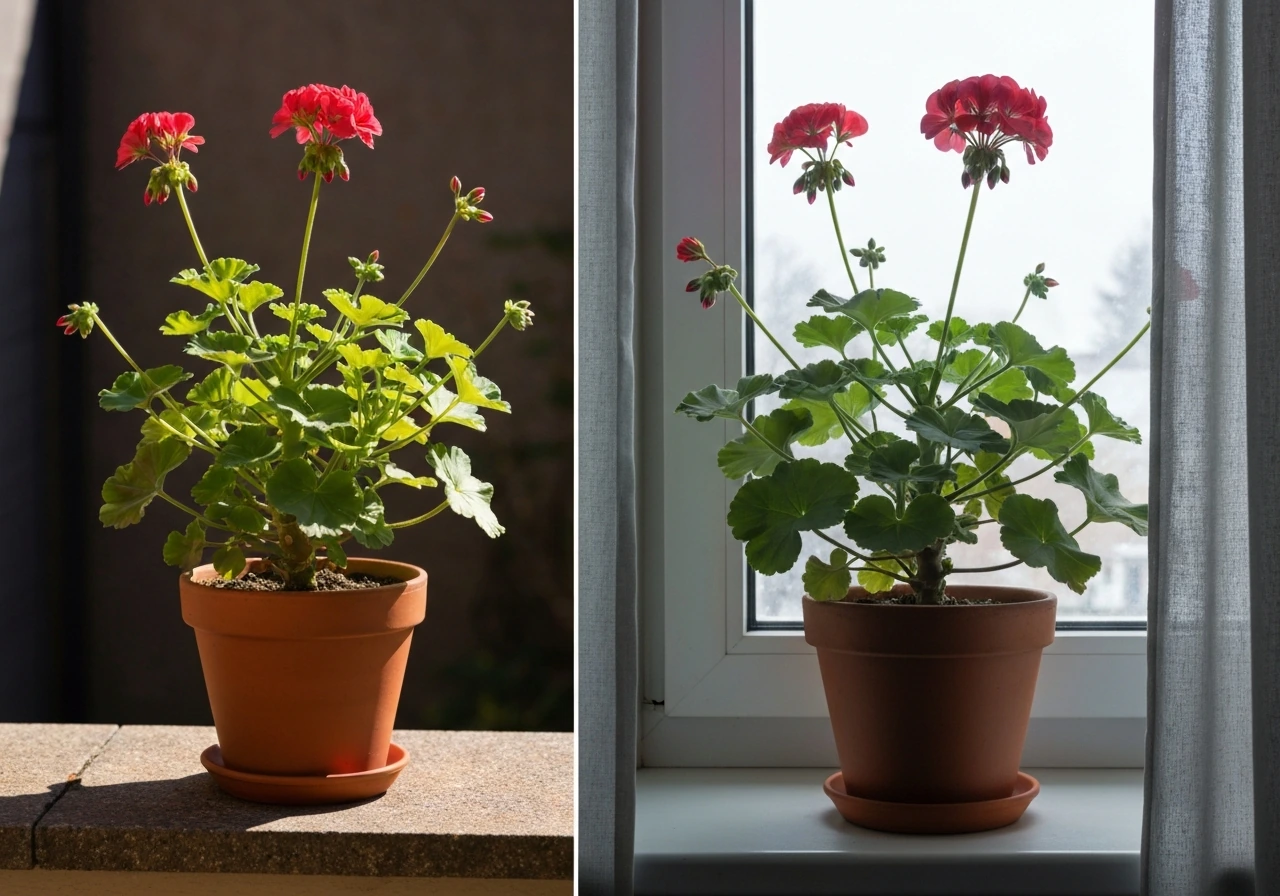
Outdoors, geraniums sit in full sun for 6 to 8 hours a day, roots dry out faster in open air, and temperatures swing naturally between warm days and cooler nights. Move them inside and all three of those conditions shift at once, which is why plants sometimes struggle in the transition.
Light is the biggest shift. Even a south-facing window delivers significantly less intensity than direct outdoor sun. Colorado State University Extension recommends at least 10 to 12 hours of light per day to keep indoor geraniums growing well and flowering through winter. If your window can't deliver that, a simple grow light on a timer closes the gap quickly.
Watering habits need to change too. Indoors, pots dry out more slowly because there's no wind and temperatures are more stable. That's the setup for root rot if you keep watering on the same schedule you used outside. Let the top inch or so of soil dry out before watering again, and always make sure your pot drains freely. UGA Extension specifically flags careful watering as essential for potted geraniums, and avoiding water pooling in the crown area reduces rot risk considerably.
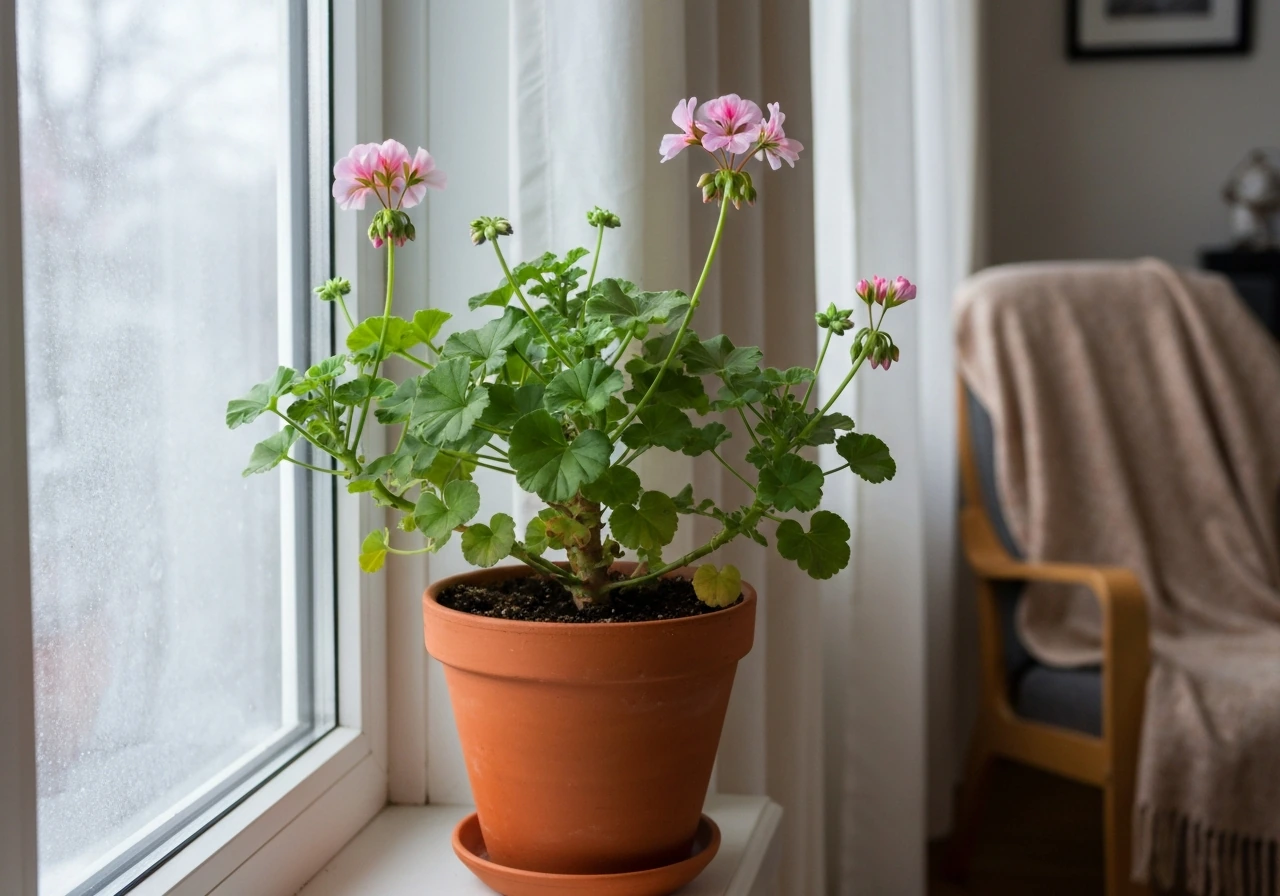
Temperature indoors is usually fine. Geraniums like it between 65°F and 75°F during the day, which is basically room temperature for most homes. They'll tolerate cooler nights, down to around 55°F, which can actually encourage more compact growth. What they can't handle at all is frost. The RHS is clear that Pelargoniums are not frost-tolerant, so if you're growing near a cold drafty window in January, move the pot back a few inches from the glass.
Fertilizer is another indoor adjustment people overlook. Clemson Extension points out that when light intensity is low indoors, especially in winter, you should reduce fertilizer to match the plant's reduced growth rate. Feeding a slow-growing plant at the same rate you'd use in a sunny summer garden just pushes salts into the soil without any benefit.
Will geraniums keep growing through winter indoors?
This depends on what you want from them. Burpee notes that geraniums can be brought indoors and grown as houseplants over winter, and the Almanac adds a useful nuance: geraniums naturally slow down during winter months, using less water and not growing much. That's normal. It doesn't mean the plant is dying. Think of it as the plant taking a breather rather than thriving or failing.
If you want active growth and flowers through winter, you need to fight that dormant tendency with good light. Colorado State Extension's recommendation of 10 to 12 hours of light per day is the target. On short December and January days, a south-facing window alone probably won't cut it in most of the country. Supplement with a fluorescent or LED grow light. Burpee's benchmark for seedlings under artificial light is 16 hours on and 8 hours off, which gives you a ceiling to work within. For established overwintering plants, 12 to 14 hours total (window plus grow light) is a reasonable goal.
If you're fine with the plant just surviving winter and coming back strong in spring, you can let it go semi-dormant. Water sparingly, stop fertilizing, and keep it somewhere cool but frost-free. Purdue Extension's overwintering guidance describes managing plants through winter in reduced-light conditions, which confirms this lower-maintenance approach is a legitimate strategy. Just don't let it freeze.
How to set up and grow geraniums indoors
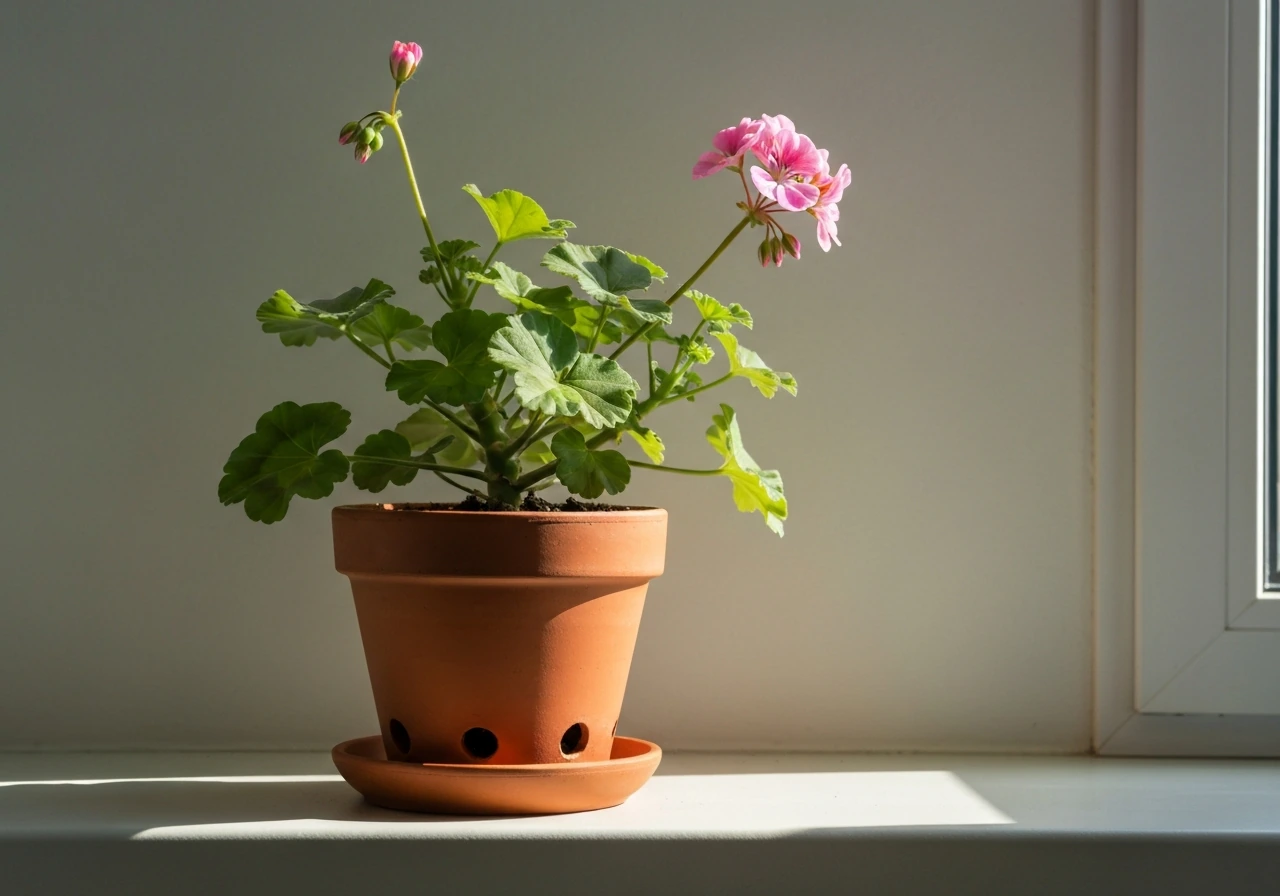
- Choose the right pot: Use a container with drainage holes. Terracotta works well because it dries out more evenly and reduces overwatering risk. A 6 to 8 inch pot handles most standard geraniums.
- Use the right mix: A well-draining potting mix is essential. UGA Extension's guidance on potting media for geraniums emphasizes that drainage matters as much as fertility. A standard potting mix cut with 20 to 25 percent perlite works well.
- Place it in the brightest spot you have: South-facing windows are ideal. East or west-facing windows can work with supplemental lighting. North-facing windows alone won't be enough.
- Add a grow light if needed: A simple LED grow light on a timer set for 12 to 14 hours covers the gap on dark winter days. Position it 6 to 12 inches above the foliage.
- Water correctly: Let the top inch of soil dry before watering. Water thoroughly until it runs from the drainage holes, then let it drain completely. Never let the pot sit in standing water.
- Fertilize lightly: Use a balanced liquid fertilizer every 3 to 4 weeks during active growth. Cut back or stop entirely if light is low or the plant is resting through winter.
- Pinch for bushy growth: Pinch off the growing tips regularly to encourage branching. This is especially important indoors where light is lower and plants tend to stretch.
- Ensure air circulation: Burpee recommends good air circulation as a key disease-prevention measure. Avoid crowding plants or placing them in stagnant corners.
Growing scented geraniums indoors
Scented geraniums (rose, lemon, mint, and other fragrant Pelargonium varieties) are genuinely excellent indoor plants, in some ways even better suited to indoor life than zonal geraniums because people grow them for their aromatic foliage as much as their flowers. Brush the leaves walking past and the scent fills the room. That's a real benefit you just don't get from most houseplants. ivy geraniums grown indoors get attention too, but scented varieties have a dedicated following for exactly this reason.
Light requirements are the same as other geraniums. Scented-leaved Pelargoniums prefer full sun but can appreciate a little shade during intense heat outdoors. Indoors, give them the brightest spot available. Mother Earth Living specifically advises supplementing window light with about eight hours of artificial light during winter to keep scented geraniums performing well indoors. That's a lower bar than the 12-hour target for active flowering, so if you just want healthy fragrant foliage through winter, scented varieties are a bit more forgiving.
Temperature is worth flagging for rose-scented types in particular. Burpee notes that rose-scented geraniums should be brought indoors when temperatures drop to around 45°F. Don't wait for a hard frost warning. Get them inside before nighttime temperatures regularly hit that threshold, which in most of the US means early to mid October.
Indoor geraniums compared to other flowering plants you might be considering
If you're weighing geraniums against other flowering options for indoors, here's a quick comparison. People often ask similar questions about other plants, like whether hyacinth can grow indoors or even whether water hyacinth is a viable indoor plant, and the answers vary considerably.
| Plant | Indoor viability | Light needs | Winter performance | Beginner friendly? |
|---|---|---|---|---|
| Geranium (Pelargonium) | Excellent | High (10-12 hrs) | Good with supplemental light | Yes |
| Hyacinth | Moderate (seasonal) | Moderate | Forced blooms only | Yes (bulb forcing) |
| Ixora | Moderate | High (bright indirect) | Slow growth | Moderate |
| Ivy | Excellent | Moderate to low | Year-round | Yes |
Geraniums hold their own well in this comparison, especially if you can provide a bright window. Ixora grown indoors is another high-light flowering plant that can struggle in lower indoor light conditions, so the experience is similar. Geraniums are arguably more forgiving on the other variables.
Problems you'll actually run into (and how to fix them)
Leggy, weak growth
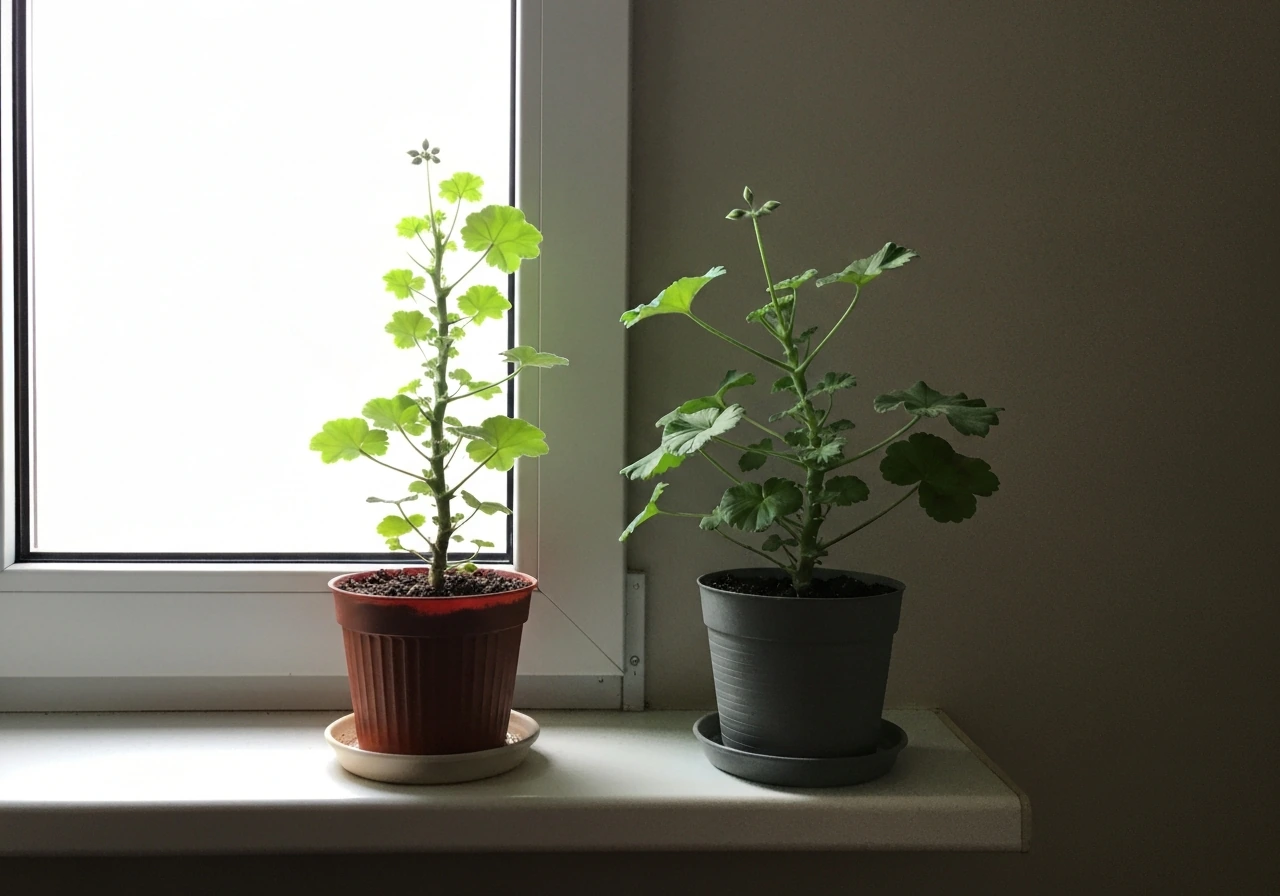
This is the most common indoor geranium complaint, and it's almost always a light problem. UNH Extension confirms that low light intensity causes elongated growth in indoor flowering plants. If your geranium is stretching toward the window, stems getting long and floppy between leaves, it needs more light. Move it closer to the window, add a grow light, or both. Pinching the stems back at the same time helps restore a more compact shape while you fix the light situation.
Yellowing leaves
Yellow leaves have a few possible causes. Thompson and Morgan note that yellowing can signal low water at the roots among other diagnoses. But indoors, overwatering is more often the culprit than underwatering. Check the soil before you do anything. If it's wet or soggy several inches down, ease off the water and let it dry out. If it's bone dry and the pot feels very light, give it a thorough soak. Lower leaves yellowing and dropping as new growth appears at the top is often just natural aging and not a problem at all.
Root and stem rot
Connecticut's CAES Plant Pest Handbook flags wilting and decline as above-ground signs of root and stem rot, and emphasizes that avoiding overwatering in heavy soils and keeping water away from the crown area significantly reduces risk. If you catch it early, let the soil dry completely, remove any visibly rotted roots, and repot into fresh dry mix. If the stem is black and mushy at the base, the plant is unlikely to recover. Prevention through proper watering beats any fix.
Pests indoors
The most common indoor geranium pests are aphids, whiteflies, spider mites, and fungus gnats. Aphids and whiteflies tend to cluster on new growth and the undersides of leaves. The University of Arizona Extension lists yellow sticky traps as an effective monitoring and control tool for whiteflies and thrips, and they work well as an early warning system for most flying pests. For spider mites, increasing humidity and wiping down leaves helps. For treatment across most of these pests, UMN Extension includes neem oil as an effective option for indoor plant pest management. Mississippi State Extension recommends sticky traps for fungus gnats specifically, and insecticidal soap or neem for soft-bodied insects like aphids, which aligns with Connecticut CAES guidance on aphid control for geraniums. Keep new plants isolated for two weeks before placing them near existing plants. That single habit prevents most indoor pest outbreaks.
Your next steps starting today
If you're starting fresh, pick up a compact zonal geranium or a scented variety from a local nursery or order online. Get a terracotta pot with drainage, a well-draining potting mix (add perlite if the bag doesn't mention it), and identify your brightest window. If it's a south or west-facing window and it's spring or summer, you're probably set without extra lighting. If it's winter or your windows face north or east, grab an inexpensive LED grow light with a built-in timer.
If you're bringing outdoor geraniums inside for winter, do it before nighttime temperatures drop toward 45°F to 50°F. Check for pests before bringing them in, trim the plant back by about a third to reduce the light demand, and give it a few weeks to adjust to lower indoor light before expecting much new growth.
You don't need a greenhouse or a perfect setup. A sunny windowsill and careful watering will take you a long way. If you've ever wondered whether trailing plants like ivy can grow successfully indoors or if vine-types like German ivy are a good fit for your space, the same bright-window logic applies. Similarly, if you're curious about bulbs and whether grape hyacinth works as an indoor plant, those are worth exploring alongside your geranium setup. But for reliable indoor flowering through winter with minimal fuss, geraniums are genuinely one of the better choices you can make.
FAQ
Can I keep indoor geraniums flowering all winter, or will they eventually stop blooming?
They can keep blooming for winter, but only if the light is strong and consistent. If you fall below the 10 to 12 hour daily light target (window plus any grow light), most plants shift into a slower, fewer-blooms phase rather than fully “failing,” so adjust lighting before you try changing fertilizer or watering.
What’s the best way to tell if my geranium needs more water indoors?
Use the top-inch rule and add a pot-weight check. If the top inch feels dry and the pot is noticeably lighter than when you recently watered, water is due. If the soil is still cool and wet more than an inch down, hold off, because indoor rot risk rises when the crown stays too wet.
Should I water geraniums from the top or bottom when they’re indoors?
Either can work if the pot drains well, but avoid repeatedly soaking the crown area with top watering. If you bottom-water, pour off any excess after a short soak, and make sure the pot is never sitting in a saucer of water.
Do indoor geraniums need a larger pot or repotting during winter?
Usually not. Repotting stresses the roots and can worsen moisture and rot issues in low winter light, so wait until spring unless the plant is root-bound and drying out extremely fast. If you must repot, use fresh, dry-leaning mix and a pot with excellent drainage.
How close should I place a grow light to avoid leggy growth and leaf issues?
Start with the manufacturer’s distance guidance, then adjust based on plant response. If stems stretch or leaves look sparse, move the light closer or increase total hours. If you see leaf scorch or bleaching, back it off. Also keep the timer consistent, because long gaps can disrupt flowering even with a good light.
My geranium is stretching toward the window but still has plenty of leaves. What should I do first?
Increase effective light before you change fertilizer. Move it closer to the brightest window and add a grow light if you cannot reach the daily light target. Then pinch or lightly trim leggy tips after the plant has had a couple of weeks of improved light, so it regains a compact shape.
Why do my indoor geraniums get yellow leaves, and how do I know which cause is most likely?
Indoors, yellowing is often linked to overwatering in combination with low light. Check the soil several inches down, if it stays wet or soggy, cut back watering and improve airflow. If the soil is truly bone dry, then a thorough soak is better than frequent small drinks.
Is it normal for my lower leaves to drop in winter?
Some lower-leaf aging and shedding can be normal, especially when light levels drop. The warning sign is widespread yellowing paired with wet soil or a decline in new growth. If new top growth looks healthy and only older leaves fade, you can treat it as seasonal slow-down rather than a crisis.
Can I bring geraniums inside later in the fall, or do I need to do it early?
Bring them in before nighttime temperatures regularly hit the mid 40s Fahrenheit range, because cold exposure and slow recovery indoors can invite stress and pest problems. If you wait too long, you may get more leaf drop during the transition and slower flowering even if lighting improves.
What temperature range is safest for indoor geraniums near windows?
Aim for roughly 65 to 75°F during the day, nights can tolerate cooler conditions down around the mid 50s°F. Keep the pot away from cold drafts and frosty glass contact in winter, even if the room thermostat seems fine.
How do I prevent fungus gnats and other pests when moving plants indoors?
Inspect leaves and stems first, and isolate new plants for about two weeks. If you tend to overwater, fungus gnats become much more likely indoors, so let the top inch dry and ensure drainage. Yellow sticky traps help you catch flying pests early.
Do scented geraniums need different indoor care than zonal geraniums?
Care is similar, but they’re often a bit more tolerant if your goal is fragrant foliage rather than continuous bloom. They still need very bright light, and a lower supplemental-light bar may work for keeping them performing, yet leggy growth still signals you need more intensity or hours.
Should I fertilize indoor geraniums in winter?
Reduce feeding when growth slows. If the plant is not actively pushing new leaves and flowers due to lower light, continued fertilizing can lead to salt buildup and stressed roots. Resume a normal schedule in spring when light and growth naturally increase.
What’s the quickest “fix” if my geranium suddenly wilts indoors?
Check soil moisture immediately. Wilting with wet soil often points to root stress from overwatering, while wilting with very dry soil points to underwatering. If the base is black and mushy or the plant collapses despite dry soil, rot may already be advanced and prevention steps (proper watering and drainage) become more important than rescue.