
Yes, lantana can grow indoors, but it comes with a catch: this is a full-sun plant that genuinely craves intense light, and most homes simply can't deliver that through a window alone. Alyssum can also be grown indoors, but it needs bright light and cool conditions to stay healthy and bloom can alyssum grow indoors. If you have a south-facing window that gets direct sun for most of the day, or you're willing to run a grow light, lantana will survive indoors and can even bloom. Without one of those two things, you'll end up with a scraggly, non-blooming plant that's more frustrating than rewarding. Know that going in, and you'll be fine. If you're also wondering can lamium grow indoors, the answer depends heavily on whether you can provide strong light similar to what lantana needs. Daylilies can be grown indoors too, but they still need very bright light and consistent care to bloom well can daylilies grow indoors. Can lysimachia grow indoors? Yes, it can, as long as you give it enough bright light and keep the soil evenly moist. Lobelia can also be grown indoors, but it has its own specific light and care requirements to stay compact and healthy can lobelia grow indoors.
Can Lantana Grow Indoors? How to Make It Bloom

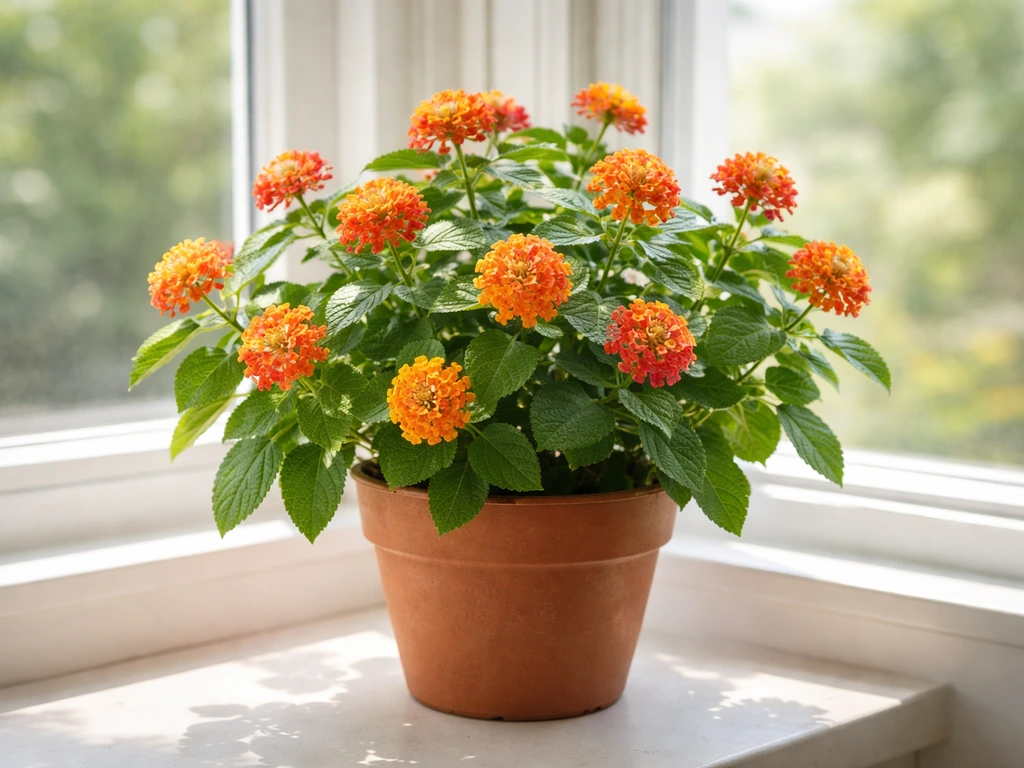
How much light lantana actually needs indoors
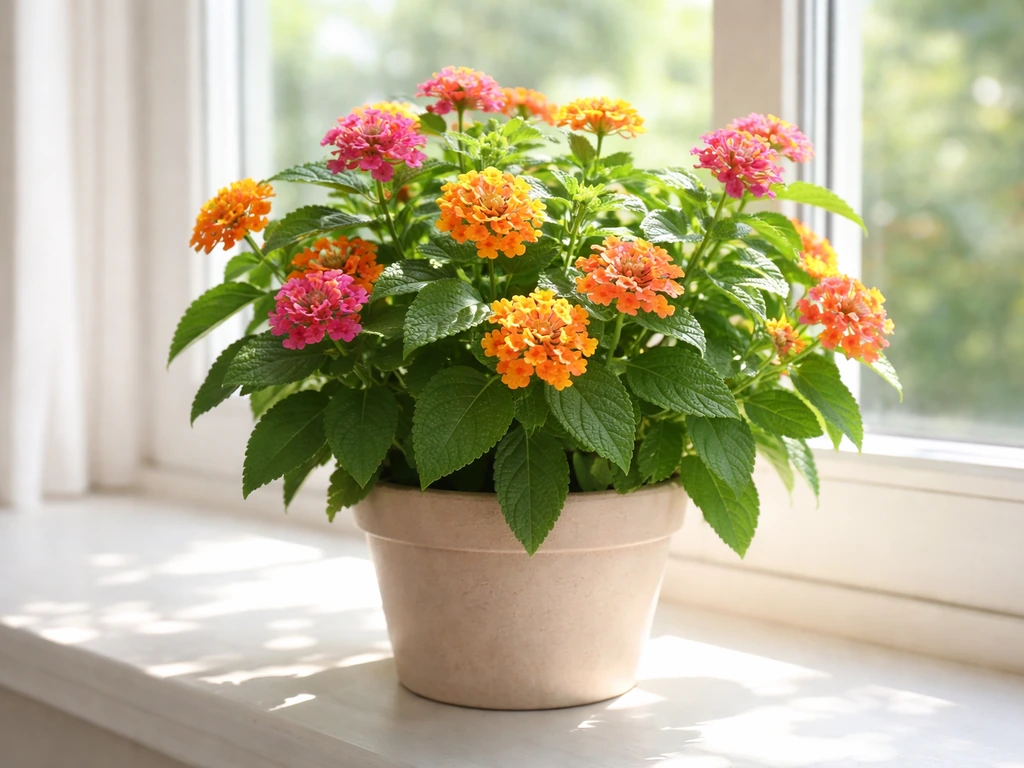
Lantana is a sun-lover through and through. Outdoors it thrives in six to eight hours of direct sun per day, and indoors it wants the closest approximation of that you can provide. A south-facing window is your best shot without supplemental lighting. East or west-facing windows often don't cut it for blooming, though they might keep the plant alive in a semi-dormant state over winter.
If your window situation isn't ideal, a full-spectrum LED grow light is genuinely the game-changer here. Set it up about 6 to 12 inches above the plant and run it for 14 to 16 hours a day. This is how I've had the most success keeping lantana blooming through winter on a north-facing apartment windowsill that would otherwise be hopeless. Look for a light rated at least 2000 to 3000 lumens for a single container plant. Timer plugs make this effortless so you're not thinking about it every day.
One thing worth noting: if you're bringing lantana indoors specifically to overwinter it (rather than keep it actively growing and blooming), the University of Minnesota Extension actually recommends keeping it in a cool room around 50 to 60°F with minimal light. The University of Minnesota Extension also notes that this overwintering method involves keeping lantana in a cool room around 50, 60°F with minimal light University of Minnesota Extension recommends keeping it in a cool room around 50 to 60°F with minimal light. That's a dormancy approach, not an active-growing approach. Both are valid, but they're very different strategies with very different results.
Setting up the perfect indoor pot and environment
Pot and soil
Lantana actually does well in containers, partly because you can control drainage so precisely. Use a terra cotta or plastic pot with drainage holes at the bottom. Drainage is non-negotiable: lantana hates sitting in wet soil and will develop root rot fast if water pools. A 10 to 14-inch container works well for a single plant, giving roots room without so much excess soil that moisture lingers too long. Use a well-draining potting mix, ideally a standard container mix with some perlite mixed in (about 20 to 25% by volume). This keeps the soil from compacting and improves drainage considerably.
Temperature and airflow
For active indoor growing, keep lantana in a warm spot: 60 to 80°F is the sweet spot. Avoid placing the pot near drafty windows or air conditioning vents, since cold drafts cause leaf drop fast. Lantana also appreciates some airflow around its foliage, which helps prevent the mildew and fungal issues it's prone to indoors. If your home is fairly still, a small fan running on low nearby works well. Humidity-wise, lantana isn't particularly fussy, and average indoor humidity (30 to 50%) suits it fine.
Watering and fertilizing your indoor lantana
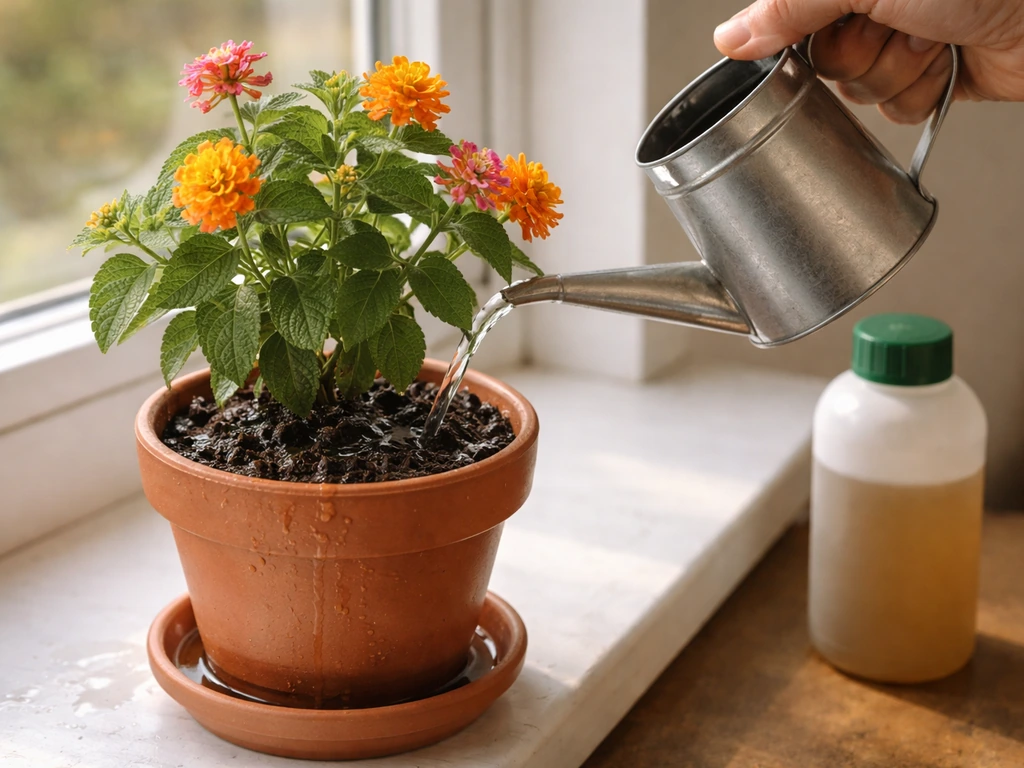
When lantana is actively growing indoors under good light, it needs consistent moisture. University of Wisconsin-Extension also notes that too much water and fertilizer can reduce lantana’s blooming too much water and fertilizer can reduce bloom. In a container, daily watering is often recommended during active growth, though in practice this depends on your pot size, soil mix, and how warm your home runs. Check the top inch of soil: if it's dry, water thoroughly until it drains from the bottom. If it's still damp, wait. The key rule from University of Minnesota Extension: water the soil directly, not the foliage. Getting leaves wet repeatedly invites mildew disease, which is already a higher risk indoors where airflow is limited.
Fertilizing indoor lantana is straightforward because it doesn't need much. If you want to support blooming and new growth, a balanced fertilizer (equal N-P-K numbers, like a 10-10-10) applied once a month at half the recommended rate is plenty. Over-fertilizing lantana, especially with high-nitrogen blends, encourages lush leafy growth at the expense of flowers, which is the opposite of what you want. I skip fertilizer entirely from November through January when growth naturally slows.
Getting lantana to actually bloom indoors
Blooms are the whole point of growing lantana, and getting them indoors takes a bit of intentional management. Light is the biggest factor (covered above), but pruning is a close second. Lantana blooms on new growth, so if you let it get woody and leggy without cutting it back, flowering drops off significantly. Prune stems back by about one-third in early spring, or whenever growth becomes sparse and stretched. This encourages fresh, bushy new growth, and flowers follow within a few weeks.
Deadheading (removing spent flower clusters) also keeps the plant pushing out new blooms rather than putting energy into seed production. Make it part of your weekly routine: just pinch or snip off faded flower heads as you see them. If you're training lantana into a compact shape or even a small standard (tree form), regular pinching of stem tips through the growing season builds a denser habit that produces more flowering sites.
One realistic expectation: indoor blooms are often less prolific and slightly less vibrant than what you'd see on an outdoor plant baking in full summer sun. That's just the nature of the light difference. Grow lights close that gap significantly, but managing your expectations helps. Think of it as a rewarding challenge rather than a guaranteed flower show.
When things go wrong: fixing common indoor lantana problems
Leggy, stretched growth
If your lantana is producing long, weak stems with large gaps between leaves, it's reaching for more light. Move it closer to your light source or upgrade your grow light setup. Prune back the stretched stems to encourage compact regrowth, and adjust the light before it happens again. This is the most common indoor problem and almost always comes back to insufficient light intensity.
Leaf drop
Sudden leaf drop usually means a temperature shock, cold draft, or dramatic change in conditions (like moving the plant abruptly from outside to inside in fall). Gradual temperature drops cause natural seasonal leaf loss, especially if you're overwintering at cool temperatures. If leaf drop happens in spring or summer, check for drafts, cold windowpanes touching foliage, or root rot from overwatering.
Pests
Lantana indoors is susceptible to a handful of common pests. Spider mites are especially likely in dry indoor conditions: you'll notice fine webbing and stippled, dull-looking leaves. Aphids cluster on new growth and flower buds. Whiteflies and mealybugs also show up, particularly if you've brought the plant in from outside without inspecting it first. Treat spider mites with a strong water spray or insecticidal soap, and use neem oil or insecticidal soap for aphids, mealybugs, and whiteflies. Isolate any affected plant immediately so pests don't spread to other houseplants nearby.
| Problem | Likely Cause | Fix |
|---|---|---|
| Leggy, stretched stems | Not enough light | Move closer to window or add grow light; prune back stretched growth |
| Leaf drop | Cold draft, temperature shock, or overwatering | Check placement, avoid cold drafts, let soil dry slightly between waterings |
| No blooms | Insufficient light or needs pruning | Improve light intensity; cut back by one-third to encourage new flowering growth |
| Spider mites | Low humidity, dry indoor air | Spray with water or insecticidal soap; increase airflow |
| Aphids or mealybugs | Brought in from outside or spread from other plants | Treat with neem oil or insecticidal soap; isolate plant |
| Mildew on leaves | Wet foliage, poor airflow | Water soil only, not leaves; improve air circulation around plant |
Is indoor lantana safe and realistic for the long haul?
Here's something to know before you bring lantana inside: it is toxic to dogs, cats, and horses, according to the ASPCA. All parts of the plant are considered toxic, with unripe berries being especially dangerous. If you have pets that chew on plants or curious kids, keep the plant completely out of reach or reconsider whether it's the right indoor plant for your household. This isn't a reason to avoid it entirely, but it's worth knowing upfront.
On the long-term realism question: lantana is a perennial in warm climates (USDA zones 9 to 11) and a tender perennial everywhere else. Indoors, with good light and care, the same plant can live for several years in a container. Many gardeners use it as a seasonal indoor plant, bringing it outside for summer and back in for winter, which is honestly the easiest way to grow it. If you're committing to year-round indoor growing, expect to repot every one to two years as the root system fills the container, and plan on an annual hard prune in late winter to keep the plant from becoming too woody.
Compared to some of the other flowering plants people try indoors, lantana sits in the middle of the difficulty range. It's not as forgiving as busy lizzies, which handle lower indoor light reasonably well, and it won't bloom as reliably as some tropical houseplants. Busy lizzies can also be grown indoors, but they need bright light to do well busy lizzies grow indoors. But if you give it the light it needs and stay on top of pruning and watering, it's a genuinely rewarding indoor plant with beautiful, colorful blooms that most people don't think to grow inside. Tiger lilies have their own indoor light and care needs, so it's helpful to review how to grow tiger lilies indoors before you commit.
Your next steps today
- Assess your light situation first: identify your brightest south-facing window or decide if you need a grow light before bringing lantana in.
- Choose a container with drainage holes, 10 to 14 inches wide, and fill with a well-draining potting mix cut with about 20% perlite.
- Position the plant as close to your light source as possible, whether that's a sunny window or a grow light running 14 to 16 hours a day.
- Water when the top inch of soil is dry, aiming the water at the base of the plant, not the leaves.
- Fertilize monthly at half-strength with a balanced fertilizer only during active growing periods (spring through early fall).
- Prune back by one-third in late winter or early spring to encourage fresh, flower-producing growth.
- Inspect regularly for spider mites, aphids, and mealybugs, especially after first bringing the plant indoors.
FAQ
Can lantana be grown indoors without a grow light if I only have a window that gets some sun for part of the day?
It may stay alive, but for blooming you usually need direct sun for most of the day, a south-facing window is the best baseline. If your window is mostly bright but not truly direct, plan on using a grow light or treat the plant as “foliage first” with occasional blooms.
What’s the difference between overwintering lantana indoors and growing it through winter to keep blooming?
Overwintering aims for dormancy, a cooler room around 50 to 60°F with minimal light to reduce growth. Active winter bloom needs warm temperatures (60 to 80°F) plus intense light, either a strong south window or a grow light run long hours.
How close should my grow light be, and what if my plant still gets leggy?
Start with the light about 6 to 12 inches above the plant and run it 14 to 16 hours daily. If you still see long, weak stems and wide leaf gaps, move the light closer and verify the bulb output, distance usually matters more than simply “having it on.”
How do I know whether I’m watering too much, especially during cloudy winter weeks?
Use the top inch rule, if it’s still damp, wait. In lower light months the plant drinks less, so daily watering often becomes unnecessary and increases root-rot risk, make watering respond to soil dryness rather than the calendar.
Should I mist lantana or increase humidity to prevent spider mites?
Misting usually doesn’t solve the underlying issue and can leave leaves wet, which increases mildew risk. For spider mites, focus on stronger airflow and a check-and-treat routine, if needed use a targeted water spray or insecticidal soap rather than relying on humidity.
Is it safe to fertilize year-round indoors?
You can fertilize during active growth, about once a month with a balanced fertilizer at half strength. From November through January, skip fertilizer because growth slows and excess nutrients can build up in the potting mix, which can contribute to salt stress and poor flowering.
Why are my flowers failing even though the plant looks healthy?
Most indoor bloom failures come from insufficient light intensity and not pruning back woody growth. Lantana blooms on new growth, so prune back about one-third in early spring and deadhead weekly, then reassess lighting if it still doesn’t respond within a few weeks.
Can I propagate lantana indoors from cuttings?
Yes, stem cuttings are the simplest approach, and they root best with warmth and consistent moisture. Use a well-draining mix and keep the cutting under bright light (often similar to what the parent needs) because weak light slows rooting and encourages rot.
What pests should I inspect for before bringing lantana indoors from outside?
Check the undersides of leaves and new growth for spider mites, aphids, and whitefly, also inspect for mealybugs in leaf joints and along stems. Isolate the plant for a couple of weeks and treat early if you see stippling, webs, clusters, or cottony spots to prevent spread.
Is lantana pet-safe if I keep it in a hanging pot or behind a barrier?
No, all parts are toxic to dogs and cats, unripe berries are especially dangerous. A barrier or hanging setup can reduce access, but it is still best to place it where chewing is impossible, especially if kids or pets roam unsupervised.