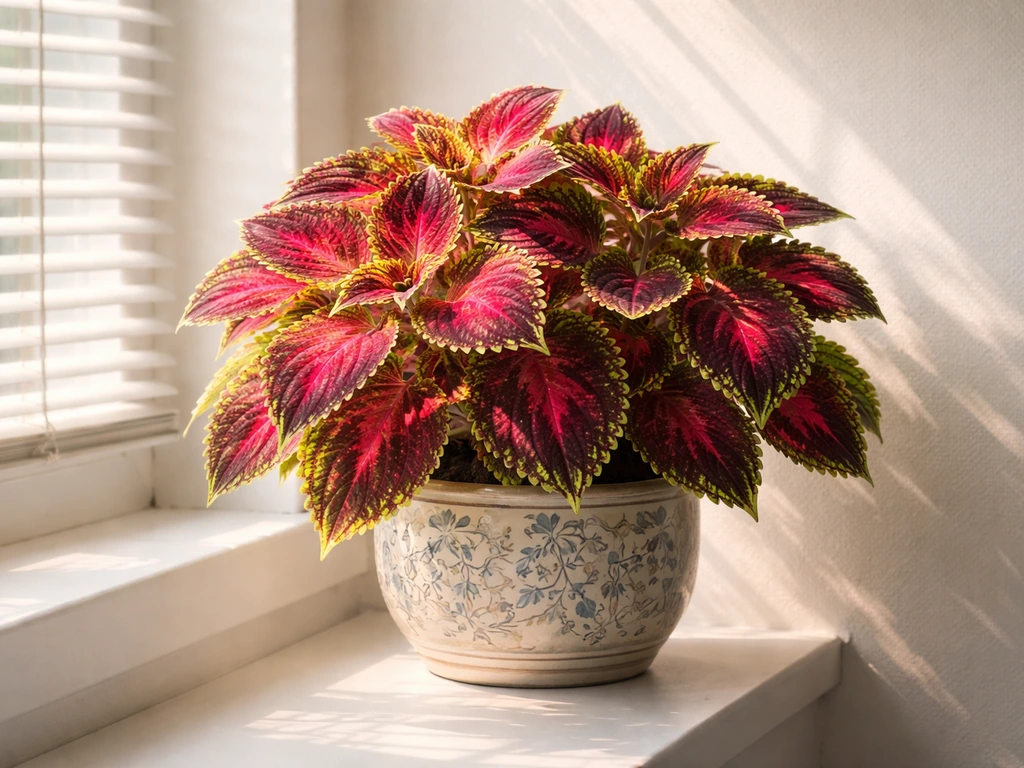
Yes, coleus can absolutely grow indoors
Coleus grows indoors without much fuss, and it can stay vibrant and colorful all year if you give it the right conditions. The Missouri Botanical Garden confirms it can add color to the home all winter when kept in a warm window, and that matches my own experience. I've kept coleus going on a bright east-facing sill from October through April with no real drama. That said, be honest with yourself about your light situation. Coleus grown indoors won't be as lush or fast-growing as a plant spending a full summer outside, and if your windows are weak, you will get leggy, stretched stems pretty quickly. Those are the real trade-offs, not the plant's survival itself.
Outdoors, coleus is treated as a tender annual because a single frost kills it. That's the main reason people bring it inside in the first place. Indoors, it's essentially a tropical houseplant and behaves like one: it needs warmth, decent light, and consistent moisture without being blank" rel="noopener noreferrer">waterlogged. If you've grown something like caladium indoors, you already know the basic care rhythm. Coleus is forgiving enough for beginners but rewards experienced growers who fine-tune their setup.
The conditions coleus actually needs indoors
Light
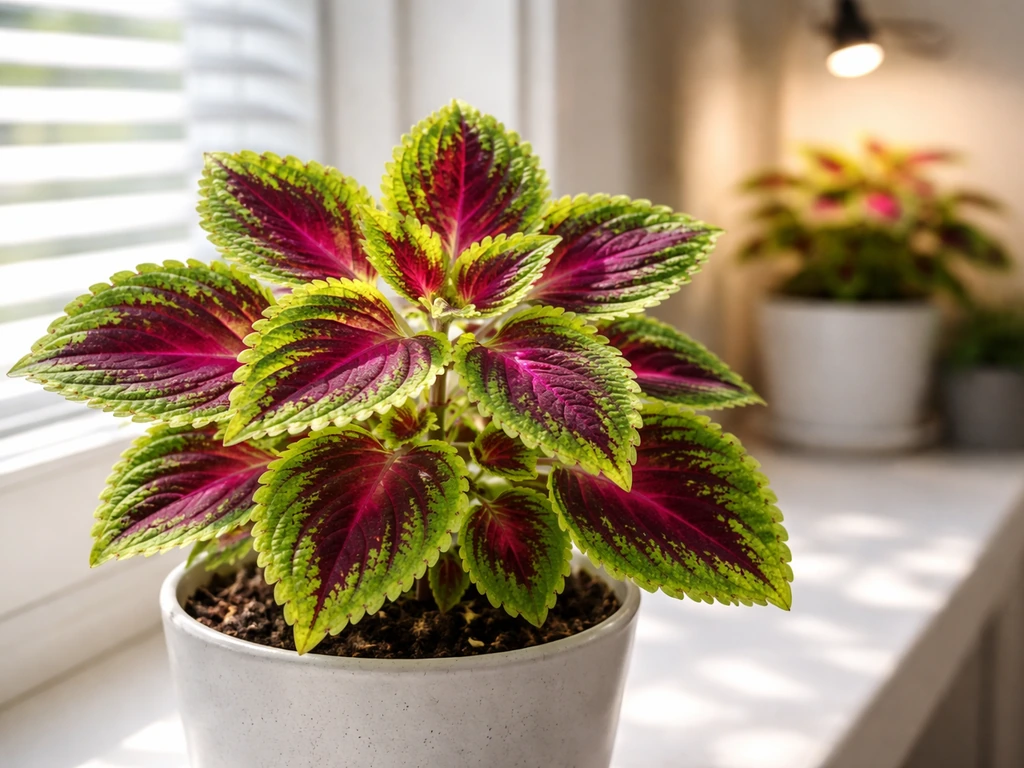
Light is the single biggest factor between thriving coleus and a sad, leggy mess. Coleus naturally prefers part shade or dappled light outdoors, which translates well to bright indirect light indoors. A south or east-facing window is ideal. A north-facing window will almost certainly produce stretching. One thing people get wrong: assuming more winter sun is always better. Varieties that aren't sun-tolerant can actually bleach and discolor if they get blasted by direct sun through glass, especially if the glass concentrates heat. Bright but filtered is the sweet spot. If natural light is genuinely limited, a full-spectrum grow light positioned 6 to 12 inches above the plant for 12 to 14 hours a day solves the problem effectively.
Temperature
Keep coleus above 60°F at all times. Most homes sit between 65 and 75°F, which is fine. The danger zones are cold drafts from windows in winter and air conditioning vents in summer. University of Missouri Extension specifically calls out cold air movement as a problem for indoor plants, so don't park your coleus right against a drafty sill or under a ceiling vent. If you touch the glass on your window in January and it's cold, the air right next to it is cold too. Pull the pot back a few inches or slide a thin curtain between the glass and the plant at night.
Humidity
Coleus prefers moderate to higher humidity, which is the one condition most homes struggle to provide in winter when heating systems dry the air out. MU Extension points out that good light helps a plant handle lower humidity better, which is useful to know. You're not totally helpless if your air is dry, as long as the light is solid. If you want to boost humidity directly, grouping plants together, setting the pot on a pebble tray with water below the drainage holes, or running a small humidifier nearby all work. Misting the leaves directly is a bad idea for coleus because wet foliage creates the exact conditions for fungal problems like downy mildew and stem rot.
How to set up your coleus for indoor growing
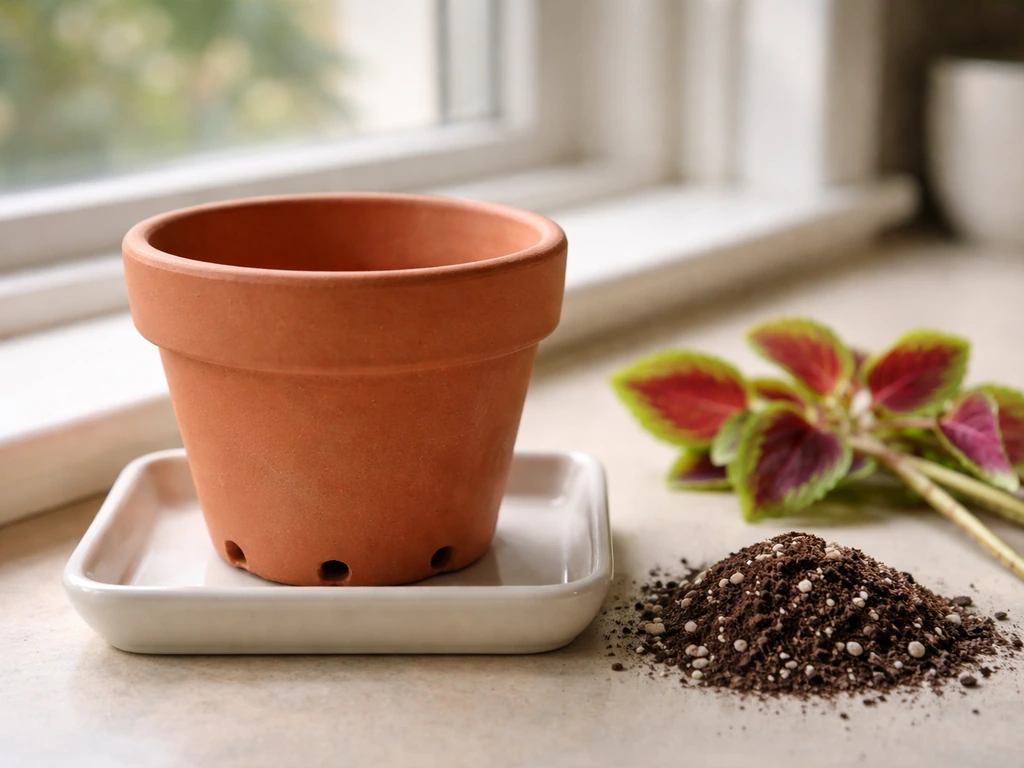
- Choose a pot with drainage holes. This is non-negotiable. Clemson HGIC is emphatic that coleus must have good soil drainage, and root rot from sitting water is one of the most common ways indoor coleus dies. A 6-inch pot works for a single stem cutting or small plant; go up to 8 or 10 inches as the plant grows.
- Use a quality, fast-draining potting mix. A standard indoor potting mix is fine, but add a handful of perlite (about 20% by volume) to improve drainage further. Avoid garden soil entirely, which compacts in pots and holds too much moisture.
- Target a soil pH between 5.8 and 6.2. Most bagged potting mixes fall in this range naturally, so you don't need to test obsessively, but if your plant looks consistently unhappy despite good light and watering, a cheap pH meter is worth checking.
- Plant at the same depth the cutting or transplant was sitting. Don't bury the stem or pile soil around the base, since that traps moisture and invites rot at the crown.
- Place the pot in your brightest indirect light spot, which is usually a south or east window set back 1 to 2 feet from the glass. Rotate the pot a quarter turn every week or two so all sides get equal light and the plant stays compact instead of leaning.
- Wait a week or two after potting before fertilizing. Let the roots settle in first.
Keeping coleus going through winter
Winter is where most people run into trouble, not because coleus can't survive indoors in winter but because shorter days and drier air stack up against the plant simultaneously. The key adjustment is to scale back watering and feeding to match slower winter growth. The University of Missouri Extension makes this point clearly: watering frequency should respond to conditions like light level, temperature, and humidity rather than a fixed schedule. In winter, those conditions all shift toward drying more slowly, so you water less often. Stick your finger an inch into the soil; if it still feels damp, wait another day or two.
On feeding: coleus doesn't need fertilizer through the darkest part of winter (roughly December through February in most of the US). Once days start noticeably lengthening in late February or March, you can resume a balanced liquid fertilizer at half strength every two to three weeks. Avoid anything formulated primarily for flowering plants. Clemson HGIC warns that high-phosphorus fertilizers can actually make coleus leggy and trigger blooming, which pulls energy away from the colorful foliage you're growing it for. A balanced formula like 10-10-10 or a foliage-focused fertilizer is the better choice.
One approach that many experienced growers prefer for overwintering is taking fresh tip cuttings in late fall rather than carrying the original plant all the way through winter. The Chicago Botanic Garden recommends this method: cut 3 to 4-inch tip cuttings from healthy plants, pot them up, and grow those indoors through winter.
Chicago Botanic Garden also advises hard cutting back coleus and bringing it indoors under bright lights for winter cut 3 to 4-inch tip cuttings from healthy plants, pot them up, and grow those indoors through winter. Young cuttings root easily in moist potting mix or even a glass of water, and they tend to stay compact and vigorous under limited winter light better than an aging, larger plant does.
If you're curious about similar overwintering strategies for other bold-foliage plants, the question of whether you can grow canna indoors follows a similar logic of managing tropical plants through colder months.
Once spring arrives and you're ready to move plants back outside, the Chicago Botanic Garden advises waiting two weeks after repotting the rooted cuttings before putting them outdoors. That hardening-off period prevents shock from the transition.
Why your indoor coleus is struggling (and how to fix it)
Leggy, stretched stems
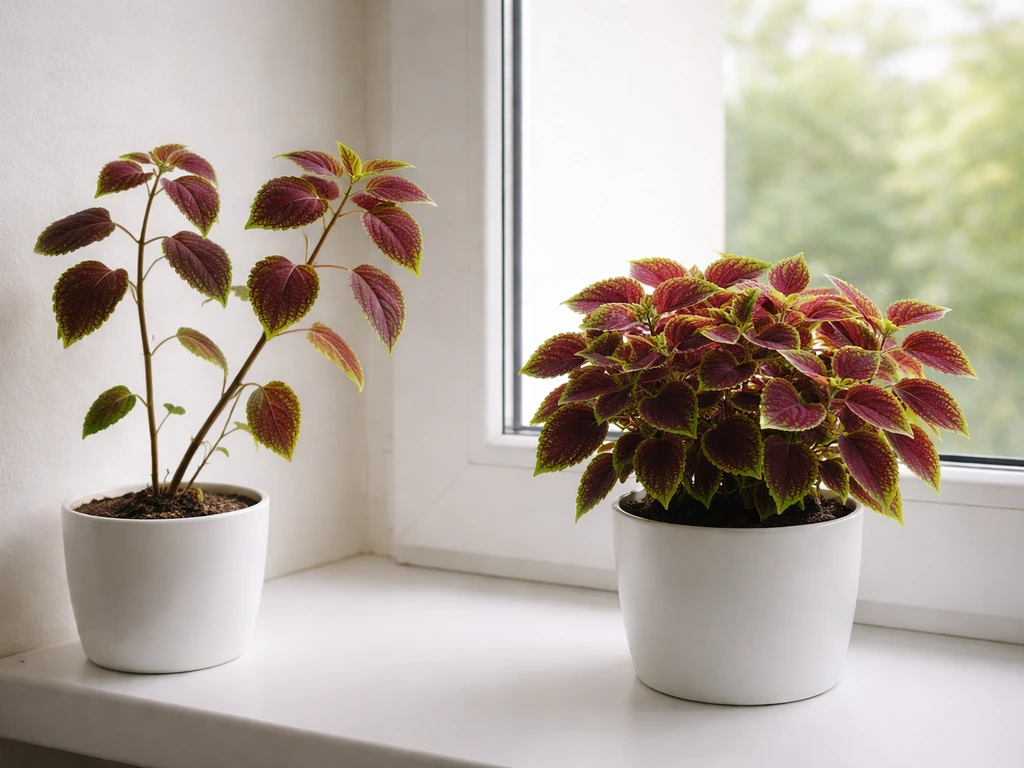
This is the number one indoor coleus complaint, and it almost always comes down to insufficient light. When coleus doesn't get enough, it stretches toward whatever light it can find, producing long bare stems with small leaves spaced far apart. The fix is to move the plant to a brighter spot or add a grow light. Then pinch back the leggy stems to just above a leaf node. Coleus branches from the pinch point, which encourages a fuller, bushy shape. Get into the habit of pinching regularly, not just when it gets out of hand. Using a high-phosphorus flowering fertilizer can also contribute to this problem, so check what you're feeding it.
Leaf drop
Sudden leaf drop usually points to a temperature or draft problem, or to a big shift in light or watering. If you just moved the plant or changed its location, give it a week to adjust before panicking. If it's sitting near a drafty window or vent, relocate it. If leaves are yellowing before they drop, that's often a watering issue, either too much or too little. Too much is more common indoors, especially in winter.
Root rot and fungal issues
Coleus is prone to downy mildew, stem rot, and root rot when conditions stay too wet. Clemson HGIC links both excessive soil moisture and wetting the foliage to these fungal problems. If a stem looks mushy or blackened at the base, that's stem rot and it usually means the plant sat in too-wet soil too long. Remove the affected parts, let the soil dry out more thoroughly between waterings, and check that the drainage holes aren't blocked. Don't water on a schedule; water when the top inch of soil is dry. Always water at the base of the plant, not over the leaves.
Pests
Indoor coleus can pick up spider mites, mealybugs, aphids, and whiteflies. NC State Extension specifically flags spider mites as an issue especially on indoor coleus plants, and SDSU Extension calls out mealybugs as a common indoor pest to watch for, identifiable by small white cottony masses on stems and leaf joints. Inspect new plants before bringing them in, and check undersides of leaves regularly. For spider mites and mealybugs, insecticidal soap or neem oil work well applied directly to the affected areas. Repeat treatment every 5 to 7 days for two to three weeks to break the pest cycle. If you're dealing with a multi-plant setup and one plant gets infested, isolate it immediately.
Fading or bleached leaf color
If your coleus was vivid outdoors and looks washed out inside, low light is the likely culprit since coleus color develops more intensely under good light. However, if it's getting very intense direct winter sun through glass for several hours a day, some varieties will bleach rather than deepen. Try diffusing the light with a sheer curtain. Similar color management questions come up with other foliage plants. For example, if you're also thinking about growing kalanchoe indoors, you'll find that getting the light balance right is just as central to keeping the plant looking good.
How coleus compares to similar indoor foliage plants
| Plant | Light needs indoors | Humidity needs | Winter indoor ease | Main indoor risk |
|---|
| Coleus | Bright indirect; 12+ hrs grow light if dim | Moderate to high | Good with warm window and grow light | Leggy growth, root rot from overwatering |
| Caladium | Medium indirect light | High | Moderate; goes dormant in low light/cool temps | Dormancy; tubers rot if too wet during rest |
| Kalanchoe | Bright direct or indirect | Low to moderate | Easy; tolerates dry indoor air well | Overwatering; needs dry periods between waterings |
| Canna | Full sun preferred | Moderate | Challenging; usually stored dormant | Insufficient light; very large plant for indoor space |
Coleus sits in a comfortable middle ground: more forgiving than caladium in terms of dormancy risk, less drought-tolerant than kalanchoe, and far more manageable indoors than canna. If you're weighing your options for colorful foliage through winter, coleus is genuinely one of the better bets as long as light is addressed. And if you're exploring the full range of indoor foliage possibilities, it's worth knowing whether cannas can grow indoors as well, since they're sometimes brought in as an overwintering strategy too.
Your ongoing care and troubleshooting checklist
Run through this list every week or two and you'll catch most problems before they become serious.
- Watering: check the top inch of soil before watering. Water only when it's dry. In winter, that might mean watering once every 10 to 14 days depending on your conditions. Always use room-temperature water, not cold water straight from the tap.
- Drainage: confirm water flows freely from the drainage holes each time you water. Empty the saucer after 30 minutes so roots don't sit in standing water.
- Light check: if stems are visibly stretching or leaves are getting smaller, add more light immediately. Rotate the pot weekly for even growth.
- Pinching: pinch back any leggy or flowering stems. Remove flower buds as soon as they appear to keep energy in the foliage.
- Fertilizing: feed with a balanced liquid fertilizer at half strength every two to three weeks from early spring through summer. Stop or reduce to monthly in fall. Don't feed in the dead of winter.
- Pest inspection: flip a few leaves and check stem joints for white cottony masses (mealybugs) or fine webbing and tiny moving dots (spider mites). Catch them early and treat with insecticidal soap.
- Temperature and drafts: feel the air near the window on cold nights. If it's noticeably chilly, move the plant or add a buffer between the pot and the glass.
- Leggy stems: pinch them back, move toward more light, and reassess your fertilizer. Don't let it go more than a few weeks without addressing it.
- Foliage color: if colors look dull or washed out, improve light quality first before changing anything else.
One last thing worth mentioning: if you enjoy growing shade-tolerant flowering or foliage plants indoors and want to explore similar challenges, the question of whether columbine can grow indoors is an interesting comparison case. It has a completely different growth habit but raises many of the same questions about light, winter care, and what to realistically expect inside a home. Coleus, though, is genuinely one of the easier calls: yes, it works indoors, yes it can handle winter, and with decent light and careful watering it will reward you with color month after month.