
Yes, desert rose (Adenium obesum) can absolutely grow indoors, but it has one non-negotiable requirement: a lot of direct sun. We're talking a south-facing window with at least 6 hours of real sunlight per day. Get that right, and desert rose is actually one of the more rewarding plants you can keep inside. Get it wrong, and you'll end up with a leggy, non-flowering plant that slowly rots from the base. The good news is that once you understand its rhythms, especially the winter rest period, it's surprisingly low-maintenance.
Can Desert Rose Grow Indoors? How to Do It Right

James Hartwell
29 Apr 2026
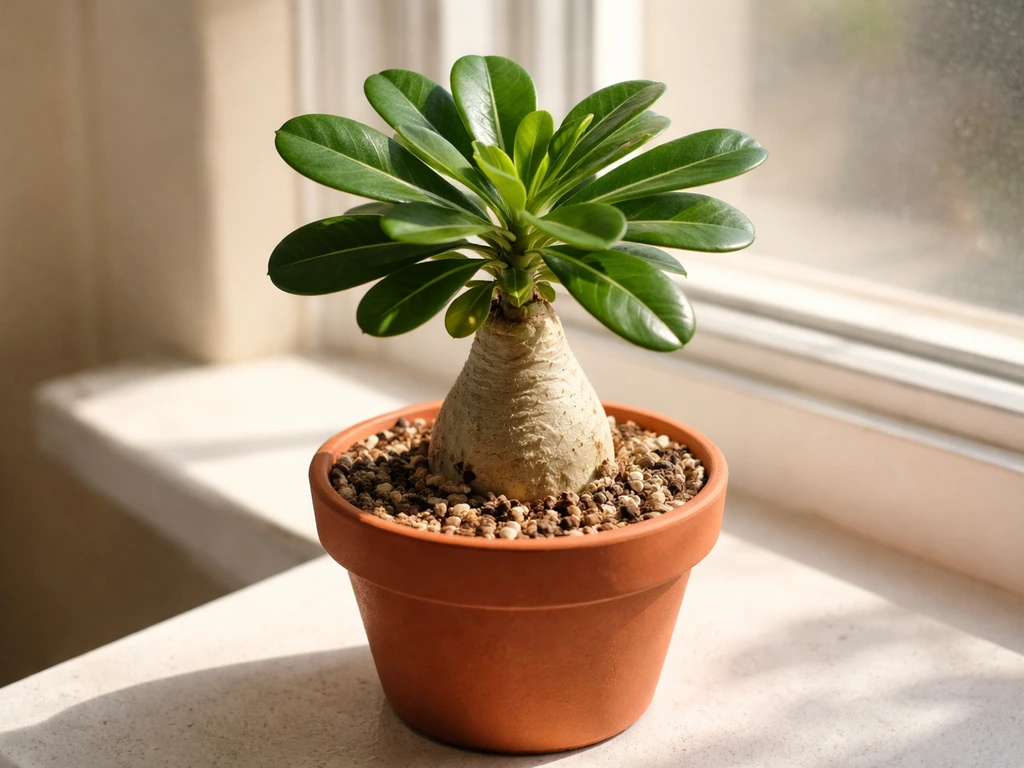
Can desert rose really live indoors long-term?
Desert rose is native to arid parts of Africa and the Arabian Peninsula, so it's evolved for intense sun, dry air, and distinct wet and dry seasons. That background matters because it tells you exactly what to replicate inside your home. The plant is not freeze tolerant at all, which actually makes it a great candidate for indoor life in most climates. Many people grow them on sunny windowsills year-round, moving them outside during summer if possible for a light boost, then bringing them back in before temperatures drop. If you only have a bright south window and no outdoor space, that's still workable. Can dawn redwood grow indoors? While desert rose is the focus here, the same indoor light and placement principles are why you can also grow certain types of African daisies indoors can african daisies grow indoors. If you want something similar to try inside, it helps to plan for strong light and consistent humidity bright south window.
Where desert rose differs from easier houseplants is that it genuinely needs high-intensity light to bloom. If you've got a dimly lit apartment or only an east-facing window, I'd be honest with you: it'll survive, but it probably won't flower and it'll slowly decline. Compare that to something like dianthus or dichondra indoors, which have their own light needs but are more tolerant of moderate conditions. Dianthus can also grow indoors, but it needs bright light and consistent care to stay healthy. Desert rose wants the brightest spot in your home, full stop.
Indoor light requirements and best placement
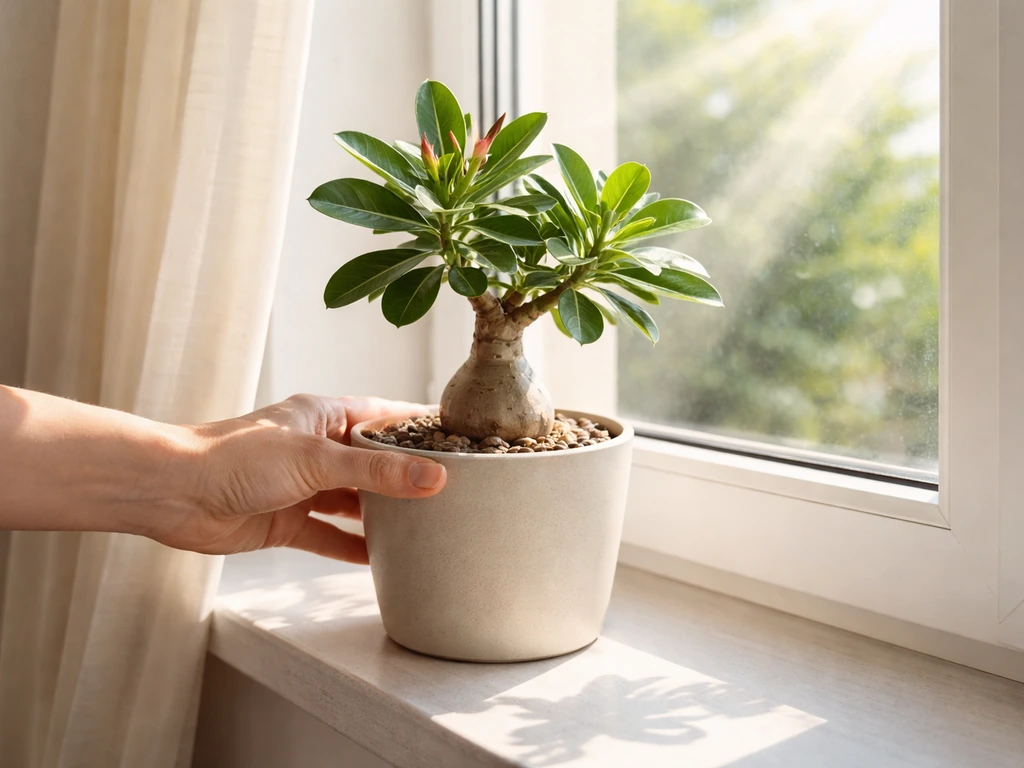
The minimum for a healthy indoor desert rose is 6 hours of direct sun per day. UF/IFAS is pretty firm on this, stating the plant must be stationed in high light at 6 hours or more to maintain flowering. Logee's, which has been growing Adeniums as potted plants for decades, simply says 'full sun, south exposure.' That's the clearest possible advice: your sunniest south-facing window is the target.
In practice, a south-facing window in a house or apartment works well from spring through fall. West-facing windows can work in summer when the sun angle is higher, but they tend to fall short in winter. North and east exposures are not suitable as primary light sources for desert rose. If you're in an apartment with limited southern exposure, a grow light positioned 6 to 12 inches above the plant for 12 to 14 hours a day can supplement or replace natural light, though natural direct sun is always preferable.
- Best spot: south-facing window with unobstructed direct sun
- Acceptable alternative: west-facing window in summer with grow light supplement in winter
- Not suitable: north-facing windows, shaded east windows, or spots more than a few feet from the glass
- Grow light option: full-spectrum LED positioned 6 to 12 inches above the plant for 12 to 14 hours daily
- Rotate the pot a quarter turn every week or two so all sides get even light exposure
Pot, soil, and drainage setup
This is where most indoor desert rose failures actually start. The caudex (that fat, swollen base) stores water, which means the plant is already carrying a reserve. If you pot it in regular potting mix in a container without drainage holes, you're setting it up to rot. I've made this mistake before with a beautiful specimen that I inherited from a friend, potted it into a cute ceramic pot with no drain hole 'just temporarily,' and watched it turn to mush over three weeks.
The right setup is a fast-draining mix in a terracotta or unglazed clay pot with at least one drainage hole. Terracotta is especially good because it wicks excess moisture away through the walls. For the soil mix, use a cactus and succulent mix as your base, then cut it further with about 30 to 50 percent perlite or coarse sand to improve drainage even more. A good rule of thumb: after watering, the mix should feel barely damp within 24 hours and be completely dry within 3 to 5 days.
Pot size matters too. Desert rose likes being slightly pot-bound. Don't jump to a dramatically larger container thinking it'll help the plant grow faster. A pot that's only 1 to 2 inches wider than the caudex is ideal. Oversized pots hold too much moisture around the roots and dramatically increase rot risk.
| Component | Recommended Choice | Why It Matters |
|---|---|---|
| Pot material | Terracotta or unglazed clay | Wicks excess moisture through walls, reduces rot risk |
| Pot size | 1 to 2 inches wider than the caudex | Prevents excess moisture retention in oversized containers |
| Drainage | At least one drainage hole, no saucers left full | Essential, non-negotiable for root health |
| Soil base | Cactus and succulent mix | Better drainage than standard potting mix |
| Amendment | 30 to 50% perlite or coarse sand | Further improves drainage and aeration |
Indoor watering schedule and avoiding rot
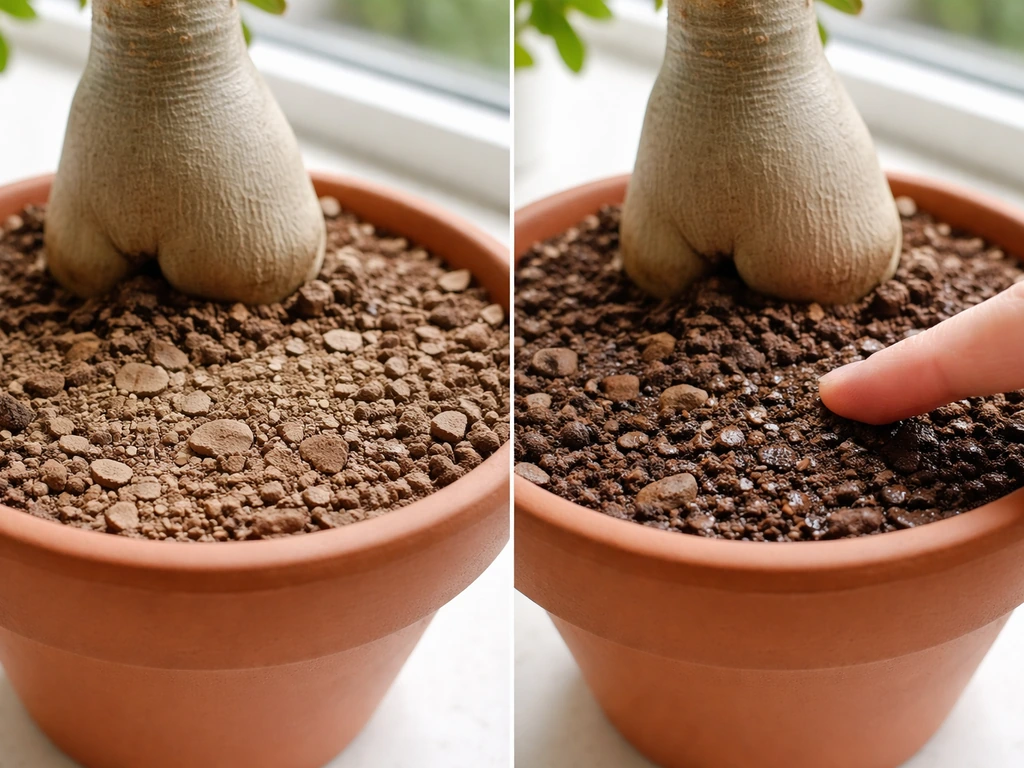
Overwatering is the number one killer of indoor desert roses. The key phrase from Logee's is 'bring the soil to a state of dryness between watering.' That means you're not watering on a fixed schedule, you're watering based on what the soil is actually doing. Stick your finger 2 inches into the soil. If it's still damp, wait. If it's dry all the way down, water thoroughly until it drains out the bottom, then leave it alone until it dries out again.
The seasonal adjustment is important: desert rose wants more moisture in summer (its active growing season) and much less in winter. During the growing season in a warm, sunny spot, that might mean watering every 7 to 10 days. In winter, especially if the plant is resting and dropping leaves (which is totally normal), you may only water once a month or even less. Logee's notes this seasonal preference directly, and it aligns with how the plant behaves in nature.
One more thing: water the soil, not the caudex. Getting water to sit in the crown of the plant or pool around the base of the swollen trunk is a fast track to fungal rot. Bottom watering (setting the pot in a shallow tray of water for 20 minutes, then removing it) is a great technique for desert rose indoors because it encourages roots to grow downward and keeps the upper part of the plant dry.
Temperature, humidity, and seasonal care
Desert rose is comfortable in the same temperature range most of us keep our homes: 65 to 90 degrees Fahrenheit. It actually loves warmth, so a warm sunny windowsill in summer is ideal. The hard limit is cold: do not let it experience temperatures below 50 degrees Fahrenheit, and keep it well away from cold drafts, air conditioning vents, and single-pane windows in winter. UF/IFAS is clear that it has no freeze tolerance, so even a brief cold snap near a drafty window can cause real damage.
Humidity is less of a concern than with tropical plants. Desert rose is comfortable in the typical dry indoor air of a heated or air-conditioned home. You don't need a humidifier or misting routine. If anything, overly humid conditions (like a bathroom with poor ventilation) can promote fungal problems. Normal household humidity between 30 and 50 percent is fine.
The seasonal rhythm indoors is something to plan around, not fight. In fall as light decreases and temperatures cool, desert rose will start dropping its leaves and flowers. This is natural dormancy, not death. UF/IFAS recommends withholding water during cold winter months and letting the plant rest for 3 to 4 months. UF/IFAS also advises withholding water during cold winter months so the plant can rest for 3 to 4 months withholding water during cold winter months and letting the plant rest for 3 to 4 months. Keep it in the brightest available spot, cut watering to almost nothing (just enough to prevent the caudex from shriveling completely), and wait. When spring arrives and temperatures warm up, resume normal watering and move it to the sunniest spot you have. New growth and flowers will follow.
Step-by-step: how to grow desert rose indoors
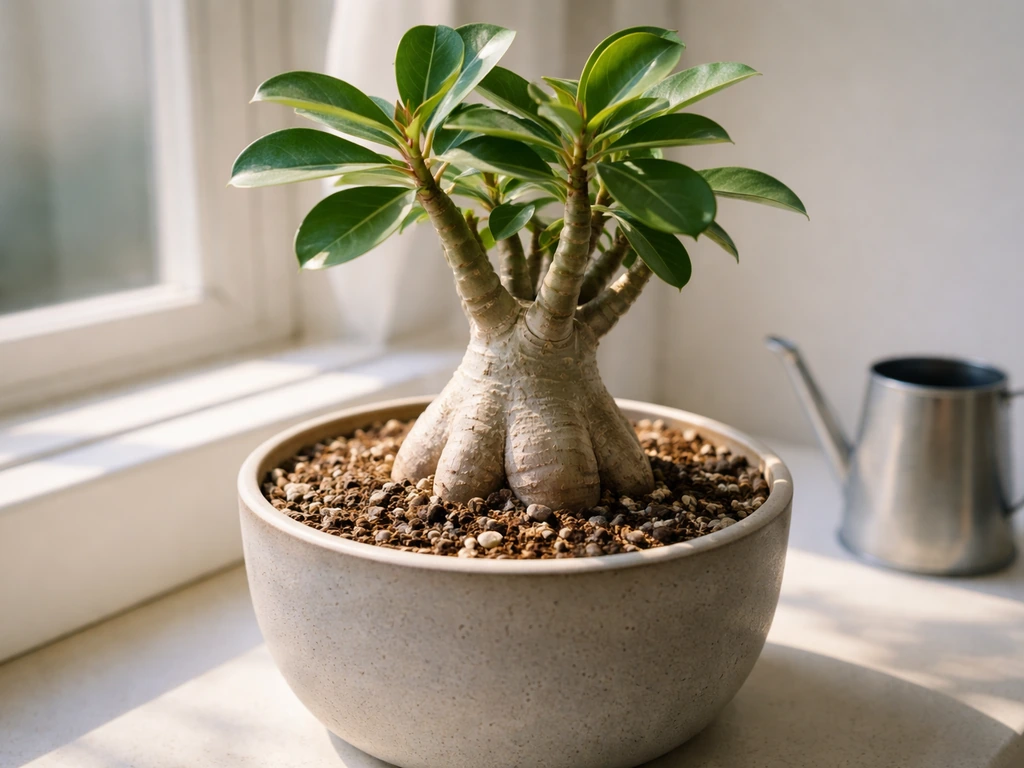
Here's a practical routine you can actually follow from day one. This isn't a once-a-year care schedule, it's how you'd think about this plant week to week throughout the year.
- Choose your spot first: identify the south-facing window in your home that gets the most unobstructed direct sun. This is where the plant lives. Don't plan to move it around.
- Set up the pot correctly before you plant: terracotta pot, cactus mix cut with 30 to 50 percent perlite, drainage hole confirmed, no decorative pot sleeve that traps water.
- Plant it so the top of the caudex sits at or slightly above the soil line. This lets the swollen base dry out faster and reduces rot risk.
- Water thoroughly after planting, let it drain completely, then wait. Check the soil in 3 to 4 days and only water again once it's completely dry 2 inches down.
- During spring and summer (active growth): water every 7 to 14 days depending on how fast your soil dries. Fertilize with a balanced or low-nitrogen liquid fertilizer once a month. Rotate the pot a quarter turn weekly.
- Watch for buds in late spring and summer: this is when proper light and watering pay off. Flowers last several days each and come in repeated flushes.
- In fall, reduce watering as light and temperature decrease. When leaves start dropping, stop fertilizing entirely.
- In winter (dormancy): water only once every 3 to 5 weeks, just enough to prevent the caudex from shriveling. Keep the plant in the brightest available window and away from cold drafts.
- In early spring: move to the sunniest spot available, resume regular watering, and start fertilizing again once you see new growth emerging from the branch tips.
Troubleshooting common indoor problems
Even when you follow the rules, things can go sideways. Here are the most common issues with indoor desert rose and what to do about each one.
Mushy or soft caudex (stem rot)
This is the most serious problem and almost always comes from overwatering or poor drainage. If the base of the plant feels soft and squishy, unpot it immediately, shake off all the soil, and inspect the roots. Cut away any black, mushy root material with clean scissors, dust the cuts with powdered sulfur or cinnamon, let the plant air dry completely (a day or two out of soil), then repot in completely fresh dry mix. Do not water for at least a week after repotting.
No flowers despite decent growth
Nine times out of ten, this is a light problem. Desert rose will grow leaves in moderate light but it needs high-intensity direct sun to trigger and sustain flowering. To answer can you grow daphne indoors, you also need to match its light needs carefully high-intensity direct sun. Move it to a better window or add a grow light. Also check whether you've been fertilizing with a high-nitrogen fertilizer, which pushes leafy growth at the expense of flowers. Switch to a fertilizer with a higher middle number (phosphorus) to encourage blooming.
Leaves yellowing and dropping outside of fall
If it's not fall or winter, yellow leaves usually indicate overwatering, a cold draft, or sudden temperature change. Check whether the plant is near an air vent or drafty window. Feel the soil: if it's wet more than a few days after watering, you're watering too often or your drainage isn't fast enough. Let it dry out completely before watering again.
Leggy, stretched-out stems
Etiolation (long, weak, stretched stems reaching toward light) means the plant isn't getting enough light intensity. The stems grow long trying to find more. Move the plant to a brighter spot or add a grow light. You can prune leggy stems back to encourage bushier growth, and the cuttings can actually be rooted to start new plants.
Spider mites or mealybugs
Hot, dry indoor conditions can occasionally attract spider mites, which show up as fine webbing under leaves. Mealybugs look like tiny white cotton tufts in leaf joints. Both can be treated by wiping the plant down with a cotton swab dipped in rubbing alcohol, followed by a spray application of neem oil diluted per label directions. Isolate the plant from others until the infestation is clear.
No new growth in spring
If it's April or May and your plant is still dormant with no signs of new buds or leaves, gradually increase watering and make sure it's in the warmest, sunniest spot you have. Sometimes plants need a temperature cue of consistent warmth above 65 degrees Fahrenheit to break dormancy. If you have outdoor space, a few warm days outside in direct sun in late spring can kickstart growth quickly.
FAQ
Can a grow light replace a south-facing window for a desert rose indoors?
Yes, but only if the grow light can deliver real intensity. Aim for 12 to 14 hours a day and position the light close enough that the plant is receiving strong direct output (commonly within 6 to 12 inches, adjusting based on your specific light). If you still see stretching or no buds after several weeks, increase light intensity and shorten the distance before increasing water or fertilizer.
Will my east-facing window work if I only get morning sun?
Generally no. An east window may be bright early, but it usually lacks the high-intensity direct sun needed to trigger flowering. You can use it for survival, but expect fewer blooms unless you add a supplemental grow light or move the plant to the sunniest available spot.
How do I know whether to water in winter when the plant drops leaves?
Watering is based on how dry the soil is, not how many days it has been. In winter dormancy, many plants are fine with minimal moisture, but don’t let the caudex shrivel excessively. A good indicator is soil dryness down the pot depth, not just the top layer.
Can I move my indoor desert rose outside during summer, and when should I bring it back in?
You can, but only after the plant has adjusted and only if temperatures stay reliably above 50°F. Move it gradually over 7 to 10 days to prevent sun scorch indoors, and watch for sudden leaf drop after the move. If night temperatures cool fast, bring it back in before any cold draft exposure.
Should I fertilize indoors year-round, or only in growing season?
Fertilize during active growth, not during dormancy. If your plant is dropping leaves or sitting idle, pause feeding. When you do fertilize, use a lower-nitrogen, bloom-encouraging formula (watch the middle number) and apply at half strength more often rather than heavy doses that can drive leaf growth at the expense of flowers.
Is it okay to mist desert rose or water from the top like other houseplants?
Avoid misting the foliage and avoid getting water into the crown. Instead, water thoroughly until drainage, then wait until the mix is completely dry by your depth check. If you suspect excess moisture, let the pot drain fully and empty any saucer or tray so standing water does not wick back up through the drainage holes.
When is the best time to repot desert rose indoors, and what pot size should I use?
Repotting is best done when the plant is actively growing or just before the active season begins. Don’t repot a stressed or actively rotting plant unless you are doing emergency root rescue. Also, if you do repot, keep the pot only slightly larger (about 1 to 2 inches wider than the caudex) to avoid excess wet soil.
What should I do if the base feels soft or mushy?
If the caudex is soft and the base looks dark, treat it as rot and remove the plant from its pot quickly. Remove old wet soil, cut away mushy roots with sterile scissors, let it air dry fully, then repot into completely dry mix. The key is withholding water for at least a week after replanting and starting only when the mix is fully dry.
My desert rose is yellowing. How can I tell if it is overwatering versus cold damage?
Yes. Yellowing can be from overwatering or cold stress, but also from sudden changes like moving from a dim room to a bright window too fast, or changing temperature near drafts. Check the soil moisture first, then check for vents and cold window panes.
Can I prune leggy indoor desert rose, and will it affect flowering?
You can prune leggy growth, but only when the plant is not in dormancy and it has enough light to recover. Make cuts to shape, then let the plant dry down like normal care. If you prune during low-light periods, you may slow recovery or reduce flowering.