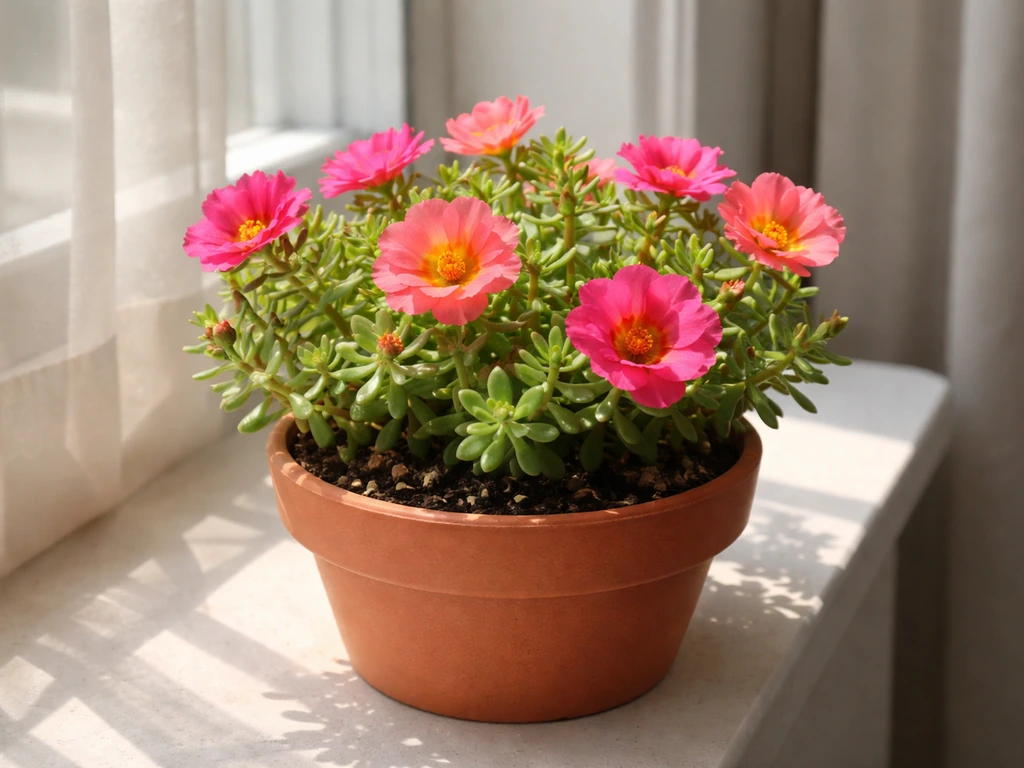
Quick answer: yes, but light is everything
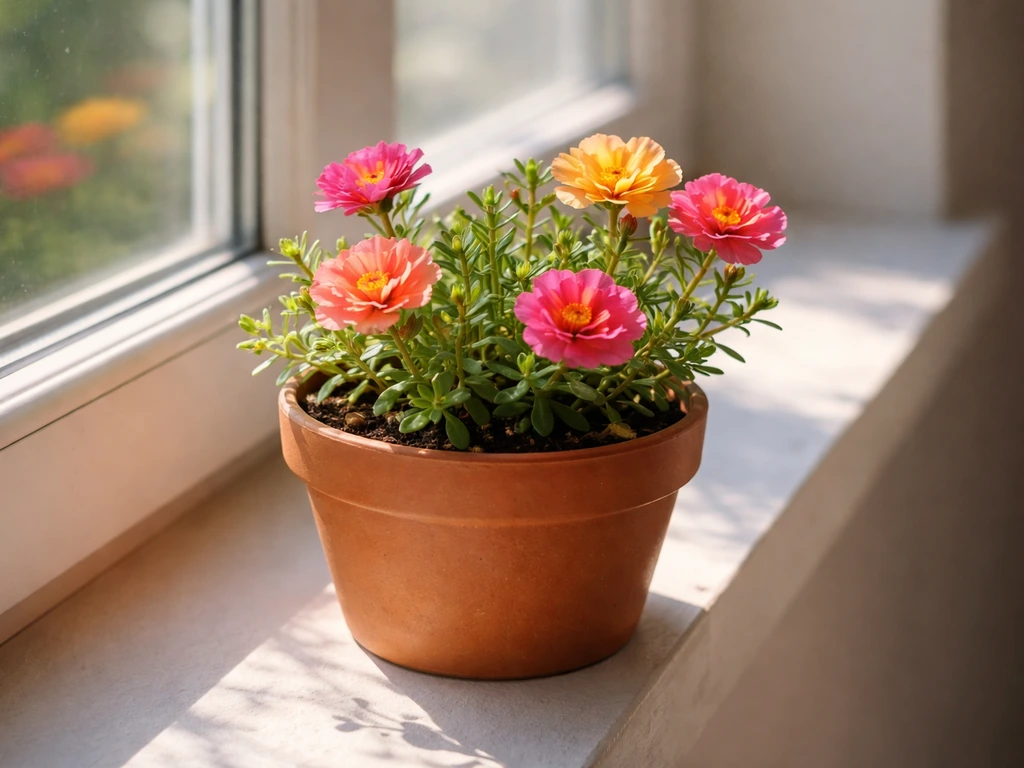
Portulaca can grow indoors, but it's one of those plants that will absolutely call your bluff if your light situation isn't serious. Portulaca (also called moss rose or Portulaca grandiflora) is a full-sun plant that needs 20,000–25,000 lux of light to flower well, plus a daylength of more than 12 hours. Most windowsills, even south-facing ones, fall well short of that. So the honest answer is: yes, you can grow portulaca indoors and keep it alive and reasonably healthy, but if you want blooms, you're almost certainly going to need a grow light. If you're just hoping it'll survive on a dim sill and reward you with flowers, it won't. It'll survive, look increasingly sad and stretched, and never open a single bloom. That said, with the right setup, it's genuinely doable and worth it.
There are also a few conditions where it simply won't work indoors: if your home stays below 60°F regularly, if you can't provide at least 12 hours of bright light per day, or if you tend to keep plants in saucers with standing water. Portulaca has a sensitive root system that's extremely intolerant of excess moisture. Those are the deal-breakers. Everything else is manageable.
The light setup that actually gets portulaca to flower
Windowsill: possible, but limited
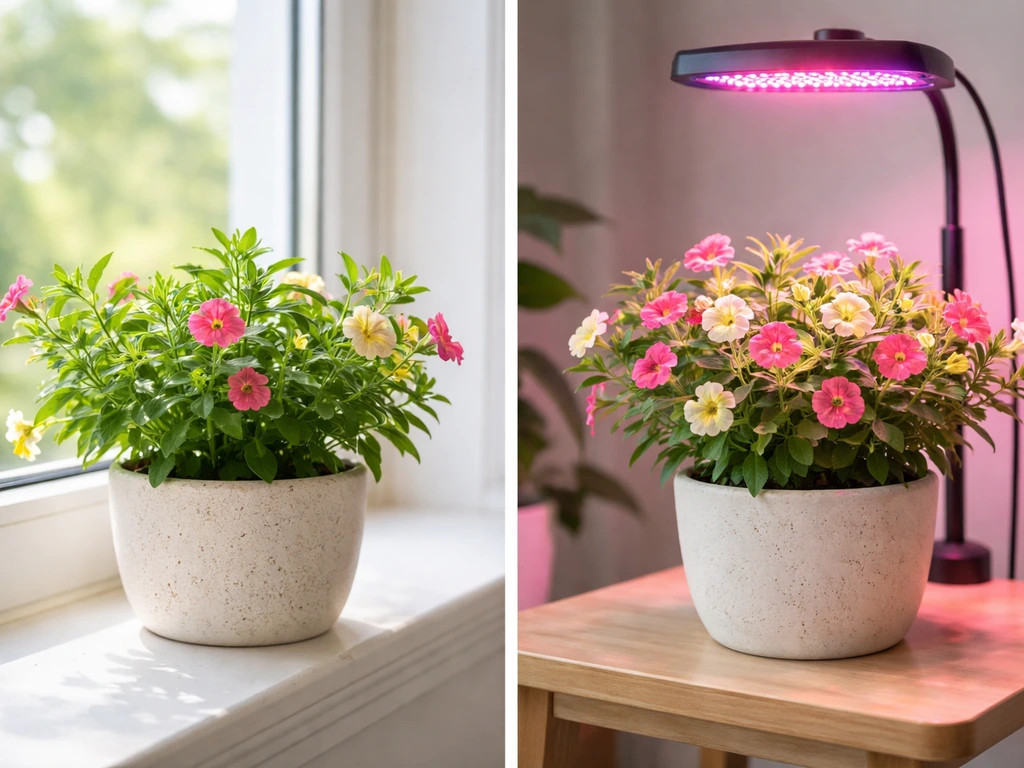
A south-facing windowsill in spring and summer gives you the best shot without supplemental lighting. In late April through August, a genuinely unobstructed south window can get you close to the intensity portulaca needs for a few hours at midday. But even then, you're typically getting 4–6 hours of direct sun through glass, and portulaca wants both high intensity and long duration. Anything less than a south window, or a south window with overhangs, trees, or buildings nearby, and you're going to get leggy growth and no flowers. I've tried east and west windows with portulaca and both times got the same result: long, floppy stems with no blooms.
Grow lights: the reliable path to blooms
If you're serious about flowering indoors, supplement with a grow light or rely on one entirely. Portulaca needs at least 6–8 mol/m²/day of light energy and a daylength exceeding 12 hours for flower initiation to happen at all. It's classified as an obligate long-day plant, meaning it won't flower without those longer light periods regardless of how bright the light is. For seedlings, position your grow light just 3–4 inches above the plants and run it for 16 hours on, 8 hours off. Once the plants are established and you're growing for blooms rather than seedling development, you can dial back to 12–14 hours. A quality full-spectrum LED panel or T5 fluorescent fixture placed close to the plants (not 2 feet away) will do the job. Intensity matters as much as duration here, so keep the light source close.
| Setup | Light hours achievable | Intensity | Flowers likely? | Best for |
|---|
| South windowsill (summer) | 4–6 hrs direct sun | Moderate to high midday | Sometimes | Short-term or supplemented setups |
| South windowsill + grow light | 12–16 hrs combined | High | Yes | Apartment growers with some natural light |
| Grow light only (no window) | 16 hrs (seedlings), 12–14 hrs (mature) | High if positioned correctly | Yes | Anyone willing to invest in the setup |
Pot, soil, and drainage: don't skip this part
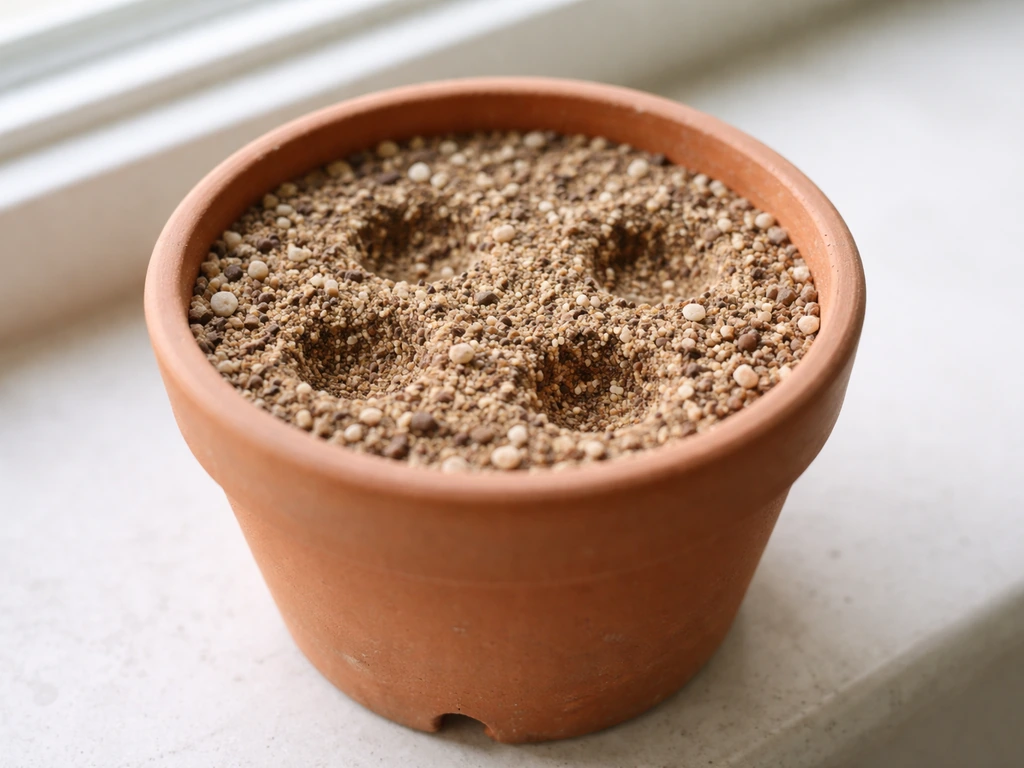
Portulaca is drought-tolerant and thrives in lean, fast-draining conditions. Indoors, that means you need to be deliberate about both the container and the mix you use, because the cozy, moist indoor environment that helps many houseplants actually works against portulaca.
For pot size and density, follow the guideline of 3 plants per 10–12 inch container. This prevents overcrowding (which contributes to weak, leggy growth) while giving roots enough room to establish without sitting in a large volume of damp soil. Terracotta pots are ideal because they wick moisture away from the root zone, which is exactly what portulaca's sensitive roots need. Plastic pots work but require you to be even more careful about watering frequency. Whatever pot you use, it must have drainage holes. No exceptions. Saucers are fine as long as you empty them promptly after watering.
For soil, skip the typical moisture-retaining houseplant mixes. Use a cactus and succulent mix, or make your own by blending standard potting mix with perlite at roughly a 50/50 ratio. The goal is a mix that drains fast and dries out between waterings. Portulaca doesn't need rich soil, and a lean mix actually helps keep growth compact rather than floppy.
Watering and feeding without overdoing it
This is where most people kill portulaca indoors. It is genuinely drought-tolerant, and indoors, where evaporation is slower and light levels are lower than outside, the soil stays wet for much longer than you'd expect. Water only when the top inch or two of soil is completely dry. Then water thoroughly until it drains out the bottom, and empty the saucer. Do not water again until the soil has dried out again. Benary's guidance is very direct about this: never allow plants to have any free moisture on them going into the night. That means if you water, do it in the morning, not the evening. Wet foliage and wet soil overnight is a fast track to root rot and fungal problems.
On feeding: portulaca needs moderate fertility, not heavy doses. Start fertilizing about a month after transplanting or once seedlings are well established. Use a liquid fertilizer at half-strength, applied every two to three weeks during active growth. Keep the EC (electrical conductivity, basically the salt level in your soil) low, below 1.0 if you have a way to measure it. Over-fertilizing leads to lush, leafy growth at the expense of flowers, and it can build up salts that stress the root system. Less is genuinely more here.
Temperature, airflow, and humidity indoors
Portulaca is comfortable in the same temperature range most people keep their homes: 65–76°F (18–24°C) is the sweet spot for healthy growth and root development. Benary's production targets suggest nights at 66–68°F and days at 68–76°F for the first two weeks after establishment, which maps almost perfectly onto a normal, climate-controlled living space. That's a genuine advantage for indoor growing. What portulaca does not like is cold drafts, air conditioning blowing directly on it, or temps that regularly dip below 60°F. Keep it away from cold windows in winter and direct AC vents in summer.
Humidity is actually not a concern in the way it is for tropical plants. Portulaca is naturally adapted to hot, dry conditions, and average home humidity is perfectly fine. If anything, high humidity combined with poor airflow is a risk factor. A gentle fan running nearby for a few hours a day helps prevent fungal issues and mimics the outdoor conditions the plant evolved for. This is especially worth doing if you're running a grow light in an enclosed space that might trap warmth and humidity around the plant.
Your step-by-step setup to start today
- Choose your location: identify the brightest south-facing spot in your home. If it gets direct sun for fewer than 6 hours, plan to add a grow light from day one.
- Get the right pot: use a 10–12 inch terracotta pot with drainage holes for 3 plants, or a smaller 4–6 inch pot for a single plant.
- Mix your soil: combine cactus/succulent mix with perlite 50/50, or buy a pre-made cactus mix. Avoid moisture-retaining mixes entirely.
- Start seeds or transplant seedlings: for seeds, sprinkle on the surface and cover with a thin layer of vermiculite only (seeds need light to germinate). For transplants, plant at the same depth they were in their nursery pot.
- Set up your grow light: if using one, position it 3–4 inches above seedlings and set a timer for 16 hours on, 8 hours off. For established plants aiming to flower, 12–14 hours is sufficient.
- Water correctly from the start: water thoroughly once after planting, then wait until the top inch of soil is dry before watering again. Always water in the morning.
- Begin fertilizing at 4 weeks: use any balanced liquid fertilizer at half the recommended strength, every 2–3 weeks.
- Monitor for problems weekly: check for stretching stems (increase light intensity or move it closer), yellowing lower leaves (reduce watering frequency), or no flowers (increase daylength to at least 12 hours).
Fixing the most common indoor portulaca problems
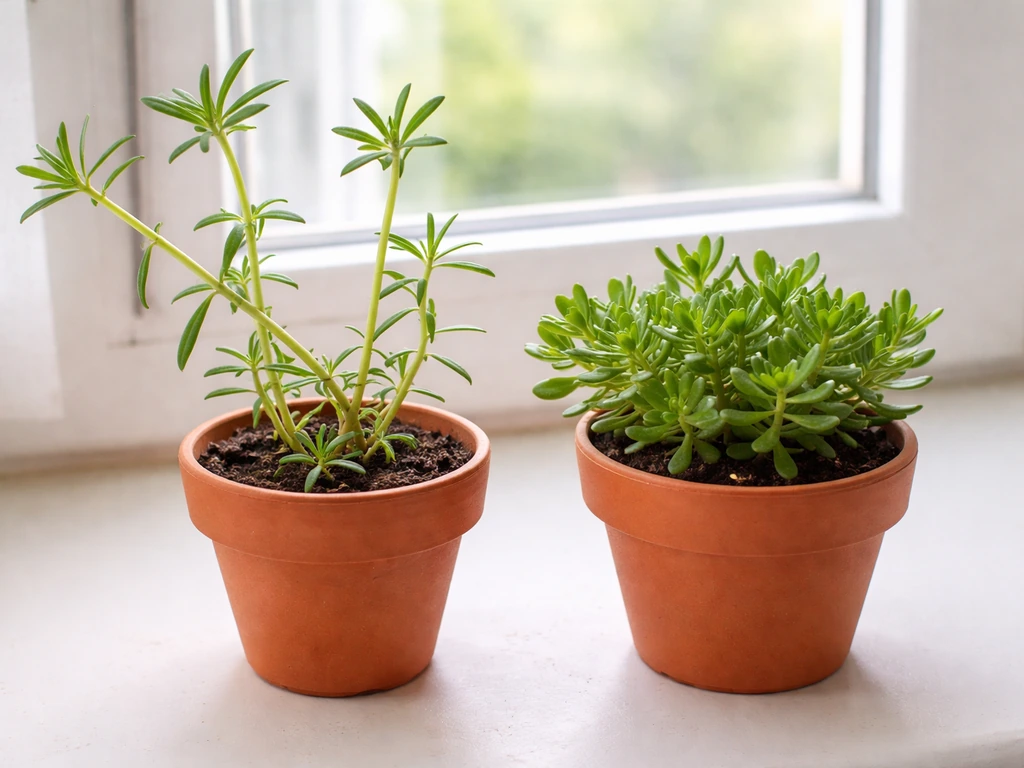
Leggy, stretched growth
This is the most common indoor problem and it's almost always a light issue. Portulaca needs 20,000–25,000 lux to perform well, and when it's getting significantly less than that, it stretches toward whatever light it can find. The fix is straightforward: move your grow light closer (aim for 3–4 inches from the canopy), increase the daily light hours to 16 if you haven't already, or relocate the plant to a brighter window. You can pinch back leggy stems to encourage bushier growth while you correct the light situation, but the pinching alone won't solve the underlying problem.
Overwatering and root problems
If you're seeing yellowing leaves, mushy stems near the soil, or the plant looking generally wilted even though the soil feels moist, overwatering is almost certainly the culprit. Portulaca's roots are particularly sensitive to prolonged wetness, and this is one of those plants where benign neglect is better than attentive watering. Let the soil dry out completely, then hold off watering for an extra day or two. If the roots have started to rot, unpot the plant, remove any dark or mushy roots, let the root ball air dry for a few hours, and repot into fresh dry mix. It can recover from mild root rot if you catch it early.
No flowers
Portulaca not flowering indoors is nearly always a light duration problem. It's an obligate long-day plant, meaning it requires more than 11–12 hours of light per day for flower initiation to even begin. Growveg’s Portulaca grow guide similarly emphasizes that portulaca is a long-day plant and typically needs sufficient daylength for flowering indoors blank" rel="noopener noreferrer">obligate long-day plant. Portulaca Sunseeker materials from Sakata note that if photoperiod is less than 13 hours, Portulaca Sunseeker may flower or be affected by insufficient photoperiod conditions blank" rel="noopener noreferrer">obligate long-day plant. If your plant looks healthy and compact but just isn't blooming, check your light timer. Even one hour less than the threshold can delay or prevent flowering entirely. Bump your light duration to 14 hours and keep the intensity high. Also check that you're not over-fertilizing with nitrogen, which pushes leafy growth instead of blooms. If you're already at the right light duration and intensity, give it another two to three weeks before worrying, since flower initiation takes time once conditions are right.
Flowers closing or not opening fully
Portulaca flowers open in response to bright light and close on cloudy days or in lower light conditions. Indoors, this behavior is amplified. If your flowers are barely opening, it's a signal that light intensity is insufficient, even if duration is adequate. Intensity and duration work together here: you need both to hit that 6–8 mol/m²/day target. Moving the grow light closer or upgrading to a higher-output fixture usually solves this.
How portulaca compares to similar plants indoors
If you're exploring easy-to-grow indoor plants in this same family of low-maintenance, drought-tolerant types, it's worth knowing that portulaca is on the more demanding end of the spectrum when it comes to light needs. If you are wondering can mogra plant grow indoors, the key is still matching the light intensity and drainage needs of the plant. If you are wondering can purple queen grow indoors, the key is making sure it gets enough bright light and the right watering routine. Its close relative purslane shares similar soil and watering requirements and is also worth considering if you want something edible. If you are wondering can purslane grow indoors, it generally can, as long as you match the same kind of bright-light and drainage-focused setup. Queen Anne's lace is usually grown outdoors, but you can grow it indoors in a bright spot or under a grow light if you mimic cool, sunny conditions can <a data-article-id="1D9993B7-9166-456B-AA04-59F8CE3EB02B">purslane grow indoors</a>. Plants like polka dot plant or purple heart plant have more modest light requirements and tend to be more forgiving on a typical windowsill. Polka dot plant is generally easier to keep indoors than portulaca, though it still benefits from bright light. Portulaca earns its place indoors specifically if you have a grow light setup and want the payoff of those vivid, jewel-toned flowers. Without that commitment to the light situation, there are easier indoor plants to start with. Can primula grow indoors? Yes, but it depends heavily on getting enough light and the right care.