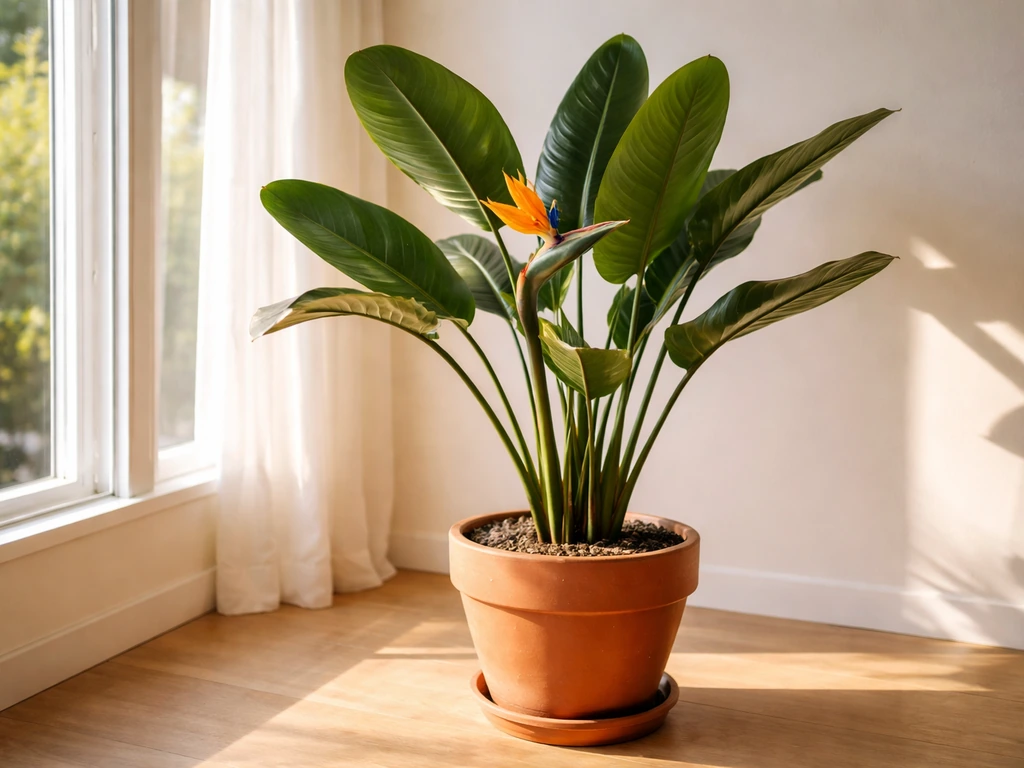
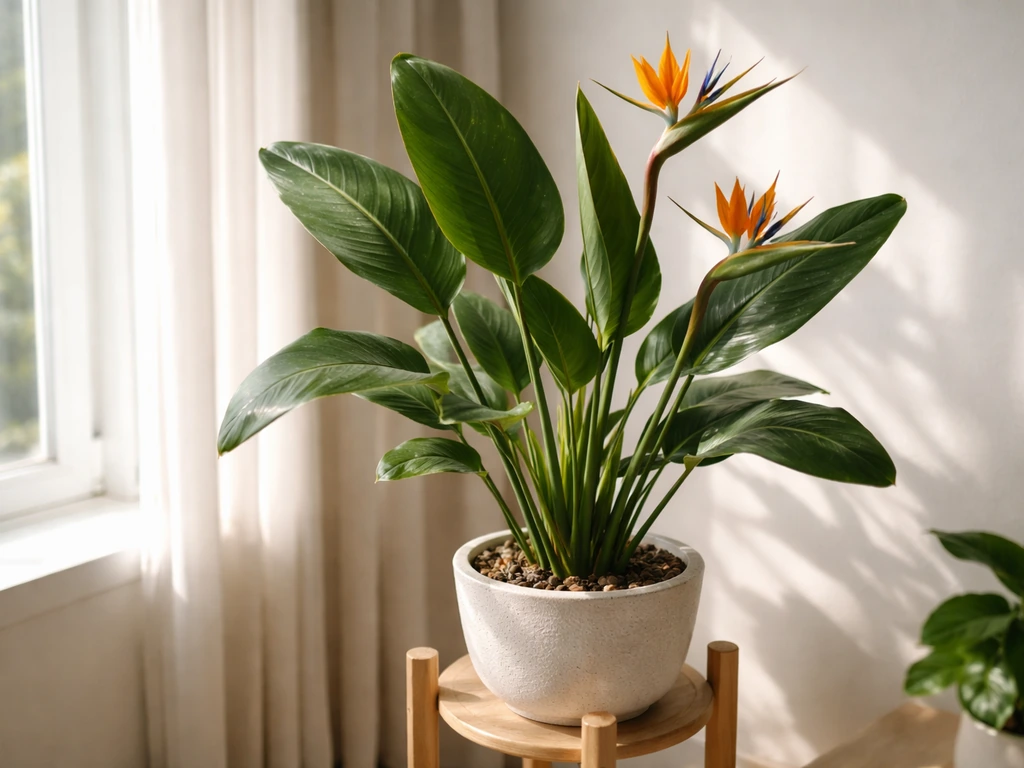
There are two main species you'll encounter: Strelitzia reginae, the classic orange-and-blue flowering bird of paradise that stays relatively compact (usually under 1.5 metres indoors), and Strelitzia nicolai, the white bird of paradise that can easily hit 1.8 to 2.5 metres or more inside your home. Both can be grown indoors, but nicolai is the one you're more likely to find at garden centres as a houseplant these days because of its dramatic foliage. Either way, the care principles are the same.
Getting the light and placement right
If I had to give one single piece of advice about growing bird of paradise indoors, it would be: give it the brightest spot in your home. These are South African plants that evolved in full sun, and they need as much light as you can realistically offer them inside four walls. The RHS recommends full light with shade from harsh midday summer sun, which in practice means a south-facing or west-facing window is your best bet in most homes. A south-facing window gives the most light hours across the day, which is what you're after.
Place the plant within about 1 to 2 metres of the window, not tucked across the room where it's catching reflected light from a wall. The closer to the glass, the better, as long as the leaves aren't pressed against it on a cold winter night. East-facing windows can work but typically don't deliver enough direct light for strong growth or flowering. North-facing windows are not realistic for this plant. If you only have north-facing windows, be honest with yourself: bird of paradise is not the right plant for your space, and you'd be setting both of you up for frustration.
One thing worth knowing: when you first bring a bird of paradise indoors or move it to a new spot, the leaves will orient themselves toward the light source over the next few weeks. Rotating the pot a quarter turn every couple of weeks helps the plant grow more symmetrically rather than leaning heavily toward the window.
Temperature, humidity, and airflow indoors
Temperature is a non-negotiable. Strelitzia reginae should never be kept in temperatures below 10 to 12 degrees Celsius (50 to 54 degrees Fahrenheit), according to the RHS. Most heated homes stay well above that, so it is usually not a problem through the main part of winter. However, if you tend to turn the heating off completely at night or your plant sits in a draughty hallway near an external door, temperatures near the glass can dip low enough to stress it. Keep it away from cold draughts and don't let it touch single-glazed windows in winter.
Humidity is less of a crisis point than with some tropical plants, but bird of paradise does appreciate a bit of moisture in the air. Centrally heated homes in winter can get very dry, and this shows up as crispy leaf edges or leaf tips turning brown. A humidifier nearby, a pebble tray with water beneath the pot, or regular misting of the leaves helps. Grouping it near other plants also raises ambient humidity slightly. You don't need to engineer a rainforest, but bone-dry air over several months will show.
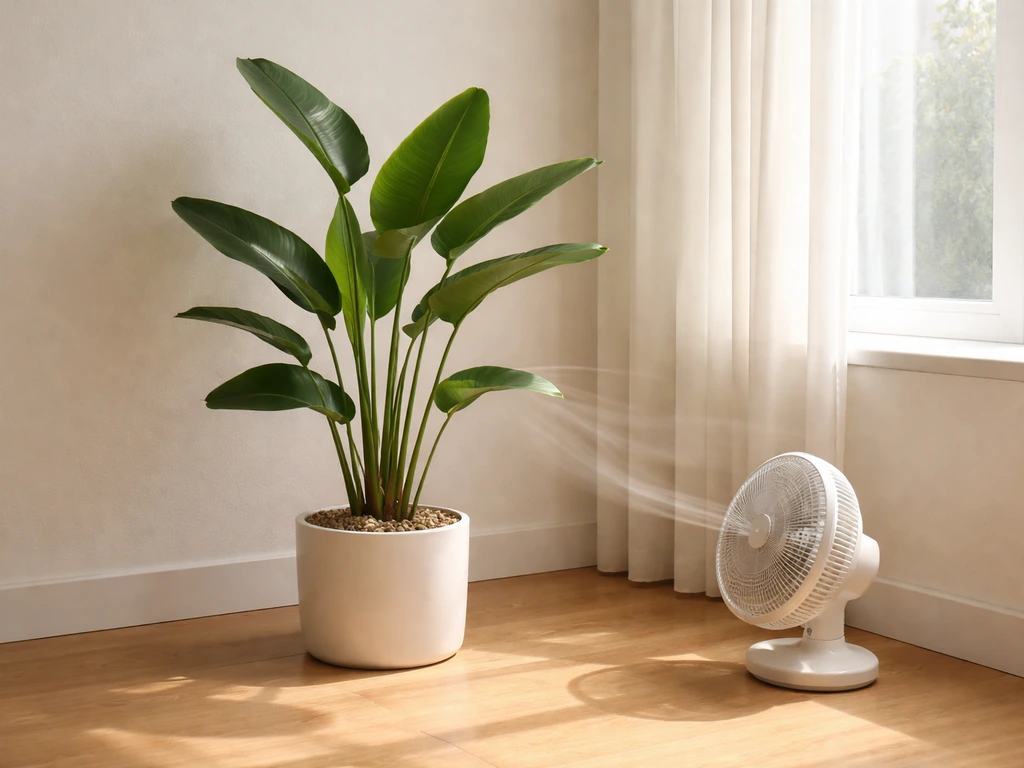
Airflow is genuinely worth thinking about, especially if you're growing it in a small or enclosed room. Good air movement helps prevent the fungal problems that crop up when moisture sits on leaves or around the soil surface. Opening a window for part of the day in warmer months, or using a small fan on a low setting, makes a real difference. The RHS specifically calls out ventilation as a tool for keeping fungal diseases like grey mould at bay, and that applies indoors just as much as in a greenhouse.
How to actually grow it indoors: step-by-step
Choosing the right pot and soil
Use a pot with drainage holes, full stop. Bird of paradise roots rot when they sit in water, and a pot without drainage is asking for trouble. That said, the plant actually flowers better when it's slightly pot-bound, so don't be tempted to jump straight to a massive container. Start with a pot that's comfortably snug around the root ball and move up only when you see roots actively pushing out of the drainage holes or the plant drying out within a day of watering. A terracotta pot is ideal because it allows some moisture to evaporate through the sides, which helps prevent overwatering issues.
For soil, use a peat-free, loam-based compost, as recommended by the RHS. A mix like John Innes No. 2 or No. 3 works well, or a general houseplant compost mixed with about 20 to 30 percent perlite to improve drainage. Avoid purely peat-based or coir-only mixes, which can hold too much moisture around the roots. The plant needs consistent moisture when it's actively growing, but the soil should drain freely and not stay waterlogged.
Watering
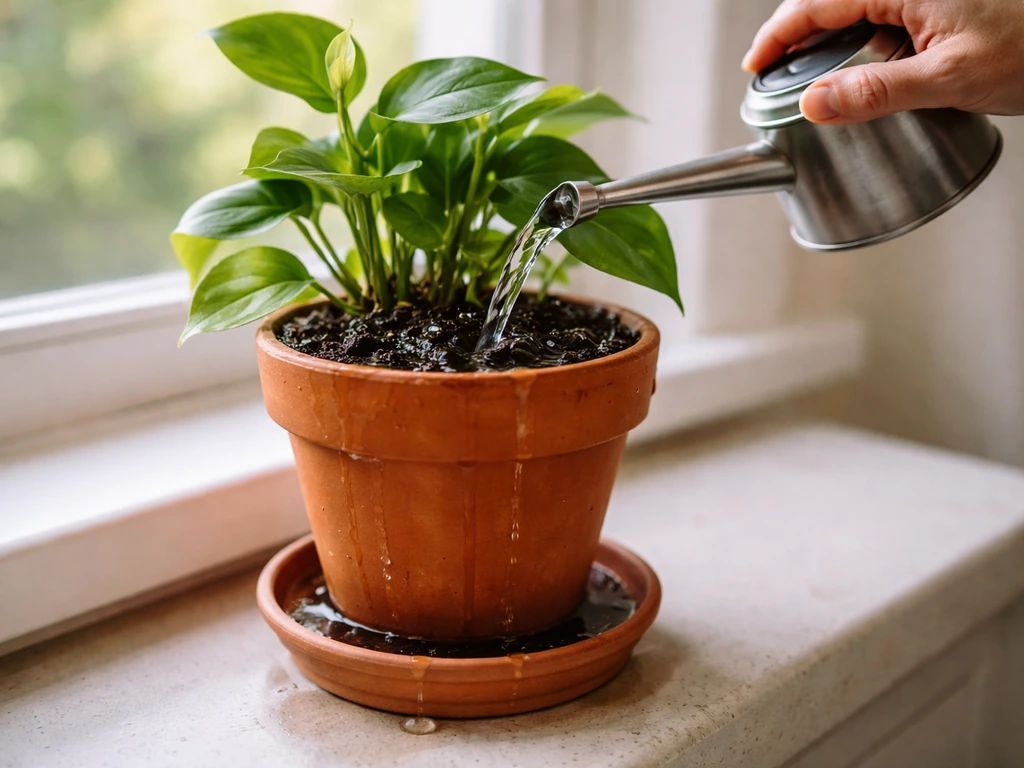
During the growing season (roughly spring through early autumn), water freely when the top inch or two of soil feels dry. The goal is consistent moisture, not a cycle of bone-dry then flooded. Costa Farms specifically warns against letting bird of paradise sit in soggy soil, and this is one of the most common ways people kill this plant indoors. UF/IFAS extension notes that bird of paradise can be harmed by soggy, wet conditions, so indoor growers should avoid waterlogged soil and ensure good drainage soggy soil. Water thoroughly until it drains from the bottom, then don't water again until the soil has partially dried out. In winter, back off significantly and let the soil dry out more between waterings, since the plant's growth slows down and it doesn't need as much.
Feeding
Feed with a balanced liquid fertiliser once a month during the growing season. The RHS is clear on this cadence: monthly feeding during active growth is not optional if you want the plant to perform well. Adequate feeding, combined with adequate light, is what pushes bird of paradise toward blooming indoors. Use a balanced formula (something like a 10-10-10 NPK ratio) rather than a high-nitrogen feed, which would push leafy growth at the expense of flowers. Stop feeding through late autumn and winter when growth has slowed.
Common indoor problems and how to sort them out
| Problem | Likely cause | Fix |
|---|
| Leaves splitting or tearing | Normal for large leaves, or low humidity | Increase humidity; some splitting is natural in the home |
| Yellow leaves | Overwatering or poor drainage | Check soil moisture and drainage; reduce watering frequency |
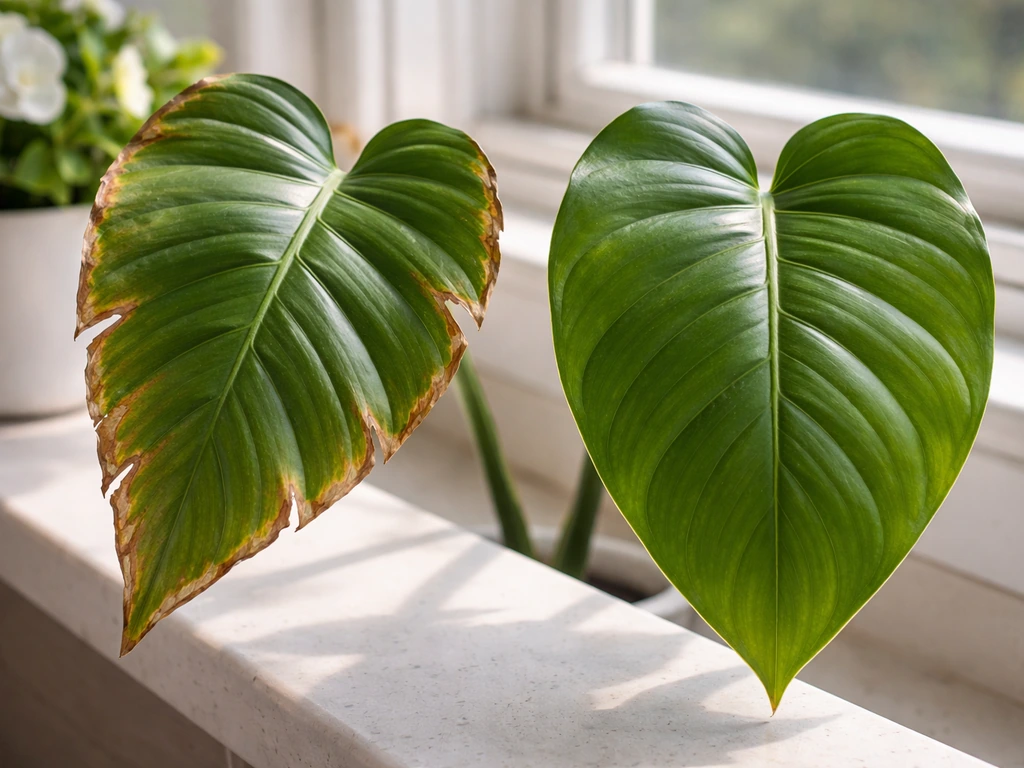
| Brown leaf tips or edges | Dry air or inconsistent watering | Mist leaves, add a pebble tray, water more consistently |
| No new growth | Not enough light or insufficient feeding | Move closer to the brightest window; resume monthly feeding |
| Root rot | Sitting in waterlogged soil | Repot into fresh well-draining mix; remove rotted roots |
| Leggy or leaning growth | Insufficient light from one direction | Rotate the pot regularly; move closer to the window |
| No flowers after years of growth | Too much shade, under-feeding, or oversized pot | Maximize light, feed monthly, allow plant to become pot-bound |
Leaf splitting is worth addressing separately because it worries a lot of new owners. Large-leaved tropical plants like bird of paradise naturally develop splits along their leaves, partly by design (it helps them cope with wind in the wild). Indoors, low humidity accelerates it, but some splitting is completely normal and not a sign anything is wrong. If the edges are clean splits, don't panic. If the edges are ragged or the leaves are yellowing at the same time, that's a different issue worth investigating.
Moving it outside for the summer (and back in again)
One of the best things you can do for a bird of paradise that has spent the winter indoors is to move it outside for the warmer months. Brighter outdoor light, natural air circulation, and warm temperatures can significantly boost its health and push it toward flowering. The RHS suggests keeping it in its pot when you do this, which makes the whole thing much simpler: you can bring it back in before the first cold snap of autumn without any disruption to the root system.
When moving it outside, do it gradually. A plant that has been sitting in indoor light all winter will sunburn if you put it straight into full outdoor sun, just like you'd get sunburned after a winter indoors. Start it in a sheltered, partly shaded spot for a week or two, then move it into brighter conditions. Bring it back inside before temperatures drop consistently below around 12 degrees Celsius (54°F), which in the UK and much of northern Europe typically means coming back in by late September or October. Bring it back inside before temperatures drop consistently below around 12 degrees Celsius (54°F), as the RHS notes Strelitzia is tender and should be moved indoors once it gets colder. In warmer parts of the US, you can push that timeline a bit further.
When bringing it back indoors in autumn, check carefully for pests that may have hitched a ride in the soil or on the leaves. Mealy bugs, scale, and spider mites are worth looking for before the plant goes back into the house. A wipe-down of the leaves and a close inspection of the stems before it comes indoors saves a lot of headaches later.
Repotting, realistic growth expectations, and what to do if nothing is happening
Repot bird of paradise only when it genuinely needs it: when roots are visibly growing out of the drainage holes or the plant dries out extremely fast after watering. As mentioned, it flowers better when slightly pot-bound, so resist the urge to pot up preemptively. When you do repot, go up just one pot size (roughly 5 cm or 2 inches larger in diameter). Spring is the best time to do this, just as the plant is starting its active growing season.
In terms of growth expectations: be patient. This is not a fast grower indoors, and flowering indoors can take several years even in good conditions. The RHS is upfront that plants may take a few years to bloom and that adequate light and feeding are the key variables. If your plant has been sitting in moderate indoor light with no feeding schedule and you're wondering why it isn't doing anything dramatic, now you know. Adjust those two things first before assuming something is wrong.
If your bird of paradise has produced no new leaves in many months and the existing leaves look dull or pale, run through this checklist before writing it off:
- Is it in the brightest window in your home, within 1 to 2 metres of the glass? If not, move it.
- Have you been feeding monthly from spring through summer? If not, start now.
- Is the pot draining freely? Check that the drainage holes aren't blocked by compacted roots.
- Is the room temperature staying consistently above 12 degrees Celsius (54°F)?
- Is the soil staying soggy between waterings? If yes, reduce frequency and check drainage.
- Has it been in the same pot for more than 2 to 3 years without repotting? It may need fresh soil even if it's not root-bound.
Bird of paradise is genuinely one of those plants that rewards attention. Will hens and chicks grow indoors? It usually can, but they need very bright light and well-draining soil. Will hens and chicks grow indoors too? If you can mimic bright light and fast drainage, you usually can. If you are also wondering if can hens and chicks grow inside, compare their needs in terms of light intensity and drainage can hens and chicks grow inside? (anchor). Unlike some tropical plants (honeysuckle, for example, is much harder to get settled indoors and needs very specific conditions to even attempt it), bird of paradise has a reasonable track record as an indoor plant as long as you can provide a bright, warm spot and commit to consistent care. If you are also wondering can you grow honeysuckle indoors, focus especially on getting the light, temperature, and humidity as close to its needs as possible honeysuckle, for example. Get those fundamentals right, give it a full growing season with proper feeding, and most plants will reward you with strong new growth and, eventually, those extraordinary flowers.