Light needs and where to put them in your home
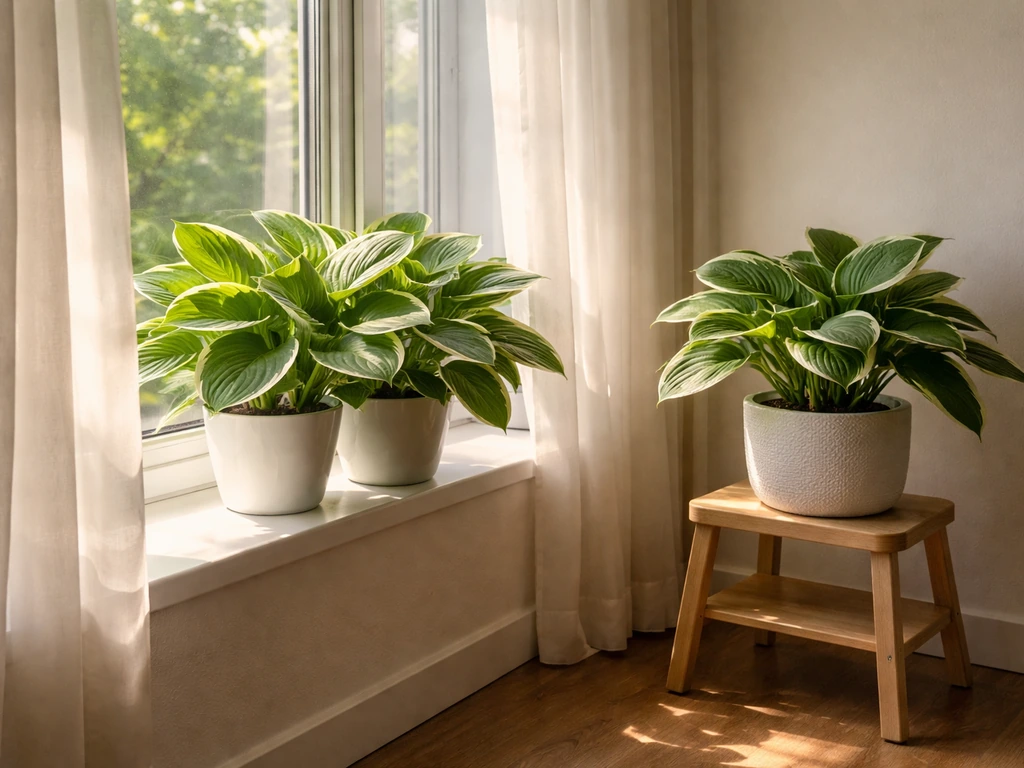
Hostas are shade-tolerant outside, but indoors that does not mean low light. There is a huge difference between deep forest shade and a poorly lit living room. For good color and healthy growth indoors, hostas need what I call bright shade: plenty of indirect light with maybe 2 to 3 hours of gentle direct sun, ideally morning sun from an east-facing window. A north-facing window alone will not cut it for most cultivars. South or west-facing windows can work but position the plant back from the glass or use a sheer curtain, because intense afternoon sun streaming through a window can scorch hosta leaves just as badly as full outdoor sun.
In practical light measurements, hostas perform best in the 500 to 1,500 foot-candle range indoors. That puts them squarely in medium-to-bright indirect light territory. Low light (below 250 foot-candles) will cause weak, washed-out growth. Too much direct sun above 2,000 foot-candles will bleach or scorch the leaves, especially on variegated or blue-green cultivars. Light-colored or yellow-tipped varieties tend to tolerate a bit more brightness, while solid blue-green types prefer the lower end of that range.
Using grow lights for hostas
If your windows are not cutting it, a full-spectrum LED grow light works well. Position it 12 to 18 inches above the foliage and run it for 12 to 14 hours per day. This mimics the long spring and summer days hostas are used to. A simple plug-in timer takes all the guesswork out of it. I have had good results using grow lights in basement setups specifically for forcing hostas out of dormancy early in late winter, which I will get into in the dormancy section below.
Potting, soil, and container setup
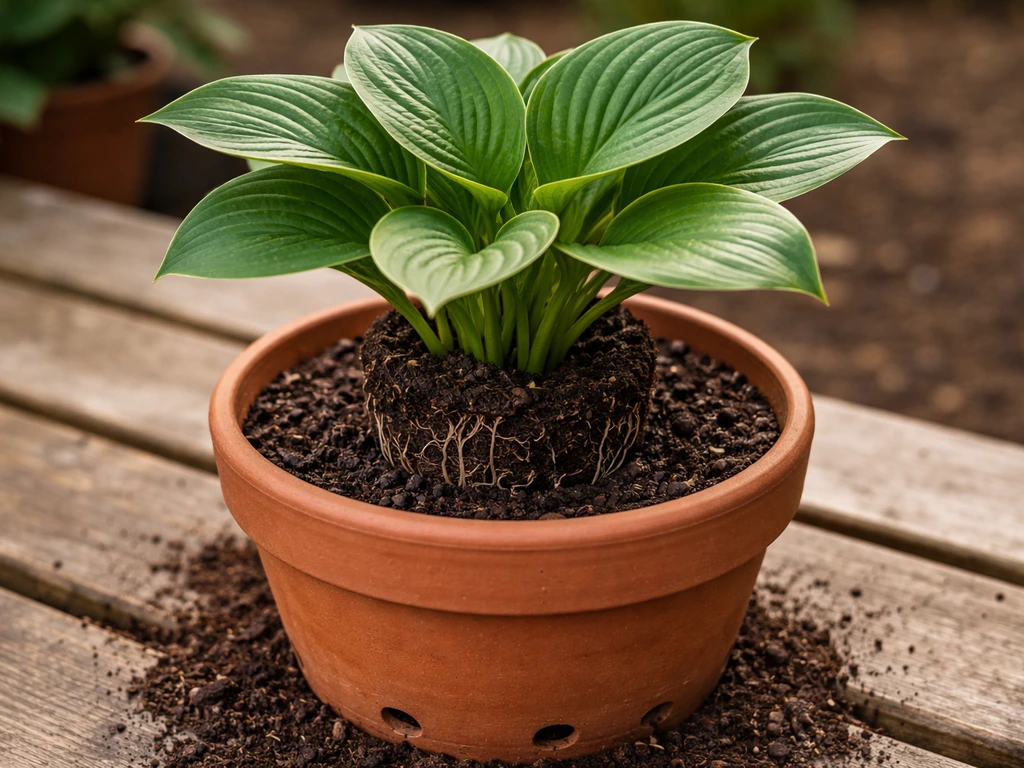
Container choice matters more for hostas than for most indoor plants. You want a pot that is proportional to the root mass. Going too large causes excess moisture to sit in the soil around the roots, which is one of the fastest ways to trigger root rot. A pot that is roughly 2 inches wider than the current root ball is the right starting point. As the plant grows, you repot up gradually rather than jumping to a massive container.
Drainage holes are not optional. Non-porous containers like glazed ceramic or some plastics retain moisture longer, so if you use those, you need to be extra cautious with watering frequency. Unglazed terracotta breathes and dries out more evenly, making it a forgiving choice for beginners. Whatever material you use, never let the pot sit in standing water in a saucer.
For soil, use a high-quality, well-draining potting mix rather than garden soil, which compacts badly in containers. I mix standard potting mix with about 20 to 30 percent perlite to improve drainage and aeration. Hostas grown in containers do fine in a slightly acidic to neutral mix (pH 6.0 to 7.0). Start with clean, sterile potting media and new or thoroughly cleaned pots, especially if you are repotting after a dormancy period, to reduce the risk of fungal issues.
Watering, temperature, and humidity
Watering
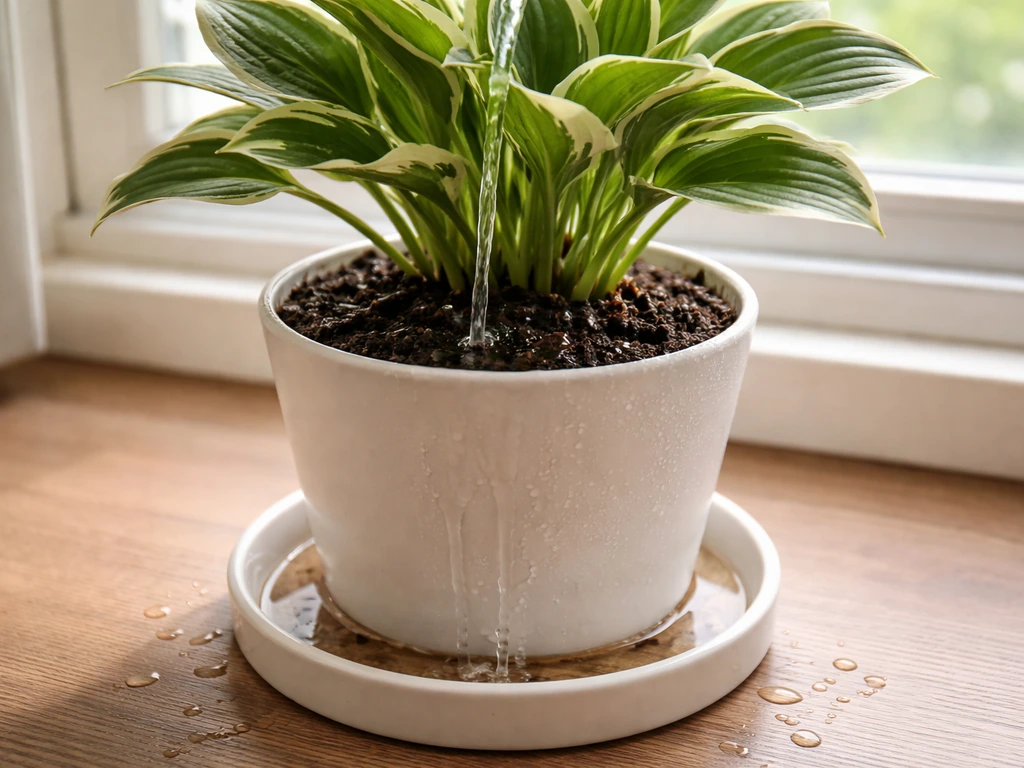
The number one killer of indoor hostas is overwatering. Water thoroughly when the top inch of soil feels dry, then let it drain completely. During active growth (spring through summer), that might mean watering every 5 to 7 days depending on your pot size, light level, and humidity. In brighter or warmer spots, the soil dries faster and plants need more frequent water. During dormancy, you can cut back dramatically, just enough to keep the roots from completely desiccating.
Watch for the warning signs: foul smell from the soil, dark or mushy roots if you check them, and yellowing leaves that feel soft rather than crispy. Those point to rot, not underwatering. Crispy brown leaf edges, on the other hand, often signal too much direct light combined with inconsistent moisture.
Temperature
During active growth, hostas are comfortable in the same temperature range most people keep their homes: roughly 60 to 75°F (15 to 24°C). They are not tropical plants, so they handle cooler indoor temps just fine. What they cannot handle is heat combined with low light and dry air, which is basically the inside of most heated apartments in winter. During dormancy (more on that below), they actually need temperatures below 45°F (7°C) for at least 6 weeks, so a cold garage, unheated basement, or outdoor shed becomes necessary.
Humidity
Hostas are not fussy about humidity the way tropical plants like hoyas or heliconias are, but they do appreciate moderate humidity. Hoya plants can also grow indoors, but they need the right light and watering routine to stay healthy can hoya grow indoors. Heliconias generally need warm, humid conditions, so indoor growing is only practical with strong light and consistent humidity can heliconias grow indoors. Typical indoor humidity of 40 to 60 percent suits them fine. If your home is very dry in winter due to forced-air heating, a small humidifier nearby or a pebble tray with water under the pot can help prevent leaf tip browning. Good air circulation also matters: stagnant humid air around the foliage invites fungal issues, so do not crowd the pot in a poorly ventilated corner.
Feeding and maintenance through the year
Hostas in containers need more fertilizer than those in the ground because nutrients leach out with regular watering. During the active growing season (roughly late spring through midsummer), feed once or twice with a balanced fertilizer. A 10-10-10 granular applied once at the start of the growing season covers most situations well, which is what many experienced hosta growers prefer. If you use a liquid balanced fertilizer, apply it at half-strength every 4 to 6 weeks during active growth.
Stop feeding by late summer. Continuing to fertilize into fall encourages soft new growth that will be damaged when the plant goes dormant. Once the leaves die back, feeding stops entirely until growth resumes in spring. Beyond feeding, maintenance is minimal: remove dead or damaged leaves as they appear, check for pests every couple of weeks, and make sure the pot is not getting root-bound by the time spring rolls around. The American Hosta Society’s winter care guidance for potted hostas includes watering in late autumn before they go dormant and removing any saucers beneath the pot before the expected first frost.
Managing dormancy: the part most people get wrong
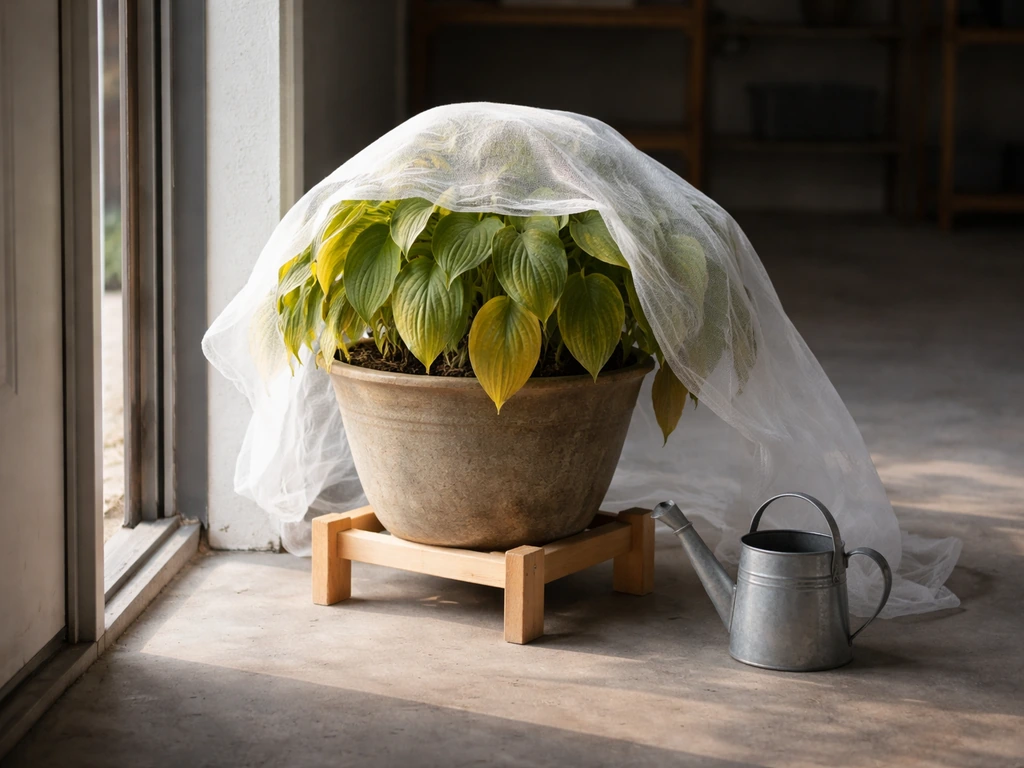
This is where indoor hosta growing gets real. Unlike a pothos or a haworthia, hostas are deciduous perennials. They need a genuine winter rest, and most cultivars require at least 6 to 8 weeks of cold temperatures below 45°F (7°C) to properly break dormancy and come back strong the following season. If you are also wondering about hibiscus, you can look into whether it can hibiscus grow indoors in winter and what light and care it needs during the cold months. You cannot just leave a hosta in your warm, well-lit living room all winter and expect it to perform year after year. It will struggle, weaken, and eventually give up.
The practical approach is to treat the indoor hosta like a semi-outdoor plant on a seasonal rotation. Here is how I handle it:
- In fall, once the leaves die back naturally, move the pot to a cold location: an unheated garage, basement, or shed where temperatures stay between 35 and 45°F (2 to 7°C).
- Keep the soil barely moist during this cold rest period. Do not let it dry out completely, but do not water it normally either. The danger zone is water sitting on frozen or cold roots when ambient temps creep above 45 to 50°F, which can cause rot.
- Leave it in the cold for at least 6 weeks, ideally 8. Mid- to late winter (January or February in most of the Northern Hemisphere) is typically when you can start thinking about waking it up.
- In late winter, bring the pot back inside and place it under grow lights or in your brightest window. Resume light watering. New shoots should emerge within a few weeks.
- Once temperatures outdoors are reliably above freezing, you can move the pot outside for the warm season if you want, or keep it indoors and manage it entirely as an indoor plant.
The American Hosta Society specifically notes that potted hostas can be brought indoors in late winter and kept under lights or in a warm window after their cold rest period has been completed. This forced early emergence is actually a fun technique if you want to enjoy early spring foliage while it is still cold outside.
Common problems and how to fix them
| Problem | Likely Cause | Fix |
|---|
| Yellow leaves (soft, mushy) | Overwatering or root rot | Stop watering immediately. Check roots: if dark and mushy, repot into fresh sterile mix, trim rotted roots, use a clean pot with drainage holes. |
| Yellow or bleached patches on leaves | Too much direct sun or sudden light increase | Move plant back from window or add a sheer curtain. Introduce grow lights gradually rather than moving from shade to bright light all at once. |
| Pale, washed-out leaves with weak growth | Too little light or nitrogen deficiency | Move to a brighter spot or add a grow light. If light is adequate, apply a balanced fertilizer at the start of the growing season. |
| Brown, crispy leaf tips or edges | Low humidity, underwatering, or light scorch | Increase watering consistency, raise humidity with a pebble tray, and reduce direct sun exposure. |
| No new growth in spring | Insufficient cold dormancy or too early wake-up | Make sure the plant received 6 to 8 weeks below 45°F. Move to a bright, warm spot and resume watering. Be patient: it can take 2 to 4 weeks for shoots to appear. |
| Slow growth, generally poor vigor | Root-bound pot, depleted soil, or low light | Repot into fresh mix one size up, feed with a balanced fertilizer, and improve light conditions. |
Root rot deserves extra attention because it is the most common reason indoor hostas fail. The fix at early detection is simple: hold off on watering, let the soil dry out more between sessions, and make sure your pot has adequate drainage. If the roots are already dark, soft, and smell foul when you pull the plant out, you need to act quickly. Trim the affected roots with clean scissors, dust the cuts with powdered cinnamon or a fungicide, repot into fresh sterile mix in a clean container, and place the plant in bright indirect light to recover. Avoid fertilizing until you see new healthy growth.
Which hosta cultivars work best indoors
Smaller and miniature hosta cultivars adapt better to container and indoor life than the giant types that can reach 4 to 5 feet wide. UGA Extension’s “Growing Hostas” publication provides horticultural guidance for hostas, including cultivar and container-friendly considerations and general growing conditions Smaller and miniature hosta cultivars adapt better to container and indoor life. Varieties like 'Blue Mouse Ears', 'Tiny Tears', or 'Mouse Trap' stay compact and manageable in pots. Variegated types with yellow or white margins tend to handle slightly more light, which is useful if your brightest indoor spot still has some direct sun for a couple of hours. Blue-green cultivars like 'Halcyon' or 'Hadspen Blue' are stunning but need the lower end of the light range and are more prone to scorch near bright windows. If you are new to growing hostas indoors, start with a smaller, lighter-colored variety and you will have more flexibility with placement.
Is growing hostas indoors worth it?
Honestly, hostas are more work indoors than most true houseplants. If you want zero-effort indoor greenery, something like a haworthia or a hoya will serve you much better. If you are wondering about a different kind of indoor pet, the question can we grow parrots at home is all about the right setup, food, and daily care indoor greener. Yes, haworthia can grow indoors as long as you give it bright light and a fast-draining cactus or succulent mix a haworthia. But if you love hostas and live in an apartment or just want to enjoy them year-round with a little effort, it is absolutely doable. The payoff is real: the textured, dramatic foliage looks incredible as an indoor feature plant, and the novelty of forcing early spring growth in January or February while it is still cold outside is genuinely satisfying. The key is going in with realistic expectations, setting up the light situation properly from day one, and committing to the seasonal dormancy routine rather than fighting it.