Yes, spider plants grow indoors beautifully, and they're honestly one of the easiest houseplants you can pick up. They tolerate a wide range of light levels, don't demand high humidity, and forgive the occasional missed watering. Illinois Extension notes that spider plants prefer bright light but are blank" rel="noopener noreferrer">very adaptable to medium light, and they can produce plantlets when potbound. If you have a bright-ish spot away from harsh direct sun, a pot with drainage holes, and halfway decent tap water, you're already set up for success.
Can Spider Plants Grow Indoors? Care Tips for Success

James Hartwell
7 May 2026
Why spider plants are such a good fit for indoor life
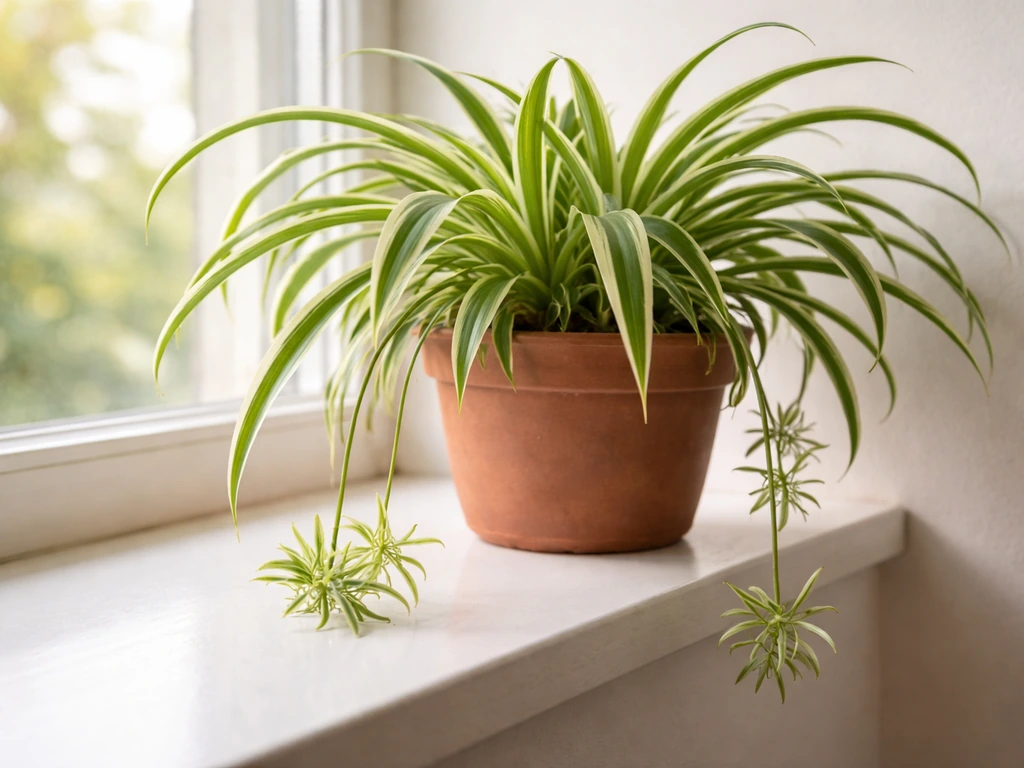
Spider plants (Chlorophytum comosum) are genuinely well-suited to home conditions. They handle average indoor humidity, tolerate the kind of fluctuating temps most apartments throw at them, and can survive lower light than most variegated plants. Wisconsin Extension describes them as "very easy to grow indoors" with year-round success, and that tracks with real experience. These aren't plants you have to baby or trick into surviving inside. They actively want to live in your home.
That said, there's a difference between surviving and thriving. If you want lush, arching leaves and a shower of little spiderettes dangling off long runners, you need to get a few conditions right. None of them are hard, but they matter.
Best indoor light conditions for spider plants
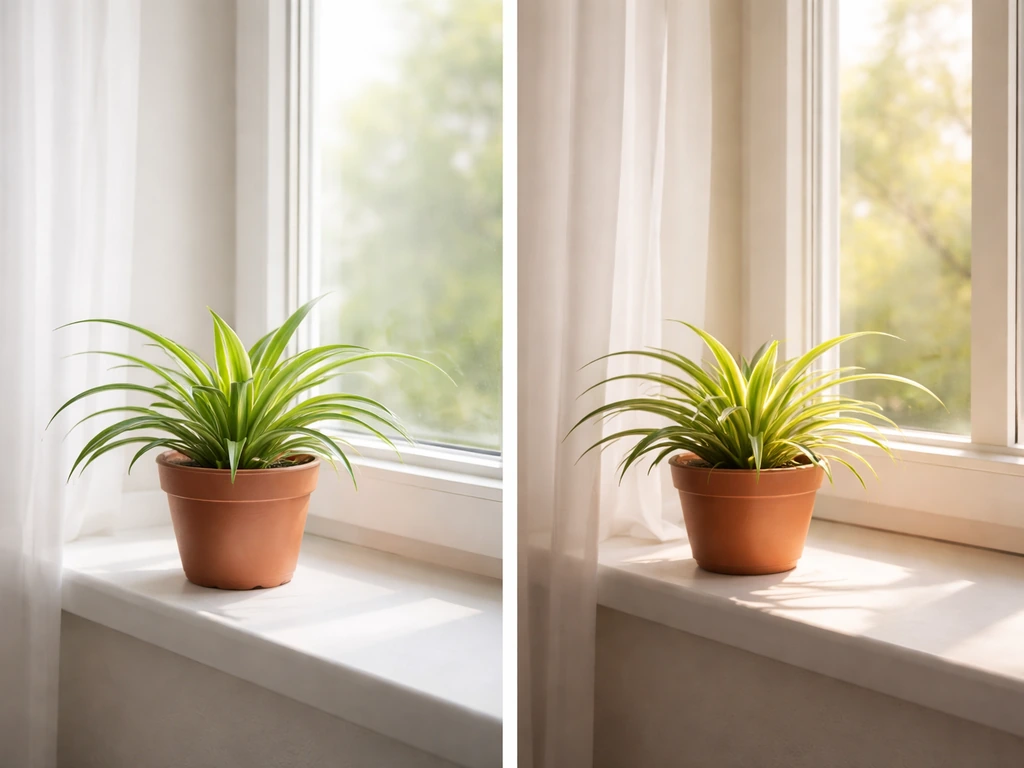
Spider plants do best in medium to bright indirect light. A north- or east-facing window works well, and a west-facing window is fine too as long as the plant isn't sitting right in a patch of direct afternoon sun. South-facing windows are great, but pull the plant back a couple of feet or hang a sheer curtain to diffuse the light. Direct, hot sunlight will scorch the tips and edges of the leaves, turning them brown, which is one of the most frustrating problems to diagnose if you don't know what caused it.
On the other end, spider plants can tolerate shade, which is why they're popular in offices and dim apartment corners. North Carolina State Extension notes they can even survive deep shade. But here's the honest trade-off: the dimmer the spot, the less vigorous the plant. You'll get slower growth, fewer runners, and little to no spiderette production. If you want a full, bushy plant that's actually pumping out babies, aim for that medium-to-bright range, not the darkest corner of the room.
- Best spot: a few feet back from a south- or west-facing window, or directly in a north- or east-facing window
- Avoid: placing the pot where direct sunlight hits the leaves for more than an hour or two, especially in summer
- Tolerable but not ideal: low-light areas with no natural window nearby (growth will be slow and spiderettes rare)
- Variegated varieties (the white-striped kind) need slightly more light than the solid green type to keep their coloring
Soil, pot, and drainage basics indoors
Spider plants aren't picky about soil, but they absolutely need good drainage. Use a standard houseplant potting mix. The goal is a mix that holds some moisture without staying waterlogged. Wisconsin Extension describes this well: a healthy potting medium has a balance of pore spaces and solids so water drains through but the roots still have access to moisture between waterings. Most bagged potting mixes hit that balance well for spider plants right out of the bag.
The pot setup matters just as much as the soil. Always use a pot with drainage holes. Roots sitting in stagnant water lead to root rot fast, and it's one of the most common reasons indoor spider plants decline. If you have a decorative pot you love but it has no drainage hole, use the double-potting approach: plant your spider plant in a plain plastic or terracotta liner pot with holes, then drop that inside the decorative outer pot. After watering, tip out or sponge up any water that collects in the outer pot so the roots never sit in it.
Spider plants have fleshy, water-storing roots, so they can handle being slightly pot-bound. You don't need to rush to repot unless roots are visibly cramming out of the drainage holes or the plant is drying out within a day of watering. When you do repot, go up just one pot size (roughly 2 inches in diameter) to avoid excess soil that stays wet around the roots.
Watering schedule and humidity needs
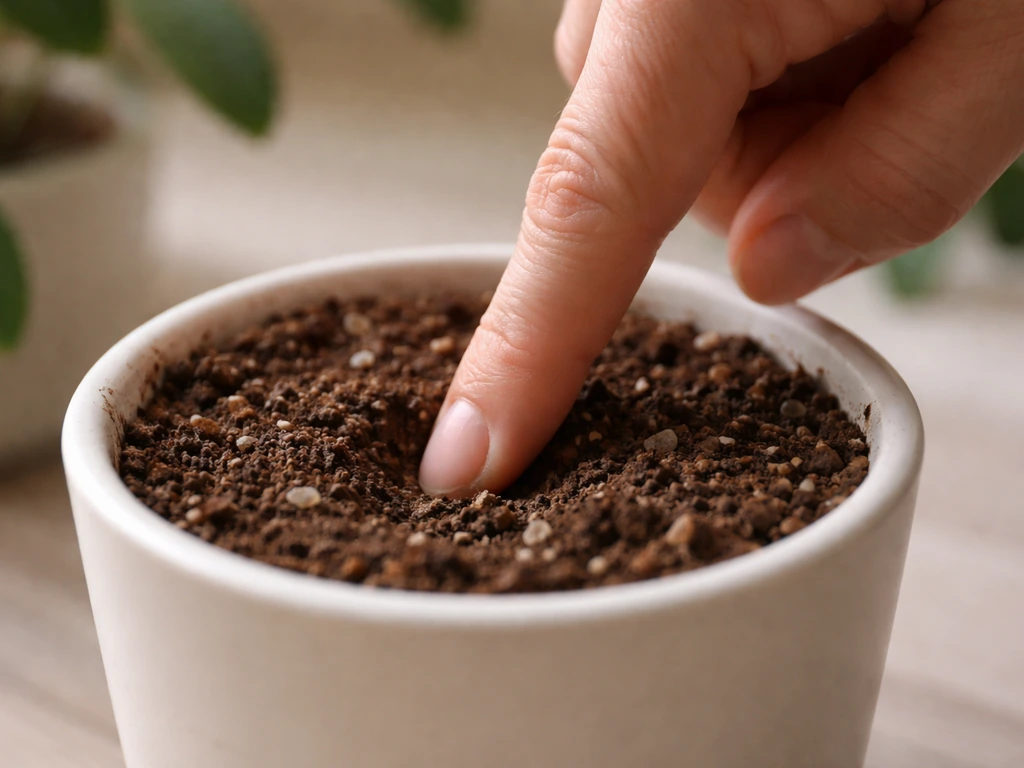
Skip the calendar watering schedule and just check the soil. Water when the top inch or so feels dry to the touch. K-State Extension puts it simply: let the soil go partially dry to dry between waterings, not bone-dry desert-dry, but definitely not constantly moist. In a warm, sunny spot that might mean every five to seven days in summer. In a cooler, dimmer corner in winter, you might go two weeks between waterings. Just check before you pour.
Humidity is pretty forgiving. Spider plants do fine at average indoor humidity, which most homes and apartments have naturally. You don't need a humidifier or a pebble tray unless your home gets extremely dry in winter from forced-air heating. If the air in your place is drying out your skin and your wood furniture, it's worth adding a bit of ambient moisture, but most spider plants will manage without it.
One thing that does matter: your water source. Tap water with high chlorine or fluoride can cause brown leaf tips over time. It's a slow build-up issue, not an immediate one. If you're already seeing tip browning and you've ruled out direct sun and dry soil, switch to filtered water, rainwater, or just let tap water sit out overnight before using it to let some of the chlorine off-gas. Flushing the pot thoroughly every few months also helps clear any accumulated mineral salts.
Temperature, placement, and airflow tips
Spider plants prefer cool to average indoor temperatures, roughly 60 to 75 degrees Fahrenheit, but they'll tolerate warmer conditions without complaint. That covers most homes year-round. What they don't love is sitting right next to a heating vent or a drafty window in winter. The sudden blasts of hot dry air from a vent will stress the plant and contribute to tip browning, and cold drafts from a single-pane window in January can shock the roots.
Placement tip: keep the plant a foot or two away from exterior walls and windows during cold months if your place gets chilly, and avoid spots directly above or below heat vents. A stable spot with consistent temperature and some gentle air circulation is ideal. Good airflow around the plant (not a direct draft, just normal room air movement) helps prevent fungal issues and keeps the plant healthy.
Common indoor problems and how to fix them
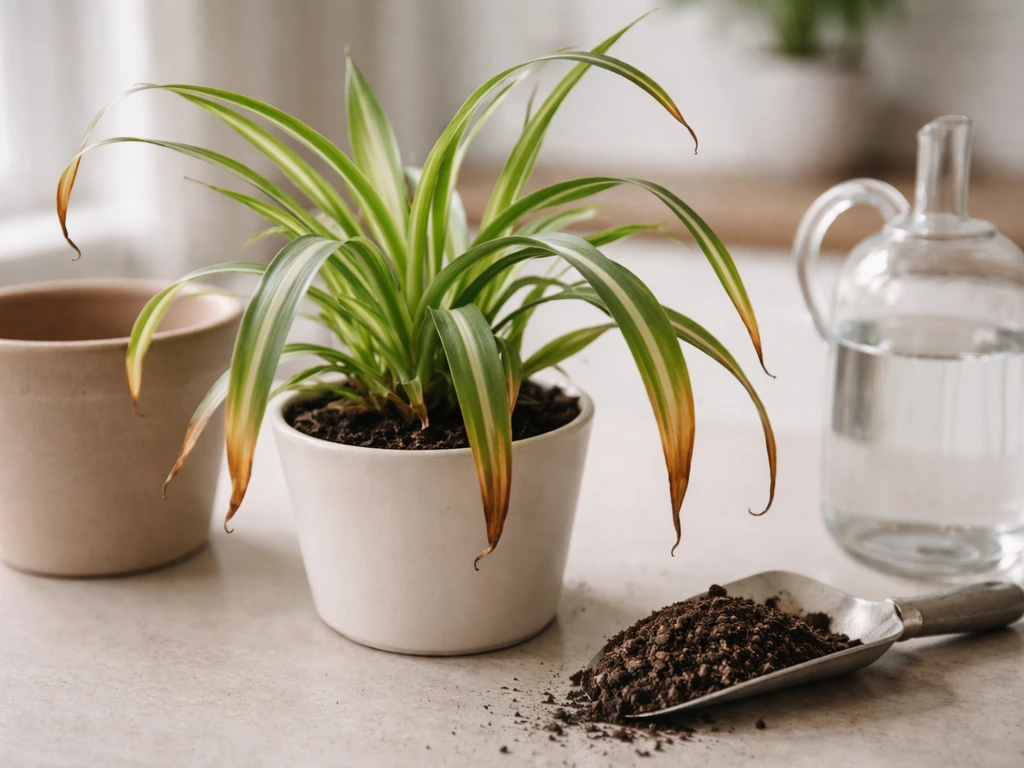
Most spider plant problems indoors boil down to a handful of causes, and once you know what to look for, they're pretty easy to diagnose and fix.
| Problem | Likely Cause(s) | Fix |
|---|---|---|
| Brown leaf tips | Low humidity, dry soil, fluoride/chlorine in tap water, salt buildup, or direct sun scorch | Check soil moisture, switch to filtered or rainwater, flush the pot to clear salts, move plant away from direct sun |
| Slow growth or pale leaves | Too little light, overwatering, or rootbound conditions | Move to a brighter spot, let soil dry more between waterings, check if repotting is needed |
| No spiderettes forming | Insufficient light, over-fertilizing, or plant is too young/recently repotted | Increase light exposure, reduce fertilizer, give the plant time to settle |
| Drooping or limp leaves | Underwatering (most common) or root rot from overwatering | Check soil: dry means water thoroughly, soggy means let dry out completely and check roots |
| Yellowing leaves | Overwatering, poor drainage, or root rot | Let soil dry, ensure drainage holes are clear, repot if roots are mushy or smelly |
| Leggy, stretched growth | Not enough light | Move closer to a window or to a brighter room |
A note on fertilizer: it's tempting to feed a slow-growing plant more to speed it up, but with spider plants, overdoing fertilizer actually causes problems. Excessive fertilizing leads to tip browning and can reduce plantlet production. A light feed with a balanced liquid fertilizer once a month during spring and summer is plenty. Skip it in fall and winter.
How to grow and expand spider plants indoors
One of the best things about spider plants is how easy they are to propagate. A healthy, established plant will send out long arching stems called runners, and at the tips of those runners you'll see little rosettes of leaves, those are the spiderettes. You can root them while they're still attached to the parent plant (Penn State Extension calls this natural layering) or cut them off and root them separately.
- Wait until a spiderette has a few visible root nubs at its base, usually small white bumps or short white roots
- Option A (layering): set a small pot of moist potting mix next to the parent plant, pin the spiderette down onto the soil surface while it's still attached to the runner, and let it root in place over a few weeks before cutting the runner
- Option B (cutting): snip the spiderette off the runner, place it in a small glass of water with the base submerged, and wait for roots to grow an inch or so long (usually 1 to 2 weeks), then pot it up in soil
- Keep the newly potted spiderette in bright indirect light and keep the soil consistently moist (not soggy) for the first few weeks while it establishes
- Once you see new leaf growth, the plant has rooted and you can treat it like any mature spider plant
Illinois Extension notes that spider plant offsets root easily, and that really is the experience. This is one of the most forgiving propagation projects in indoor gardening. If you have a friend or neighbor with a spider plant already producing runners, asking for a spiderette is a completely normal thing to do. These plants multiply fast and most growers are happy to share.
If your plant isn't producing runners yet, the most likely reason is light. Get it into a brighter spot, ease up on fertilizer, and give it a few weeks. Spiderette production is a sign the plant feels secure and healthy, not stressed. Once the conditions are right, the runners usually come on their own.
What to adjust today if your spider plant isn't doing well
If you already have a spider plant indoors and it's struggling, here's a quick triage. First, check where it's sitting. Is it getting any natural light? Even a few feet closer to a window can make a real difference. Second, feel the soil. Is it wet or dry? Adjust your watering accordingly and make sure the pot is actually draining. Third, look at the water you're using. If you're on tap water in an area with heavy chloride or fluoride treatment, try switching to filtered water for a few weeks and see if tip browning slows down.
Spider plants are resilient. Most of the time, one or two of these adjustments is all it takes to turn a struggling plant into a thriving one. If you're newer to indoor plants and wondering how different species compare in terms of indoor adaptability, spider plants sit comfortably alongside air plants in the "genuinely easy" category, though they need soil and regular watering where air plants don't. If you're also curious about air plants, you may be wondering can air plants grow indoors and what setup they need to thrive. Either way, spider plants are a great starting point and one of the most rewarding plants to keep indoors. While spider plants are easy indoors, you may be wondering if can pitcher plants grow indoors too. If you want the thrill of carnivory, look into what carnivorous plants grow indoors and how to meet their light and watering needs. If you want to try something more challenging, you can grow carnivorous plants inside by giving them the right bright light and mineral-free water.
FAQ
Can spider plants grow indoors in a low-light room if I just want them to stay alive?
Yes, they can survive, but expect slower growth and fewer or no runners. If you want new spiderettes, place the plant closer to a window or use a grow light, aiming for medium-to-bright indirect light rather than dim corners.
How much direct sun is too much for an indoor spider plant?
Even if spider plants tolerate light ranges, hot direct afternoon sun can scorch leaf tips and edges. A practical rule is to keep them out of any spot where sunlight creates a bright, sharp rectangle on the leaves for hours.
Why are my spider plant leaf tips turning brown, even though my soil isn’t bone-dry?
Common causes are mineral buildup from tap water, fertilizer overuse, or heat and dry air from a vent. Try switching to filtered water for a few weeks, reduce or stop feeding, and move the plant away from HVAC blasts.
Should I mist spider plants to increase humidity indoors?
Usually no. They handle average home humidity well, and misting can leave foliage damp, which may increase spotting or other issues. If your home is extremely dry, focus on improving ambient humidity rather than frequent misting.
Do spider plants need fertilizer to make spiderettes, or will they reproduce without it?
They don’t need much. Too much fertilizer is more likely to cause tip browning and can reduce plantlet production. For indoor growth, use a diluted balanced liquid only during spring and summer, about once a month, and skip fall and winter.
How can I tell when my spider plant needs water without overthinking it?
Use the finger test and check the top inch of soil. Water when that section feels dry, and then water thoroughly until excess drains out, rather than giving small sips that keep the root zone uneven.
Is it better to let a spider plant dry out completely or keep it slightly moist?
Slightly moist is not the goal, you want partial drying between waterings. Constant moisture raises the risk of root rot, especially in pots without good drainage or when the room is cooler.
What’s the safest way to use a decorative pot that doesn’t have drainage?
Use a liner pot with drainage holes inside the decorative outer pot, then remove or drain any water that collects after watering. Never leave the inner pot sitting in standing water for long periods.
How do I know if my spider plant is becoming root-bound?
Look for roots crowding out of the drainage holes, the plant drying out extremely fast after watering, or reduced growth. When repotting, go up only one pot size to avoid too much wet soil.
How long does it take for spiderettes to appear indoors?
If light and watering are right, runners can show up within weeks. In low light or over-fertilized conditions, it can take much longer or stop entirely, so adjust placement first before assuming the plant can’t reproduce.
What’s the easiest way to propagate spider plants indoors?
Root the spiderettes either while still attached to the parent or by cutting them and rooting separately. Natural layering works well because the parent plant helps keep the cutting stable while it forms roots.
Can I propagate spiderettes in water, or does it need soil?
Both can work, but water-rooted plantlets may need a gradual transition to soil to prevent transplant stress. If you water-propagate, change the water regularly and pot up once roots are established.
Why is my spider plant dropping older leaves or looking limp?
Check for inconsistent watering (alternating between wet and dry), root stress from poor drainage, or temperature swings near drafts or vents. Fixing the environment usually improves the overall look within a few weeks.
Are spider plants safe around pets?
They are generally considered non-toxic compared with many other houseplants, but individual pets can still react to chewing. If your pet has a sensitive stomach, consider keeping the plant slightly out of reach to reduce ingestion.