You can grow a surprisingly wide range of plants inside your home, and most people overthink it. The honest short answer: snake plants, pothos, ZZ plants, peace lilies, spider plants, philodendrons, and Chinese evergreens will thrive in the vast majority of homes with minimal fuss. If you have a bright south or west window, you can add herbs, succulents, kalanchoe, and rubber plants to that list. The rest of this guide helps you figure out exactly which ones fit your specific home, what to plant them in, and how to keep them alive without turning your living room into a greenhouse.
Plants Which Grow Inside Home: Best Indoor Choices
James Hartwell
17 Apr 2026
Quick answer: the best indoor plants for most homes
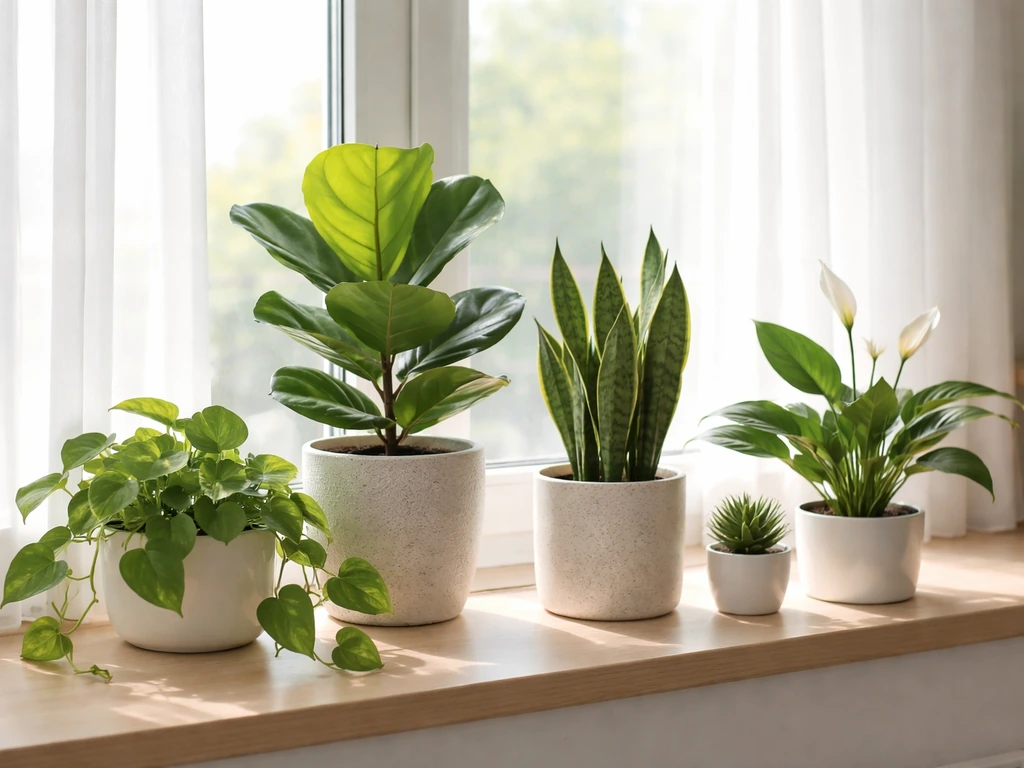
If you want a plant today and don't want to read the whole article, start with one of these. They cover the widest range of indoor conditions and forgive beginner mistakes better than almost anything else you'll find at a garden center.
- Snake plant (Dracaena trifasciata): tolerates low light, low humidity, and irregular watering — possibly the most forgiving houseplant in existence
- Pothos (Epipremnum aureum): vines freely, handles low to medium light, and bounces back from both under- and over-watering
- ZZ plant (Zamioculcas zamiifolia): stores water in its rhizomes, thrives in low to medium light, virtually indestructible
- Peace lily (Spathiphyllum): one of the few flowering plants that genuinely does well in low light — though keep it away from pets
- Spider plant (Chlorophytum comosum): handles medium light, non-toxic, produces cheerful hanging offshoots, great for shelves
- Heartleaf philodendron: fast-growing, medium-light lover, very similar care to pothos but with softer, heart-shaped leaves
- Chinese evergreen (Aglaonema): gorgeous foliage, tolerates low to medium light, comes in green, red, and pink varieties
These seven plants represent the core of what most indoor gardeners actually grow successfully. If you're curious about a broader list beyond these go-to picks, there's a solid rundown of plants you can grow inside that covers additional species worth considering. But for today, these seven are your starting point.
Match plants to your light situation
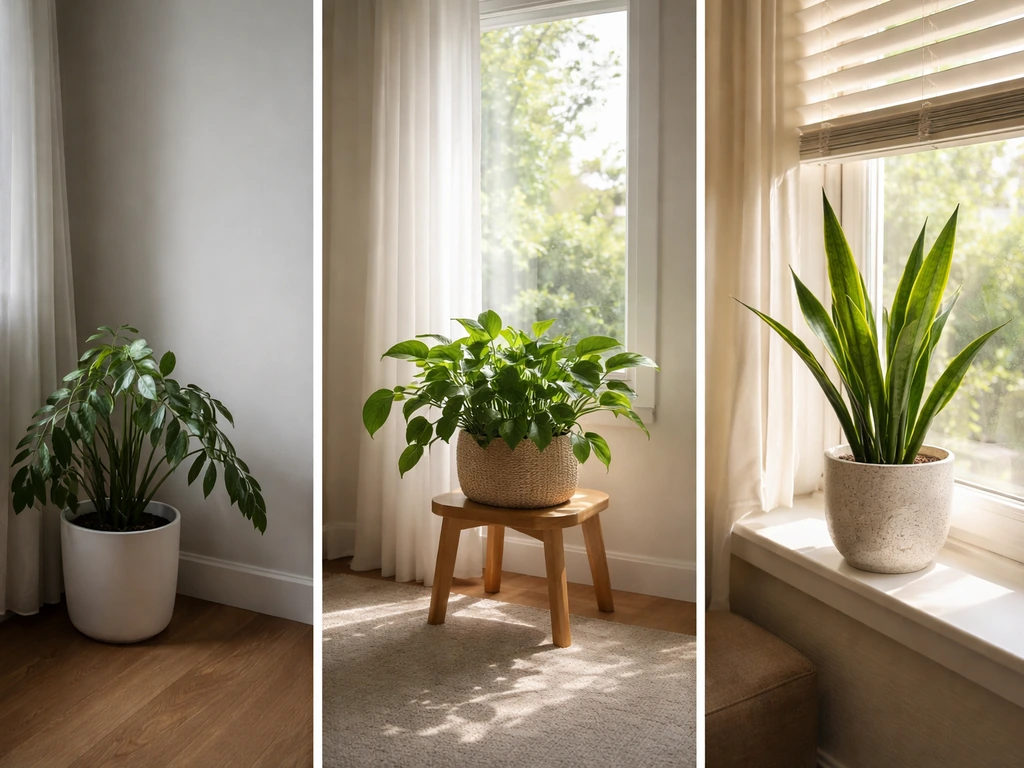
Light is the single biggest factor in whether an indoor plant survives or slowly sulks its way to death. Before you buy anything, spend one day noticing where the sun actually hits in your home and for how long. Most people dramatically overestimate how bright their rooms are. A spot that feels bright to your eyes can still be too dim for many plants because your eyes adjust to low light, but plants don't.
Low-light spots (north windows, interior corners, hallways)
Low light doesn't mean no light, but it does mean direct sun never reaches the spot. The plants that genuinely do well here are snake plants, ZZ plants, pothos, Chinese evergreens, cast iron plants, and peace lilies. Snake plants in particular are remarkable in this respect, as Iowa State Extension notes, they grow in almost any lighting environment and even handle the low-humidity air that winter heating creates in most homes. That combination makes them almost impossible to fail with.
Medium-light spots (east windows, a few feet back from south/west windows)
Medium light is honestly the sweet spot for the widest range of houseplants. Spider plants, philodendrons, dracaenas, African violets, rubber plants (if not too far back), and most ferns fit here well. If you have an east-facing window that gets a few hours of morning sun, you are in excellent shape. This is also where most tropical houseplants live happily, and if you're specifically interested in that category, the guide to tropical plants you can grow indoors goes deep on species and care.
Bright-light spots (south or west windows, sunny sills)
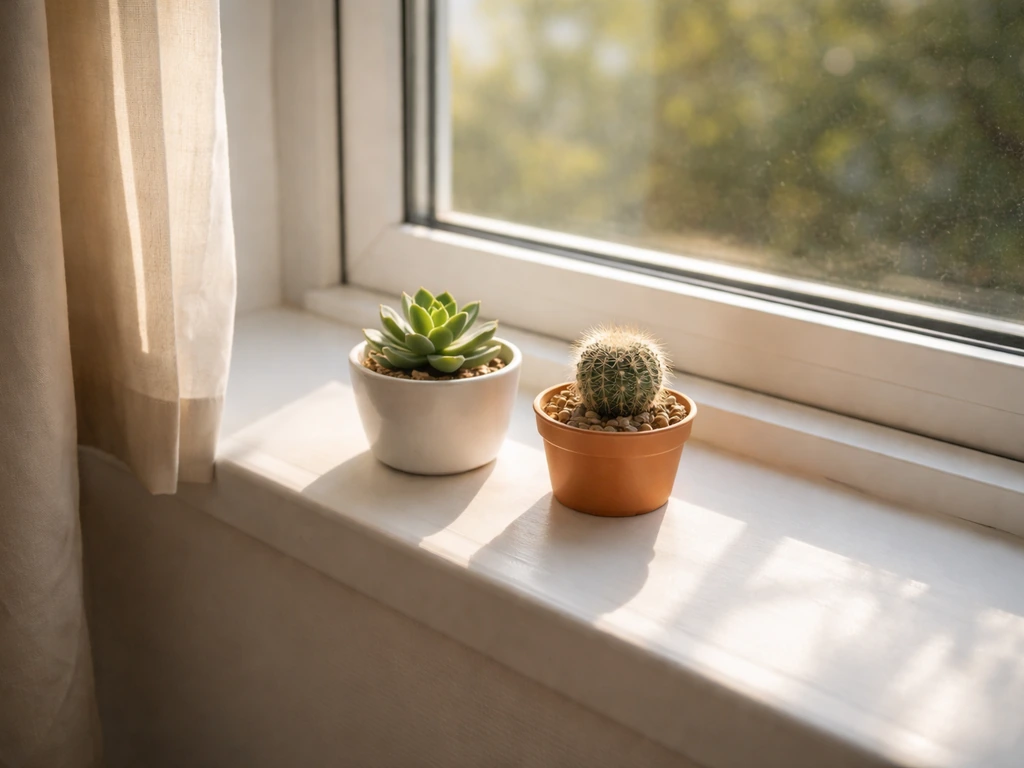
Bright indirect light means a spot that gets several hours of sun per day, ideally without direct midday sun scorching the leaves. This is where herbs, succulents, cacti, rubber plants, fiddle-leaf figs, and flowering plants like kalanchoe really shine. Basil, for example, needs at least 6 to 8 hours of bright light daily according to the University of Minnesota Extension, a south-facing sill in spring is about perfect. Kalanchoe is another bright-light favorite, but note that getting it to rebloom requires about 14 hours of uninterrupted darkness per day for roughly 8 weeks; even a lamp left on in the room can reset the clock.
| Plant | Light Level | Tolerates Low Light? | Good for Beginners? |
|---|---|---|---|
| Snake plant | Low to bright indirect | Yes | Yes |
| Pothos | Low to medium | Yes | Yes |
| ZZ plant | Low to medium | Yes | Yes |
| Peace lily | Low to medium | Yes | Yes |
| Spider plant | Medium | Somewhat | Yes |
| Heartleaf philodendron | Medium | Somewhat | Yes |
| Chinese evergreen | Low to medium | Yes | Yes |
| Rubber plant | Medium to bright | No | Moderate |
| Fiddle-leaf fig | Bright indirect | No | No |
| Kalanchoe | Bright indirect | No | Moderate |
| Basil / herbs | Bright (6–8 hrs) | No | Moderate |
Beginner-easy plants vs. ones that need a bit more attention
There's a real difference between plants that actively want to live and plants that need you to get a lot of variables right. After watching a fair few houseplants slowly decline over the years, I'd split things into two honest camps.
The genuinely easy ones are snake plants, pothos, ZZ plants, spider plants, heartleaf philodendrons, and Chinese evergreens. These tolerate irregular watering, average indoor humidity, and the kind of light most rooms actually have. They won't punish you for going on a two-week vacation. Understanding what characteristics allow for some plants to grow indoors helps explain why these species specifically are such reliable performers: they typically come from forest understory environments where variable light and occasional dry spells are the norm.
The slightly harder ones include fiddle-leaf figs (dramatic about drafts and inconsistent watering), orchids (specific watering and humidity needs), African violets (sensitive about wet leaves and water temperature), most ferns (need consistent humidity), and herbs (need much more light than people expect). These aren't impossible, but they'll test your patience if you're just starting out. If you want something visually unusual without the difficulty spike, the article on exotic plants you can grow indoors covers some striking options that are more manageable than they look.
For people who want visible results fast, growth rate matters too. Pothos and heartleaf philodendron are among the quickest-growing common houseplants. A more detailed look at what plants grow fast indoors is worth checking if watching progress is part of the appeal for you.
What to plant them in: pots, potting mix, and drainage
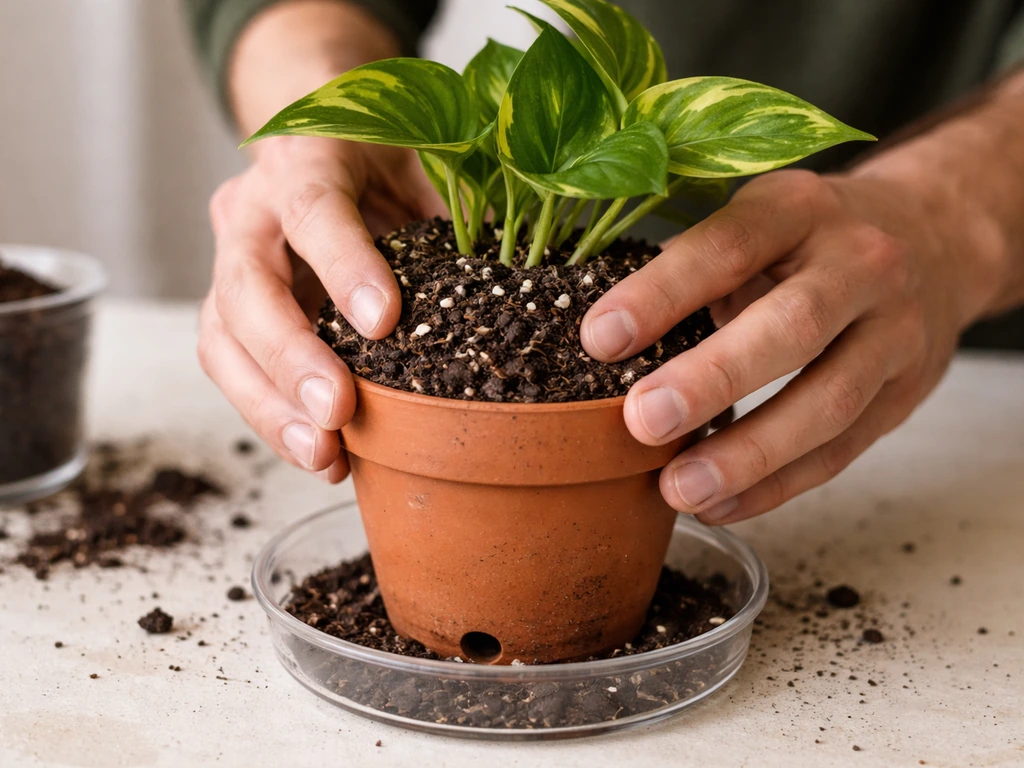
Getting the container setup right matters more than most beginners realize. The wrong pot or the wrong soil is behind a huge number of indoor plant deaths, and the fix is simple once you know what to look for.
Pots and drainage holes
Always use a pot with at least one drainage hole. No exceptions. Roots sitting in pooled water develop rot quickly, and by the time you see wilting or yellowing leaves, the root damage is often already serious. University of Minnesota Extension also warns that overwatering and letting plants sit in water can contribute to root rot Roots sitting in pooled water develop rot quickly. University of Maryland Extension is blunt about this: excess water problems come from either poorly drained soil or overwatering, and the symptoms (yellowing lower leaves, wilting) can look almost identical to drought stress because damaged roots can't deliver water even when the soil is wet. On pot size, go one size up when repotting, not three, too much extra soil holds too much moisture for the root mass to absorb.
One thing worth knowing: Iowa State Extension actually advises that drainage saucers are often unnecessary and can slow drainage by creating a water table at the bottom of the pot. If you do use saucers for floor protection, empty them within an hour of watering so water doesn't reabsorb upward.
Potting mix vs. garden soil
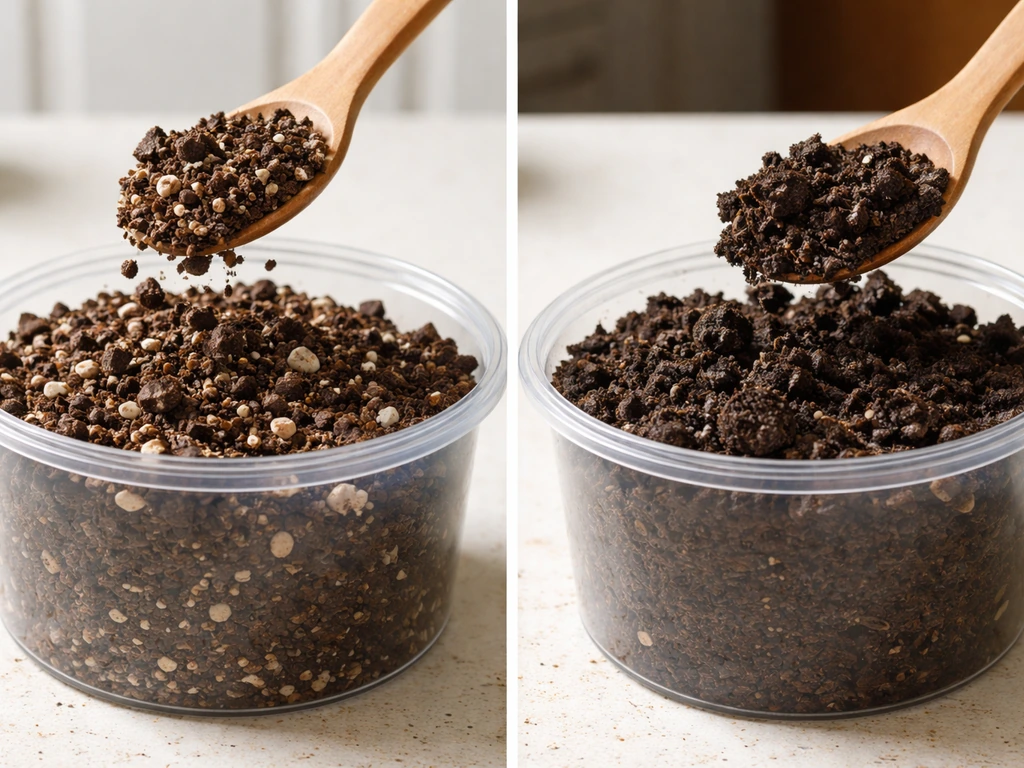
Never use outdoor garden soil in indoor pots. It compacts, drains poorly, and introduces pests. A quality commercial potting mix is the baseline for almost every houseplant. From there, small adjustments help: mix in extra perlite (about 20 to 30 percent by volume) for succulents, cacti, and herbs that need fast drainage. For tropical foliage plants like pothos or philodendrons, a standard all-purpose potting mix is fine as-is. All-purpose potting soil with perlite or vermiculite can help containers drain better, according to Oregon State University Extension a standard all-purpose potting mix. Oregon State Extension reinforces this: a good-quality potting mix combined with correct drainage practice is the foundation of container plant health.
When repotting, Iowa State Extension recommends surrounding the root mass with fresh potting soil rather than leaving old, degraded mix around the roots. Potting mix breaks down over time and loses its drainage structure, so even plants that aren't rootbound benefit from fresh mix every year or two.
Indoor care essentials: watering, temperature, humidity, and placement
According to UC IPM, the most common reason houseplants decline is improper watering, followed by low light and low relative humidity. Those three factors, more than anything else, determine whether your indoor plants stay healthy long-term. Here's how to get each one right.
Watering
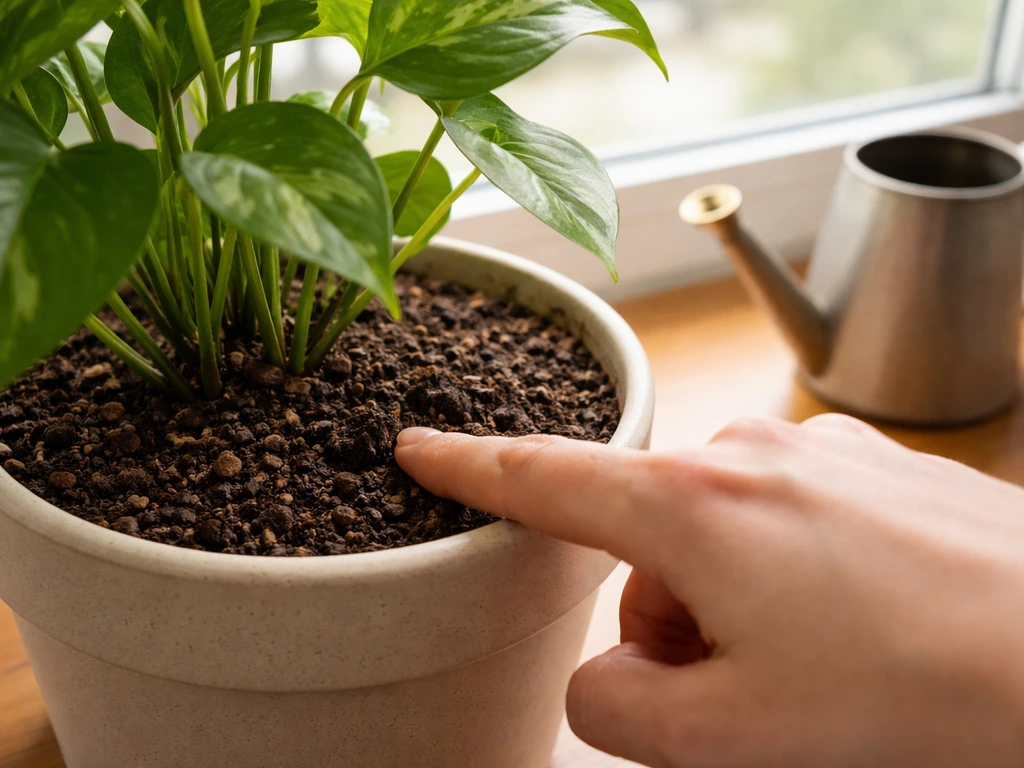
The single most useful watering rule: check the soil before you water, not the calendar. Push your finger about an inch into the potting mix. If it's still damp, wait. If it's dry at that depth, water thoroughly until it runs out the drainage hole. Most common houseplants prefer to dry out slightly between waterings. Overwatering kills far more houseplants than underwatering does. For African violets specifically, the African Violet Society of America recommends watering when the top half inch of soil is somewhat dry, and suggests a wick setup through the drainage hole as a way to deliver consistent moisture without wetting the leaves.
Temperature
Most houseplants are comfortable in the same temperature range humans prefer. Iowa State Extension gives a practical target: daytime temperatures around 65 to 75°F and nighttime temperatures around 60 to 65°F. The bigger risks are cold drafts from windows in winter, heat from radiators or vents, and temperature fluctuations near exterior doors. Keep plants away from those spots, especially in winter.
Humidity
This is the one most beginners overlook until something goes wrong. Penn State Extension cites ASHRAE guidance that indoor relative humidity should stay between roughly 30 and 60 percent, but winter heating frequently pulls it below 30 percent. Tropical plants especially hate that. Practical fixes include grouping plants together (they raise local humidity through transpiration), setting pots on trays of pebbles and water (the evaporation helps), or using a small humidifier near your plant collection. University of Minnesota Extension also flags that winter home air is particularly harsh, so this matters most from November through March.
Placement and fertilizing
As a general rule, put plants as close to your brightest window as possible without letting direct midday sun scorch the leaves. Rotate pots a quarter turn every week or two so all sides of the plant get even light exposure. On fertilizing: houseplants grow more slowly indoors than outdoors, so Iowa State Extension recommends using fertilizer at half or even quarter the label strength to avoid salt buildup in the soil. A diluted balanced liquid fertilizer every four to six weeks during spring and summer is plenty for most foliage plants.
Herbs, edibles, and pet and maintenance considerations
If you want to grow edible plants indoors, herbs are the most realistic starting point. Basil, chives, mint, parsley, and thyme can all live on a bright windowsill, but be realistic: Missouri Extension is honest that indoor herbs are often less productive than their outdoor counterparts. They still grow, they still taste great, but don't expect to harvest armfuls. Water herbs so that a little moisture runs through the drainage hole each time, but never let them sit in standing water. Good drainage is even more critical for herbs than for foliage plants.
On the pet front, this is genuinely important if you have cats or dogs. Peace lilies, for example, are listed by the ASPCA as toxic to pets due to calcium oxalate irritants. Iowa State Extension notes that many common houseplants are toxic to pets and recommends reading plant labels carefully and verifying each species on a poison control list before bringing it home. If your pets are known chewers, either stick to verified pet-safe plants (spider plants, Boston ferns, African violets, money trees) or use hanging planters and high shelves to keep plants out of reach. Don't assume a plant is safe just because it's common.
There's also a category of plants many people don't think of for indoors: plants originally found growing outdoors or in the wild that actually adapt well to indoor life. If that angle interests you, the article on outdoor plants that can grow indoors and the companion piece on wild plants you can grow indoors are worth reading before your next plant shopping trip.
How to choose your first plant today
Keep it simple. Answer these five questions and you'll know exactly what to buy and how to set it up.
- What's the light like in the spot where you want to put a plant? (No direct sun = low light; morning or evening sun = medium; several hours of direct sun = bright)
- Do you have pets that chew plants? If yes, filter your shortlist to verified pet-safe species only.
- How often do you realistically want to water? If the answer is 'rarely,' go with a snake plant or ZZ plant. If you don't mind weekly checking, you have more options.
- Do you want foliage, flowers, or something edible? Foliage plants are easiest; edible herbs need the most light.
- Do you have a pot with a drainage hole and a bag of quality potting mix? If not, buy those before or alongside the plant.
Once you've answered those, you're ready. For a first plant, a snake plant or pothos is genuinely hard to go wrong with in almost any home. Buy it, put it in a well-draining pot with fresh potting mix, place it near your best window, and water it only when the top inch of soil is dry. That's it. Mississippi State Extension puts it well: houseplant success comes from managing light, temperature, water, nutrients, and humidity together over time, not from getting one thing perfect. Small consistent habits beat occasional heroic interventions every time.
FAQ
Can plants which grow inside home survive in a windowless room?
Yes, but only if the plants are placed where natural light reaches them consistently, and you avoid drafty spots. Most “works in most homes” picks still need some usable light, especially in winter. A room that is bright by human eye can still be too dim for slow growers, so confirm by observing where sunlight lands for at least a few hours.
If I use a grow light, can I skip worrying about light level?
Not usually. Grow lights can work, but you should plan for intensity and distance, not just turning a light on. Treat it like an additional “bright indirect” or “medium light” source by running it for a consistent daily schedule, then adjust based on new leaf growth.
How do I tell if my indoor plant is dying from overwatering versus too little light?
The fastest way is to buy the right potting mix for the plant type and follow a soil-check routine. If your plant keeps yellowing and soil stays wet too long, it is usually overwatering or poor drainage. If leaves look scorched or bleached, it is often too much direct sun, even when the window seems bright.
What should I do about low humidity in winter if my plants start to struggle?
Most of the plants listed tolerate average home humidity, but winter is the exception. If your home often drops below about 30 percent humidity, prioritize grouping plants, using pebble trays properly, or running a small humidifier near your collection. Don’t increase watering to “compensate” for dry air, that mainly increases rot risk.
How often should I fertilize, and what’s the biggest mistake beginners make?
It depends on the plant and your light. In general, fertilize less than outdoors, use half-strength or quarter-strength, and stop or reduce feeding in fall and winter when growth slows. A common mistake is fertilizing a stressed plant that already has root or light issues, which can worsen salt buildup and leaf problems.
My plant’s leaves are yellow and the soil stays wet, what should I do next?
Start with a clean plan: remove the plant from the pot, check roots for mushy or black sections, and repot into fresh potting mix in a pot with drainage holes. If the soil drains slowly or smells sour, old mix or compacted mix is often the real cause. Then switch to watering only after the top portion of soil dries.
Are indoor herbs worth it, and why are my basil or mint plants slow?
For herbs, expect lower yields indoors even with good care. Use the brightest available spot, water just enough for a small amount to drain each time, and never let pots sit in runoff. If you want consistent harvests, choose fast-growing herbs like basil and chives and rotate them toward the light periodically.
Can I move my indoor plants outdoors in summer, and what should I watch for?
Yes. Many “easy” plants are relatively forgiving, but most can be stressed by sudden changes in temperature and light, especially near exterior doors or HVAC vents. Move plants gradually over a few days, keep them out of drafts, and avoid repotting and changing light at the same time.
Are all common indoor plants safe for cats and dogs?
No, you can’t treat all common houseplants the same. Pet safety is species-specific, even within the same “looks like” category, and many popular plants are toxic. If you have cats or dogs that chew, verify each plant by name and keep plants in hanging planters or on shelves out of reach.
When should I repot, and is bigger always better for houseplants?
Small repots can be helpful when roots have outgrown the container or mix has broken down, but you still want to avoid upsizing too much. If the plant is struggling from overwatering or low light, repotting into a much larger pot often worsens the problem. A safer approach is to fix drainage and watering first, then repot if roots are clearly crowding the pot.