Yes, gardenias can grow indoors, but I want to be upfront with you: they are one of the most demanding houseplants you can take on. They will bloom beautifully if you nail a very specific set of conditions, and they will drop every bud and yellow out on you if you don't. This isn't a plant you can stick in a corner and forget. But if you have a bright, cool, humid spot in your home and you're willing to be consistent, indoor gardenias absolutely reward the effort. If you are also growing jasmine indoors, you can use similar humidity and temperature strategies to help it settle in cool, humid spot.
Can Gardenia Grow Indoors? Indoor Care Guide and Tips
James Hartwell
18 Apr 2026
Light requirements and where to place them
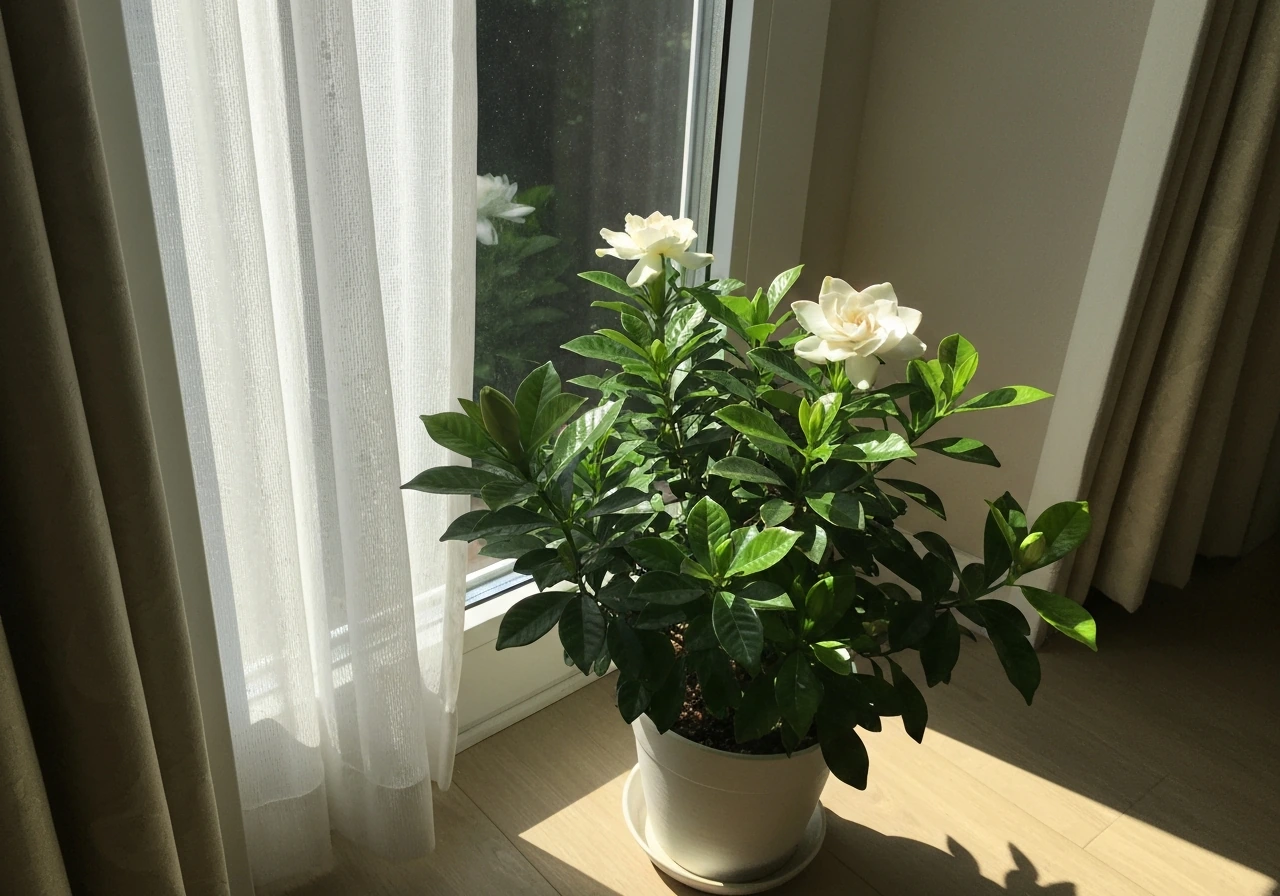
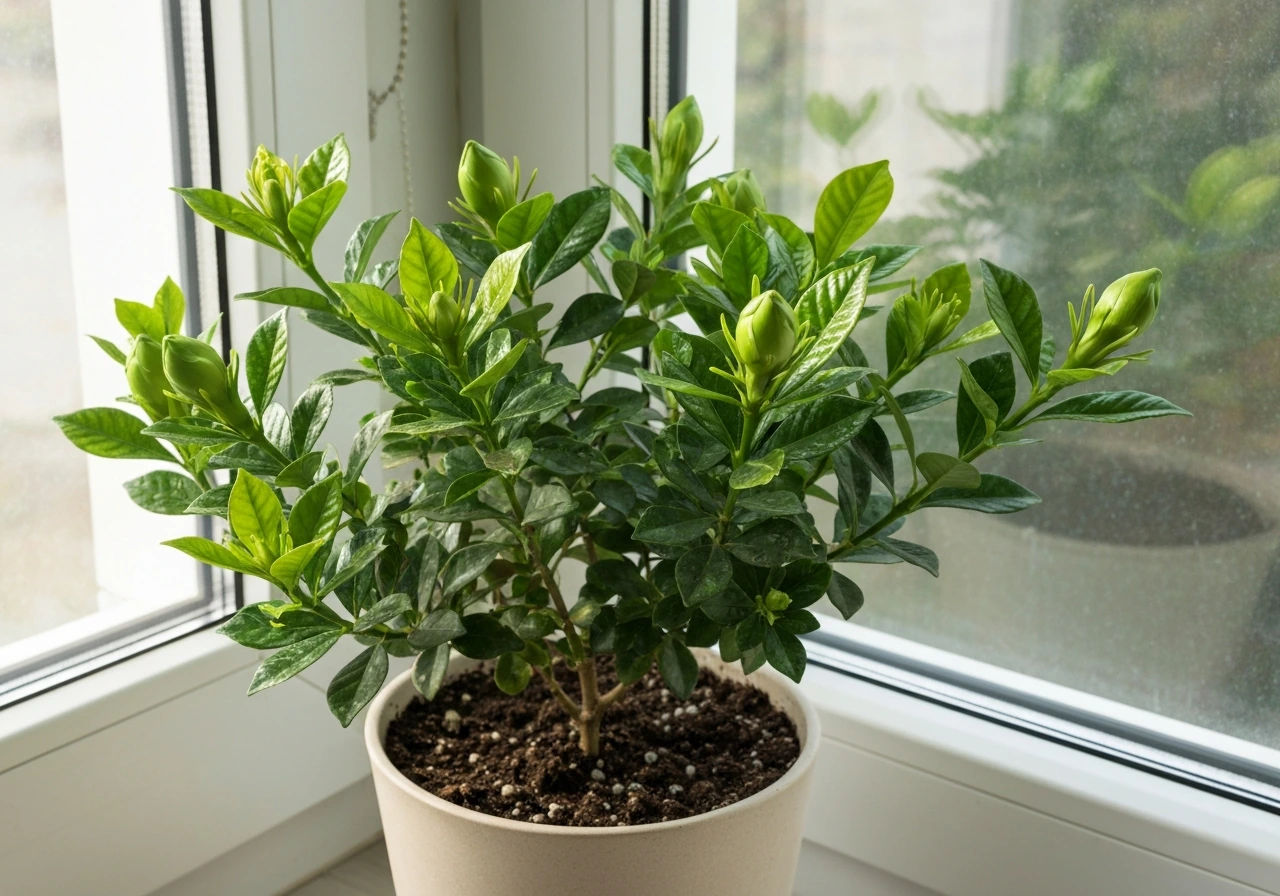
Light is the first thing to get right, and it's usually the first thing people get wrong. Gardenias need bright, direct light when kept indoors. That means a south- or west-facing window where the plant actually receives several hours of direct sun each day, not just bright ambient light. An east-facing window can work in a pinch, but you'll likely see fewer blooms. Insufficient light is one of the confirmed contributors to bud drop, so if your sunniest spot is a dimly lit room, a gardenia is going to frustrate you.
Placement matters beyond just compass direction. Keep the plant as close to the glass as possible without touching it, and rotate the pot every couple of weeks so all sides get even exposure. In winter, wipe dust off the leaves regularly because even a light film can reduce how much light the plant absorbs. If natural light is marginal, a full-spectrum grow light placed 6 to 12 inches above the plant for 14 to 16 hours a day is a legitimate option.
Temperature, humidity, and airflow
This is where most indoor gardenias fail, and it's worth spending some real time on. Gardenias bloom within a narrow temperature window. For bud development, the ideal range is 60 to 65°F at night. Night temperatures above 70°F will cause buds to drop even when everything else looks fine. Daytime temps can run a bit warmer, but any consistent warmth above that threshold at night is enough to abort flowering. Most people keep their homes at 68 to 72°F year-round, which is precisely the range that triggers bud drop.
The coolest, sunniest spot in your home is the target zone. A windowsill in an unheated spare bedroom, a sunroom that stays cool overnight, or even a spot near a window in a room you keep at the lower end of comfortable can all work. Avoid placing the plant near heating vents, radiators, or fireplaces. Rapid temperature swings, like the kind that happen when a cold draft comes through a poorly insulated window in winter, are just as damaging as sustained warmth.
Humidity is equally non-negotiable. Gardenias want high humidity, ideally 50% or above. Indoor air, especially in winter with forced-air heating, typically runs 20 to 30% humidity, which is far too dry. The fix is to run a humidifier near the plant, set the pot on a pebble tray filled with water (the pot should sit on the pebbles above the water line, not in it), or cluster it with other plants to create a more humid microclimate. Misting the foliage directly is less reliable because it dries quickly and can encourage fungal issues. Airflow matters too: gentle air circulation helps prevent mold and mildew without the drying effect of direct drafts.
Soil, pot choice, watering, and fertilizing
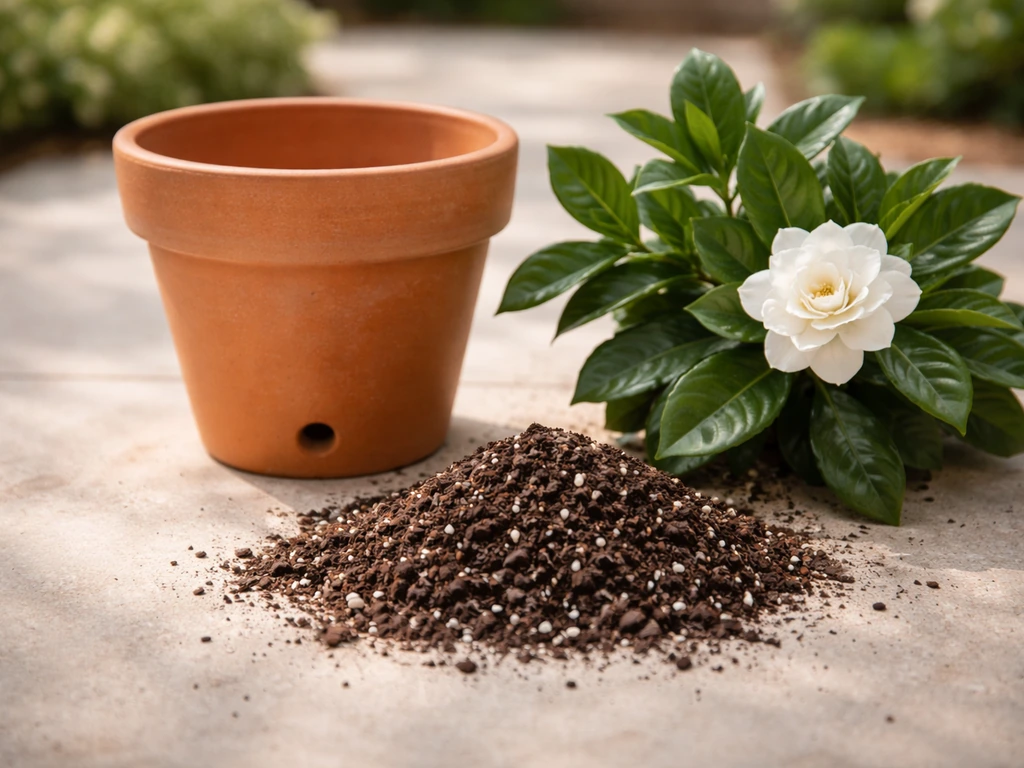
Choosing the right pot and soil
Use a fairly light, slightly acidic potting mix with a pH between 5.0 and 6.0. A standard peat-based mix works, or you can blend regular potting soil with perlite and a bit of pine bark fines. The acidity matters because gardenias are prone to chlorosis (yellowing leaves) in neutral or alkaline soil, and getting the pH wrong is a fast track to a yellow, unhappy plant. Avoid heavy, dense mixes that hold too much moisture around the roots.
For pots, terracotta is a good choice indoors because it breathes and helps prevent overwatering. Make sure there are drainage holes, because gardenias will not tolerate sitting in soggy soil. Pick a pot that's proportional to the plant: too large a container holds excess moisture that the roots can't use, which leads to root rot. For indoor gardenia 'tree' forms (standard or topiary shapes), a 10- to 14-inch pot is usually appropriate for a mature specimen.
Watering the right way
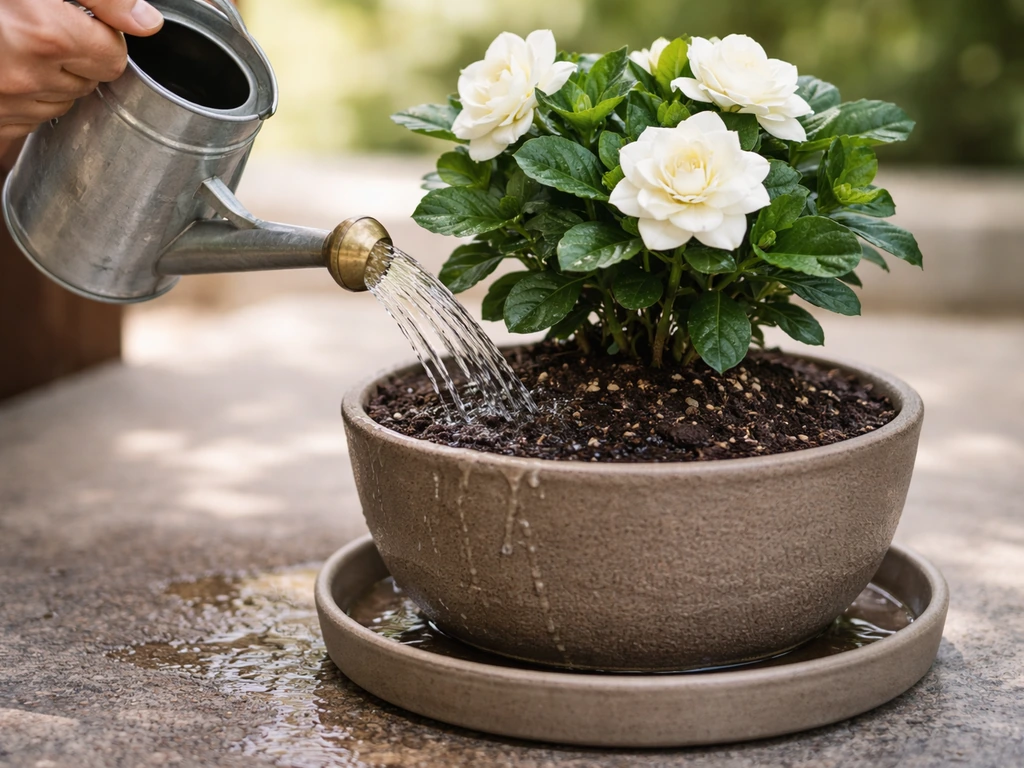
Uniform moisture is the goal. Gardenias don't like to dry out completely between waterings, but they also don't want to sit in wet soil. Water thoroughly when the top inch of soil feels dry, then let the excess drain completely. Always water at the base of the plant rather than overhead to minimize moisture on the foliage, which helps reduce disease pressure indoors. In winter when growth slows, you'll water less frequently, but don't let the plant get bone dry.
Fertilizing for blooms
Feed gardenias with an acidifying fertilizer formulated for acid-loving plants (azalea or camellia fertilizers work well). Apply every two to four weeks from spring through early fall at half the recommended dose. Stop fertilizing in late fall and winter when the plant is resting. Nutrient deficiency, especially iron and magnesium, shows up as yellowing between the leaf veins, and it's often a sign the soil pH has drifted too high rather than that the plant actually needs more nutrients.
How to grow gardenia indoors: from setup to ongoing care
- Choose your spot first. Identify the coolest, sunniest location in your home before you buy the plant. South or west window with direct sun and nighttime temps you can keep at or below 65°F is the target.
- Select the right variety. Compact cultivars like 'Radicans,' 'Buttons,' or 'Kleims Hardy' are much more manageable indoors than full-size shrubs. 'Veitchii' is a classic choice for indoor growing and reliably repeats blooms.
- Plant in a well-draining, acidic mix. Use a peat or pine bark-based mix with perlite. Check pH with an inexpensive soil test kit and target 5.0 to 6.0.
- Set up humidity support on day one. Place a pebble tray under the pot and position a small humidifier nearby. Don't wait until you see stress symptoms.
- Water consistently. Check the soil every two to three days and water at the base when the top inch is dry. Drain completely after watering.
- Fertilize during the growing season. Start feeding in spring with an acidifying fertilizer every two to four weeks at half strength. Stop in late fall.
- Monitor night temperatures actively. If you're heading into summer with no way to cool the room below 70°F at night, move the plant to a cooler spot or accept that blooming may pause.
- Prune lightly after flowering. Trim spent blooms and any leggy growth right after flowering to encourage bushier growth and future bud sets. Avoid heavy pruning, which removes next season's flower buds.
- Transition carefully between seasons. When bringing an outdoor-summered plant back indoors in fall, acclimatize it gradually over one to two weeks to avoid shock-triggered bud drop.
Fixing the most common indoor gardenia problems
Bud drop
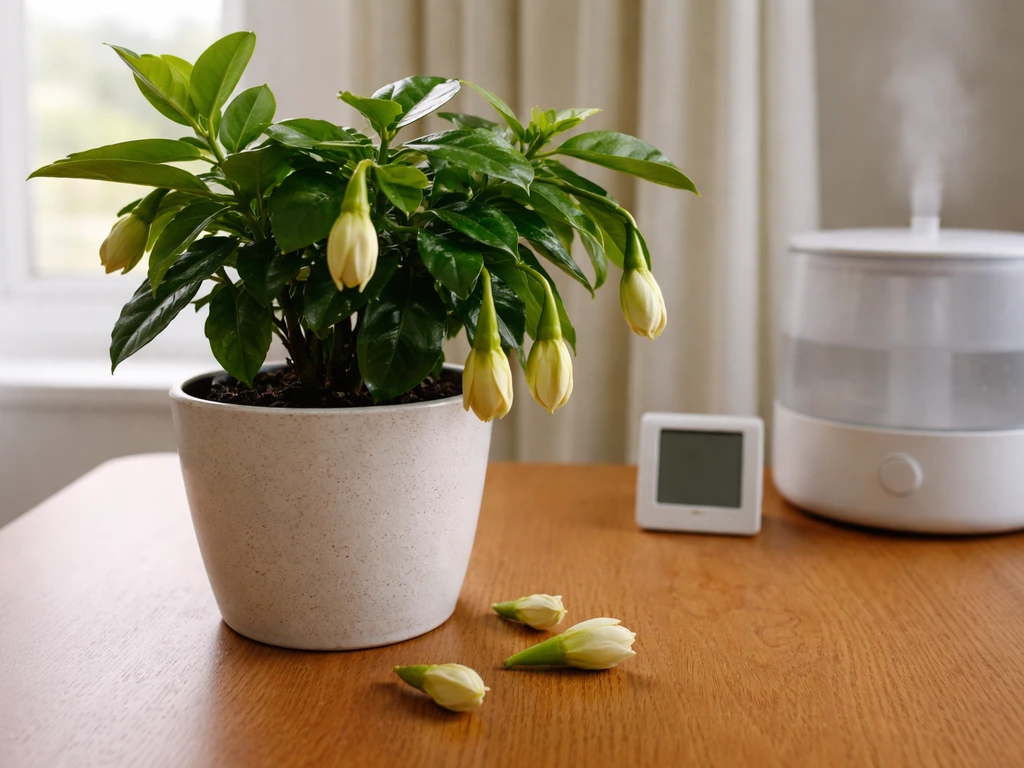
Bud drop is the most frequent complaint with indoor gardenias, and it almost always comes down to one of a handful of triggers: night temperatures above 70°F, low humidity, inconsistent soil moisture, insufficient light, or sudden environmental changes like moving the plant or a drafty window. Gardenia. net also recommends nighttime temperatures around 60, 62°F and daytime temperatures around 60, 75°F for best bud setting [nighttime temperatures around 60–62°F and daytime temperatures around 60–75°F](https://www. gardenia.
net/guide/learn-how-to-grow-and-care-for-your-gardenia). The Chicago Botanic Garden notes that gardenias can be grown successfully indoors as houseplants, but they require specific cultural care to trigger bud formation.
Work through that checklist systematically before assuming the plant is a lost cause. Usually one of those factors is the culprit. The fix is to stabilize everything: consistent watering, boost humidity, confirm nighttime temps are in range, and leave the plant in one place.
Yellow leaves
Yellowing leaves have a few common causes indoors. If the yellowing is between the veins while the veins stay green (interveinal chlorosis), the soil pH is likely too high, the plant is iron-deficient, or both. Treat with an acidifying fertilizer or a chelated iron supplement and check your soil pH. If whole leaves are turning yellow and dropping, look at overwatering, poor drainage, or soil temperatures below 70°F (cold windowsills in winter can chill the root zone even when the air temperature is fine). Nutrient deficiency from under-fertilizing during the growing season also shows up as general yellowing.
Pests
Indoor gardenias attract spider mites, scale, and mealybugs, especially in dry conditions. Spider mites thrive in low humidity, which is another reason to keep that humidifier running. For spider mites and soft-bodied insects, insecticidal soap spray applied directly to the pests is effective and low-risk indoors. For scale, horticultural oil at a 2% solution smothers the insects without harsh chemistry. Apply either product thoroughly to all leaf surfaces, including undersides, and repeat every seven to ten days for two to three cycles to break the pest life cycle. Check new growth regularly because early detection makes control much easier.
No flowers at all
If your gardenia is healthy and green but refuses to bloom, temperature is usually the issue. Gardenias need that cool nighttime period of 60 to 65°F to set buds. A plant kept in a warm living room year-round may look fine but simply never get the temperature cue it needs to flower. Inadequate light is the other common reason for no blooms. If you can't offer enough natural light, a grow light added to the setup often makes the difference.
Is indoor gardenia success realistic for your situation?
Here's the honest assessment. If you have a cool sunroom, an unheated but frost-free porch, or a south-facing window in a room you keep on the cooler side, growing gardenias indoors is genuinely achievable and worth trying. If your entire home stays at 72°F year-round and you have no way to give the plant cooler nights, you're going to struggle with flowering specifically, even if the foliage stays green and healthy.
Variety choice makes a real difference too. Full-size gardenia shrubs can reach 4 to 6 feet outdoors, and while you can grow them as container plants, managing size indoors is a real challenge. Compact varieties like 'Radicans' (which stays under 2 feet) or 'Kleims Hardy' are far better suited to indoor container life. If you're wondering can Arabian jasmine grow indoors, it also needs the right light, temperature, and humidity balance to bloom well. For indoor 'gardenia tree' forms, these are typically standard-trained plants with a single stem and a rounded canopy. They look beautiful but are even more finicky because the pruning needed to maintain the tree form stresses the plant. A 12- to 14-inch container is usually the minimum for a well-developed tree form.
Seasonal adjustments matter year-round. In summer, many gardeners move their indoor gardenias outside to a shaded patio, which gives them better humidity and light naturally. Just be sure to bring them back indoors before nighttime temps drop below 55°F in fall, and do it gradually to avoid shock. In winter, the plant essentially rests: reduce watering slightly, stop fertilizing, and focus on keeping humidity up and temps stable. Spring is when you'll see new growth push, and that's when you resume feeding and resume higher watering frequency.
How gardenia compares to other fragrant plants for indoors
If you're drawn to gardenias for their fragrance but want to know how they stack up against alternatives, here's a quick honest comparison. Gardenias are beautiful but genuinely high-maintenance. Something like jasmine grown indoors is often more forgiving about temperature swings and rewards you with fragrant blooms with less fussing. If you want the climbing, fragrant experience, you might also look at whether star jasmine can grow indoors or explore Arabian jasmine as an indoor plant, which handles indoor warmth better than gardenia does. For those interested in Confederate jasmine indoors, that's another fragrant option worth comparing before committing to a gardenia.
| Plant | Light Needs | Humidity Tolerance | Temperature Flexibility | Indoor Difficulty |
|---|---|---|---|---|
| Gardenia | Bright direct sun | Needs high (50%+) | Very narrow (60–65°F nights) | High |
| Jasmine (common) | Bright indirect to direct | Moderate | More flexible | Moderate |
| Arabian Jasmine | Bright indirect | Moderate to high | Tolerates indoor warmth | Moderate |
| Star Jasmine | Bright indirect | Moderate | Moderate flexibility | Moderate |
| Jade Plant | Bright indirect | Low humidity fine | Very flexible | Low |
If you want something lower-stakes while you get your indoor gardening feet under you, jade plants indoors are about as forgiving as it gets. On the trailing plant side, both creeping jenny as an indoor plant and creeping charlie grown indoors are interesting low-maintenance options if you're working with limited space. Even wandering jew as an indoor plant is far less demanding than a gardenia if you're after easy indoor color.
But if you've read all of this and still want to grow a gardenia indoors, good. They are genuinely stunning when they bloom, and the fragrance is worth the effort. Just go in with clear eyes: get a compact variety, find your coolest sunny window, set up humidity support before the plant arrives, and commit to consistent watering. Do those four things and you have a real shot at a flowering gardenia on your windowsill. If you're also wondering about a trailing houseplant option, can wandering jew grow indoors, and what it needs can be a great next read.
FAQ
Can a new indoor gardenia bloom right away after I bring it home?
Yes, but expect a slower start. It typically takes a full growing season (and sometimes longer) for an indoor gardenia to build enough buds, so don’t judge success based on flowers in the first few months after purchase. Focus on stable night temps, consistent moisture, and adequate light until you see new growth.
What’s the safest way to move an indoor gardenia to a new window or room?
If you have to move the plant, do it in small steps. Relocating from one window to another often triggers bud drop even when conditions seem similar, so shift the pot gradually over 1 to 2 weeks, keep the same watering rhythm, and avoid drafts during the transition.
How can I measure whether my home actually gives the cool nights gardenias need?
For best results, plan for a clear “night cool” zone rather than relying on daytime temperatures. Use a thermometer near the leaves, not just the thermostat, because windowsills can be noticeably cooler (chilling the root zone) while the air stays warm. Aim for nights around 60 to 65°F while preventing cold drafts.
Is misting enough to keep indoor humidity high for gardenias?
Misting can help briefly, but it usually doesn’t raise the humidity for long enough indoors, and wet foliage can raise disease risk. Instead, prioritize a humidifier or pebble tray and direct the goal toward stable humidity around the plant rather than frequent leaf spraying.
My gardenia yellows in winter, but my room temperature seems fine, why?
Winter can fool you. A warm room can still have a cold root zone on a windowsill, which can cause whole-leaf yellowing and drop. Pull the pot slightly away from the glass if winter nights are cold, and consider insulating the area under the pot to avoid chilling.
How do I tell if yellowing is from overwatering versus a soil pH or nutrient issue?
Overwatering can look like nutrient deficiency at first, especially with persistent yellowing and slow growth. Always check drainage and the soil moisture level at the root depth, and only fertilize lightly when active growth resumes, since feeding a stressed root system can worsen problems.
Can I repot my indoor gardenia if it’s struggling with bud drop or yellow leaves?
Yes, but only within limits. Too-large containers hold extra moisture, increasing root rot risk, so repot only when the plant is actively growing and needs the space. When repotting, use the same acidic potting approach and gently tease out only the loosest root material.
What should I do if I think my indoor gardenia has spider mites or scale?
If you suspect pests, start by isolating the plant immediately and inspecting undersides and new growth with a bright light. Sticky residue or fine webbing can point to specific culprits, but the key is early detection, then repeat treatments every week or so for multiple cycles to break the life cycle.
If I use a grow light, can I keep the plant in a warmer room and still get blooms?
A grow light works best as an added supplement, not a replacement for everything else. If you use one, keep it at a consistent distance (about 6 to 12 inches) and run it long enough to create several hours of “real” light exposure, then still protect the plant from warm nights.
My gardenia buds are dropping, should I adjust everything at once or one thing at a time?
For indoor gardenias, consistent care beats perfect care. Instead of changing multiple variables at once, adjust one factor at a time based on the likely trigger list (night temps, humidity, light, watering consistency), then wait a week or two to see which problem improves.
Do spider mites mean I should increase humidity immediately, even before treatment?
Most indoor gardenias prefer higher humidity, and spider mites are a strong clue that humidity is too low. Check humidity near the plant, not just in the room, and if mites appear, increase humidity while treating, because killing adults alone may not prevent reinfestation.
When should I prune an indoor gardenia, especially if I want it to bloom?
Generally, it’s safer to prune sparingly indoors, because pruning can stress a plant that already struggles with bud development. If you must shape, do light trimming after the main flush of growth, and avoid heavy removal of flowering wood unless you’re maintaining a trained tree form.