Yes, caladiums can absolutely grow indoors. They are tropical plants that actually prefer the warm, sheltered conditions a home provides over harsh outdoor weather. That said, they are not the kind of plant you can stick in a dark corner and forget about. Get the light, warmth, and watering right, and you will have some of the most dramatic foliage you can grow inside. Get those things wrong, and the tubers will quietly rot or the leaves will fade and collapse. This guide gives you everything you need to set them up correctly and keep them going, season after season.
Can Caladium Grow Indoors? Winter Care and Steps
James Hartwell
21 Apr 2026
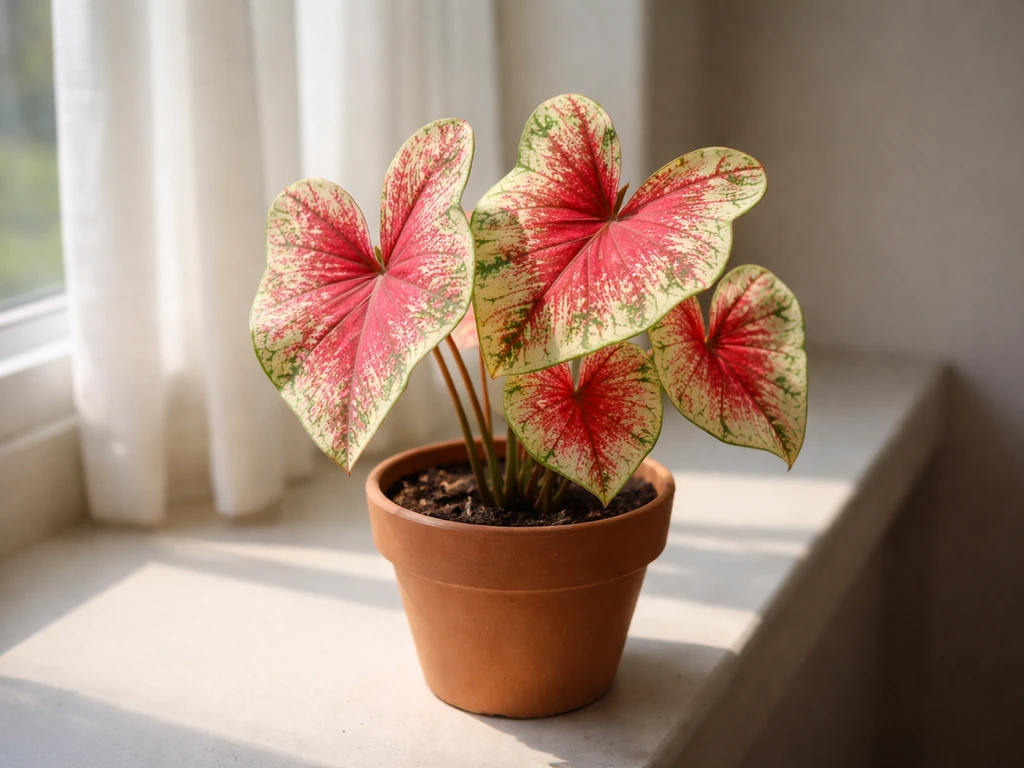
Can caladiums really grow indoors? (Short answer)
Yes, with a real caveat: caladiums do not grow year-round indefinitely, even indoors. They are tuber-based tropical plants that naturally cycle through a growing period and a dormant rest period. Indoors, that cycle is slower and more controllable than outdoors, but it still happens. You will get a few months of gorgeous, leafy growth, then the plant will start to wind down. That is normal, not a failure. The goal is to manage that cycle well so you get the best growth season possible and bring the plant back strong the next time around.
Light: the make-or-break factor for indoor caladiums
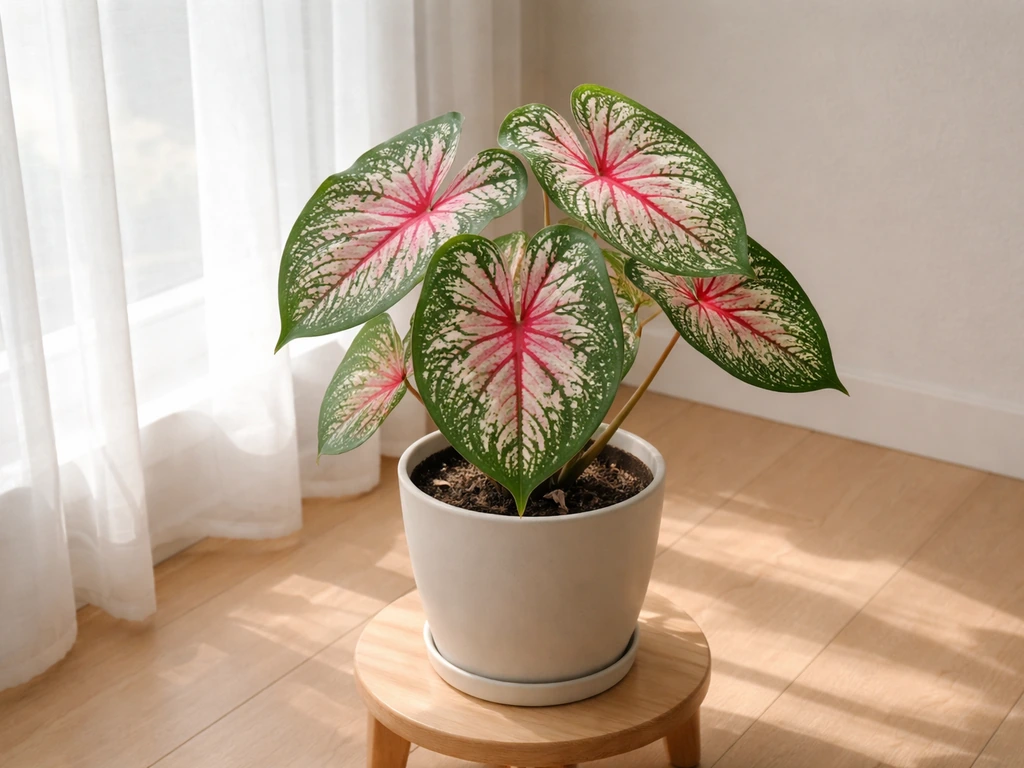
Light is where most people go wrong with caladiums indoors. These plants want bright, indirect light. Think a spot near a large east- or north-facing window, or back from a south- or west-facing window where direct sun is filtered by a sheer curtain. Direct midday sun will scorch the leaves, but too little light is its own problem: the colors dull and wash out, growth slows, and the plant just looks defeated.
To put some numbers to it: caladiums show their best color at around 5,000 foot-candles of light. For reference, bright outdoor sunlight hits 10,000 to 12,000 foot-candles, and a typical well-lit room might only reach 500 to 1,000 foot-candles. That gap matters. A spot right next to a large south-facing window (without direct sun hitting the leaves) is your best bet for getting close to that sweet spot indoors. If your apartment does not have great natural light, a grow light placed 12 to 18 inches above the plant can bridge the gap.
In winter specifically, light levels drop significantly even in sunny windows. If you want to keep your caladium actively growing through winter rather than letting it go dormant, a full-spectrum grow light becomes pretty much essential. Without it, the plant will likely wind down on its own as light dwindles, which is fine if you are planning to manage the dormancy cycle intentionally.
The right pot, soil, and drainage setup
Caladium tubers rot easily if they sit in soggy soil, so drainage is non-negotiable. Use a pot with at least one drainage hole, and do not use a saucer that lets the pot sit in standing water. A terracotta pot is a good choice because it lets excess moisture evaporate through the walls, which gives you a little extra insurance against overwatering.
For soil, go with an organic potting mix that drains well. A standard peat- or coco coir-based potting mix works, but amend it with perlite (roughly a 3:1 mix of potting soil to perlite) to improve drainage. Caladiums prefer a soil pH between 6.0 and 6.5, which is slightly acidic. If you want to be thorough, you can add a small amount of garden lime to bring the pH up if your mix is very acidic. Most quality potting mixes fall in the right range already, so this is mainly worth checking if you are mixing your own.
Watering, humidity, and temperature: hitting the right targets
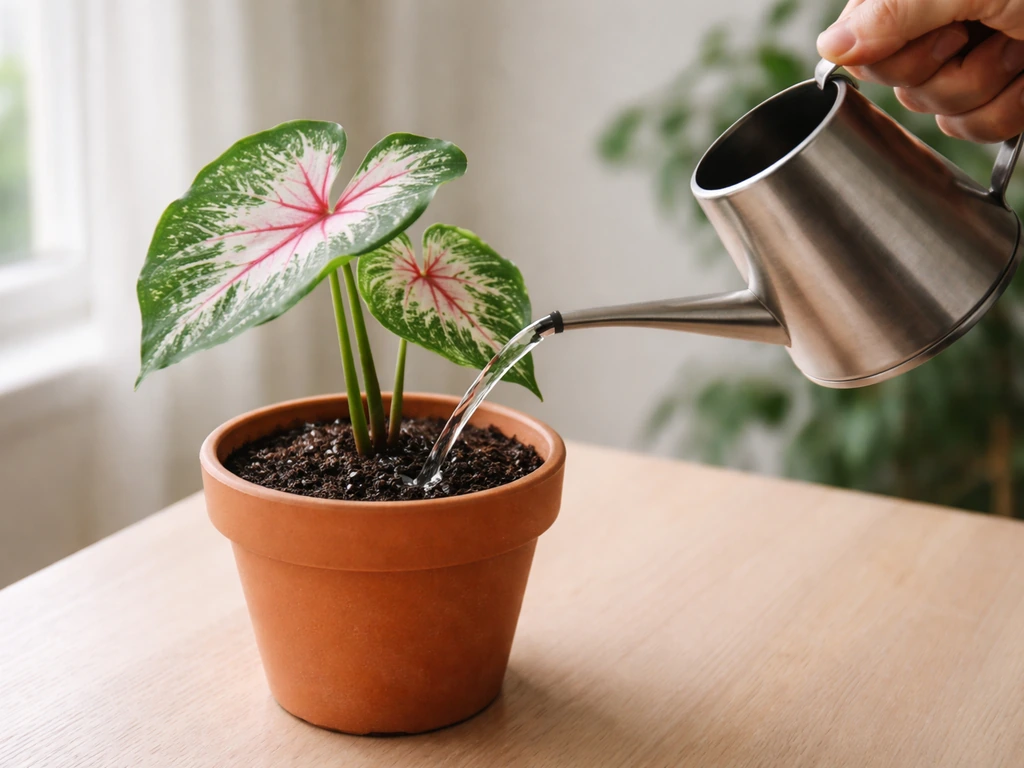
Watering
Caladiums have a relatively high water requirement for a houseplant, but they cannot be kept constantly wet. The goal is evenly moist soil during the growing season, not soggy. Water when the top inch of soil feels dry, and make sure water drains freely through the pot each time. One practical tip: avoid splashing water on the leaves when you water. Pour at the base of the plant. Wet foliage can invite disease.
When the plant is just starting out (tuber just planted, leaves not yet developed), keep watering on the lighter side. Once the plant is in full leaf and actively growing, you can water more consistently. As the plant begins to wind down toward dormancy, cut back on watering gradually, and stop altogether once leaves start dying back.
Humidity
Caladiums love humidity. They are tropical plants, and dry indoor air is one of the quieter ways they struggle inside, especially in winter when heating systems pull moisture out of the air. Aim for humidity levels of 50% or higher around your plant. A humidifier near the plant is the most reliable fix. You can also group plants together (they create a little microclimate of shared humidity) or set the pot on a tray of pebbles with water below the drainage hole. Misting the leaves is less effective and risks leaving water droplets that can cause leaf spot.
Temperature
Warmth is critical for caladiums. They need consistent temperatures between 70°F and 90°F during the day, and nights should stay at or above 65°F. If air temperature drops below 65°F, the plant does not tolerate it well, and growth stalls or declines. For soil specifically, aim for at least 70°F. Cold soil (and cold windowsills in winter) is a common cause of tuber rot. Keep pots away from drafty windows, air conditioning vents, and exterior doors. A soil thermometer is cheap and genuinely useful if you are trying to troubleshoot a caladium that refuses to grow.
Do caladiums grow year-round indoors, or do they go dormant?
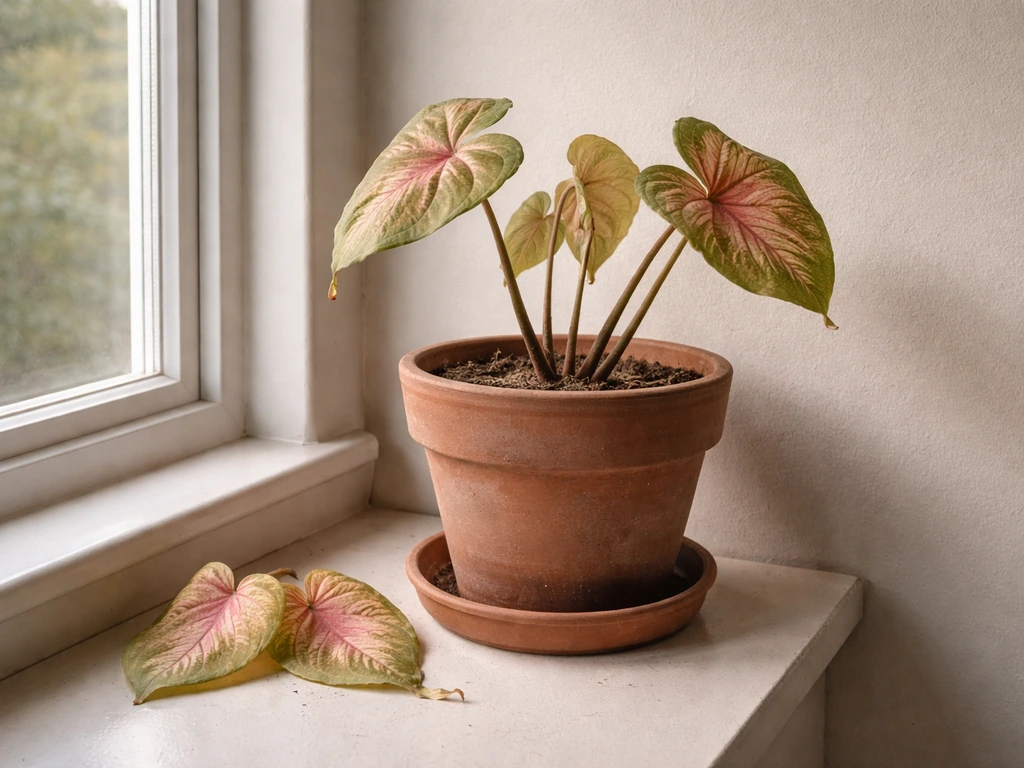
Here is the honest answer: even with perfect indoor conditions, caladiums will typically enter dormancy after a few months of active leaf growth. This is not something you did wrong. It is the plant's natural cycle. Leaves will begin to die back, growth slows, and eventually the plant looks like it is giving up. Caladium leaves die back during their dormant season Leaves will begin to die back. That is your signal to shift into dormancy management mode rather than panic-watering it or trying to coax it back immediately.
That said, some growers do manage to stretch the growing season indoors by keeping warmth and light very consistent with grow lights. If you maintain temperatures above 70°F and provide strong supplemental lighting through winter, you may get a longer active period. But most home setups will see the plant naturally wind down, especially as winter light drops.
Winter care: keep it growing or let it rest?
You have two real options in winter, and the right one depends on your setup.
Option 1: Manage dormancy (the easier path)
When you notice leaves starting to yellow and die back, stop watering. Let the soil dry out completely. The tuber is going into a rest period, and it does not need water or attention right now. You can leave the tuber in its pot or remove it and store it. If storing separately, let the tuber cure in a cool, dry spot for one to two weeks after removing it from the soil, then trim off any dried foliage and place it in a cardboard box with peat moss, vermiculite, or sawdust. Store in a location that stays between 60°F and 65°F, away from any source of frost or extreme heat. When spring arrives and you are ready to restart, pot the tuber back up, place it in warmth, and begin watering lightly. New growth will follow.
Option 2: Push through winter with grow lights and heat
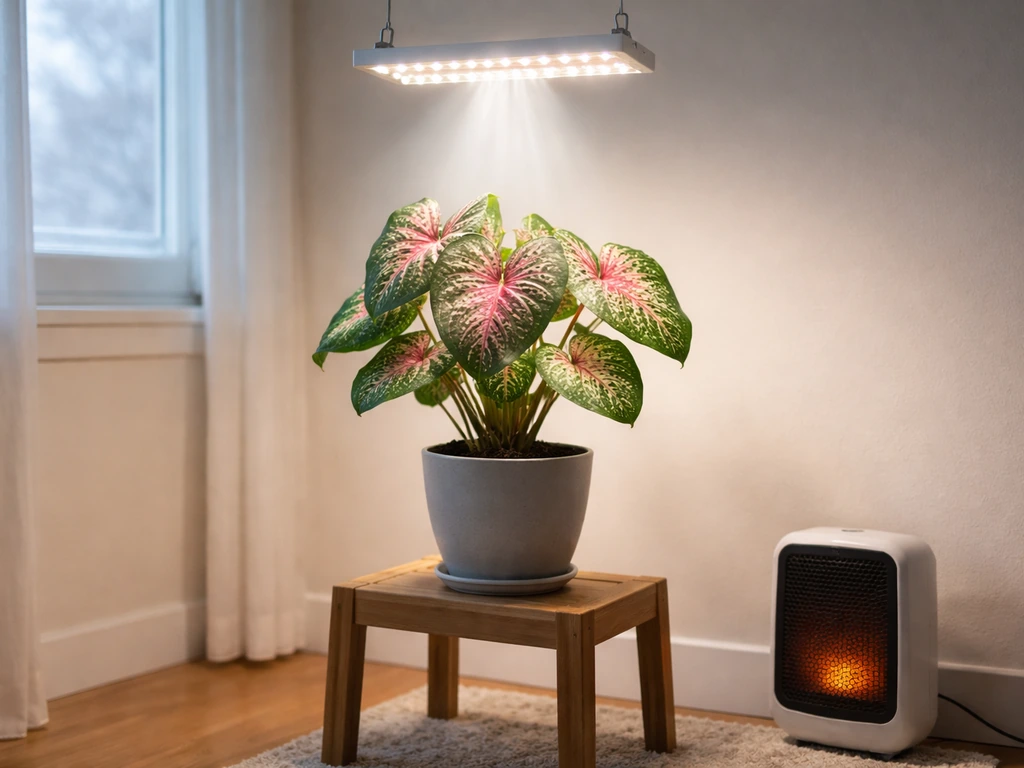
If you want to try keeping your caladium actively growing through winter, you need to compensate for two things: dropping light levels and cooling temperatures. A full-spectrum LED grow light running 12 to 14 hours a day, combined with keeping the plant in a warm room (consistently above 70°F, ideally), gives you the best shot. Keep humidity up with a humidifier and continue the regular watering routine. This approach takes more effort and is not guaranteed, but it works in the right setup. If the plant still begins to die back despite your efforts, take that as a cue to let it rest rather than fighting it.
Troubleshooting: why your caladium is struggling
| Symptom | Most Likely Cause | Fix |
|---|---|---|
| Leaves yellowing all over | Too much water or cold temperatures | Check soil drainage; move away from cold drafts; let soil dry slightly between waterings |
| Pale, washed-out leaf color | Too little light | Move closer to a window or add a grow light |
| Scorched or brown leaf edges | Direct sun or low humidity | Filter the light with a sheer curtain; increase humidity |
| Plant not growing or sprouting | Cold soil or tuber rot | Check soil temp (needs 70°F+); check tuber for soft spots indicating rot |
| Drooping leaves despite watering | Overwatering and root/tuber damage | Stop watering, check drainage, inspect tuber; let soil dry before watering again |
| Leaves dying back in winter | Natural dormancy cycle | Stop watering, allow rest period, resume when new growth appears in spring |
The single most common indoor caladium mistake I see is overwatering a plant that is heading into or already in dormancy. When leaves start dying back, people water more, thinking the plant needs help. That is the opposite of what it needs. Wet soil around a dormant tuber is exactly the condition that causes rot. When in doubt, err on the side of dryness once the plant starts winding down.
The second most common issue is not enough light. A caladium pushed to a dim corner of a room will slowly fade: colors go muddy, leaves get smaller, and new growth stops. If your plant is not performing, light is the first thing to fix before adjusting anything else.
What to do right now
If you already have a caladium indoors, check these things today: Is it near a bright window or grow light? Is the room consistently above 65°F at night? Are you watering to keep the soil evenly moist (not wet)? Is there any humidity source nearby? If you can answer yes to all of those and the plant is actively growing, you are in good shape. If it is dying back and you are heading into late spring or summer, give it a rest period and restart when temperatures warm. If it is dying back in the middle of what should be its growing season, check the soil temperature and inspect the tuber for rot.
If you are thinking about bringing caladiums inside for the first time, the best time to start is late spring or early summer when warmth and light are on your side. Set them up with the right soil, a bright spot, and consistent warmth, and they will reward you with some genuinely spectacular foliage. If you are planning to grow canna indoors, focus on strong light and steady warmth so your plants stay vigorous throughout the season can you grow canna indoors. To learn more about this specifically, check out how can cannas grow indoors. Other colorful foliage plants like coleus also grow well indoors under similar conditions, so if you find you enjoy growing caladiums inside, it is worth exploring what other shade-tolerant tropicals can thrive in your space. If you enjoy indoor plant experiments like this, you might also like to check can kalanchoe grow indoors for another colorful option with similar home-care considerations. If you are wondering can you grow columbine indoors, focus on cool, bright conditions and provide consistent moisture without waterlogging. Other colorful foliage plants like coleus also grow well indoors under similar conditions, so if you find you enjoy growing caladiums inside, it is worth exploring what other shade-tolerant tropicals can thrive in your space can coleus grow indoors.
FAQ
Can caladium grow indoors in winter without going dormant?
Yes, but only if the caladium can stay warm enough. Aim for a night temperature of at least 65°F, and keep the pot itself near room temperature (cold windowsills can chill the tuber and trigger rot). If your home drops below that, expect slower growth or dormancy sooner.
My caladium’s leaves are dying back, should I water more indoors?
You should not. Once leaves start yellowing and dying back, stop watering and let the soil dry completely. If you keep the mix evenly moist during that phase, the dormant tuber is at higher risk of rot.
Does misting a caladium help with indoor humidity?
A small amount is fine, but treat it as a humidity tool, not a substitute for airflow and proper watering. Water droplets sitting on the leaves can raise disease risk, so focus on a humidifier or a pebble tray and avoid frequent leaf misting.
How dark can the room be and still keep caladium growing indoors?
If it is totally dark, expect poor color and stunted growth. Caladiums do best with bright, indirect light, ideally near an east or north window, or using a grow light positioned 12 to 18 inches above. If you can see your own hand clearly without turning on lights, it is usually still not enough for strong color.
Should I use a grow light for indoor caladiums even in a sunny window?
Choose the light setup based on what you can control. If you have limited natural light, use a full-spectrum grow light for 12 to 14 hours daily. If you do have a very bright window, you may be able to reduce grow light time, but you should still monitor color (dull or washed patterns usually mean light is insufficient).
What’s the best way to avoid overwatering caladiums indoors?
Yes, but remove the guesswork by checking the soil and drainage. Water when the top inch dries, then make sure water flows out of the drainage hole. If water stays in a saucer or the pot never drains, you are effectively setting up a rot risk.
My newly potted indoor caladium is yellowing, is it normal?
Most yellowing early on is normal if you just repotted or replanted. However, if leaves collapse quickly while the soil stays wet or smells sour, inspect for tuber rot. Let the soil dry more between waterings and verify drainage holes are not blocked by debris.
How long does dormancy last for indoor caladiums?
Not always. Indoors, the winter rest period can be shorter or longer depending on temperature and light consistency. The key indicator is leaf dieback, if it is starting, switch to dormancy management rather than forcing the calendar to match.
What can I do if my indoor caladium grows but never thrives?
If you want to keep them from “sliding into dormancy,” prioritize warmth first (above 70°F daytime, nights 65°F or warmer) and then lighting consistency. Even with good light, a cold room or cold soil can stop growth, so consider insulating the pot from a chilly windowsill.
How can I tell if my caladium problem is temperature or watering indoors?
Use a thermometer to confirm both air and soil temperature. Cold soil is a common trigger for tuber rot, especially with window drafts. If the room feels warm but the plant is near glass or an uninsulated wall, move it away or add gentle insulation around the pot.