
Yes, calathea can absolutely grow indoors, and they actually prefer it. These are rainforest floor plants, so the sheltered, warm, relatively stable environment inside your home is closer to their natural habitat than an outdoor garden ever would be. That said, 'indoors' covers a lot of ground. A bright, humid bathroom is very different from a dry apartment living room in January, and calathea will tell you the difference pretty quickly with curling leaves, crispy edges, or dramatic drooping. Get a few key conditions right, though, and calathea is one of the most rewarding houseplants you can grow.
Can Calathea Grow Indoors? How to Grow It Successfully

James Hartwell
17 May 2026
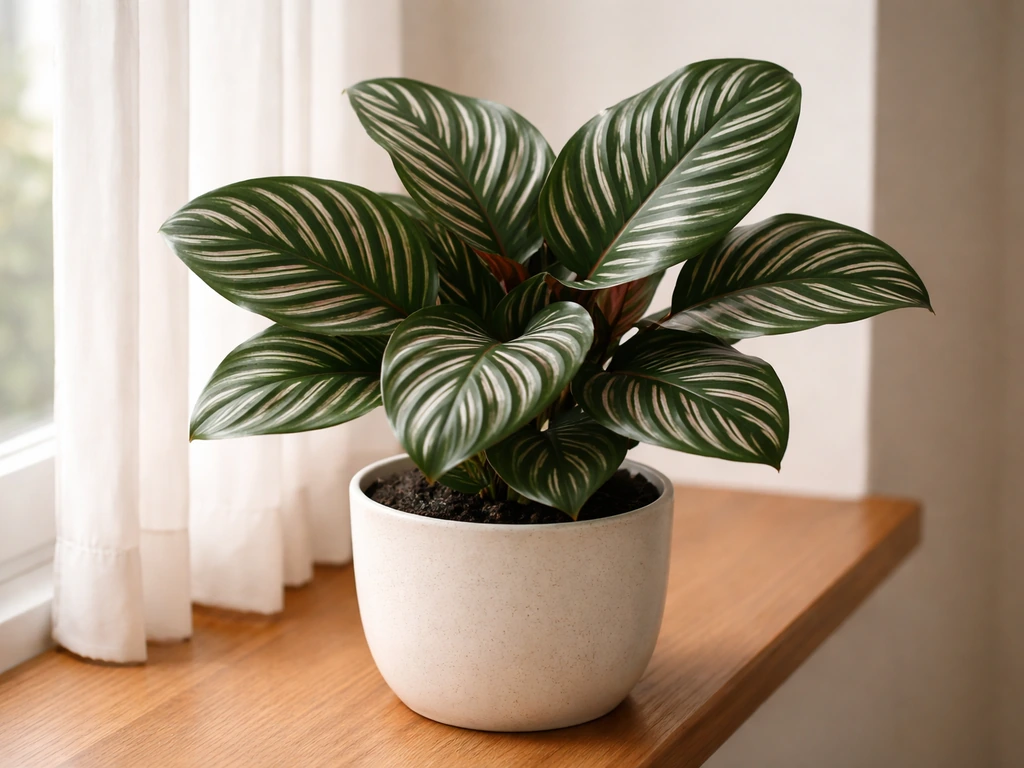
Can calathea really thrive indoors
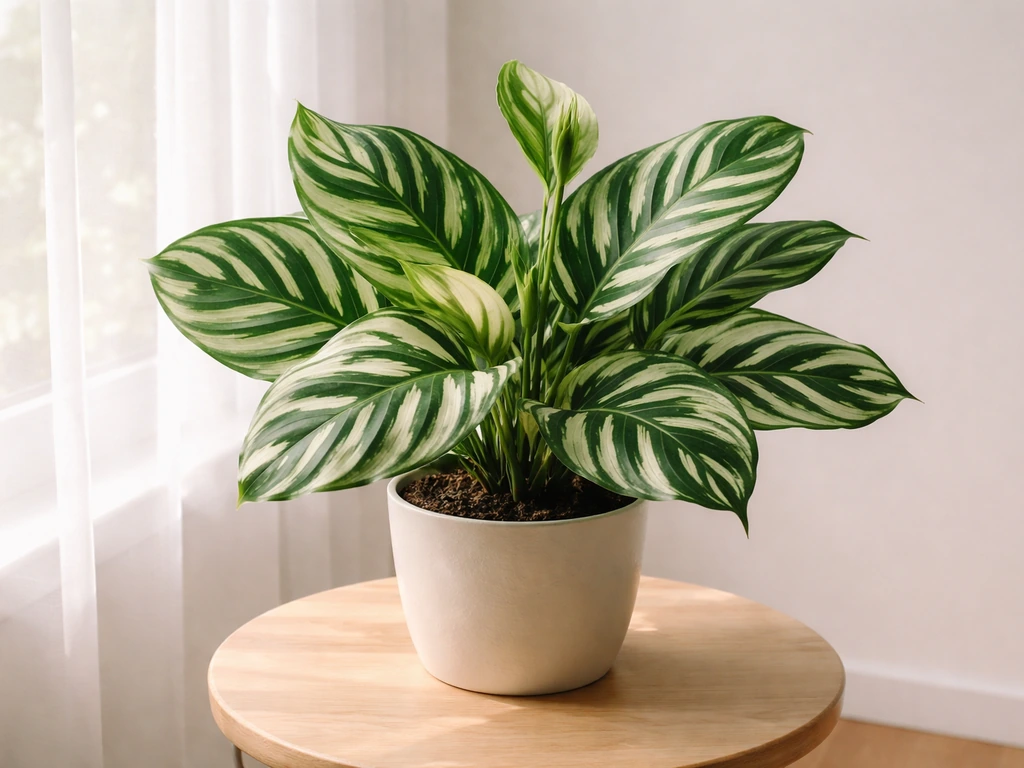
Calathea (often sold now under the genus Goeppertia, but still widely labeled calathea in nurseries) evolved on the floors of tropical rainforests in Central and South America. That origin story tells you almost everything you need to know about its indoor needs: dappled or low light, consistent warmth, and high humidity.
Epic Gardening notes that calatheas prefer relatively high humidity, citing a 40, 60% range, and that stress from dry air can lead to curling, yellowing, and wilting prefer relatively high humidity (40–60%). The good news is that most homes naturally provide warmth and filtered light.
The harder part for most people, especially apartment dwellers, is humidity, since indoor air, especially in heated or air-conditioned spaces, tends to run far drier than calathea likes.
Here is the honest answer on thriving versus surviving: calathea will tolerate a lot, but it will only truly thrive when light, humidity, and watering are all working together. Most indoor calathea problems trace back to one of those three things being off. Nail all three and you will have a lush, patterned, head-turning plant that also moves its leaves up and down with the light cycle, which never gets old. Struggle with all three and you will be fighting crispy tips and yellowing leaves for months. The good news is the fixes are practical and doable for anyone, apartment or house, beginner or experienced grower.
Best indoor light conditions for calathea
Calathea is often sold as a 'low light' plant, and while it tolerates lower light better than most, that label can give beginners false confidence. The sweet spot is medium to bright indirect light. Think the light you get near a north, east, or west-facing window where the sun never hits the leaves directly. Direct sun will bleach those gorgeous leaf patterns and scorch the edges fast.
In practice, placing your calathea within a few feet of a north-facing window works well for most of the year. In winter, when light levels drop significantly, shift it to a south-facing windowsill to compensate. The key word in all of this is 'indirect.' Even a south window is fine as long as the plant is not sitting in a direct beam of sunlight. A sheer curtain between the plant and the glass solves that instantly.
One thing worth knowing: low light does not cause crispy tips or curling leaves, but it will slow growth and dull those leaf patterns over time. If your calathea looks faded or is barely producing new leaves, more indirect light is usually the fix, not fertilizer or a different pot.
Humidity and temperature targets (and how to raise them at home)
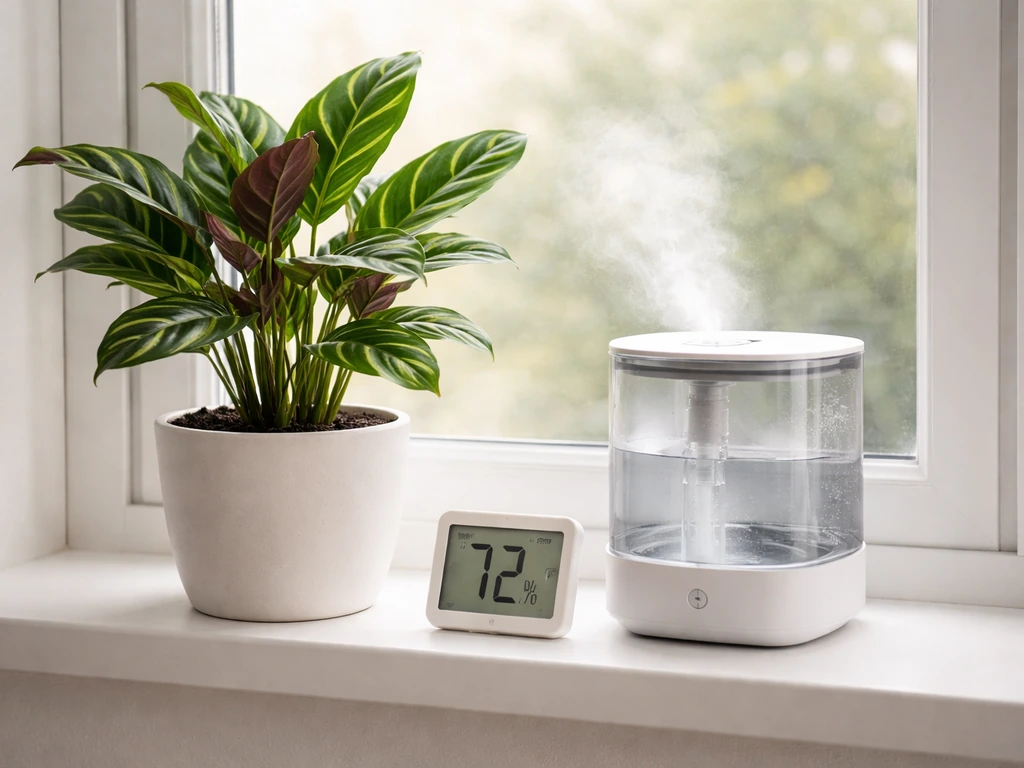
This is where most indoor calathea attempts succeed or fail. Calathea wants humidity in the 60 to 80 percent range, and most homes sit somewhere between 30 and 50 percent, especially in winter when heating systems dry the air out significantly. At low humidity, the plant loses water from its leaves faster than the roots can replace it, which leads to wilting, curling, and those frustrating crispy brown edges that no amount of watering fixes.
Temperature is the easier variable. Keep your calathea above 60°F (15°C) at all times, and try to stay in the 65 to 80°F range for active growth. Avoid placing the plant near cold drafts, air conditioning vents, or cold windowpanes in winter. Even a brief chill from an open window can cause visible stress.
For humidity, here are the practical options that actually work at home:
- Use a small humidifier nearby. This is the most reliable method and works especially well in bedrooms or home offices where calathea doubles as a beautiful display plant.
- Group calathea with other plants. Plants release moisture as they transpire, and clustering them creates a slightly more humid microclimate.
- Place the pot on a pebble tray filled with water, making sure the pot sits above the waterline, not in it. This adds some localized humidity around the plant, though the effect is modest.
- Pick a naturally humid room. Bathrooms with windows or kitchens near sinks are genuinely great spots for calathea as long as the light works.
- Measure before you guess. Buy a cheap indoor hygrometer (they run about $10 to $15) and check your actual humidity levels. You might be surprised how dry your space really is.
Misting the leaves directly is a common suggestion but it is inconsistent as a humidity solution and can encourage fungal issues if water sits on leaves too long. A humidifier or pebble tray is a better long-term approach.
Watering and soil setup for indoor calathea
Water your calathea when the top inch of soil feels dry, not on a strict schedule. Check the soil every two to three days by pressing your finger about an inch into the mix. If it feels dry, water thoroughly until it runs out the drainage holes, then let it dry to that top-inch threshold again before watering. In winter when growth slows, you will be watering less frequently, sometimes every 10 to 14 days. In summer, it could be every five to seven days. Follow the soil, not the calendar.
Water quality matters more with calathea than most houseplants. Tap water with high mineral content or chlorine/fluoride can cause brown leaf tips over time, and this is one of the most common 'mystery' problems I see people blame on light or humidity when the real culprit is their water. The fix is simple: switch to distilled water, filtered water, or collected rainwater. If you want to stick with tap water, letting it sit overnight in an open container allows some of the chlorine to off-gas, which helps a little.
For soil, calathea needs a mix that holds some moisture without staying waterlogged. A standard potting mix on its own often holds too much water and compacts over time, which is bad news for calathea's delicate root system. Improve drainage by mixing in perlite, orchid bark, or pumice, roughly one part amendment to every two to three parts potting mix. Always use a pot with drainage holes. No exceptions. Root rot from sitting in wet soil is one of the fastest ways to lose a calathea.
Step-by-step indoor care routine
Once your setup is right, maintaining a calathea is mostly about consistency. Here is the routine I follow and recommend to beginners:
- Every 2 to 3 days: Check soil moisture by pressing a finger about one inch into the mix. Water if the top inch is dry. Skip if it still feels damp.
- Weekly: Wipe down the leaves with a damp cloth to remove dust. Clean leaves photosynthesize better and you will catch early pest problems while you are at it.
- Weekly: Check your hygrometer. If humidity is below 50 percent, run the humidifier or refill the pebble tray.
- Seasonally (spring and summer): Fertilize every four to six weeks with a balanced water-soluble fertilizer diluted to half strength. Do not fertilize in fall or winter when the plant is resting.
- Seasonally: Adjust window placement as light changes. Move closer to a brighter window in winter, pull back from intense light in summer.
- Annually: Check if the plant is root-bound by looking for roots coming out of the drainage holes. If so, repot one pot size up in fresh soil mix.
Common indoor problems and how to troubleshoot leaf issues
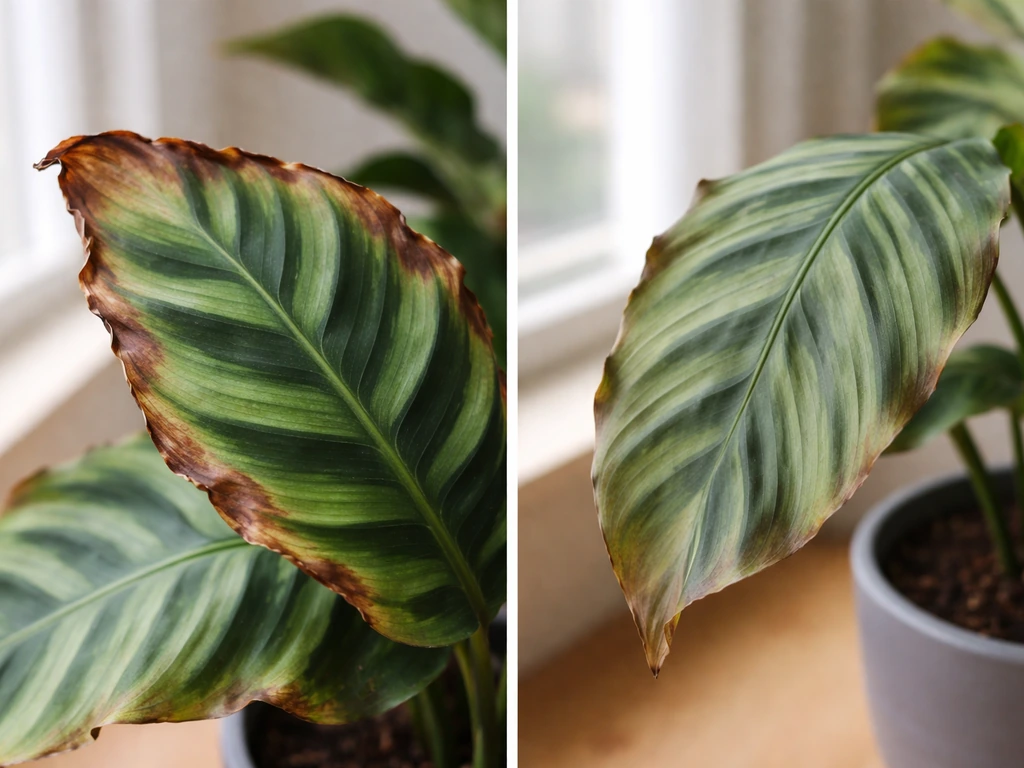
Most calathea problems have a pattern to them once you know what to look for. Here is a quick guide to the most common symptoms and their causes:
| Symptom | Most Likely Cause | Fix |
|---|---|---|
| Crispy brown leaf edges or tips | Low humidity or tap water mineral buildup | Raise humidity above 50%; switch to distilled or rainwater |
| Leaves curling inward | Low humidity, underwatering, or heat stress | Check humidity first, then soil moisture; move away from heat vents |
| Yellow leaves | Overwatering, poor drainage, or water chemical buildup | Let soil dry more between waterings; check drainage holes are clear |
| Faded or washed-out leaf patterns | Too much direct light | Move to a shadier spot or add a sheer curtain |
| Drooping or wilting despite moist soil | Low humidity causing rapid transpiration | Boost humidity immediately; check for root rot if issue persists |
| Slow growth or no new leaves | Too little light or needs fertilizer | Move to brighter indirect light; start feeding every 4 to 6 weeks in spring |
One important note on persistent decline: if you have corrected light, humidity, watering, and water quality and the plant is still getting worse, look more carefully at the roots. Gently unpot it and check for mushy, dark roots, which signal root rot. Trim damaged roots with clean scissors, let them air dry briefly, then repot in fresh mix. Also check the undersides of leaves for spider mites, which love dry indoor air and can devastate a calathea quickly. Tiny webbing or speckling on leaves is the giveaway.
Calathea is more demanding than a pothos or a philodendron, which is naturally easygoing indoors. But calathea is not unreasonably difficult. It just has clear preferences, and when you meet them, it thrives visibly and dramatically.
Quick-start checklist and next steps today
If you are bringing a calathea home today or trying to rescue one that is struggling, here is what to do right now:
- Find a spot near a north, east, or west window with bright indirect light and no direct sun hitting the leaves
- Check your current humidity with a hygrometer; if it is below 50 percent, set up a pebble tray or small humidifier
- Make sure your pot has drainage holes and that the soil mix is airy, not dense and compacted
- Switch to distilled, filtered, or rainwater if you have been using tap water and seeing brown tips
- Water only when the top inch of soil is dry, not on a fixed schedule
- Keep the plant away from cold drafts, air conditioning vents, and cold windowpanes
- Plan to fertilize at half strength every four to six weeks during spring and summer only
- Set a reminder to check the soil every two to three days until you get a feel for the rhythm
Calathea rewards attention and consistency more than any single care trick. Once you dial in its humidity and watering, it becomes a genuinely low-maintenance plant with spectacular results. If you are interested in other bold-leaved tropical plants for indoors, colocasia is another option worth considering, though it has quite different light and space requirements. Colocasia can also be grown indoors, but it typically needs bright, humid conditions and plenty of space to perform well.
If you are also wondering about canna plants, they can grow indoors too with the right light and warmth can canna plants grow indoors. And if you are newer to indoor growing in general, starting with something forgiving like a philodendron can help you build confidence with humidity and watering routines before graduating to calathea.
FAQ
Can calathea grow indoors year-round, or do I need to move it outside in summer?
Most calatheas do fine indoors all year because they prefer stable warmth and humidity. If you move it outdoors, avoid direct sun, wind, and quick humidity swings (even a shaded patio can be drier and brighter than your home). A safer approach is to keep it indoors and only adjust placement for seasonal light changes.
What’s the best indoor window for calathea if I only have one option?
If you can choose one, start with a north or east window with indirect light. If that’s too dim, a west or south window can work during most of the year as long as you add a sheer curtain and keep the plant out of the sun’s direct beam. In winter, you may need to shift it closer to a brighter window to maintain growth.
How humid does my home need to be for calathea to thrive?
Aim for roughly 60 to 80 percent humidity for the best results. If you are stuck in the 30 to 50 percent range, rely on a humidifier or a pebble tray approach rather than only misting. Also consider grouping plants together, since shared microclimates can raise humidity around foliage.
Why do my calathea leaves curl even though I’m watering regularly?
Leaf curl commonly happens when humidity is too low or the plant is drying out between waterings. Another frequent cause is inconsistent soil moisture, where the top inch dries but deeper soil stays wet, stressing roots. Check soil depth and humidity together, and look at leaf edges, not just the curl, to decide whether the issue is dryness versus overwatering.
Is misting calathea leaves enough to solve humidity problems?
Misting can give short-term relief, but it usually doesn’t maintain humidity consistently and can increase fungal risk if water lingers on leaves. If you do mist, do it in the morning and avoid soaking, then treat a humidifier or pebble tray as the main humidity strategy.
How do I know if my calathea is getting too much light indoors?
Too much direct light often shows up as bleached or faded leaf patterns and scorched, crispy edges rather than uniform wilting. Move the plant back from the window or keep it behind a sheer curtain, and resume closer placement gradually if needed.
My calathea has brown tips, what should I check first?
First suspect water quality, since mineral-heavy tap water can create brown tips over time even when humidity and light seem correct. Try distilled, filtered, or rainwater, and if you continue to see tips worsening, review drainage and soil aeration so roots can function normally.
Can I use tap water if I don’t want to switch to distilled or filtered?
You can try, but it is a gamble, especially with hard water or water with high chlorine or fluoride. If you stick with tap water, letting it sit overnight may reduce chlorine a bit. Watch for repeat brown tip symptoms and be ready to switch to filtered or distilled if the issue persists.
How can I tell when my calathea should be watered if I’m not sure about soil moisture?
Use a consistent check, press a finger about one inch into the soil, and water only when that zone feels dry. If your potting mix dries unevenly, consider repotting into a more airy mix (potting mix plus perlite or orchid bark) so moisture spreads more reliably and roots don’t cycle between wet and dry extremes.
What’s the safest way to repot a struggling calathea indoors?
Only repot into a fresh, well-aerated mix with drainage holes, and handle roots gently. If you see mushy or dark roots, trim them with clean scissors and let the plant air briefly before potting. After repotting, keep it in bright indirect light and slightly reduce watering frequency until you see new growth.
Should I fertilize calathea indoors, and how often?
Fertilizer helps if light and humidity are already correct, but it won’t fix low humidity, wrong watering, or root issues. Once growth resumes, use a diluted, balanced fertilizer and apply sparingly (many people overdo it). If your plant is declining, prioritize correcting care conditions and consider waiting to fertilize until it stabilizes.
Can spider mites or other pests spread in indoor homes, and what should I watch for?
Yes, pests can spread quickly between indoor plants. Calathea is particularly prone to spider mites in drier air, look for fine webbing and tiny speckling on leaf undersides. Isolate the plant, increase humidity around it, and rinse leaves gently before deciding on further treatment.
What if my calathea is still declining after I fix light, humidity, and watering?
If conditions are correct and the plant keeps getting worse, check roots for rot (mushy, dark, foul-smelling roots) and examine leaf undersides for mites. Root rot can progress even when you water “on schedule,” especially if the soil stays waterlogged. Unpot, inspect, and repot into a better-draining mix if any rot is present.
Is it normal for calathea to move its leaves up and down indoors?
Yes, calathea often raises and lowers leaves with the light cycle. If movement suddenly stops along with drooping or yellowing, that usually points to a care imbalance such as low humidity, cold drafts near windows, or inconsistent watering. Rotate the pot slightly every couple of weeks for even growth.