
Yes, dianthus can grow indoors, but it needs more light than most windowsills actually deliver. If you're wondering about another popular bloom, learn whether can african daisies grow indoors and what conditions they need. If you're also wondering whether dichondra can grow indoors, the lighting and setup requirements are different from dianthus, so it's worth checking those specifics first can dichondra grow indoors.
Can Dianthus Grow Indoors? Setup, Care, and Success Tips

James Hartwell
30 Apr 2026
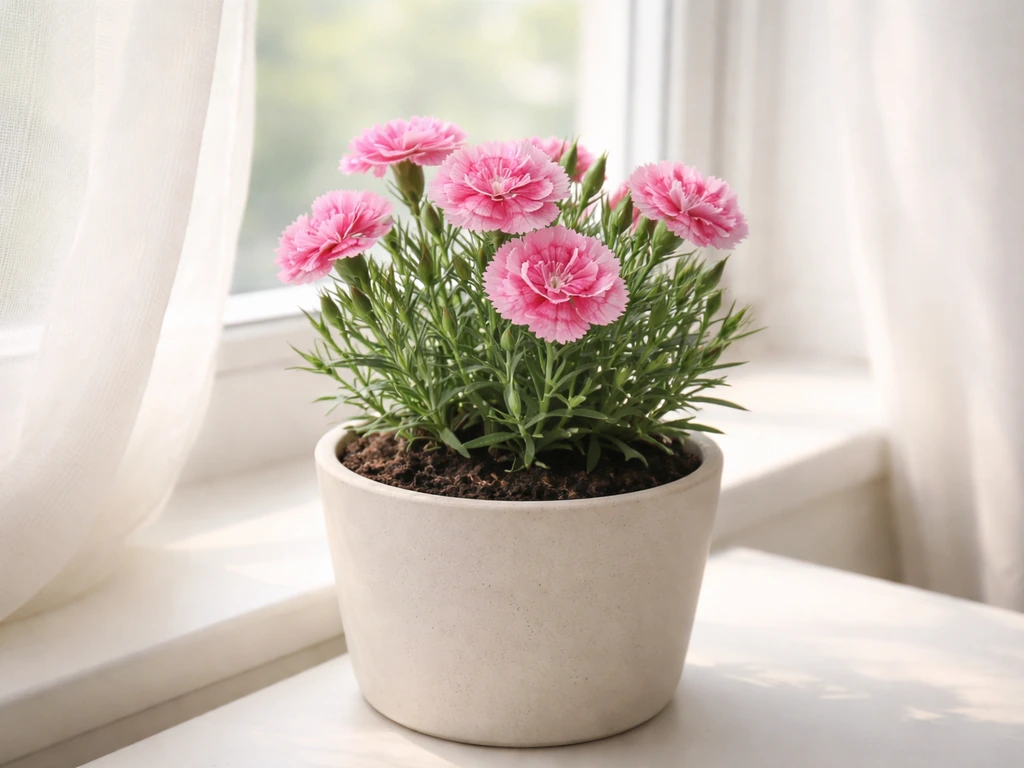
Give it at least 6 hours of direct sun daily, keep temperatures in the 65–70°F range during the day with cooler nights around 50–60°F, make sure air moves freely around the plant, and deadhead religiously. Do all that, and you can get a dianthus blooming on your windowsill for weeks. Skip any one of those requirements and you'll end up with a leggy, bud-dropping plant that fades fast.
Is dianthus actually suitable for indoor growing
Dianthus is not a natural houseplant. It's a sun-hungry, cool-air-loving flower that evolved outdoors, and it will remind you of that if you stick it in a dim corner. Can dawn redwood grow indoors? With the right bright light and cooler nighttime temperatures, you can grow daphne indoors as well can you grow daphne indoors. It can, but it needs very bright light and cool temperatures to stay healthy cool-air-loving. That said, it's absolutely growable inside if you're honest about what it needs and set things up accordingly.
The best candidates for indoor growing are compact florist types and potted pinks sold in quart or small containers, especially varieties labeled as Dianthus caryophyllus (carnation types) or the dwarf pinks sold as patio plants. These are already accustomed to container life. Large bedding varieties bred for garden borders are harder to manage indoors because they want more root room and more intense outdoor light than any windowsill can match.
One honest heads-up: indoor dianthus is more of a seasonal performer than a permanent resident. It can thrive for months with the right setup, but most home environments don't replicate the cool nights and bright light it naturally gets outdoors. Compared to something like a desert rose, which genuinely adapts to the warmth of a sunny indoor room, dianthus wants that cooler temperature swing between day and night that indoor spaces often don't provide. If you're wondering about succulents instead, can desert rose grow indoors depends on getting bright light and careful watering.
Best indoor conditions: light, temperature, airflow
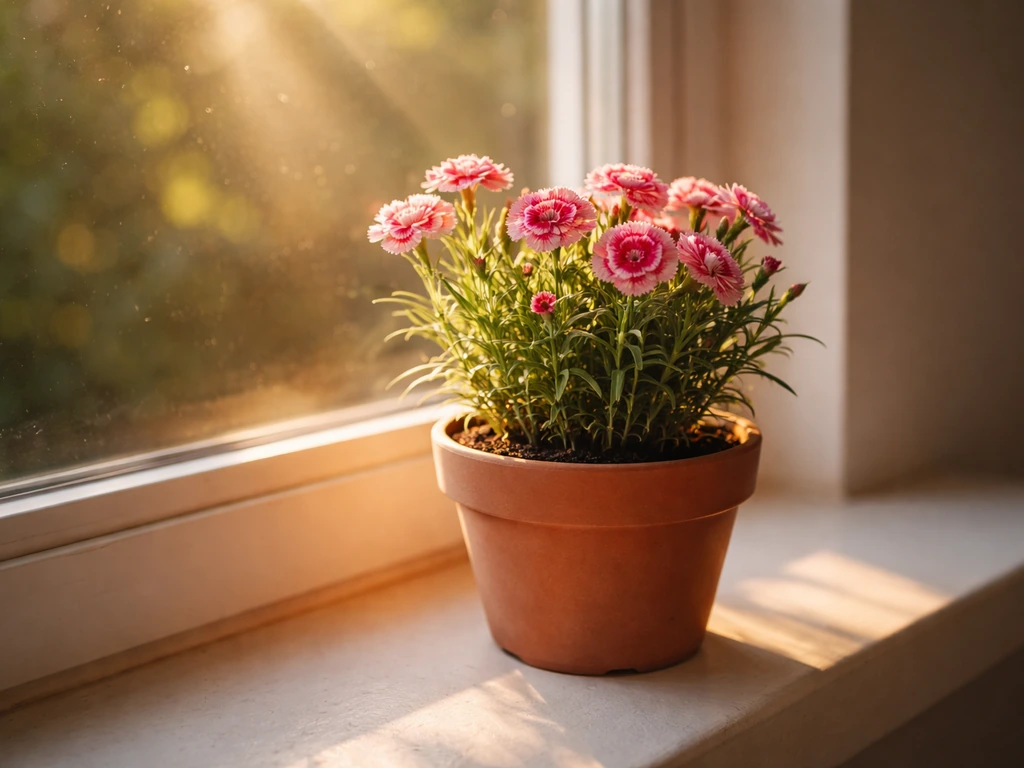
Light
This is where most indoor dianthus attempts fail. Dianthus needs at least 6 full hours of direct sun every day, and 6 to 8 hours is ideal for reblooming. A south-facing window is your best bet. A west-facing window can work if afternoon sun is strong and unobstructed. A north-facing window is not going to cut it, and an east-facing window with only soft morning sun will keep the plant alive but not blooming well.
Before you place your plant, stand at the window for a few minutes and actually check what you're working with. Is the glass tinted? Are there overhanging eaves or a tree outside cutting the light by 30%? These things matter more than people realize. If your best window gives fewer than 5 hours of direct sun, add a full-spectrum LED grow light positioned 6 to 12 inches above the plant for a few hours each day to make up the difference. It's not complicated, and for dianthus it can be the difference between blooms and bare stems.
Temperature
Dianthus performs best at 65–70°F during the day and cooler nights around 50–55°F. Most homes sit at 68–72°F around the clock, which is slightly warmer than ideal but workable. What really helps is placing the plant near a cool window where nighttime temperatures drop a bit naturally, especially in late fall or early spring. Avoid heating vents, radiators, and spots right next to appliances that throw heat. Warm, stagnant air is one of the fastest ways to stress a dianthus indoors.
Airflow
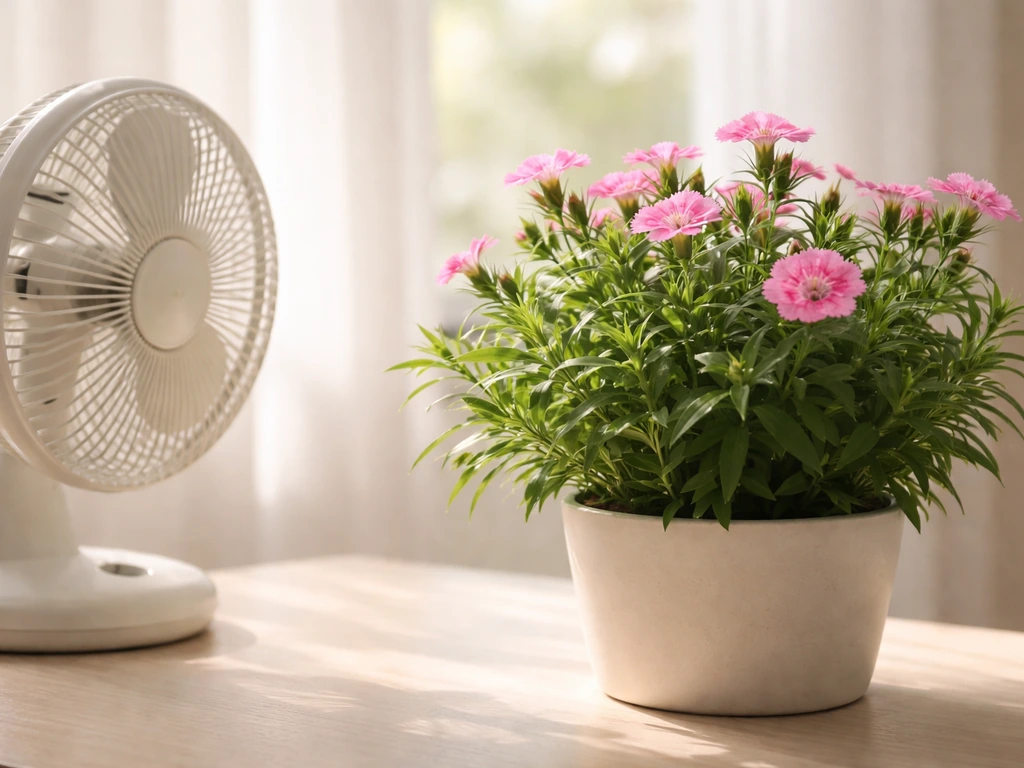
Good air circulation is non-negotiable with dianthus. Poor airflow raises humidity around the foliage, which sets the stage for Botrytis (gray mold) and fungal crown rot. Indoors, this means don't crowd it against other plants, don't put it in a closed-off nook, and consider running a small fan nearby on low for an hour or two each day. It sounds fussy, but dianthus is genuinely susceptible to fungal issues when air is still.
How to pot it up: container, drainage, soil choice
Container size matters more than people think. A 3.5 to 4.5 inch pot (around 9–12 cm) is the right range for a single compact dianthus plant. Shallow, wide pots work well and are actually recommended for production culture. Going too large traps excess moisture around the roots, which is a fast track to root rot.
Drainage is critical. Use a pot with drainage holes, full stop. Decorative cachepots are fine as long as you pull the inner pot out to drain after watering and never let it sit in standing water. A single drainage hole that's partially blocked is worse than no hole at all because it gives false confidence.
For the potting mix, aim for something well-draining with a slightly alkaline pH of 6.5 to 7.5. A standard indoor potting mix on its own holds too much moisture. Cut it with roughly 30% coarse perlite or pumice to improve drainage and aeration. That gritty texture mimics the fast-draining soil dianthus naturally thrives in outdoors. If your mix feels dense and spongy after watering, it needs more perlite.
Indoor care checklist: watering, fertilizing, deadheading
Watering
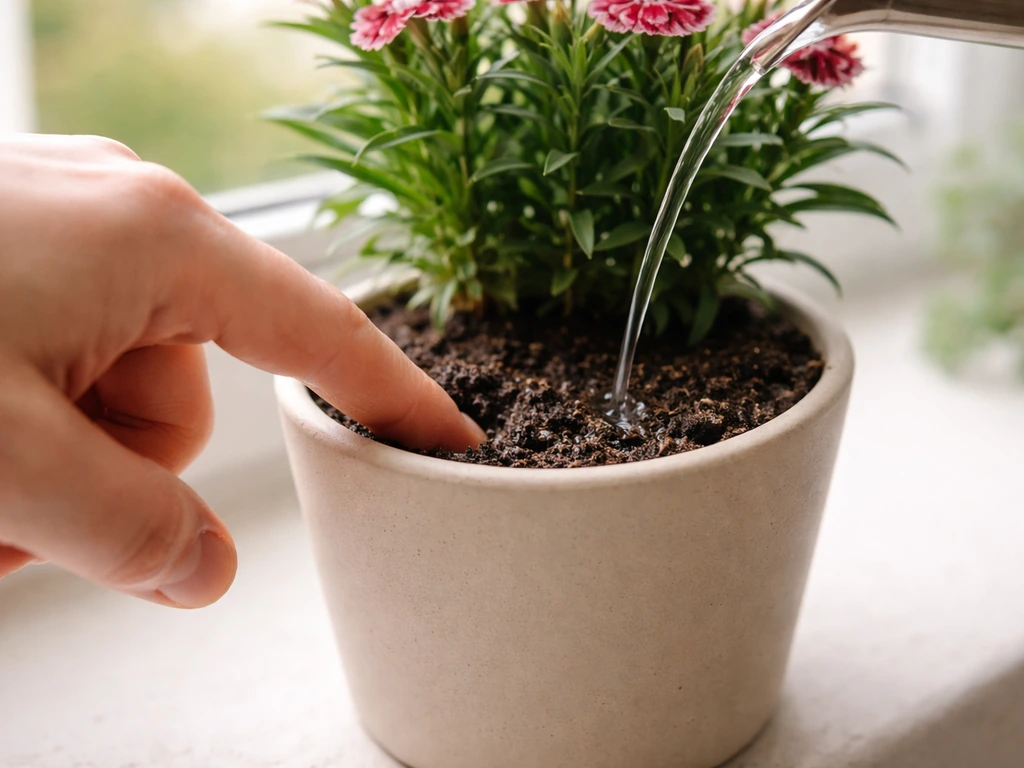
The number one indoor dianthus killer is overwatering. The rule is simple: only water when the top 1 to 2 inches of soil are dry to the touch. Stick your finger in the soil before every watering. If it still feels cool and moist an inch down, wait another day. When you do water, water thoroughly until it drains from the bottom, then stop. Never let the pot sit in a saucer of water. Avoid watering in the evening, and try not to splash water on the leaves or stems, since wet foliage overnight dramatically increases the risk of fungal problems.
Fertilizing
Dianthus is not a heavy feeder, but it does need regular nutrients during active growth. A diluted liquid fertilizer every two weeks from spring through summer works well. Choose a balanced or low-nitrogen formula. Too much nitrogen pushes leafy green growth at the expense of flowers, which is the opposite of what you want. Back off fertilizing in fall and winter when the plant naturally slows down.
Deadheading
If you take one care tip seriously, make it this one. Deadheading is the single most effective thing you can do to keep dianthus blooming. As soon as petals start to wilt or drop, clip the stem back to the nearest healthy set of leaves. Don't just pull off the spent flower head and leave a bare stem. Cutting back to a leaf node is what triggers the plant to push new buds. Do this consistently and you can extend blooming from spring all the way through fall. Let spent flowers go to seed and the plant thinks its job is done.
Common problems indoors and quick fixes
| Problem | Likely Cause | Quick Fix |
|---|---|---|
| Leggy, stretched stems | Not enough light | Move to south/west window or add grow light 6–12 inches above plant |
| Bud drop | Heat stress, inconsistent watering, or low humidity swing | Move away from heat vents, water on schedule, check temperature |
| Botrytis (gray mold) | High humidity + poor airflow + cool temps + wet foliage | Remove affected tissue immediately, increase airflow, water at base only |
| Root rot | Overwatering or poor drainage | Reduce watering, check soil mix, repot with more perlite if needed |
| Aphids | Common indoor pest on soft new growth | Wash off with a strong spray of water or treat with insecticidal soap |
| Spider mites | Hot, dry indoor air | Mist with water spray or apply insecticidal soap, improve humidity slightly |
| Failure to rebloom | Spent flowers not removed, or not enough light | Deadhead consistently, reassess light levels |
Botrytis deserves a little extra attention because it can spread fast once established. High humidity above 85%, poor air circulation, crowded plants, and cool nights below 62°F all create the perfect environment for it. When you see the fuzzy gray growth, remove the affected parts immediately and throw them in the trash, not the compost. Dead or decaying plant tissue is exactly what Botrytis spores use to survive and spread to healthy tissue.
Can you keep it long-term: seasonal expectations
Dianthus indoors is best thought of as a season-long performer, not a permanent houseplant. Most compact varieties will give you strong blooms through spring and summer with good care. Come late fall, many plants will naturally slow down and may go semi-dormant, especially if light levels drop as days shorten. This is normal, not a sign you've killed it.
Some carnation types (Dianthus caryophyllus) can rebloom on their own, but others need specific day-length or temperature cues to flower again. If your plant stops blooming in fall or winter, reduce watering slightly, hold off on fertilizing, and let it rest. Come late winter or early spring when light returns, resume regular care and it may push new growth and buds.
Realistically, you'll likely get the best results from spring through early fall. After that, many growers either move the plant outdoors for summer (and treat it as a seasonal indoor display in spring and fall) or simply replace it annually with fresh plants. That's not a failure. Florist dianthus and compact pinks are inexpensive and widely available in spring. If you get a full season of blooms out of one indoors, that's a genuine win compared to, say, trying to grow a bedding annual in a dark apartment year-round.
If you're comparing options for a continuous indoor bloomer, dianthus is more demanding than some other flowering plants you might consider. Plants like dipladenia can handle warmer indoor temperatures more comfortably, and African daisies share dianthus's need for strong light. The key difference with dianthus is the cool-night preference, which is genuinely hard to replicate in a consistently heated home.
Your immediate next steps
- Check your windows today. Stand at each window and time how many hours of direct, unobstructed sun each spot gets. South-facing windows with 6+ hours are your target. West-facing windows with strong afternoon sun can work as a backup.
- If your best window gets fewer than 5 hours of direct sun, order or pick up a full-spectrum LED grow light before buying your plant. Position it 6–12 inches above the pot.
- Choose a compact or dwarf variety sold in a 3.5 to 4.5 inch pot. Avoid large bedding types meant for garden borders.
- Repot into a mix of standard potting soil plus 30% coarse perlite, in a pot with solid drainage holes.
- Place in your sunniest, coolest spot away from heating vents. Set a reminder to check soil moisture every 2 days.
- Start deadheading from day one. Every wilted bloom gets cut back to the nearest healthy leaf node.
FAQ
How can I tell if my indoor dianthus is getting enough direct sun to bloom?
Look for daily sun hours you can measure, not just “bright window.” If buds stall or flowers drop quickly, it often means fewer than 6 hours of true direct light. If you cannot confirm direct sun, use a grow light for a few hours daily and reassess in 2 to 3 weeks, since dianthus needs time to form new buds.
Can I grow dianthus indoors year-round, or will it always act seasonal?
Most indoor dianthus behaves like a seasonal performer because it prefers a cooler nighttime drop. You can sometimes keep it blooming longer with consistent lighting and cooler nights, but if you stop fertilizing, reduce watering slightly in fall, and let it rest through winter, you will usually get better flowering again in spring.
What temperature setup works best if my apartment never gets cool at night?
Try placing the pot near the coolest window area and away from drafts that warm the air continuously. If your nighttime temperatures stay above the mid-60s, dianthus may survive but bloom less, so adding a grow light plus running a fan for gentle airflow can partially compensate for the light, though it cannot fully replace the cool-night requirement.
Should I move my dianthus outdoors during warm weather?
Yes, moving it outdoors in summer often improves performance because it can access stronger light and more natural airflow. Harden it gradually over a week to prevent sun scorch, and bring it back before nights become cool enough for outdoor growth. If you do this, treat indoor dianthus as a seasonal cycle, not a permanent houseplant.
Why does my dianthus get leggy and drop buds even though I water correctly?
Legginess and bud drop indoors usually point to insufficient light rather than only watering. Confirm you are providing direct sun or supplemental lighting, then check for heat at night from vents or appliances. Also make sure the plant is not crowded, since stressed plants are more likely to abort buds.
Is it okay to use a decorative pot or cachepot without drainage holes?
Decorative covers are fine only if the plant pot can drain freely. Always water, wait for drainage, then empty any leftover water. If the inner pot sits in moisture, even briefly, it can trigger root rot. A single drainage hole that is partially blocked is a common hidden cause of failure, so check it regularly.
What’s the correct watering method, and how do I avoid overwatering?
Use the “top 1 to 2 inches dry” rule and feel the soil depth, not just the surface. When watering, soak thoroughly until water runs from the bottom, then stop and discard drainage. Avoid evening watering so the pot has more time to dry before cooler nighttime conditions increase disease risk.
How do I prevent fungal problems like Botrytis indoors?
Prioritize airflow and remove any affected tissue immediately. Avoid misting or wetting leaves, especially overnight. If you notice gray fuzzy growth, cut below the visible area and discard in trash, not compost. A small fan on low for an hour or two daily can help by keeping foliage drier and reducing stagnant air.
My dianthus flowers, then stops. How do I get it to bloom again?
Deadhead properly by cutting the stem back to the nearest healthy leaf set after petals wilt, not just removing the flower head. Also keep up light and do mild feeding during active growth. If blooming stops in fall or winter, reduce watering a bit, pause fertilizer, and allow a rest period while light improves in late winter.
Which dianthus types are easiest to grow indoors?
Compact florist types and patio or dwarf pinks in small containers are usually the best starting point. Large bedding varieties often want more root room and stronger outdoor light than windows can provide, so they may look okay at first but decline faster indoors.