Do those things, and you absolutely can have dahlias blooming inside your home in January. Skip any one of them, and you will end up with a sad, stretched-out plant or a rotted tuber. So the honest answer is: yes, with the right setup, and this guide will walk you through exactly what that setup looks like. If you are also wondering about other bulbs, you may be interested in whether can daffodils grow indoors with the right light and care.
What dahlias actually need indoors
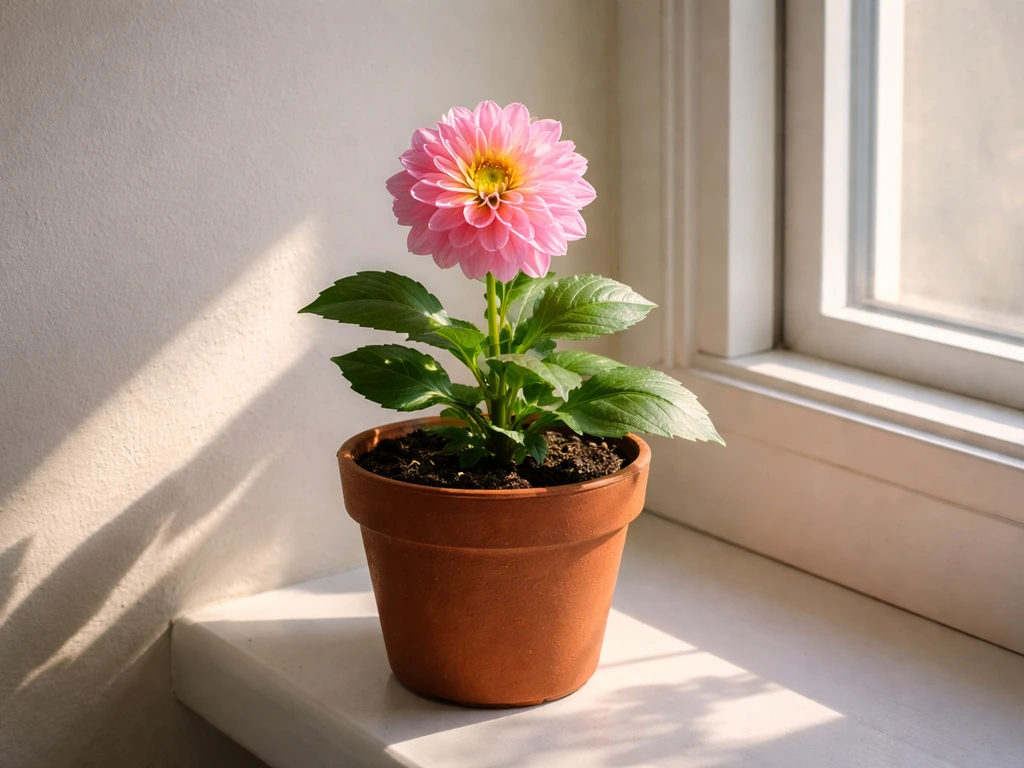
Before you invest in pots, tubers, or lights, it helps to understand what dahlias are asking for. They are not especially fussy plants by nature, but they do have a few non-negotiable requirements that most indoor spaces do not automatically provide.
Light
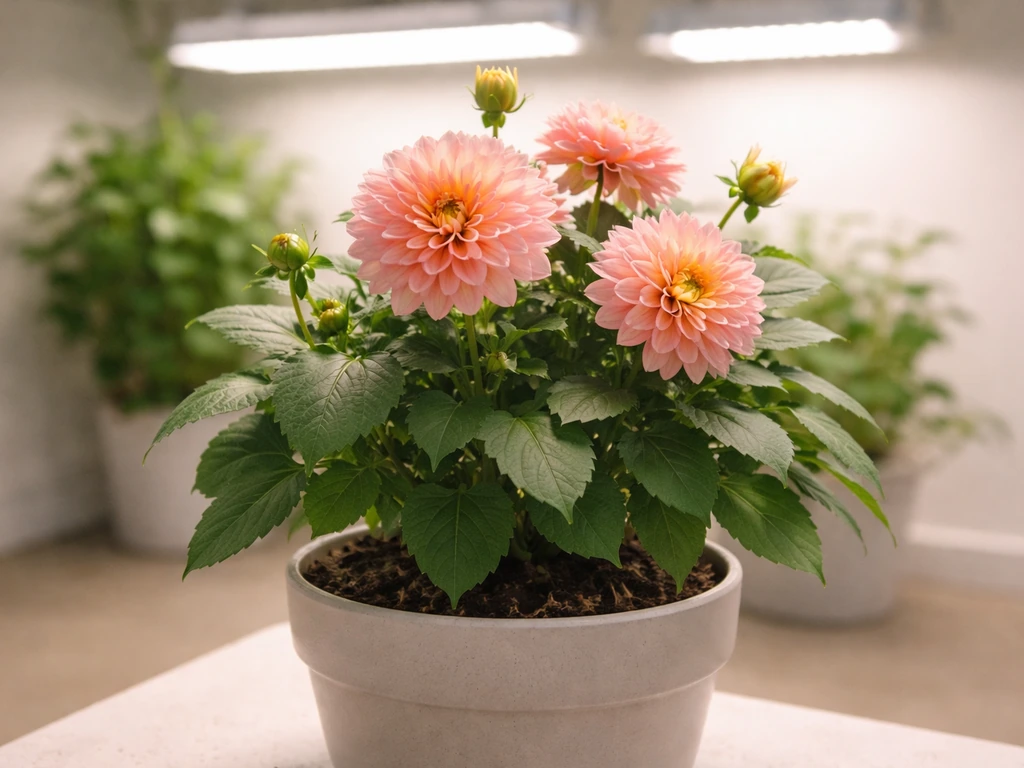
Light is the single biggest obstacle to growing dahlias indoors year-round. Dahlias want full sun outdoors, roughly 6 to 8 hours of direct light per day. Indoors, even a bright south-facing window rarely delivers enough intensity to keep them happy, especially in winter. Commercial greenhouse growers target around 4,000 to 6,000 foot-candles of light intensity and maintain day lengths of up to 14 hours using extension lighting.
That should tell you something: if professional greenhouses need supplemental lighting, your windowsill almost certainly does too. A good full-spectrum LED grow light on a timer set to 14 to 16 hours per day is not optional if you want year-round growth and blooms. Without it, your dahlia will stretch toward any available light, produce weak stems, and may not flower at all.
Temperature
Dahlias prefer day temperatures around 70 to 72°F and night temperatures in the 62 to 64°F range. Most homes sit comfortably in that window, which is genuinely good news. What you want to avoid is anything below 55°F (tubers will go dormant or rot) and prolonged heat above 85°F (blooms will suffer and drop). Keep them away from cold drafts near windows in winter and away from heating vents that blast dry, hot air.
Humidity and airflow
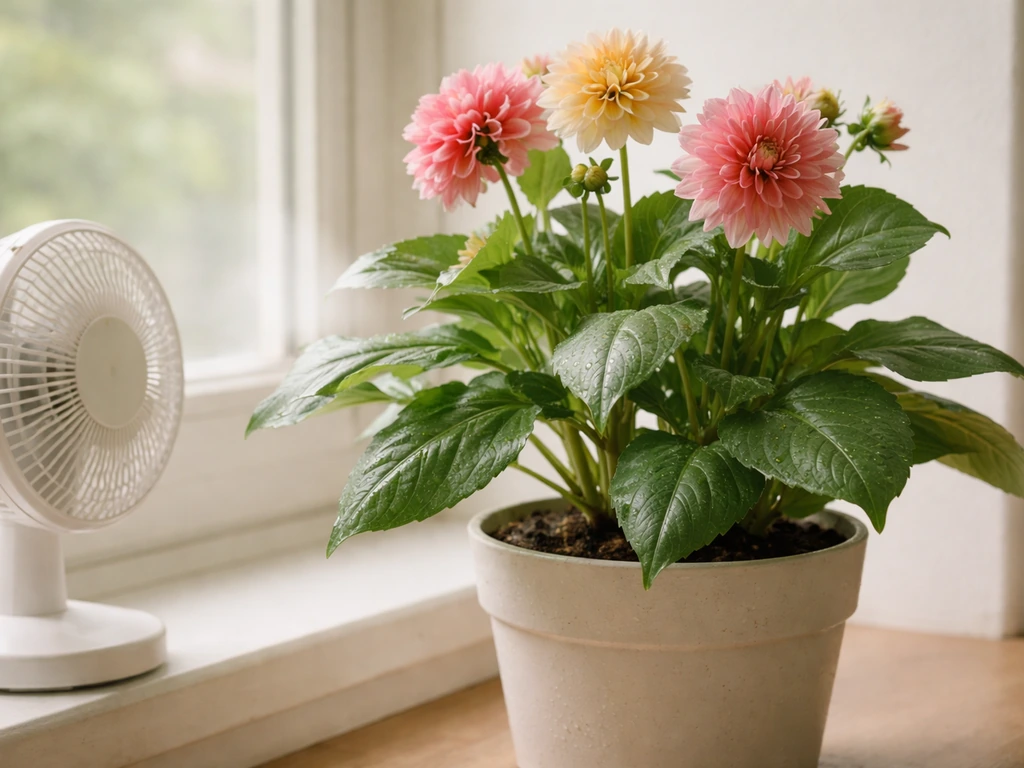
Dahlias like moderate humidity, roughly 50 to 60%, and they need good airflow around the stems and foliage. Indoors, stagnant air is a recipe for powdery mildew, which is one of the most common dahlia problems I see when people grow them inside. A small oscillating fan running on low near your plants makes a noticeable difference. Do not mist the leaves as a humidity fix because wet foliage is exactly what fungal diseases want. If your home is very dry in winter, a humidifier nearby is a better solution than misting.
Picking the right variety and starting method
Container-friendly varieties
Not all dahlias are suited for indoor container life. The giant dinner-plate varieties can reach 4 to 5 feet tall and need enormous pots that simply do not belong in most living rooms. For year-round indoor growing, you want compact, dwarf, or patio-type dahlias. Varieties in the 12 to 24 inch height range are ideal. Look for labels like 'Gallery' series, 'Topmix' series, 'Figaro' series, or any variety described as dwarf or patio dahlia. These were essentially bred for container culture, have shorter internodes (so they stay bushy rather than leggy), and produce plenty of blooms relative to their size.
Tubers vs. started plants: which to use
If you want to start from tubers, that works well in spring when you are planning your indoor setup from scratch. Tubers are cheaper per plant and give you a range of variety choices. Plant them in late winter or early spring, keep the soil barely moist until sprouts appear, then ramp up watering and light as growth takes off. If you want blooms faster or you are starting mid-year, buying a started plant from a nursery is the quicker route. Either way works for year-round growing. The main thing to remember is that tubers need a dry, warm start with minimal water until they sprout, while purchased plants can go straight into their final container.
Pots, soil, and getting drainage right
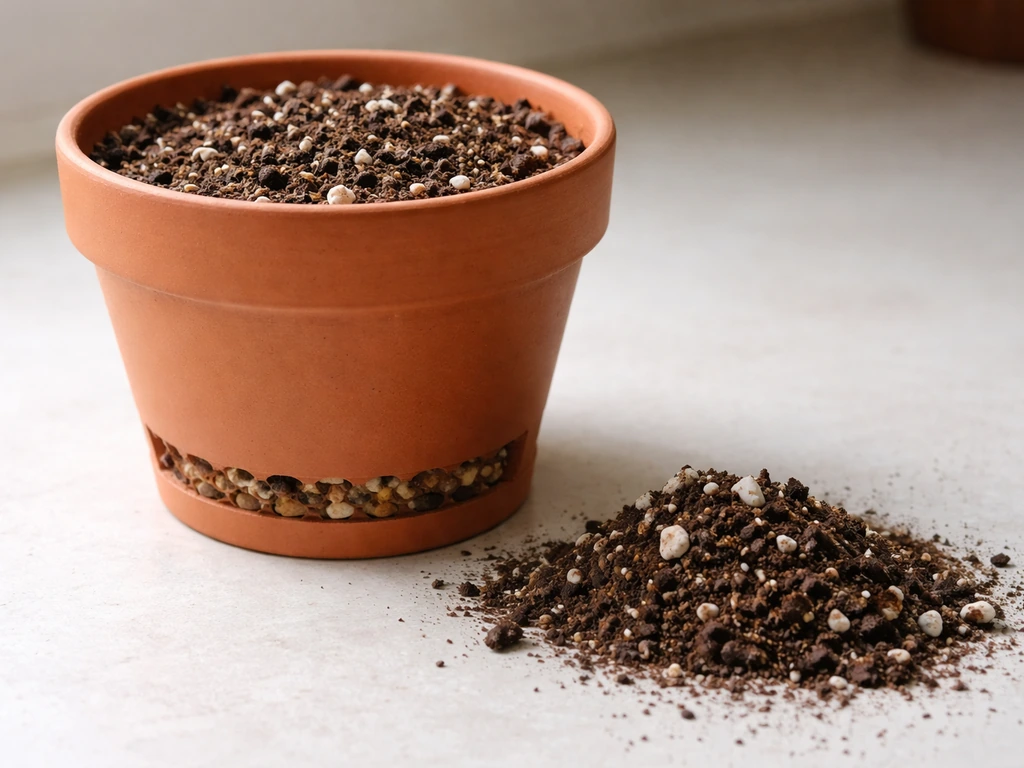
Dahlia tubers rot easily in soggy soil. This is probably the number one way people accidentally kill them indoors, and I have done it myself before I figured out the drainage piece. Here is what actually works.
- Container size: Use a pot at least 12 inches wide and 12 inches deep for dwarf varieties. Compact varieties in the 18 to 24 inch height range do best in a 14 to 16 inch pot. Bigger is better for dahlias because a larger soil volume helps buffer moisture and gives the tuber room to develop.
- Drainage holes: Non-negotiable. If a pot does not have drainage holes, do not use it for dahlias. No exceptions.
- Pot material: Terracotta is ideal because it breathes and helps prevent overwatering. Plastic works if you are careful with watering frequency. Avoid glazed ceramic for dahlias if you tend to water generously.
- Soil mix: Use a well-draining potting mix, not garden soil. A mix of standard potting mix, perlite (about 25 to 30% by volume), and a small amount of coarse sand creates the loose, fast-draining environment dahlias love. Avoid heavy, moisture-retaining mixes marketed for tropicals or ferns.
- Spacing: One tuber or plant per 12 to 14 inch pot. Do not crowd them. Dahlias need room for their root system, and crowding increases disease pressure indoors.
Watering and fertilizing: the routine that actually works
Watering
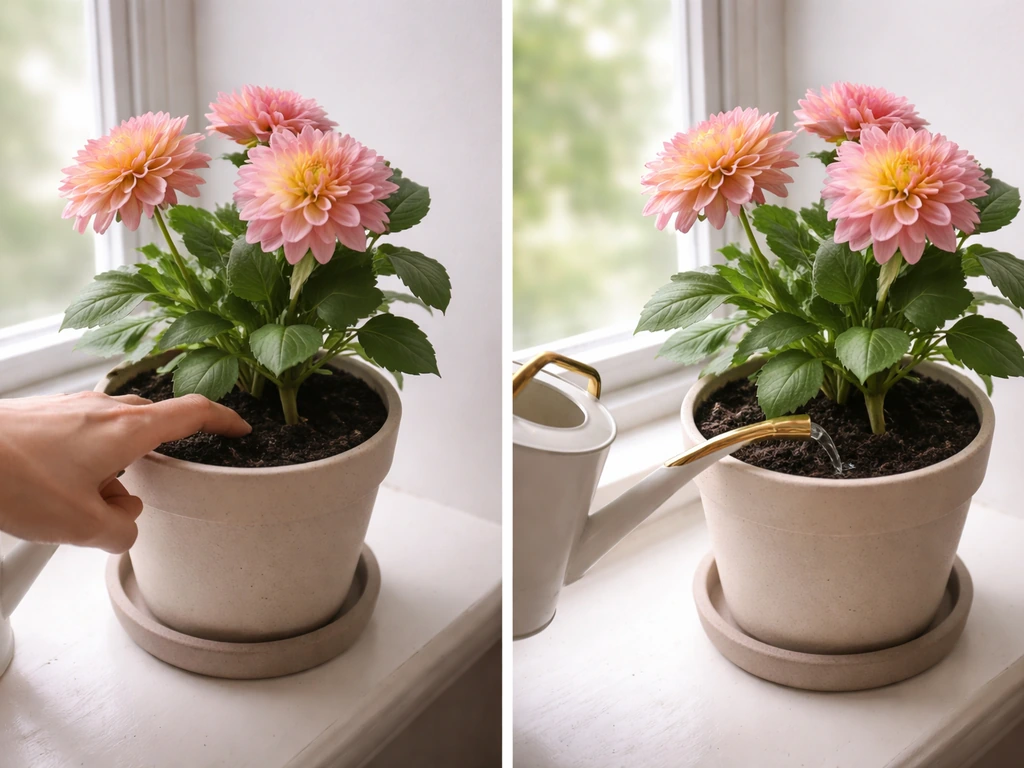
Water dahlias when the top inch of soil feels dry, not on a fixed schedule. In an actively growing, well-lit indoor setup, that might be every 2 to 3 days. In a cooler or lower-light spot, it might be once a week. Always water thoroughly so it drains out the bottom, and never let the pot sit in standing water. During the initial sprouting phase from a tuber, keep the soil barely moist, watering only once every 7 to 10 days until you see green growth emerging. After that, you can water more regularly as the plant develops its leaf system and starts actively using moisture.
Fertilizing
Once your dahlia is actively growing (past the sprouting stage and showing 4 to 6 inches of growth), begin feeding every 2 weeks with a balanced liquid fertilizer such as a 10-10-10 or 5-5-5. As flower buds begin to form, switch to a lower-nitrogen fertilizer with higher phosphorus and potassium, something like a 5-10-10 ratio, to encourage blooms rather than leafy growth. Do not fertilize newly planted tubers before they sprout. Do not over-fertilize with nitrogen at any stage because it produces lush dark-green leaves with few or no flowers, which is a very common indoor mistake.
Managing growth and getting dahlias to actually bloom indoors
Light schedule and photoperiod
This is where year-round indoor dahlia growing gets interesting. Dahlias are day-length sensitive plants. In their natural outdoor cycle, shortening days in late summer and fall trigger tuber formation and eventual dormancy. If you want to keep them growing and blooming indoors continuously, you need to prevent that trigger by maintaining long days, specifically 14 to 16 hours of light per day.
A timer on your grow light set to 14 to 16 hours on and 8 to 10 hours off takes care of this automatically. Without that day-length control, your dahlia will eventually sense the shift toward shorter days (especially in fall and winter) and begin winding down even indoors. The grow light timer is the tool that essentially tricks the plant into staying in active growth mode year-round.
Pinching and preventing leggy growth
When your dahlia reaches about 8 to 10 inches tall, pinch out the growing tip just above a set of leaves. This one step is responsible for the difference between a bushy, well-branched plant full of blooms and a single stretched stem with one flower on top. Pinching encourages 4 to 6 side shoots to develop, which means many more flowers. After pinching, continue deadheading spent blooms consistently to keep new buds coming. If growth still looks leggy despite good light, move the grow light closer (most LED grow lights perform best at 12 to 18 inches above the canopy) or increase the wattage of your setup.
Staking compact varieties
Even dwarf and patio dahlias can flop once they have multiple stems loaded with blooms. A small bamboo stake or a compact plant cage inserted at potting time (before you can see the root system) prevents both stem breakage and root disturbance later. This is especially worth doing with plants under grow lights because the stems, while not weak, can get top-heavy.
Your year-round plan: keep growing or store the tubers?
Here is where you have a genuine choice to make, and it depends on your setup and goals.
| Approach | What it involves | Best for | Trade-offs |
|---|
| True year-round growing | Keep lights on 14-16 hrs daily, maintain 62-72°F, water and feed consistently throughout the year | Gardeners with a grow light setup who want continuous blooms | Higher electricity use, plant may need a brief rest after 10-12 months of growth |
| Planned rest period | After 8-10 months of active growth, reduce water and light to let the plant slow down for 4-6 weeks, then resume | Most home growers, easier to manage long-term | Brief bloom gap, but plant comes back stronger |
| Tuber storage | Dig or unpot tubers in fall, store in cool dry location (45-50°F), repot fresh in late winter | Growers who want the traditional dahlia cycle indoors | No winter blooms, but easy and reliable for following season |
If true year-round blooms are your goal, the continuous growing approach with a grow light and photoperiod control is the path to take. In practice, most home growers find that giving the plant a 4 to 6 week reduced-light rest period every 10 to 12 months produces healthier tubers and a more vigorous rebound flush of blooms. Think of it less as dormancy and more as a breather. If you are storing tubers instead, lift them after foliage dies back, let them dry for a few days, dust with a fungicide powder, and store in a paper bag or cardboard box filled with barely damp peat moss or vermiculite at 45 to 50°F. A basement or cool closet works well.
When things go wrong: common problems and how to fix them
Leggy, stretched growth with no flowers
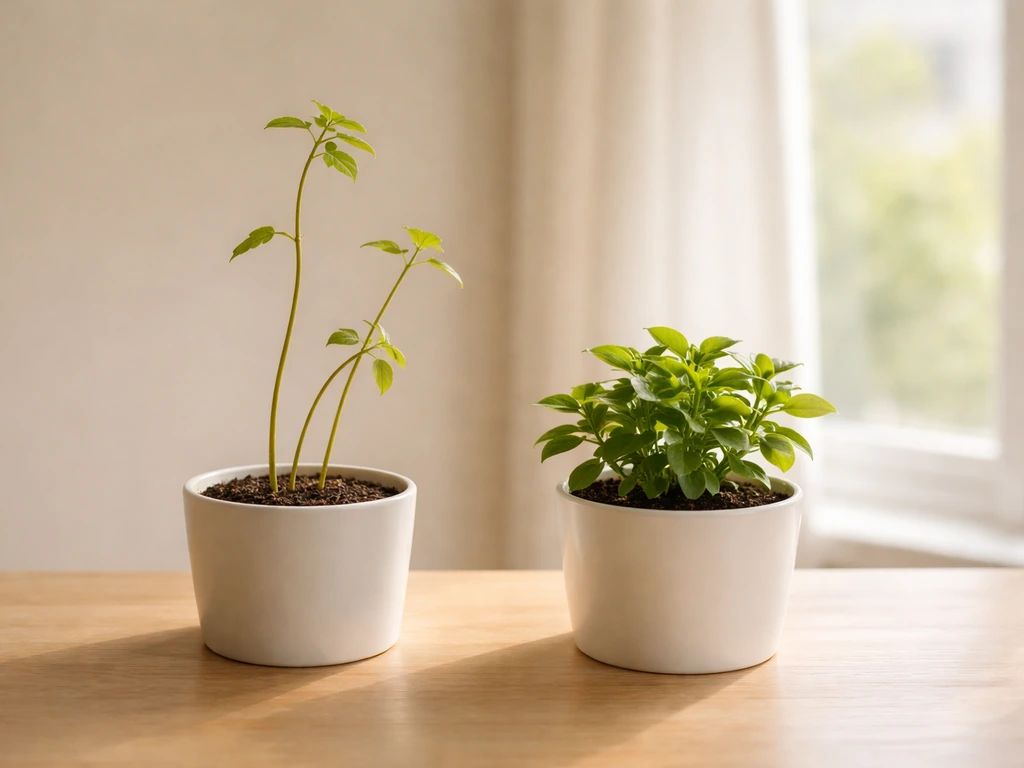
Almost always a light problem. Your plant is reaching for light it is not getting enough of. Move it closer to your grow light, increase the light duration to 14 to 16 hours, or upgrade to a higher-output light. Also check whether you pinched the growing tip early on. If you did not, do it now and the plant will branch out.
Rotted tuber or yellowing lower leaves
This is overwatering or poor drainage. Check that your pot has drainage holes and that you are not letting it sit in a saucer of water. The American Dahlia Society recommends removing any saucer or tray from the base of the pot so water can drain freely and avoid standing water letting it sit in a saucer of water. Reduce watering frequency and, if the problem is severe, unpot the plant, remove any mushy tuber sections with a clean knife, dust cuts with sulfur powder or cinnamon, let it dry for 24 hours, and repot in fresh, drier mix.
Powdery mildew on leaves
White powdery coating on leaves is a fungal issue driven by poor airflow and sometimes inconsistent watering. Add a small fan, remove affected leaves immediately, and treat with a diluted neem oil spray or a baking soda solution (1 teaspoon baking soda plus a few drops of dish soap per quart of water). Do not mist leaves as a humidity remedy.
Aphids and spider mites
Indoor dahlias can attract both. Check the undersides of leaves regularly. A strong spray of water knocks aphids off, and neem oil spray handles both pests effectively. Spider mites tend to appear when humidity is very low and air is dry and hot, so maintaining that 50 to 60% humidity range helps prevent them.
Your indoor dahlia success checklist
- Choose a compact or dwarf variety bred for containers (Gallery, Topmix, Figaro series or similar)
- Use a pot at least 12 inches wide and deep with drainage holes, filled with a well-draining perlite-amended mix
- Set up a full-spectrum LED grow light on a timer: 14 to 16 hours of light per day
- Keep daytime temperature at 70 to 72°F and nighttime temperature at 62 to 64°F
- Water when the top inch of soil is dry; never let the pot sit in standing water
- Pinch the growing tip at 8 to 10 inches to encourage branching and more blooms
- Feed every 2 weeks with balanced fertilizer during growth; switch to low-nitrogen, high-phosphorus fertilizer when buds form
- Run a small fan nearby for airflow to prevent mildew
- Deadhead spent flowers consistently to keep new buds coming
- Check leaves weekly for pests and treat early with neem oil if needed
- Plan either a brief rest period every 10 to 12 months or proper tuber storage if you want to reset the plant
Dahlias are more achievable indoors than most people expect, but they do ask more of you than low-light houseplants. If you have grown other sun-loving flowers indoors before, like marigolds or chrysanthemums, you already know the light-first mindset that makes the difference. Marigolds can also grow indoors, but they need similarly strong light to stay healthy and bloom reliably.
Get the lighting right, keep the drainage sharp, and dahlias will reward you with genuine blooms year-round inside your home. If you are wondering whether morning glories can grow indoors too, the biggest factor will be whether you can provide enough bright light and warmth can morning glories grow indoors. The same principle applies to can daffodils grow indoors, since light is what ultimately determines whether bulbs thrive indoors.
If you are also considering bleeding hearts, make sure you can maintain the bright, cool conditions they prefer for indoor growth bright light and warmth.