Short-term display vs. long-term indoor plant: what to expect
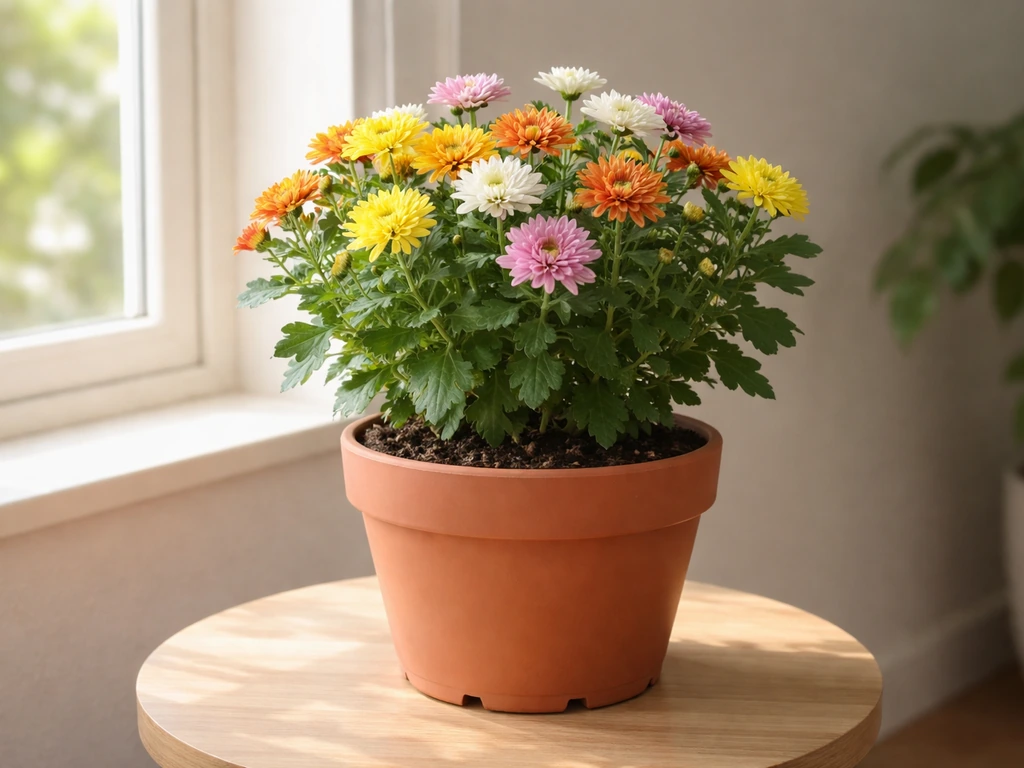
Most potted mums you find at garden centers or grocery stores are bred specifically as seasonal gift plants. University of Missouri Extension frames them clearly as display plants, with a typical indoor lifespan of several weeks to a month under proper care. That is not a failure of your green thumb. That is just what they are designed to do.
Long-term indoor culture is possible in the sense that you can keep the plant alive after flowering, trim it back, and attempt to grow it on. But getting it to rebloom indoors without managing the photoperiod (the precise schedule of light and dark hours the plant needs to initiate flowering) is genuinely unreliable. Commercial growers use techniques like night-interruption lighting or pre-dawn light regimes to manipulate day length for short-day crops like mums. That is not something most home gardeners are set up to do. So unless you are prepared to cover your plant with a blackout cloth for 14-plus hours each night on a strict schedule, treat indoor mums as a beautiful, temporary display and enjoy every week of it.
| Factor | Short-term display (weeks to a month) | Long-term indoor culture (post-bloom) |
|---|
| Realistic for most people? | Yes, very achievable | Possible but difficult |
| Reblooming indoors | Not needed, already in bloom | Unreliable without photoperiod control |
| Effort required | Low to moderate | High (blackout schedules, pruning, repotting) |
| Best outcome | Weeks of color with good care | Foliage plant with occasional blooms if lucky |
| Recommended approach | Optimize light, cool temps, water well | Worth trying if you enjoy the challenge |
How to grow mums indoors, step by step
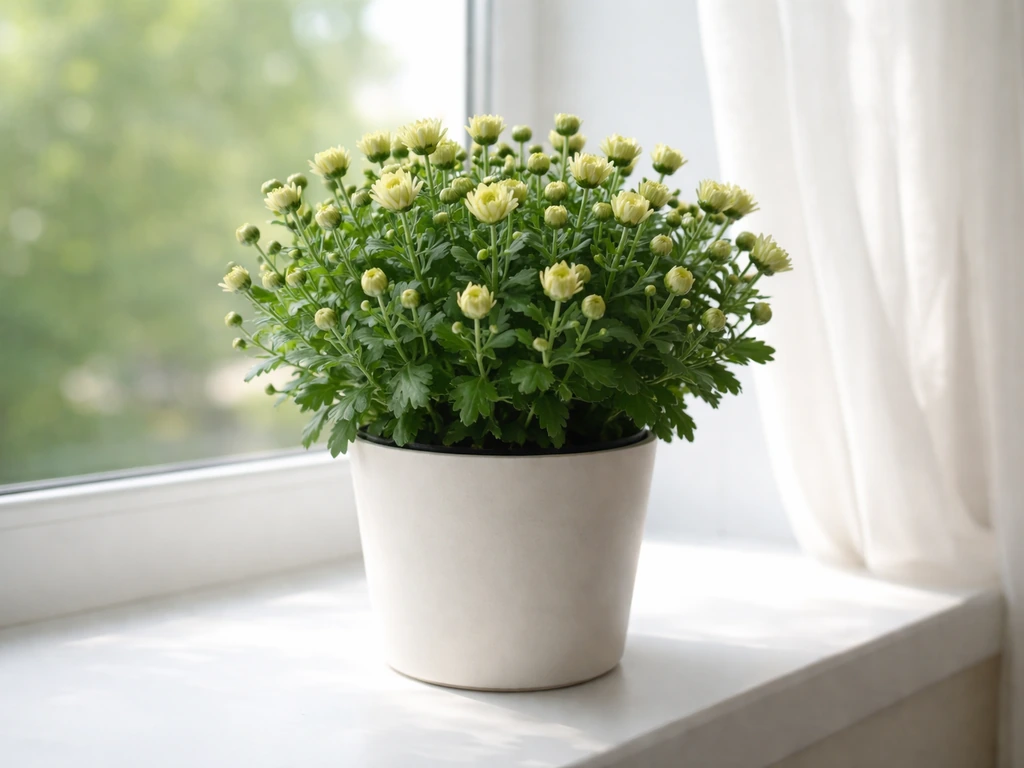
Whether you are aiming for a long display or trying to keep your mum going after the flowers fade, the process starts the same way. Here is exactly what to do.
- Choose the right plant to start with: Buy a mum that has plenty of closed or barely open buds rather than one already in full bloom. More closed buds means more display time ahead of you. Compact, bushy varieties handle indoor conditions better than tall, leggy types.
- Pick an appropriately sized pot: Your mum should have a pot with drainage holes. If the nursery pot is sitting inside a decorative sleeve with no drainage, remove it or punch holes in the bottom. Sitting water is the fastest way to kill a mum indoors.
- Use a well-draining potting mix: A standard quality potting mix works fine. You do not need anything exotic. What you do need is mix that does not compact and holds moisture without staying waterlogged. Adding a small amount of perlite (around 20 percent by volume) improves drainage noticeably.
- Place it in the right spot immediately: Bright, indirect light near a window is your starting point. Do not skip this step or leave the plant on a dark shelf while you figure out where to put it. Light matters from day one.
- Water it correctly from the start: Check the soil before every watering. Push your finger about an inch into the soil. If it feels dry at that depth, water thoroughly until it drains out the bottom. If it still feels moist, wait.
- Keep it cool: Mums genuinely prefer cooler temperatures. If you can place your indoor mum in the coolest room of the house, you will extend the bloom significantly.
- Pinch if you are growing long-term: If the flowers have faded and you want to try growing the plant on, cut it back by about a third and pinch new growth tips to encourage branching and bushiness. This mirrors what USU Extension recommends for outdoor mums and works indoors too.
Light and placement: this is where most people go wrong
Mums want bright light, but not harsh direct sunlight beating down on the petals. Direct afternoon sun through a south-facing window can fade blooms and stress the plant faster than you would expect. The sweet spot is a bright east-facing or north-facing bright window, or a south or west-facing window where the plant is set back a foot or two from the glass to soften the intensity.
Outdoors, mums are full-sun plants. Indoors, that equation shifts because window glass filters UV and the available light hours are shorter and less intense than open sky. If your home has limited natural light, especially in winter months, you will notice your mum suffering faster. Buds may drop, existing flowers open poorly, and the plant looks generally deflated. That is insufficient light intensity doing its work.
When to use a grow light
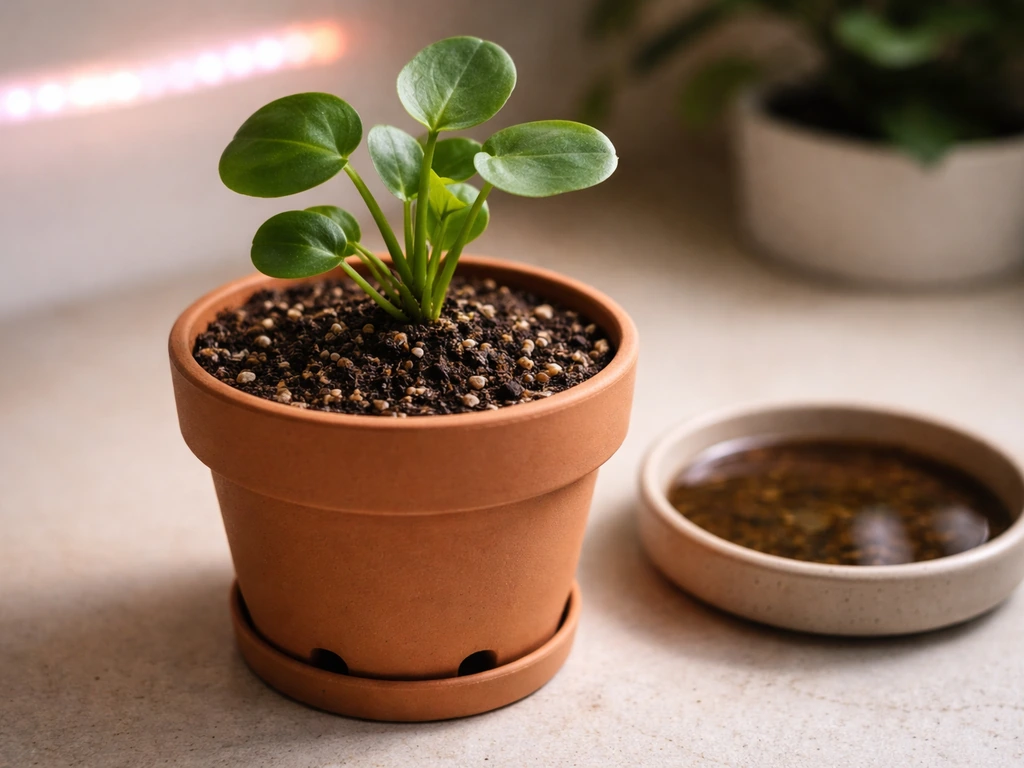
If your best window is weak (north-facing in winter, obstructed by trees or buildings), a full-spectrum LED grow light positioned 6 to 12 inches above the plant for 12 to 14 hours per day will make a real difference for vegetative growth. However, there is a nuance worth knowing: if you are trying to trigger reblooming, you actually want to limit light to around 10 hours per day and keep the rest of the time in complete darkness. Running a grow light carelessly on an extended schedule can prevent your mum from ever setting new buds again. For a display-phase mum that is already blooming, a grow light simply helps the plant stay healthy and hold its existing flowers longer.
Potting, soil, watering, and drainage
Mums drink more water than a lot of houseplants, especially when they are actively blooming. The soil should stay consistently moist, not soaking wet and not bone dry. Both extremes cause problems. Drought stress makes buds drop and petals go crispy at the edges. Overwatering causes root rot and, ironically, makes the plant look wilted even though the soil is wet.
The finger-test method works perfectly here: one inch deep into the soil, if it feels dry, water. Water thoroughly and let it drain completely before putting the saucer back under the pot. Never let the plant sit in standing water. When it comes to timing, water in the morning rather than the evening. This is a tip that comes directly from Utah State University Extension for disease management and applies equally well indoors: when leaves and soil surface stay wet overnight in the warmer, less-ventilated indoor environment, you are setting up ideal conditions for fungal problems.
For soil, a quality all-purpose potting mix with added perlite is the practical choice. Avoid garden soil, which compacts badly in containers and does not drain well. Repotting is rarely necessary for a display-phase mum, but if you are trying to grow one long-term, move it to a pot only one size larger when roots start circling the bottom.
Temperature, humidity, and airflow
Temperature is genuinely one of the most controllable variables you have with indoor mums, and it has a huge impact on how long your plant looks good. University of Missouri Extension recommends night temperatures around 60 to 65 degrees Fahrenheit for general care, but notes that for the longest possible display, dropping nighttime temperatures to 50 to 55 degrees Fahrenheit makes a meaningful difference. If you have a cool spare room, a north-facing hallway, or a spot near a cool window in spring or fall, that is your best location.
Most centrally heated homes sit at 68 to 72 degrees Fahrenheit or warmer, which is on the high side for mums. The warmer your home, the faster buds open, flowers age, and the display is over. If you want to squeeze more weeks out of your mum, keep it away from heating vents, radiators, and south-facing windows that heat up significantly during the day.
On humidity: mums do not demand high humidity the way some tropical plants do, but they dislike very dry air. Central heating in winter can drop indoor humidity significantly, and consistently dry air contributes to bud drop and overall plant stress. A simple pebble tray filled with water placed under (but not touching) the pot, or running a small humidifier nearby, adds enough ambient moisture to help. Avoid misting the foliage directly since wet leaves overnight create disease risk.
Airflow matters more indoors than most people realize. Stagnant air encourages fungal issues, especially when you are watering regularly and humidity is moderate. A gentle fan on low setting nearby, or simply keeping the room ventilated, goes a long way. Just keep your mum away from cold drafts from windows or exterior doors, since rapid temperature swings are listed explicitly by UNH Extension as a contributor to bud drop and bloom problems.
Fixing the most common problems
Buds dropping before they open
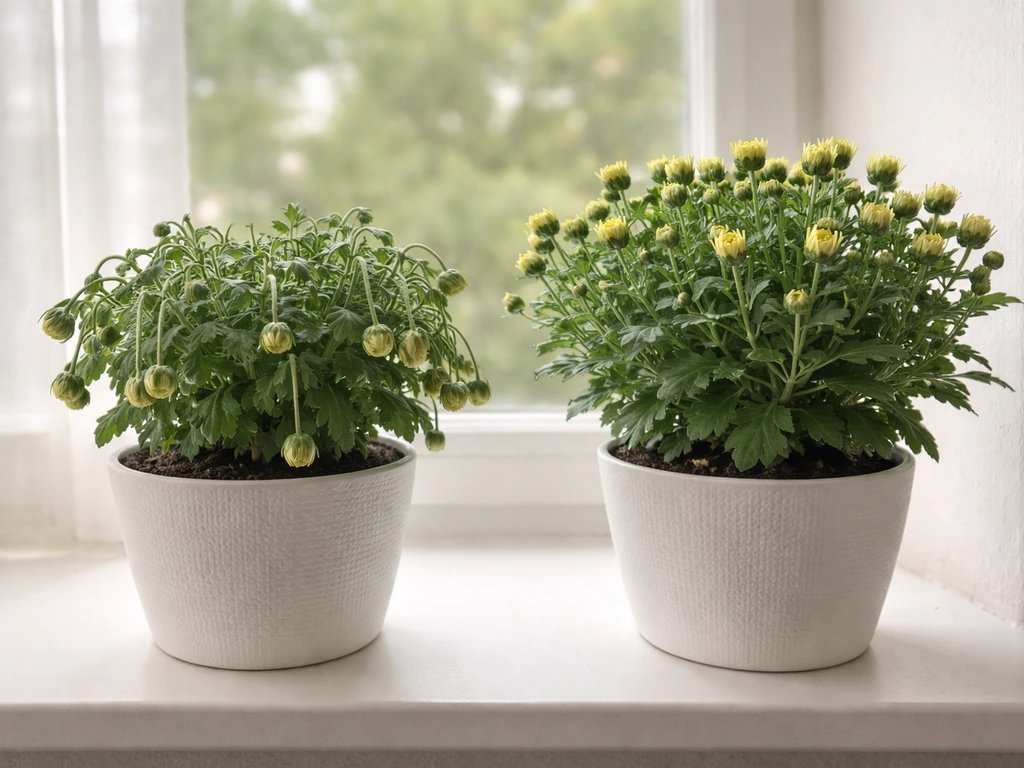
This is the most frustrating indoor mum problem and it almost always comes down to one of three things: the temperature is too high, the light is too weak, or the plant experienced a sudden environmental shock (like moving from a cool store to a warm house, or sitting near a drafty window). Check all three. Move the plant to a cooler, brighter spot, keep it away from heating vents, and try to minimize any sudden temperature swings. Consistent conditions matter more than perfect conditions.
Leggy, stretched-out growth
If your mum is producing long, weak stems reaching toward the window with sparse leaves, it is telling you clearly that it is not getting enough light. This is especially common in apartments with limited window access. Move the plant closer to your brightest window or add a grow light. For any new growth you want to keep compact and bushy, pinch the tips back to encourage branching, a technique that works both outdoors and in.
Wilting even with wet soil
Wilting with wet soil points directly to root rot from overwatering or poor drainage. Check the roots if you can: healthy roots are white or light tan and firm. Rotted roots are brown, mushy, and smell unpleasant. If rot has set in at the base, it is very difficult to save the plant. Going forward, always check soil moisture before watering and ensure your pot drains freely.
Pests: what to watch for
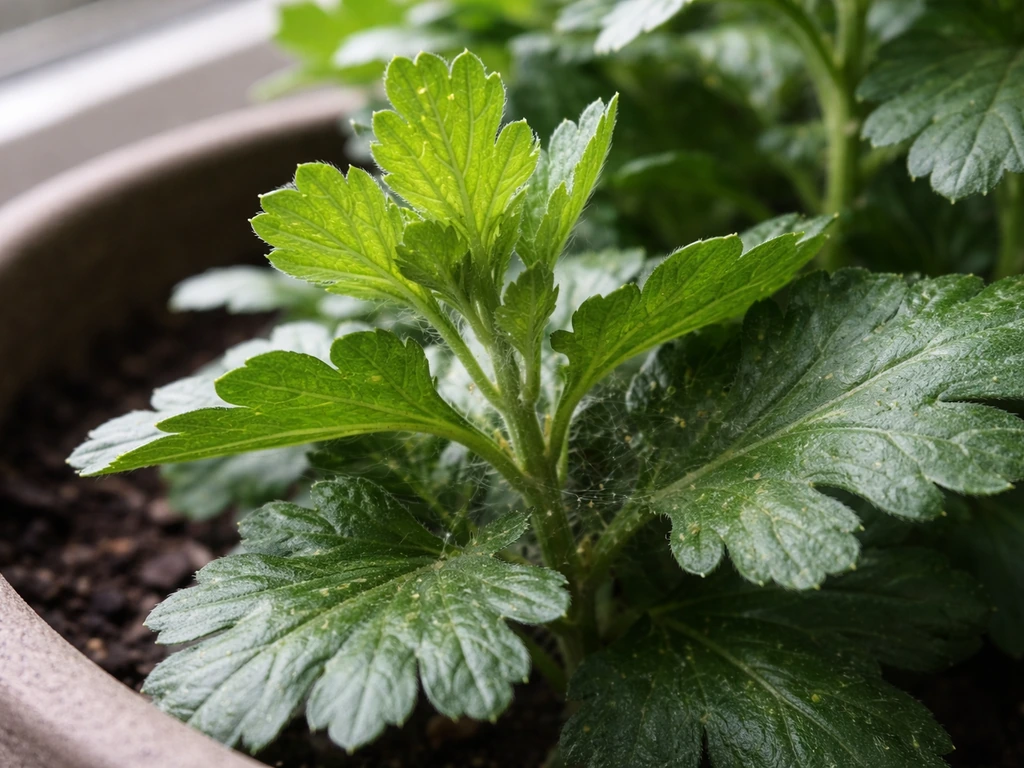
Aphids and spider mites are the most common indoor mum pests. Aphids cluster on new growth and undersides of leaves and can be knocked off with a steady stream of water or treated with insecticidal soap spray. Spider mites thrive in hot, dry conditions and appear as tiny moving dots with fine webbing on leaf undersides. Increasing humidity and improving airflow helps prevent them. A neem oil spray applied every 7 to 10 days handles active infestations. Check the undersides of leaves whenever you water so you catch problems early.
Flowers fading or going brown quickly
Direct hot sunlight through a south or west window will fade and age mum flowers much faster than indirect light. If your blooms are going brown at the edges or fading within a week, the light is likely too intense or the temperature too high. Diffuse the light with a sheer curtain or move the plant back from the glass.
Your next steps right now
If you have a mum in hand (or are about to buy one), here is what to do today. Find your brightest window that gets indirect or filtered light, ideally an east-facing spot or a south-facing window with a sheer curtain. Check that the pot drains properly and remove any decorative sleeve trapping water. Set it in the coolest room you can manage, away from heating vents and drafts. Water it in the morning only when the top inch of soil feels dry. Do those four things consistently and you will get the best possible display from your plant. For a fuller guide on the best chilli plants to grow indoors in the UK, use the methods and light tips tailored to peppers best chilli plants to grow indoors uk. If you are also wondering can chilli plants grow indoors, the same kind of light-first approach matters, just with different watering and temperature targets best chilli plants to grow indoors uk.
If you want to attempt long-term indoor growing after the flowers fade, cut the plant back by about a third, keep up the watering and light routine, and consider whether you have the setup (and patience) to manage a strict light-dark schedule for potential reblooming. Most people find it is easier to simply enjoy the display, compost the spent plant, and pick up a fresh one next season. Either choice is completely valid. Mums are worth growing indoors for the color they bring, even on a temporary basis.