Yes, Purple Heart (Tradescantia pallida) can absolutely grow indoors, and it's one of the more forgiving houseplants you can keep. The catch is light: without a genuinely bright spot, those vivid purple stems and leaves fade to a washed-out greenish color, and the plant gets leggy fast. Give it a south- or west-facing window with several hours of direct sun each day, use a well-draining potting mix, and let the soil partly dry out between waterings. Do those three things and you'll have a lush, deeply colored plant that practically takes care of itself.
Can Purple Heart Plant Grow Indoors? Care Guide
James Hartwell
24 Apr 2026
What 'success' actually looks like indoors
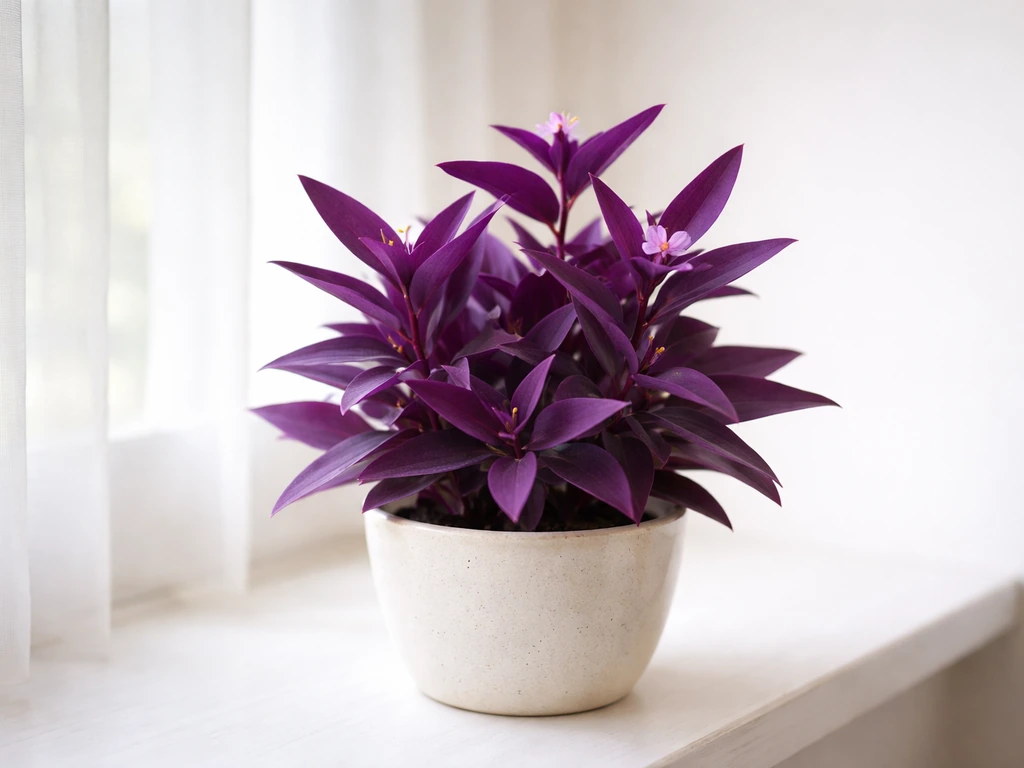
A healthy indoor Purple Heart has rich, saturated purple leaves and stems, compact growth (not long floppy stretches between leaves), and occasional small pink-lavender flowers. It won't be quite as intensely colored as a plant baking in a full-sun garden bed, but it can come close if you nail the light. The plant grows year-round indoors in most homes, tolerates some neglect, and bounces back quickly from a missed watering or two. Yes, primula can grow indoors, but it needs the right conditions, especially consistent light and suitable moisture grow year-round indoors. If your plant is mostly green and sprawling, that's a light problem, not a lost cause.
Best light indoors: where to put it and how much sun it needs
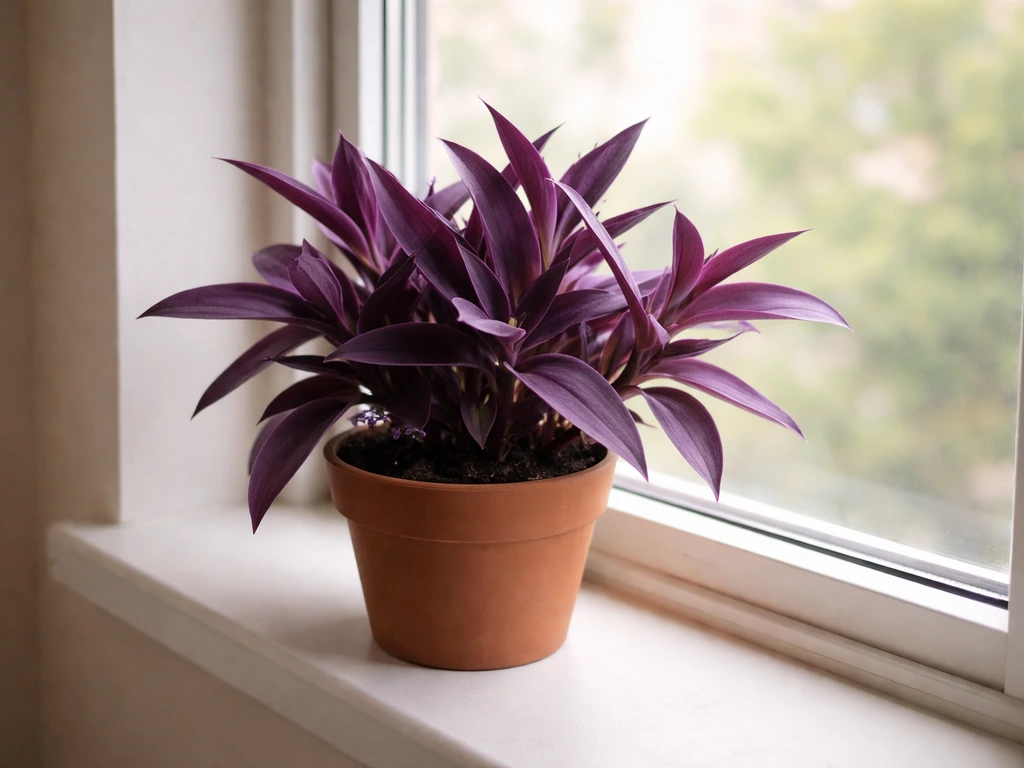
Light is the single biggest factor with Purple Heart indoors. If you are also wondering can mogra plant grow indoors, the key is giving it enough light and a well-draining pot so it stays healthy. Every university extension resource I've come across says the same thing: full sun produces the best color. In a home, that means a south-facing window is your first choice, with a west-facing window as a solid backup. An east-facing window can work if the plant gets a few hours of direct morning sun, but color will be noticeably paler. North-facing windows are a hard no for this plant.
Place the pot as close to the glass as possible without letting leaves press against a cold window in winter. Aim for at least four to six hours of direct sun per day. If you only have east or west windows in your apartment, a full-spectrum grow light used for 12 to 14 hours a day can genuinely compensate. I've kept Purple Heart under a grow light during a particularly dark winter and it held its color well. Without supplemental light in a low-light apartment, you're fighting a losing battle.
Soil, pot, and drainage setup
Drainage is non-negotiable. Purple Heart is drought-tolerant once established, and sitting in wet soil is one of the few things that will genuinely damage it. Use a standard houseplant potting mix and improve it with perlite or coarse sand, roughly one part perlite to three parts mix. This keeps the soil aerated and prevents it from staying soggy after watering.
Any pot with drainage holes works. Terracotta is a nice choice because it wicks away excess moisture and dries out faster than plastic, which suits Purple Heart's drought-tolerant nature. A hanging basket is also a classic option and shows off the trailing stems beautifully. Avoid pots without drainage holes unless you're very precise about watering, which most of us aren't.
Watering and feeding
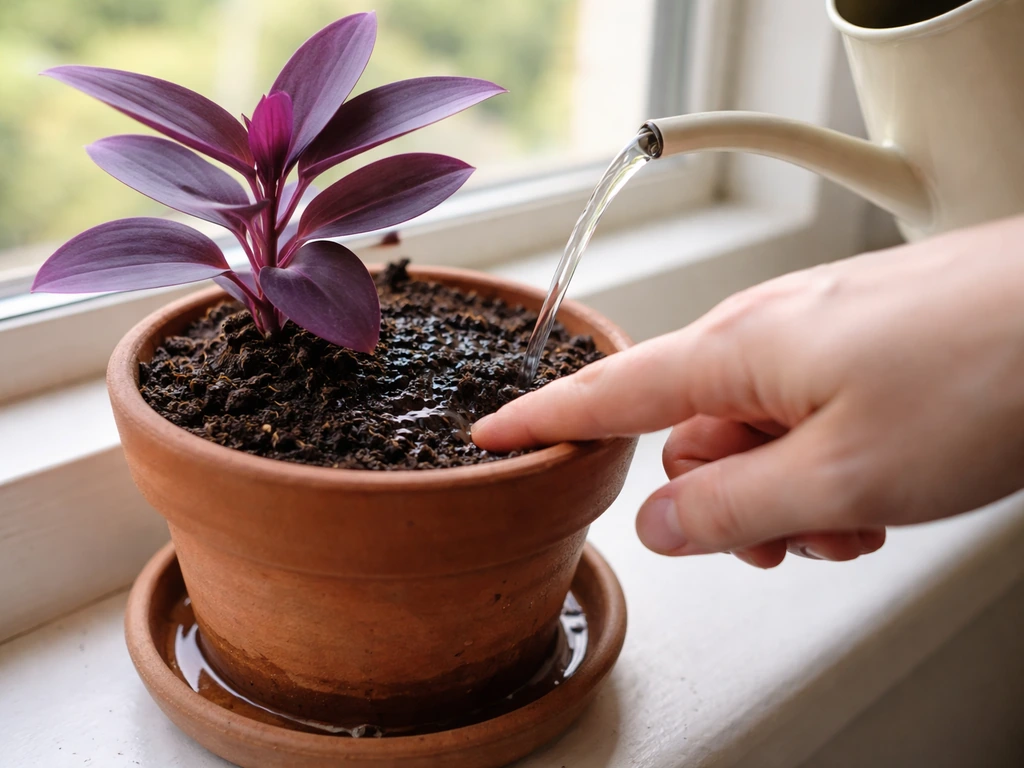
Water your Purple Heart once about half the soil has dried out. Stick your finger two inches into the soil: if it still feels damp, wait a few more days. In a bright south-facing window during summer, you might water every five to seven days. In lower light or during winter, stretch that to ten to fourteen days. This plant genuinely thrives on a little neglect and tolerates drought better than overwatering.
In winter, dial watering back further even if the plant is still in a bright spot. Growth slows, and the roots don't need as much moisture. For fertilizing, a balanced liquid fertilizer (10-10-10 or similar) applied once a month during spring and summer is plenty. Skip fertilizing in fall and winter. Purple Heart isn't a heavy feeder and you don't need to overthink this part.
Temperature, humidity, and airflow
Purple Heart prefers temperatures between 60 and 75 degrees Fahrenheit, which is basically normal indoor living temperature. It'll handle slightly cooler nights without complaint, but consistent cold below 50 degrees stresses it. The bigger concern is avoiding drafts: don't put the pot directly in front of a drafty window, a heating vent, or an air conditioner. Sudden temperature swings can cause leaf drop, which looks alarming but is usually fixable once you move the plant somewhere more stable.
Humidity-wise, Purple Heart is easy. It prefers higher humidity but tolerates typical household humidity in the 20 to 30 percent range without issue. You don't need a humidifier or a pebble tray unless your home is unusually dry in winter and you're seeing crispy leaf edges. Good airflow around the plant helps prevent any fungal issues, so don't crowd it against a wall with no air movement.
Keeping it compact, colorful, and easy to propagate
Pinching is your best tool for a full, bushy Purple Heart. Regularly pinching off the growing tips forces the plant to branch rather than stretch into long, bare stems. Do this throughout the growing season. After the plant flowers, cut it back to prevent it from getting spindly: just trim stems back by a third or so. It sounds harsh but the plant responds quickly with fresh, compact growth.
Propagation is almost embarrassingly easy with this plant. Snip a stem with at least one node, stick it directly into moist potting mix or drop it in a glass of water. Either method works. In water, you'll usually see roots within two to four weeks. Once roots are about two to three inches long, pot the cutting up in your standard well-draining mix. I've filled out a sparse pot by propagating a handful of cuttings right back into the same container. It's genuinely one of the fastest, easiest plants to multiply.
Common indoor problems and how to fix them fast
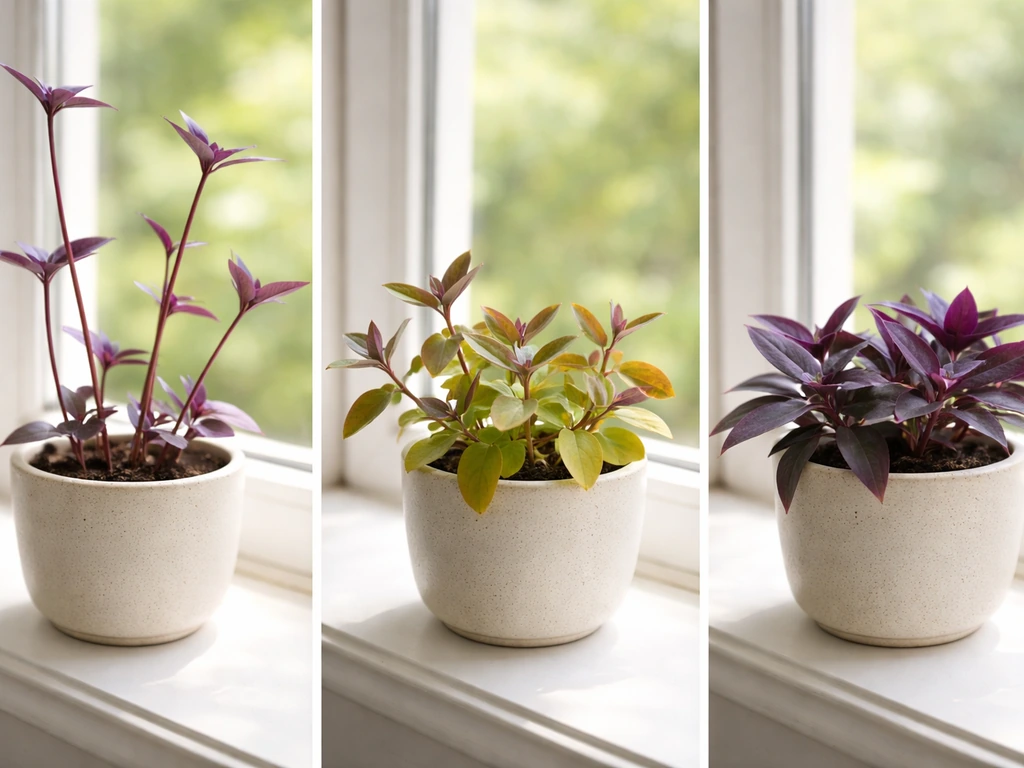
Most indoor Purple Heart problems come down to one of three causes: too little light, too much water, or too little water. Here's how to read what your plant is telling you: Purple Heart sap and handling can sometimes cause skin irritation or contact reactions, which is why it's smart to handle the plant carefully.
| Symptom | Most likely cause | Quick fix |
|---|---|---|
| Stems stretching long with big gaps between leaves (leggy) | Not enough light | Move to a brighter window or add a grow light; pinch back stems to encourage branching |
| Color fading from purple to green | Insufficient light | Increase direct sun exposure; south or west window, or use a grow light |
| Yellow leaves | Overwatering | Let soil dry out further between waterings; check drainage holes aren't blocked |
| Brown, crispy leaf tips | Underwatering, low humidity, or too much intense direct sun | Water when top half of soil is dry; move back slightly from glass if midday sun is scorching |
| Leaf drop | Temperature fluctuations or cold drafts | Move away from drafty windows, vents, or AC units; keep in stable 60-75°F range |
The fading color issue trips people up the most. If your Purple Heart looks more green than purple, the fix is almost always more light, not more fertilizer. Chasing color with extra feeding just pushes more green, leggy growth. Get the light right first and the color follows naturally.
Queen Anne's lace can you grow indoors, but you'll need the brightest light you can manage and cooler conditions to keep it happy can you grow queen anne's lace indoors. In a bright spot with plenty of light, it can purple queen grow indoors even though cooler, stable conditions help a lot. Purple Heart is a tough, adaptable plant indoors, and once you dial in its spot, it really does thrive on minimal fuss.
If you want to grow can mogra plant grow indoors, focus on giving it bright light and keeping conditions stable so it doesn't stall. If you are also wondering about purslane, it can grow indoors too, but it needs strong light and careful watering to stay healthy can purslane grow indoors. If you are also curious about other colorful houseplants, can a can polka dot plant grow indoors will depend on whether you can provide similarly bright light Purple Heart is a tough, adaptable plant indoors.
If you are wondering will portulaca grow indoors, the answer also depends mostly on light intensity and how consistently you can meet its sun needs. Can purslane grow indoors? It can, but like Purple Heart, it depends heavily on getting enough bright light consistently.
FAQ
How much direct sun does Purple Heart need indoors to stay purple?
Plan for about 4 to 6 hours of direct sun daily for good color. If you cannot get that from windows, a full-spectrum grow light placed close to the plant (so it actually receives strong intensity) for roughly 12 to 14 hours per day is the usual workaround. If the plant is consistently leggy or turning green, increase light first before changing fertilizer.
What’s the fastest way to fix leggy growth or long bare stems?
Pinch the growing tips regularly to force new side shoots. If it is already overgrown, cut stems back by about one third after flowering or during active growth, then keep the plant in the brightest spot you have. Legginess almost always improves when light is increased and pinching starts.
Should I rotate the pot to keep growth even?
Yes. Rotate it about once a week so all sides receive similar light. Without rotation, the plant often bends or develops a lopsided, thinner look on the darker side, even if it is getting enough total light.
How do I tell the difference between underwatering and overwatering?
Overwatering typically shows as yellowing, soft or mushy stems, and soil that stays damp for many days. Underwatering usually causes limp stems and dry soil that pulls away from the pot edges. Purple Heart can forgive missed water, so if in doubt check whether the soil is actually still wet 2 inches down before watering again.
Can I let Purple Heart dry out completely, and will it recover?
It can handle drying out well, but aim for partial drying rather than repeatedly bone-dry. If it has already wilted badly, water thoroughly and allow excess water to drain fully. Recovery is usually quick if the roots have not been kept wet for too long.
Is it safe to grow Purple Heart in a hanging basket indoors?
Yes, hanging baskets look great and help air circulation. Just ensure the basket has a way for water to drain freely, and monitor watering because the soil can dry faster overhead than it would in a pot sitting on the floor. Use the same well-draining mix and watering rule (water only after the top part dries).
What pot size is best for indoor Purple Heart?
Choose a pot that is only slightly larger than the root ball. A much larger container holds moisture longer, which raises the risk of root issues. If you propagate multiple cuttings into one container, keep them close together, but avoid going oversized for the number of plants you have.
Does Purple Heart need fertilizer indoors?
Not much. Fertilize lightly about once a month during spring and summer using a balanced liquid fertilizer at label strength or slightly diluted. Skip fertilizing in fall and winter. If color is fading, increasing light usually works better than adding more nutrients.
Why are there leaf drops when temperatures change indoors?
Drafts and sudden cold snaps are common triggers. Keep the plant away from air conditioners, heating vents, and drafty windows, and avoid moving it repeatedly between very different light and temperature conditions. Mild leaf loss is often recoverable once the environment stabilizes.
What should I do if my plant looks green even in a bright window?
First confirm you are getting direct rays for several hours, not just bright light. Pull the plant closer to the glass if winter cold is not causing leaf contact, and consider a grow light if your window light is weak at your latitude or during winter. Also check that you are not overwatering, since stress can slow purple development.
How should I propagate Purple Heart for the best success rate?
Use a stem cutting with at least one node. For faster results, root cuttings in moist potting mix for sturdier starts, or root in water until you see clear roots, then pot once roots reach a couple inches. Keep cuttings in bright light, but avoid soggy media and keep airflow around the plant to reduce rot risk.
Is Purple Heart a low-allergy plant, and is it safe to keep around pets?
It is a Tradescantia, and like many plants in this group it can cause irritation if chewed or handled. If you have pets or small children, keep it out of reach and wear gloves if you have sensitive skin. If ingestion occurs, contact a vet or poison control promptly.