
Yes, you can grow Persian shield (Strobilanthes dyerianus) indoors, and it can look absolutely stunning when the conditions are right. The catch is that this plant is fussier than your average houseplant. It wants warmth, real humidity, and genuinely bright indirect light, and if you shortchange it on any of those three, you'll end up with leggy stems, faded foliage, or a plant that just slowly sulks. Get them right, though, and that iridescent purple shimmer is worth every bit of the effort.
Can You Grow Persian Shield Indoors? Setup and Care

James Hartwell
3 May 2026
Is Persian Shield a Good Fit for Indoors?
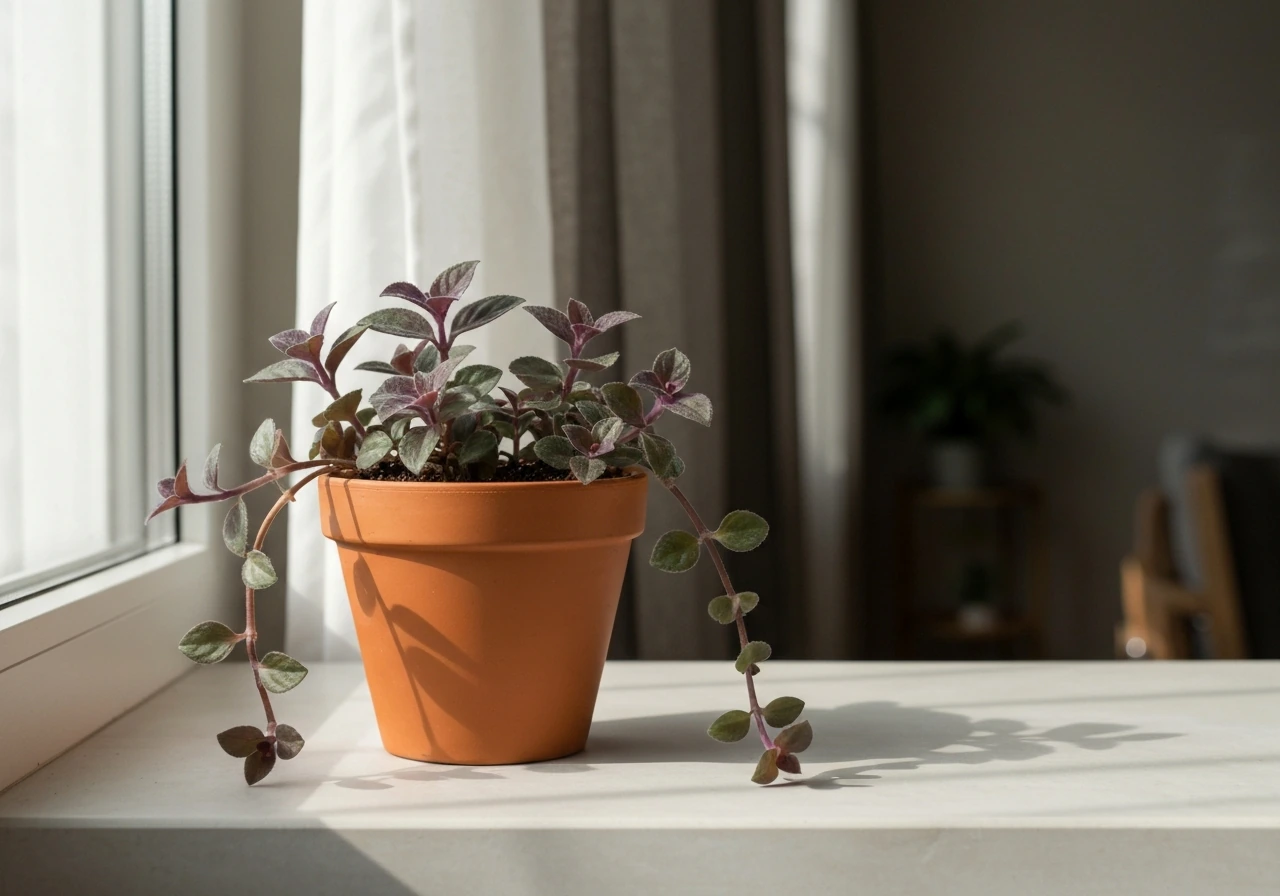
Persian shield is a tropical perennial originally from Myanmar, so it genuinely prefers warm, humid, bright conditions year-round. Indoors, it works well as a houseplant or as an overwintered specimen if you live somewhere with cold winters. The Henderson Master Gardener program notes it can be overwintered indoors in a bright sunny room, which is accurate, but there's a realistic trade-off: as the plant ages and its stems get woodier, the foliage color tends to lose that vivid metallic sheen.
So think of indoor growing as either a permanent situation where you commit to keeping it young and bushy with pruning, or a seasonal strategy where you bring it in from the garden when temperatures drop. If you are also wondering can you grow edelweiss indoors, the key is giving it a cool, bright spot and the right potting mix so it can mimic alpine conditions.
If you're an apartment dweller with a bright south or east-facing window, Persian shield is absolutely doable. If your brightest spot is a dim north-facing window with no direct sun at any point in the day, you'll likely struggle to keep it from going leggy and dull. Be honest about your light situation before committing.
Light and Placement: The Make-or-Break Factor
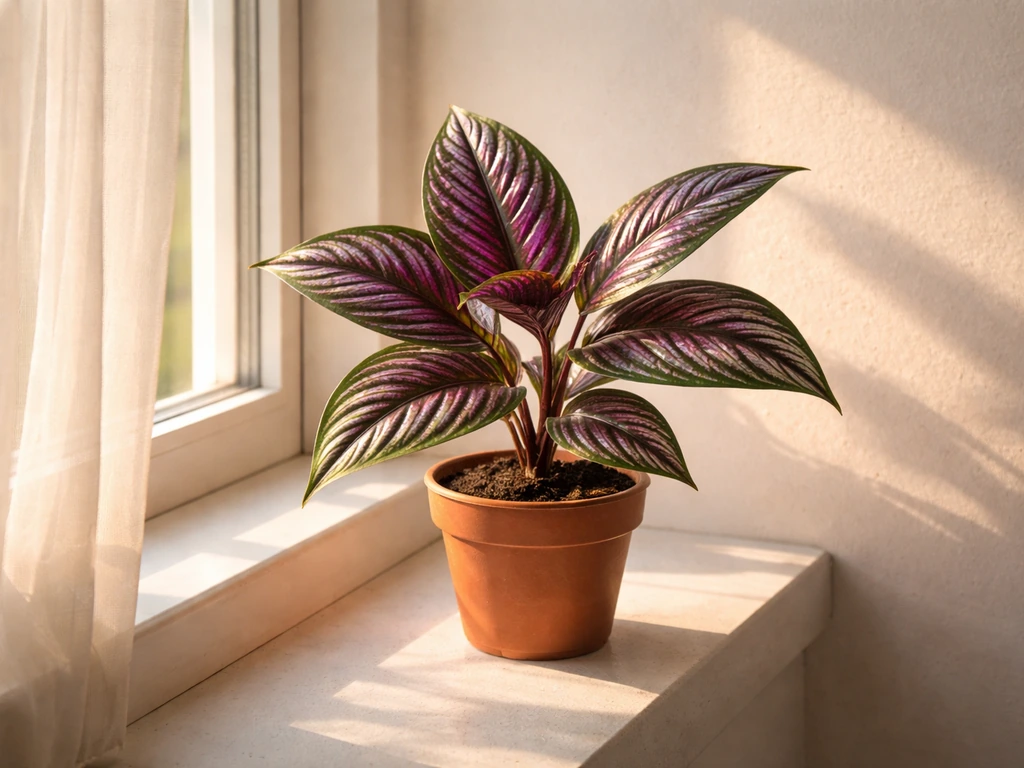
Light is the single biggest challenge for Persian shield indoors. In production settings, growers target 3,000 to 6,000 foot-candles of light to get quality plants. That's a lot, and most indoor spaces fall well below it. What this means practically is that you need your brightest window, and ideally one with at least some direct sun during the day.
An east-facing window that gets direct morning sun is a great starting point. A south-facing window with unobstructed light works well too. A north-facing window can work only if it's completely unobstructed and you're in a sunny climate. West windows with afternoon sun are fine but watch for heat stress in summer. The rule of thumb: direct morning sun or consistently bright indirect light all day. Anything less and the plant stretches toward the light source, stems get weak, and that gorgeous purple fades to a disappointing greenish-gray.
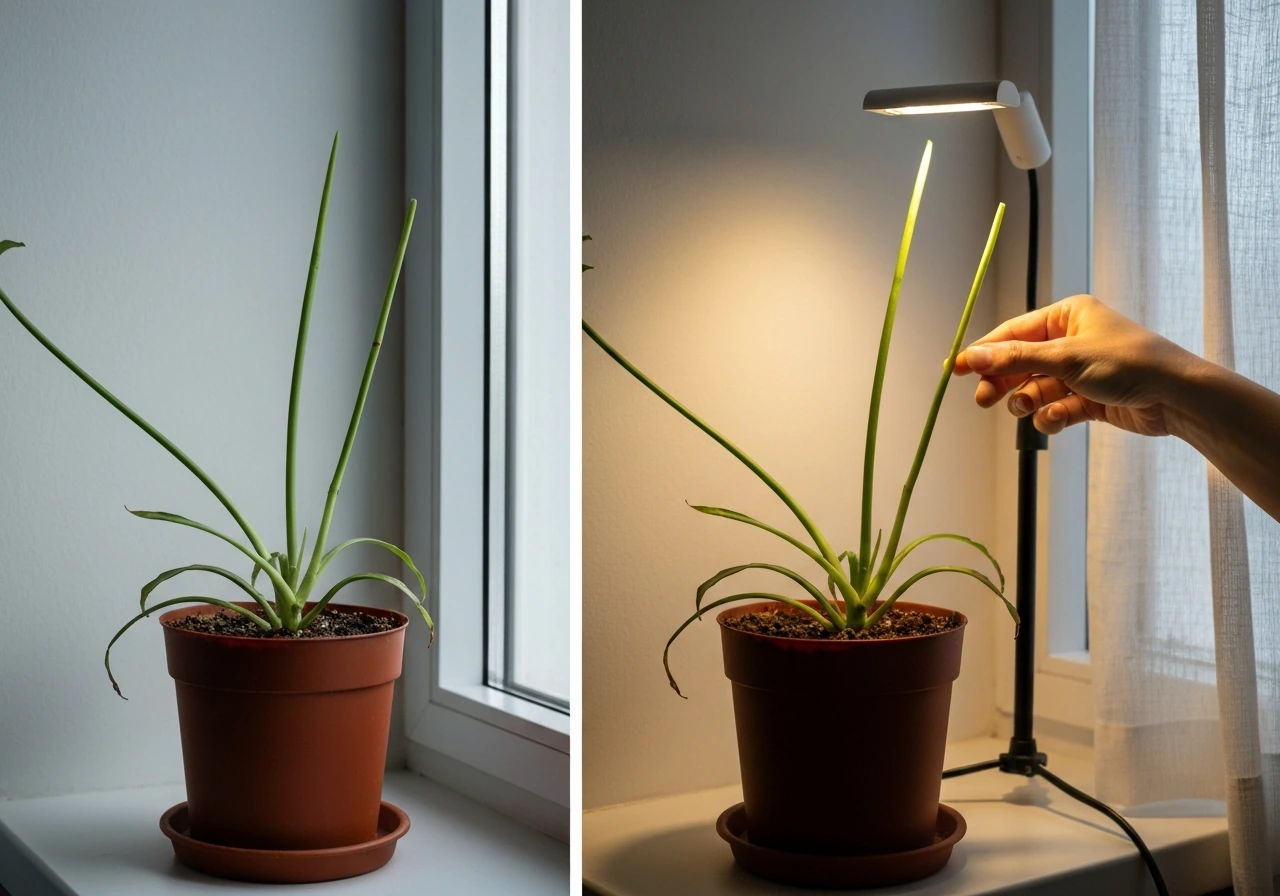
If your natural light is limited, a full-spectrum LED grow light placed 6 to 12 inches above the foliage for 12 to 14 hours a day can absolutely fill the gap. This is often the more reliable route for apartment growers where window real estate is competitive.
Soil, Pot Choice, and Drainage Setup
Persian shield wants consistently moist, fertile, well-drained soil. Those three words have to coexist, which means your potting mix and pot choice matter. I use a standard quality potting mix combined with about 20 to 25 percent perlite to improve drainage without letting things dry out too fast. This strikes the balance between moisture retention and aeration that the roots need.
For the pot, always go with one that has drainage holes. No exceptions. Waterlogged soil leads directly to root rot, and that's one of the most commonly cited killers of Persian shield indoors. Terra cotta pots are useful here because the porous walls help excess moisture escape, which is a natural safeguard against overwatering. Plastic or glazed ceramic pots retain moisture longer, which can work fine but requires a bit more caution with how often you water. Pot size should be proportional to the plant: a pot that's too large holds more soil than the roots can absorb water from, which means the bottom of the mix stays wet for too long.
Watering, Humidity, and Temperature
Watering
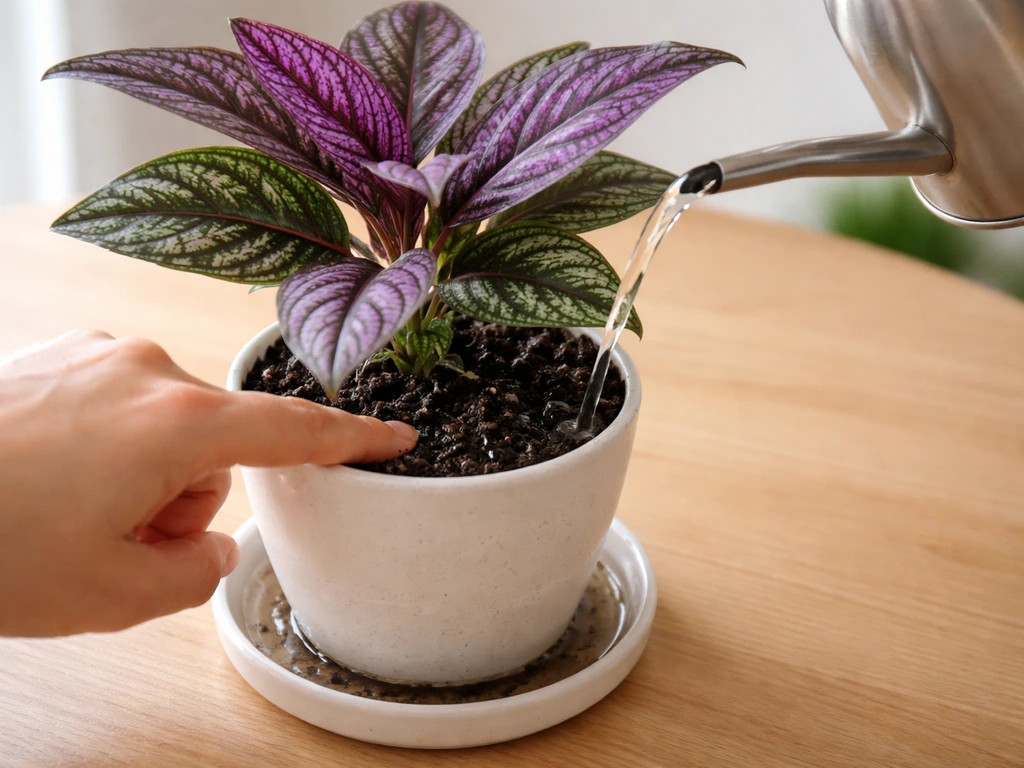
Water Persian shield when the top one to two inches of soil feel dry. Don't water on a rigid schedule: check the soil first. In a warm, bright spot the soil might dry out every three to five days. In a cooler or lower-light location it may take longer. When you do water, water thoroughly so it runs from the drainage holes, then let the excess drain completely. Never let the pot sit in a saucer of standing water.
In winter, growth slows and the plant enters a semi-dormant phase. Pull back on watering frequency during this period and let the soil dry out a bit more between sessions. Overwatering a slow-growing winter plant is one of the fastest routes to root rot.
Humidity
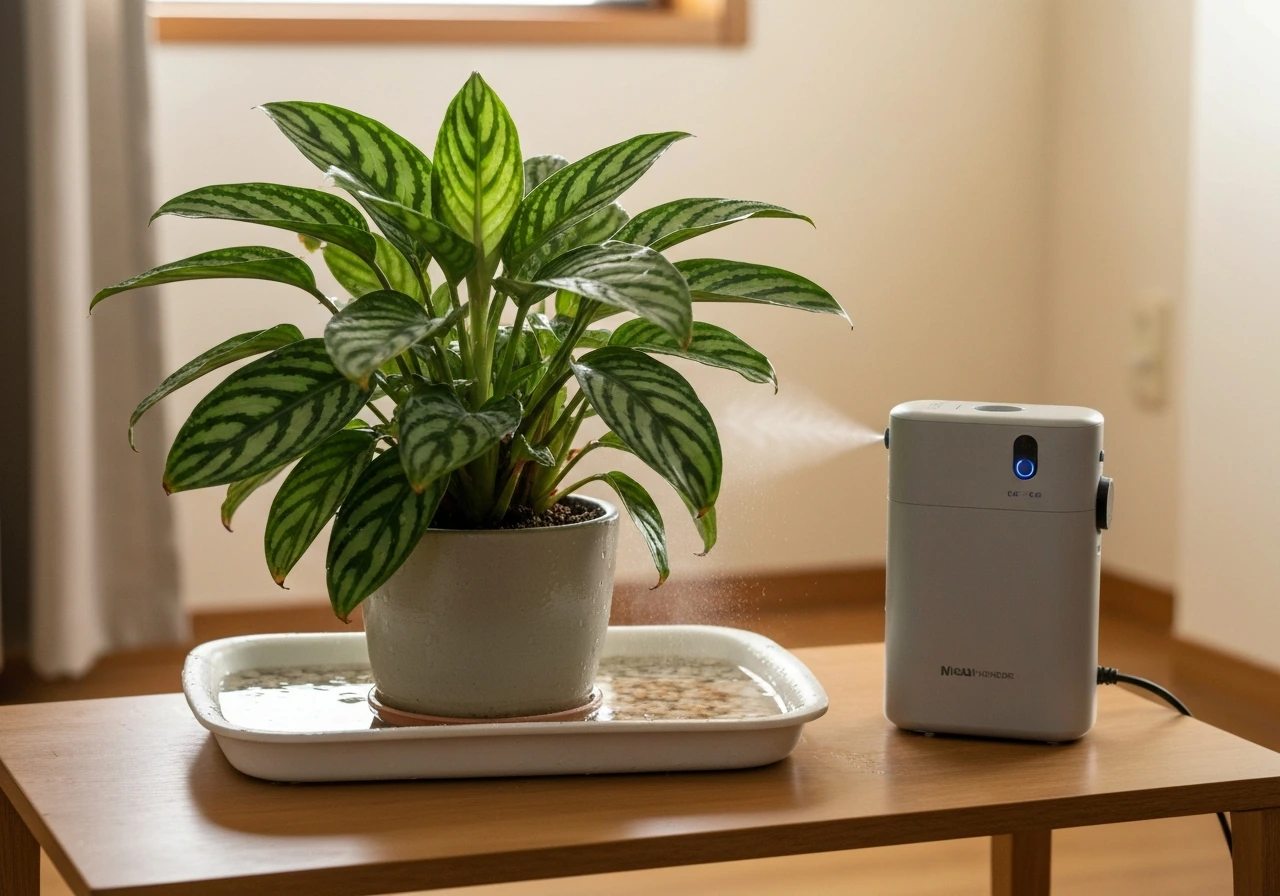
Persian shield prefers humidity in the 50 to 80 percent range. Most homes hover around 30 to 50 percent, which is on the low end for this plant. Crispy brown leaf edges and a lackluster appearance are the early signs that humidity is too low. A small humidifier near the plant is the most reliable fix. Grouping it with other plants, setting it on a pebble tray with water, or misting the leaves regularly are all secondary options that help but don't fully substitute for a humidifier in a dry home.
Temperature
Keep daytime temperatures between 74 and 79°F (23 to 26°C) and nights no lower than 65°F (18°C). The plant can tolerate a range of about 65 to 75°F (18 to 24°C) broadly, but it really does best on the warmer end of that. Critically, keep it away from cold drafts, air conditioning vents, and single-pane windows in winter. Temperatures below 50°F (10°C) will cause leaf drop. Persian shield reacts badly to sudden temperature swings, so avoid spots where temperatures fluctuate dramatically between day and night.
Fertilizing and What to Expect for Growth
Feed Persian shield from spring through fall with a balanced water-soluble fertilizer like a 10-10-10 or 20-20-20, applied every two to three weeks. Some growers prefer a high-nitrogen fertilizer to push foliage growth, which makes sense given that lush leaf production is the whole point with this plant. Either approach works. In winter, reduce feeding to once a month or stop entirely if the plant is barely growing.
Indoors, Persian shield grows more slowly than it does outside in a warm garden bed. Don't expect rapid sprawling growth. It'll put on new leaves steadily during the warm months and slow to almost nothing in winter. The plant can get leggy over time, especially in lower light, so pinching back stem tips regularly during the growing season keeps it bushy and encourages more colorful new foliage. Don't be shy about pruning: the newer growth is almost always more vibrantly colored than older woody stems.
Common Indoor Problems and How to Fix Them
| Problem | Likely Cause | Fix |
|---|---|---|
| Leggy, stretched stems | Not enough light | Move to brighter window or add a grow light; pinch back tips to encourage bushy growth |
| Faded or dull foliage color | Low light or low humidity | Increase light exposure; raise humidity to 50%+ |
| Brown, crispy leaf edges | Low humidity or underwatering | Add a humidifier; check soil moisture more frequently |
| Yellowing leaves with soggy soil | Root rot from overwatering | Check drainage, let soil dry out more; repot if roots are mushy |
| Leaf drop | Temperature shock, cold drafts, or sudden humidity drop | Move away from vents and cold windows; keep temps stable above 60°F |
| Spider mites (fine webbing, stippled leaves) | Dry indoor air, common in winter | Increase humidity; wipe leaves with neem oil solution or insecticidal soap |
| Aphids or mealybugs | Warm indoor conditions | Remove by hand, use insecticidal soap or neem oil spray; isolate the plant |
Spider mites are the most common pest issue indoors, particularly in winter when heating systems dry out the air. Consistently higher humidity is your best preventive measure. If you spot them early, a neem oil spray every five to seven days for two to three weeks typically clears them up. For mealybugs, a cotton swab dipped in rubbing alcohol applied directly to the insects works well for small infestations before you scale up to a spray treatment.
Long-Term Care and Taking Cuttings
Over time, Persian shield naturally gets woodier and less colorful as a houseplant. The practical solution is to propagate it regularly so you always have young, vibrant plants on hand. Stem cuttings are easy and reliable. Take a cutting of four to six inches from a healthy stem tip that has no flower buds on it. This last point matters: once a stem develops flower buds, its ability to root as a cutting drops sharply, so take cuttings from purely vegetative growth.
Strip the lower leaves, dip the cut end in rooting hormone powder or gel (this speeds things up noticeably even though it's not strictly required), and place it in a small pot of moist perlite or a mix of perlite and potting soil. Keep it warm, humid, and in bright indirect light. A clear plastic bag loosely draped over the cutting helps retain humidity while it roots. In two to four weeks you should see new growth indicating roots have formed. Then treat it like a mature plant from there.
Once you have healthy young cuttings growing, you can retire the older, woodier parent plant or cut it back hard in early spring to see if it pushes fresh new growth. It sometimes does, but fresh cuttings are generally a better bet for that neon purple color.
Moving It Outdoors vs. Keeping It Indoors Year-Round
If you have outdoor space, moving Persian shield outside for the warm season is genuinely worth doing. It grows bigger, faster, and more colorfully outdoors. The timing rule is simple: move it out only after nighttime temperatures are consistently above 50°F. Bring it back inside in fall before nights drop below that same threshold. In most of the U.S. that means outdoor time runs roughly from late May through early to mid-October depending on your region.
Don't just move it straight from your windowsill to full outdoor sun. It needs two to three weeks of hardening off first. Start by placing it in a sheltered outdoor spot with bright shade for a few days, then gradually introduce more sun and air movement, bringing it back inside each night during this transition period. This prevents leaf scorch and shock that would set the plant back weeks.
If you don't have outdoor space or just prefer to keep it indoors year-round, that works fine. You're simply managing the light, humidity, and temperature targets all year rather than letting the outdoors do that work for you in summer. Persian shield is not quite as effortlessly lush as, say, a pothos, but it's far from a finicky nightmare if your conditions are in the right range. Can you grow foxglove indoors?
If you can meet its bright light and consistent care needs, it can work too. With the right bright light, humidity, and warmth, you can grow perennials indoors like this too. You can use the same approach to set up a thriving indoor environment for ornamental grass, focusing on strong light, consistent moisture, and suitable temperature and humidity can you grow ornamental grass indoors.
Think of it as a medium-effort, high-reward plant: the effort is mostly upfront in setting up the right spot, and then it's mostly maintenance from there. If you also want to know whether you can grow asters indoors, the key is matching your light and temperature expectations can you grow asters indoors.
FAQ
Can you grow Persian shield indoors without a south or east window?
Yes, but only if you treat it like a light-hungry plant, not a low-light decoration. A 20 to 40 watt per square foot LED grow setup (or an equivalent full-spectrum bar) is often more realistic than a small desk lamp. Also plan on running the light on a timer for a steady 12 to 14 hours, then rotate the pot every week so one side does not outgrow the other and become lopsided.
Why does my Persian shield lose its purple color indoors over time?
Expect it to eventually fade even with perfect conditions, especially if the plant gets older stems. The fix is renewal: pinch regularly to keep it bushy during the growing season, and plan to take stem cuttings every year or every couple of years so you always have young growth with the best purple metallic sheen.
How do I tell if my Persian shield is struggling from too little light versus poor feeding?
It should look different depending on whether you are underfeeding or undercutting light. Low light usually causes stretching, wider spacing between leaves, and duller coloration, while low fertilizer shows up as overall lighter green and slower new leaf production. If both are happening, prioritize light first, then use the recommended spring to fall feeding schedule rather than trying to “push” color with extra fertilizer.
What humidity method works best if my home is below 40% humidity?
Misting can help temporarily, but it rarely brings humidity into the 50 to 80 percent range for long enough to fully prevent browning edges. The most reliable approach is a small humidifier placed near the plant, set up so the airflow does not blow directly on the leaves. If you use a pebble tray, keep water level in the tray and avoid letting the pot sit in standing water.
Can I move my Persian shield outdoors in summer, and how do I avoid leaf scorch?
Yes, but you need to avoid the common “too much, too fast” mistake. Start by moving the plant outside for short periods in bright shade, then increase sun exposure gradually over 2 to 3 weeks. Bring it in before nights drop below 50°F, and skip the move if the forecast predicts a sudden cold snap or heavy wind.
How often should I water Persian shield indoors, and can I water on a schedule?
Watering from the top is fine, just be consistent with checking the soil first. The important part is to water thoroughly until it drains, then empty the saucer immediately. If you let water linger in the outer pot, or you water on a calendar without checking dryness, Persian shield is prone to root rot.
Can I use alcohol or neem oil if I see spider mites or mealybugs on indoor Persian shield?
Yes, but only temporarily as a rescue if you are dealing with a small pest issue or you can isolate the plant. Avoid heavy alcohol use on large infestations, and test on a small leaf first because some plants can get leaf spotting. After treatment, keep humidity stable, because stressed plants can attract mites again quickly.
My leaves are browning, what should I check first?
Commonly, the plant is getting burned light or an airflow problem. If leaves look scorched, check for direct midday sun through a hot window and move it back to bright indirect light or use sheer curtains. If leaves brown after turning pale or crispy, also inspect for heating vents, cold drafts, and overly dry air, then adjust humidity and temperature stability.
When is the best time to propagate Persian shield indoors, and what cutting should I use?
The best time is during active growth, and you should avoid cuttings from stems that have formed flower buds. Take 4 to 6 inch tip cuttings, keep them warm and humid under a loose plastic cover, and use moist perlite or a perlite mix. If you see new growth in 2 to 4 weeks, that is your cue to begin treating the cutting like a mature plant with regular humidity.
What pot size and soil mix prevent overwatering and root rot?
Choose a pot that is only slightly larger than the root ball, because a too-large container keeps the bottom wet longer. Make sure the pot has drainage holes, and use a mix with added perlite (about 20 to 25 percent) for aeration. If you notice the top feels dry but the lower soil stays wet for many days, the pot is likely too large or the mix is holding too much water.