
Yes, you can grow honeysuckle indoors, but it comes with real caveats you need to know before you bring one home. Honeysuckle is a vigorous climbing vine that wants full sun, a lot of vertical space, and good airflow. Indoors, it can survive and even flower if you give it a south-facing window with strong light (or a solid grow light setup), a large container with drainage, and a trellis or support structure to climb. It is not as effortless as a pothos or a snake plant, but it is absolutely doable, especially if you choose the right variety and treat it like the sun-lover it is.
Can You Grow Honeysuckle Indoors? Step by Step Guide

James Hartwell
26 Apr 2026
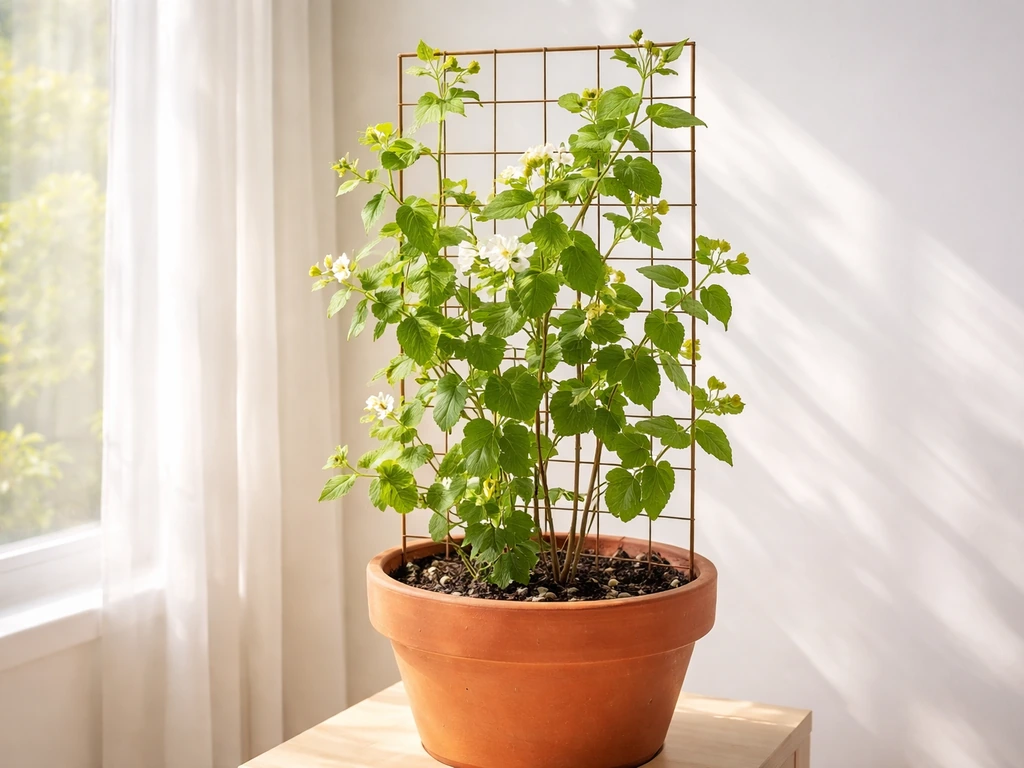
Choosing the right honeysuckle variety for indoors
Not all honeysuckles are equally suited to life in a pot inside your home. The genus Lonicera contains dozens of species and cultivars, and some are far more manageable than others. blank" rel="noopener noreferrer">Japanese honeysuckle (Lonicera japonica) is one of the most commonly suggested options for container growing because it can be kept confined in a pot or planter, though it is a fast, rampant grower that will quickly take over a space if you let it.
Harvest to Table notes that honeysuckle can be grown in full sun to light shade and highlights that Lonicera japonica can become invasive. A better pick for most indoor gardeners is Lonicera periclymenum, the common European honeysuckle, and specifically named cultivars like 'Graham Thomas' (known for its creamy-yellow flowers and strong scent) or 'Sweet Tea,' which has been commercially handled in container production settings.
These cultivars tend to be slightly less aggressive and still produce the fragrant flowers most people are after.
The core principle when choosing is this: pick a cultivar from a reputable nursery that has container-growing notes attached to it, and avoid the most vigorous species if you have limited space. Japanese honeysuckle can work in a container, but go in knowing it needs frequent pruning to stay manageable indoors. If you have a small apartment, a more compact named cultivar is your best friend here.
Light, temperature, and humidity: what honeysuckle actually needs
Light is the non-negotiable
Honeysuckle wants full sun, and Logee's, one of the more respected specialty plant nurseries, is clear about this: a southern exposure is best. Indoors, that means your brightest window, ideally a south-facing one that gets direct sun for several hours a day. Honeysuckle can tolerate partial shade, but here is the honest trade-off: lower light means fewer flowers, or possibly no flowers at all. Japanese honeysuckle research resources report good growth at [about 47% of full sun](https://resources.
ipmcenters. org/resource. cfm? rid=5890&vid=6233) (Thomas 1980), which can help when describing nuanced light levels.
If you are growing it purely for the vining foliage, partial light works. If you want the blooms and the scent, you need intense light. In a dim apartment, a strong full-spectrum grow light placed close to the plant is not optional, it is the difference between a thriving vine and a sad, leggy stem reaching desperately toward your ceiling.
Temperature and airflow
Honeysuckle is not a tropical houseplant, and it actually benefits from a cooler rest period in winter. Most homes stay between 65 and 75°F, which is fine during the growing season, but try to give the plant a slightly cooler spot in winter (around 50 to 60°F) if you can manage it, like a bright but cool room or enclosed porch. Good airflow matters too. Stagnant, humid indoor air is a recipe for fungal problems and pest infestations. Running a small fan nearby or cracking a window on mild days makes a genuine difference.
Humidity
Honeysuckle is not as humidity-hungry as, say, a bird of paradise or tropical fern, but it does not love the bone-dry air of a heated apartment in winter. Aim for moderate humidity around 40 to 60 percent. A pebble tray with water beneath the pot or occasional misting helps, but do not mist so heavily that the foliage stays wet, as that invites mildew.
Container setup: pot size, soil, drainage, and support
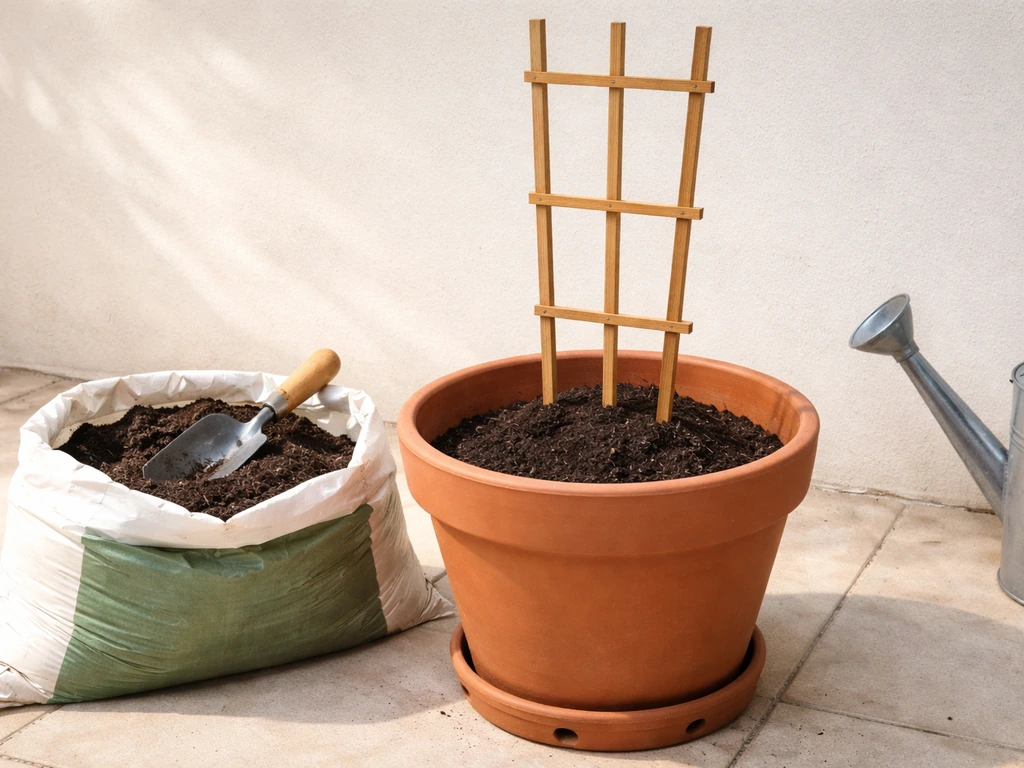
Honeysuckle has an extensive root system and it grows fast, so undersizing the pot is one of the most common mistakes. Aim for a container at least 40 cm (about 16 inches) in diameter, or with a minimum capacity of around 30 liters. If you are repotting, move up to a pot that is two to three times the size of the current one. Drainage holes are non-negotiable. Logee's specifically warns against letting the soil stay "soggy wet," and root rot in a waterlogged container is one of the quickest ways to lose the plant.
For the potting mix, use a well-draining, loam-based compost rather than a standard lightweight houseplant mix. Adding perlite (about 20 to 30 percent by volume) improves drainage and aeration significantly. Avoid heavy garden soil on its own, which compacts in containers and suffocates roots.
Because honeysuckle is a climber, it needs something to grab onto. A trellis, bamboo hoop, tension wire attached to a wall, or even a sturdy tomato cage placed inside the pot all work. Plan for this from the start rather than retrofitting it later when the vine is already tangled. The plant will twine naturally around any vertical support you provide.
Watering, fertilizing, and keeping up with a fast grower
Watering
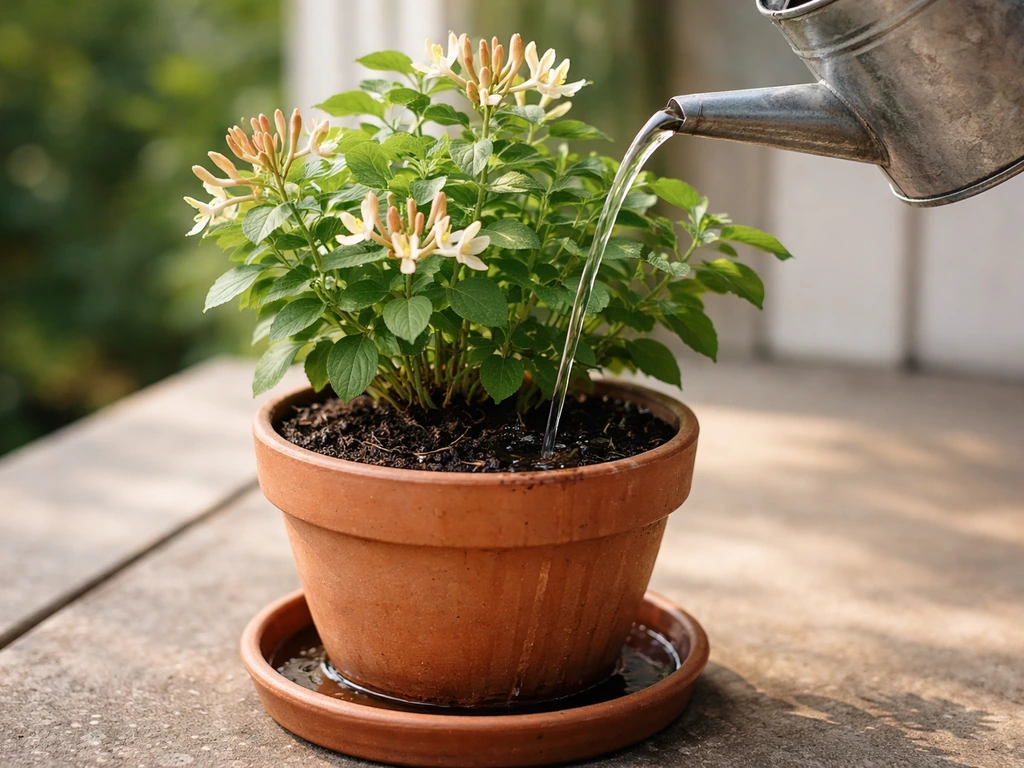
The goal is consistent, even moisture without waterlogging. Water when the top inch or two of soil feels dry, and water thoroughly until it drains from the bottom of the pot. Do not let the pot sit in standing water in a saucer. In summer, an actively growing honeysuckle in a sunny spot may need watering every two to three days. In winter, cut back significantly and let the soil dry out a bit more between waterings. The exact schedule will depend on your pot size, soil mix, light level, and indoor temperature, so check the soil with your finger rather than watering on a fixed day.
Fertilizing
During the growing season (spring through late summer), feed your honeysuckle every two to four weeks with a balanced liquid fertilizer. Research on Lonicera japonica confirms that nitrogen, phosphorus, and potassium ratios all affect vegetative growth and bud production, so a well-balanced N-P-K fertilizer is a reasonable starting point. If your plant is growing vigorously but not flowering well, try switching to a fertilizer with a slightly lower nitrogen ratio and higher phosphorus to encourage blooming. Do not fertilize in winter when the plant is resting.
Pruning
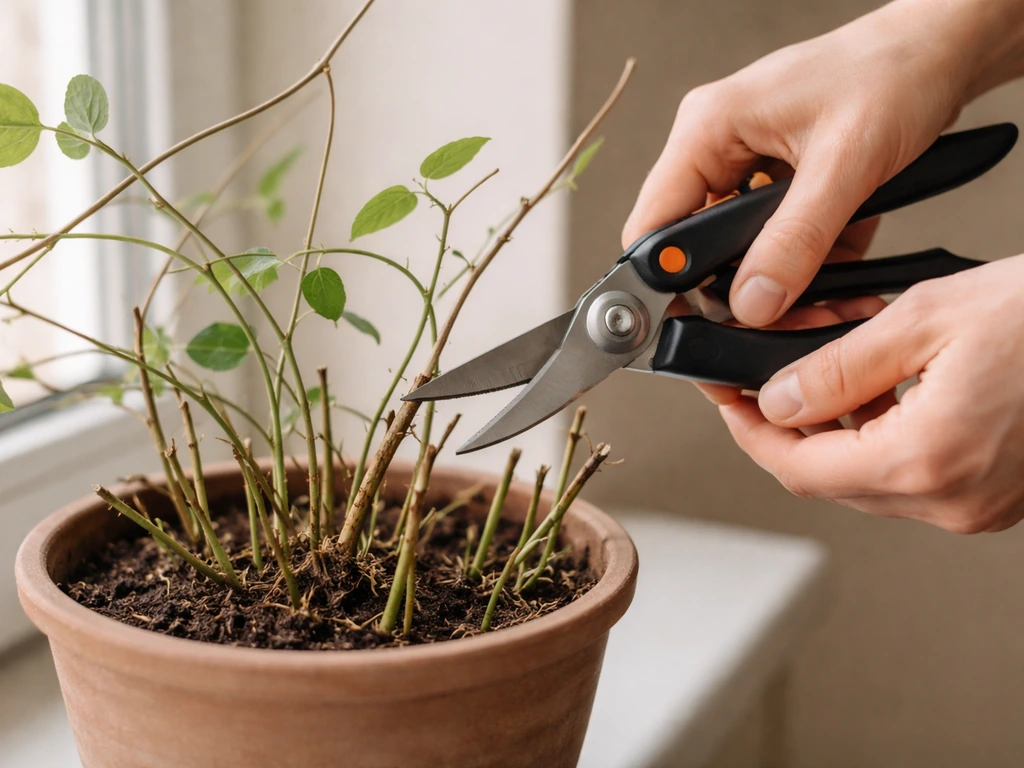
Indoor honeysuckle needs regular pruning to stay manageable and to keep light reaching the inner growth. After flowering, trim back spent stems. In late winter or early spring, give the whole plant a more significant cutback to keep its shape and size appropriate for your space. This also encourages fresh, more floriferous growth in the coming season.
Growing from cuttings or seed and getting it established
Cuttings are the most reliable and practical propagation method for indoor honeysuckle. Take softwood cuttings in late spring or early summer, when the stems are green and flexible but not completely new growth. Aim for cuttings around 10 to 15 cm (4 to 6 inches) long, with a clean cut just below a node.
Strip the lower leaves, dip the cut end in rooting hormone powder or gel (this genuinely helps speed up rooting), and place the cutting in a small pot of moist perlite or a 50/50 perlite and peat mix. Cover loosely with a clear plastic bag or a humidity dome to retain moisture around the cutting, and keep it in bright indirect light. Rooting typically takes around three to four weeks, though this varies with temperature and species.
Growing from seed is slower and more complicated. Honeysuckle seeds often have dormancy requirements, including cold stratification (a period of cold, moist conditions to break dormancy), which means you will need to mimic a winter chill artificially before sowing. For most home gardeners, cuttings are simply the faster, more predictable route. Once your cutting has rooted and been potted up, treat it exactly as described above: strong light, well-draining soil, and consistent moisture.
Troubleshooting the most common indoor problems
| Problem | Likely Cause | What to Do |
|---|---|---|
| Leggy, stretched stems | Insufficient light | Move to a sunnier window or add a full-spectrum grow light; prune leggy stems back |
| Yellowing leaves | Overwatering, root rot, or pest damage | Check soil moisture and drainage; inspect roots; look for pests on leaf undersides |
| Leaf drop | Temperature stress, drafts, or severe underwatering | Keep away from cold drafts or heating vents; water more consistently |
| No flowers | Not enough light or too much nitrogen | Maximize light exposure; switch to a lower-nitrogen, higher-phosphorus fertilizer |
| Spider mites | Dry air, warm indoor conditions | Increase humidity; rinse leaves; use neem oil or introduce predatory mites as a biological control |
| Root rot | Waterlogged soil, poor drainage, no airflow | Repot into fresh, well-draining mix; trim rotted roots; reduce watering frequency |
Leggy growth is by far the most common complaint with indoor honeysuckle, and it is almost always a light problem. If your stems are reaching and the internodes (the gaps between leaves) are unusually long, the plant is searching for more sun. A grow light running 12 to 14 hours a day can genuinely turn this around within a few weeks. Spider mites are the other frequent headache, especially in dry heated homes in winter. Catching them early matters: look for fine webbing and tiny dots on leaf undersides, and act quickly before a small infestation becomes a full-scale problem.
If you enjoy the challenge of growing plants indoors that are not traditionally thought of as houseplants, honeysuckle sits in a similar category to some other vigorous or sun-loving species. Getting the light and container setup right from day one is the single biggest factor in whether your indoor honeysuckle thrives or just limps along. Nail those two things, and you have a genuinely rewarding, fragrant vine to enjoy inside your home.
If you are also curious about succulents, you might be wondering will hens and chicks grow indoors under similar bright light conditions. If you are wondering about something else like whether can hens and chicks grow inside, it helps to look at the specific care needs for that poultry setup as well. Yes, hens and chicks can also be grown indoors, but they need very bright light to stay compact and healthy.
FAQ
How much light does indoor honeysuckle really need to flower?
To get consistent blooms, plan on either several hours of direct sun in a bright south-facing window or a grow light strong enough to keep leaves from reaching. If growth looks stretched even with a “bright” window, increase light intensity or move the light closer, and run it about 12 to 14 hours per day.
What should I do if my honeysuckle is growing fast but not producing flowers?
First check light, because weak indoor light is the most common cause of no blooms. If light is adequate, adjust feeding by reducing nitrogen slightly and increasing phosphorus emphasis, then pause fertilizer during winter rest so the plant does not stay in a vegetative-only mode.
Can I grow honeysuckle indoors without a grow light if I do not have a south window?
It is possible but harder. If your brightest exposure is east or west, expect either fewer flowers or a higher leggy-growth risk. A grow light becomes the practical substitute, especially in winter when day length drops and windows often cannot deliver comparable intensity.
Will honeysuckle smell strong indoors, and where should I place it?
Some cultivars are notably fragrant, and blooms indoors can be noticeably scented. Place the pot near the trellis area where airflow is good, but not directly in a sleeping space if you are sensitive to strong fragrance, and monitor for pollen-related reactions if you have allergies.
How do I prevent root rot in an indoor container?
Use a pot with drainage holes and a well-draining, loam-based mix with added perlite. Water thoroughly, then wait until the top inch or two dries before watering again, never leave the pot sitting in a saucer, and ensure the support trellis does not block airflow around the soil surface.
Do I need a larger pot immediately, or can I start small?
Start closer to the target size if possible, because honeysuckle develops an extensive root system and runs out of space quickly. If you start in too small a container, you will be forced into frequent repotting and the plant can sulk; aim for at least about 30 liters capacity for mature indoor plants.
How often should I prune indoor honeysuckle, and when is the best time?
After flowering, remove spent stems, then do a more significant shaping cut in late winter or early spring to control size and open up the interior for light. Regular light trims during the growing season also help keep it from tangling into an unmanageable mass.
Why are the leaves yellowing or dropping even though I water regularly?
Overwatering is a common culprit, especially indoors where evaporation is slower. Yellowing with persistently damp soil often points to poor drainage or too-frequent watering, so let the top part of the mix dry more between waterings and verify the pot is not waterlogged.
My vine is climbing the support but looks messy, how can I train it indoors?
Train it early by guiding new shoots onto the trellis or wire as they grow, rather than letting it freely twine in one direction. Gentle re-positioning every couple of weeks helps you control shape, reduces tangling that complicates pruning, and keeps airflow through the plant.
What humidity level should I aim for, and is a pebble tray enough?
Target moderate humidity, roughly 40 to 60 percent. A pebble tray can help locally, but heated homes in winter often stay too dry overall, so combine it with airflow control (fan) and avoid heavy misting that leaves foliage wet enough to encourage mildew.
How can I tell if I have spider mites before the damage spreads?
Check leaf undersides regularly for tiny dots and fine webbing, especially when indoor air is dry. Early detection means you can intervene when there are only a few affected leaves, rather than waiting until leaves look stippled and dry across the whole vine.
Is honeysuckle safe to grow indoors if I have pets?
Many honeysuckle species are not considered pet-safe houseplants, and ingestion risk is real even if symptoms vary by species. If you have cats or dogs that chew plants, keep the vine fully out of reach and consider choosing a non-toxic climbing alternative instead.
Can I grow honeysuckle from cuttings in water first?
Water-rooting is sometimes possible, but for indoor success it is usually better to root cuttings in a moist, airy medium like perlite or a perlite-peat mix. This reduces transplant shock, and keeping the cutting in bright indirect light with a humidity dome helps maintain rooting conditions.