Yes, you can absolutely grow Carolina Reapers indoors, and with the right setup they will fruit. The catch is that these are not low-effort windowsill plants. They need intense light (ideally a dedicated grow light), warm temperatures, good airflow, and a little patience since the whole cycle from seed to first harvest can take six to nine months. If you can give them those things, growing Carolina Reapers inside is genuinely rewarding and completely doable whether you have a spare corner, a grow tent, or just a sunny south-facing window and some ambition.
Can You Grow Carolina Reapers Indoors? Step-by-Step Guide
James Hartwell
1 May 2026
What to realistically expect growing Carolina Reapers indoors
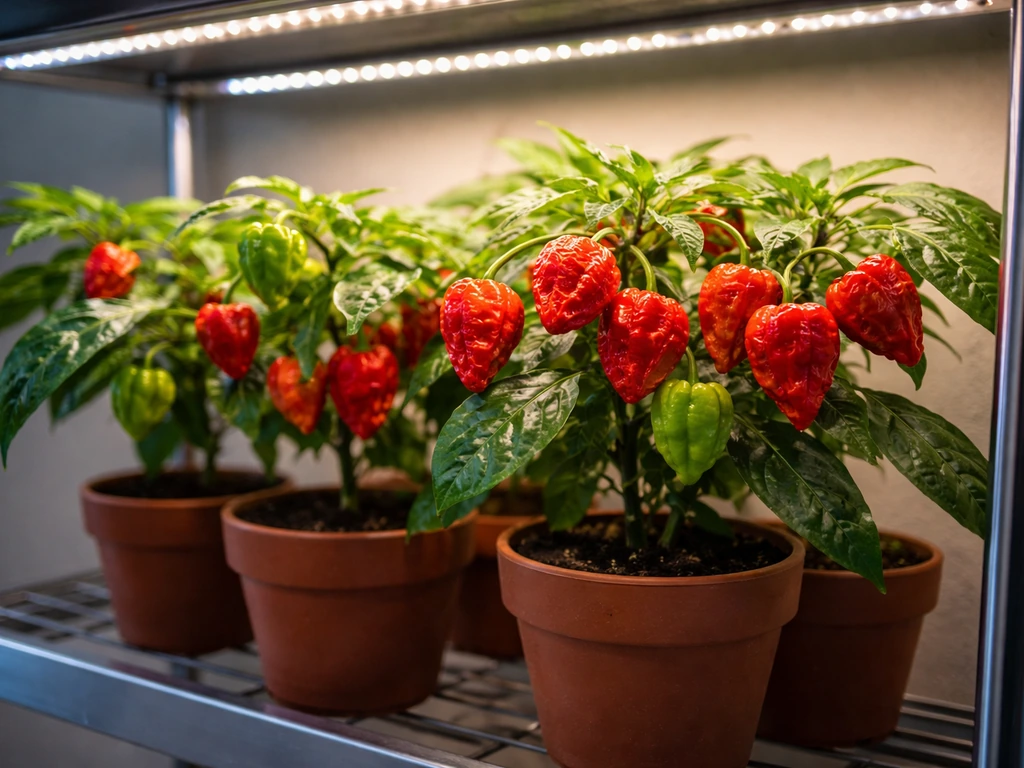
Let me be straight with you: Carolina Reapers are Capsicum chinense, the same species as habaneros and scotch bonnets. That means they are slow growers that evolved in hot, humid Caribbean climates. Indoors, you are essentially recreating a mini tropical environment. Plants started from seed in late winter typically reach maturity and begin fruiting by mid to late summer, though under strong grow lights you can push that timeline a bit. Expect your plant to live in a pot for a long time before you see red wrinkled pods.
The upside of growing indoors is real. You control the season, so you can start whenever you want. You avoid outdoor pests like aphid colonies blown in by wind. And Carolina Reapers, like most chinense peppers, overwinter beautifully indoors under controlled conditions, meaning you can keep a plant going for multiple seasons and get even bigger harvests in year two. I have kept a potted reaper alive through two winters on a grow light shelf and the second-year plant produced pods noticeably faster than starting from scratch.
Light requirements and how to set up your indoor grow area
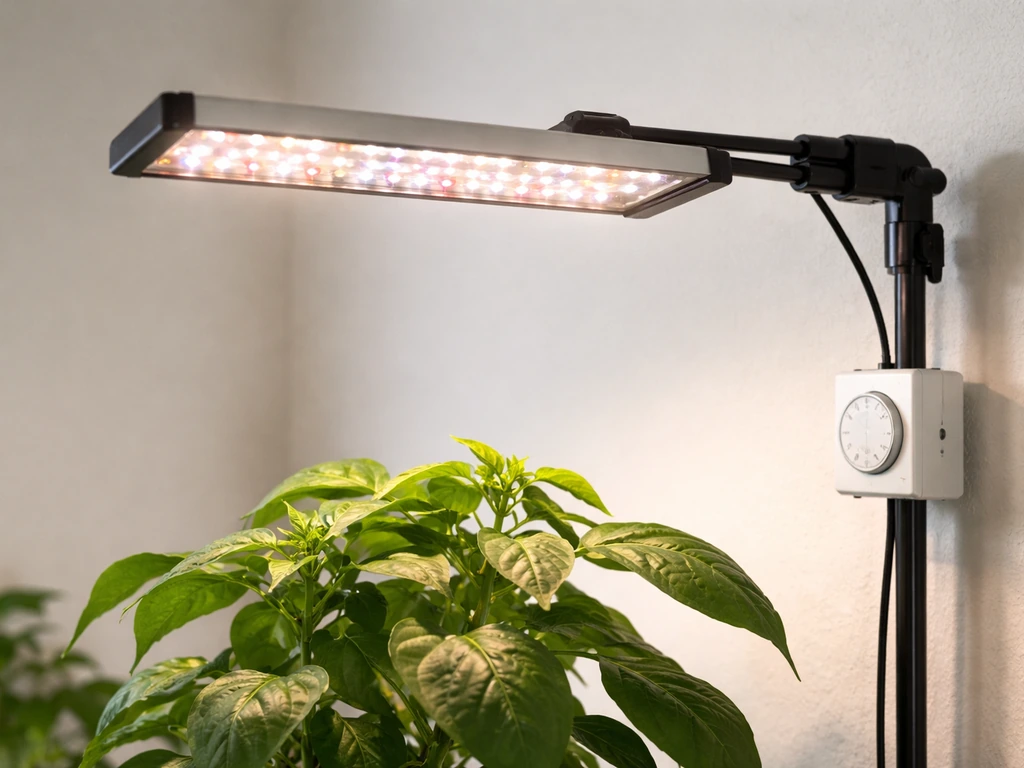
Light is the single biggest variable for indoor pepper success. Carolina Reapers need roughly 14 to 16 hours of bright light per day during active growth. A south-facing window gives you the best shot with natural light, but in most homes and apartments it still falls short of what these plants want, especially in winter or early spring when the days are short and the sun is low. If your plants start stretching toward the window and getting leggy within the first few weeks, that is your signal that the window alone is not cutting it.
A dedicated grow light changes everything. Full-spectrum LED grow lights are the most practical choice right now: they run cool, use less electricity than older HPS or fluorescent setups, and cover the wavelengths peppers actually use. For a single plant or a small cluster, a quality 100 to 200 watt LED panel (true wattage, not marketing wattage) positioned 12 to 18 inches above the canopy is more than enough. Set it on a timer for 16 hours on, 8 hours off during the seedling and vegetative stage, then drop to 14 hours on when you want to encourage flowering.
- South-facing window: acceptable if you are in a warm, sunny climate and willing to supplement; expect slower growth and some legginess
- T5 or T8 fluorescent shop lights: decent for seedlings, marginal for fruiting adult plants
- Full-spectrum LED grow light (100W+ true draw): the best indoor option for getting pods reliably
- Grow tent with reflective walls: maximizes light efficiency and helps with humidity control
If you are combining a window with a supplemental grow light, position the light on the opposite side so the plant gets light from two angles. That helps prevent the one-sided lean you get with window-only growing.
Starting Carolina Reaper seeds indoors
The best time to start Carolina Reaper seeds indoors is January through March if you eventually want to move plants outside for summer, or any time of year if you are growing entirely under lights. Chinense peppers have notoriously slow germination, often taking 14 to 28 days, sometimes longer. Do not panic if nothing pops up in week one.
Getting germination right
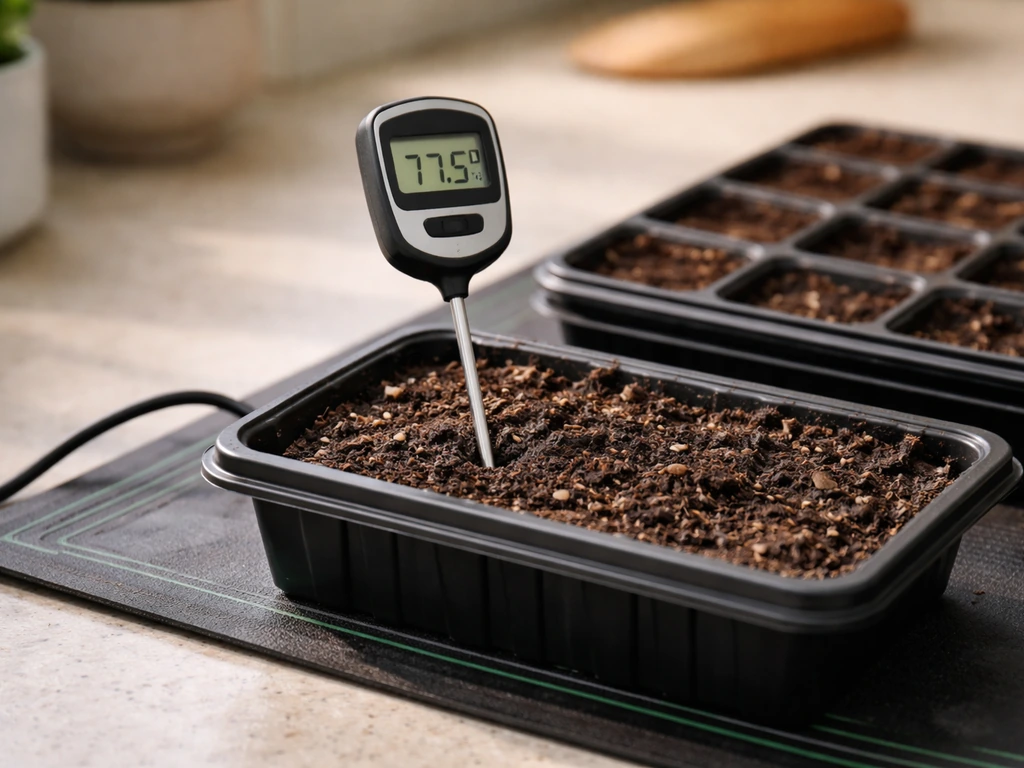
Soil temperature is the biggest lever for germination speed. Carolina Reaper seeds germinate best at soil temperatures blank" rel="noopener noreferrer">between 27 and 32°C (80 to 90°F). At room temperature (around 20°C), germination is sluggish and uneven. A seedling heat mat placed under your seed tray makes a dramatic difference. Using a heating mat to keep pepper seed-starting flats around 80°F to 90°F until seedlings emerge can improve emergence, according to UMN Extension blank" rel="noopener noreferrer">heating mat placed under your seed tray makes a dramatic difference. I have gone from waiting 25 days without a mat to seeing sprouts in 10 to 12 days using one. Keep the mat under your tray until the seedlings are up and have their first true leaves.
- Fill small seedling cells or a seed tray with a light, sterile seed-starting mix (not heavy potting soil)
- Plant seeds about 6mm (1/4 inch) deep, one or two per cell
- Mist the surface gently and cover the tray with a clear dome or plastic wrap to hold humidity
- Place on a heat mat set to 27 to 32°C and keep in a warm location
- Check daily and mist lightly if the surface dries out, but do not waterlog the mix
- Once sprouts emerge, remove the dome and move under your grow light immediately
- Thin to one seedling per cell once the first true leaves appear
Transplanting seedlings
When seedlings have two to three sets of true leaves and roots start showing at the bottom of their cells, it is time to pot up. Move them into 4-inch pots first, then into their final container once the plant is 15 to 20 cm tall and well-established. Going from a tiny cell to a huge final pot too quickly can lead to the soil staying wet too long, which encourages root rot. Step up gradually. Note that potato vines have different indoor needs, but you can grow them inside if you match their light and watering requirements can potato vine grow indoors.
Potting, soil, temperature, watering, and feeding
Container size and soil
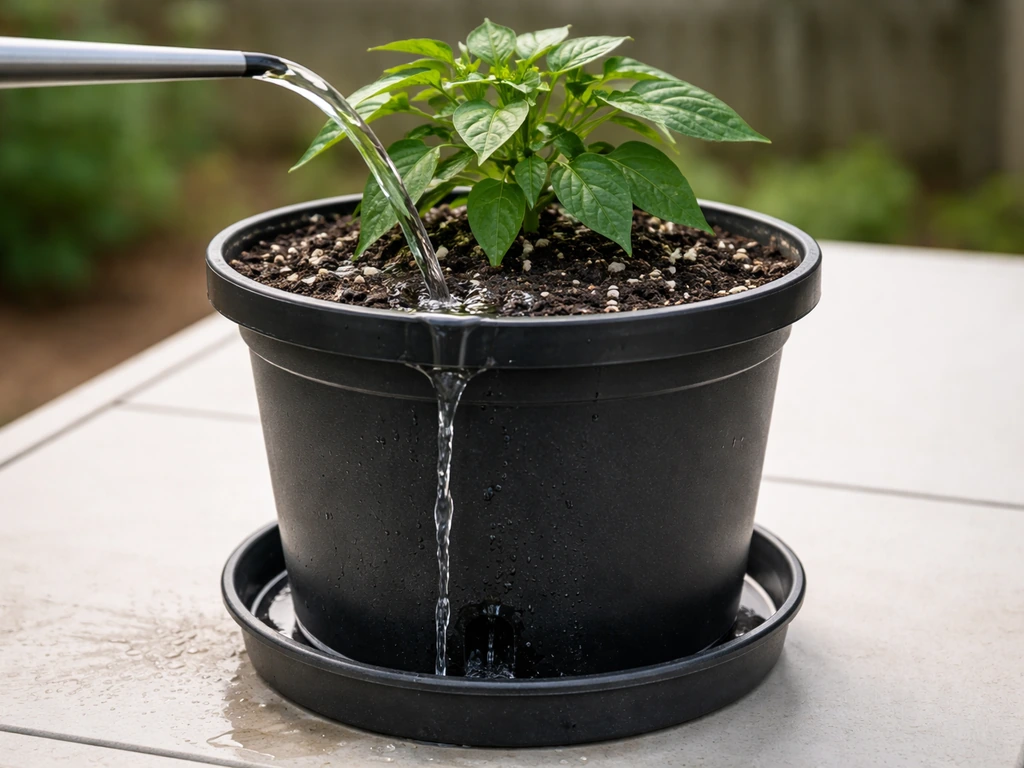
Carolina Reapers develop substantial root systems. For a single plant grown to full fruiting size, aim for a final container of at least 5 gallons (roughly 19 liters). A 7 to 10 gallon pot gives the plant even more room to establish and typically results in bigger harvests. Choose a pot with solid drainage holes because these plants hate sitting in water.
Use a well-draining potting mix. A good starting point is a quality peat or coco-based potting mix amended with 20 to 30 percent perlite to open up drainage. Peppers do not like compacted, heavy soil. If you are reusing old potting mix, refresh it with compost and perlite before planting.
Temperature
For strong vegetative growth, keep daytime temperatures between 24 and 30°C (75 to 86°F). For flowering and fruit set, optimal daytime temps are around 26 to 32°C, with nighttime temperatures dropping to around 16°C (60°F). That nighttime dip actually supports good pollen development. Daytime temperatures consistently above 32°C (90°F) can cause bud drop and poor fruit set, so if you are running heat lamps or growing in a hot room in summer, watch your thermometer carefully.
Watering
Water deeply when the top inch of soil feels dry, then let the pot drain fully. Do not let the plant sit in a saucer of standing water. Overwatering is one of the most common ways indoor pepper growers kill their plants: the leaves droop, which looks exactly like underwatering, and then people water again and make it worse. Pick the pot up before and after watering to get a feel for its weight when dry versus wet. That muscle memory saves plants.
Feeding
Start feeding about two weeks after transplanting into the final pot. During the vegetative stage, use a balanced fertilizer (something like 5-5-5 or a 3-1-2 NPK ratio) every one to two weeks. Once the plant starts forming flower buds, switch to a lower-nitrogen, higher phosphorus and potassium formula to encourage fruiting rather than endless leafy growth. Liquid fertilizers are easiest to control indoors. Slow-release granules work too but are harder to adjust if you see deficiencies.
Getting your Carolina Reaper to flower and fruit indoors
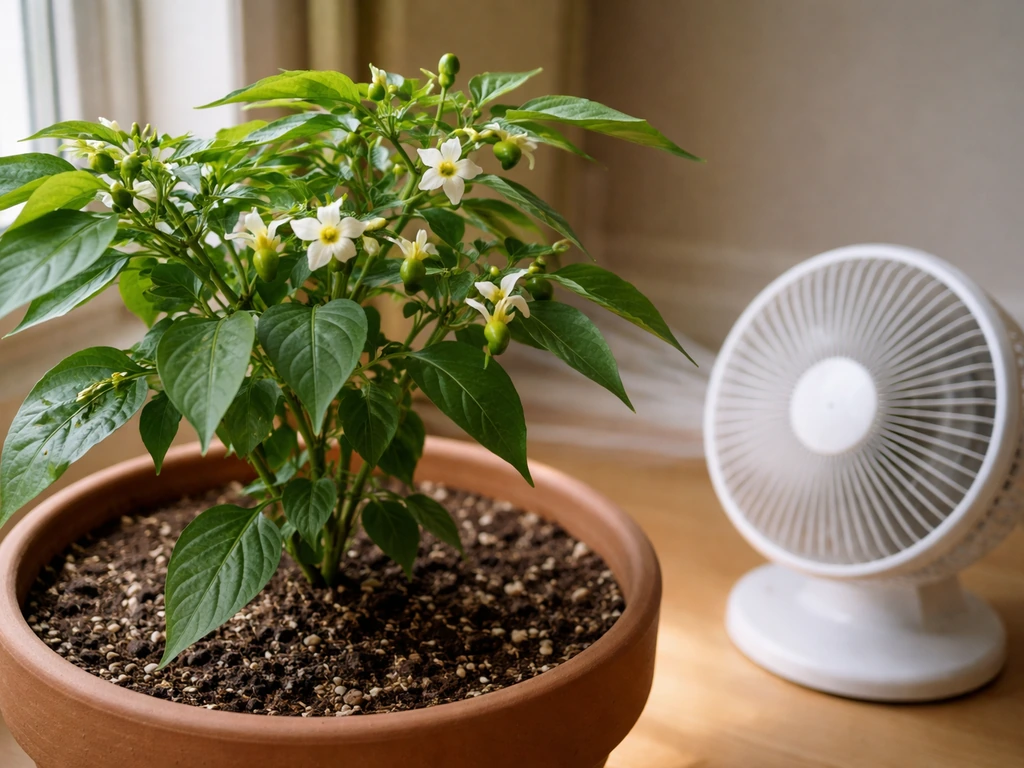
This is where indoor growing gets interesting. Outdoors, bees and wind handle pollination. In an r/HotPeppers discussion, multiple users suggest that indoor Carolina Reapers may not require manual pollination if a fan provides enough pollen movement bees and wind handle pollination. Indoors, you need to step in. The good news is that Carolina Reapers are self-fertile, meaning one plant can pollinate itself, but they need some help moving the pollen around.
The most reliable method is to run a small oscillating fan near your plants for several hours a day. The gentle movement mimics wind and shakes pollen loose within the flowers. You can also give individual flowers a light shake with your finger or use a soft paintbrush or electric toothbrush held near the flower to vibrate the pollen free. I do both: a fan runs on a timer for six hours a day, and I give the plant a quick finger-flick on flowering days when I water.
For pollen to be viable and transfer properly, nighttime temperatures need to stay between 13 and 21°C (55 to 70°F) and daytime should not exceed 32°C (90°F). Push above that upper limit and flowers drop before setting. Relative humidity around 70 to 80 percent is ideal for good pollen release and stigma receptivity. In dry indoor air, especially in winter with heating running, humidity can drop to 30 to 40 percent, which seriously hurts fruit set. A small humidifier near the plant or a tray of water nearby helps.
From pollination to fully ripe red pods, expect 90 to 120 days. The fruits start green, then go through a yellow or orange stage, and finally turn that deep red associated with ripe Carolina Reapers. Do not rush the harvest: the heat and flavor develop most in the last weeks of ripening.
Common indoor problems and how to fix them
Leggy, stretched plants
Long internodes, weak stems, and a general reaching toward the light are classic signs of insufficient light intensity or duration. Move the grow light closer (while watching for heat stress) or increase the daily light hours. If you only have a window, add a reflective surface on the opposite side to bounce light back at the plant. Pruning the top of a leggy seedling (called topping) encourages bushier branching and a more compact plant.
No fruit or flowers dropping
The usual culprits are temperature extremes, low humidity, and poor pollination. Check that your daytime temps are not spiking above 32°C near the light source, that nighttime temps are not going below about 13°C, and that humidity is above 50 percent at minimum. Add manual pollination with a fan or light shaking if you are not already doing it. Also check your fertilizer: too much nitrogen late in the season keeps plants in vegetative mode and delays flowering.
Overwatering and drooping
If leaves droop and the soil is still damp, stop watering and let the plant dry out. Remove the saucer for a day or two to encourage drainage. If you have been consistently overwatering, check the roots for root rot (mushy, brown roots vs. healthy white or tan roots). Repotting into fresh, dry mix with added perlite can save a plant if you catch it early.
Pests indoors
The most common indoor pepper pests are fungus gnats, spider mites, and aphids. Fungus gnats breed in consistently moist soil: letting the top inch dry between waterings and using yellow sticky traps controls them. Spider mites show up in hot, dry conditions and appear as tiny moving dots on the underside of leaves with fine webbing. Turtle vine can also be grown indoors, but it needs bright light and consistent moisture to thrive indoor pepper growers. Increase humidity and apply insecticidal soap or neem oil spray. Aphids tend to cluster on new growth and can be knocked off with a jet of water in the shower, then treated with neem.
| Problem | Likely Cause | Fix |
|---|---|---|
| Leggy, stretched stems | Too little light or too few hours | Move light closer, add hours, or supplement window with grow light |
| Flower or bud drop | Temps above 32°C or below 13°C, low humidity | Adjust temperature, raise humidity, ensure 50–80% RH |
| No fruit set | Poor pollination, excess nitrogen, temperature stress | Run a fan, hand-pollinate, switch to low-N fertilizer |
| Drooping with wet soil | Overwatering or root rot | Let dry fully, check roots, repot if needed |
| Drooping with dry soil | Underwatering | Water deeply and let drain fully |
| Fungus gnats | Overly moist topsoil | Let soil surface dry between waterings, use yellow sticky traps |
| Spider mites | Hot, dry air | Raise humidity, apply neem oil or insecticidal soap |
| Yellowing lower leaves | Nitrogen deficiency or overwatering | Adjust watering, feed with balanced fertilizer |
Harvesting, storing, and what to do next season
Harvest Carolina Reapers when they are fully red and have developed the characteristic bumpy, wrinkled skin and the distinctive tail. Use scissors or pruning snips rather than pulling by hand, which can damage branches. Fresh pods keep in the fridge for a week or two. For longer storage, dry them in a dehydrator at around 52°C (125°F) until fully brittle, then store in airtight jars away from light. You can also freeze fresh pods whole in a zip-lock bag for months.
At the end of the season, you have a decision to make. You can let the plant go and start fresh with seeds next year, or you can overwinter it. Overwintering is worth doing if your plant is healthy and bushy. Cut it back by about a third, move it under the grow light with reduced watering, and let it rest through the cold months. In spring, resume normal watering and feeding, and the plant will push vigorous new growth and flower much earlier than a seedling would. Second-year Carolina Reaper plants are genuinely impressive producers.
If you want to save seeds, let a few pods fully ripen on the plant, scoop out the seeds, rinse them, and let them air dry on a paper towel for a week before storing in a cool, dry place. Seeds stay viable for two to three years if stored well.
Your indoor Carolina Reaper action plan
Here is what to do right now depending on where you are starting from:
- If you have only a south-facing window: start seeds now, plan to add a cheap grow light or T5 strip before the plant hits the vegetative growth phase, and expect slower progress than a full grow-light setup
- If you have a grow light already: start seeds immediately, use a heat mat for germination, and plan on 6 to 9 months from seed to first ripe pod
- If you have neither: invest in a basic full-spectrum LED panel (under $50 for a starter unit), a seedling heat mat, and quality seed-starting mix before you begin
- Grab a small oscillating fan if you do not already have one, it is essential for pollination and for building strong stems
- Pick up a digital thermometer and hygrometer so you can actually see your temperature and humidity, guessing gets expensive fast when pods are dropping
Growing Carolina Reapers indoors is one of those projects that feels ambitious at first and then becomes surprisingly manageable once you have the basics dialed in. The plants are tough, they respond visibly to good care, and there is something genuinely satisfying about growing the hottest pepper in the world on your kitchen shelf. If you are also wondering can you grow silvervine indoors, it helps to set up the right light and growing conditions from day one.
If you are wondering about other varieties, you may also be able to grow a purple sweet potato vine indoors with the right light and container can purple sweet potato vine grow indoors. Give them the light, warmth, and airflow they need and they will deliver. These same indoor light, temperature, and watering principles also apply if you’re wondering can you grow virginia creeper indoors.
FAQ
Can you grow Carolina Reapers indoors using only a sunny window?
Sometimes, but expect more failures in winter. If you see steady legginess (long gaps between leaves) after 2 to 3 weeks, switch to a grow light rather than waiting, because chinense peppers need both intensity and consistent day length to reliably flower and set fruit.
How many plants can you fit under one LED panel, and how close should it be?
A 100 to 200 watt full-spectrum panel can comfortably handle one plant or a small cluster, but the key is canopy coverage, not the watt number on the box. Keep the light 12 to 18 inches above the top, raise or lower as needed to avoid leaf curl or bleaching, and make sure every plant gets similar light.
Why are my Carolina Reaper flowers dropping even though I’m pollinating?
Most often it is temperature or humidity. If daytime is spiking above about 32°C near the light, or nighttime is too low, flowers can drop before the pollen works. Also check humidity, dry indoor air can reduce pollen release and stigma receptivity even when you run a fan.
Is one Carolina Reaper plant enough indoors, or do I need more?
For fruit, one plant is usually enough because it is self-fertile, but it still needs pollen movement. If you do have multiple plants, you may get faster results by running the same fan and gently vibrating blooms on all of them, rather than relying on chance transfer.
Do I need to remove the first flowers to help the plant grow bigger?
No, but you should control expectations. If the plant is small or stressed after transplanting, allowing a heavy early fruit load can slow overall growth and delay future flowering. A practical approach is to let the first few blooms set, then support the plant with consistent feeding and light rather than removing everything automatically.
What fertilizer should I use if my leaves look dark green but growth is slow?
That combination often points to an over-nitrogen or inconsistent feeding routine. Switch from balanced feed to a lower-nitrogen, higher phosphorus and potassium formula once you see bud formation, and check that you are watering correctly so nutrients can actually cycle through the root zone.
How do I prevent overwatering when I can’t tell how wet the pot is?
Use the weight test. Lift the pot before watering, then lift again when moist, and aim to water when it is clearly lighter and the top inch is dry. Also remove saucers for a day if the pot stays heavy, standing water in the saucer can quickly trigger root problems.
What should I do if seedlings emerge but then stall or damp off?
Damping off is usually too much moisture and low airflow. Keep the heat mat only until germination, reduce watering so the mix stays just lightly moist, and start gentle airflow early (for example, a small fan on low) so leaves and soil surface dry slightly between waterings.
Can I start seeds in a typical room without a heat mat?
Yes, but germination is slower and uneven. If you do not use a mat, you can still improve odds by warming the room consistently and covering the tray loosely to reduce moisture loss, but if you routinely sit near 20°C, expect delays compared with 80 to 90°F soil temperatures.
Why are my plants getting leggy even with a grow light?
Usually it is distance, light hours, or light coverage. If stems stretch, lower the light carefully while watching for heat stress, increase daily photoperiod according to the stage, and confirm the plant sits centered so the brightest portion of the LED reaches it.
How do I know when to harvest, and should I wait for full red color only?
Full red is the safest cue for the classic ripe flavor and heat development. But you can also look for the characteristic bumpy wrinkled skin and the tail, if pods are red yet smooth or still firm, give them a bit more time under stable conditions rather than picking immediately.
Can I overwinter my Carolina Reaper indoors without losing it?
Yes, as long as you reduce watering and keep it under light so it does not remain weak and overly wet. Cut it back by about a third, run the grow light on a reduced schedule, and only water when the top layer dries, do not keep it soaking during the rest period.
Are indoor Carolina Reapers safe to handle if I’m worried about skin irritation?
They can still burn skin and eyes indoors. Wear gloves when pruning, avoid touching your face, and keep a clean spray bottle and paper towels handy for quick cleanup, especially right after harvesting or working near wet stems.