
Yes, you can grow carnivorous plants indoors, and plenty of people do it successfully in apartments, offices, and windowless rooms. With the right species and setup, can air plants grow indoors too, though they need different care than carnivorous plants grow carnivorous plants indoors. The honest caveat is that these plants are not typical houseplants. They evolved in nutrient-poor, boggy environments with intense sun, and replicating that indoors takes a deliberate setup. Get the light, water quality, and substrate right, and you'll have healthy, trap-firing plants year-round. Skip those three things and you'll be composting a dead flytrap within a few months. Here's exactly what you need to know before you bring one home.
Can You Grow Carnivorous Plants Inside? Full Indoor Guide
James Hartwell
20 May 2026
Which carnivorous plants can actually live indoors
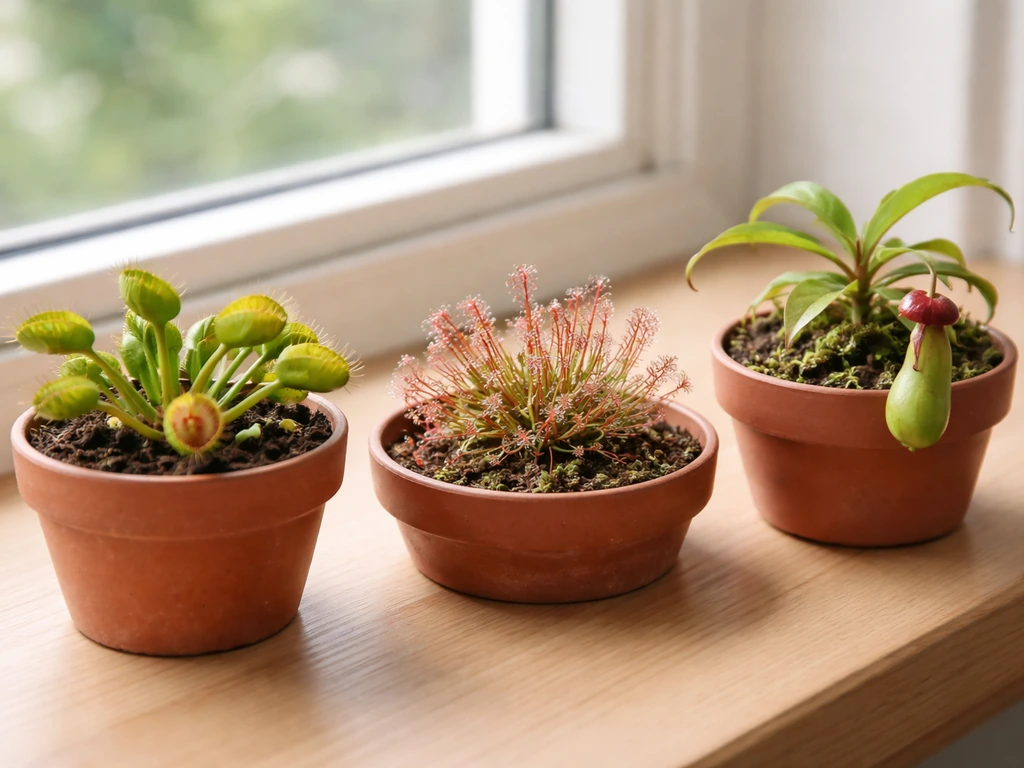
Not every carnivorous plant is equally suited to indoor life, so starting with the right species matters a lot. If you're wondering can spider plants grow indoors, the good news is they generally do well with the right light and watering indoor life. The four genera you'll encounter most often as a beginner are blank" rel="noopener noreferrer">Dionaea (Venus flytrap), Drosera (sundews), Nepenthes (tropical pitcher plants), and Sarracenia (North American pitcher plants). Of those, sundews and tropical Nepenthes pitcher plants are the most forgiving indoors. Venus flytraps can thrive inside with a serious grow-light setup and a plan for winter dormancy. Sarracenia are the most challenging indoors because of how much light they demand.
| Plant | Indoor Difficulty | Needs Dormancy | Key Challenge Indoors |
|---|---|---|---|
| Venus flytrap (Dionaea) | Moderate | Yes (temperate) | High light requirement, winter dormancy |
| Sundews (Drosera capensis and tropical types) | Easy to moderate | No (tropical types) | Consistent humidity and adequate light |
| Tropical pitcher plant (Nepenthes) | Moderate | No | High humidity (50%+), warm nights above 60°F |
| North American pitcher plant (Sarracenia) | Hard indoors | Yes (temperate) | Needs near-full-sun intensity, cold dormancy |
If you're just getting started, Drosera capensis (Cape sundew) is the single best first plant. It's a tropical sundew, so no dormancy is needed, it tolerates a wider light range than flytraps, and it's genuinely hard to kill once your watering and substrate are dialed in. Nepenthes are right behind it for apartment growers who can manage humidity. Venus flytraps are worth growing but require more commitment. Sarracenia are honestly better suited to an outdoor bog garden or a very sunny south-facing window with supplemental light. There's a dedicated breakdown of what carnivorous plants grow best indoors if you want to go deeper on species selection.
Light: the thing most indoor growers underestimate
Light is where most indoor carnivorous plant attempts fail. These plants evolved in open, sunny bogs. A bright window that seems perfect to you is often half or a third of the intensity they need. Venus flytraps, for example, blank" rel="noopener noreferrer">need around 15,000 lux for roughly 14 hours per day to grow well indoors. Some growers push to 25,000 lux for even better results. A south-facing window on a clear day might hit 10,000 lux on the windowsill but drops fast as you move even a foot away. North or east-facing windows simply won't cut it for flytraps or Sarracenia.
Windows vs. grow lights
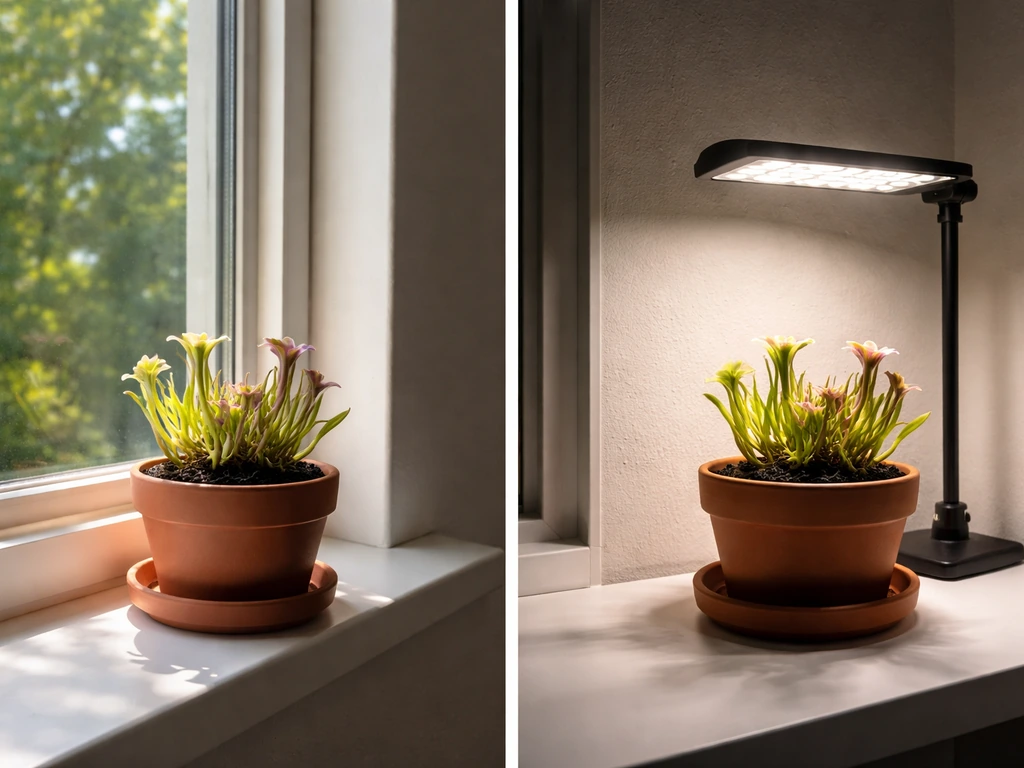
A south-facing window with no obstructions is your best window option, and it works well for sundews and can work for Nepenthes. For Venus flytraps and Sarracenia, I'd treat window light as supplemental and use a dedicated grow light as your primary source. LED grow lights are the practical choice now: they run cooler, use less energy, and the good ones can easily hit the lux levels carnivorous plants need. Avoid cheap CFL 'grow bulbs' sold at hardware stores.
They almost never provide enough intensity for pitcher formation in Sarracenia or for healthy Venus flytrap traps. Position your LED panel so plants sit 6 to 12 inches below it and use a timer set to 14 hours per day during the growing season. Sundews are a bit more forgiving, with around 12,000 to 15,000 lux for 10 to 12 hours per day being a solid target.
Nepenthes are more shade-tolerant than the others and can do well in bright indirect light, though more light still means better growth.
Water and soil: the two rules you cannot break
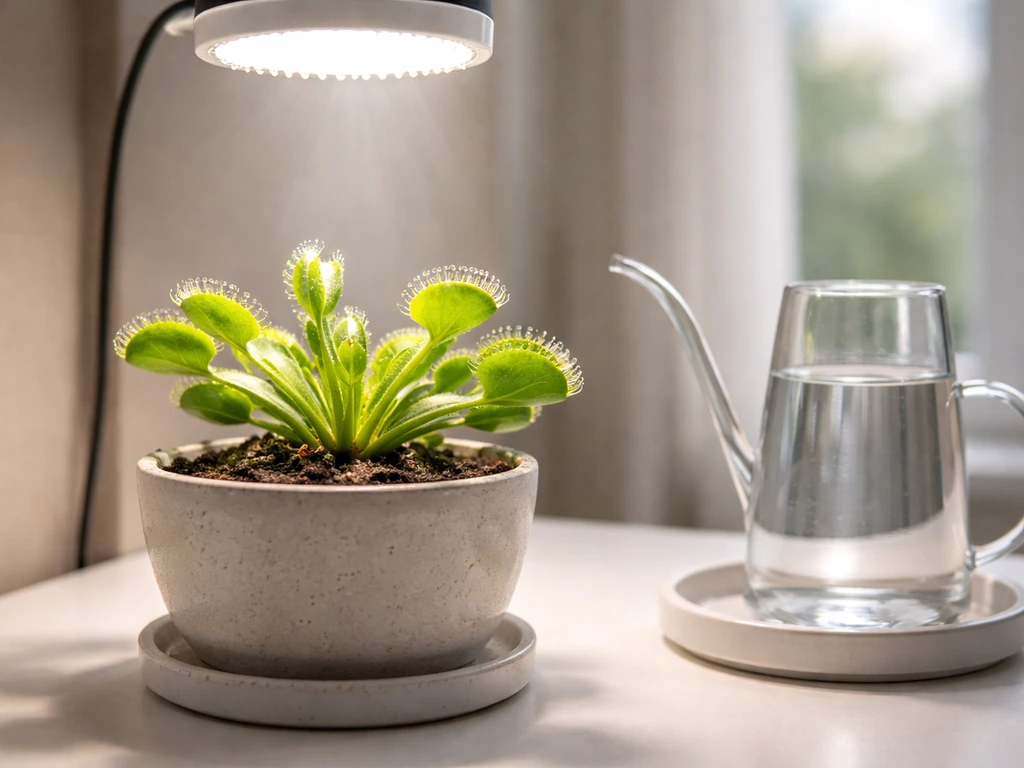
Carnivorous plants come from mineral-poor environments, and their roots have almost no tolerance for the salts and minerals in normal tap water. Over time, tap water and especially mineral or spring water will accumulate in the substrate and essentially poison the roots. The only acceptable water types are distilled water, reverse osmosis (RO) water, and collected rainwater. If you want a rough guideline, water with dissolved solids below 50 ppm is ideal, and anything above 100 ppm from the tap is risky long-term. Distilled water from the grocery store is cheap and completely reliable. I buy it by the gallon and keep a jug next to my plants.
The right substrate
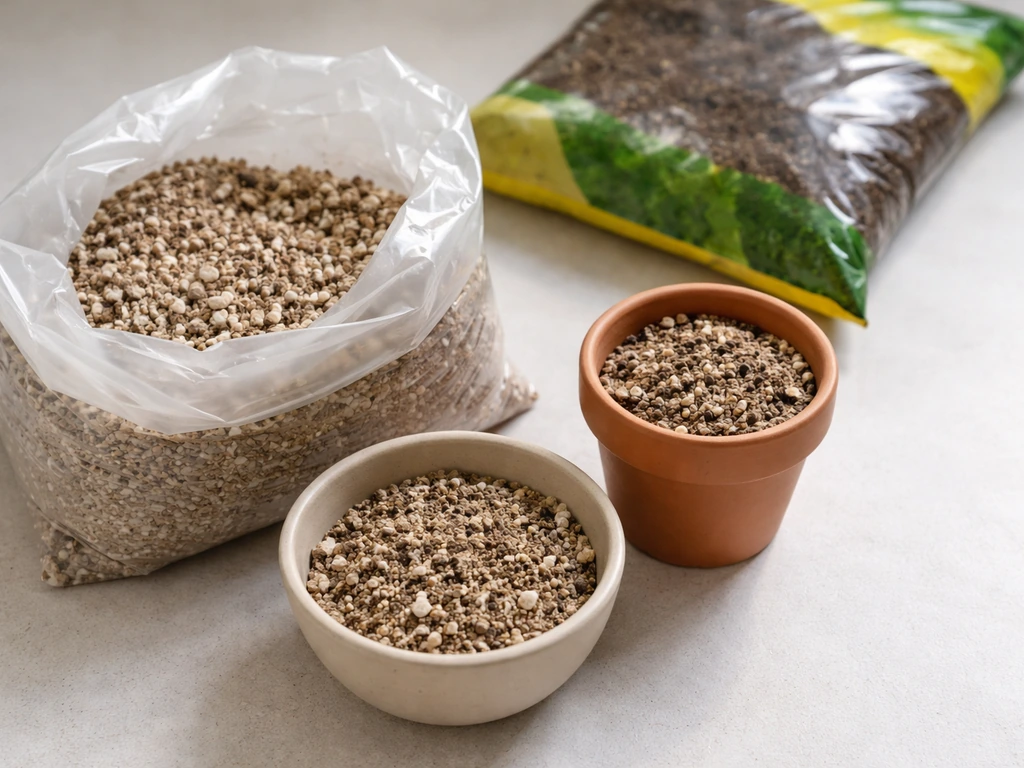
Regular potting mix and anything with added fertilizer will kill carnivorous plants. Their roots are adapted to nutrient-poor, acidic soil, and a rich mix burns them. The go-to media options are live or dried long-fiber sphagnum moss, or a simple mix of about three parts peat moss to one part clean, sharp silica sand (or perlite). Chicken grit works as the inorganic component too.
Before you pot anything, soak and rinse all media in distilled or rainwater to flush out any contaminants. The substrate should stay moist but not waterlogged. Many growers use the tray method: sit the pot in a shallow tray with about half an inch to an inch of distilled water at all times. This mimics the boggy conditions these plants naturally grow in and keeps watering simple.
What not to do
- Never use tap water, spring water, or mineral water
- Never use standard potting mix, compost, or soil with added fertilizer
- Never fertilize the soil (feeding the traps occasionally is different and should be done sparingly)
- Never use gravel, garden sand, or beach sand as they contain minerals
- Never let the substrate dry out completely for most bog species
Temperature, humidity, and airflow
Different carnivorous plant groups have different environmental comfort zones, so matching the plant to your home's conditions matters. If you are wondering what carnivorous plants grow indoors, start by matching the species to your light and temperature conditions carnivorous plant groups. Nepenthes (tropical pitcher plants) want daytime temps around 75 to 88°F and nights no lower than about 60°F. They also need humidity of at least 50%, and higher is better. A bathroom with a south-facing window can work well for them, or you can use a humidifier near the plants. Venus flytraps and temperate sundews are fine at typical room temperatures during the growing season, roughly 70 to 85°F.
Airflow is something a lot of beginners overlook, especially if they're growing in a terrarium. Stagnant, damp air is the primary cause of mold on the substrate and on the plants themselves. A small USB fan running on low nearby is often all it takes to prevent the fuzzy mold issues that plague enclosed setups. If you're using a terrarium for Nepenthes (which is common for humidity control), make sure it has some ventilation or leave the lid cracked. Fresh air exchange prevents rot and keeps the growing environment healthier overall.
Dormancy: which plants need it and how to handle it indoors
This is the biggest practical hurdle for indoor growers with temperate species. Venus flytraps, Sarracenia, and temperate sundews all require a winter dormancy period to stay healthy long-term. Dormancy is triggered by cooler temperatures and shorter days, roughly mimicking their natural habitat in the Carolinas. Without it, temperate carnivorous plants slowly weaken over a year or two and eventually die. A dormant Venus flytrap can look almost dead on top, with brown or withered leaves, but the rhizome underground is alive and will resprout in spring.
How to give temperate species dormancy indoors
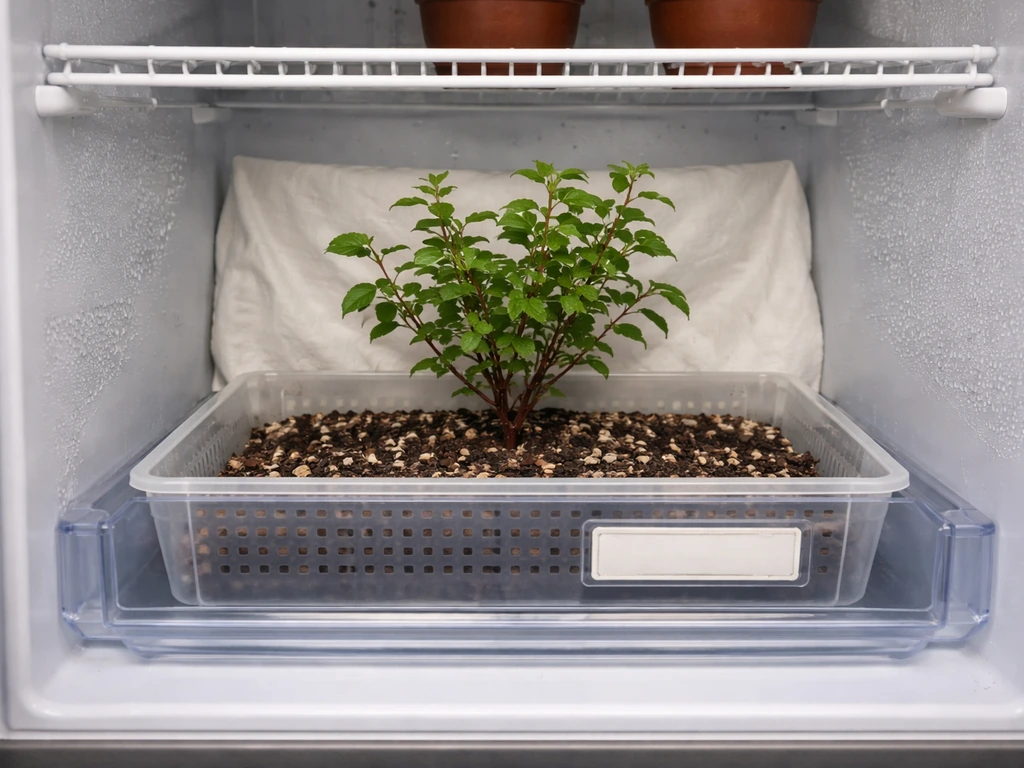
For indoor growers, the refrigerator method is the most reliable option if you don't have a cold garage, unheated porch, or outdoor space. The process involves keeping the plant moist, wrapping the pot in a plastic bag, and storing it in your refrigerator (not the freezer) for about three months, typically November through February. Temperatures just above freezing and up to around 50°F are ideal for overwintering. Most temperate species will survive brief dips below freezing, but sustained freezing will kill them. Moana Nursery recommends a dormancy window of three to five months for Venus flytraps specifically. After dormancy, bring the plant back into its full-light growing setup and expect new growth within a few weeks.
Tropical species: no dormancy needed
Tropical Nepenthes and tropical Drosera (like Cape sundew) do not need a dormancy period at all. They grow year-round and simply want consistent warmth, humidity, and light. This is one of the main reasons I recommend them as starting points for apartment growers who can't easily manage a cold period. If you want the full picture on pitcher plants specifically, pitcher plants have their own set of indoor considerations worth exploring.
Setting up your indoor carnivorous plant in the first 30 to 60 days
- Choose your plant based on your setup: Cape sundew or Nepenthes for lower-light or no-grow-light scenarios, Venus flytrap if you have or plan to buy a proper LED grow light.
- Prepare your substrate before potting: mix three parts peat moss to one part perlite or silica sand, soak it in distilled water, and squeeze out excess. It should be damp, not dripping.
- Use a plastic pot (not terracotta, which wicks minerals from the water) with drainage holes, and set it in a shallow tray.
- Fill the tray with about half an inch to one inch of distilled water. Refill when it drops close to empty. Do not let the tray dry out completely for bog species.
- Position the plant under your grow light (6 to 12 inches below the panel) or on the sunniest windowsill you have. Set a timer for 14 hours of light per day for flytraps, 12 hours for sundews and Nepenthes.
- For the first two weeks, keep the plant in slightly lower light than target to acclimate it. New leaves grown under your indoor conditions will be tougher than the ones it arrived with.
- Do not trigger the traps repeatedly during acclimation. Let the plant focus energy on establishing roots.
- After 30 days, check for new growth as your signal that the plant has adjusted. If leaves are elongating and pale rather than compact and colored, increase light intensity or duration.
- At 60 days, you should see healthy new traps (on flytraps), sticky new leaves (on sundews), or developing pitchers (on Nepenthes). If you're seeing blackening, revisit your water source and light levels first.
Troubleshooting common indoor problems
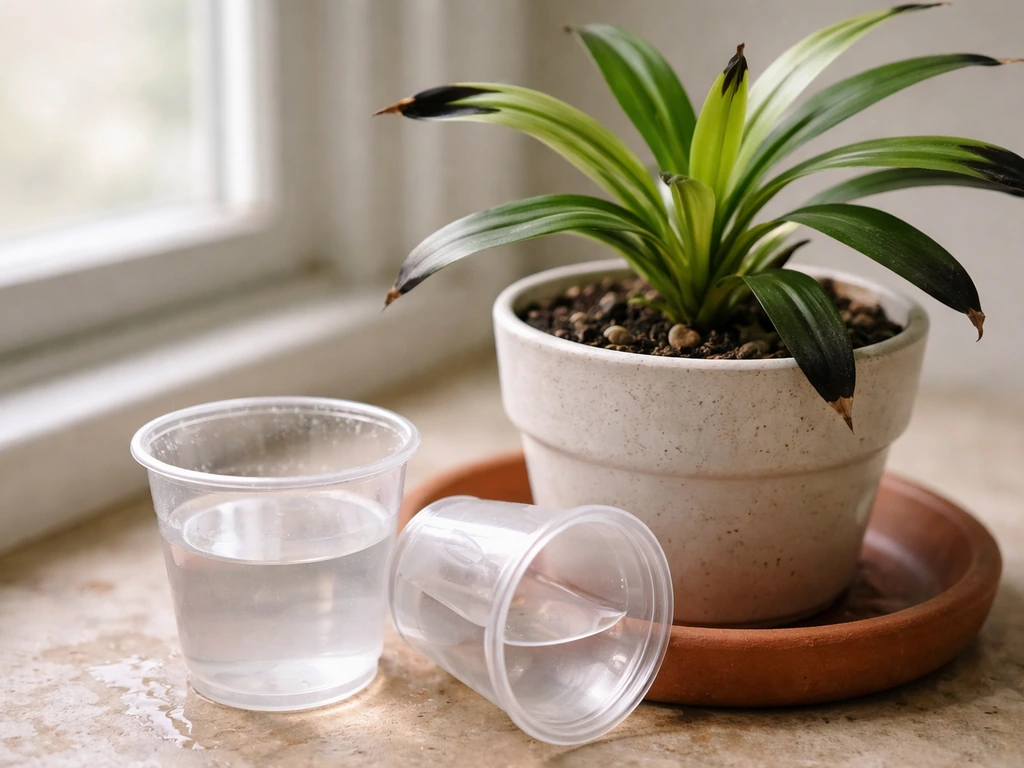
| Problem | Most Likely Cause | Fix |
|---|---|---|
| Traps or leaves turning black | Tap water mineral buildup, or plant triggered too often | Switch to distilled water immediately, stop triggering traps manually |
| Weak, elongated leaves (etiolation) | Not enough light | Move closer to grow light or switch to a higher-intensity LED panel |
| Mold on substrate surface | Stagnant air, too-wet conditions | Add a small fan for airflow, reduce standing water depth slightly |
| Plant looks dead in winter (temperate species) | Normal dormancy, not actual death | Check rhizome for firmness; if firm, it's alive. Keep cool and barely moist. |
| No pitchers forming (Nepenthes) | Low humidity or insufficient light | Raise humidity above 50% with a humidifier or enclosed setup with ventilation |
| Root rot / mushy stem base | Waterlogged substrate with no airflow | Repot into fresh damp (not soaking) substrate, improve drainage |
| Fungus gnats | Overly wet surface substrate | Allow surface to dry slightly between waterings, add a thin layer of live sphagnum on top |
| Plant not catching insects indoors | No insects available | Hand-feed with freeze-dried bloodworms or small insects every 2 to 4 weeks, one trap at a time |
Before you buy: your setup checklist
Go through this list before purchasing your first carnivorous plant. If you can check every box relevant to your chosen species, you're set up to succeed. If you're missing something, get it sorted before the plant arrives, not after.
- Distilled, RO, or collected rainwater on hand (a gallon or more to start)
- Peat moss and perlite or silica sand purchased and pre-soaked in distilled water
- Plastic pot with drainage holes and a matching shallow tray
- LED grow light with a timer if your windows are anything less than an unobstructed south-facing exposure (required for Venus flytraps, strongly recommended for most others)
- A plan for dormancy if you're buying a Venus flytrap, Sarracenia, or temperate sundew: either an outdoor cold space or refrigerator access from November to February
- A small fan or ventilation source if growing in an enclosed terrarium or humid bathroom
- No fertilizer in the house to be accidentally used on these plants
- Realistic expectations: these plants catch bugs as a supplement to photosynthesis, not as their main food source. Indoors with no bugs, plan to hand-feed occasionally.
The bottom line is that indoor carnivorous plant growing is genuinely achievable, but it rewards preparation. The growers who struggle are almost always using tap water, the wrong soil, or not enough light. Nail those three things, choose a beginner-friendly species like Cape sundew or a Nepenthes, and you'll find these plants are far more rewarding than a typical houseplant. So if you are wondering whether indoor plants grow well, focus first on light intensity, water quality, and the right substrate do indoor plants grow. And once you've got the basics down, branching out to Venus flytraps or even Sarracenia with a proper light rig is a satisfying next step.
FAQ
If I can place the plant on a sunny windowsill, will that be enough to grow indoors?
Yes, but only if you treat a windowsill as “supplemental” light and fill the gap with a proper grow light. In practice, most homes cannot reach the sustained lux levels needed for healthy Venus flytraps and Sarracenia from a typical window alone, so expect slower growth and weak traps if you rely on sun only.
Can I use tap water if it is not too hard?
No, not for indoor carnivorous plants. Use distilled, reverse osmosis, or rainwater, and if you have to use tap in an emergency, flush the media thoroughly afterward with clean water. Letting mineral-rich water build up is one of the quickest ways to decline long-term root health.
Are terrariums a good way to grow carnivorous plants indoors, or do they cause problems?
Terrariums can work, especially for moisture-loving Nepenthes, but you must avoid stagnant air. Add airflow (like a small fan on low) and ensure there is ventilation or a cracked lid, otherwise mold and rot become much more likely.
Should I fertilize carnivorous plants grown indoors to help them thrive?
For most beginner setups, yes. Fertilizer is unnecessary because these plants obtain nutrients from prey and their roots are adapted to low-mineral media. If you accidentally fertilize, the safest move is to stop immediately and flush the substrate repeatedly with distilled or rainwater, then wait and watch for trap and leaf decline.
Do indoor carnivorous plants need a winter dormancy even in an apartment?
It depends on dormancy needs. Venus flytraps and temperate sundews require a real winter dormancy period indoors, either by moving them to a genuinely cold environment or using a refrigerator setup. Tropical Nepenthes and tropical sundews do not need dormancy, so forcing a cold period can stress them.
What are the signs my carnivorous plant is dying because of indoor conditions rather than watering or soil?
Sometimes, but only for the right species and lighting. Cape sundew and some Nepenthes can handle a wider range of indoor conditions, but Venus flytraps are less forgiving if light is insufficient. If traps stop forming or growth stalls, the first thing to check is light intensity and distance from the LED.
How do I keep moisture consistent if I’m using the tray method?
Use distilled or rainwater for flushing and refilling, and keep an eye on how fast water level changes. If the tray runs dry, roots can dry out even if the top looks damp. Conversely, constantly oversaturated, mineral-contaminated water can also harm plants, so keep the media clean and maintain the intended moisture level.
My new indoor carnivorous plant looks bad right after I bought it, is that normal?
Sometimes they can “stall” for a while after arriving. Indoor stress from shipping, changed light, and repotting shocks is common, so avoid frequent adjustments. Give it stable light (correct distance and timer), clean water, and appropriate substrate for several weeks before judging performance.