Yes, ivy can absolutely grow indoors, and it's one of the more forgiving trailing plants you can bring inside. English ivy (Hedera helix) is the species you'll most often find sold as a houseplant, and with bright indirect light, well-draining soil, and a little attention to watering, it does genuinely well in a home environment. It's not effortless, but it's far from difficult once you understand what it actually needs.
Can Ivy Grow Indoors? Indoor Care Guide for Beginners

James Hartwell
25 Apr 2026
How hard is ivy to grow indoors, really?
I'd call indoor ivy a medium-difficulty plant. It's not a "put it in a corner and forget it" succulent, but it's also not a fussy orchid. The main reason people struggle with ivy indoors isn't light or temperature, it's watering. Ivy wants to dry out slightly between drinks, and most beginners either keep the soil constantly soggy (hello, root rot) or let it dry out so completely that the leaves start scorching. Get the watering rhythm right and you've solved 70% of indoor ivy problems before they start. Can ixora grow indoors, and what conditions does it need to actually thrive?
The other challenge is humidity. Most homes, especially in winter when the heating is running, are drier than ivy would prefer. Spider mites absolutely love dry air, and they love ivy even more. So if you're in a centrally heated apartment, you'll want to stay on top of that. None of this is a dealbreaker, but it's good to go in with eyes open.
Light and where to put it
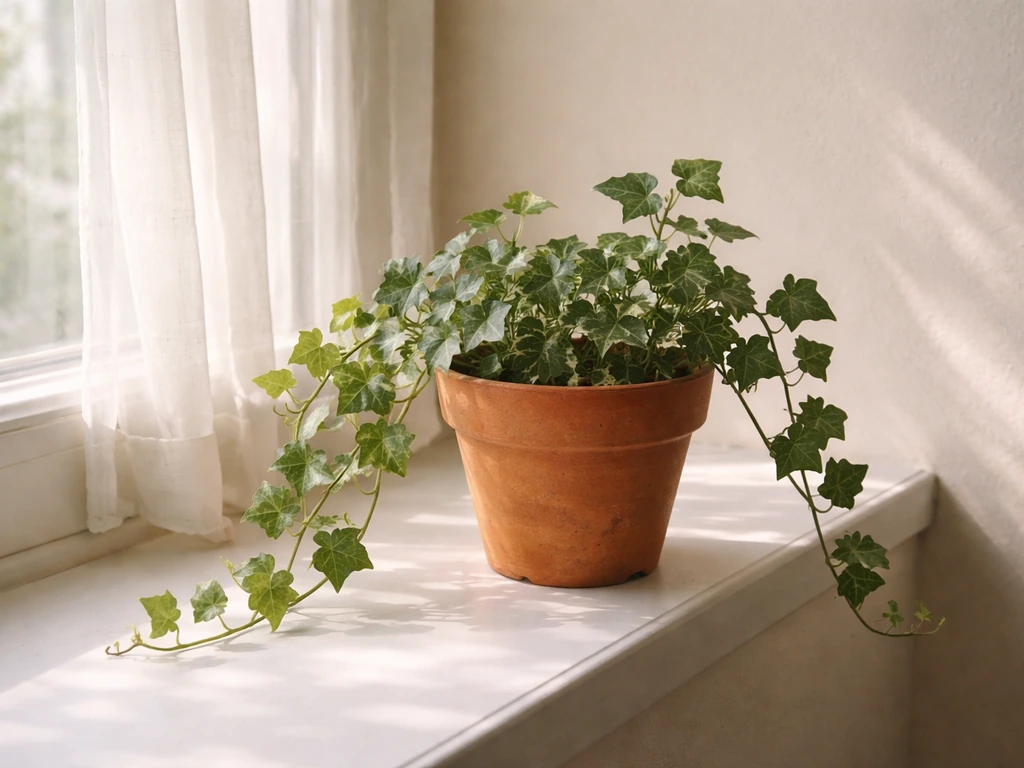
Ivy prefers bright, indirect light indoors. A spot near a north- or east-facing window is ideal, you get good light without the scorching intensity of direct afternoon sun hitting the leaves. A west or south window works too, but pull the pot back a foot or two from the glass or use a sheer curtain to diffuse things. Direct, intense sun will discolor and scorch the foliage, which is the same thing that happens to ivy outdoors in full winter sun.
Ivy is shade-tolerant compared to many houseplants, it survives in lower light conditions that would kill something like a croton. But "tolerates low light" doesn't mean it thrives there. In dim spots, growth gets leggy and pale, the plant loses its compact trailing habit, and it becomes more vulnerable to pests and disease. If your only available space is a dark corner, ivy will limp along but won't be happy. If you've got a bright windowsill or a spot within a few feet of a window, you're in great shape.
Soil, watering, humidity, and temperature
Soil and drainage
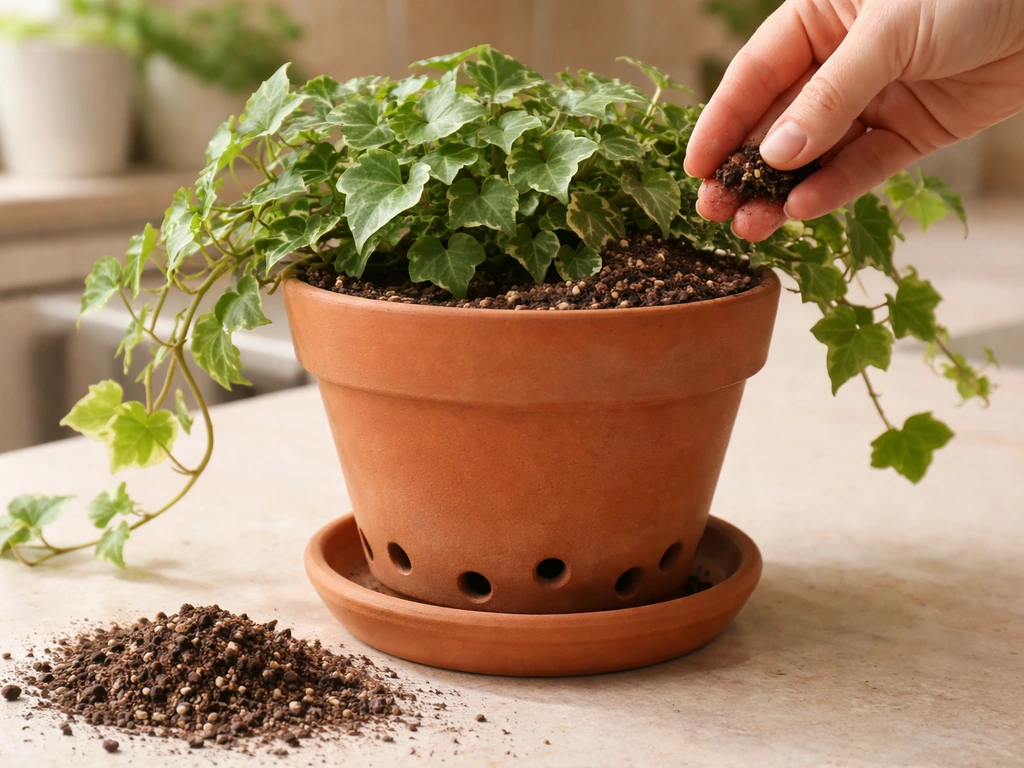
Use a well-draining potting mix and make sure the pot has drainage holes. This is non-negotiable with ivy. A standard houseplant potting compost works well; you can mix in a small amount of perlite if you want extra drainage insurance. The goal is soil that holds some moisture but doesn't stay waterlogged. Never let ivy sit in a saucer full of water, roots standing in water is the fastest route to root rot.
Watering
Forget watering on a schedule. Instead, check the soil: when the top inch feels dry, water thoroughly until it drains from the bottom, then leave it alone until that top inch is dry again. This might mean watering every five days in summer and every ten to fourteen days in winter. The plant's needs shift with the season and your home's conditions, so the finger-in-soil check is genuinely the most reliable method. The soil should stay consistently moist, not wet and not bone dry.
Humidity
Ivy prefers moderate to higher humidity, and most indoor environments, particularly in heated or air-conditioned spaces, run drier than it likes. If you are also wondering will geraniums grow indoors, the same basics of light and avoiding overly dry air will largely determine the outcome. You don't need to buy a humidifier for a single ivy plant, but a few simple steps help a lot: misting the leaves occasionally, grouping plants together, or placing the pot on a tray of pebbles filled with water (the pot sits above the water level, not in it). Keeping ivy away from heating vents and radiators is especially important in winter.
Temperature
Ivy actually prefers cooler conditions than most people expect. The ideal indoor temperature range is roughly 50°F to 70°F (10°C to 21°C). It handles normal indoor temperature swings fine, but it doesn't love hot, stuffy rooms. If you keep your home on the warmer side or the plant sits near a heat source, you'll notice faster soil dry-out, increased pest pressure, and stressed leaves. A cool room with a bright window is genuinely the sweet spot.
Choosing the right ivy type for indoors
When people say "ivy," they usually mean English ivy (Hedera helix), and that's what this guide focuses on. It's the most commonly sold houseplant ivy, and it comes in dozens of cultivars with varying leaf shapes, sizes, and variegation. Smaller-leafed and variegated varieties like 'Glacier,' 'Goldheart,' and 'Needlepoint' are popular for indoor use and tend to stay manageable in containers. All Hedera helix cultivars share the same basic indoor care requirements. All Hedera helix cultivars share the same basic indoor care requirements, so you can apply these tips whether you're growing ivy indoors for the first time or already have a few plants can ivy geraniums grow indoors.
One thing worth knowing: not every plant sold under the name "ivy" is actually Hedera helix. German ivy, for example, is actually Senecio mikanioides, a completely different species with different care needs. If you're growing something labeled as German ivy indoors, its requirements may not match what's described here. Similarly, Fatshedera (a hybrid sometimes sold as an ivy-like plant) is not a true ivy. Always check the botanical name on the label if you want to be sure what you're working with.
| Ivy Type | Botanical Name | Indoor Suitability | Notes |
|---|---|---|---|
| English Ivy | Hedera helix | Excellent | Most common houseplant ivy; many cultivars available |
| Variegated English Ivy | Hedera helix cvs. | Excellent | Needs slightly more light to maintain variegation |
| German Ivy | Senecio mikanioides | Moderate | Different species; care needs vary from English ivy |
| Fatshedera | × Fatshedera lizei | Moderate | Ivy hybrid; larger leaves, similar light needs but different habit |
Ongoing care: pruning, training, repotting, and feeding
Pruning
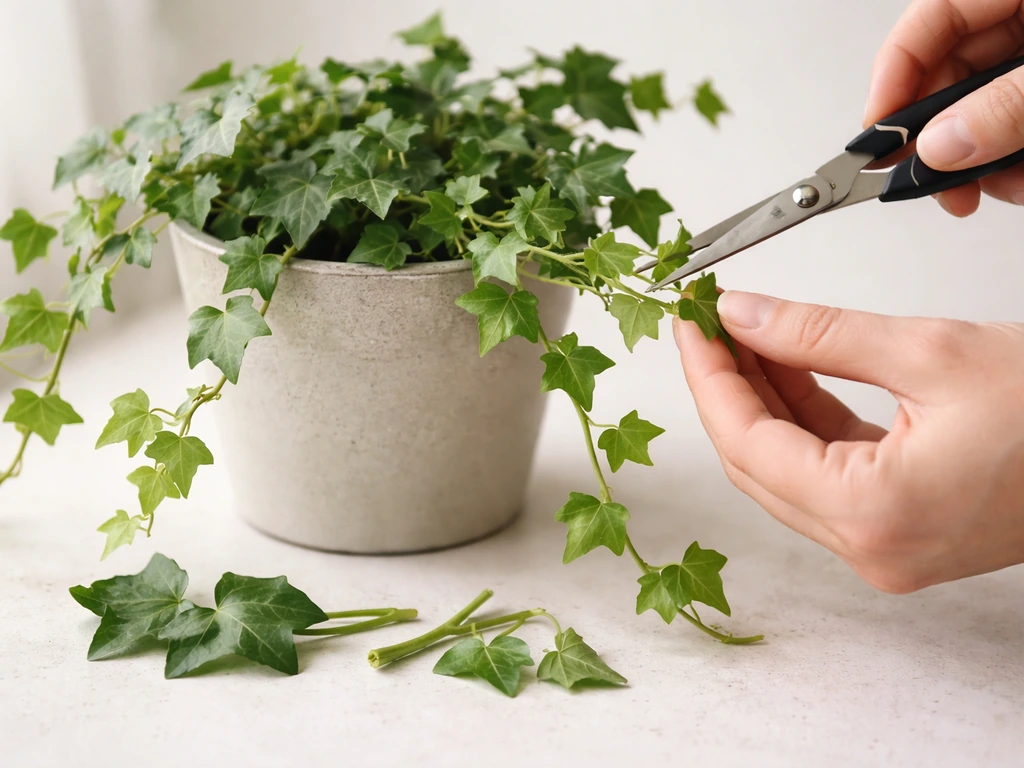
Prune ivy regularly to keep it from getting rangy and to encourage bushier growth. You can pinch back the growing tips with your fingers or use clean scissors. If a stem gets very long and leggy with sparse leaves, a sign the plant has been in lower light, cut it back hard and move the plant somewhere brighter. Pruning is also a good opportunity to take cuttings: ivy roots readily in water or moist soil, so you can propagate new plants from what you trim.
Training and vining
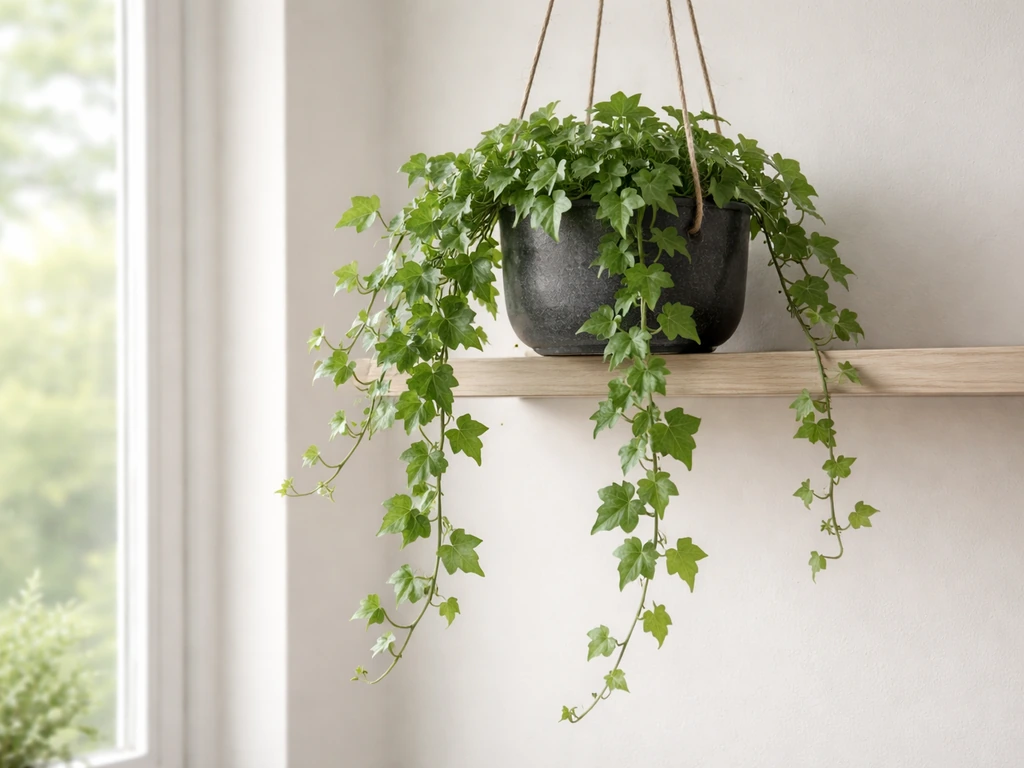
Ivy's trailing habit makes it perfect for hanging baskets, the edge of a high shelf, or trained up a small trellis or moss pole. If you want it to climb, give it something to grip, ivy attaches with small aerial rootlets. In a hanging basket, just let it cascade naturally. Training it into a topiary shape (a wire frame filled with moss) is another popular option, though that requires more regular trimming to maintain the shape.
Repotting
Repot ivy roughly every two to three years, or when you see roots growing out of the drainage holes or circling the pot's surface. Spring is the best time to do it. Go up only one pot size at a time, a pot that's too large holds more soil than the roots can absorb, which increases the risk of waterlogging. Use fresh potting compost with good drainage, and make sure the new pot has drainage holes.
Fertilizing
Feed ivy lightly during the growing season (spring through summer) with a balanced liquid houseplant fertilizer, roughly once a month. Don't fertilize in fall or winter when growth slows. Over-fertilizing is a genuine problem with ivy: too much fertilizer can cause leaf scorch and brown edges, which beginners often mistake for a watering or pest issue. When in doubt, feed less rather than more.
Troubleshooting common indoor ivy problems
Yellow leaves
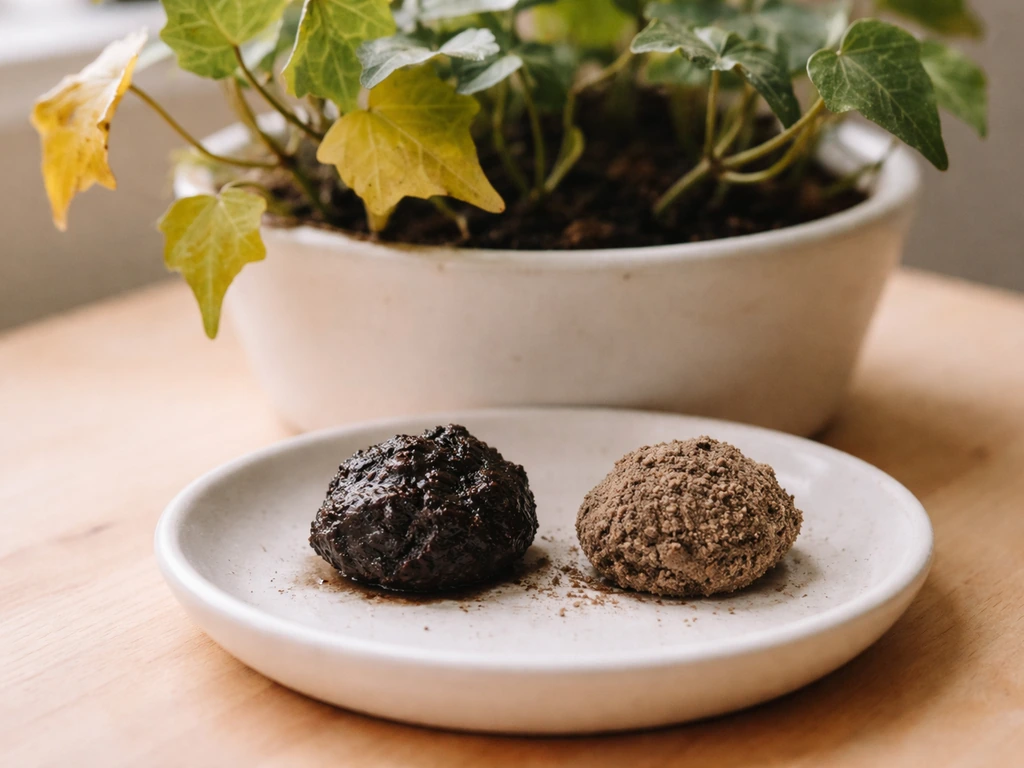
Yellowing leaves are almost always a watering issue. Overwatering is the most common cause: if the soil is staying consistently wet, the roots can't breathe, root rot sets in, and the leaves turn yellow and soft. If you suspect root rot, take the plant out of its pot, trim any black or mushy roots, and repot in fresh dry mix with better drainage. Underwatering can also cause yellowing, but the leaves will be dry and crispy rather than soft. Yellow leaves with dark spots or halos may indicate bacterial leaf spot, which spreads in wet conditions.
Crispy brown edges
Brown, crispy leaf edges usually point to one of three things: drought stress (the soil dried out too completely between waterings), low humidity (especially near a heater or vent), or excess fertilizer. Check the soil first. If it's bone dry, water thoroughly and consider boosting humidity around the plant. If you've been feeding regularly, skip a few rounds and flush the soil with plain water to clear any fertilizer buildup.
Leggy, sparse growth
Long stems with widely spaced, small leaves mean the plant is stretching toward light it isn't getting enough of. Move it to a brighter spot and prune the leggy stems back to encourage bushier regrowth. This is one of the most fixable problems with indoor ivy, better light makes a noticeable difference within a few weeks.
Spider mites
Spider mites are the number one pest threat for indoor ivy, and they thrive in exactly the conditions many heated homes provide: warm, dry air. You'll notice fine webbing on the undersides of leaves and a general dull, stippled look to the foliage. Act fast because mites reproduce quickly. Isolate the plant, then wipe the leaves down with a damp cloth or spray with insecticidal soap, making sure to cover the undersides of leaves thoroughly. Repeat every few days for two to three weeks. Boosting humidity around the plant also makes conditions less hospitable for mites.
Mealybugs
Mealybugs look like small white cottony blobs tucked into leaf joints and along stems. They're less common than mites on ivy but definitely show up. Dab individual bugs with a cotton swab dipped in rubbing alcohol, then follow up with an insecticidal soap spray on the whole plant. Like spider mites, they're often introduced on new plants from the garden center, so it's worth inspecting any new purchase before it gets near your existing collection.
Root rot
Root rot is the most serious problem and usually results from consistent overwatering or a pot without drainage. Symptoms include yellowing leaves, wilting despite wet soil, and a foul smell from the soil. If you catch it early, removing the plant from its pot, trimming the damaged roots, and repotting in fresh well-draining mix can save it. Prevention is much easier than cure: always use pots with drainage holes, and never let ivy sit in standing water.
If you enjoy trailing and climbing plants indoors, it's worth knowing that ivy sits in good company, plants like ivy geraniums and German ivy offer a similar aesthetic but with meaningfully different care requirements, so it's worth looking into those separately if you want to expand your indoor display. Can water hyacinth grow indoors too, and what light and water conditions does it need for healthy growth?
Can grape hyacinth grow indoors too, and what light and watering conditions does it need for healthy growth? If you are also curious about other indoor growers, you may wonder Can water hyacinth grow indoors too. Can ivy geraniums grow indoors, and what light and watering conditions do they need for healthy growth? If you're curious about geraniums, you might also be asking will geraniums grow indoors and what conditions they need to stay healthy.
FAQ
Can ivy grow indoors without a hanging basket or trellis?
Yes, ivy can be grown in a regular pot, but it will trail and spread rather than climb. If you want it to look fuller, keep it near a bright window and pinch back the tips every few weeks to encourage branching, because indoor light often causes stretching.
How do I tell if my indoor ivy is being overwatered versus underwatered?
Overwatering usually makes the soil stay damp longer, leaves turn yellow and feel soft, and the plant may wilt even though the potting mix is wet. Underwatering tends to cause dry, crispy leaf edges and a faster dry-down of the top inch, with leaves that are not mushy.
What’s the best way to check watering if my potting mix is deep or slow-draining?
Use a finger test at the top inch, and if you suspect the mix is staying wet underneath, lift the pot to feel weight. A lightweight pot is usually ready for watering, while a heavy pot after a few days often means the soil is still too wet.
Do I need grow lights if my home doesn’t get much bright indirect light?
If you cannot get within a few feet of a window with consistent daylight, grow lights help prevent leggy, pale growth. Run them long enough to mimic bright indirect conditions, and rotate the pot weekly so one side does not stretch toward the light.
Can indoor ivy survive in a bathroom or kitchen with more humidity?
Often yes, bathroom and kitchen conditions can be a good match for humidity, but avoid spots directly over the sink if steam and splashes keep leaves constantly wet. Good airflow still matters to reduce fungal issues, and you should still let the top inch dry before watering.
Is it okay to mist ivy leaves instead of adjusting watering?
Misting can help with humidity and spider mite pressure, but it is not a substitute for correct soil moisture. If misting makes you water less often, watch the soil rather than the leaves, because leaf appearance can change slower than the root zone.
How cold can indoor ivy tolerate, and should I worry about drafts?
Ivy prefers cooler but stable indoor temperatures, roughly 50 to 70°F, and it dislikes hot, stuffy rooms. Avoid cold drafts from exterior doors or windows at night, because rapid temperature swings can stress the plant and make pests more likely.
Why did my variegated ivy start losing its color indoors?
Variegated cultivars usually revert when light is too low, which shows up as greener leaves and reduced white or gold. Move it closer to a bright indirect window or use a grow light, then prune back fully green stems to encourage the variegated growth.
Should I trim yellow or brown leaves, or leave them on the plant?
You can remove yellow leaves and any crispy browned foliage, but use clean scissors and do not over-prune healthy growth. Removing damaged leaves improves airflow around the plant and makes it easier to spot new problems early.
Can I propagate indoor ivy from cuttings in water?
Yes, ivy cuttings often root in water or moist soil. Use a jar of fresh water and change it every few days to prevent stagnation, then once roots are established, pot into well-draining mix and keep it slightly bright to reduce shock.
Is ivy safe to have indoors if there are pets or kids?
English ivy is toxic if ingested, so keep it out of reach and train it so trailing stems cannot be chewed. If ingestion is suspected, contact local poison control or a veterinarian right away, since symptoms can vary by exposure and amount.
What should I do if my ivy gets spider mites even though I mist it?
Misting may reduce mites, but it rarely removes an infestation quickly. If you see webbing or stippling, isolate the plant and treat undersides thoroughly with insecticidal soap, repeating every few days for at least a couple of weeks to catch newly hatched mites.