
Yes, kalanchoe grows indoors beautifully, and it's honestly one of the more forgiving houseplants you can bring home. Give it a bright window, let the soil dry out completely between waterings, and keep it in a room that stays between 60°F and 85°F, and it will reward you with weeks of color. It handles average apartment humidity just fine, doesn't demand constant attention, and with a little coaxing you can even get it to rebloom year after year.
Can Kalanchoe Grow Indoors? How to Grow It Indoors
James Hartwell
1 May 2026
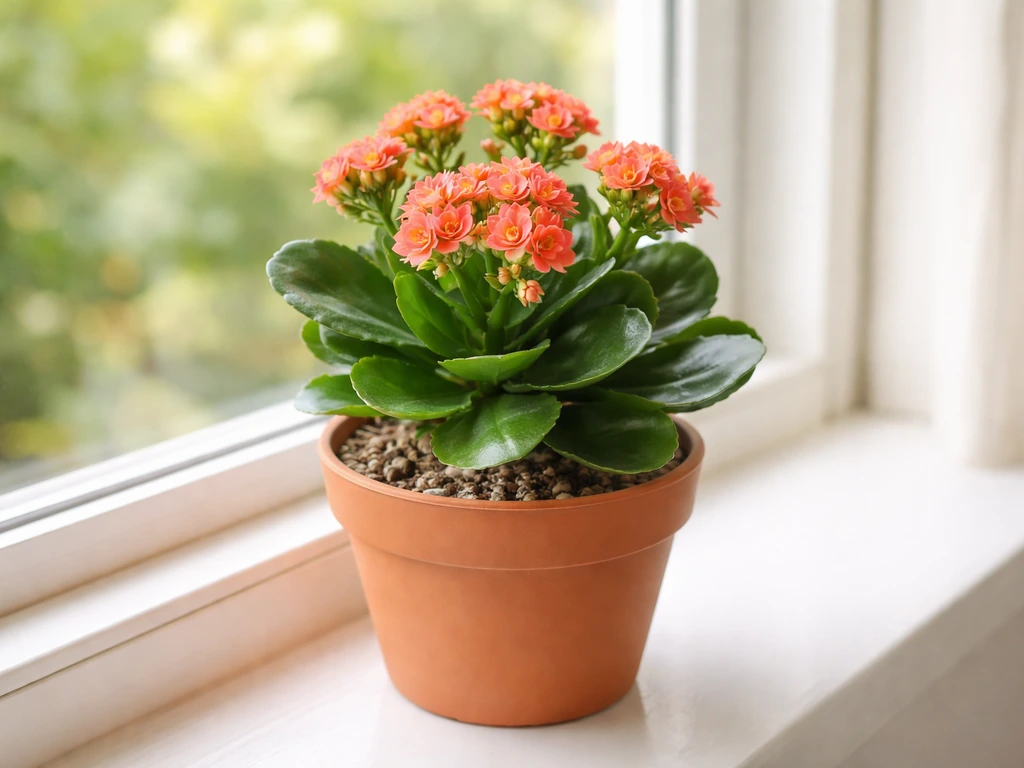
Why kalanchoe is a great indoor plant
Kalanchoe blossfeldiana (the one you'll find at most nurseries and grocery stores) is a succulent, which means it evolved to handle dry spells and bright, somewhat harsh light. That background translates perfectly to indoor conditions where overwatering is a far bigger risk than underwatering, and where light is often the limiting factor. Unlike some flowering plants that sulk and drop buds the moment you bring them inside, kalanchoe actually prefers the warmth and stability of a home environment. It's one of those plants that genuinely thrives indoors rather than just surviving there, which puts it in a different category from fussier choices like coleus or caladium, which need much more humidity and careful light management. While kalanchoe is easier in typical home humidity, you can also ask can caladium grow indoors and learn what it needs to stay healthy indoors. Coleus is also often grown indoors, but it generally needs more consistent humidity and brighter, filtered light than kalanchoe can coleus grow indoors.
Light requirements and where to put it
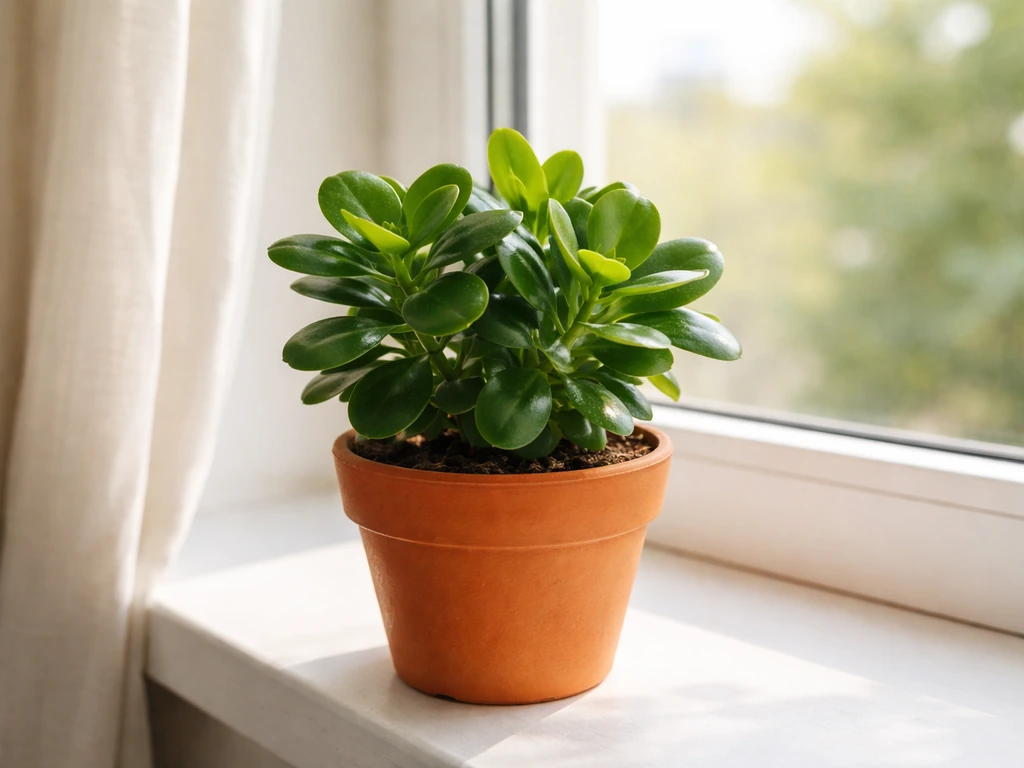
Light is the single biggest factor in whether your indoor kalanchoe stays compact, healthy, and blooms. It wants full sun to bright indirect light, and the best spots in most homes are a south- or west-facing window. A south-facing window is ideal in winter when the sun is lower and the light is weaker. In summer, a west-facing window or a spot with bright indirect light (pulled back a foot or two from a south window) prevents leaf scorch.
The practical test: if you can comfortably read a book without a lamp in that spot during the brightest part of the day, there's probably enough light. If the room feels dim or the window faces north, the plant will stretch toward whatever light it can find, get leggy, and stop flowering. An east-facing window can work, but growth will be slower and blooms less reliable.
One nuance worth knowing: kalanchoe is a short-day plant. It forms flower buds when nights are long (about 14 hours of darkness) and days are short (about 10 hours of light). In its natural cycle outdoors that happens in fall and winter automatically. Indoors, artificial lighting can interfere. If your plant is sitting near a lamp that runs into the evening, the light interrupts the dark period and prevents bud set. Keep it away from artificial light sources during the night hours if you want it to rebloom.
Watering and soil mix for indoor kalanchoe
Getting the soil right first
Start with a fast-draining mix. A straight cactus or succulent potting mix amended with extra perlite or coarse sand is ideal. If you don't have cactus mix on hand, a 50/50 blend of regular potting soil and cactus mix works well too. The goal is a mix that drains quickly and doesn't hold water around the roots. Heavy, peat-dense potting mixes are the enemy here. Pair the mix with a pot that has a drainage hole, no exceptions. Terracotta pots are a great choice because they breathe and help the soil dry faster, which is exactly what kalanchoe wants.
How to water without overdoing it
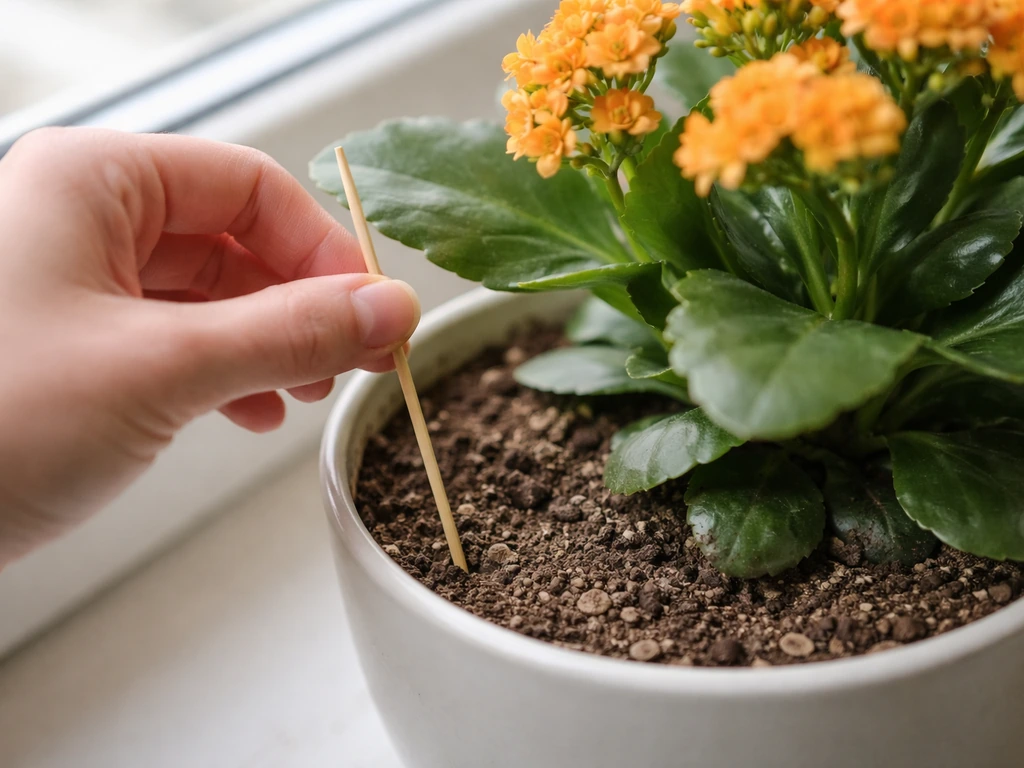
The rule is simple: don't water until the soil is completely dry. Not just the surface, but the top 2 inches. Stick your finger in. If it comes out with any moisture at all, wait. In practice this usually means watering about once every 10 to 14 days during active growth in spring and summer, and stretching that to around once every three weeks in winter when the plant is semi-dormant and the soil dries more slowly. When you do water, water thoroughly until it drains out the bottom, then let it drain fully and never leave the pot sitting in a saucer of water.
Most indoor kalanchoe problems, including yellowing leaves and mushy stems, trace back to overwatering. It's easier to rescue a slightly underwatered kalanchoe than one sitting in soggy soil.
Temperature, humidity, and airflow
Kalanchoe is comfortable in the same temperature range most people keep their homes: 60°F to 85°F (15°C to 29°C). The sweet spot for nighttime temperatures is 60°F to 65°F (15°C to 18°C), which also happens to encourage bud development. Avoid placing it near heating or air conditioning vents, which blast dry air and cause temperature swings. Similarly, don't push it against a cold single-pane window in winter where temperatures near the glass can drop well below the plant's comfort zone.
On humidity: kalanchoe doesn't need any special treatment here. It's adapted to average indoor humidity and doesn't require a pebble tray, misting, or a humidifier. If you live somewhere with particularly dry winters (forced-air heating systems really strip humidity from a room), it won't object, and that's a genuine advantage over many flowering houseplants. Good airflow is helpful, though. Stagnant air encourages fungal problems. A room with occasional air circulation from an open window or a gentle fan is enough.
Setting up your indoor kalanchoe from day one
- Choose the right spot first: pick a south- or west-facing window that gets several hours of direct or bright indirect light daily. Set the plant there before worrying about anything else.
- Check the pot and soil: if your nursery plant came in a plastic pot without drainage or in dense peat mix, repot into a terracotta or ceramic pot with drainage holes using a cactus/succulent mix amended with perlite.
- Water once after repotting, then wait: let the soil dry out completely before the next watering. The stress of repotting combined with wet soil is a fast track to rot.
- Keep it away from evening light sources: if it's near a lamp or grow light that stays on after dark, move it or shield it. Consistent long nights (14 hours) are what trigger new buds.
- Start a watering check routine: every 7 days, poke the top 2 inches of soil. Only water when it's completely dry. Set a reminder if that helps.
- Fertilize lightly during active growth: a balanced liquid fertilizer diluted to half strength, applied once a month in spring and summer, supports healthy growth. Skip fertilizing in fall and winter.
- Trigger reblooming in fall: starting around October 1, move the plant to a dark spot or a room where no artificial light reaches it after sundown, giving it 14 continuous hours of darkness per day. Keep this up for 6 to 8 weeks or until you can see bract color developing (usually by mid-November). Then move it back to maximum light during the day.
Troubleshooting common indoor problems
Leggy, stretched growth
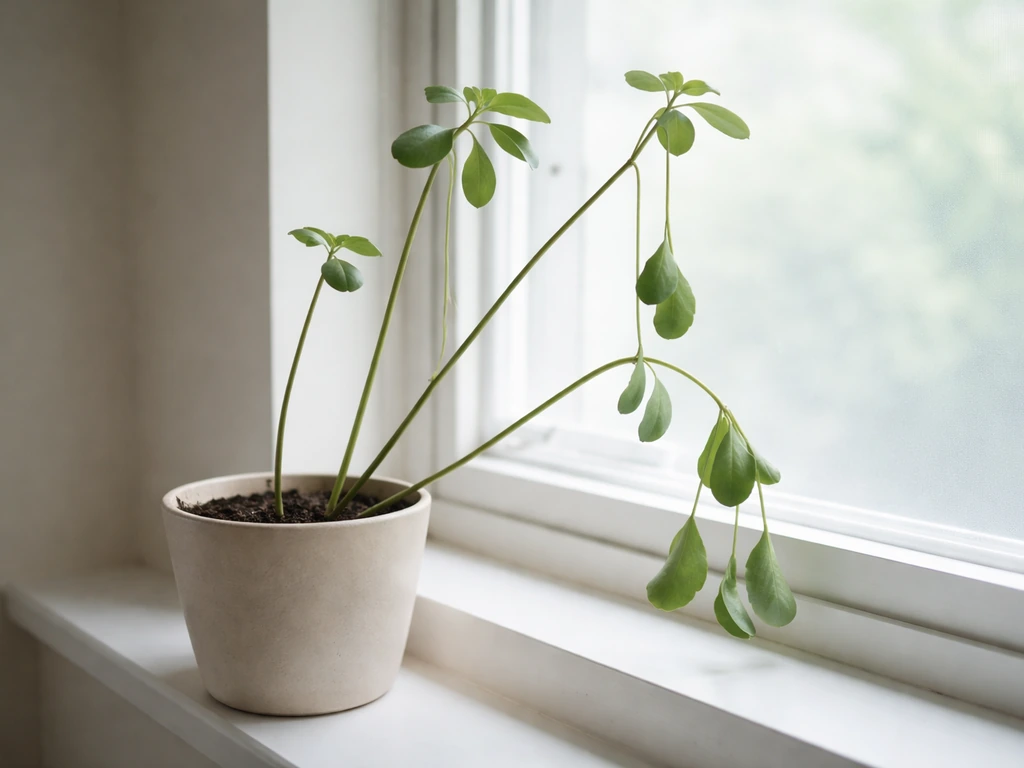
If your kalanchoe starts reaching toward the window with long, weak stems and widely spaced leaves, it's not getting enough light. This is the most common indoor complaint. The fix is to move it closer to the brightest window you have. Severely leggy stems won't compact back on their own, but you can cut them back to a healthier node and the plant will regrow more compactly once the light situation improves. Think of it as a reset button.
Yellow leaves and mushy stems
Yellow leaves paired with soft, mushy stems near the soil line almost always mean overwatering, and potentially root or crown rot caused by the waterlogged conditions. Utah State University Extension notes that blank" rel="noopener noreferrer">Phytophthora root and crown rot is a common problem that can affect plants when conditions favor the waterborne pathogen. Penn State Extension identifies Phytophthora root and crown rot as a key disease for kalanchoe: it starts with dark spots at the soil level and spreads up the stem, eventually causing wilting and plant death. If you catch it early, you may be able to cut off the rotted portion, let the cut callous for a day or two, and reroot the healthy part in fresh dry mix. Prevention is much easier: always let the soil dry completely before watering again and never let the pot sit in standing water.
Powdery mildew
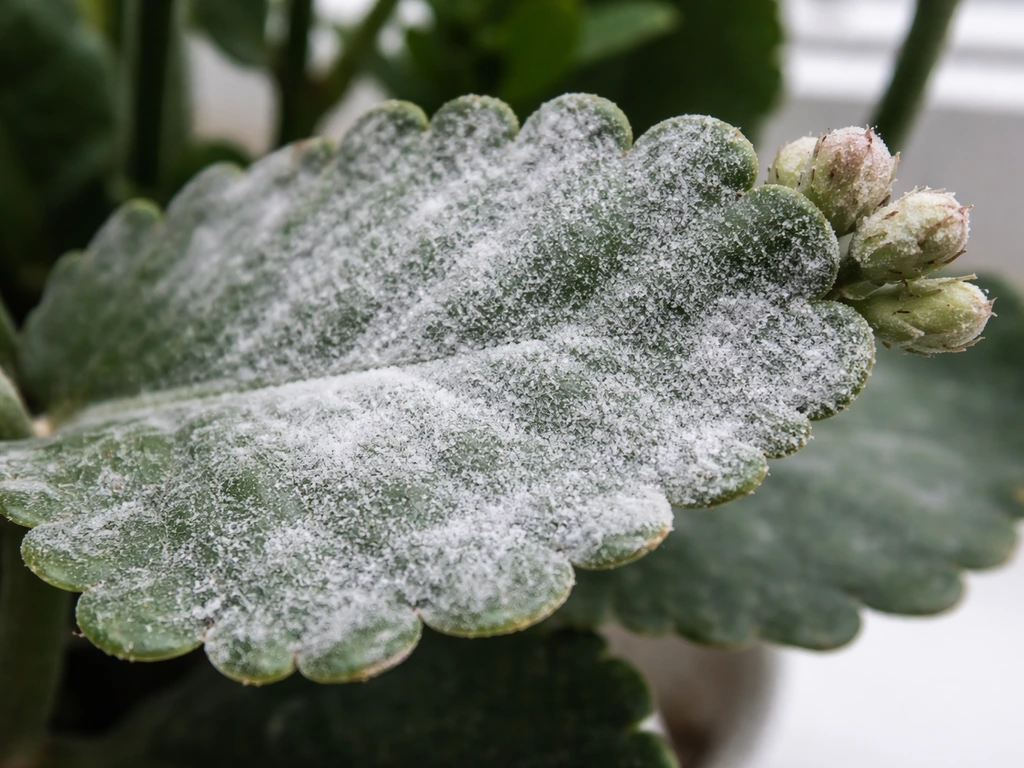
If you see a dusty white to gray coating on the leaves, stems, or buds, that's powdery mildew. It's more likely in low-light, low-airflow spots where the plant is already stressed. Remove badly affected leaves, improve air circulation around the plant, and avoid getting water on the foliage. Moving it to a brighter, better-ventilated spot usually stops the spread.
Mealybugs, scale, and spider mites
Kalanchoe can attract a few common houseplant pests. Mealybugs show up as white cottony clusters in leaf axils and along stems. Scale looks like small brown bumps stuck to the stems. Spider mites leave fine webbing on the undersides of leaves, often when the air is very dry. All three respond well to insecticidal soap spray. Apply it weekly, making sure to hit leaf undersides and stem joints where pests hide, until the infestation clears. For spider mites, neem oil is also effective. Catching pests early makes all the difference, so check the undersides of leaves when you do your regular watering check.
| Problem | Most likely cause | Fix |
|---|---|---|
| Leggy, stretched stems | Insufficient light | Move to a south- or west-facing window; trim and regrow |
| Yellow leaves, mushy base | Overwatering or root rot | Let soil dry fully; repot in fresh mix if rot is present |
| White/gray dusty coating | Powdery mildew | Remove affected leaves; improve airflow and light |
| White cottony clusters | Mealybugs | Weekly insecticidal soap spray to all plant surfaces |
| Fine webbing on leaves | Spider mites | Insecticidal soap or neem oil spray; weekly until clear |
| No new flower buds | Too much artificial evening light or insufficient dark period | Ensure 14 hours of uninterrupted darkness nightly for 6–8 weeks in fall |
Can you get it to rebloom every year?
Absolutely, and it's more straightforward than most people expect. After the first bloom fades, trim off the spent flower stalks, keep the plant in bright light through spring and summer with regular (but not excessive) watering, and then start the short-day treatment in early October. If you are also trying to grow other plants, like canna, you can look into whether can you grow canna indoors and what light and watering it needs. Give it 14 hours of complete darkness every night for 6 to 8 weeks while still providing bright light during the remaining 10 hours of the day. By mid-November you should see bract color developing, and the plant will move back into full bloom heading into the holidays. In ideal indoor conditions, kalanchoe can actually flower multiple times a year, though the fall-into-winter bloom cycle is the most reliable one to aim for. Columbine indoors is a bit different, but getting the right light and temperature is the key starting point kalanchoe can actually flower multiple times a year.
The main thing working in your favor is that kalanchoe genuinely wants to bloom. It's not a reluctant houseplant. Get the light and watering right, replicate those long fall nights, and you'll have a plant that earns its windowsill space season after season. Yes, can cannas grow indoors, too, but they need brighter light and more consistent moisture than kalanchoe windowsill space season after season.
FAQ
Does indoor kalanchoe need 6 to 8 weeks of total darkness to bloom?
Yes, but you still need the short-day trigger to rebloom. If you keep it in the same window year-round with bright indoor lighting, it may keep growing leaves but skip flowers. For the most reliable blooms, arrange 14 hours of uninterrupted darkness each night (around early October for most homes) and keep it in bright light during the remaining daytime window.
What counts as “darkness” for indoor kalanchoe short-day flowering?
Kalanchoe prefers darkness, not just dim light. If a lamp, TV glow, or smart display light reaches the plant during the “dark” hours, bud set can fail. Aim for complete darkness by using a timer-controlled room, closing curtains, or moving the plant away from any night lighting source.
How can I tell when it is truly time to water indoor kalanchoe?
If the pot feels dry on top but the soil is still damp deeper down, it can still lead to root issues when you water too soon. Use the finger test described in the article (check the top 2 inches), and if your plant sits in dense shade, water even less often because the soil stays wet longer.
My kalanchoe yellowed, but I barely water it. What else could be wrong?
Signs of overwatering can lag. Even if you pause watering now, a plant with damaged roots may look worse before it improves. If you see mushiness near the soil line or stems turning dark and soft, inspect the crown and roots, remove any rotten parts, and repot into fully dry, fast-draining mix.
Can kalanchoe grow indoors in a north-facing window?
A north-facing window usually will not provide enough light for compact growth and dependable flowering, so the plant stretches and flowers less. If your best window is north, compensate by moving it closer to the glass and rotating the pot often, or consider supplementing with a grow light to avoid legginess.
Is it okay to use regular potting soil for indoor kalanchoe?
For most homes, you can use a cactus or succulent mix, but the bigger decision is drainage. Make sure the pot has a drainage hole, and avoid decorative covers or saucers that keep the bottom wet. If water runs through too fast and the plant wilts, you may need more frequent but still “only when dry” watering rather than a less-draining mix.
How close can indoor kalanchoe be to a window or heater?
You usually should not. Cold drafts and temperature swings near single-pane windows can slow growth and make the plant more vulnerable when the soil is wet. Keep it a little back from cold glass in winter and avoid placing it right in the path of heat vents or AC.
If my kalanchoe is leggy, should I cut it back or just move it to more light?
Yes, and it can be a smart way to fix leggy plants. Pruning works best after a bloom fades, cutting back to a healthy node, then placing the plant back into the brightest available spot to regrow compactly. Expect regrowth to take time if the light is only moderate.
How do I distinguish powdery mildew from just dust on kalanchoe leaves?
Dusty white or gray powder can also be confused with residue, but true powdery mildew typically looks like a dry coating that spreads and may worsen in low airflow. Improve airflow, remove heavily affected leaves, and avoid wetting foliage. If it keeps progressing, isolate the plant from other houseplants until it stabilizes.
Should I repot indoor kalanchoe, especially if it came from a store in a small pot?
Yes, but do it only when needed and in a way that minimizes root disturbance. If repotting, use a dry day and fast-draining mix, then wait a bit before watering so you do not trap moisture around disturbed roots. Move up only one pot size to avoid an overly large, water-retaining container.
What is the best way to handle mealybugs or scale on indoor kalanchoe?
Typically, mealybugs and scale respond well to insecticidal soap, but scale can be stubborn because it is protected by the shell. Keep applying as recommended and consider wiping the stems to reduce adult scale. Also check leaf axils and where leaves meet the stem, because that is where reinfestation starts.