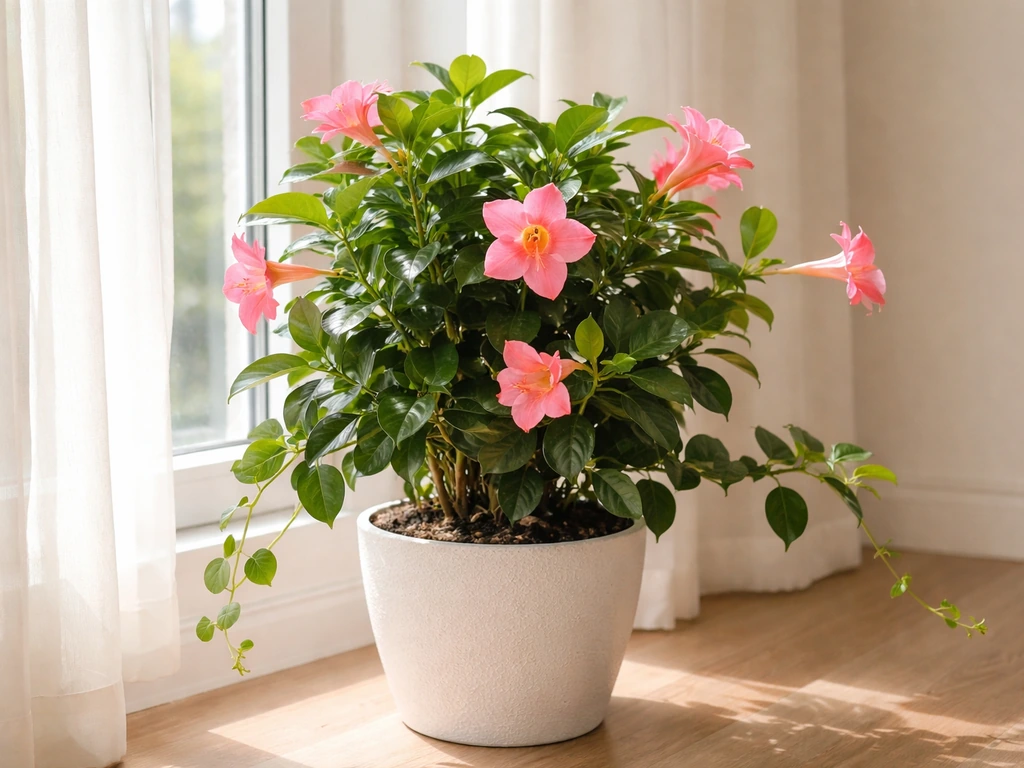
Yes, dipladenia can grow indoors, but it will thrive rather than just survive only if you give it genuinely bright light, consistent warmth, and careful watering. Park it in a dim corner and it will slowly decline, stop flowering, and sulk. Put it right in front of a south- or west-facing window (or add a grow light), keep temperatures above 65°F at night, and stay disciplined about not overwatering, and you can absolutely keep a healthy, blooming dipladenia inside your home year-round.
Can Dipladenia Grow Indoors? Care Guide for Blooming Plants
James Hartwell
6 May 2026
What dipladenia actually needs indoors (the honest picture)
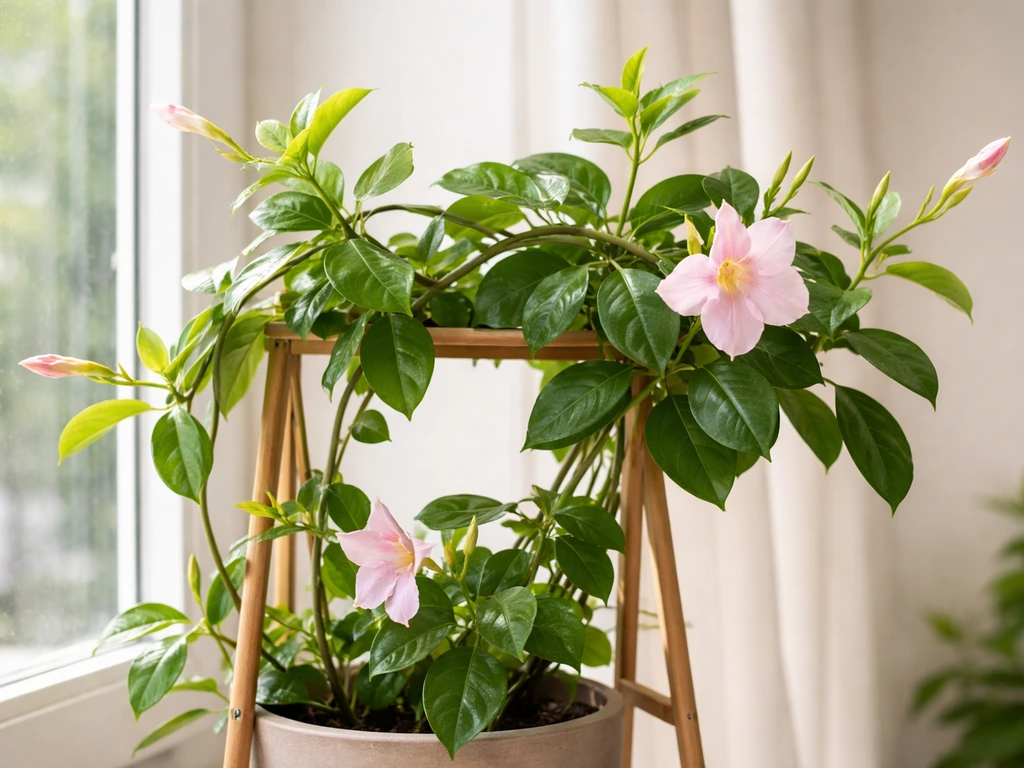
Dipladenia (Mandevilla sanderii) is a tropical plant from Brazil that wants a lot of sun, warmth, and humidity. Outdoors in summer it is basically unstoppable. Indoors it is more demanding than the average tropical houseplant, and the biggest reason people fail with it inside is light. The plant needs something close to 5,000 to 7,000 foot-candles of light to flower reliably. That is a very bright, sunny window, not just "good light by a window." If your apartment only has north-facing windows, I will be straight with you: this one is going to struggle.
The flowers form on new, current-season shoots, so if the plant is not growing actively and vigorously, you will not see many blooms. Reduced or zero flowering indoors is the most common complaint, and it almost always comes back to insufficient light. Everything else, watering, humidity, fertilizing, is secondary. Get the light right first.
Where to put it: light placement indoors
Your best placement is directly in front of a south- or west-facing window where it gets several hours of bright, indirect sun each day. Clemson University recommends curtain-filtered or bright indirect sunlight, not harsh midday direct rays through glass, which can scorch the leaves. A sheer curtain between the plant and a south-facing window is a good setup. NC State Extension confirms this: bright indirect light plus high humidity is the indoor combination that works.
In winter, even a south-facing window may not cut it. The days are short and the light is weaker, which is when many indoor dipladenias stop blooming entirely and kind of coast in semi-dormancy. If you want the plant to keep growing through winter, add a full-spectrum grow light on a timer for 12 to 14 hours a day. Position the light close enough to actually count, not just the small clip-on lamp you put at the back of a shelf. This makes a real difference.
Soil, pot size, drainage, and watering
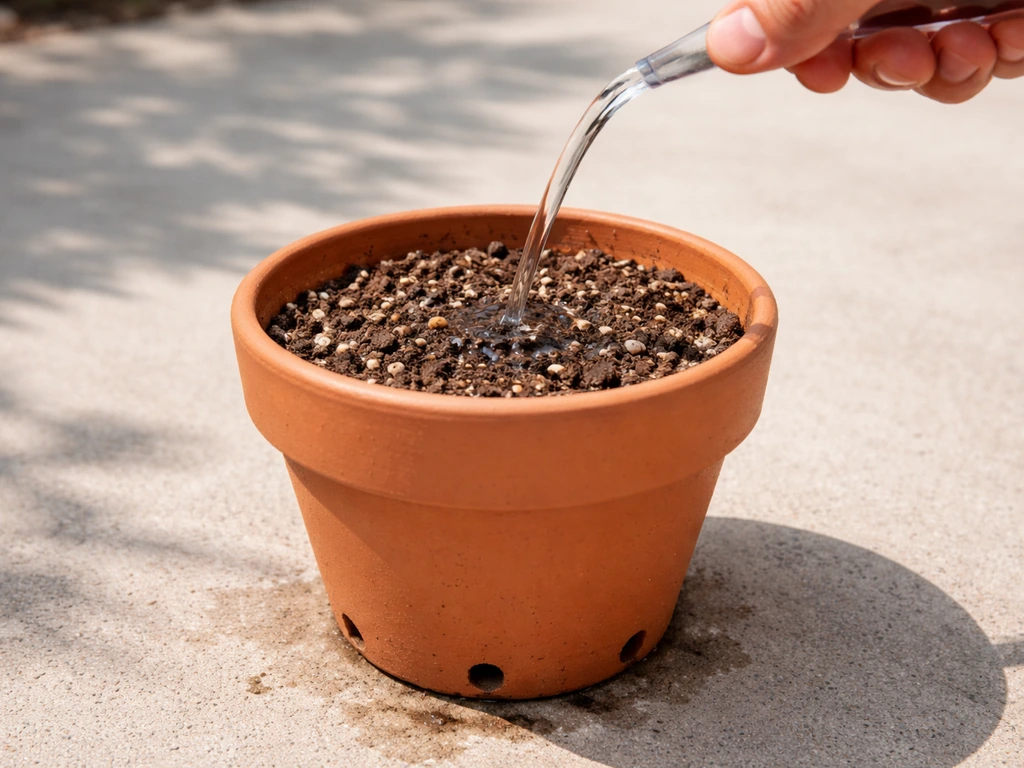
Dipladenia hates wet feet. This is probably the second most important thing after light. The roots rot easily if the soil stays soggy, and every source I trust on this plant hammers the same point: never let it sit in water, and keep it on the drier side between waterings. Use a well-draining potting mix, something like a standard tropical mix with added perlite (about 20 to 30 percent perlite by volume). The mix should feel airy, not dense or water-retentive.
Choose a pot with drainage holes, full stop. No drainage hole means you are gambling every time you water. A terracotta pot actually helps because it allows the soil to breathe and dry down faster than plastic. Size-wise, go snug rather than oversized. A pot that is much larger than the root ball holds more moisture than the roots can use quickly, which increases the rot risk.
Water thoroughly when the top inch or two of soil is dry, then let it drain completely and empty the saucer. In summer when the plant is actively growing and the light is higher, you may be watering every five to seven days. In winter, back off significantly. Once every ten days to two weeks is often enough. Feel the soil rather than following a calendar.
Temperature, humidity, and airflow
Dipladenia wants daytime temperatures above 70°F (21°C) and nighttime temperatures between 60 and 65°F. The RHS puts the warmth bar at least 21°C (70°F), and the BBC Gardeners' World Magazine notes that nighttime temperatures should stay above 18°C (64°F) for best results. Most heated homes hit these numbers without any intervention, which is one reason dipladenia is easier to keep alive in winter indoors than, say, outside in a cold climate.
Do not let it drop below 50°F. Clemson puts the cold tolerance threshold at 45 to 50°F, but that is survival mode, not thriving mode. Keep it away from drafty windows and cold air conditioning vents in summer.
Humidity is where apartments often let you down. Dipladenia is a tropical plant that wants higher humidity than most centrally heated homes provide in winter. Aim for 50 percent or higher if you can. Options include grouping it with other plants, placing the pot on a tray of damp pebbles (making sure the pot base is above the water line), or running a humidifier nearby. Misting is less effective and can leave water on the foliage overnight, which encourages fungal problems. Speaking of foliage, good airflow around the plant matters: stagnant air on wet leaves is a disease invitation, so do not crowd it against a wall or in a tight corner.
How to start one indoors and keep it going
Starting from cuttings
Cuttings are the reliable way to propagate dipladenia indoors. Take softwood cuttings in early summer from new growth, about 3 to 4 inches long with a couple of nodes. Dip the cut end in rooting hormone powder, then stick it in a sandy peat or perlite-heavy mix. The RHS recommends a heated propagator set to 68 to 77°F (20 to 25°C) for best rooting, but you can get results by placing the cutting in a bright warm spot and covering it loosely with a clear plastic bag to hold humidity. Roots usually develop in four to six weeks.
Fertilizing
Feed every two weeks during spring and summer with a fertilizer higher in phosphorus than nitrogen, something like a 10-20-10 formula. Phosphorus supports root development and flowering, which is exactly what you want. Clemson specifically recommends this approach. Stop fertilizing in autumn and through winter when the plant is resting. Feeding a dormant or semi-dormant plant with poor light just pushes weak, leggy growth.
Pruning and pinching
Because dipladenia flowers on new growth, pruning timing matters. The best time to cut it back is at the end of autumn, after flowering slows, before or just as you bring it indoors for winter. You can trim thin secondary shoots back to three or four buds from the main stems to tighten up the shape and reduce size. This also makes the plant easier to manage indoors. In spring, pinch the tips of new shoots to encourage branching and a bushier habit. More branches mean more shoot tips, and more shoot tips mean more flowers.
Common indoor problems and how to fix them
| Problem | Likely Cause | Fix |
|---|---|---|
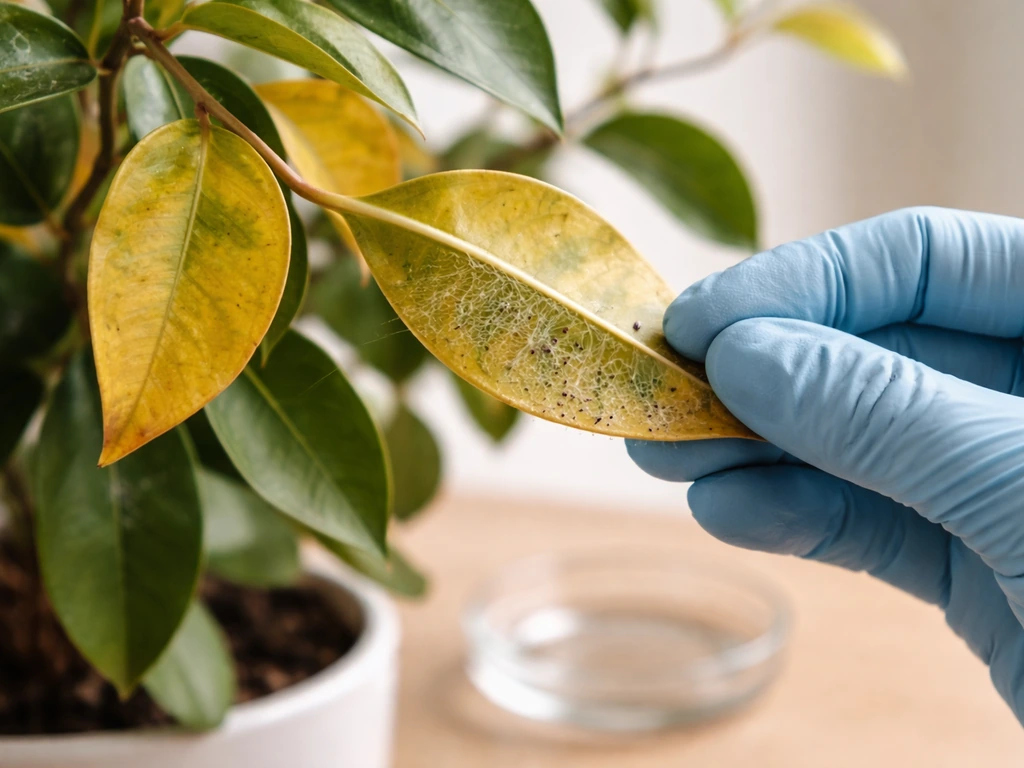
| Yellow leaves | Overwatering or waterlogged roots | Let soil dry down more between waterings; check drainage; remove standing water from saucer |
| No flowers | Insufficient light | Move to a brighter window or add a grow light; ensure the plant is in active growth mode |
| Leggy, stretched growth | Low light, especially in winter | Increase light exposure; pinch stem tips to encourage branching |
| Spider mites (tiny yellow dots on leaves) | Low humidity, dry indoor air | Increase humidity; wipe leaves with damp cloth; treat with insecticidal soap or neem oil |
| Mealybugs (white waxy fluff in leaf joints) | Common houseplant pest | Dab with rubbing alcohol on a cotton swab; spray with insecticidal soap (contact only) |
| Whiteflies (tiny white insects under leaves) | Warm, sheltered indoor conditions | Sticky yellow traps; insecticidal soap sprays; ensure product label lists your target plant |
Spider mites are the pest I see most often on indoor dipladenia, especially in winter when indoor air is dry. They leave tiny yellow stippling all over the leaves before things get worse. The fix is raising humidity and treating early, because once a mite population explodes on a plant in a dry apartment it is much harder to bring back under control. Check the undersides of leaves regularly if you notice the foliage looking dull or speckled.
Seasonal care and living indoors year-round
Dipladenia can absolutely live indoors year-round if your conditions are good enough. The same approach to light and consistent conditions matters if you are wondering can you grow daphne indoors. Can dipladenia grow indoors can dichondra grow indoors. In practice, many gardeners keep it outdoors in summer and bring it in for winter, which works very well. If you do this, bring it inside before overnight temperatures drop toward 50°F, and do a quick inspection for pests before it comes through the door. It is much easier to deal with a spider mite problem outside than to nurse an infestation that hitched a ride indoors.
Once inside for winter, expect growth to slow and flowering to reduce or stop. That is normal. Cut back watering, stop fertilizing, and give it the brightest spot you have. If you add a grow light, it may keep some blooms going through winter. Without supplemental light, the plant will likely rest until spring light improves, then push out new shoots and flowers again once you resume feeding.
As spring arrives, increase watering gradually, resume the biweekly feeding schedule, and if you plan to move it back outside, do it after your last frost date and harden it off over a week or two so the sudden jump in light intensity does not scorch the leaves it grew indoors.
How dipladenia compares to similar indoor candidates
If you are also considering other flowering tropicals for indoors, desert rose (Adenium) has very similar high-light demands and a similar intolerance of overwatering, so the same sunny window and cautious watering principles apply there too. African daisies can also be grown indoors, but they still need bright light and careful watering to stay healthy can African daisies grow indoors. Can dawn redwood grow indoors too?
It can be challenging because it needs very bright light and the right cooling or dormant conditions. Unlike dipladenia, can desert rose grow indoors mostly depends on giving it very bright light and avoiding overwatering. Dianthus, by contrast, tolerates somewhat cooler temperatures and is a bit more forgiving in lower light, making it a slightly easier indoor plant for trickier conditions.
Yes, dianthus can grow indoors too, as long as you give it enough light and a well-draining setup can dianthus grow indoors. Dipladenia sits in the "rewarding but demanding" category: the flowers are spectacular and it is genuinely doable indoors, but it will not coast in mediocre conditions the way some tougher houseplants will.
FAQ
My dipladenia is indoors but the leaves look droopy, why is this happening?
Droop indoors is often a watering mismatch. If the soil is staying wet, the roots can struggle and leaves wilt. If the soil is drying too far and repeatedly, the plant also droops. Check by feeling the top couple inches, and only water after it’s dry there, then always empty any saucer after draining.
Can I keep dipladenia in a north-facing room if I use a grow light?
Yes, but only if the grow light is strong enough and close enough to provide the same “bright window” intensity you would get outdoors or from a south or west exposure. A weak clip-on lamp is usually not enough. Use a timer for 12 to 14 hours and position the light so you can clearly see bright illumination on the top of the plant, not just the surrounding area.
How do I tell if my dipladenia is getting too much direct sun through the window glass?
Leaf scorch usually shows up as pale, dry patches or browned edges, most noticeable on leaves closest to the glass. If that happens, move the plant slightly back behind a sheer curtain or switch to bright indirect light. Avoid relocating suddenly during heat of the day, adjust gradually over several days.
Should I rotate my dipladenia to keep it from leaning?
Yes, rotation helps because dipladenia will grow toward the brightest source. Turn the pot a quarter turn every week or two. Do it consistently, but avoid making large location changes at the same time you adjust watering or add fertilizer.
Why does my dipladenia stop flowering even though the plant seems healthy?
Most indoor “no blooms” cases are light-related, especially in winter or in rooms with filtered or low-intensity daylight. Also remember it flowers on new current-season shoots, so if growth is sluggish due to insufficient light or low warmth, blooms will drop even if the plant is alive.
What potting mix should I use, and can I use regular houseplant soil?
Regular houseplant soil often holds too much moisture and increases rot risk. Use a well-draining tropical mix and increase drainage by adding perlite, aiming for an airy texture. If you repot into something more water-retentive, pause watering for longer and monitor moisture closely for the first few weeks.
How can I water dipladenia correctly when the top inch takes longer to dry?
In winter or in low light, it’s normal for the top inch to stay dry slowly. Only water after the top inch or two is dry by finger check, then water thoroughly until it drains. If the pot remains heavy for many days, you are overwatering or the potting mix is too dense, which means you should adjust mix and pot size before watering more cautiously.
Is misting helpful for humidity and spider mites?
Misting is usually short-lived and can leave water on leaves overnight, which increases fungal risk. For dipladenia, humidity is better raised with a humidifier or a pebble tray that keeps the pot base above the water line. Pair this with early mite checks under leaf undersides.
Can I move my indoor dipladenia outdoors in summer, or will it shock the plant?
You can, but harden it off gradually. Start with morning sun or bright shade, then increase light over 1 to 2 weeks. Bring it indoors before nights drop toward 50°F, and inspect leaves for spider mites before it stays inside again.
When should I prune indoors, and will pruning reduce flowering?
Prune at the end of autumn after flowering slows, before or around the time you bring it inside for winter, then tidy by trimming thin secondary shoots back to a few buds. Spring pinching encourages branching, which creates more new shoot tips for future blooms. Avoid heavy cutting during winter low-light rest, since it can remove growth that would otherwise carry into spring.
Do I need fertilizer in winter, or should I just stop completely?
Stop fertilizing in autumn and through winter when growth slows. Even if the plant isn’t dead, feeding under dim indoor light can cause weak, leggy growth without improving flowering. Resume the biweekly phosphorus-leaning feeding schedule in spring when you see new growth and stronger light.
My plant drops leaves indoors. Is it normal?
Some leaf drop can happen when conditions change, especially during winter transition or after moving it to a darker spot. Confirm you’re meeting the light and watering basics, keep it away from cold drafts, and avoid overwatering. If leaves yellow first, that points more toward root issues than normal seasonal stress.