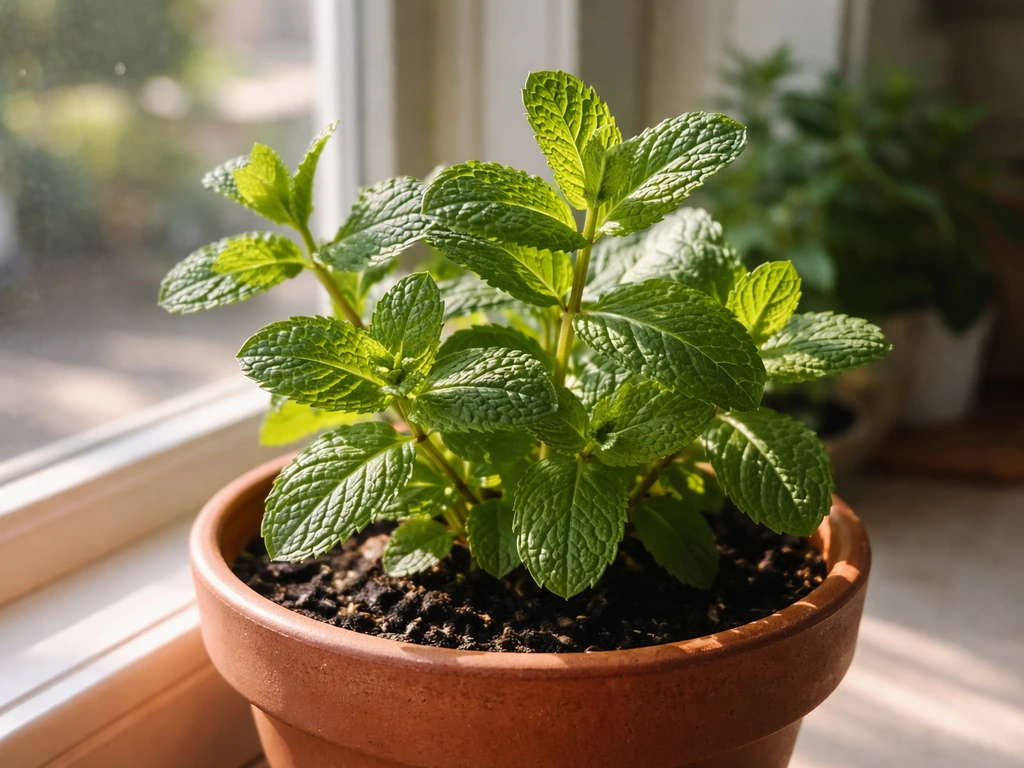
Yes, peppermint can absolutely grow indoors, and it's one of the more forgiving herbs to keep on a windowsill or under grow lights. Mentha × piperita is a vigorous, fast-growing plant that adapts well to container life as long as you give it enough light, a well-draining potting mix, and a watering routine that keeps the soil consistently moist without ever letting it sit soggy. Get those three things right and you'll be snipping fresh leaves year-round.
Can Peppermint Grow Indoors? Easy Indoor Growing Guide
James Hartwell
1 May 2026
You can apply the same indoor growing setup to mums by focusing on bright light, consistent moisture, and good drainage. If you can provide the right light, container drainage, and watering routine, the same indoor peppermint setup also answers whether can mums grow indoors.
Light and placement: the factor that makes or breaks indoor peppermint
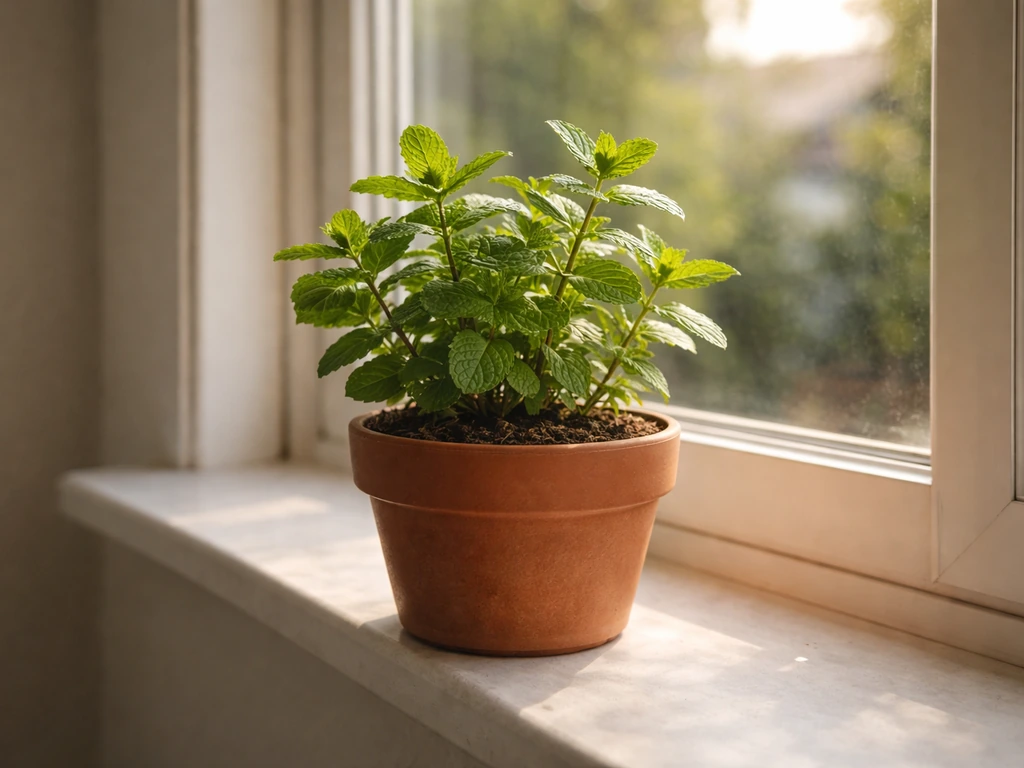
Light is where most indoor peppermint attempts fall apart. Peppermint wants a lot of it. If you still cannot meet those window-light needs, the grow-light guidance in the related section can help answer can mums grow indoors. A south- or west-facing window is your best option. A south-facing sill in the northern hemisphere typically delivers the strongest, longest daily light exposure, which is exactly what mint needs to grow vigorously and develop good flavor. East-facing windows work as a secondary option if the room is bright, but north-facing windows usually don't cut it on their own.
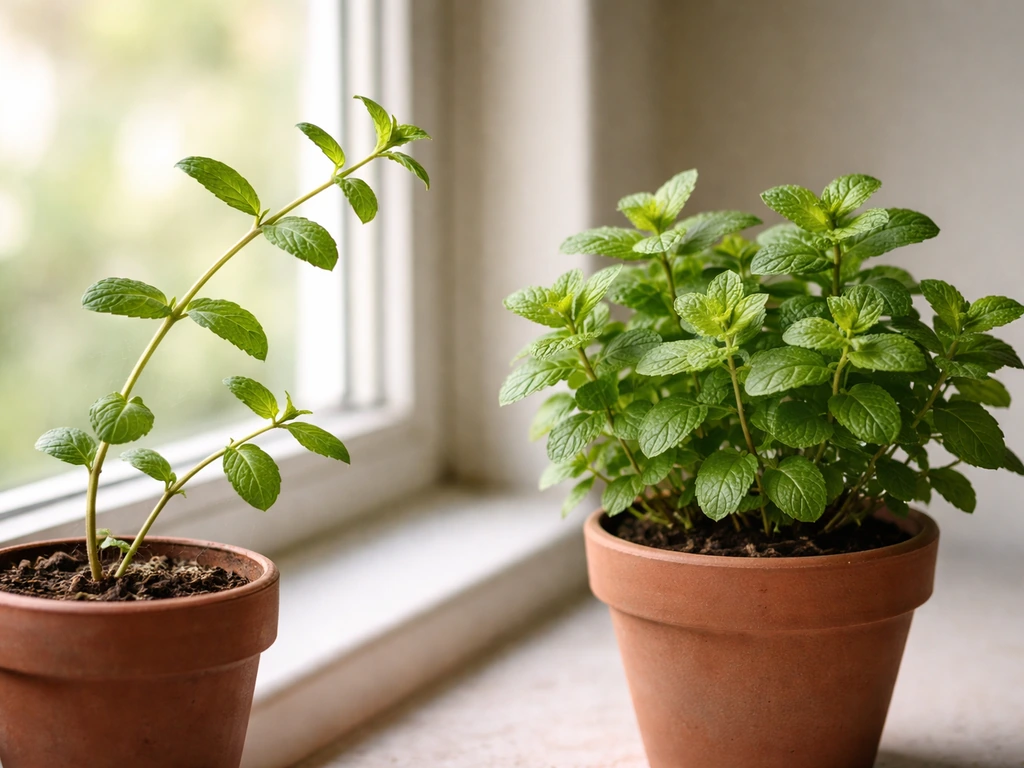
Herbs grown in shade go leggy and lose much of their essential oil, meaning the leaves you harvest taste flat. If you've noticed long, weak stems reaching toward a distant window, that's the plant telling you it's starving for light. Move it closer to the glass or add supplemental lighting immediately.
Using grow lights for peppermint
If your windows are limited (apartment life, north-facing rooms, winter in northern climates), a full-spectrum LED grow light is a genuine solution rather than a gimmick. Research on peppermint under LED lighting points to 14 to 16 hours of light per day as the sweet spot for strong growth and good essential oil development. Set a timer and aim for at least 14 hours.
For mint grown indoors, UC Master Gardeners notes it can work with about 6 hours of bright window light or about 12, 16 hours of supplemental light from cool white fluorescent or LED lamps 12–16 hours of supplemental light from cool white fluorescent or LED lamps. Position the light close enough that the plant receives meaningful intensity, ideally in the range that studies describe for active mint growth.
A basic full-spectrum LED panel placed 6 to 12 inches above the canopy works well for a windowsill-sized pot.
Soil, pot choice, and drainage
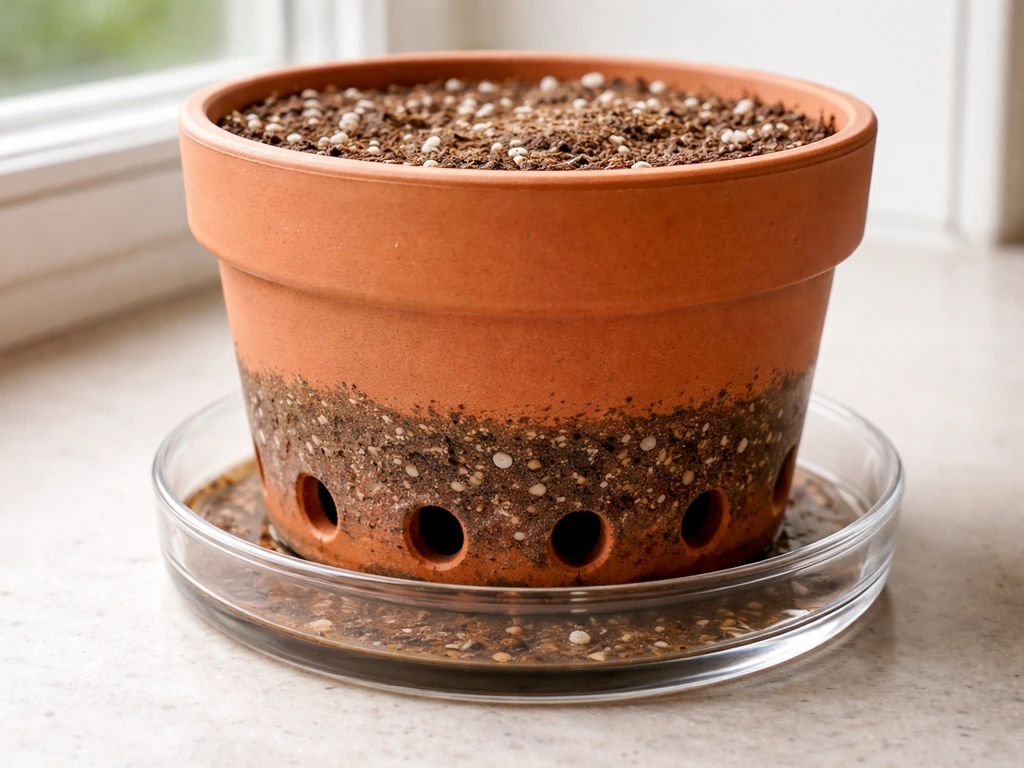
Peppermint in a container is only as good as its drainage setup. Waterlogged soil is one of the fastest ways to kill an indoor herb, and mint is no exception. Start with a quality soilless potting mix rather than garden soil. Garden soil compacts in containers, cuts off root aeration, and can bring in soilborne pathogens. A commercial potting mix amended with perlite (aim for roughly 20 percent perlite by volume) gives you the drainage and aeration that mint roots need.
The pot itself matters too. Choose a container with at least one drainage hole at the bottom. This is non-negotiable. I've seen beautiful mint plants turn into mush inside a week when someone dropped them into a decorative pot without drainage. Terra cotta pots are particularly good for mint because they breathe, letting excess moisture escape through the walls. If you prefer ceramic or plastic, just be more conservative with watering.
Pot size is worth thinking about early. Mint spreads aggressively, and a small pot will get root-bound fast. A container that is at least 8 to 12 inches in diameter gives the plant room to spread and means you're not repotting every few months. If you're growing multiple herbs together, keep peppermint in its own pot since it will crowd out neighbors quickly.
Watering and humidity: how to avoid the most common failures
The single most reliable watering trigger for indoor peppermint is to check the top half-inch to one inch of soil. When that layer feels dry, water thoroughly. When it's still moist, leave it alone. This sounds simple, but in practice a lot of people water on a fixed schedule regardless of what the soil is actually doing, which is how overwatering happens. Indoor conditions vary by season, pot size, and light levels, so your watering frequency will shift. In winter near a dry heating vent, the soil may dry out faster than you expect. In a cool shaded room in summer, it might stay moist for days.
Overwatered peppermint shows symptoms that can mimic drought stress, which confuses a lot of people. Wilting, yellowing leaves, and a general collapse can look like the plant needs more water when the real problem is that the roots are rotting from sitting wet. Always check drainage before adding more water. If the pot has no drainage hole, that's your first fix.
Humidity is worth a mention. Mint prefers a moderate humidity level. Bone-dry indoor air from central heating won't kill it, but it can stress the plant and make it more vulnerable to spider mites. A light misting every couple of days or placing the pot on a pebble tray with a bit of water in it helps. Avoid keeping the foliage wet for long periods, though, because dense, damp leaves with poor airflow are an invitation for fungal problems like powdery mildew.
Temperature and airflow needs
Peppermint is comfortable in the same temperature range most people keep their homes: roughly 65 to 75°F (around 18 to 24°C) during the day, with cooler nights down to 55 to 60°F being totally fine. The USDA cites a maintenance temperature of around 25°C (77°F) for controlled mint growing conditions, so room temperature is generally a good fit. What you want to avoid are the extremes: hot, dry air blasting from a heating register, cold drafts from a single-pane window in winter, or placing the pot right against a cold exterior wall.
Airflow is underrated. Indoor rooms with stagnant air and dense plant foliage create ideal conditions for powdery mildew, which loves humidity above 70 percent and temperatures in the 68 to 86°F range. Keep your peppermint somewhere with reasonable air movement, even if that just means it's not crammed into a corner with a dozen other plants. A gentle fan running nearby helps a lot in tighter spaces.
How to start peppermint indoors: seeds, cuttings, or division
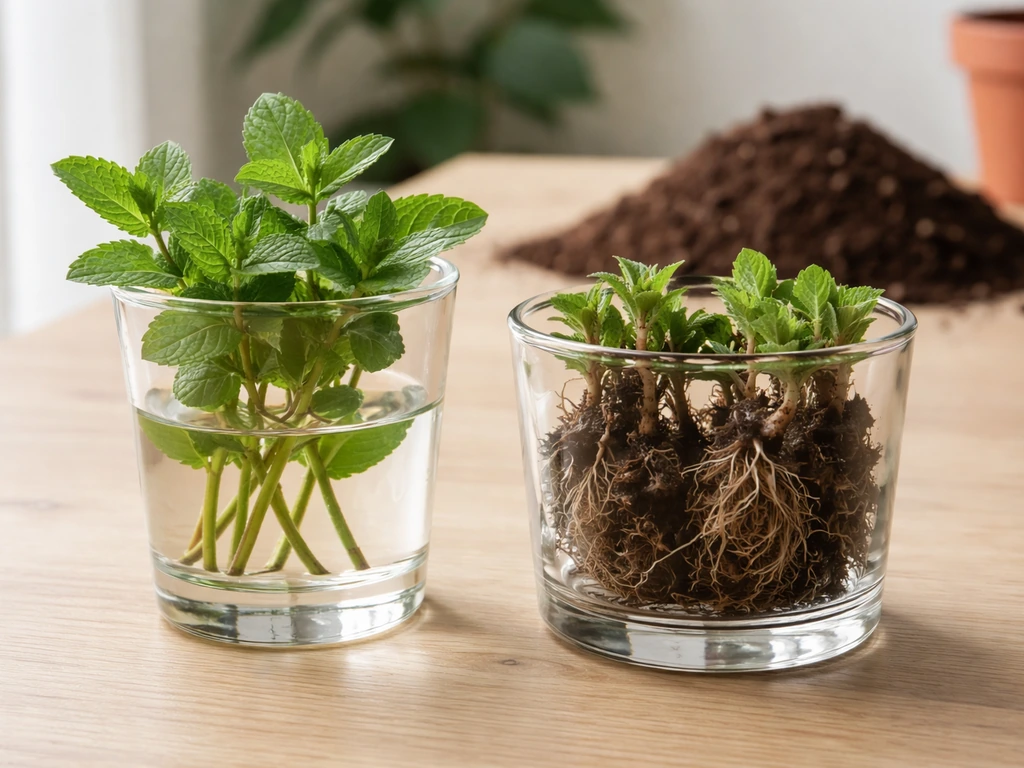
Here's where I'll save you some frustration: don't bother with seeds for peppermint specifically. Peppermint is a hybrid (Mentha × piperita), and seeds, if you can find them, won't reliably produce plants with the flavor profile you're after. The best options are cuttings, division, or buying a starter plant from a nursery.
Starting from cuttings
Cuttings are the easiest route if you have a friend with a peppermint plant or can pick up a bunch from a grocery store (look for stems with nodes). Snip a 4 to 6 inch cutting just below a leaf node, strip the lower leaves, and place it in a glass of water or directly into a moist, lightweight rooting medium. A peat-based mix with about 20 percent perlite works well.
Virginia Cooperative Extension notes that rooting media for propagation should be clean and describes perlite as a usable coarse rooting medium [about 20 percent perlite works well](https://www. pubs. ext. vt.
edu/content/dam/pubsextvt_edu/426/426-002/SPES-683. pdf). Enclose the cutting in a clear plastic bag or propagation dome to keep humidity up around the cutting while roots develop. Roots typically appear within one to two weeks in good conditions.
Once roots are an inch or so long, transplant into your prepared potting mix.
Starting from division
Division is the other reliable method and is especially useful if you already have an outdoor peppermint plant or know someone who does. Simply dig up a section of the root mass with a few stems attached, separate it from the parent plant, and pot it up directly. Division works because mint spreads by runners and the root system is already established. Plants started by division often settle in and start producing new growth faster than cuttings.
Buying a starter plant
The fastest path to indoor peppermint is simply picking up a healthy starter from a garden center or herb nursery. Repot it into a larger container with your amended potting mix within a week or so of bringing it home, and you're ready to grow. This is the approach I'd recommend to anyone who just wants to get started today without a propagation setup.
Ongoing care: harvesting, pruning, and preventing legginess
Regular harvesting is actually part of good care, not just a benefit. Pinching off the top sets of leaves regularly encourages the plant to branch out and stay bushy rather than shooting up a single long stem. Once stems reach 4 to 6 inches, pinch or snip just above a leaf pair. Never remove more than about a third of the plant at once or you'll shock it and slow regrowth.
Legginess is a direct symptom of insufficient light, so if your plant is stretching toward the window no matter how much you prune, the real fix is more light. Prune aggressively once and then move the plant to a better position or add a grow light. Pruning without fixing the light issue is just delaying the same problem.
Peppermint is a heavy feeder relative to some herbs, but indoors you don't need to go overboard. A balanced liquid fertilizer diluted to half strength every three to four weeks during the active growing season (spring and summer) keeps it happy. Ease off in late fall and winter when growth naturally slows. If the plant has been in the same pot for a year or more and growth has really stalled, check if it's root-bound and step it up to the next pot size.
Troubleshooting common indoor peppermint problems
| Problem | Likely cause | Fix |
|---|---|---|
| Leggy, weak stems | Not enough light | Move to a brighter window or add a full-spectrum grow light running 14–16 hours/day |
| Wilting despite moist soil | Root rot from overwatering or poor drainage | Check for drainage holes, reduce watering, let soil dry out between waterings |
| Yellowing leaves | Overwatering, root rot, or nutrient deficiency | Fix drainage first; if drainage is fine, apply a diluted balanced fertilizer |
| Flat, weak flavor | Insufficient light or insufficient oil development | Increase light duration and intensity; harvest from vigorous new growth |
| White powdery coating on leaves | Powdery mildew from humidity + poor airflow | Improve air circulation, avoid wetting foliage, reduce humidity, remove affected leaves |
| Tiny webs on undersides of leaves | Spider mites (thrive in hot, dry conditions) | Increase humidity, rinse leaves with water, use insecticidal soap if infestation is heavy |
| Sticky residue, small insects | Whiteflies or aphids | Inspect undersides of leaves; treat with insecticidal soap or neem oil; improve airflow |
Spider mites are probably the most common pest issue with indoor peppermint, especially in winter when heating systems dry the air out significantly. They love hot, dry, low-humidity environments. If you see fine webbing on the undersides of leaves, act immediately. Rinse the plant in the sink, mist it regularly, and use insecticidal soap if the population is established. Catching it early makes a big difference.
Powdery mildew is the main fungal threat, and it's almost always connected to poor airflow combined with high humidity. It's a frustrating one because you need some humidity for the plant to thrive, but too much stagnant moisture around the leaves invites the mildew in. Keep air moving and don't crowd the plant.
Your next steps if you're starting today
- Pick up a peppermint starter plant from a local nursery or garden center, or take cuttings from an existing plant.
- Choose a pot at least 8 inches in diameter with drainage holes. Terra cotta is ideal.
- Fill it with a quality soilless potting mix amended with about 20 percent perlite for drainage.
- Place the pot in your brightest window (south or west-facing), or set up a full-spectrum LED grow light on a 14 to 16 hour timer.
- Water only when the top half-inch to one inch of soil is dry, and always water until it drains from the bottom.
- Keep the plant away from heating vents, cold drafts, and stagnant corners.
- Start pinching tips once the plant hits 4 to 6 inches to keep it bushy and productive.
If you're also curious about growing other mint varieties indoors, the care principles carry over closely since most mints share similar light, water, and drainage needs. If you want to broaden your indoor herb and spice setup, you can also look at the best chilli plants to grow indoors in the UK for similar light and watering planning best chilli plants to grow indoors UK. And if peppermint has you interested in other herbs and edibles for indoor spaces, chilli plants are another popular option that many apartment growers experiment with, though they come with their own specific light and temperature requirements worth reading up on separately.
FAQ
How often should I water indoor peppermint if I use a grow light year-round?
Check the top half-inch to one inch of soil each time. Even with steady lighting, watering frequency still changes with pot size, airflow, and room temperature. A fixed schedule usually fails, especially in winter when indoor air can dry faster near heaters.
Can I grow peppermint indoors in water only, like in a jar?
Peppermint cuttings can root in water, but the long-term setup usually needs potting mix. Once roots form, transplant into amended potting mix with drainage so the plant gets enough nutrients and root oxygen, otherwise growth stalls and plants become prone to rot.
What’s the best window direction for peppermint indoors?
A south- or west-facing window is usually most reliable. East windows can work if the room is bright most of the day, but north-facing windows often lead to stretching and weaker leaf flavor unless you supplement with an LED grow light.
Why does my peppermint look leggy even though I’m pruning?
Pruning controls shape, but leggy growth is usually a light shortage signal. If stems keep reaching toward the light, move the plant closer to the glass or raise light intensity with a grow lamp, then prune again once new growth appears.
Do I need to fertilize indoor peppermint, or will it grow fine without it?
It will grow without frequent feeding, but peppermint is a heavier feeder than many herbs. Use a balanced liquid fertilizer at half strength every three to four weeks during spring and summer, then pause or reduce in fall and winter when growth slows.
Should I mist peppermint to prevent spider mites, or will that cause mildew?
Misting can help only in a targeted way. Focus on improving overall conditions, like gentle airflow and keeping humidity moderate, rather than keeping leaves wet. If you mist, do it lightly and avoid prolonged damp foliage, since powdery mildew risk increases with stagnant, humid leaf surfaces.
What humidity range is safe for indoor peppermint?
Aim for moderate humidity, not tropical levels. If you notice powdery mildew starting or leaves stay damp for long periods, reduce humidity and increase airflow. Using a pebble tray can raise humidity gently without wetting the foliage as much as frequent misting.
Is peppermint safe to grow indoors if I have pets or small children?
Peppermint is generally used as a culinary herb, but indoor pets may chew leaves and young children can ingest plants unintentionally. If you keep pets that chew plants, use a barrier or keep the container in a less accessible spot, and consider using only leaves you intend to harvest rather than treating the plant with any chemicals.
Can I plant peppermint with other herbs in the same pot?
Best practice is to keep peppermint separate. Mint spreads aggressively and will crowd out slower herbs in shared containers, especially indoors where root space is limited. If you must mix herbs, use a very large planter and still expect mint to take over unless you contain it.
What type of pot is safest for indoor peppermint to prevent overwatering?
Use a container with at least one drainage hole. Terra cotta is helpful because it breathes and releases moisture through the walls, but any plastic or ceramic pot works if you water carefully and let excess water fully drain.
My peppermint leaves are yellow and the plant seems limp. Is it underwatering?
Not always. Overwatering can cause yellowing and collapse that looks similar to drought stress. Check the drainage first, confirm the soil is not waterlogged, and only water after the top half-inch to one inch feels dry.
Can I start peppermint from seeds indoors?
It’s not recommended. Peppermint is a hybrid, so seed grown plants often do not match the flavor you want. For reliable indoor results, start from a starter plant, cuttings, or division.
How do I harvest peppermint indoors without stopping growth?
Pinch or snip the tops regularly to encourage branching. Only remove a portion of the plant at a time, and if you harvest heavily and the plant looks shocked, back off and let it re-grow. Consistent light harvesting usually performs better than occasional large cuts.
What spacing should I use if I grow multiple peppermint plants indoors?
Give each plant enough room so leaves have airflow. Crowding increases mildew risk, even if humidity seems moderate. If plants share one grow light or window spot, rotate containers occasionally so all sides get similar light exposure.