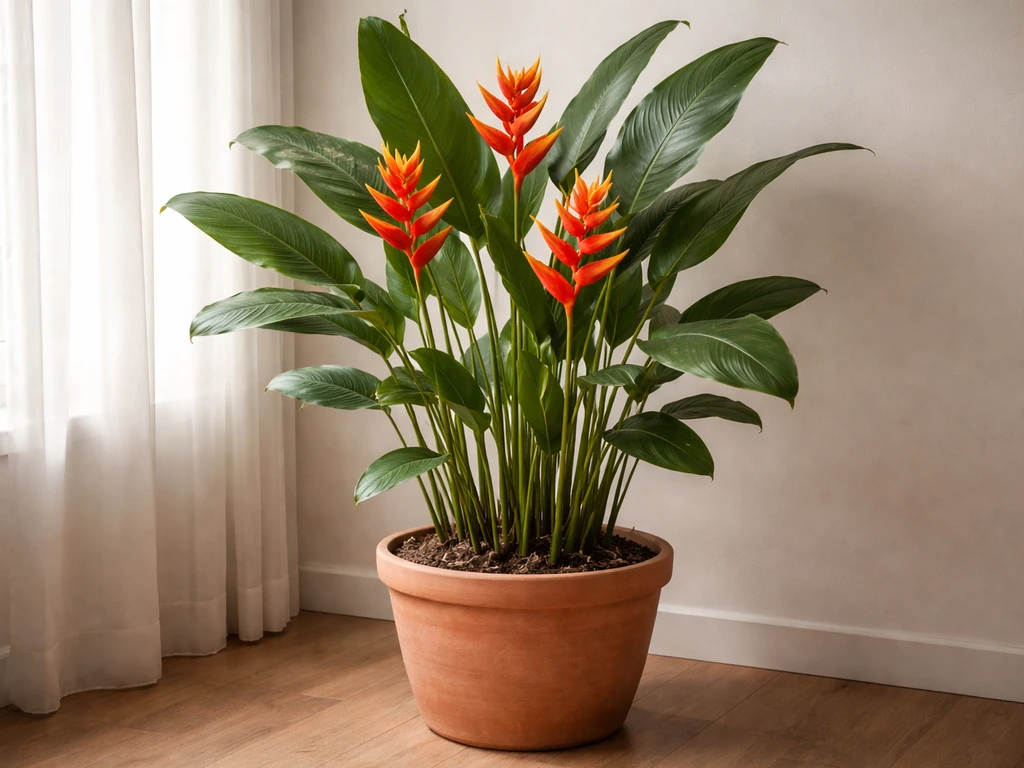
Yes, heliconias can grow indoors, but they are genuinely demanding and most will struggle to flower unless you nail down a few non-negotiable conditions: maximum light, consistent warmth above 70°F, and humidity levels that feel more like a greenhouse than a living room. If you can get those three things right, smaller varieties like Heliconia psittacorum are surprisingly rewarding container plants. If even one of those conditions is missing for most of the year, you will end up with a leafy green plant that never blooms and slowly declines.
Can Heliconias Grow Indoors? Indoor Care Guide
James Hartwell
17 May 2026
Are heliconias realistic as indoor plants?
I want to be honest here because heliconias get oversold as exotic houseplants. These are tropical plants that evolved in rainforest margins and clearings where they get direct sun, heat, and humidity all day, every day. Taking them indoors in a temperate climate is a real stretch, and most species will simply refuse to bloom unless conditions closely mimic their native range. That said, it absolutely can work.
The key insight from extension horticulture research is that when all three of the main variables (light, temperature, humidity) are close to ideal, even indoor-grown heliconias produce flowers. Miss the mark on any one of them and growth slows or stops entirely. So this is less a question of can they survive indoors and more a question of whether you can recreate enough of the tropics in your home to make them thrive.
Think of heliconias as being on the far end of the indoor difficulty scale, somewhere past hibiscus, which at least tolerates lower humidity. In the same way, hibiscus can also be grown indoors during winter, but it needs bright light and stable warmth to avoid dropping buds. If you have had success overwintering a tropical plant indoors and you have a south-facing window or grow lights, you have a real shot.
If your space is cool and dry with limited natural light, a different tropical plant like hoya or haworthia is going to serve you much better. Hoya can grow indoors too, but it has its own requirements for light and care. If you are specifically wondering about can haworthia grow indoors, haworthia is typically easier to keep happy than heliconias in home conditions.
Which varieties actually work indoors
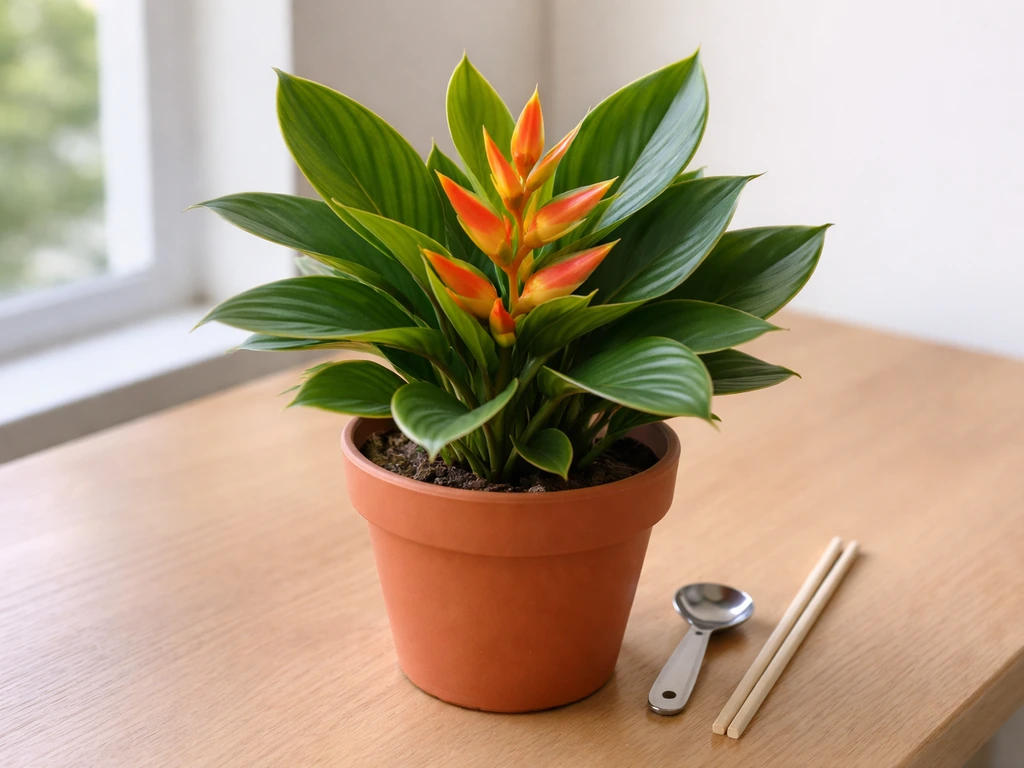
The single most important variety decision is size. Most heliconia species grow 4 to 15 feet tall outdoors, and trying to keep a 12-foot plant in a living room is not practical. The University of Wisconsin–Madison Extension specifically calls out smaller cultivars as the only realistic option for container growing. Heliconia psittacorum, commonly called parrot heliconia or parakeet heliconia, is the go-to indoor choice and the one most backed by real cultivation data.
If you are trying to answer can we grow parrots at home, start by choosing the right parrot heliconia type and matching the light, warmth, and humidity it needs. BBC Gardeners' World specifically names H. psittacorum 'Hawaii' as a variety suited to house plant growing, and MasterClass describes parrot heliconia as a relatively short indoor pot option. These typically top out at 3 to 5 feet in a container, which is manageable.
- Heliconia psittacorum 'Hawaii': Named as a house plant variety by BBC Gardeners' World, compact, erect orange-red bracts
- Heliconia psittacorum 'Tay': Well-studied in indoor and greenhouse cultivation, reliable bloomer when temperatures are maintained above 70°F
- Other compact H. psittacorum cultivars: Generally 3 to 5 feet tall with erect inflorescences, which bloom faster than pendulous types
- Avoid pendulous/large species like H. caribaea or H. rostrata for indoors: These grow very large, take 2-plus years to first bloom, and are impractical in pots
When buying, look for small rhizomes or starter plants in 1-gallon containers rather than bare rhizomes alone. Starting with an established root system shaves months off the time to first bloom and gives you a better chance of success in the lower-light indoor environment.
Light: the biggest make-or-break factor indoors
Heliconias need as much light as you can possibly give them indoors. The Heliconia Society International is blunt about it: if indoor light is too low, growth rate slows and flowering stops. A north-facing window is not going to cut it. At minimum you need an unobstructed east or west-facing window, and a south-facing window (in the Northern Hemisphere) is ideal. Anything filtered through sheer curtains or blocked by a tree outside reduces light to a level where the plant may survive but will not bloom.
Grow lights are practically a necessity for most indoor setups, especially in winter when day length drops. If you are in an apartment with limited window access, a full-spectrum LED grow light positioned 12 to 18 inches above the canopy for 14 to 16 hours per day can compensate for a less-than-perfect window. Think of it this way: if you are reading this in January and your south window gets 4 hours of weak winter sun, a grow light is not optional, it is the difference between a plant that flowers and a plant that just sits there.
Temperature, humidity, and airflow
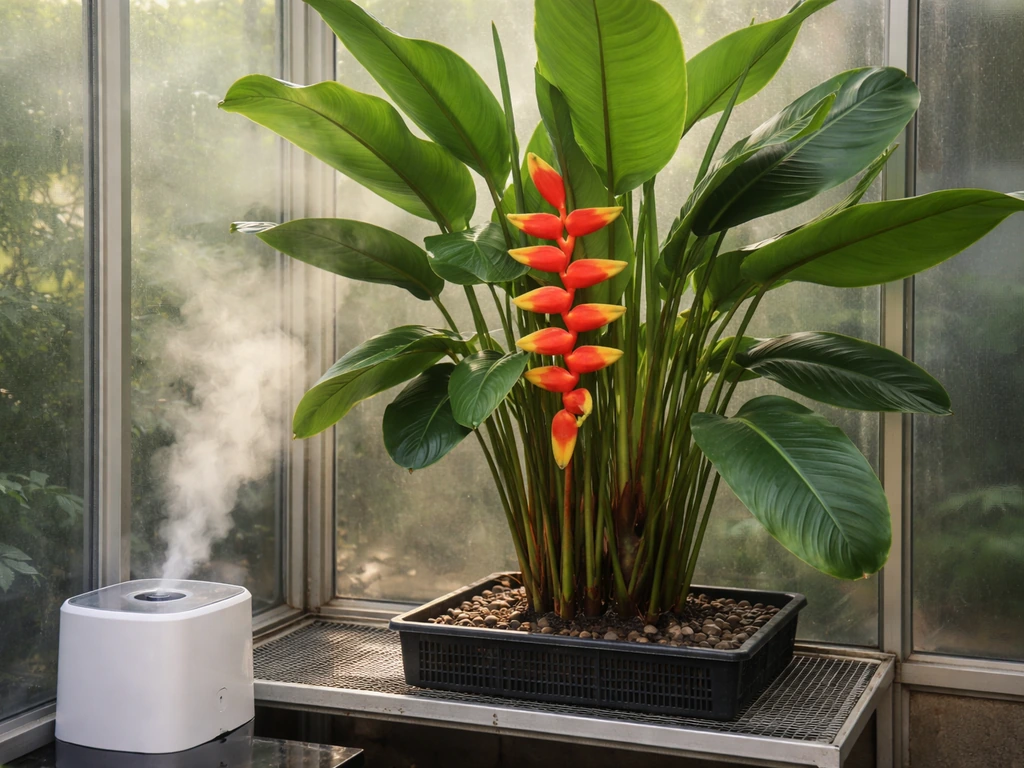
Temperature is critical and closely tied to flowering. The optimum range for heliconia growth and flower production is 70 to 95°F (21 to 35°C). Research on H. psittacorum 'Tay' showed that raising greenhouse temperatures from 59°F to 70°F more than doubled flower production, from 25 to 60 flowers per square meter. Growth decreases below 70°F and stops entirely at 50°F. Cold injury, including black spotting at the bases of the bracts, begins below 55°F. This means you should never place your heliconia near a drafty window in winter, an exterior door, or an air conditioning vent. The plant needs to stay comfortably warm, not just alive-warm.
Humidity is the other hurdle. Heliconias prefer 75 to 85% relative humidity, which is far above the 30 to 50% humidity in most homes, especially with central heating or air conditioning running. You have a few practical options: run a humidifier near the plant, mist the leaves periodically (the Heliconia Society International recommends this when humidity is low), or group the heliconia with other tropical plants to create a more humid microclimate. A pebble tray filled with water beneath the pot also helps slightly. A humidity meter near the plant is worth buying so you know what you are actually dealing with rather than guessing.
Airflow is often overlooked. Good air circulation prevents fungal issues and keeps the foliage healthy, but avoid placing the plant where cold drafts hit it directly. A small fan on low, running intermittently in the same room, provides the gentle movement heliconias benefit from without chilling them.
Potting mix, containers, and drainage
A well-draining, airy mix is essential because heliconias hate sitting in wet soil. A reliable container mix for indoor heliconias is one-third peat moss (or coco coir as a more sustainable alternative), one-third perlite, and one-third coarse potting mix. This combination drains freely while holding enough moisture between waterings. When planting a rhizome, position it so the very tip just barely protrudes from the soil surface.
Container size matters more than people think. A pot that is too large holds excess moisture around the roots and encourages rot. Start a new rhizome or small plant in a 6 to 8 inch pot and size up as the plant fills it out, typically to a 10 to 14 inch final pot for a mature H. psittacorum. Always use a pot with drainage holes, no exceptions. The drainage rule for indoors is straightforward: some water should flow out the bottom when you water, but the pot should never sit in the saucer water for more than 30 minutes. Empty the saucer after every watering session.
Watering and fertilizing
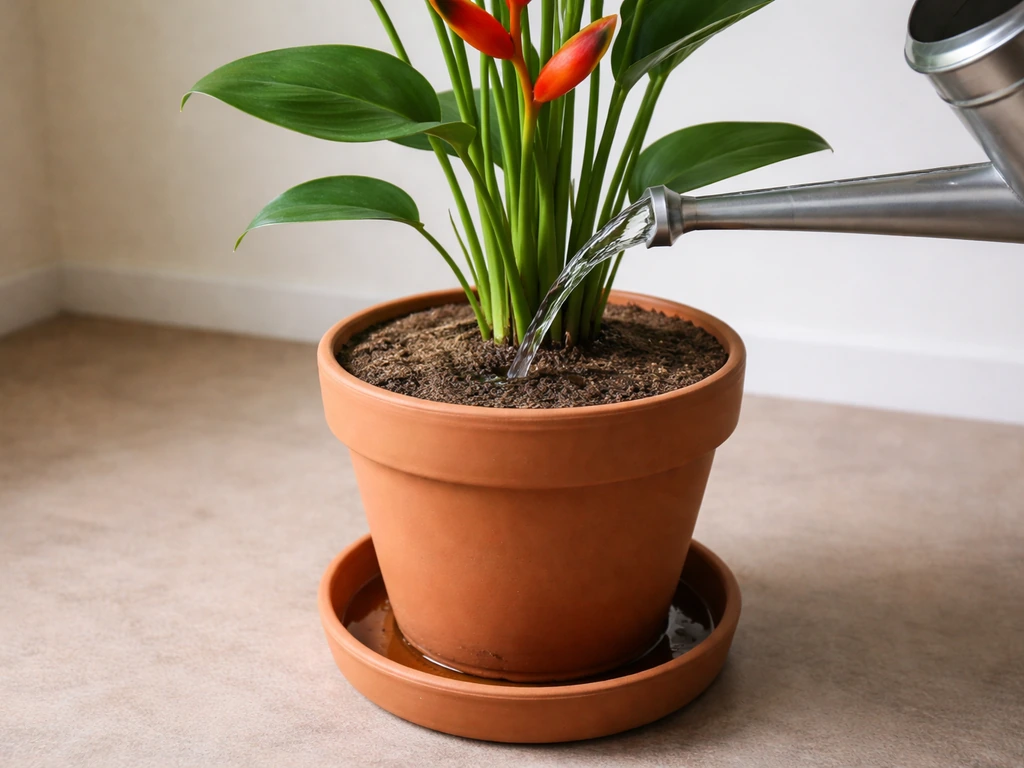
During active growth (typically spring through summer indoors), water thoroughly when the top inch of soil feels dry. In practice, that usually means watering every 5 to 7 days in warm months and much less frequently in winter. The key mistake I see is people continuing to water on the same schedule year-round. When the plant is not actively growing due to lower winter light or temperature, reduce watering significantly to avoid root rot.
For fertilizer, a liquid 15-30-15 formulation (high middle phosphorus number) supports flowering. Mix it at half a teaspoon per gallon of water and apply weekly during active growth until any blooms start to fade. The higher phosphorus encourages bud and flower formation. When the plant is resting or growth is visibly slow, cut fertilizing back to once a month or stop entirely until conditions improve. Over-fertilizing a slow-growing indoor heliconia causes salt buildup in the soil and can burn roots, so less is genuinely more during low-light periods.
Realistic size, flowering timeline, and what to expect
Indoor heliconias grow more slowly than outdoor tropical specimens, and your expectations around flowering need to be realistic. For compact H. psittacorum types with erect inflorescences, you can realistically expect first flowers within about 12 months of planting a healthy rhizome under good conditions. Larger species with pendulous inflorescences typically need 2 or more years to first bloom, and honestly those species are not worth attempting indoors. In a container, a mature H. psittacorum will reach 3 to 5 feet tall. That is a reasonable houseplant size if you have the ceiling height and floor space.
Do not expect an outdoor flowering frenzy indoors. You are likely to get a few flower stalks at a time rather than a continuous mass display. That is normal, and a single heliconia flower stalk indoors is genuinely spectacular. The bright waxy bracts on H. psittacorum hold their colour for weeks. If conditions dip in winter, the plant may go through a slow or dormant period where it produces no new flowers and minimal leaf growth. This is not a sign of failure. Dial back the watering and fertilizer, keep the temperature above 65°F, maintain humidity, and the plant will resume growth when light and warmth improve.
Troubleshooting common indoor problems
Yellow leaves
Yellowing leaves are the most common complaint and have a few possible causes. Overwatering and poor drainage are the most frequent culprits indoors. Check whether the soil is staying wet for too long between waterings and whether the saucer has standing water. Root rot from consistently wet soil will yellow leaves from the bottom up. The second cause is low light combined with cold temperatures, which slows chlorophyll production. If the plant is in a dim spot and the temperature is below 65°F, move it closer to your light source and warm it up. The third cause is nutrient deficiency, usually because the plant has exhausted the soil or has not been fertilized for months.
Black spots on bracts or leaves
Black spots, especially at the base of flower bracts, are a classic sign of cold damage. If temperatures have dropped below 55°F, even temporarily (think: near a single-pane window on a cold night, or near an air conditioning unit), the flowers will show it fast. Move the plant away from cold surfaces and drafts immediately. Once bract tissue is damaged it will not recover, but new growth will be healthy if you fix the temperature issue.
No flowers after a year or more
If your heliconia has healthy foliage but refuses to bloom, work through this checklist in order: Is it getting enough direct light? If you want to know whether you can hostas grow indoors, the same principle applies: match the light and humidity to what the plant needs to thrive. Is the temperature consistently above 70°F during the day? Is humidity above 60 to 70% near the plant? Are you fertilizing with a phosphorus-rich fertilizer weekly during the growing season? Light is almost always the primary culprit indoors. Adding a grow light is the single intervention most likely to unlock flowering.
Drooping or wilting leaves
Wilting in a heliconia that is getting adequate water usually points to root rot from standing water or to very low humidity causing the leaves to lose water faster than the roots can supply it. Check the root zone first by lifting the pot or inspecting drainage holes. If roots look brown and mushy, reduce watering and improve drainage. If roots look healthy, boost humidity with a humidifier or misting and ensure the plant is not sitting near an air vent.
Pests
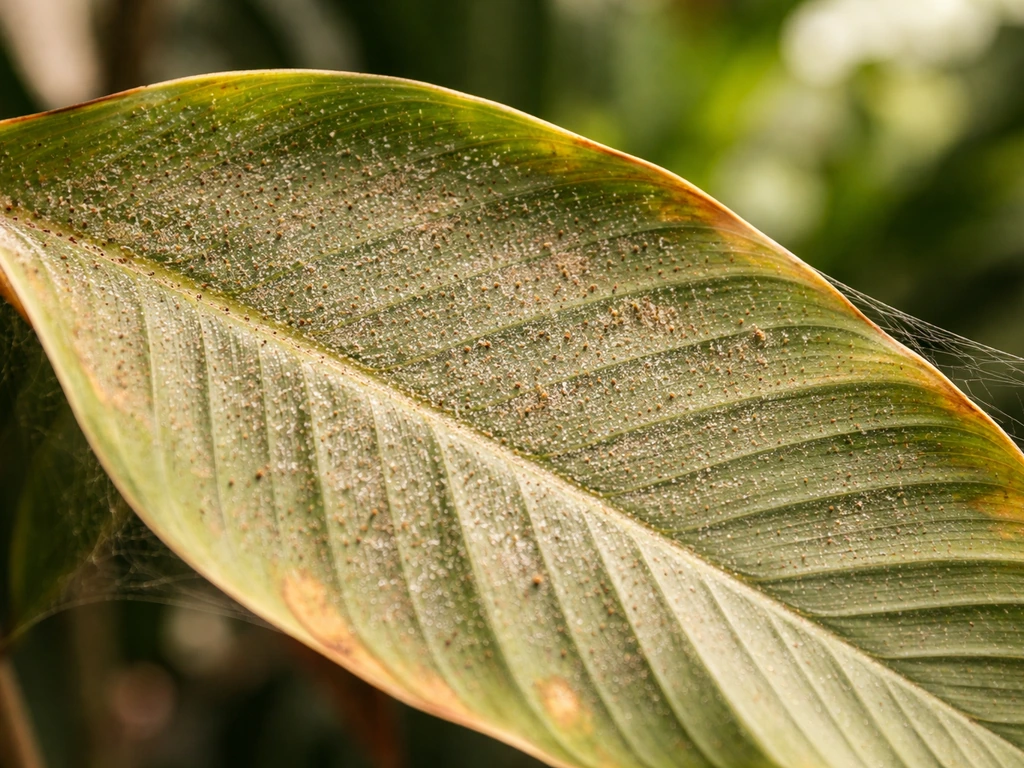
Spider mites are the most common pest on indoor heliconias, and they thrive in exactly the hot, dry conditions that a poorly-humidified indoor setup creates. You will notice fine webbing on leaf undersides and tiny moving dots. Raise humidity immediately, wipe leaves down with a damp cloth, and treat with insecticidal soap or neem oil spray every 7 days until clear. Scale insects can also appear on stems. Scrape them off manually with a soft brush dipped in rubbing alcohol and follow up with neem. Keeping humidity in the healthy range is the best preventive measure against both.
| Problem | Most Likely Cause | Fix |
|---|---|---|
| Yellow leaves | Overwatering or low light/temperature | Improve drainage, reduce watering, move to brighter/warmer spot |
| Black spots on bracts | Cold damage below 55°F | Move away from cold drafts or cold windows immediately |
| No flowers | Insufficient light or temperature below 70°F | Add grow lights, increase warmth, use phosphorus-rich fertilizer |
| Drooping leaves | Root rot or very low humidity | Check roots, fix drainage, raise humidity with humidifier or misting |
| Spider mites or scale | Low humidity and dry air | Raise humidity, treat with neem oil or insecticidal soap |
FAQ
What’s the minimum humidity I can get away with if I cannot reach 75% to 85% indoors?
If you cannot maintain at least roughly 60% to 70% near the plant for extended periods, expect poor or no flowering. Survival is possible at lower humidity, but flower bracts are usually the first to fail. The practical workaround is to create a microclimate (humidifier nearby plus grouping, or a clear humidity enclosure with ventilation) rather than relying on whole-room humidity.
Can I grow heliconias indoors without grow lights if I have a bright window?
Possibly, but only if the window delivers several hours of strong direct light daily and the plant can sit unobstructed. South-facing is ideal in the Northern Hemisphere, east or west can work, and north usually will not. If you are seeing slow growth year-round, pale new leaves, or no bud development, assume the light is still insufficient and switch to a grow light.
Should I rotate the pot to ensure even growth indoors?
Yes, rotate the container every 1 to 2 weeks so one side does not stretch toward the light. However, avoid moving it during bud formation or right after you notice bract development, since repeated stress can cause buds to stall or drop.
How do I tell the difference between underwatering and low humidity on heliconia leaves?
Underwatering usually shows as soil drying and leaf droop that improves after a thorough watering. Low humidity often causes dry, crisp leaf edges or a “limp” look even when the soil is still moderately moist. Use a finger test 1 to 2 inches deep and also check humidity near the plant with a small meter rather than guessing.
Can I keep my heliconia outdoors during summer and then bring it back inside for winter?
Yes, but acclimate gradually. Increase light and humidity exposure over 7 to 14 days when moving outdoors, and reverse the process when bringing it back in to avoid shock. Also inspect for spider mites and scale before moving indoors, since infestations can explode in dry winter air.
What pot size should I choose for a new starter plant versus an established rhizome?
For new starters, start around a 6 to 8 inch pot, then size up as roots fill in. A pot that is much larger stays wet longer, which increases rot risk and can delay flowering for months. If you are unsure, err smaller and upsize only when you see roots circling drainage holes.
Do heliconias need to be repotted often indoors?
Not frequently. Repot when roots visibly fill the pot or the mix breaks down and stays wet too long. Going up one container size at a time is usually enough for H. psittacorum. Repotting too often, especially during winter low-light conditions, can stress the plant and reduce blooming.
How can I avoid root rot when watering a heliconia indoors?
Water thoroughly, then let excess drain completely, and never let the pot sit in water longer than about 30 minutes (empty the saucer). Adjust frequency with seasons, watering when the top inch dries, and ensure your mix drains fast. If you notice yellowing from the bottom, check the root zone promptly, not just the leaf symptoms.
Why are my bracts turning black or spotting near the base?
Black spotting at the base of bracts is commonly linked to cold injury, even from brief contact with cold glass or drafts from vents or doors. Move the plant away from any cold surfaces immediately and stabilize the temperature above about 65°F. Bracts already damaged will not recover, but new growth should improve once conditions stabilize.
My heliconia has leaves but never flowers. What should I troubleshoot first?
Follow a priority order: confirm direct light is strong enough (often the main issue), then verify daytime temperature stays consistently above 70°F, then check humidity near the plant. Finally, ensure you are feeding with a phosphorus-forward liquid during active growth. If you only change one thing, upgrading light with a full-spectrum grow light typically yields the biggest improvement.
How long can I expect a heliconia to take to bloom indoors from a starter rhizome?
With a healthy, established rhizome and good conditions, compact H. psittacorum types often flower within about 12 months. If you start with bare rhizomes or under marginal light and humidity, it can take much longer, and some plants may only flower in a warm, bright part of the year.
Are spider mites and scale treatable on heliconias indoors without harming the plant?
Yes, but timing and repeat applications matter. Rinse or wipe leaves to reduce mites, then use insecticidal soap or neem, repeating about every 7 days until clear because eggs can hatch. Avoid strong treatments when the plant is stressed by cold, low light, or very low humidity, since that can compound damage.