Hens and chicks (Sempervivum) will grow indoors, but they are honestly one of the trickier succulents to keep happy inside. The biggest hurdle is light. These plants evolved on sun-baked rocky slopes, and a standard apartment window rarely delivers what they want. If you can give them a south-facing window with direct sun for at least 4 to 6 hours a day, or supplement with a grow light, they will thrive. Miss that mark, and they stretch, fade, and eventually rot. Get the light right first, then the rest of the care is simple.
Will Hens and Chicks Grow Indoors? Indoor Care Guide

James Hartwell
27 Apr 2026
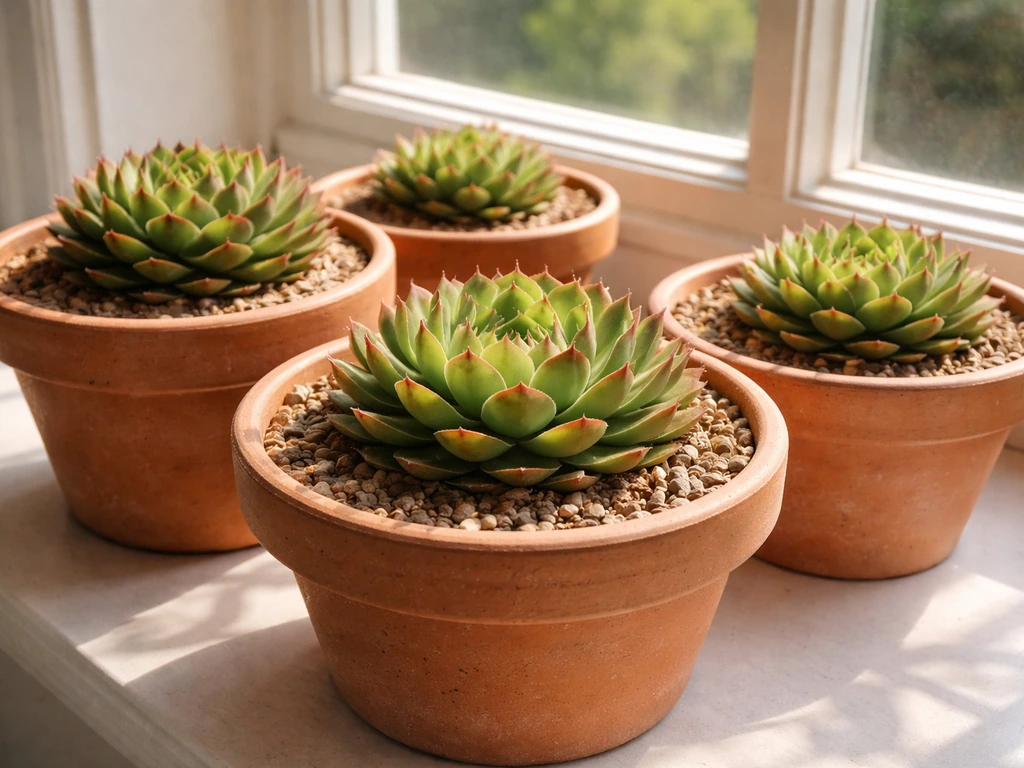
What 'indoors' actually looks like for hens and chicks
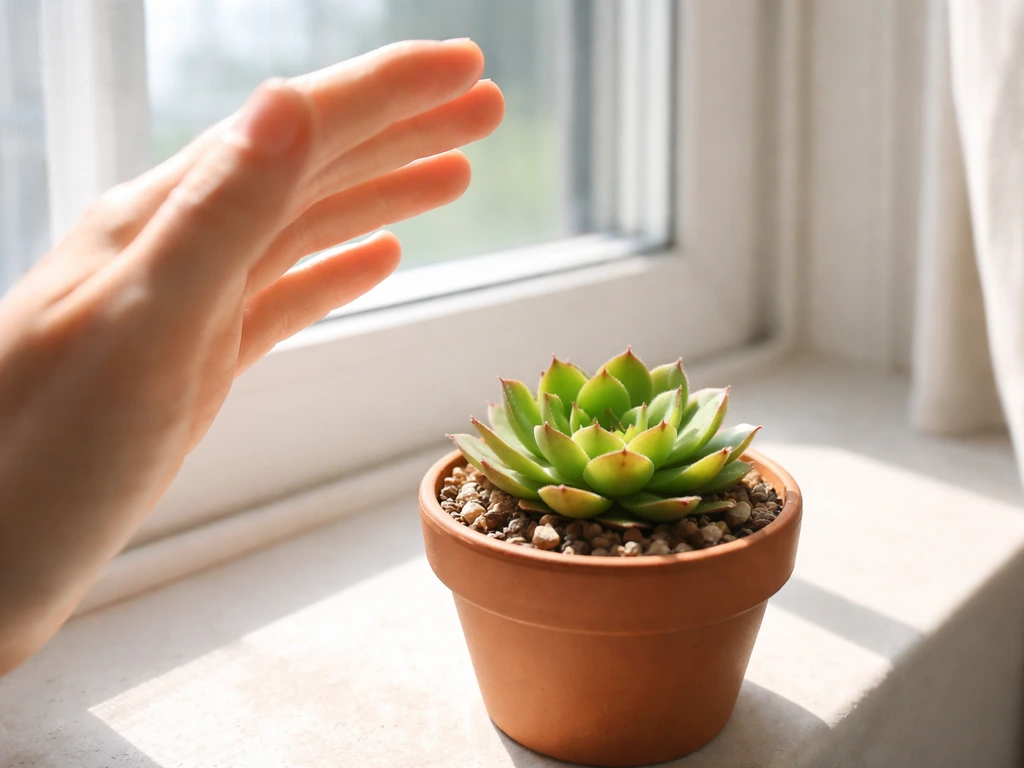
Sempervivum are classified as high-light plants. That's not marketing language, it's a real requirement. Indoors, 'high light' means a south-facing windowsill where the sun hits the leaves directly for most of the day, or a west-facing window that gets strong afternoon sun. An east-facing window is borderline, and north-facing is a non-starter. If you're working with limited natural light, an LED grow light placed 6 to 12 inches above the rosettes for 12 to 14 hours a day will substitute well.
One practical tip: put your hand between the light source and the plant. If you can't feel warmth or see a sharp shadow, the light probably isn't intense enough. I've kept a small tray of hens and chicks on a south windowsill in a third-floor apartment and they did beautifully all spring and summer. The same plants moved to a side table 4 feet back from that same window started stretching within three weeks.
- South-facing window: best option, direct sun most of the day
- West-facing window: good, especially for summer afternoons
- East-facing window: marginal, monitor for stretching
- North-facing window: avoid for Sempervivum
- Grow light: LED full-spectrum, 6 to 12 inches above the plant, 12 to 14 hours daily
Soil mix and containers that prevent rot
The single fastest way to kill hens and chicks indoors is to plant them in regular potting mix in a deep pot with poor drainage. Most Sempervivum problems are caused by too much water, too little light, or both. Their roots sit in wet media, fungal pathogens move in, and the rosette goes mushy from the base up. You need two things working together: a fast-draining soil mix and a container that physically lets water escape.
Soil mix
A reliable DIY mix is one part peat moss to one part perlite or coarse builder's sand. That combination gives you the drainage and aeration succulents need in containers. You can also buy a pre-made cactus and succulent mix and cut it 50/50 with extra perlite, which bumps the drainage even further. The goal is a mix that feels almost gritty in your hand and never clumps into a wet ball when squeezed.
Container choice
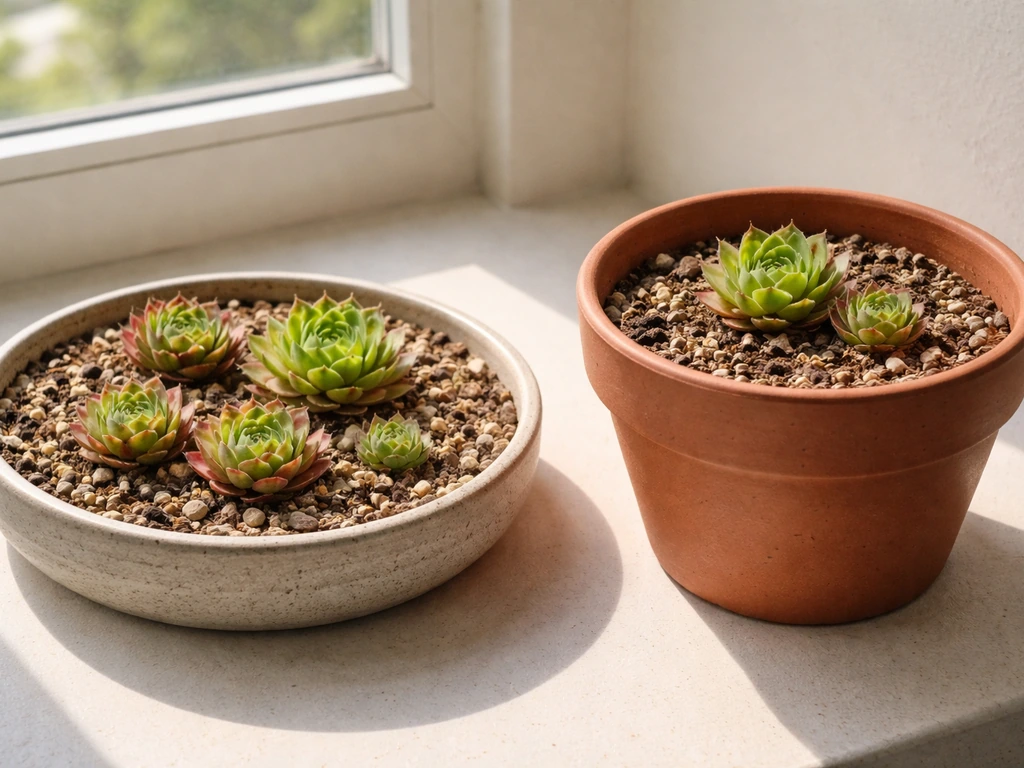
Shallow containers are ideal for Sempervivum. Growers specifically recommend a 'mum pan' style, which is wide and shallow rather than deep. This matches the plant's naturally shallow root system, keeps the root zone smaller, and means the soil dries out faster between waterings rather than staying wet at the bottom. Unglazed terracotta is a great material choice because it wicks moisture out through the walls. Whatever container you pick, it must have drainage holes. No exceptions. Decorative pots without holes create a reservoir of standing water at the bottom that will rot the roots every time.
One more thing worth knowing: dark-colored containers placed near a sunny window can get surprisingly hot, potentially hot enough to damage roots in a small pot. If you have a black or very dark pot, keep it away from direct radiant heat from the glass, or slip it inside a lighter-colored outer pot.
Watering and care schedule indoors
Indoor hens and chicks need far less water than most houseplants. The rule is simple: stick your finger an inch into the soil. If it feels moist at all, don't water. Wait until the top inch or two is fully dry before you water again. In a warm, bright window during spring and summer that might mean watering every 7 to 10 days. In a cooler room in winter, it could stretch to 3 to 4 weeks or longer.
When you do water, water thoroughly. Pour until water drains freely from the bottom, let it drain completely, and empty any saucers within 30 minutes. K-State Extension’s water-wise guidance for watering succulents notes that after you water, excess water should drain and you should let the plants fully dry out blank" rel="noopener noreferrer">excess water should drain after watering. Never let the pot sit in standing water. This 'drench and dry' approach is much better than giving small sips on a fixed schedule, which tends to keep the top layer slightly moist all the time, which is exactly what fungus gnats love.
Fertilizer is optional and minimal. If you want to feed them, a half-strength balanced liquid fertilizer once in spring and once in early summer is plenty. Skip fertilizing in fall and winter entirely.
Temperature, humidity, and winter adjustments
Sempervivum are cold-hardy plants outdoors, surviving well below freezing, but indoors they adapt reasonably well to typical home temperatures of 60 to 75°F (15 to 24°C). They handle a bit of warmth near a sunny window without complaint. What they don't love is being right next to a heat vent blowing dry air, which can desiccate the outer leaves faster than the roots can keep up.
Humidity is one area where indoors actually works in their favor. Sempervivum prefer low to moderate humidity, and the dry air inside most homes in winter is fine for them. If you're growing other tropicals alongside your succulents, don't mist or use a humidifier near the hens and chicks as the extra moisture encourages gray mold (Botrytis), which is a real indoor threat for these plants.
Winter is the trickiest season. Natural light drops, the plant's growth slows almost completely, and the temptation to keep watering 'just in case' is strong. Resist it. Pull back watering dramatically in winter, move the pot as close to your sunniest window as possible, and consider adding a grow light on a timer if your days are very short. The plants won't look exciting in December and January, and that's fine. They're resting.
Starting new plants from offsets indoors
One of the best things about hens and chicks is that the 'chicks' part of the name is literal. The mother rosette constantly produces small offset rosettes on short stolons around its base, and separating these to start new plants is very straightforward indoors.
- Wait until the offset (chick) has developed its own small root system and is at least a third of the size of the mother rosette. Pulling them off too early means they have little energy reserves.
- Gently tug the offset away from the stolon, or use clean scissors to cut it free close to the base.
- Set the offset in a shady, dry spot indoors for 3 to 5 days so the cut end dries and calluses over. This step is important. Planting a fresh cut directly into moist soil invites rot.
- Prepare a small shallow pot with a gritty propagation mix. Aim for a mix that is 50 to 70 percent grit (coarse sand or perlite) to help the new roots establish without sitting in wet media.
- Place the offset on top of or just barely nestled into the mix. Don't bury the rosette. Water lightly around it rather than soaking the mix.
- Keep the pot in bright indirect light for the first two weeks while roots establish, then move it to your sunniest spot.
- Resume normal watering once you feel slight resistance when you gently tug the plant, which means roots have anchored.
The mother rosette will die after it flowers, which is normal, but by that point she will have produced plenty of chicks to replace herself. A healthy indoor plant can generate 4 to 10 offsets in a single growing season.
Troubleshooting common indoor problems
| Problem | What it looks like | Fix |
|---|---|---|
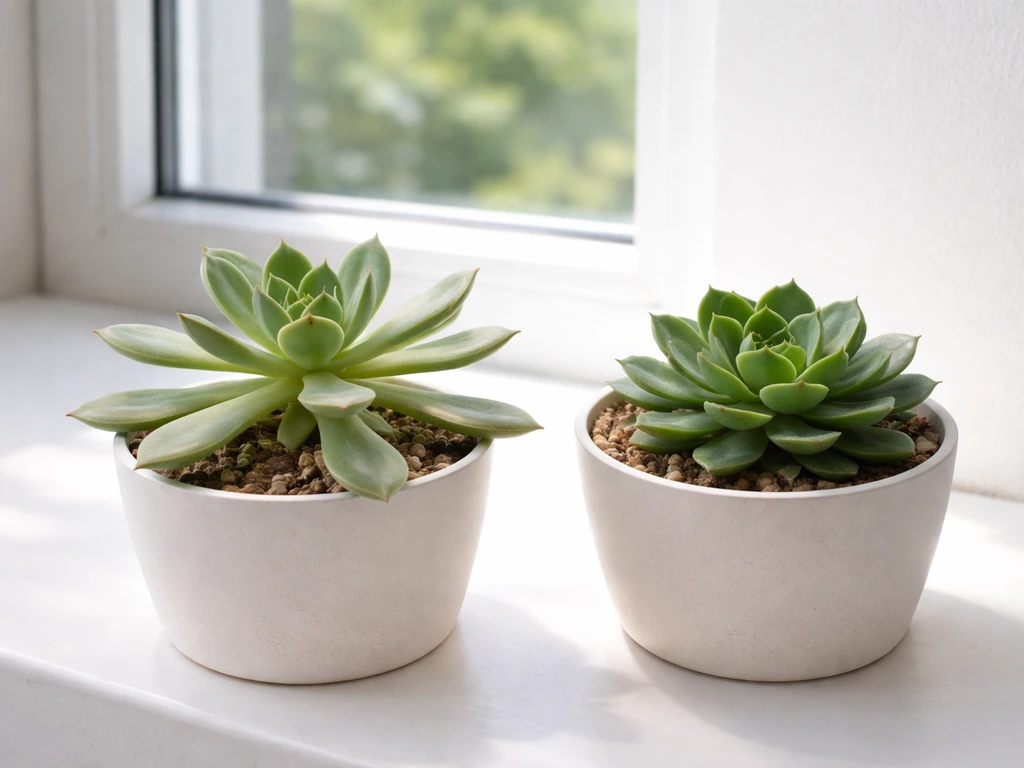
| Etiolation (stretching) | Rosette elongates, leaves spread wide and pale, loses tight compact shape | Move to stronger light immediately or add a grow light. Stretched growth won't revert but new growth will be compact. |
| Mushy leaves or mushy base | Soft, translucent, or discolored leaves from the center or bottom | Overwatering or poor drainage. Remove from pot, cut away rotted tissue, let it dry for 2 to 3 days, replant in fresh gritty mix, and hold water for a week. |
| Fungus gnats | Tiny flies hovering around soil surface | Let the soil dry out completely between waterings. Gnats breed in moist media. Water only when the soil is dry an inch or two down. |
| Mealybugs | White cottony clusters in leaf crevices or on roots | Dab visible clusters with a cotton swab dipped in rubbing alcohol. For root mealybugs, remove all soil from roots, rinse thoroughly, and repot in fresh mix. |
| Gray mold (Botrytis) | Gray fuzzy patches on leaves, especially in winter or high humidity | Improve airflow, reduce humidity near the plant, remove affected leaves, and reduce watering frequency. |
| Leaf drop or shriveling | Outer leaves dry and crisp | Some outer leaf loss is normal. If widespread, check that the plant isn't drying out too fast due to heat from a nearby vent or window glass. |
Is your home setup likely to work?
Be honest with yourself about your windows. If you have a true south-facing windowsill that gets unobstructed direct sun for most of the day, hens and chicks will probably do well for you. If you are wondering can hens and chicks grow inside, the answer is yes as long as they get enough light. If you want to know whether a bird of paradise can grow indoors, the key is matching its light, watering, and temperature needs to your home setup can bird of paradise grow indoors. If your best window is east-facing or shaded by trees or a building, invest in a simple LED grow light before you buy the plants rather than after you watch them stretch. The grow light is a $20 to $40 fix that makes the difference between a healthy tight rosette and a sad pale spiral.
The other immediate thing to fix is your container situation. If you only have deep pots and standard potting mix on hand right now, pick up a bag of perlite and a shallow clay pot with drainage holes before you start. Those two items cost less than five dollars and will prevent the most common indoor failure mode by a wide margin.
Compared to some other plants people try to grow indoors, like honeysuckle or holly, hens and chicks are genuinely more manageable as long as the light need is met. The same idea applies when you ask can you grow holly indoors, since light and consistent care make the biggest difference. If you’re wondering can you grow honeysuckle indoors, light, a trellis, and consistent watering are the keys to success honeysuckle or holly. They don't need humidity trays, they don't need regular pruning, and they reward neglect better than most. Get the light and drainage right, water less than your instincts tell you to, and these tough little rosettes will reward you with a whole colony of chicks before the end of the growing season.
FAQ
How do I tell if my hens and chicks are getting enough light indoors (before they start rotting)?
Watch for early “light deficit” signs like stretching (rosettes get taller), fading to a less vibrant color, and leaves spacing out (less tight rosette). If you see a sharp shadow or feel noticeable warmth from the sun or grow light, you are closer to the target. If not, adjust the plant closer or increase grow light hours.
Can I grow hens and chicks indoors year-round under a grow light instead of a window?
Yes, but keep the timing consistent, 12 to 14 hours daily is a good starting point. Use a fixed height (about 6 to 12 inches above the rosettes) and avoid leaving the light on 18 to 24 hours, since you still need a winter-like rest period when growth naturally slows.
What’s the safest way to water indoors when I’m not sure how dry the soil really is?
Use the finger test, but also lift the pot to check weight, dry soil should feel noticeably lighter. Water thoroughly only after the top inch or two is dry, then drain completely and empty any saucer. If you tend to overwater, switch from “small sips” to less frequent full drenches.
Do hens and chicks need a special potting mix, or will regular succulent soil work?
Regular potting mix is usually too water-retentive, especially in deeper pots. Even with “succulent soil,” you may need to cut it with extra perlite or coarse sand so the mix stays gritty and does not clump into a wet ball when squeezed. The key is drainage that dries quickly.
Why are my hens and chicks rotting even though I think I water correctly?
Most indoor rots come from standing water at the bottom (no drainage holes, or water left in a saucer) and soil that stays wet too long. Also check that the rosette base is not sitting in water during watering. If drainage is slow, move to a shallower container and increase aeration with perlite.
Is misting or using a humidifier okay if my home air is very dry?
Usually no. Sempervivum prefer low to moderate humidity, and extra moisture on or around the leaves can encourage mold problems like gray mold (Botrytis). If you must raise humidity for other plants, keep it separated from the hens and chicks and avoid misting directly.
Can I put hens and chicks near a heater vent or fireplace for extra warmth?
Avoid it. Even if temperatures look right, dry forced air can desiccate the outer leaves faster than the roots can keep up, leading to shriveled tips and an untidy look. Keep them near bright light, but away from direct vent airflow.
What temperature range is actually safe for indoor hens and chicks?
They do fine in typical home temperatures, roughly 60 to 75°F (15 to 24°C). Just avoid placing them in cold drafts from windows at night or letting the pot sit against very cold glass, which can stress the roots. If your indoor nights drop a lot, consider a grow light and a slightly warmer spot.
How often should I repot or refresh the soil indoors?
Repot only when needed, usually when the plant has filled the shallow container with offsets or the soil stays wet longer than it used to. When repotting, use the same shallow, fast-draining setup and let any damaged roots dry for a day before watering lightly to prevent immediate rot.
When should I separate the chicks from the mother rosette indoors?
Separate when the offsets form their own compact rosettes and have begun to look self-sufficient, typically during spring to early summer growth. Do not rush if they are tiny and loosely attached, waiting a bit gives them a better chance to root without collapsing.
Are brown leaves always a watering issue?
Not always. Older outer leaves can brown as the plant reallocates energy, especially in winter. Red flags include browning that spreads from the base upward, a mushy texture, or foul smell, which points to rot. If only the oldest leaves are dying off gradually, it may be normal rest or minor stress.
Do hens and chicks need fertilizer indoors, and what mistakes should I avoid?
Fertilizer is optional. If you choose to feed, use half strength once in spring and once in early summer, then stop in fall and winter. Overfertilizing is a common mistake indoors, it can cause softer growth that holds moisture longer and increases rot risk.