
Yes, potato vine (sweet potato vine, Ipomoea batatas) can absolutely grow indoors, and it can look spectacular doing it. Give it a warm room, a bright window, and a well-draining pot and you will have trailing vines within weeks. It is not the easiest houseplant you will ever own because it craves more light and warmth than most apartments naturally provide, but it is very doable if you set things up right from the start.
Can Potato Vine Grow Indoors? How to Grow It Successfully

James Hartwell
5 May 2026
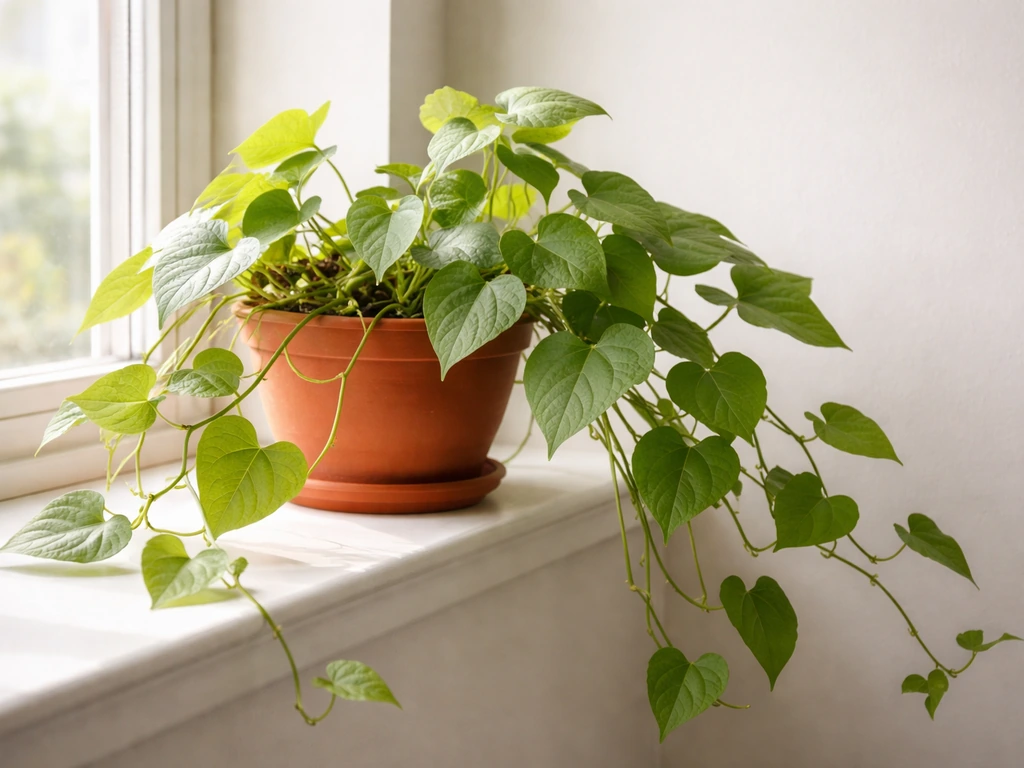
First, let's be clear about which "potato vine" we're talking about
This is worth a quick clarification because the name "potato vine" can mean a couple of different things. The plant people most commonly grow indoors as a trailing ornamental or edible is sweet potato vine (Ipomoea batatas), a vigorous annual vine in the morning glory family. That's the one with the bold chartreuse, purple, or bronze leaves you see spilling out of hanging baskets. The other option is a true potato plant (Solanum tuberosum), which produces a scraggly vine above ground, but nobody really grows that one intentionally as an indoor houseplant. This article is focused entirely on Ipomoea batatas, the sweet potato vine, which is the plant almost everyone is searching for when they ask this question.
Light is the make-or-break factor indoors
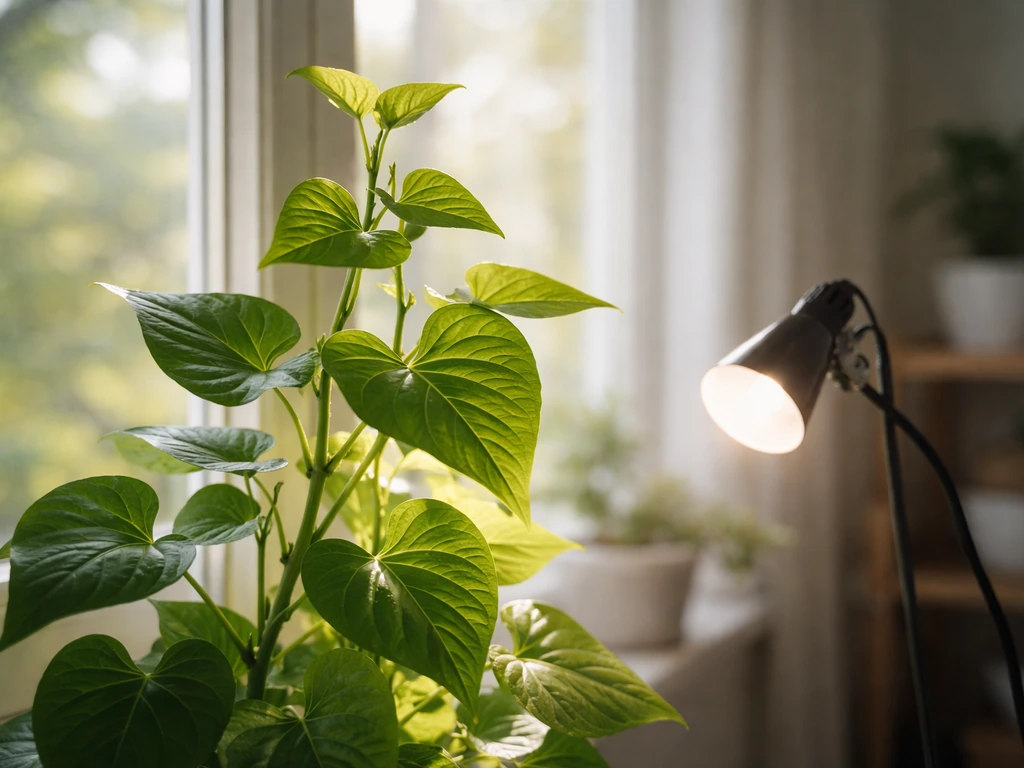
Sweet potato vine is a sun-lover in the truest sense. Outdoors it thrives in full sun. Indoors, that means you need the brightest spot in your home, ideally a south-facing or west-facing window that gets at least 6 hours of direct or near-direct light per day. An east-facing window can work but expect slower, leggier growth. A north-facing window will not cut it at all. I have tried it in a north-facing apartment window and ended up with pale, stretched stems reaching desperately toward the glass.
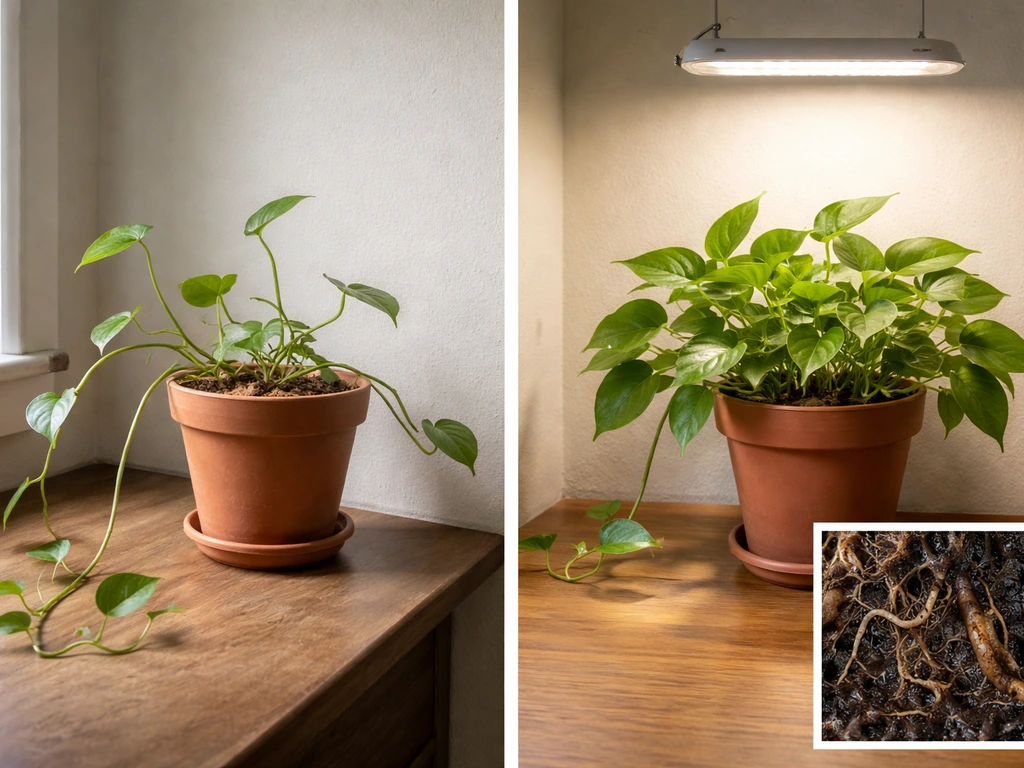
If your windows are limited, a grow light is not a luxury here, it is basically a necessity for keeping growth compact and colorful. A full-spectrum LED grow light positioned 6 to 12 inches above the plant and running 14 to 16 hours per day will substitute well for a strong window. The leggy, washed-out look that frustrates so many indoor growers almost always comes back to insufficient light, not anything more mysterious than that.
How to start your sweet potato vine indoors
You have three practical starting methods, and each one works a little differently depending on what you have on hand.
Starting from a grocery store sweet potato (the water method)
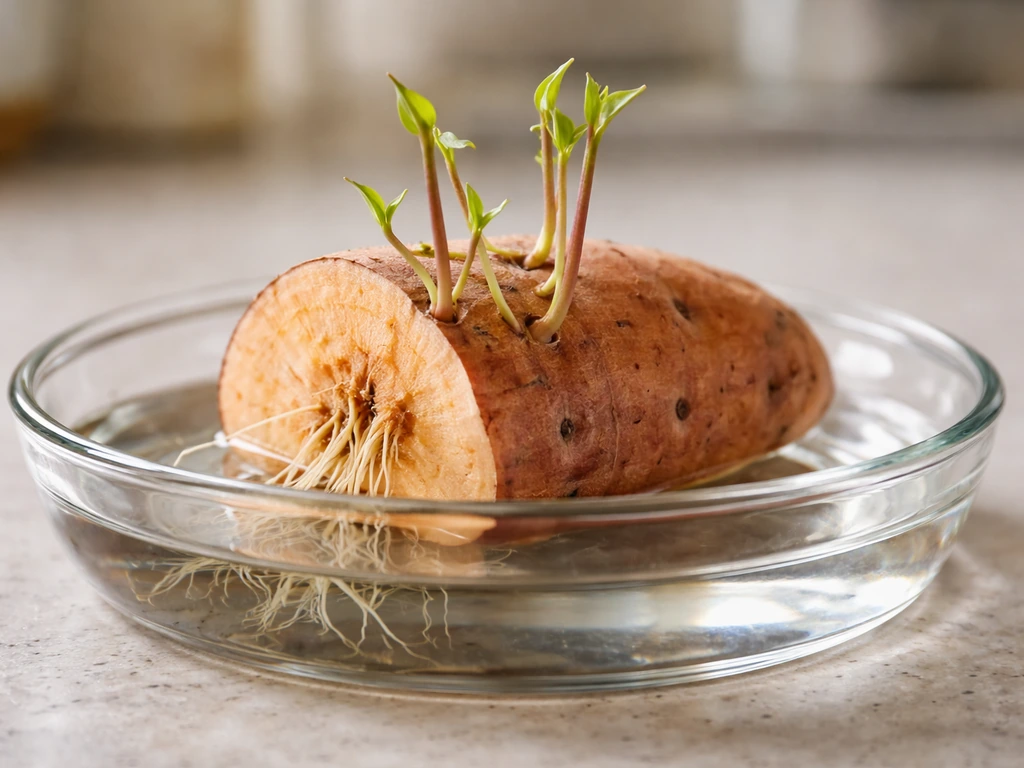
This is the classic approach that many people remember from school science projects. Slice a sweet potato in half, set the cut side down in a shallow container with about half an inch of water, and place it somewhere warm. Within a few weeks you will see slips, which are small rooted vine cuttings, emerging from the skin. Once the slips reach 6 to 12 inches long, twist them off gently at the base.
Before potting them up, recut the bottom of each slip about half an inch to an inch above the base end. This fresh cut removes any potentially diseased tissue and encourages new roots to form quickly. One decent-sized sweet potato can produce a surprising number of slips, sometimes dozens over two or three harvests.
Starting from cuttings (slips you buy or take from an existing plant)
If you already have a potato vine or can buy slips, this is the fastest route. Look for cuttings that are 6 to 12 inches long with at least 5 to 8 nodes (the bumps along the stem where leaves attach). Trim the bottom end cleanly, remove any leaves from the lower half of the stem, and either root them in water or plant them directly into moist potting mix. Rooting in water is more visual and satisfying but potting directly into soil tends to produce a stronger root system faster.
Starting from a tuber
You can also plant a whole or partial sweet potato tuber directly in a container and let it sprout vines in place. Bury it just below the surface of moist potting mix and keep the soil warm. This works well but takes more time to get visible vine growth than the slip method. Keep the soil at around 75 to 80 degrees Fahrenheit to speed things up. Below that temperature, slip production slows down dramatically and can take 8 to 10 weeks or more.
Pot size, soil mix, and planting depth
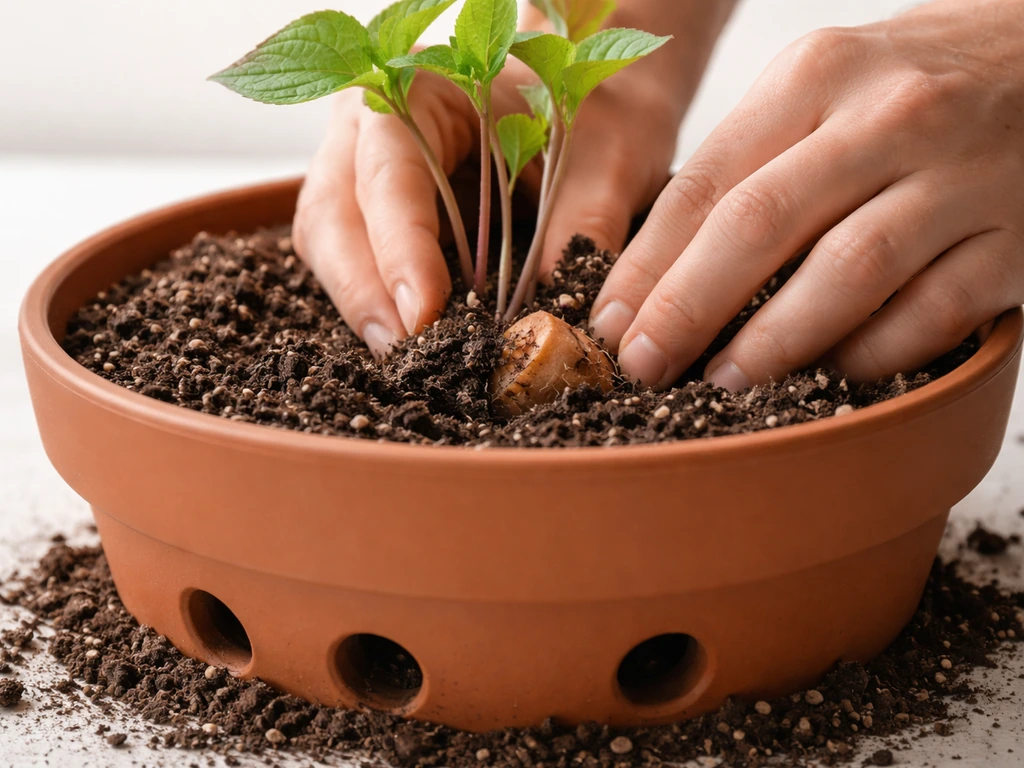
Sweet potato vine has an ambitious root system. For a single plant or a small cluster of slips, start with at least a 12-inch container. If you want a really lush trailing display or plan to grow multiple plants together, a 14 to 16-inch pot or a large hanging basket is a smarter choice. The bigger the container, the less frequently you will stress about watering and the more vine growth you will get.
Drainage is non-negotiable. Use a pot with generous drainage holes and skip any decorative pot without them unless you are using it only as a cachepot with a well-drained liner inside. For soil, sweet potato vine does best in a light, fast-draining mix. A blend of standard potting soil cut with perlite (roughly 2:1 ratio) works really well. Sweet potatoes naturally prefer sandy, well-aerated soils, so the perlite mimics that environment while still holding enough moisture. Aim for a slightly acidic to neutral pH, anywhere from 5.5 to 6.8 is fine, which most quality potting mixes fall into naturally.
Plant your slip or cutting so that the bottom two or three nodes are buried in the soil, leaving the leafy upper portion exposed. For a whole tuber, a depth of 2 to 3 inches below the soil surface is plenty.
Watering and feeding indoors
Watering
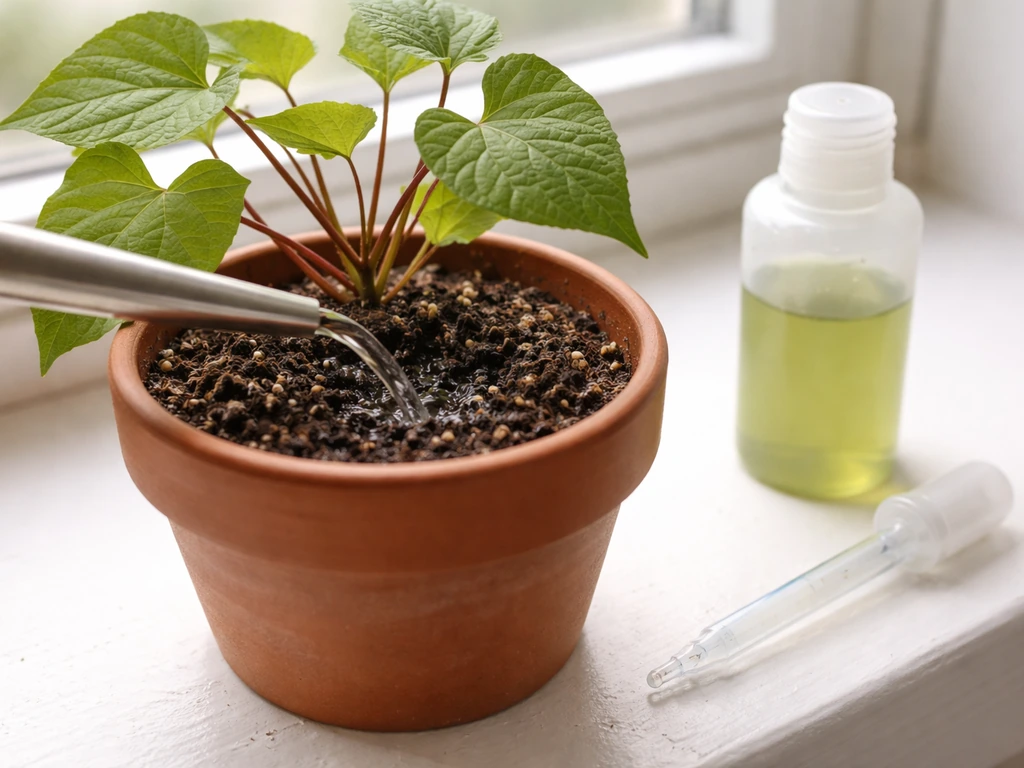
The number one killer of indoor sweet potato vine is root rot from overwatering, especially in lower-light conditions where the plant is not actively growing fast enough to drink up what you give it. A good rule of thumb: stick your finger an inch or two into the soil, and only water when that top layer feels dry. In a warm, bright spot the plant may need water every 3 to 4 days in summer.
Near a cooler window or in a shadier room, that interval can stretch to once a week or longer. When you do water, water thoroughly until it drains from the bottom, then let the pot dry out appropriately before the next round. Never let it sit in standing water.
Feeding
For the first couple of weeks after planting a new slip, go easy on fertilizer and focus on root establishment. A diluted starter fertilizer with a higher middle number (phosphorus) is helpful early, something like a 15-30-15 formula mixed at roughly 1 oz per gallon, applying just a few ounces per plant.
Once the vine is actively growing and has settled in, switch to a balanced liquid fertilizer at half the recommended strength every two to three weeks during the active growing season. Avoid going heavy on nitrogen because that tends to push a lot of vine growth at the expense of root development, and it can contribute to yellowing older leaves when the plant gets too much. Ease off feeding almost entirely in winter if growth slows.
Temperature, airflow, and humidity
Sweet potato vine is a tropical plant through and through. It wants warmth, and it will tell you clearly when it is not happy. Keep indoor temperatures between 65 and 85 degrees Fahrenheit for best growth. The sweet spot for active growing is closer to 75 to 80 degrees, which is also the target temperature for getting strong slip production from a sprouting tuber. Critically, do not let temperatures drop below 55 degrees Fahrenheit. Below that threshold, the plant risks chilling injury, which makes it susceptible to rot and rapid decline, especially if you keep watering a plant that has essentially gone into shock.
On humidity, sweet potato vine appreciates more moisture in the air than a typical dry heated home provides, but it does not need rainforest levels. Average indoor humidity of 40 to 60 percent is fine for established plants. During propagation or rooting, higher humidity around 70 to 90 percent helps cuttings establish. You can achieve that by loosely covering a cutting tray with a clear plastic dome or bag, just make sure there is no heavy condensation dripping back onto the stems since that invites rot. Remove the dome once you see new growth.
Airflow is worth thinking about too. Good air circulation around the leaves and stems helps prevent the fungal issues that can develop in warm, stagnant indoor air. Avoid pushing the plant into a tight corner with no air movement. A gentle fan running occasionally nearby works well if your space tends to feel stuffy. Check the undersides of tender new growth regularly for spider mites and aphids, and treat early with a strong water spray or insecticidal soap as needed (see detailed guidance) Ornamental Sweet Potato Vine Care | Leafy Zen.
Pruning, training, and propagating more plants
Sweet potato vine grows fast. Indoors, fast growth is both the reward and the challenge. The vines can easily get leggy (long stems with sparse leaves) if light is insufficient, but even in ideal conditions they will eventually outgrow their space. Regular pruning keeps the plant compact, bushy, and healthy.
Pinch or cut back long stems just above a leaf node whenever vines start looking stretched or bare. Do this throughout the growing season without guilt. The plant responds by pushing out new lateral growth from the cut point, which gives you that full, trailing look you are after rather than one long stringy vine.
For training, sweet potato vine is naturally a trailer so it looks gorgeous in hanging baskets or on a shelf where the vines can cascade down. If you want it to climb or drape in a particular direction, guide the stems around a small trellis, moss pole, or along a shelf edge. The stems are flexible and easy to redirect while young.
Every stem you prune is a potential new plant. Take 6-inch cuttings from pruned stems, remove the lower leaves, and root them in water or directly in moist potting mix. They root quickly in warm conditions, often within 1 to 2 weeks. This is a great way to keep a steady supply of plants going or share them with friends.
Common indoor problems and how to fix them
| Problem | Likely Cause | Fix |
|---|---|---|
| Leggy, stretched stems | Insufficient light | Move to a brighter window or add a grow light 6–12 inches above the plant, running 14–16 hours per day |
| Yellow leaves (older, lower leaves) | Nitrogen deficiency or overwatering | Check soil moisture first; if not overwatered, apply a balanced fertilizer at half strength |
| Yellow leaves (widespread, new and old) | Overwatering, root rot, or virus | Reduce watering immediately, check roots for rot, repot in fresh sterile mix if roots are mushy |
| Wilting despite moist soil | Root rot from excess water or cold temperatures | Check root health; if roots are brown and soft, trim affected roots, repot in fresh well-draining mix, and move to a warmer spot |
| Root rot | Overwatering plus poor drainage or cold soil | Improve drainage, allow soil to dry between waterings, keep temps above 60°F |
| Spider mites | Low humidity, dry conditions | Mist leaves and wipe with a damp cloth; apply neem oil or insecticidal soap spray weekly until clear |
| Aphids | New growth attracted to soft tissue | Rinse off with water, then apply insecticidal soap; check undersides of leaves |
| Mealybugs | Indoor plants without natural predators | Dab with rubbing alcohol on a cotton swab; apply neem oil spray; inspect regularly since they spread quickly indoors |
| Slow or stalled growth | Temperature too low or insufficient light | Ensure room temps are 70–80°F and boost light levels |
Root rot deserves special attention because it is fast and brutal. Infected tissue can decay in as little as three days under warm, wet conditions. The fix is always the same: catch it early by checking roots when the plant looks off, trim any soft brown roots back to healthy tissue, dust cuts with cinnamon (a natural antifungal), and repot into fresh sterile potting mix. Never reuse old soggy soil from a rotted plant.
What success actually looks like
A healthy indoor sweet potato vine produces bold, colorful leaves on long trailing stems that cascade naturally from the pot. If you are also wondering about other houseplants with similar care needs, you may be wondering can you grow silvervine indoors too. In a bright warm spot, you can expect noticeable new growth every week during the active season. The colors stay vibrant, the stems stay firm, and the plant just keeps pushing out new vines. For pest outbreaks like mealybugs, use insecticidal soaps or neem and be sure to treat all leaf surfaces (including undersides) weekly until the infestation is gone (GardeningKnowHow) blank" rel="noopener noreferrer">GardeningKnowHow: How to Get Rid of Mealybugs Indoors.
You probably will not get edible tubers indoors under typical home conditions, and flowering is unpredictable, but honestly the foliage alone is the whole point for most people growing it inside. If you are wondering about growing Carolina reapers indoors instead, the light, warmth, and potting needs are very different from sweet potato vine.
If you are curious about how sweet potato vine compares to other vigorous indoor vines, purple sweet potato vine follows the same care principles and is especially striking indoors. Vinca vine and turtle vine are worth looking at if you want lower-maintenance alternatives that are more forgiving in lower-light setups. Virginia creeper is related in spirit but does not make a great indoor plant at all, so sweet potato vine is a much better choice if you want that lush trailing aesthetic inside your home.
Your next steps if you want to start today
- Identify your brightest window or set up a full-spectrum LED grow light before you bring any plant home.
- Buy a sweet potato from the grocery store or source slips from a garden center. Organic sweet potatoes from the grocery store tend to sprout slips more reliably since they have not been treated to suppress sprouting.
- Start slips in water using the half-potato method, or buy pre-rooted slips to skip the waiting period entirely.
- Prepare a pot at least 12 inches wide with drainage holes and fill it with a 2: 1 mix of potting soil and perlite.
- Keep the plant in a room that stays between 70 and 80 degrees Fahrenheit. If your home runs cold, place the pot on a seedling heat mat set to around 75 to 80 degrees.
- Water only when the top inch or two of soil is dry, and feed with diluted balanced fertilizer every 2 to 3 weeks once the plant is established.
- Prune regularly and root the cuttings to multiply your plants for free.
FAQ
Can potato vine grow indoors without a south or west window?
Yes, but plan on using a grow light. A north-facing window usually cannot provide enough intensity, and the plant will become pale and leggy even if it is still alive. If you cannot reach at least the equivalent of 6 hours of near-direct light, position a full-spectrum LED 6 to 12 inches above and run it 14 to 16 hours daily.
How do I tell if I’m overwatering my indoor potato vine?
Look for consistently wet soil, yellowing leaves, and soft, dark roots when you gently check the drainage. The simplest routine is watering only after the top 1 to 2 inches of mix dry out, then watering thoroughly until it drains, with no standing water in the saucer.
What size pot is best if I want multiple vines in one container?
For a lush “hanging basket” look, use a larger container so moisture stays more stable and roots have room to breathe. A single plant or a few slips do fine in at least a 12-inch pot, but multiple plants together usually do better in a 14 to 16-inch basket to reduce how often you have to adjust watering.
Should I fertilize immediately after potting slips?
For the first couple of weeks, hold back or use only a mild starter feed. Focus on root establishment rather than pushing leaf growth, a diluted phosphorus-forward mix works best early. Once active growth is underway, switch to a balanced liquid fertilizer at half strength every 2 to 3 weeks.
My potato vine is getting leggy even with a window. What’s the most common cause?
Insufficient light. Even if the plant looks green, low light causes long stems with fewer leaves. Try raising the light intensity or hours first, then only adjust pruning and turning the pot toward the brightest side to keep growth even.
Can I grow potato vine indoors in water long term, or do I need soil?
You can root cuttings in water for convenience, but long-term water culture often leads to weak or unstable growth compared with potting mix. Once roots are formed, transferring to a fast-draining mix typically gives sturdier roots and reduces rot risk from stagnant water conditions.
Why are my slips not sprouting or are taking too long?
Temperature is the usual culprit. Keep the rooting environment around 75 to 80°F for faster slip production, and avoid prolonged exposure below the mid-60s. If you’re using room-temperature conditions, expect slower growth, sometimes 8 to 10 weeks with tubers.
Do I need high humidity to grow indoor potato vine?
Not for established plants, average indoor humidity around 40 to 60% is fine. Higher humidity, roughly 70 to 90%, is mainly useful during propagation. If you cover cuttings, prevent condensation from dripping back onto stems, remove the cover once new growth appears.
Is it safe to prune a lot, and can I reuse cuttings for new plants?
Pruning is not only safe, it is encouraged indoors to maintain a dense look. Cut above a leaf node, and you can root the removed stem sections. Trim lower leaves, then root in water or moist mix, warm conditions usually lead to rooting in 1 to 2 weeks.
What should I do if I suspect root rot?
Act immediately. Remove the plant from its pot, inspect roots, trim any soft brown sections to healthy tissue, dust cuts with cinnamon, and repot into fresh sterile, well-draining mix. Do not reuse old soggy soil, it can reintroduce pathogens.