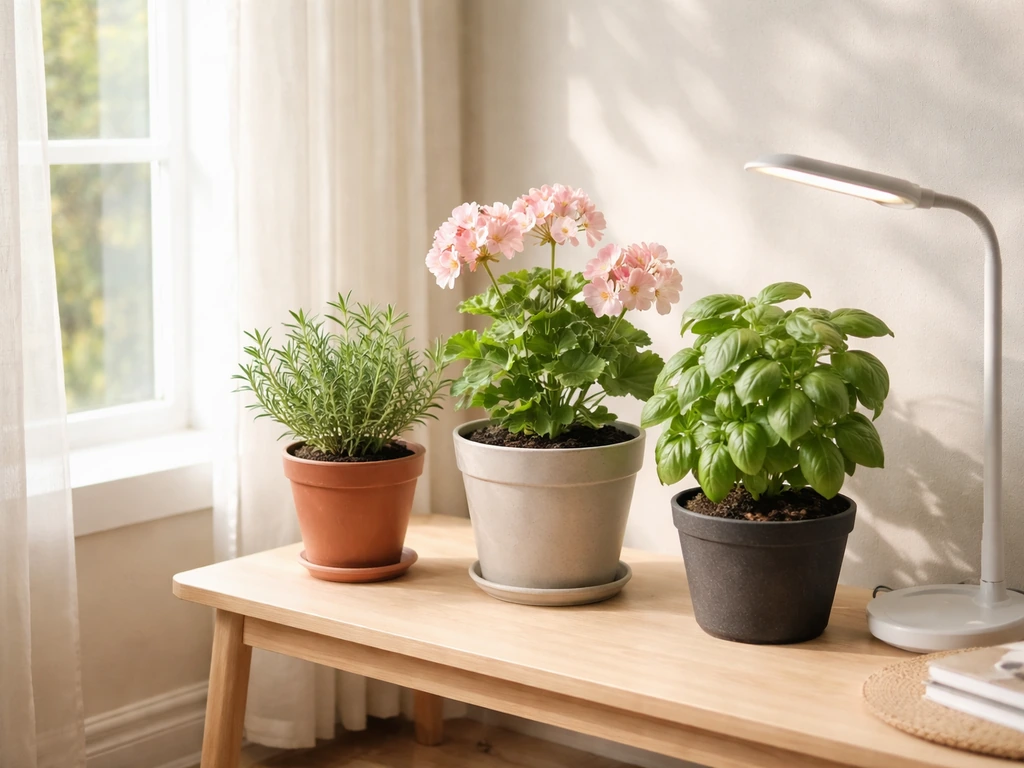
Yes, many outdoor plants can grow indoors, and some genuinely thrive there long-term. Herbs like basil, chives, and parsley, flowering plants like geraniums and fuchsias, and compact woody plants like dwarf citrus and rosemary can all live successfully inside your home, provided you match them to your available light, give them the right temperature range, and bring them in gradually rather than all at once. The catch is that not every outdoor plant makes the cut. Plants that need full-strength sun, cold dormancy periods, or large root systems will struggle inside no matter how much effort you put in. The ones that work are the ones whose natural preferences happen to line up with what your home can actually offer.
Outdoor Plants That Can Grow Indoors: A How-To Guide
James Hartwell
30 Apr 2026
How to choose outdoor plants that will actually survive indoors
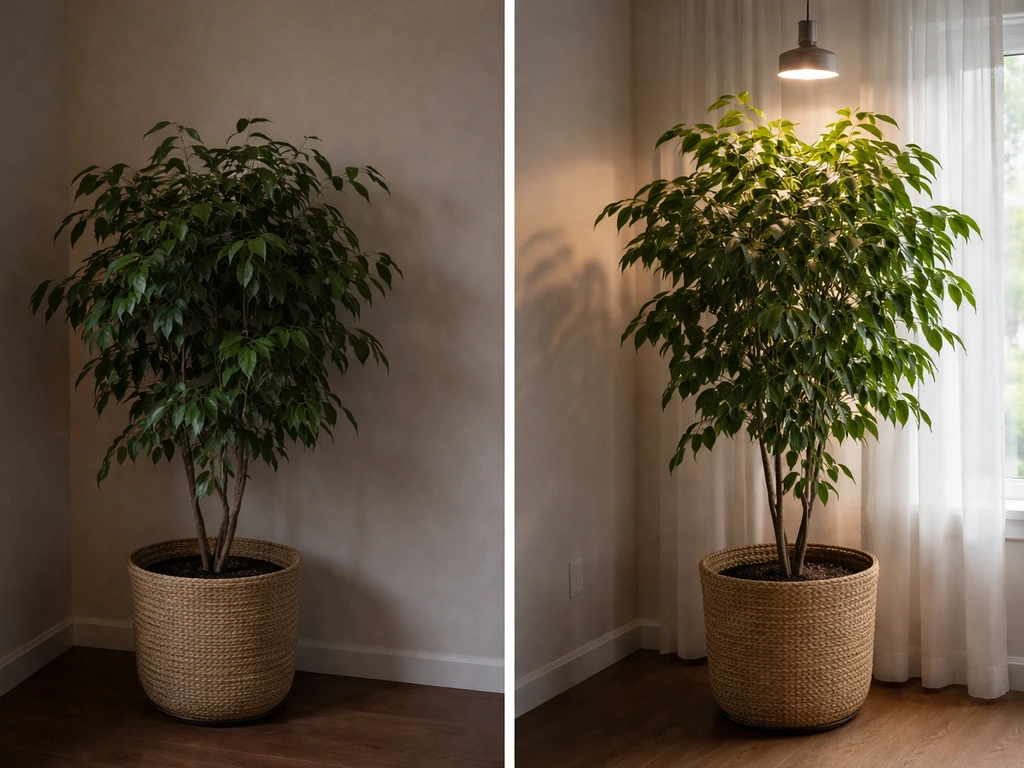
The single biggest reason outdoor plants fail indoors is inadequate light. Iowa State University Extension and Outreach notes that for most indoor gardeners, light is the most limiting environmental factor for growing houseplants light is the primary limiting factor for indoor plant growth. Virginia Cooperative Extension and the University of Kentucky both flag this as the primary limiting factor for indoor plant growth. Before you carry anything through the door, honest assessment of your windows is non-negotiable. A south-facing window gets the most light in the northern hemisphere and is your best option for herbs and citrus. East and west windows work well for shade-tolerant plants. North-facing windows are genuinely low-light and limit you to plants that are comfortable in dim conditions. Window glass itself reduces light intensity, so even a bright-looking room may not deliver what an outdoor plant expects.
If you want to get precise about it, the University of Maine Extension uses a PPFD-based framework (Photosynthetic Photon Flux Density) to measure light intensity. Most herbs and vegetative plants need roughly 100 to 500 PPFD to grow well indoors. You can measure this with an inexpensive light meter app or a dedicated PAR meter. But honestly, the practical shortcut is this: if you can comfortably read a book in that spot on a winter afternoon without turning on a lamp, you have at least marginal light. If you want the fastest growth, focus on light levels you can match consistently and choose varieties known to handle indoor conditions well grow fast indoors. If you need a lamp on by 2 p.m., most outdoor plants will sulk.
Beyond light, think through these factors before choosing a plant to bring inside:
- Temperature: Most outdoor plants brought indoors prefer 60 to 75°F during the day and tolerate a slight dip at night. The University of Maryland Extension uses 60°F night temperatures as the threshold trigger for moving plants. If your home drops below 50°F near drafty windows in winter, sensitive plants like basil or citrus will suffer.
- Photoperiod: Day length influences growth cycles and dormancy. Purdue Extension notes that day-length cues drive dormancy in many plants, which means some outdoor plants naturally want to slow down or rest in winter even if you keep them warm.
- Space and growth habit: A compact dwarf lemon stays manageable on a sunny windowsill. A butterfly bush does not. Choose plants that are naturally small or can be kept that way with regular pruning.
- Dormancy requirements: Some plants, like dahlias and fuchsias, actually benefit from a rest period indoors rather than continued active growth. Fighting a plant's natural dormancy is a losing battle.
- Season: Fall is the ideal time to transition outdoor plants inside, before the first frost but after summer heat has passed. Timing matters as much as technique.
The best outdoor plants to grow indoors (by type)
Edible herbs
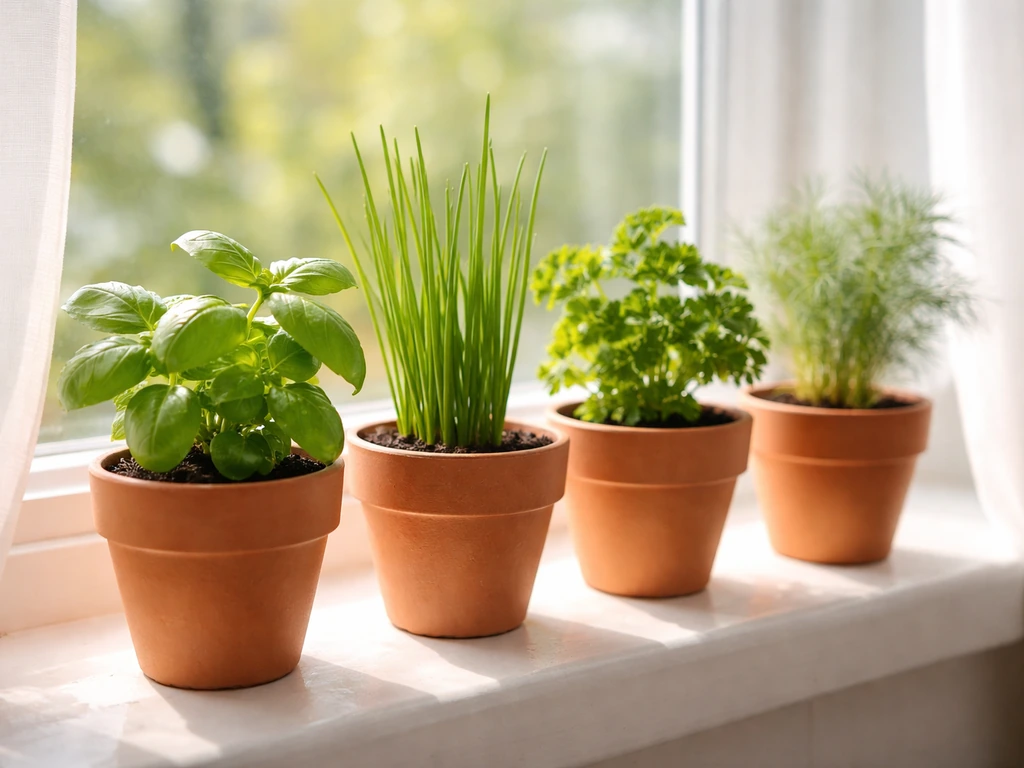
Herbs are the most forgiving category for indoor growing, and the University of Minnesota Extension specifically highlights basil, chives, parsley, cilantro, and dill as solid indoor candidates. They're compact, useful, and most of them don't need blazing hot sun to survive. That said, Oregon State University Extension is clear that window glass limits available light and that growth will be noticeably slower indoors than outside. Your herbs will probably look a little leggier than their outdoor counterparts. That's normal. Here's what each one needs:
| Herb | Light Needed Indoors | Key Indoor Tip |
|---|---|---|
| Basil | Bright, south-facing window or grow light | Very sensitive to cold drafts; keep away from air conditioning vents and cold glass |
| Chives | Moderate to bright light; tolerates east window | One of the easiest herbs indoors; let soil dry slightly between waterings |
| Parsley | Moderate light; east or west window works | Slow-growing indoors but reliable; harvest outer stems to encourage new growth |
| Cilantro | Bright light; south or west window | Bolts quickly in heat; keep in a cooler spot (65–70°F) to extend harvest |
| Rosemary | Bright light; south window; good airflow essential | Hates waterlogged soil and stagnant air; a small fan helps prevent mold and fungal issues |
| Mint | Moderate light; east or west window | Spreads aggressively, so keep in its own container; stays compact indoors |
Flowering plants
Geraniums and fuchsias are the two outdoor flowering plants most commonly brought indoors with success. Iowa State University Extension covers geraniums in depth, noting that leaf drop indoors is a sign of insufficient light. A south-facing window gives them the best chance at staying actively growing through winter. Alternatively, you can follow a cooler-storage approach: put them in a cool, humid basement environment around 35 to 45°F and let them semi-dormant through winter, then bring them back to light in late winter for revival. Fuchsias respond better to dormancy. Both the Chicago Botanic Garden and Garden Design advise letting fuchsias rest and slide into dormancy when brought indoors during cold weather rather than trying to keep them actively growing and blooming. Cut them back, water sparingly, and store them somewhere cool and frost-free. You'll get far better results in spring this way.
- Geraniums: Bright indoor light or cool semi-dormant storage; overwatering is the most common killer
- Fuchsias: Best overwintered in dormancy; cool, frost-free spot; minimal water; prune back before storing
- Begonias (tuberous): Similar to fuchsias; University of Alaska Fairbanks Extension recommends dormant storage for tuberous types through winter
- Impatiens: Can survive indoors in moderate light but expect reduced flowering; treat as a temporary indoor plant rather than a long-term resident
Compact shrubs and trees
Dwarf citrus trees (meyer lemon, calamondin, dwarf lime) are the standout success story in this category. Wisconsin Horticulture Extension is specific: citrus needs bright light indoors, and the same source notes they can go back outside once temperatures are consistently above 50°F. Indoors, a south-facing window is essentially mandatory, or you'll need to supplement with a grow light. Expect slower fruiting indoors, but a healthy tree will still produce. Dwarf olive trees and dwarf pomegranates also work reasonably well with bright indoor light. Bay laurel (used in cooking) handles lower light better than most and is a good choice if your windows aren't south-facing.
How to move outdoor plants inside without stressing them out
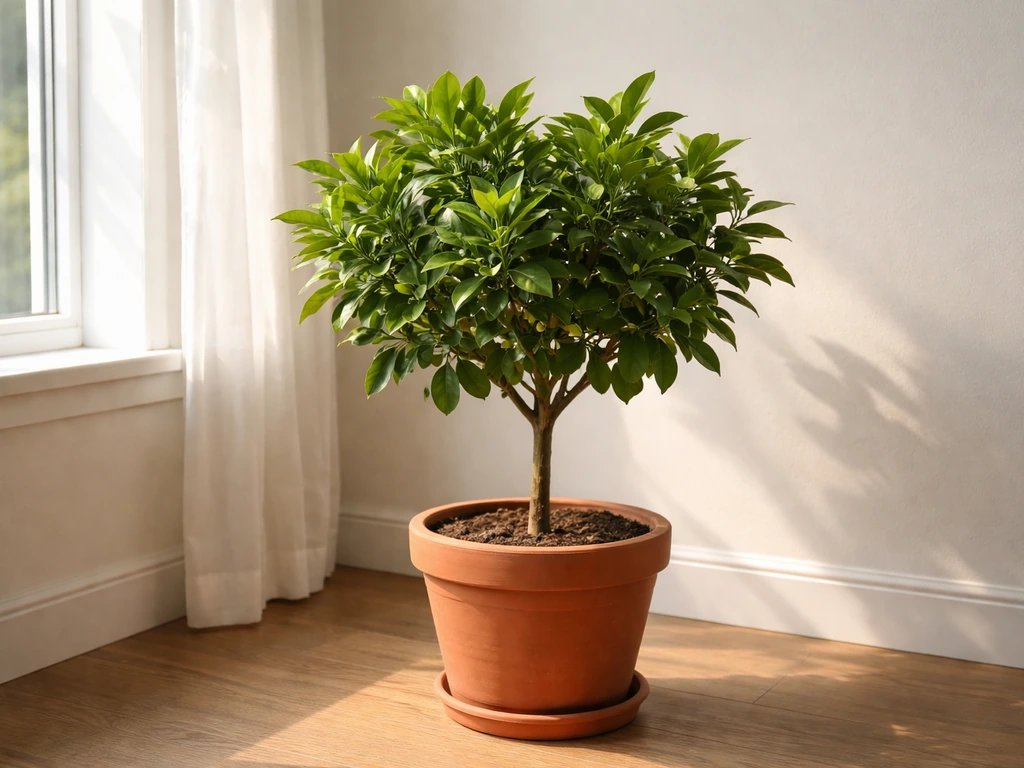
Abrupt transitions stress plants hard. A plant that spent all summer in direct outdoor sun is not prepared for a dim living room, and the shock can cause significant leaf drop, wilting, or even death. Acclimation (often called hardening off in reverse) is how you prevent that. Penn State Extension defines hardening-off as gradually exposing plants to full sun, wind, and cool nights over about 10, 14 days, and it advises avoiding tender seedlings outdoors on windy days or when temperatures are below 45°F hardening off as gradually exposing plants to full sun, wind, and cool nights over about 10–14 days. Clemson Extension recommends timing the move so that outside and inside temperatures are roughly the same, which typically means moving in early to mid fall before the heat turns on indoors. UC ANR suggests a 7 to 10 day gradual transition, and the University of Alaska Fairbanks Extension specifically notes that plants need to adjust to differences in temperature, UV intensity, and wind exposure between indoor and outdoor environments.
- Start 7 to 10 days before the intended move-in date. Begin by bringing the plant inside for just a few hours each day, then returning it outside.
- Gradually increase indoor time each day until the plant is spending nights inside too.
- Before the final move indoors, inspect the plant thoroughly. Check under leaves, along stems, and in the top inch of soil for pests.
- Treat the plant with insecticidal soap spray on all leaf surfaces (top and bottom), stems, and the top of the soil, then let it dry. Clemson Extension recommends this specifically to avoid bringing outdoor bugs indoors.
- If possible, keep the newly moved plant isolated from your other houseplants for two weeks to catch any hitchhiking pests before they spread.
- Place the plant in your brightest available window first. You can move it to a less-ideal spot later if needed, but starting bright gives the plant the best chance to adjust.
- Hold off on fertilizing for the first three to four weeks indoors. The plant is already stressed from the transition; extra nutrients won't help and may cause further issues.
Indoor care: what actually keeps these plants alive
Watering
Overwatering kills more indoor plants than anything else, and outdoor plants brought inside are especially vulnerable because they stop growing as fast and use less water than you expect. If you’re aiming for exotic plants you can grow indoors, the same watering logic matters even more because they often slow down quickly when light levels drop outdoor plants brought inside. Oregon State University Extension's guidance is simple and reliable: water thoroughly, but only when the soil surface is dry to the touch. For most plants indoors, this means watering once or twice a week in summer and sometimes as little as once every 10 to 14 days in winter. Always water until it drains from the bottom, and never leave plants sitting in standing water in a saucer.
Fertilizing
Plants need far less fertilizer indoors than they do outside, especially in winter when growth slows. A balanced liquid fertilizer (something like 10-10-10) at half the recommended dose, applied monthly during spring and summer, is plenty for most herbs and flowering plants. Skip fertilizing entirely from late fall through late winter unless you're using grow lights and the plant is actively producing new growth. Over-fertilizing stressed plants causes salt buildup and can scorch roots.
Pruning and pinching
Regular light pruning keeps indoor plants from getting leggy and encourages bushier, more productive growth. For herbs, pinch off flower buds as soon as you see them to extend the harvest period. For flowering plants like geraniums, remove dead flowers and any yellowing leaves promptly. For compact shrubs and trees, prune selectively to maintain shape and size, ideally in early spring before new growth kicks in.
Humidity and airflow
Most homes in winter run at 30 to 40% relative humidity, which is drier than most outdoor plants prefer. Grouping plants together raises local humidity slightly. A small humidifier near your plant area helps significantly. For rosemary and other Mediterranean herbs that are prone to mold and fungal issues in stagnant air, a small fan running on low nearby makes a real difference. Keep plants away from heating vents and radiators, which create hot dry air pockets that dehydrate foliage fast.
Common indoor pests
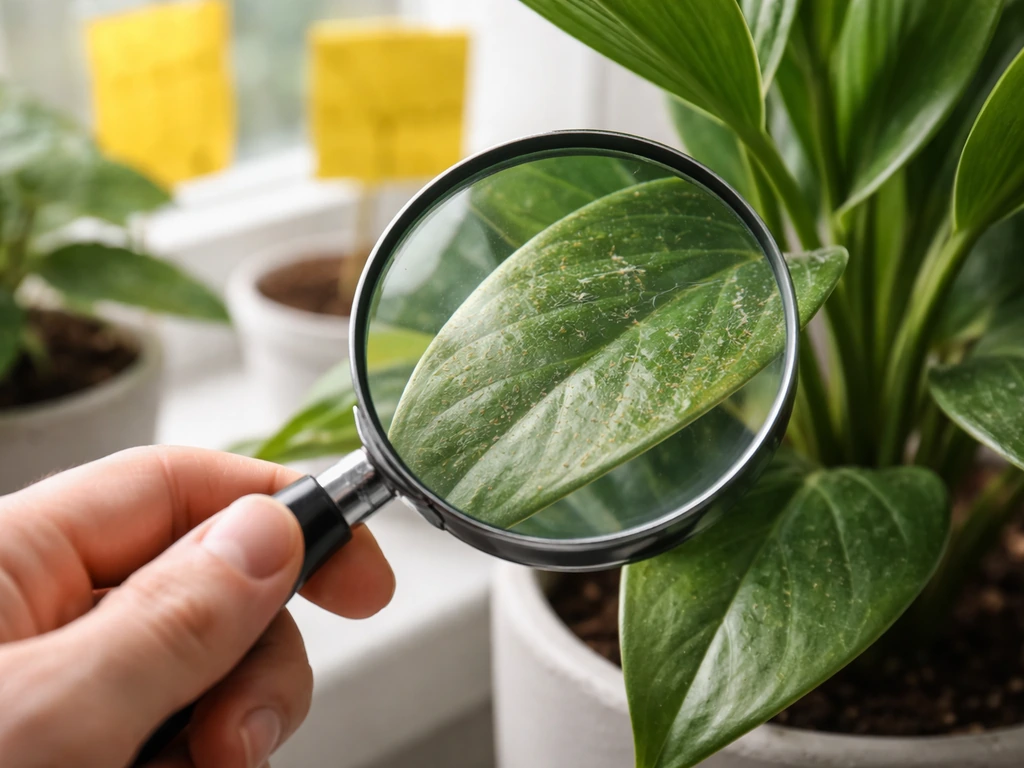
Spider mites, fungus gnats, and mealybugs are the pests you're most likely to encounter after bringing plants in from outside. Spider mites thrive in dry indoor air and show up as fine webbing on leaves with tiny stippled damage. University of Missouri Extension recommends insecticidal soap as a least-toxic control for spider mites and other soft-bodied pests. Repeat applications every 5 to 7 days for two to three weeks are needed to break the life cycle. Fungus gnats are more annoying than damaging to the plant itself, but their larvae can harm roots. University of Wisconsin Extension recommends applying a biological control containing Bti (like mosquito bits watered into the soil) for larvae, combined with yellow sticky cards to catch adult gnats. The University of Arizona Extension provides additional guidance for more resistant infestations, including insecticidal oils and pyrethroids for harder-to-control populations.
What to do when things go wrong
| Symptom | Most Likely Cause | Fix |
|---|---|---|
| Leggy, stretched growth reaching toward the window | Insufficient light | Move to a brighter window or add a grow light 6 to 12 inches above the plant |
| Yellow leaves (lower leaves first) | Overwatering or insufficient light | Check soil moisture before each watering; move to better light |
| Sudden leaf drop after moving indoors | Transition shock or temperature change | Normal for first 1 to 2 weeks; ensure plant is away from cold drafts and heating vents |
| Brown leaf tips or edges | Low humidity or fertilizer salt buildup | Increase humidity; flush soil with water to leach excess salts |
| Slow or no growth in winter | Natural dormancy or low light | Reduce watering and fertilizing; supplement with a grow light if growth is desired |
| Fine webbing on leaves | Spider mites | Treat with insecticidal soap on all leaf surfaces every 5 to 7 days for 3 weeks |
| Tiny flies hovering around soil | Fungus gnats | Apply Bti-based biological drench to soil; use yellow sticky cards; let soil dry more between waterings |
| White cottony clusters on stems | Mealybugs | Dab with isopropyl alcohol on a cotton swab; follow with insecticidal soap spray |
A simple long-term plan for cycling plants back outside
The goal isn't just to keep outdoor plants alive indoors through winter. The real payoff comes from successfully cycling them back outside in spring, where they bulk up again in real sun before you bring them in again the following fall. This cycle is what keeps these plants genuinely healthy year after year rather than slowly declining.
The University of Maryland Extension and University of Minnesota Extension both use night temperature as the key trigger for timing moves. Move plants back outside in spring once night temperatures are consistently above 50°F (or above 60°F for tropical-origin plants like basil or citrus). Don't rush this. A late frost can do serious damage to plants that have been in a warm house all winter, and UC ANR notes that if frost threatens after you've moved plants out, bring them back inside for the night without hesitation.
The spring move outside also requires hardening off, just like the fall move inside. Wisconsin Horticulture Extension warns that leaves can sunburn if plants move too quickly from indoor low light to full outdoor sun. Follow the same 7 to 10 day gradual exposure process: start in sheltered shade, then partial sun, then full sun over one to two weeks. This is especially critical for citrus and any plant that spent winter next to a window rather than under a grow light.
- Late winter (February to March): Start increasing watering and resume light fertilizing for actively growing plants. This signals the plant that growing season is approaching.
- Early spring: Begin hardening off by placing plants in a sheltered outdoor spot (morning sun, afternoon shade) for a few hours daily.
- After 7 to 10 days of gradual exposure: Move plants to their permanent outdoor spot for the season.
- Summer: Let plants grow freely outdoors. This is when they recover from winter and build the reserves they'll need for the following indoor season.
- Late summer (August to September): Inspect plants for pests and begin thinking about fall timing. Don't wait until the first frost warning to start planning.
- Early fall (before night temps drop below 50 to 60°F): Begin the indoor transition process again, starting with the gradual hardening-off in reverse.
Some outdoor plants that are naturally suited to indoor conditions overlap with what many gardeners think of simply as houseplants. If you're curious about what characteristics make certain plants genuinely adaptable to life inside, that's a worthwhile question to dig into, as the answer explains why some outdoor plants feel right at home on a windowsill while others never settle in. If you want, you can use those clues to narrow down plants which grow inside home that match your light and conditions. Similarly, tropical outdoor plants are often the easiest category to transition indoors, since their native environments share a lot in common with a warm, somewhat-humid living room. The outdoor-to-indoor cycle described here is most reliable for plants that already have some tolerance for lower light and stable temperatures. Start with those, build confidence, and then experiment with trickier species from there.
FAQ
Can I keep an outdoor plant indoors year-round without ever moving it outside?
You can, but expect slower growth, fewer blooms, and a higher need for consistent light. If you never provide an outdoor-like bright period, skip the “boost” temptation, water based on soil dryness, and keep pruning and fertilizing lighter than you would during outdoor season. Plants that normally rely on seasonal cues (especially flowering types) may gradually decline if they never get a light and temperature shift.
My plant is getting light, but it’s still leggy. What should I check first?
Legginess often points to insufficient light or light that’s coming from only one direction. Rotate pots weekly so growth stays even, and consider moving the plant closer to the brightest window or switching to a grow light for a defined schedule. If the plant is also stretching without thick new leaves, assume the PPFD is still below what it needs, even if the room looks bright.
How can I tell if I’m underwatering versus overwatering indoors?
Overwatering usually shows wet soil, yellowing, soft stems, and fungus-prone conditions, even if the plant looks droopy. Underwatering more often presents with dry, pulling-away edges in the pot and wilting that improves after watering. The practical test is soil-surface dryness, water until it drains, then wait until the surface dries again rather than watering on a strict calendar.
Do outdoor plants need to be fertilized during winter?
Usually no. If you are not using grow lights and the plant is not actively producing new growth, pause fertilizer from late fall through late winter. If the plant is still pushing new leaves under supplemental light, use only half-strength balanced fertilizer monthly, and stop if leaf tips scorch or growth stalls, as that can indicate salt buildup.
Is it safe to use saucers, or will that always cause problems?
Saucers are fine only if you empty them. Standing water in a saucer can deprive roots of oxygen and trigger root rot, especially when indoor temperatures are lower. A good routine is watering until you see drainage, then discarding any excess after 10 to 20 minutes.
What’s the best way to acclimate plants to indoor conditions when bringing them in from summer?
Use the same principle as hardening off, just reversed. Start by placing the plant in bright shade indoors, then increase light gradually over about a week, while keeping watering conservative because growth slows. Also avoid immediately switching from outdoor airflow to still indoor air, if possible add gentle airflow with a fan on low.
Should I prune before moving plants indoors, or after?
For most plants, do light maintenance before the move, then do deeper shaping in late winter or early spring when growth resumes. If you prune right before relocating a stressed plant, keep cuts minimal and avoid removing a large portion of foliage from a plant that already has limited indoor light. For geraniums and fuchsias, the timing and extent of pruning can differ, especially if you’re following a dormancy approach.
Can I bring pests indoors even if my plant looks healthy?
Yes. Spider mites and mealybugs can be present before you notice, and fungus gnats may already have larvae in the soil. Quarantine new arrivals from other houseplants for at least a week, inspect leaf undersides and leaf nodes, and check the soil surface for flying adults or larvae signs before you place the plant near your existing collection.
What should I do if leaves drop after moving a plant inside?
A small amount of leaf drop can be normal during the transition, but heavy drop usually means light is too low or acclimation happened too quickly. Confirm window light first, then adjust watering to avoid both soggy soil and bone-dry cycles. If the plant has become leggy, consider a grow light rather than increasing fertilizer, since the plant needs light more than nutrients.
How do I manage humidity for outdoor plants that hate dry indoor air?
Grouping plants helps, but it’s not always enough. A small humidifier near the plant area can raise local humidity, while a gentle fan improves airflow for mold-prone plants. Keep plants away from vents and radiators, and avoid over-wetting foliage, especially if you do not have airflow.
Which grow light setup works best if my windows are not south-facing?
Look for a light that you can position close enough to deliver usable intensity, then run it on a consistent schedule. A common mistake is placing the lamp too far, which increases reach but reduces intensity. Start with hours that match your winter conditions, and monitor spacing and leaf response, compact growth indicates the plant is receiving enough light.
When should I move outdoor plants back outside in spring, and what if frost threatens?
Use night temperatures as the key trigger, move out once nights stay consistently above 50°F for most non-tropicals (and higher for warm-origin plants). If frost threatens after you’ve moved them out, bring them in for the night rather than waiting, then resume outdoor time the next day. This protects new tender growth that appeared while indoors under softer conditions.