
Yes, wax begonias can absolutely grow indoors year-round, and they're honestly one of the more forgiving flowering plants you can keep on a windowsill. Begonia semperflorens (technically the Semperflorens-Cultorum hybrids you find at most nurseries) will bloom continuously inside as long as they get enough bright light. That's the one real non-negotiable. Get the light right and everything else is manageable. Skimp on it and you'll be fighting leggy, sad-looking plants within a few weeks.
Can Wax Begonias Grow Indoors? Yes Plus Care Guide

James Hartwell
7 May 2026
Why wax begonias actually work as houseplants
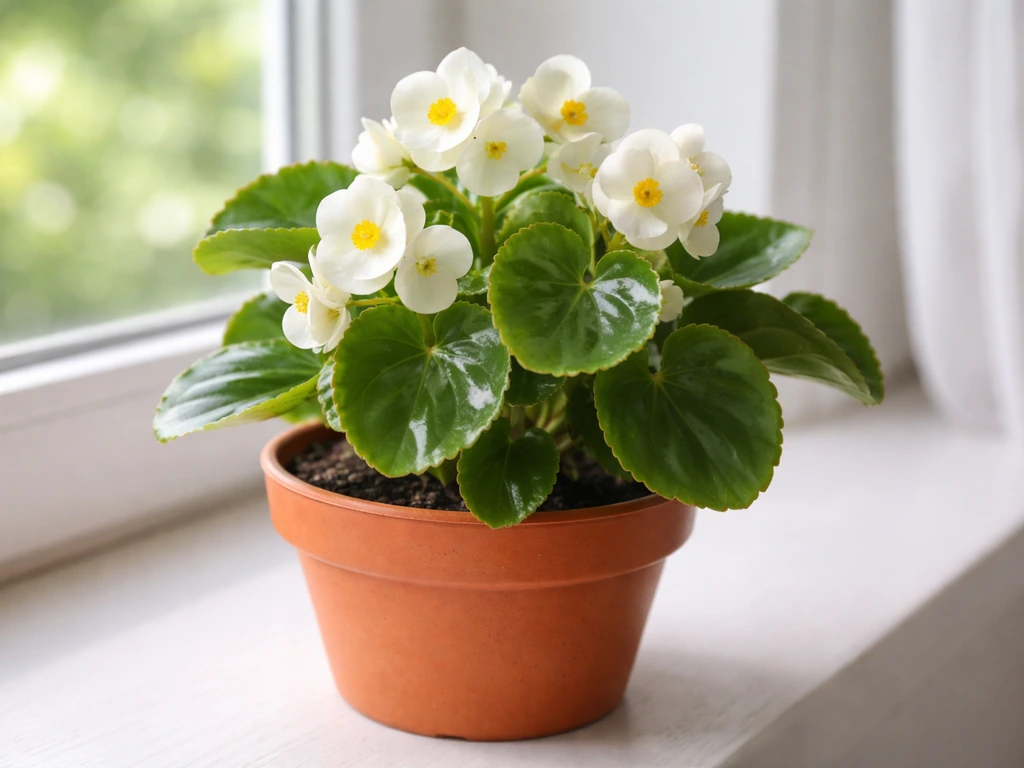
Most begonias sold as outdoor bedding plants don't survive inside because they're adapted to wide-open sun and airflow. Wax begonias are a bit different. They're compact, they bloom almost non-stop, and they don't demand the intense heat or humidity that tropical begonias do. I've kept them going on a bright south-facing windowsill through entire winters without missing a beat. The bronze-leaved cultivars especially handle direct indoor sun well, while green-leaved types prefer that slightly filtered light situation. Either way, the plant is genuinely suited for indoor life in a way that, say, a standard impatiens is not.
One thing worth setting expectations on: these are sold as annuals in most garden centers, which means the nursery trade treats them as temporary plants. That doesn't mean they have to be. Indoors, away from frost and seasonal extremes, a healthy wax begonia can live for years if you give it proper care and occasional pruning.
Light requirements and where to put them in your home
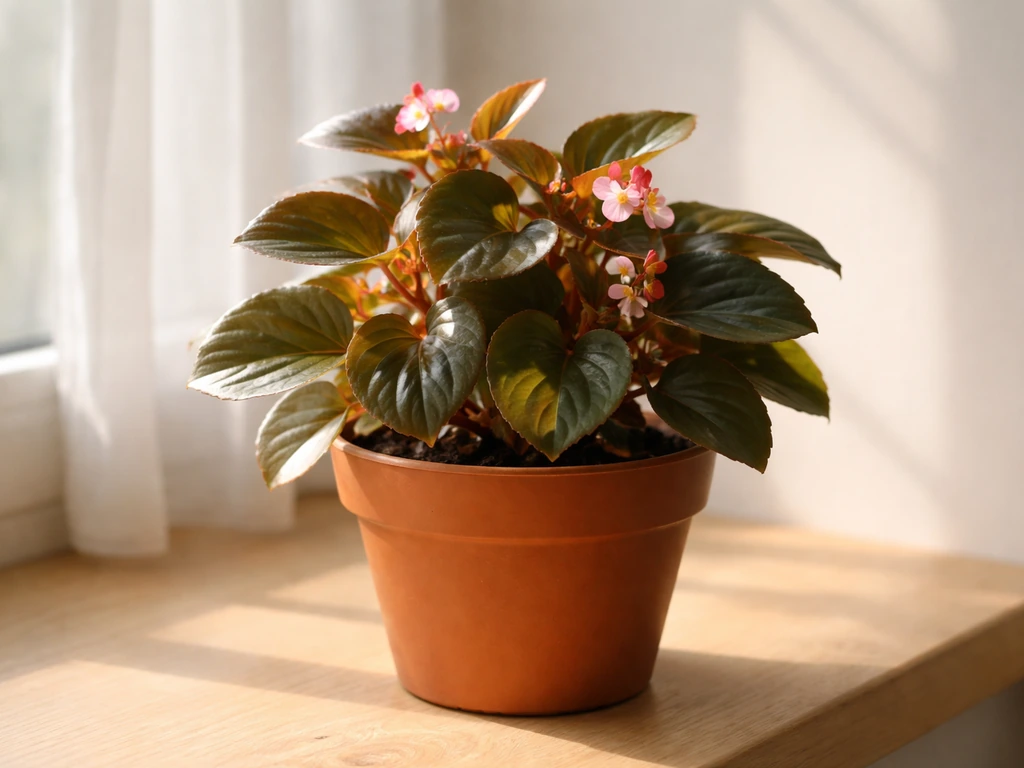
Bright indirect light is the sweet spot, but these plants can handle a few hours of direct indoor sun too, especially the bronze-leaved varieties. A south-facing or east-facing window is your best bet. South windows give the most light, and if you're in the northern hemisphere that usually means a solid 4 to 6 hours of sun coming through in winter when the sun sits lower. East windows give gentler morning light, which suits the green-leaved cultivars perfectly since they're prone to sunscald under harsh afternoon rays.
West windows work reasonably well too, though afternoon summer sun through a west window can get intense enough to bleach leaves if the plant is right up against the glass. North windows are the tough case. If a north-facing window is your only option, you're going to need a grow light to get consistent blooming. A simple full-spectrum LED positioned 6 to 12 inches above the plant for 12 to 14 hours a day will do the job. I've seen people keep very happy wax begonias under a grow light on a kitchen counter with no window access at all.
| Window Direction | Light Quality | Best Cultivar Type | Verdict |
|---|---|---|---|
| South-facing | Bright, direct 4-6 hrs | Bronze-leaved | Excellent |
| East-facing | Gentle morning sun | Green-leaved | Very good |
| West-facing | Afternoon direct sun | Bronze-leaved | Good (watch for scorch) |
| North-facing | Low indirect only | Either (with grow light) | Needs supplemental light |
Watering, soil, and drainage: the stuff that actually kills them
Overwatering is by far the most common way people lose wax begonias indoors. The roots are shallow and fine-textured, and they rot fast in soggy soil. The goal is evenly moist, never waterlogged. A good rule: stick your finger an inch into the soil. If it feels dry at that depth, water thoroughly until it drains freely from the bottom. If it still feels damp, leave it alone. In a typical indoor environment during winter, I water mine roughly every 5 to 7 days, but that changes based on pot size, humidity, and how much light the plant is getting. A begonia sitting in a bright sunny spot in summer may need water every 3 days.
Soil choice matters here. A standard houseplant potting mix works, but I always cut it with about 20 to 30 percent perlite to improve drainage. Wax begonias do not want dense, heavy soil that holds moisture for days. For the pot itself, always use one with drainage holes. Terracotta pots are genuinely helpful because they wick away excess moisture through the walls, reducing root rot risk. If you love the look of a decorative ceramic pot, drop the terracotta pot inside it as a liner rather than planting directly into a pot with no drainage.
Pot size is worth thinking about too. Begonias actually bloom better when slightly root-bound. A 4 to 6 inch pot for a standard nursery transplant is about right. Going too large means the soil stays wet too long between waterings, which circles right back to root rot.
Temperature, humidity, and airflow indoors
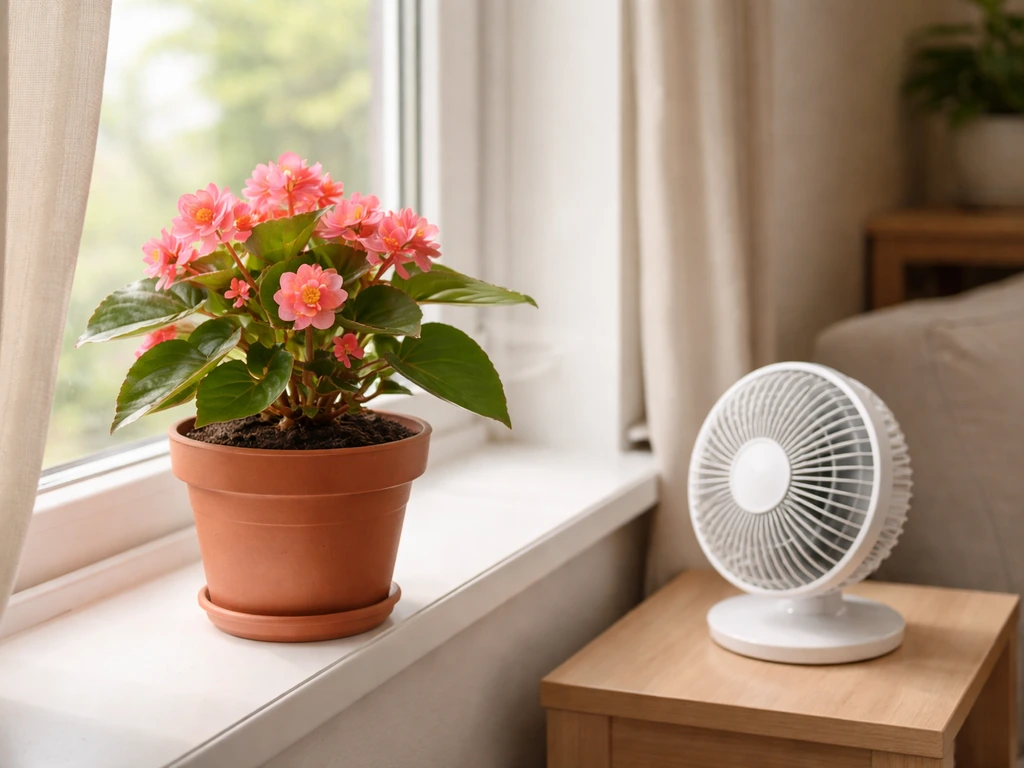
Wax begonias are comfortable in the same temperature range most people keep their homes: between 60°F and 75°F (15°C to 24°C). They don't love cold drafts, so keep them away from windowsills that get icy cold in winter, and away from heating vents that blast dry hot air. Both extremes stress the plant quickly. In my apartment, I move them back a few inches from the glass in January when temperatures outside dip below freezing, just to avoid that cold-glass chill.
Average household humidity (around 40 to 50 percent) is fine for wax begonias. They're not as humidity-hungry as many tropical plants. That said, dry forced-air heat in winter can tip the balance toward spider mite problems (more on that below). A small humidifier nearby or a pebble tray with water can help if your home gets really dry in winter.
Airflow is something a lot of people overlook. Stagnant, humid air around begonias creates the perfect condition for botrytis (grey mould) and other fungal problems. Opening a window occasionally when weather allows, or simply running a small fan on low nearby, makes a real difference. You want gentle air movement, not a wind tunnel, but don't let your plant sit in a still, closed-off corner with no circulation.
Fertilizing, deadheading, and keeping them tidy
During the active growing season (roughly spring through early fall), feed wax begonias with a balanced liquid fertilizer, something like a 10-10-10 or a bloom-boosting formula, diluted to half strength every two to four weeks. In winter, when light levels drop and growth slows, cut back to once a month or skip feeding entirely until days get longer again. Over-fertilizing in low-light conditions produces lush green leaves and very few flowers.
Wax begonias are often described as self-cleaning, meaning spent blooms drop off on their own. That's true to a point, but I still pinch off old flowers and dead leaves by hand when I see them. It keeps the plant looking neat and prevents decaying plant material from sitting on the soil or leaves, which is exactly where fungal issues start. While you're at it, pinch the growing tips occasionally to encourage bushier, more compact growth rather than long, leggy stems.
Fixing common indoor problems
Leggy, stretched-out growth
If your wax begonia is producing long bare stems with leaves only at the tips, it's almost always a light problem. The plant is literally reaching toward whatever light source it can find. Move it to a brighter spot or add a grow light. Then cut the leggy stems back by about a third to a half, which will push new bushy growth from lower on the plant. Don't be afraid to be aggressive with the pruning here.
Yellow leaves
Yellowing leaves have a few different causes. Lower leaves yellowing and dropping is usually normal aging, especially on an older plant. If yellowing is widespread and the soil is wet, you're almost certainly overwatering. Let the soil dry out more between waterings and check that your drainage is adequate. Yellow leaves with dry soil could mean the plant needs fertilizer or is getting too much direct harsh sun. It takes a bit of detective work, but start with watering habits since that's the culprit most of the time.
Fungal issues: botrytis and powdery mildew
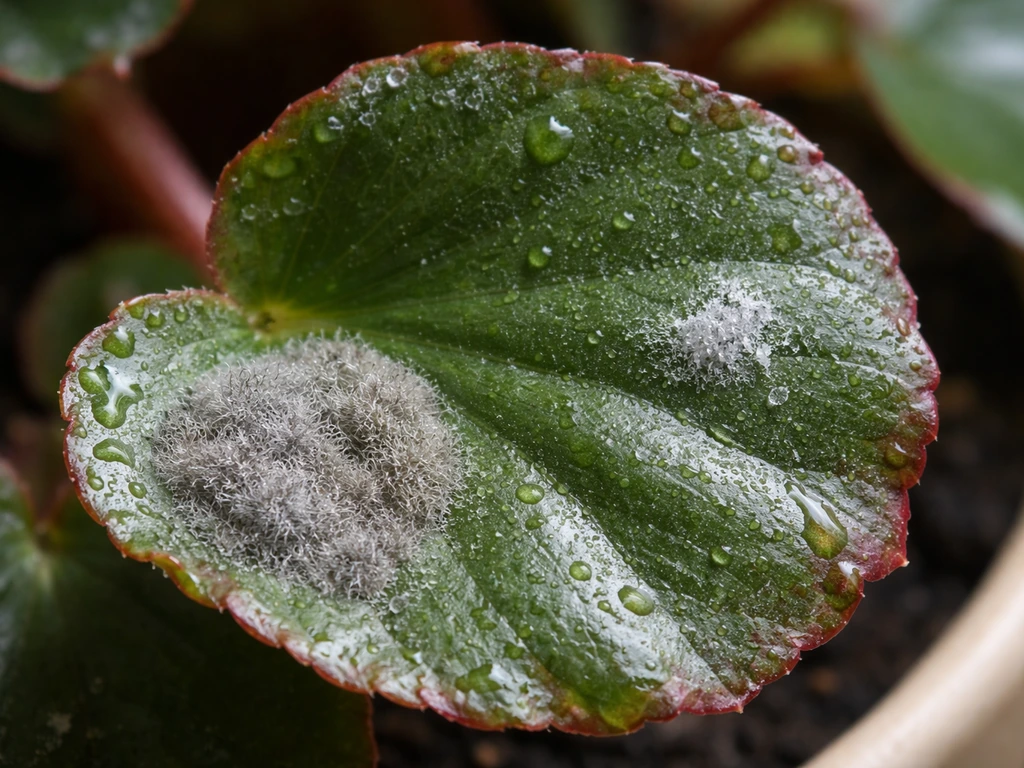
Grey mould (botrytis) shows up as fuzzy grey patches on leaves, stems, or spent flowers, usually in cool, humid, still air. Remove affected parts immediately, improve airflow around the plant, and avoid wetting the leaves when you water. Powdery mildew looks like a white dusty coating and thrives in warm, humid conditions with poor airflow. Both are prevented more than cured: good airflow, proper spacing, and removing dead plant material before it decays are your best defenses.
Pests: aphids, mealybugs, and spider mites
Aphids cluster on new growth and leave a sticky residue. Knock them off with a strong stream of water in the sink, then follow up with insecticidal soap if needed. Mississippi State University Extension notes that aphids can sometimes be controlled by washing them off with a [forceful spray of water](https://extension. msstate.
edu/publications/publications/insect-pests-houseplants) strong enough to remove them without damaging the leaves. Mealybugs look like white cottony tufts and hide in leaf joints. Dab them with a cotton swab dipped in rubbing alcohol, then spray with neem oil. Spider mites are a dry-air problem and show up as fine webbing on the undersides of leaves with bronze stippling on the surface.
Increase humidity, remove heavily affected leaves, and treat with neem oil or insecticidal soap, covering undersides of leaves thoroughly.
How to propagate wax begonias indoors
Propagating wax begonias from cuttings is easy and genuinely satisfying. Take a stem cutting 3 to 4 inches long with at least two leaf nodes. Remove the lower leaves, leaving just one or two at the top. You can root it in a small glass of water on a bright windowsill, and you'll usually see roots within 2 to 3 weeks.
Real-world experiences from a begonia cuttings discussion on r/begonias show rooting can vary, with some cuttings taking about 3 to 4 weeks or longer in water roots within 2 to 3 weeks. Once roots are an inch or two long, pot it up in your prepared soil mix.
Alternatively, stick cuttings directly into moist perlite or a well-draining potting mix and cover with a clear plastic bag to hold humidity until roots establish, usually in about 3 weeks.
This is a great way to refresh an older, leggy plant. Rather than trying to rehabilitate a plant that's gotten out of control, take cuttings from the best stems, propagate a fresh batch, and start clean. If you're interested in expanding your indoor begonia collection beyond wax types, angel wing begonias and Rieger begonias are worth exploring as well, since they each bring a different look and have slightly different indoor care requirements. If you want an answer specifically for angel wing begonia, they can also grow indoors with the same focus on bright light and careful watering angel wing begonias. Rieger begonias can also be grown indoors, but they need the right light and care to thrive.
- Take a 3 to 4 inch stem cutting just below a leaf node
- Strip lower leaves, leaving one or two at the tip
- Place in a glass of water or moist perlite on a bright windowsill
- Wait 2 to 3 weeks for roots to reach 1 to 2 inches long
- Pot up in a 3 to 4 inch container with well-draining potting mix
- Keep consistently moist and in bright indirect light until established
Your most important next steps
If you're bringing a wax begonia indoors for the first time, start by identifying your best light source. Put it in your brightest window, ideally south or east-facing. Check the soil before every watering and resist the urge to water on a set schedule. Make sure the pot drains freely, and give the plant some breathing room rather than cramming it into a tight corner. With those basics covered, a healthy wax begonia will reward you with near-constant color indoors, which is more than most flowering houseplants can promise. Can strelitzia nicolai grow indoors? Yes, with enough bright light and the right watering routine.
FAQ
Will a wax begonia keep blooming during winter indoors?
Yes, but only if it gets enough light. A cool, bright window with consistent sun or a grow light schedule (about 12 to 14 hours) is usually the difference between blooming and staying mostly foliage. Keep the soil on the drier side in winter, since growth slows and water needs drop.
How do I fertilize wax begonias without causing fertilizer burn?
Fertilizer can burn wax begonia roots when the soil is too wet. If you feed, always dilute to half strength and apply after the soil has dried to normal, not while it is still soggy or recently watered heavily. In low light months, skipping feeding is safer and prevents soft, leaf-heavy growth.
How can I tell if it is dust or powdery mildew on my wax begonia?
Start by checking for white residue that can be mistaken for dust. If the “dust” wipes off easily, it may be normal buildup, but powdery mildew often returns quickly and leaves a patchy look. The practical move is to increase airflow, remove affected leaves, and avoid misting or wetting foliage when watering.
Can I bring an outdoor wax begonia inside and keep it healthy?
Yes, but don’t move it suddenly. When bringing it indoors from outdoors, acclimate over 7 to 10 days by gradually reducing direct sun exposure and placing it in brighter indoor light first, then adjusting as needed. This reduces leaf scorch and stress that can lead to pests later.
My wax begonia looks wilted even though the soil is damp, what does that usually mean?
The pot is usually too big. When soil stays wet for many days, root rot risk rises quickly. Use a pot with drainage holes, keep to a slightly root-bound size, and switch to a mix amended with perlite for faster drying.
What should I do if I suspect spider mites on a wax begonia?
If you see tiny webs and bronze stippling, spider mites are the likely culprit, especially in dry winter air. Treat by increasing humidity, removing heavily damaged leaves, and thoroughly coating the undersides of leaves with insecticidal soap or neem oil, repeating as directed on the product.
Can I water from the top or should I use a saucer for wax begonias?
Avoid letting water sit in the saucer, especially in low-light months. Always empty excess runoff after watering, and confirm that the potting mix drains freely. If you use a decorative cachepot, ensure the drainage holes are usable and the inner liner pot drains completely.
Do grow lights work differently depending on distance or hours for wax begonias?
Yes, but the main risk is uneven watering under a tall grow light. If you rotate the pot every week and keep the light at a consistent distance (often around 6 to 12 inches), you’ll get more even growth and fewer leaning stems. Watch for stretching, that means the light is too weak or too far away.
How often should I repot wax begonias grown indoors?
Repotting too often can disrupt roots and reduce flowering. If your plant is healthy, blooming, and not root-bound, you can wait until it is clearly crowded or the mix has broken down. When you do repot, go just one pot size up and keep the same drainage-focused soil.
Are wax begonias safe for pets?
Wax begonias can be safe around many pets, but sensitivities vary by animal. If your pet chews plants, the safest approach is to keep the plant out of reach and monitor for any mouth irritation or vomiting. If you know your pet has a history of plant chewing, consider choosing a non-flowering or pet-safe alternative.