Yes, water hyacinth (Eichhornia crassipes) can grow indoors, but it needs a proper aquatic setup, serious light, and warm water to do it well. It's not a windowsill herb or a houseplant you can forget about. Think of it more like keeping a small pond inside your home. Get those core conditions right and it'll grow fast, look stunning, and even flower. Get them wrong and it'll yellow out and rot within a couple of weeks.
Can Water Hyacinth Grow Indoors? Setup and Care Guide
James Hartwell
3 May 2026
Quick answer: can water hyacinth grow indoors?
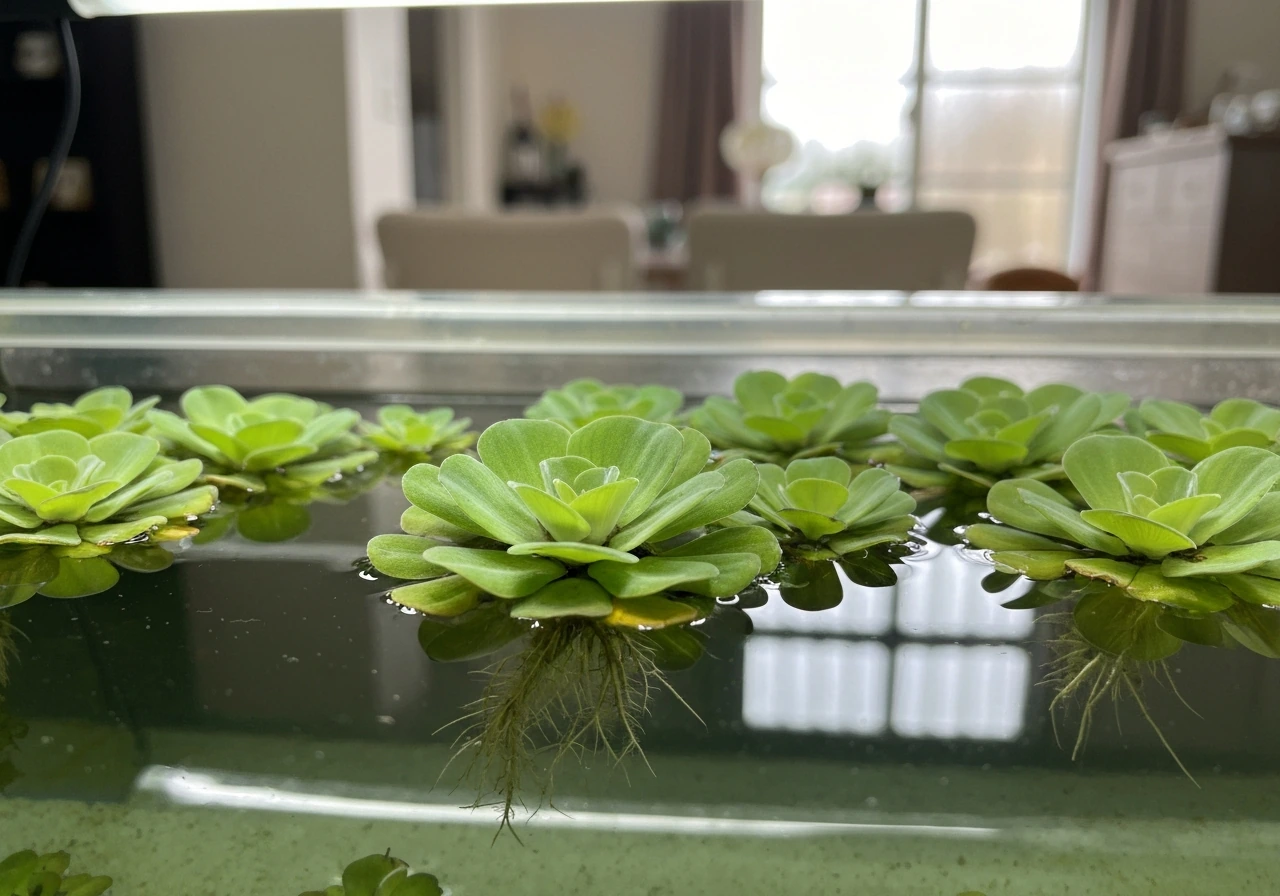
Water hyacinth can absolutely grow indoors as long as you replicate its natural habitat: warm, still water with nutrient availability and lots of bright light. If you’re trying to replicate those conditions, you can start by setting up a bright tank and then monitor light, temperature, and water depth closely can hyacinth grow indoors. It's a free-floating aquatic plant, so it doesn't go in soil. It floats on the surface with its roots dangling down into the water below. That means your indoor "planter" is essentially a water-filled container or tank. If you've got a bright south or west-facing room, some patience with setup, and a willingness to manage growth, this is a rewarding plant to keep inside. If your home is dim and cool, I'd be honest with you: it's an uphill battle.
Indoor setup basics: tank size, water depth, and container choice
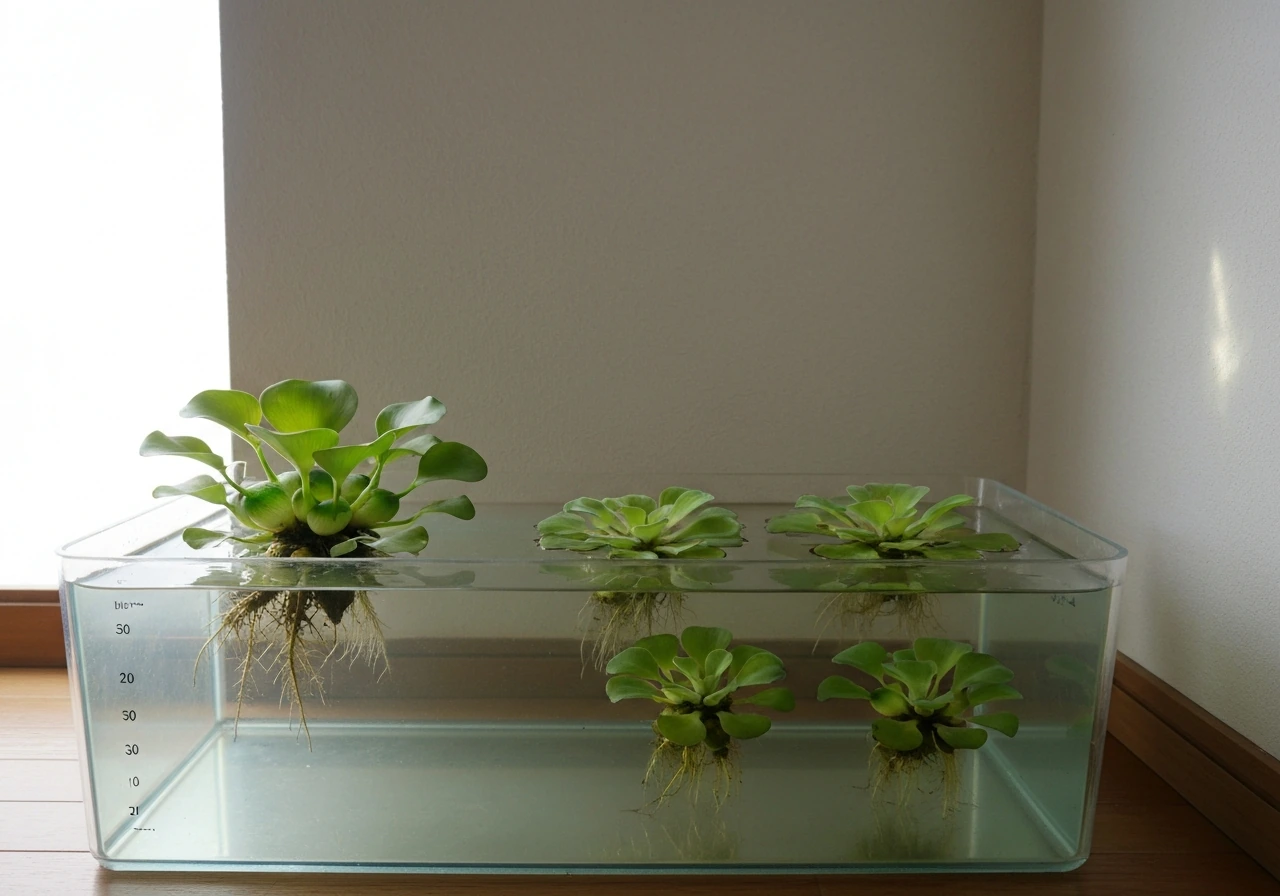
The container is everything with this plant. Water hyacinth needs room to spread. Each rosette can grow 30–50 cm across, and the plant spreads by producing side shoots quickly once it's happy. For a single plant or a small cluster, a container that holds at least 40–60 litres of water gives you enough room and helps stabilize water temperature. Smaller containers like bowls or buckets heat up and cool down too fast, which stresses the plant.
Water depth should be at least 20–30 cm. The roots of water hyacinth can hang down 30 cm or more when the plant is thriving, so shallower setups will restrict them and slow growth noticeably. A deeper vessel (40–50 cm) is actually better, especially if you plan on adding fish or aquatic companions. Wide and shallow containers work less well than tall, deep ones.
For material, any watertight container works: a large glass aquarium tank, a food-grade plastic storage tote, a glazed ceramic pot, or a dedicated indoor pond planter. I've had good results using a 75-litre glass aquarium because you can see the root development and monitor water clarity easily. Avoid metal containers as they can leach ions that alter water chemistry. If you're keeping fish alongside the hyacinth, an aquarium with a filter is the smarter choice.
Light requirements: natural light vs grow lights and placement tips
This is where most indoor attempts fail. Water hyacinth is a full-sun plant outdoors, used to 6 to 8 hours of direct sunlight per day. Indoors, matching that intensity is genuinely difficult. A south-facing window in a bright room is your best natural-light option, but even then, glass filters out some UV and the intensity is lower than outside. In my experience, natural light alone only cuts it in summer and only in rooms with large, unobstructed windows.
For most indoor growers, a full-spectrum LED grow light is the practical solution. Aim for a light that delivers at least 50–80 watts of actual power output (not equivalent) positioned 15–30 cm above the water surface, running for 12–14 hours per day. High-output LED aquarium lights or horticultural grow lights both work. Look for a color spectrum that covers both the blue range (400–500 nm) and red range (600–700 nm) to support full plant growth and, if you're lucky, flowering.
- South or west-facing windowsill: viable in summer, supplement with grow lights in winter
- North or east-facing rooms: grow light is mandatory, not optional
- Keep the light on a timer: 12–14 hours on, 10–12 hours off mimics natural day length
- Distance matters: too far and the plant stretches and yellows; too close and leaves can bleach
- Rotate the container occasionally if growth leans heavily toward the light source
Temperature and water quality for indoor growth
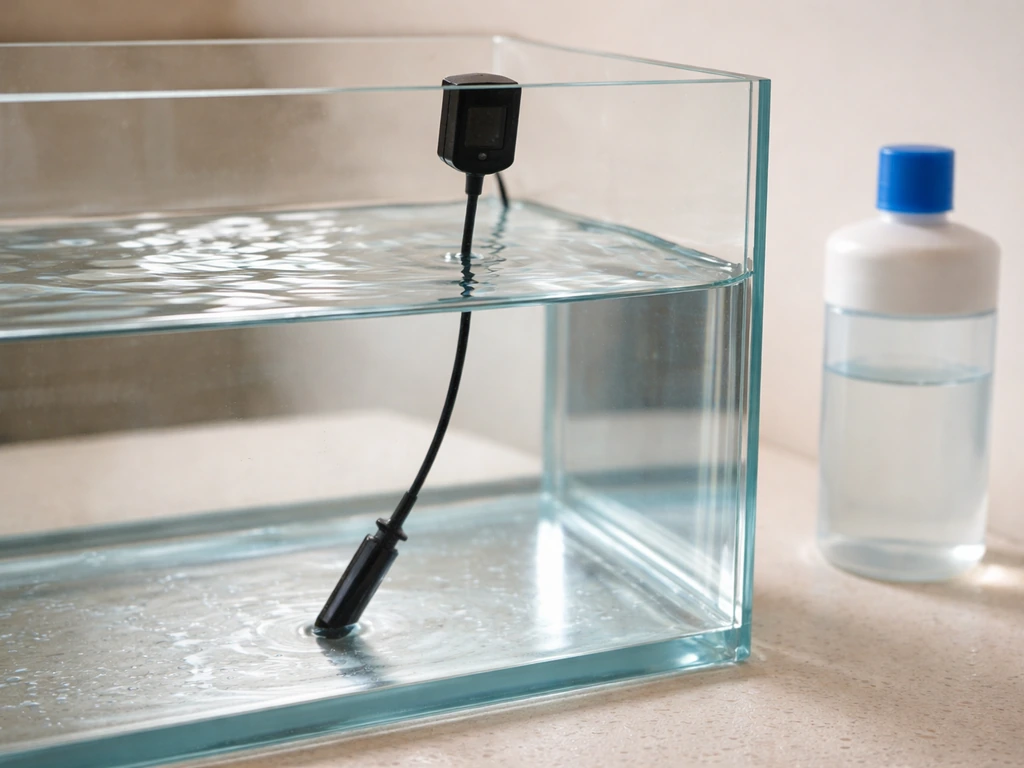
Water hyacinth is tropical and warmth-loving. According to USGS NAS, common water-hyacinth (Eichhornia crassipes) has optimal growth at water temperatures around 28, 30°C blank" rel="noopener noreferrer">optimal growth at water temperatures around 28–30°C. blank" rel="noopener noreferrer">The FlowGrow aquatic plant database lists its optimum temperature range as 25–30°C, and USGS data points to peak growth at 28–30°C. Below about 20°C, growth slows significantly. If air temperatures drop below 5°C for more than two or three weeks, regrowth is seriously impaired and the plant can die back completely. Indoors, most homes sit around 18–22°C, which is actually on the cool side for this plant. If your indoor water temperature drifts below 20°C, consider an aquarium heater set to 25–28°C. It's a small investment that makes a huge difference.
Water quality matters too. Water hyacinth is tolerant of a fairly wide pH range (around 6.0–8.0), but it prefers slightly acidic to neutral water. Use dechlorinated tap water or let tap water sit uncovered for 24 hours before filling the container. If you're using a fish tank, the fish waste actually feeds the plant nicely and keeps it growing well. Change out 20–30% of the water every two weeks if there are no fish, to prevent stagnation and buildup of excess minerals.
Nutrients and feeding: what keeps it growing
Water hyacinth is a heavy feeder. In its native environment it draws nitrogen, phosphorus, and potassium directly from the water, which is part of why it becomes invasive so fast outdoors. Indoors, with no input from a natural water body, you need to provide nutrients. If you have fish in the tank, their waste often provides enough nitrogen to keep growth going. Without fish, use a diluted liquid aquatic fertilizer, something formulated for pond plants or aquarium use, every two to three weeks. Go light on dosing: half the recommended concentration is usually enough. Too much fertilizer feeds algae as fast as it feeds the plant.
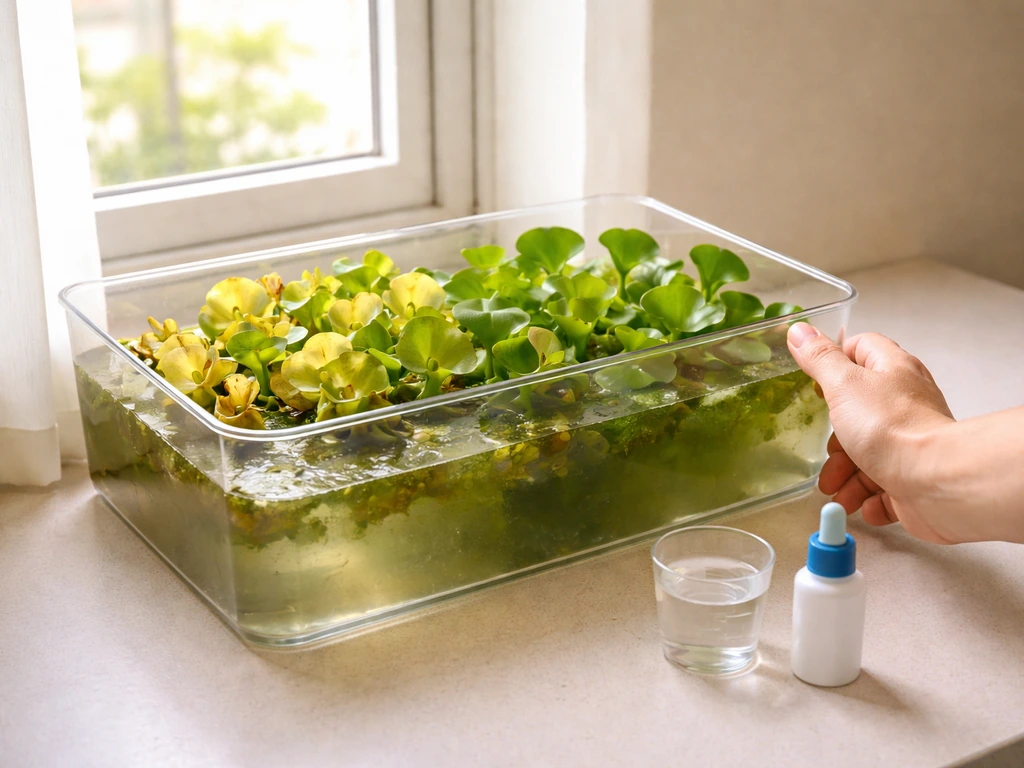
Watch the leaves as your growth indicator. Healthy water hyacinth has glossy, dark green, rounded leaves on inflated petioles (those bulbous air-filled stems that keep it buoyant). If leaves turn pale or yellow-green, the plant is either light-starved or nutrient-deficient. If the petioles stop inflating and the plant starts sitting lower in the water, it's struggling. Both are fast fixes once you identify the cause.
Common indoor problems and how to fix them fast
| Problem | Likely Cause | Fix |
|---|---|---|
| Yellowing leaves | Insufficient light or low nutrients | Move closer to grow light or window; add diluted aquatic fertilizer |
| Slow or no growth | Water too cold (below 20°C) | Add aquarium heater set to 25–28°C |
| Plant sinking / flat petioles | Poor light, low nutrients, or cold stress | Address light and temperature first; check fertilizer schedule |
| Green water / algae bloom | Too much fertilizer or too much light on water | Reduce fertilizer; shade the water surface; partial water change |
| Root rot / mushy stems | Stagnant water, low oxygen, or disease | Increase aeration; do a 50% water change; remove affected plants |
| Overcrowding | Rapid reproduction by side shoots | Trim or remove excess plants; keep only what your container can support |
Algae is probably the most common frustration with indoor aquatic setups. When you're running a grow light for 12–14 hours a day over open water, algae loves those conditions just as much as your water hyacinth does. A few strategies that actually help: keep the water surface covered as much as possible with plant material (the hyacinth itself helps with this), avoid overfeeding with fertilizer, and if algae is persistent, reduce light duration by an hour or two and do a partial water change. Floating cover plants like duckweed can also shade algae out, though they compete with the hyacinth for nutrients.
Responsible indoor containment and safe handling
Water hyacinth is listed as one of the world's worst aquatic invasive species. It's banned or restricted in many US states, parts of Australia, and several other countries because even a small fragment introduced to a natural waterway can establish and spread rapidly, choking out native ecosystems. If you're keeping it indoors, containment is a genuine responsibility, not just a suggestion.
- Never dump tank water, plant trimmings, or roots into drains, gutters, or outdoor waterways
- Dispose of plant material by composting it thoroughly or sealing it in a bag for the trash
- Check your local regulations before acquiring water hyacinth: it's illegal to possess or sell in some regions
- Keep all containers screened or positioned away from outdoor drainage, especially during heavy rain
- If you're moving house, don't relocate plants to outdoor ponds or garden features
Handling the plant itself is low-risk. Water hyacinth doesn't have thorns or irritants. That said, if your tank water contains fish waste or fertilizer residue, wash your hands after reaching into the water. Some people with sensitive skin find the wet plant material mildly irritating with prolonged contact, so gloves are a sensible precaution when trimming.
Getting started today: your first water hyacinth setup
- Source a plant from a reputable aquatic plant supplier or garden center (check local regulations first)
- Fill a 40–75 litre container with dechlorinated water to a depth of at least 30 cm
- Set water temperature to 25–28°C using an aquarium heater if your home is cooler than 22°C
- Position under a full-spectrum grow light or in the brightest available window
- Set a timer for 12–13 hours of light per day
- Add a small dose of diluted aquatic fertilizer if no fish are present
- Check the plant every few days: leaf color and petiole firmness are your best growth indicators
- Trim side shoots every two to three weeks once the plant establishes and starts reproducing
Once you've got a stable aquatic setup running, water hyacinth is actually one of the easier aquatic plants to keep going. The same container that suits water hyacinth can support other floating aquatic plants if you want to experiment. If you’re wondering whether another plant can truly thrive indoors, you might also like our guide on will geraniums grow indoors experiment. And if you're interested in more conventional indoor plants that share some of water hyacinth's bold foliage appeal, looking into plants like regular hyacinth or grape hyacinth grown indoors gives you a very different but equally satisfying display that's far more forgiving in a typical home environment. If you're wondering specifically whether can ixora grow indoors, the answer depends on getting enough bright light and consistently warm, evenly moist conditions. This highlights that true hyacinths and related plants have very different indoor needs, so it helps to check specifics before you try ivy geraniums indoors grape hyacinth grown indoors.
FAQ
Can water hyacinth grow indoors without a heater or grow light?
It can survive briefly, but consistent growth usually fails. Without a heater, indoor water often stays under about 20°C, which slows growth and can cause dieback. Without strong full-spectrum light, leaves typically become pale and growth stalls. If you skip both, plan on a short, weak display rather than steady flowering.
What is the easiest way to judge whether the light is strong enough indoors?
Look at how quickly new rosettes expand and whether petioles stay inflated, not just leaf color. Light-starved plants often keep growing slowly, and petioles stop holding buoyancy. If you have to move the lamp closer or extend the photoperiod, keep total daily light time within about 12 to 14 hours to avoid algae spikes.
Do I need to use fish for nutrients, or can I fertilize instead?
You can do it either way. If there are no fish, use a diluted liquid aquarium or pond fertilizer for pond plants every two to three weeks, and start at half the label dose. Overfertilizing indoors commonly causes algae blooms even when the hyacinth looks only slightly off.
How often should I change the water if I do not have fish?
Do partial water changes of about 20 to 30% every two weeks when there are no fish. This helps reduce mineral and nutrient buildup that can shift water chemistry and increase algae pressure. If you see persistent cloudiness or heavy algae despite correct lighting, increase water-change frequency slightly rather than adding more nutrients.
Can I keep water hyacinth in a small bowl or vase to save space?
For long-term growth, it is usually a mistake. Small containers tend to swing in temperature too fast and leave too little room for the roots to hang and spread, causing stunted rosettes. If you must use a smaller container temporarily, expect slower growth and be ready to upgrade quickly to a larger aquarium or tote.
Should I aerate the water or run a filter?
Water hyacinth prefers still water, so heavy aeration is not necessary. If you use a filter, keep flow gentle so the plant is not constantly pushed around. In a fish tank, you still want good filtration for fish health, but aim for circulation that does not strip nutrients away from the hyacinth’s root zone.
Is it safe to put water hyacinth near windows, even if it is sunny?
It can work in a bright, warm room during parts of the year, but windows often lack enough intensity and consistency. UV and intensity drop through glass, and winter or cloudy spells typically lead to slower growth. Treat window-only setups as experimental, and switch to a grow light if you notice thinning, yellowing, or reduced petiole inflation.
How do I prevent algae when I have a strong grow light?
Combine light control and nutrient control. Keep hyacinth cover high, avoid full-strength fertilizing, and if algae persists, reduce light duration by about one to two hours and do a partial water change. You can also add a separate floating shade plant cautiously, because extra floating plants can compete for nutrients.
What should I do if my hyacinth leaves turn yellow or the plant sinks?
Yellowing usually points to insufficient light or nutrient imbalance. Sinking and loss of inflated petioles often means stress from low temperature, inadequate light, or root restriction from insufficient water depth. Check water temperature first, confirm the light height and schedule, then adjust nutrients gradually rather than making multiple changes at once.
Can water hyacinth be kept indoors year-round, and how do I handle dormancy?
Yes, if you maintain warm water temperatures and consistent light. If your setup cannot hold water above roughly 20°C, growth may slow dramatically and the plant can die back during cold periods. To avoid setbacks, plan heating and lighting for winter before you notice problems.
Is there any special cleanup or disposal needed for indoor water hyacinth?
Yes, treat it as an invasive-risk plant even indoors. Never pour tank water into outdoor drains or waterways. When you trim or end a setup, remove plant material carefully, bag it, and dispose of it according to local rules, then thoroughly empty and clean the container to prevent fragments from escaping.