
Yes, you can grow canna indoors, but success depends almost entirely on light. Cannas are big, sun-hungry tropical plants, and most indoor spaces simply don't deliver enough of it. That said, if you pick a compact variety, set up strong supplemental lighting, use a well-draining pot, and keep things warm, you can absolutely grow a healthy canna inside your home. Flowering indoors is possible too, though it's harder to pull off than in a sunny garden bed. Go in with realistic expectations and the right setup, and cannas can be genuinely rewarding houseplants.
Can You Grow Canna Indoors Yes, But Here’s How

James Hartwell
2 May 2026
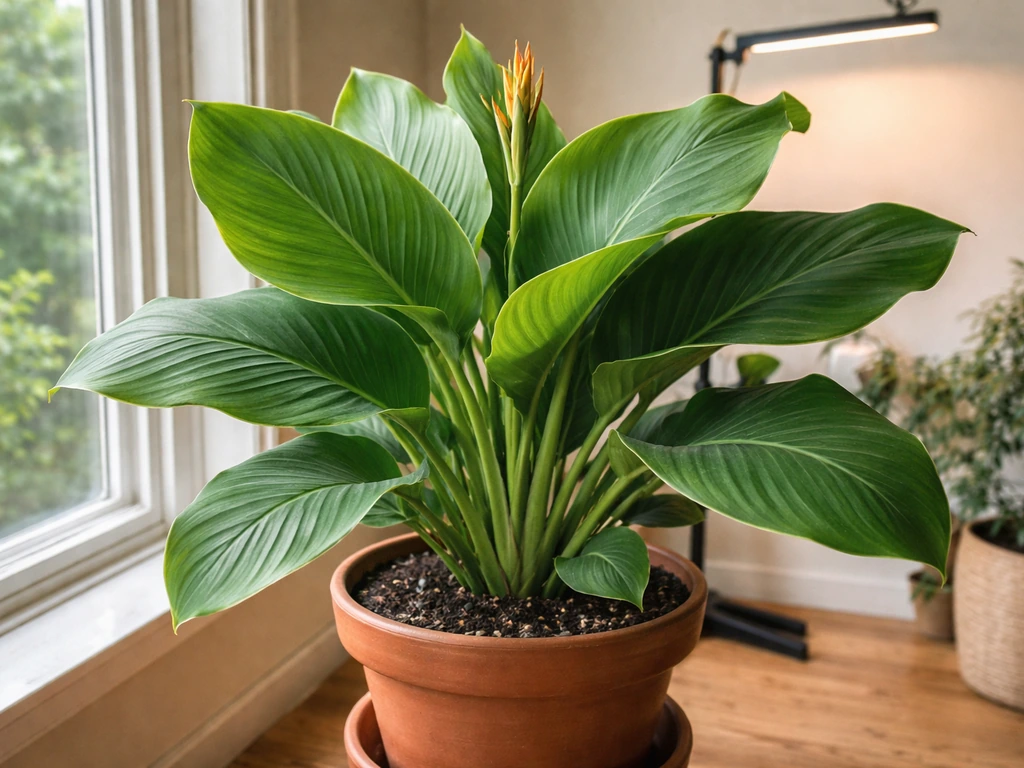
What success actually looks like for indoor canna
Indoor canna success isn't the same as outdoor canna success. Outside, a tall variety like 'Wyoming' can hit 6 to 8 feet and bloom reliably every summer. Indoors, you're aiming for something different: a compact, vigorous plant with rich green (or bronze, or striped) foliage, sturdy upright stems, and ideally some blooms if your light game is strong enough. Think of lush, healthy leaves as the baseline win, with flowers as the bonus.
A few clear signs things are going well: new leaves unfurling regularly, stems standing upright without flopping, and the soil drying out between waterings rather than staying soggy. On the flip side, watch out for wilting even when the soil is wet (a bad sign, often rot), a sour smell from the pot, leaf spotting, or any mushy softness at the base of the stem. Those are the classic failure signals for indoor cannas, and they're almost always linked to too much moisture and not enough airflow.
Best varieties for growing canna indoors
Variety choice might be the most important decision you make before you even buy a rhizome. Cannas fall into three rough height categories: dwarf (under about 3 feet), midsize (3 to 5 feet), and tall (5 to 8 feet). For indoor growing, you want dwarf or compact varieties. A 6-foot canna in your living room isn't just unwieldy, it's also harder to light properly and tends to get leggy fast without truly intense light.
Dwarf varieties typically top out at around 18 to 36 inches (45 to 90 cm), which fits realistically under standard ceiling heights and within the footprint of a grow light. A good example is Canna 'Angelique', which comes in at roughly 2 to 4 feet with soft pink flowers. Other compact types in the Tropical series or 'Pretoria' dwarf forms work similarly well. If you're browsing at a garden center, look for anything labeled "dwarf," "compact," or "patio" on the tag. Those are written with container growing in mind, and they translate well indoors.
Outdoor cannas grown in garden beds are often chosen for drama and height, which is the opposite of what you want inside. If you already have a tall variety and want to try it indoors, you can, but keep expectations low on the flowering front and give it the largest, sunniest spot you have.
Light: the make-or-break factor indoors
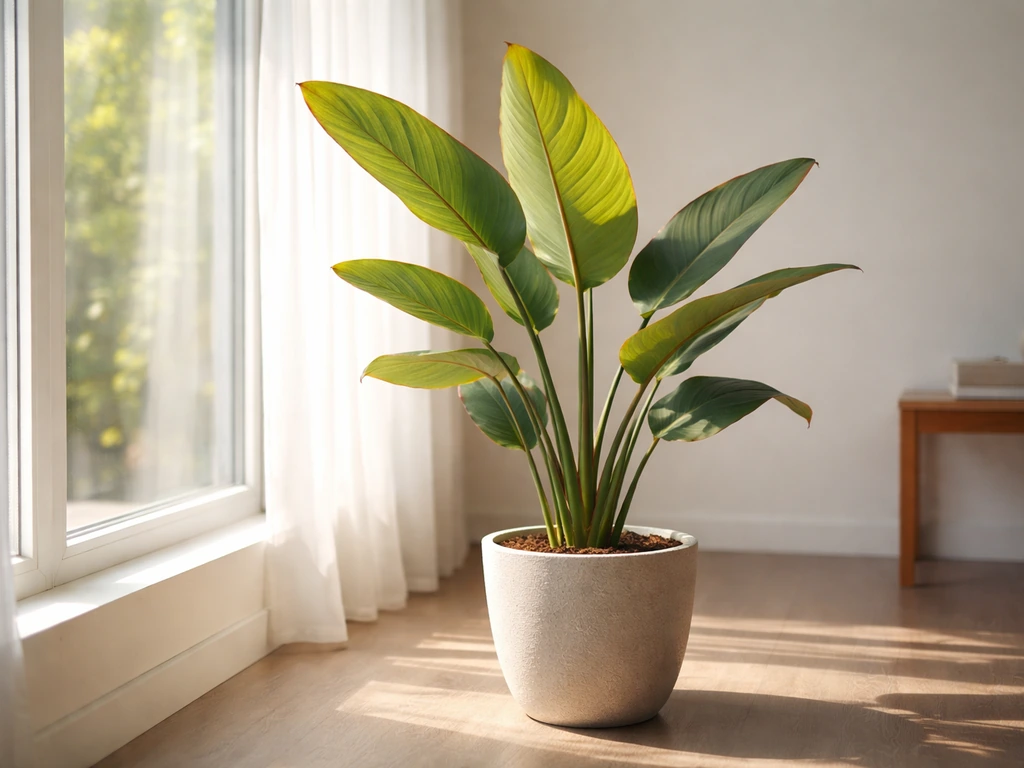
Cannas want 6 to 8 or more hours of direct, unfiltered sunlight every day. That's full sun, no compromises. In a garden, that's easy. Indoors, that's a real challenge. Even a bright south-facing window usually delivers 4 to 5 hours of direct sun at best, and filtered through glass, the intensity drops noticeably. A canna sitting in a sunny apartment window will grow, but it will stretch toward the light and produce weaker stems than one grown outside. That's not a deal-breaker, but it's honest.
Making the most of natural light
Put your indoor canna in the brightest spot you have. A south-facing window is ideal in the northern hemisphere, a north-facing window in the southern hemisphere. Keep the plant close to the glass (within a foot or two), keep the glass clean, and rotate the pot every week or two so all sides get exposure. Pull back any sheer curtains during the day. Every bit of direct sun counts. With the right lighting and care plan, canna growing indoors is totally achievable can cannas grow indoors.
When and how to use grow lights
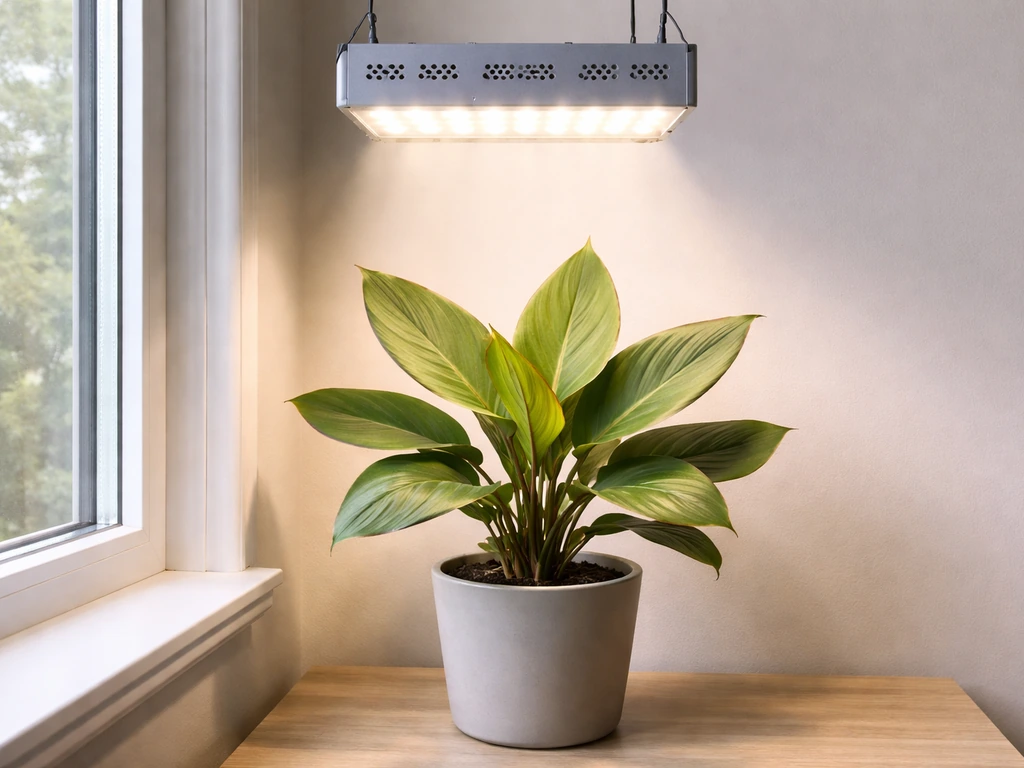
If you're serious about getting blooms, or if your windows are limited, a grow light is the single best upgrade you can make. A full-spectrum LED grow light positioned 12 to 18 inches above the foliage and running for 14 to 16 hours a day can genuinely substitute for outdoor sun intensity. Look for lights rated in the 2000 to 4000 lumen range for a single container plant. Set a timer so the plant gets consistent photoperiods rather than guessing each day. I've seen compact cannas bloom reliably under LED grow lights in apartments with no direct sun at all, so this is absolutely a viable path.
Pot, soil, and watering basics
The pot you choose matters more than most people realize. Go too small and the rhizome gets cramped, roots overheat, and the whole plant stresses out. Go too big and excess soil stays wet for too long, which is a fast track to rot. For a single dwarf canna rhizome, aim for a container at least 18 inches in diameter and at least 5 gallons (about 20 liters) in volume. That gives enough room for root development without drowning the roots in unused wet soil.
Drainage holes are non-negotiable. If a pot doesn't have them, drill some or pick a different pot. Cannas sitting in standing water will rot. Use a free-draining potting mix, something like a standard potting compost mixed with about 20 to 30 percent perlite. That combination holds enough moisture to keep the plant hydrated while letting excess water move through quickly. Avoid heavy garden soil or dense mixes that compact in containers.
When you plant the rhizome, place it horizontally in the pot with the growth buds (the small "eyes") facing upward. Cover it with about 2 to 4 inches (5 to 10 cm) of soil. Some sources say shallower (1 to 2 inches) for faster emergence, others recommend 3 to 4 inches for stability. I tend to go with about 3 inches for container planting, which balances sprouting speed with anchoring the rhizome well.
For watering, the golden rule is: water thoroughly, then let the top inch or two of soil dry out before watering again. In active growth during warm months, that might mean watering every 2 to 3 days. In cooler or lower-light conditions, the plant uses less water and you should back off accordingly. Always water at the base, not overhead, and empty any saucers after 30 minutes so roots aren't sitting in pooled water.
Temperature, humidity, and airflow
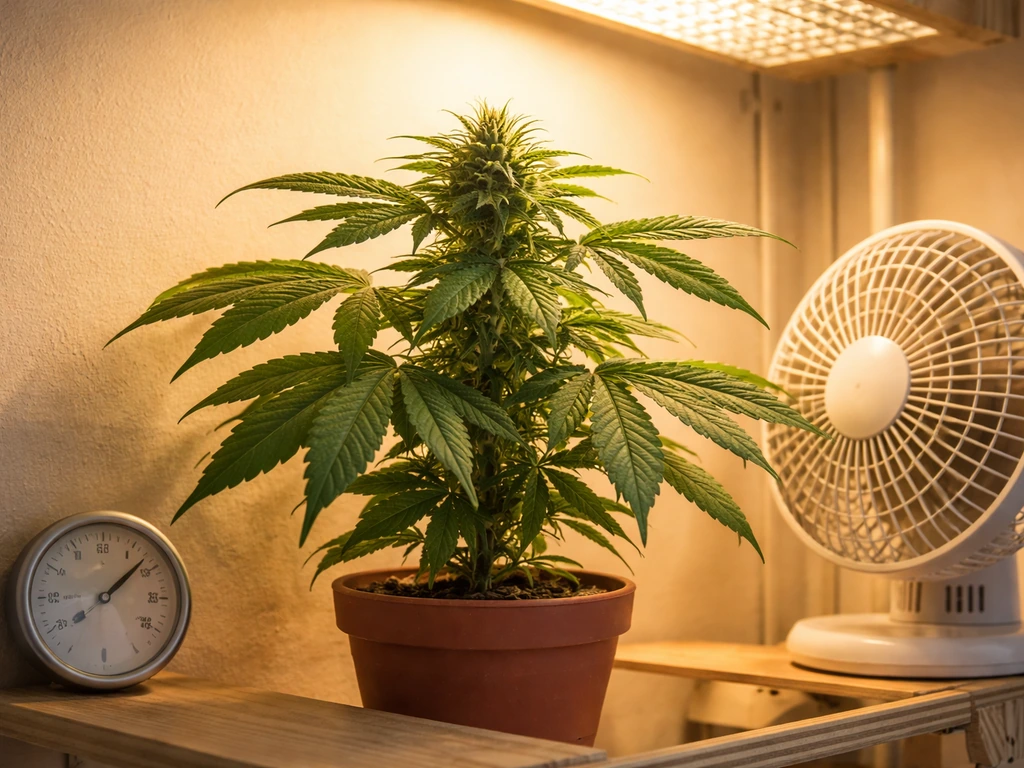
Cannas are tropical plants that love warmth. For active indoor growth, aim to keep nighttime temperatures at 65 to 70°F (18 to 21°C) and daytime temperatures somewhere in the 70s to low 80s°F (21 to 28°C). They handle warmth well but are sensitive to cold, anything below 50°F (10°C) will slow growth noticeably, and frost is lethal. Keep them away from cold drafts, air conditioning vents in summer, and windowsills that get genuinely cold in winter.
On humidity, cannas tolerate a reasonable range but prefer moderate to high humidity, which aligns with their tropical origins. Indoor air in winter, especially with heating running, can get very dry. You don't need to hit rainforest levels, but keeping relative humidity around 50 to 60 percent helps. A small humidifier near the plant, a pebble tray with water beneath the pot (but not touching the pot's drainage holes), or grouping plants together all help maintain humidity without overwatering.
Airflow is something indoor gardeners often overlook, but it's genuinely important for cannas. Good air circulation discourages fungal issues and helps keep spider mites in check. If the room is stagnant, run a small fan on low nearby, aimed to create gentle movement around the foliage rather than blasting directly at the plant. Even 20 to 30 minutes of fan time a day makes a difference.
Starting from rhizomes vs. seed indoors
Almost every practical indoor grower starts cannas from rhizomes, not seeds. Rhizomes are faster, more reliable, and you know exactly what you're getting in terms of variety and color. Expect rhizomes to take 60 to 120 days from planting to flower, depending on light and temperature conditions. Start them in late winter (January to March) if you want active growth by spring, or simply pot them up whenever you're ready and give them consistent warmth and light to trigger growth.
Growing from seed is possible but slower and less predictable. Canna seeds have a very hard coat and need to be scarified (nicked or sanded) and soaked in warm water for 24 hours before sowing to speed germination. Even then, expect 2 to 3 weeks before you see sprouts, and it'll be many more months before you get a plant large enough to bloom. For most indoor gardeners, rhizomes are simply the better choice.
Fertilizing your indoor canna
Cannas are hungry plants and need consistent feeding during active growth. A balanced fertilizer like 10-10-10 or a slightly phosphorus-forward formula like 5-10-5 works well. The phosphorus supports root development and encourages flowering, which is especially useful indoors where you're trying to coax blooms without full outdoor sun.
Feed every two weeks during the active growing season (typically spring through late summer) using a liquid fertilizer diluted to label strength. Liquid feeds are easier to manage in containers because you can control the dose precisely and the plant takes them up quickly. Slow-release granular fertilizers are a lower-maintenance option, but liquid gives you more control for troubleshooting.
One thing to watch for: if leaves start showing yellowing between the veins while the veins themselves stay green (interveinal chlorosis), that can indicate a magnesium deficiency. A dose of diluted Epsom salt (magnesium sulfate), about 1 tablespoon per gallon of water, applied once a month alongside regular feeding, can address this. It's a common issue in container-grown plants where nutrients leach out with frequent watering.
Stop feeding in fall when growth slows, and don't fertilize a plant that's going dormant or stressed. Overfeeding a struggling plant makes things worse, not better.
Solving common indoor canna problems
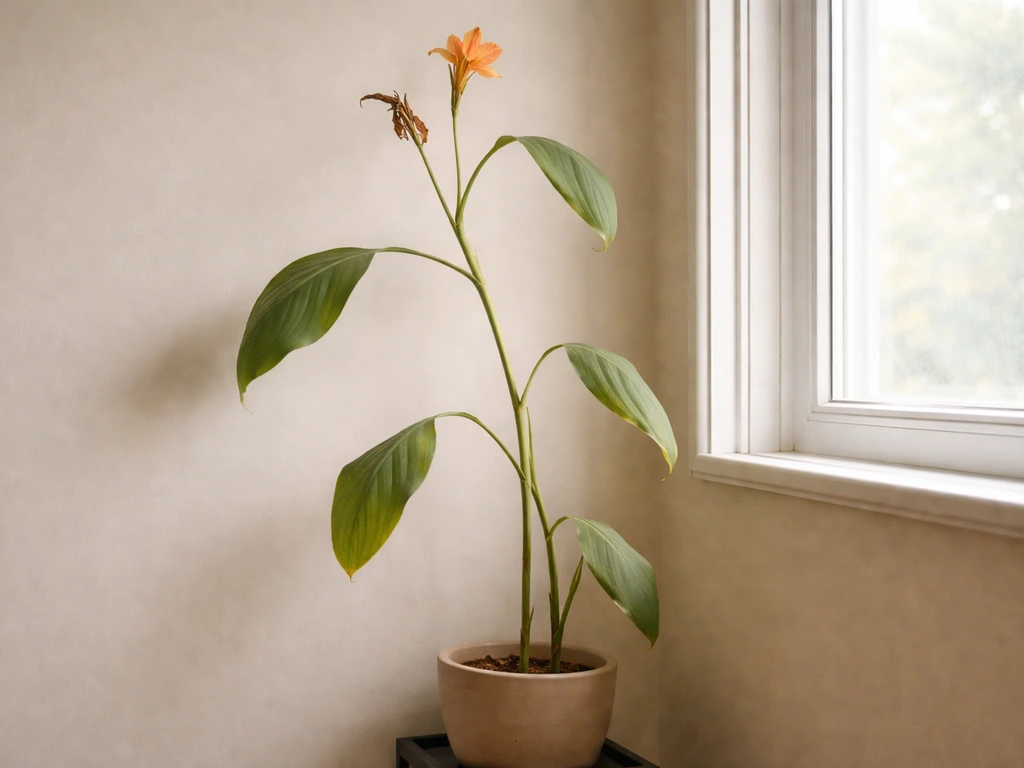
Leggy, floppy growth
This is the most common indoor complaint, and it almost always comes down to light. When a canna stretches toward a window with thin, weak stems and large gaps between leaves, it's telling you it's not getting enough. The fix is either to move it to a brighter spot or add a grow light. Staking the stems can help cosmetically, but it won't solve the root cause. If you add more light and the plant starts pushing compact, strong new growth, you're on the right track.
Rhizome and crown rot
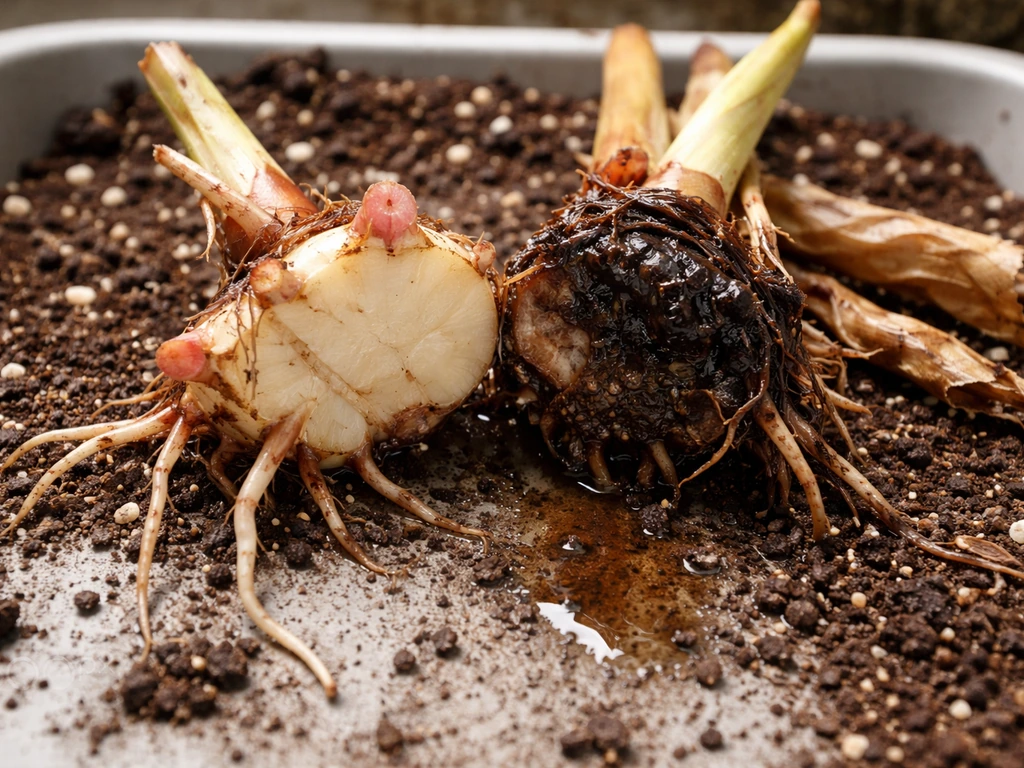
Rot is the second biggest killer of indoor cannas. It's caused by fungal pathogens including Sclerotium rolfsii and Fusarium species, which thrive in persistently wet, warm conditions. Signs include mushy stems at the base, a sour or rotten smell from the soil, and wilting despite moist soil. If you catch it early, you can sometimes save the plant by removing it from the pot, cutting away all rotted tissue with a clean knife, letting the rhizome dry for a day, dusting the cuts with powdered sulfur or a fungicide, and repotting in fresh, dry mix. Prevention is much easier than cure: good drainage, the right pot size, and not overwatering.
Spider mites and mealybugs
Spider mites love hot, dry, still indoor air, which is exactly the environment a canna sits in next to a sunny window in winter. You'll notice fine webbing on the undersides of leaves and a stippled, dusty look to the foliage. Mealybugs show up as cottony white clusters in leaf axils and along stems. Both can stunt growth and cause yellowing. For mites, increase humidity and improve airflow first. Then treat with insecticidal soap or neem oil, covering all leaf surfaces including the undersides. University of Minnesota Extension’s “Recipe for Success” fact sheet for spider mites also lists insecticidal soap treatments such as Kopa™ Insecticidal Soap, along with timing guidance in its laminated format blank" rel="noopener noreferrer">insecticidal soap option (Kopa™ Insecticidal Soap). Repeat every 5 to 7 days for three weeks to break the life cycle. Mealybugs respond well to dabbing with a cotton swab dipped in rubbing alcohol, followed by a neem oil spray.
Leaf spotting and fungal issues
Brown or rust-colored spots on leaves can point to fungal issues, often made worse by overhead watering or very high humidity with poor airflow. Water at the base only, improve ventilation, and remove affected leaves promptly. A copper-based fungicide can help if the problem persists. Canna rust is a specific fungal disease that shows as orange powdery pustules on leaf undersides. It spreads fast, so remove and dispose of affected leaves immediately (not in compost) and treat the whole plant.
When your canna outgrows the indoors
Even compact cannas can eventually push the limits of an indoor space, especially as the rhizome multiplies over seasons. If your plant is hitting the ceiling, getting root-bound, or just not thriving despite your best efforts, moving it outdoors (or transitioning it through dormancy) is a perfectly good option. Harden it off over 7 to 10 days by putting it outside for a few hours each day in a sheltered, partially shaded spot before moving it to full sun. That transition prevents sunscald on leaves that have adapted to indoor light levels. Alternatively, let the plant go dormant in fall by cutting back watering, cutting the stems down to a few inches, and storing the pot in a cool, dry, frost-free spot (around 50 to 55°F / 10 to 13°C) for the winter. Bring it back into warmth in late winter to restart the cycle.
If you enjoy growing tropical foliage plants indoors generally, cannas share some traits with other bold-leaved plants worth exploring. Yes, you can also grow kalanchoe indoors, but it has its own needs for light and watering to keep it healthy. You may also like learning how to grow columbine indoors, since it has its own light and moisture needs. Caladiums, for instance, are another rhizome-based tropical that leans more foliage-forward and can be a bit more forgiving on light indoors. Coleus is another option if you love the colorful leaf angle without the size commitment of a canna.
Quick reference: indoor canna at a glance
| Factor | Target for indoor canna |
|---|---|
| Light | 6 to 8+ hours of direct or grow-light equivalent daily |
| Pot size | Minimum 18 inches diameter, 5 gallons (20 L) volume |
| Planting depth | 2 to 4 inches (5 to 10 cm) deep, eyes facing up |
| Watering | Thoroughly, then let top 1 to 2 inches dry before rewatering |
| Night temperature | 65 to 70°F (18 to 21°C) |
| Humidity | 50 to 60% relative humidity |
| Fertilizer | 10-10-10 or 5-10-5, every 2 weeks during active growth |
| Best varieties | Dwarf or compact types, 18 to 36 inches tall |
| Days to flower | 60 to 120 days from planting |
FAQ
Can you grow canna indoors year-round, or do they need dormancy?
You can keep them growing indoors for multiple seasons if you maintain strong light and warm temperatures, but most cannas still benefit from a rest period. A practical approach is to let growth slow in fall, reduce feeding, cut stems back, and store the rhizome in a cool, frost-free area so you can restart vigor in late winter.
What’s the minimum light a canna needs indoors to survive, even if it might not bloom?
If you only have a bright window with limited direct sun, the plant may survive but will usually stretch and produce weaker stems. For survival plus healthier foliage, aim for at least several hours of strong light daily, and if blooms are your goal or window light is inconsistent, use a grow light on a timer (about 14 to 16 hours).
Should I start canna rhizomes in water or directly in soil indoors?
For indoor growing, planting directly in a warm, free-draining potting mix is usually the safer route. Soaking or water-starting can increase the chance of rot if airflow and temperatures are not ideal. If you do soak to encourage sprouting, drain thoroughly and move into dry-ish, well-aerated mix.
How do I prevent rot if my indoor space stays cool or my watering schedule is inconsistent?
Rot is most likely when it’s warm and wet at the rhizome base. Use the larger pot size guideline, ensure drainage holes are clear, water deeply then wait until the top inch or two dries, and keep a small fan for airflow. If your home runs cool, reduce watering frequency rather than trying to “catch up” with extra water.
Can I use a small grow tent or closet to grow cannas indoors?
Yes, cannas can do well in enclosed setups if you manage light height, airflow, and temperature. Keep the light 12 to 18 inches above the foliage, run a gentle fan to avoid stagnant air, and avoid letting condensation build on leaves, which raises fungal risk.
Do I need fertilizer if my potting mix already has nutrients?
Usually, you still feed during active growth, but start lighter. If the mix has slow-release nutrients, wait a few weeks after sprouting before beginning a diluted liquid feed on a 2-week schedule. Stop feeding if leaves pale but growth also stalls, overfeeding stressed plants can worsen problems.
Why are my canna leaves yellowing, but the veins stay green, what should I do?
Interveinal chlorosis (yellow between veins while veins remain greener) often points to magnesium deficiency in container plants. A monthly dose of diluted Epsom salt can help, but also check that you are not overwatering, because root stress can mimic nutrient issues.
Is it okay to mist cannas for humidity indoors?
Misting can help briefly but it often increases leaf wetness, which can contribute to spotting or fungal issues if airflow is low. Better options are a humidifier set around 50 to 60 percent humidity, a pebble tray that does not touch the drainage holes, or grouping plants, then maintain airflow with a fan.
How often should I rotate the pot to prevent leaning?
Rotate the container every week or two so all sides receive comparable light. If you use a grow light, rotation still helps if the light is not perfectly centered or if surrounding reflections change as the plant grows.
My canna is growing tall and leggy indoors, do I need to stake it or change something else?
Leggy growth is almost always a light problem, staking only fixes appearance. The fastest improvement comes from moving to a brighter spot or raising the grow light output and ensuring consistent daily photoperiod using a timer. Once light levels improve, new growth should tighten up over time.
What’s the best way to handle spider mites on indoor cannas?
Start with humidity and airflow, then treat the undersides of leaves thoroughly with insecticidal soap or neem oil. Repeat every 5 to 7 days for several rounds, because eggs and newly hatched mites can survive the first treatment.
If my canna outgrows the indoors space, can I transition it outside?
Yes, but harden it off first to prevent sunscald. Increase outdoor exposure gradually over 7 to 10 days in a sheltered, partially shaded spot before moving to full sun. If you want year-round container cycles, you can also transition it into dormancy indoors and restart later.