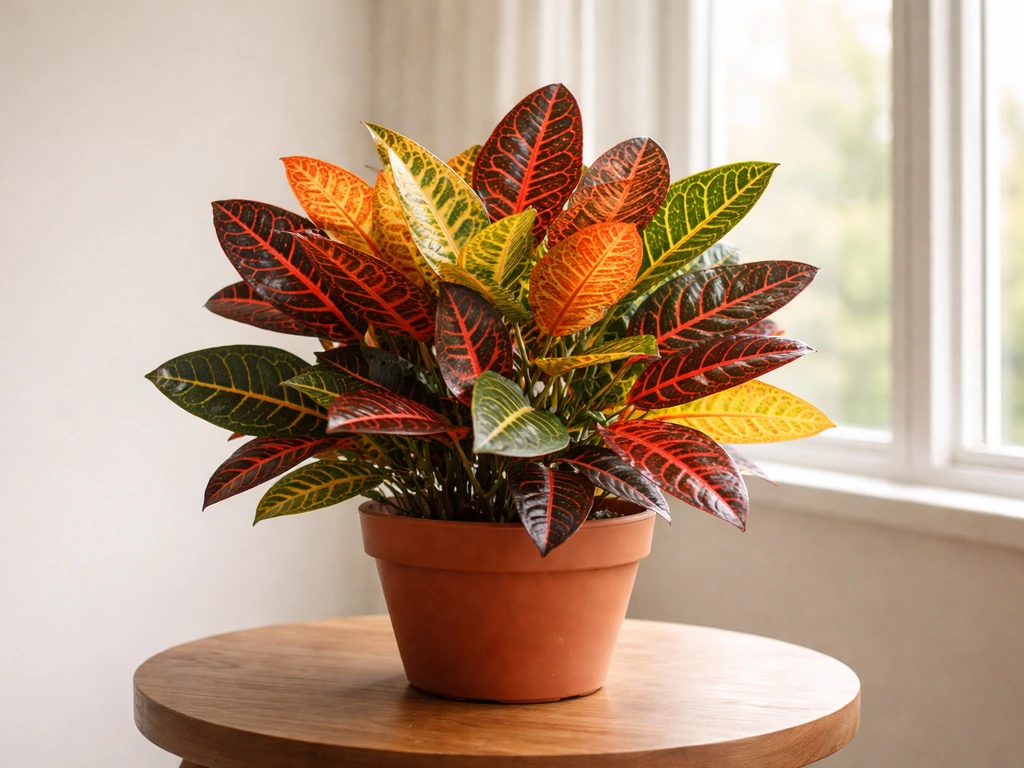
Yes, crotons can absolutely grow indoors, but they're not the easygoing houseplant that forgives neglect. can tradescantia grow indoors. Get the light right, keep the air humid and warm, and water consistently without overdoing it, and you'll have one of the most dramatic, colorful plants in your home. Get those things wrong, and you'll watch leaves drop one by one until you're left with a sad stick in a pot. The good news is that once you understand what crotons actually need, it's very manageable, even in an apartment. If you’re also wondering can camellias grow indoors, the key is matching their light and moisture needs to your home’s conditions.
Can Crotons Grow Indoors? Light, Water, and Care Guide

James Hartwell
6 May 2026
Choosing the right croton to bring inside
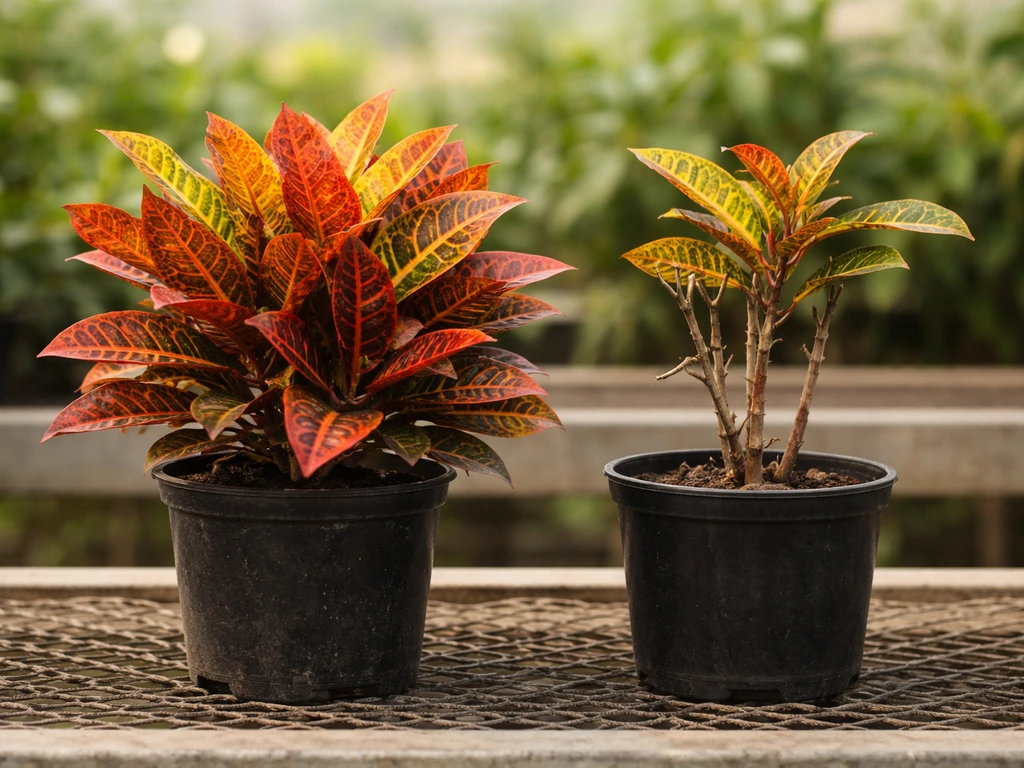
Not all crotons are equally suited to indoor life, and size matters a lot if you're working with limited space. The classic 'Petra' cultivar is stunning with its bold red, orange, and yellow leaves, but it can reach 3 to 6 feet tall and nearly as wide indoors, and will push well past 8 feet if you never prune it. If you want something more apartment-friendly, look at 'Gold Dust', which typically tops out around 2 to 3 feet and stays bushy and compact. Rushfoil-type crotons like 'Golden Bell' have a narrower, more upright habit that works well in tight spaces too.
When you're picking a plant at the nursery, skip any that already have bare stems, yellowing lower leaves, or a leggy stretched look. Those are signs it's already been kept in too little light and it's going to struggle even harder in your home. Choose the densest, most colorful specimen on the shelf. Vibrant leaf color is basically a health indicator with crotons: the more saturated and multicolored the leaves, the better the plant was grown before you got it.
Light requirements: this is the make-or-break factor
If there's one thing that determines whether your croton thrives or slowly declines indoors, it's light. Crotons are classified as high-light houseplants, and the University of Tennessee extension notes they need roughly 4 hours of direct light daily for good color. The University of Maryland Extension puts them firmly in the high-light category, meaning a south-facing window is your best bet in most homes. A bright west-facing window can work too, giving the plant strong afternoon sun. East-facing windows, which deliver gentler morning sun, are workable but often just barely enough, and a north-facing window alone will not cut it.
Here's the nuance though: crotons want bright light and some direct sun, but not brutal midday summer sun blasting through glass at full intensity, which can scorch leaves and dull the colors to a grayish tone. A south window with a sheer curtain in summer, or a spot just beside a south window rather than directly in the beam, is often the sweet spot. UW-Madison Extension notes that in insufficient light, leaf colors revert to greener and the bold markings fade, so if your croton starts looking uniformly green, move it closer to the light source.
When to use a grow light
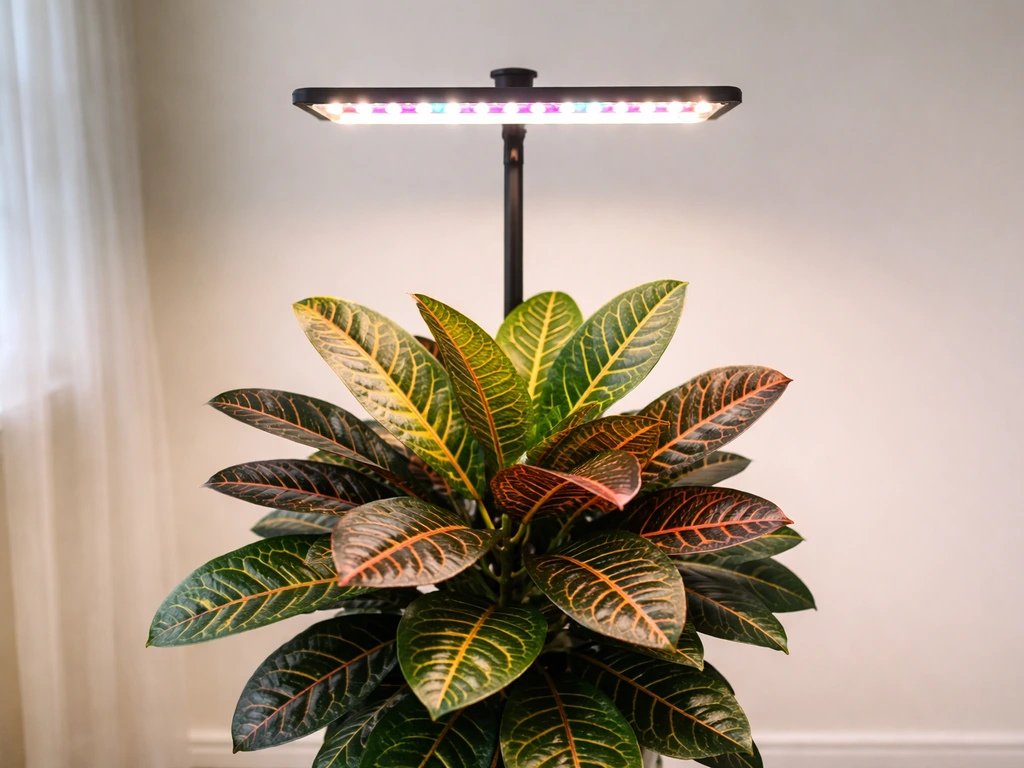
If your best window is north-facing, or you're in a basement apartment, a full-spectrum LED grow light positioned 6 to 12 inches above the plant for 12 to 14 hours a day will make a real difference. This isn't just a workaround, it can genuinely replicate the brightness a croton needs. I've kept one under a grow light during winter months when sun angles drop and window light weakens, and the color stayed vivid. Think of a grow light as insurance against the predictable seasonal light dip.
Watering, soil, and drainage done right
Crotons like consistently moist soil, not soggy soil. The practical rule: check the top 1 to 2 inches of soil, and when that layer feels dry to the touch, water thoroughly until it drains freely from the bottom. Empty the saucer after about 30 minutes so the roots aren't sitting in standing water. In summer, this might mean watering every 5 to 7 days. In winter, when growth slows and light is lower, you might stretch to every 10 to 14 days. The RHS notes that dry compost triggers leaf drop, so don't let it dry out completely, but also don't keep it waterlogged.
For soil, the RHS recommends ericaceous (acidic) compost for codiaeum, which is the same type used for azaleas and blueberries. A standard peat-based or peat-free acidic mix works well. Avoid heavy, dense potting soils that stay wet. Good drainage is non-negotiable: choose a pot with drainage holes, and if you're using a decorative cachepot, make sure it doesn't trap water at the bottom. The RHS also suggests using rainwater or filtered water at room temperature rather than cold tap water, which can shock roots and contribute to leaf drop.
Temperature and humidity targets
Crotons are tropical plants and they want warm, stable conditions. The RHS gives an ideal temperature range of 18 to 35°C (roughly 65 to 95°F). Colorado State University PlantTalk narrows it to around 70°F during the day and no lower than 55 to 60°F at night. The practical indoor takeaway is to keep your croton away from cold windowsills in winter, away from air conditioning vents that blast cold air, and away from exterior doors that let in drafts. Temperature swings and cold drafts are a primary trigger for leaf drop.
Humidity is equally important. CSU PlantTalk targets 40 to 80% relative humidity for crotons. Most homes sit around 30 to 40% in winter with the heating running, which is on the low end for a plant that evolved in tropical rainforests. There are a few practical ways to raise humidity without turning your living room into a greenhouse.
- Place the pot on a tray filled with pebbles and water, making sure the pot base sits above the waterline, not in it. As the water evaporates, it raises local humidity around the plant. The RHS specifically recommends this approach.
- Group your croton with other humidity-loving houseplants. Plants naturally release moisture through transpiration, and clustering them creates a slightly more humid microclimate.
- Run a small humidifier near the plant, especially in winter. This is the most reliable method if your home gets very dry.
- Mist the leaves occasionally as a short-term boost, but don't rely on misting alone as the humidity effect is brief.
Fertilizing and rotating for the best results
During the active growing season (roughly March through September), feed your croton monthly with a diluted balanced liquid fertilizer. The University of Maryland Extension recommends this cadence for houseplants generally, and it works well for crotons. Dilute to half the recommended strength to avoid salt buildup in the soil. In fall and winter, when the plant's growth slows, stop fertilizing entirely until the following spring.
Rotating the pot is a simple step a lot of people skip, and then wonder why one side of their plant looks great while the other has faded, sparse leaves. Because indoor light comes from one direction, the side facing away from the window gets significantly less intensity. Give your croton a quarter turn every week or two so all sides get exposure. It sounds fiddly but takes about three seconds and makes a noticeable difference in even growth and color distribution over a season.
Troubleshooting common indoor croton problems
Leaf drop
This is the most common complaint with indoor crotons and it almost always has one of three causes: the plant was moved or disturbed (crotons notoriously drop leaves when relocated), the air is too dry, or the temperature dropped suddenly. Some leaf drop right after you bring a new plant home is normal, it's adjusting. But ongoing, progressive leaf drop points to dry air, cold drafts, inconsistent watering, or insufficient light. Work through that list systematically rather than assuming the plant is doomed.
Fading color and green-only leaves
If the bold oranges, reds, and yellows are fading and new leaves are coming in mostly green, the plant isn't getting enough light. Move it to a brighter spot or add a grow light. This is a very reliable signal and worth acting on quickly because once a croton gets chronically light-starved, it can become difficult to bring back.
Curling or drooping leaves
Curling leaves usually mean the plant is thirsty or the air is too dry. Check the soil first: if the top inch or two is dry, water thoroughly. If the soil is moist and leaves are still curling or drooping, focus on humidity. In very dry indoor air, the RHS notes that plants transpire faster than their roots can absorb water, leading to wilting even in adequately watered soil.
Spider mites and mealybugs
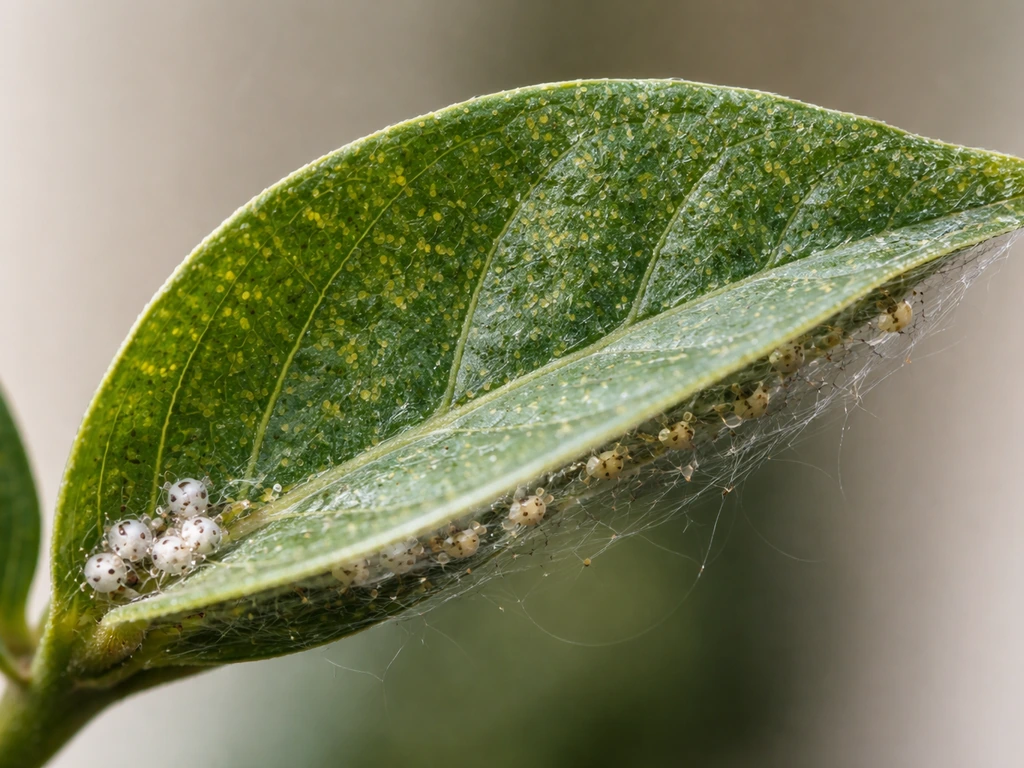
Spider mites love dry conditions and will show up as fine webbing on the undersides of leaves with tiny yellowing specks on the surface. Mealybugs look like small white cottony clusters in leaf axils and along stems. Both are common on indoor crotons, especially in low-humidity environments. For mites, Utah State University Extension recommends insecticidal soap or horticultural oil (applied at about 1 to 1. Colorado State University Extension explains that blank" rel="noopener noreferrer">insecticidal soaps can be effective against small, soft-bodied arthropods such as spider mites and mealybugs. 5% dilution, at dusk for best effect). For mealybugs, blank" rel="noopener noreferrer">Missouri Botanical Garden points to insecticidal soap and horticultural oils as effective treatments. Isolate an affected plant immediately, treat weekly for 3 to 4 weeks, and boost humidity to make conditions less hospitable for mites going forward.
Your indoor croton success checklist
If you want to set your croton up for success starting today, run through this list before and after you bring it home. Cyclamen can also be grown at home, but it needs different care than crotons what type of plant is cyclamen grow a garden. These are the factors that separate thriving indoor crotons from the ones that slowly deteriorate.
- Choose a compact cultivar like 'Gold Dust' (2 to 3 ft) for smaller spaces, or 'Petra' if you have room for a statement plant.
- Pick the healthiest, most colorful specimen at the nursery: dense foliage, vivid colors, no bare lower stems.
- Place it at a south or bright west-facing window, or under a full-spectrum LED grow light for 12 to 14 hours daily.
- Use an ericaceous (acidic) potting mix in a pot with drainage holes.
- Water when the top 1 to 2 inches of soil are dry; water deeply and let it drain fully.
- Use rainwater or filtered water at room temperature rather than cold tap water.
- Keep the room between 65 and 95°F and avoid cold drafts, vents, and chilly windowsills in winter.
- Raise humidity to at least 40% using a pebble tray, plant grouping, or humidifier.
- Fertilize monthly with diluted balanced liquid fertilizer from spring through late summer; stop in fall and winter.
- Rotate the pot a quarter turn every week or two for even light exposure.
- Inspect leaves monthly for spider mites and mealybugs; treat early with insecticidal soap or horticultural oil.
- If leaves drop after moving the plant, be patient and stabilize conditions before making further changes.
Crotons reward patience and consistency. Once yours finds its spot and adjusts to your home's conditions, it can hold its color and stay full for years. Cymbidiums are also commonly grown as houseplants, and with the right light and temperature they can do well indoors. If you want to expand beyond crotons, you can also ask can you grow camellia sinensis indoors and follow the same consistency mindset for light and care can hold its color and stay full for years. If you enjoy the challenge of tropical plants indoors, you might also find tradescantia and cyclamen interesting for similar reasons: they're both bold, colorful options with their own specific indoor requirements worth exploring.
FAQ
What’s the best way to acclimate a croton I just bought, so it doesn’t drop leaves?
Keep it in the brightest spot you have right away, avoid moving it for 2 to 3 weeks, and protect it from drafts (doorways, AC vents). If it needs to be moved, do it gradually over several days and keep watering consistent, since relocation plus changes to light or humidity are the most common trigger for ongoing leaf drop.
Can I grow a croton indoors on the same schedule year-round, or do I need to change care in winter?
You should change the routine. In winter, light intensity drops and growth slows, so water less often, stop fertilizing, and keep the plant away from cold windowsills. If you cannot increase light, expect slower recovery and possible leaf loss until conditions stabilize.
How do I tell the difference between under-watering and over-watering with crotons?
Check the soil, not the plant’s mood. If the top 1 to 2 inches are dry, water thoroughly; if the soil stays wet or smells musty and leaves yellow or drop, you may be over-watering or using a potting mix that holds water. Good drainage and emptying the saucer after watering are key to preventing root stress.
Is tap water always a problem for indoor crotons?
It’s not always, but issues can happen if your water is very cold or unusually hard. Using room-temperature water reduces shock, and if you notice browning leaf edges or soil crusting, switch to filtered or rainwater and flush the pot occasionally by running water through until it drains freely.
Do crotons need to be repotted soon after I buy them?
Usually, no. Unless the plant is root-bound or sitting in a poor, water-holding mix, repotting immediately can add stress and trigger leaf drop. Wait until it has adjusted (often a few months), then move it to an acidic, well-draining mix in a pot that has drainage holes.
Can crotons handle fluorescent light or only full-spectrum grow lights?
Crotons need high brightness. Standard indoor fluorescents often do not provide enough intensity for strong color, especially in winter. A full-spectrum LED is more reliable when natural light is weak, and the main practical factor is distance and duration (keeping it close enough and running it long enough).
How often should I rotate the pot, and will that cause more leaf drop?
Rotate only a small amount (a quarter turn) every week or two. The key is to avoid frequent, dramatic repositioning, which can stress the plant. If your croton is actively dropping leaves, pause rotation until it settles, then resume once things stabilize.
Why are the leaves dropping but the soil seems moist?
Moist soil with leaf drop often points to non-water causes, most commonly cold drafts or sudden temperature drops. Also consider low humidity or insufficient light, since crotons can shed leaves when they cannot transpire and absorb water efficiently under stressful conditions.
Are crotons safe around pets and children?
Crotons (codiaeum) are generally considered toxic if ingested, so it’s smart to keep them out of reach and wash hands after handling, since sap can irritate skin. If you suspect chewing or ingestion, contact a local poison control service promptly.
What’s the fastest way to recover color if my croton starts turning greener?
Treat it as a light problem first. Move it closer to the brightest window you can manage, or add a grow light, then keep the plant steady for several weeks. Expect improvement in new growth first, older leaves will not recolor, so patience and consistency matter.
How do I manage spider mites indoors without constantly re-treating the whole room?
Isolate the plant immediately when you see mites, spray foliage so the undersides are covered, and repeat treatments on a weekly schedule for a few weeks. Boost humidity around the plant afterward, since mites thrive in dry conditions, and wipe nearby leaves or check other plants to prevent reinfestation.