
Morning glories can grow indoors, and they can even bloom, but they are one of the more demanding flowering vines you can attempt inside a home. They need a genuinely sunny spot or a full-spectrum grow light, consistent warmth, room for a trellis, and careful watering. Get those things right and you will have fast-climbing vines with open-faced flowers. Miss on light especially, and you will end up with a tall, floppy, flowerless mess. If you have a south-facing window or are willing to run a grow light for 14 to 16 hours a day, this is absolutely doable. If your best window faces north or east with limited direct sun, it is a harder road. Can bleeding hearts grow indoors? It is also worth checking can daffodils grow indoors, since bulb plants have different light and watering needs. With the right light, moisture, and temperature control, you can give them the conditions they need.
Can Morning Glories Grow Indoors? A Step-by-Step Plan

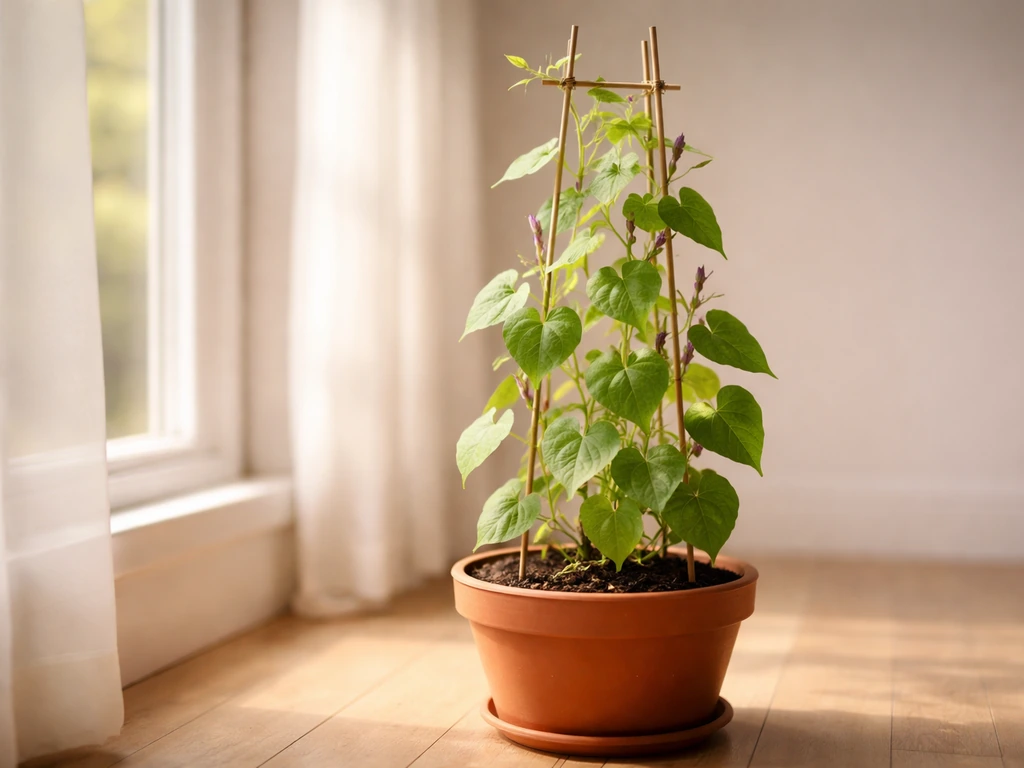
What you actually need to pull this off
Morning glories are sun-hungry plants. Outdoors, they want full sun all day. Indoors, you are trying to replicate that, which is the single biggest challenge. A south-facing window in a spot with no obstructions is your best natural-light option. If your window gets 6 or more hours of direct sun hitting the leaves, you have a reasonable shot at flowers. Anything less than that and blooming becomes unreliable, though the plant will survive and grow.
That said, morning glories are not as picky about bloom conditions as something like a dahlia. They are vigorous growers and will push a lot of vegetative growth even in imperfect light. The problem is that indoors you rarely have imperfect light that still gets you flowers. It tends to be either enough light for blooms or not quite enough and the plant just keeps vining without ever opening a flower.
Light requirements and how to provide them indoors
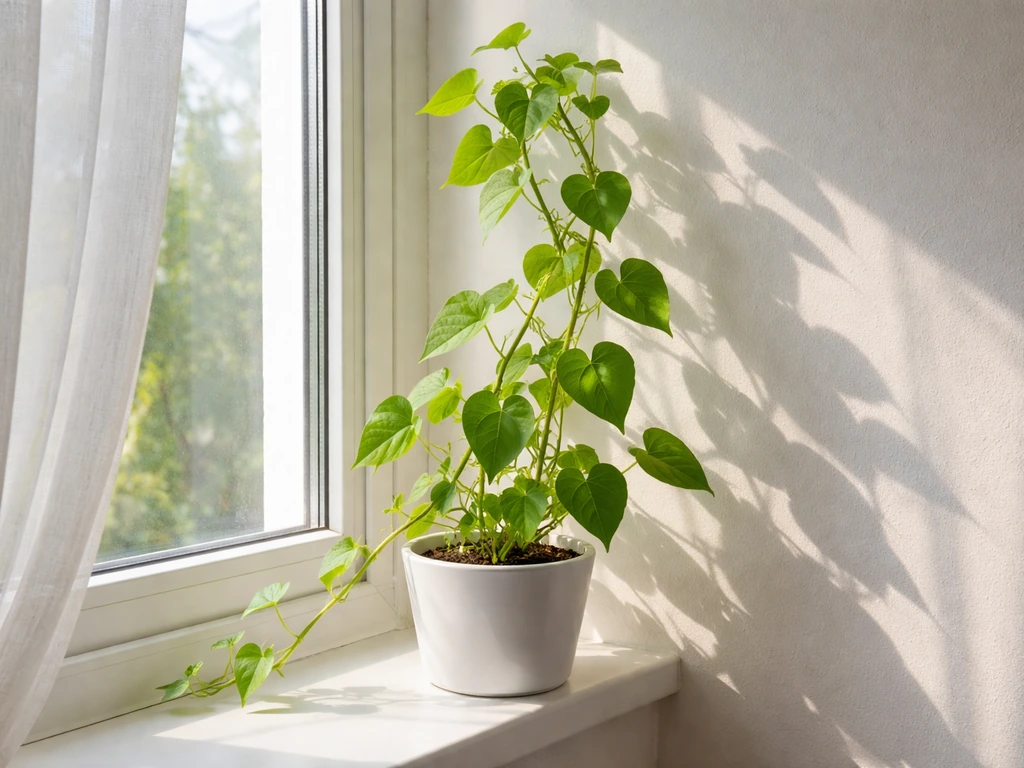
This is the section that determines whether you succeed or struggle, so take it seriously. Morning glories need the equivalent of full sun, which means high light intensity for a long duration. The two ways to get there indoors are a strong natural window or a grow light.
Using a window
A south-facing window is your best bet in the Northern Hemisphere. Place the pot right at the glass, not set back on a shelf. Even a foot or two away from the window drops light intensity significantly. If you have a west-facing window that gets strong afternoon sun for 4 to 5 hours, that can work but expect fewer flowers and slower growth than a full south exposure. East-facing windows that catch only morning sun tend to produce leggy, non-blooming vines. You can supplement with a grow light in that case.
Using a grow light
A full-spectrum LED grow light positioned 6 to 12 inches above the plant and running 14 to 16 hours per day is the most reliable way to grow morning glories indoors without depending on seasonal window light. This is how you grow them year-round regardless of apartment orientation. Look for a light with a minimum of 2000 to 3000 lumens output directed at the canopy. Set a timer so the light shuts off consistently. Morning glories actually use a light/dark cycle to trigger blooming, so uninterrupted 24-hour light is counterproductive. Give them 14 to 16 hours on and 8 to 10 hours of darkness.
Choosing a variety and starting from seed
Not all morning glory varieties are equally suited to containers and indoor growing. Compact or dwarf cultivars are much easier to manage inside than the standard species that can run 10 to 15 feet outdoors. Look for varieties described as bush-type or compact. 'Sunrise Serenade' and 'Ensign' types tend to stay manageable. Standard Ipomoea purpurea and Ipomoea tricolor varieties like 'Heavenly Blue' will grow vigorously and produce beautiful flowers, but they require more aggressive trellis management indoors.
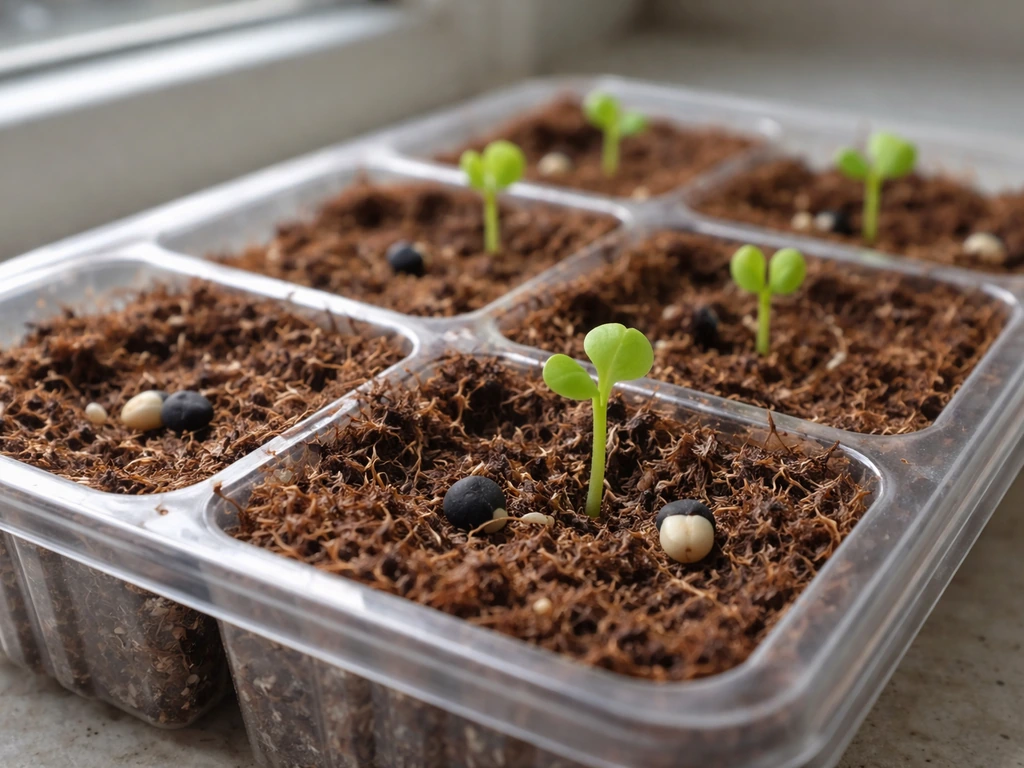
Morning glory seeds have a hard coat, which is why germination can be inconsistent. Soak seeds in room-temperature water for up to 12 hours before planting, or gently nick the seed coat with a nail file on the side opposite the eye (the pale scar). Either method softens or breaks through that hard coat and speeds up germination considerably. Seeds germinate in 5 to 14 days at soil temperatures of 65 to 75 degrees Fahrenheit (18 to 24 Celsius). Keep the starting medium consistently moist but not soggy during this period. Sow seeds about half an inch deep directly into the container you plan to grow them in, since morning glories dislike root disturbance and do not transplant well.
Containers, soil, watering, and feeding
The right container
Use a container that is at least 8 to 10 inches wide and 6 inches deep, with drainage holes. This is the minimum. If you want robust growth and flowering, go bigger, something in the 12-inch diameter range with a depth of 10 to 12 inches. Morning glories develop a significant root system and get rootbound quickly in small pots, which stresses the plant and suppresses blooming. Terracotta pots are helpful here because they allow some moisture evaporation through the walls, reducing the risk of staying too wet.
Soil mix
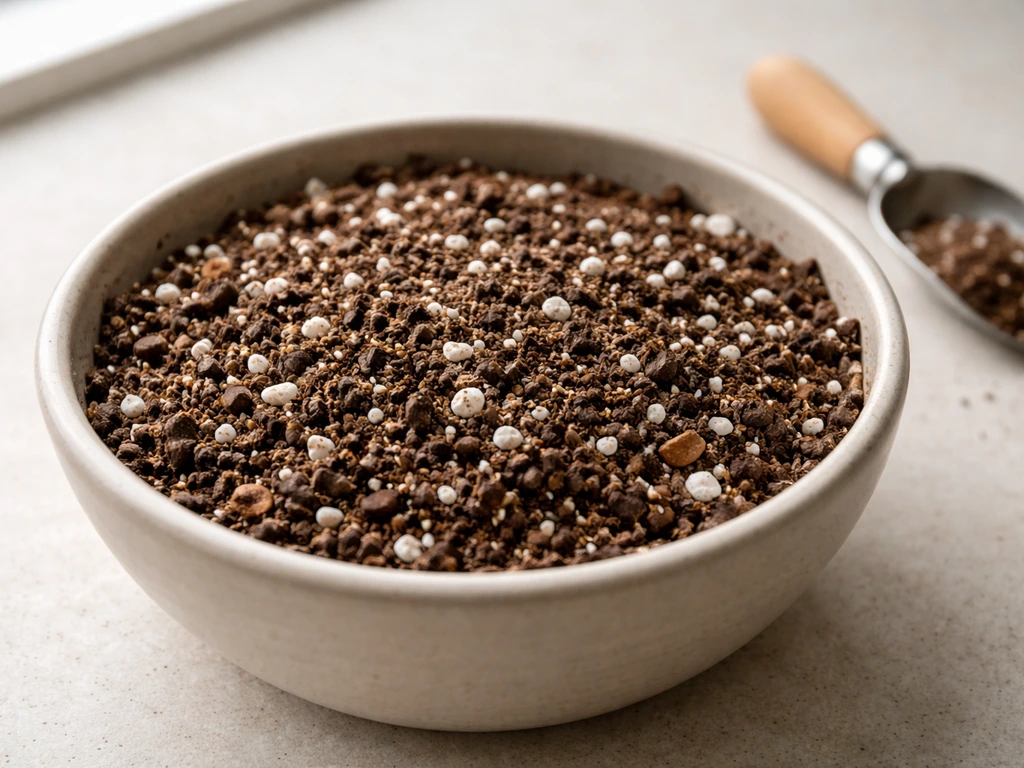
Use a well-draining potting mix. A standard all-purpose potting mix works, but add 20 to 25 percent perlite to improve drainage. Morning glories do not want rich, heavy soil. In fact, too much fertility encourages lush leafy growth at the expense of flowers. This is one of the counterintuitive things about this plant: lean soil actually promotes blooming.
Watering
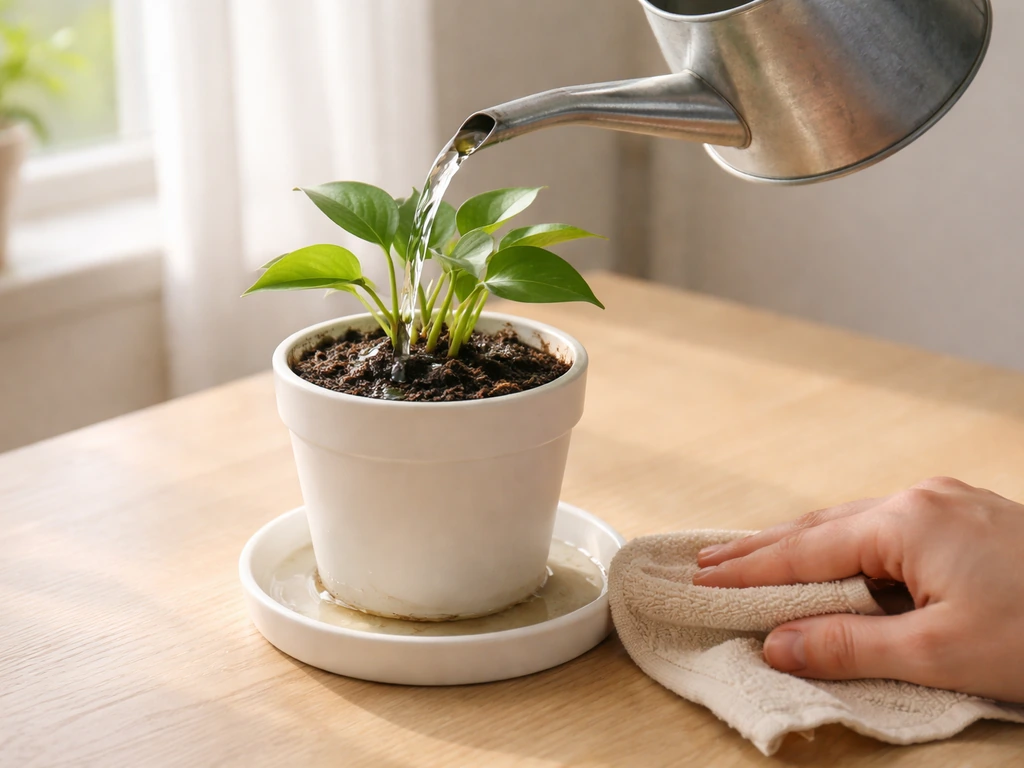
Water when the top inch of soil is dry. Morning glories like consistent moisture but are very susceptible to root rot if the soil stays waterlogged. Always water thoroughly, let it drain completely from the holes, and never let the pot sit in standing water. Indoors, where evaporation is slower than outside and light intensity is lower, it is easy to overwater. When in doubt, wait another day.
Feeding
Feed lightly. A balanced liquid fertilizer at half strength every two to three weeks during active growth is plenty. Avoid high-nitrogen fertilizers designed for foliage plants, as these push leafy vine growth and suppress flowers. If your plant is growing aggressively but not blooming, cut back or stop fertilizing entirely and see if that helps trigger flower production.
Managing a fast vine in a small space
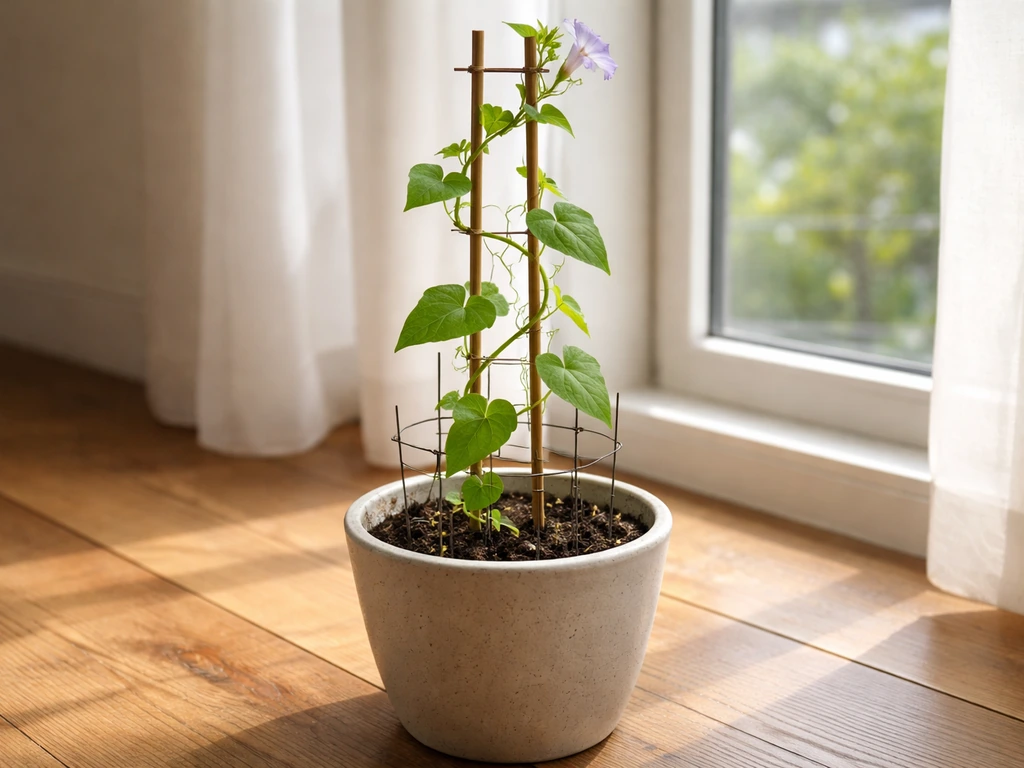
This is where indoor morning glory growing gets genuinely tricky. These vines grow fast, and indoors there is nowhere for them to go unless you plan for it from day one. Have a support system ready before you even plant the seeds.
A bamboo trellis, a small wire frame inserted into the pot, or a simple string trellis anchored to a window frame or nearby wall all work well. Aim for something at least 3 to 4 feet tall to give the vine room to climb. If you are growing near a window, you can run inexpensive jute twine vertically from the pot up to a curtain rod or a hook near the top of the window frame. The vine will find it and wrap around naturally.
Once the vine starts climbing, check it every few days. Morning glories can add several inches of growth per day in good conditions, and indoors they will wrap around anything nearby, including other plants, window handles, and curtain fabric. Guide the growing tips back onto the trellis regularly. If the vine gets out of hand, you can pinch back growing tips to keep size manageable and actually encourage branching, which leads to more flowers.
- Set up the trellis before sowing seeds, not after the vine is already growing
- Aim for a support at least 3 to 4 feet tall inside the pot
- Check and guide new growth every 2 to 3 days once active growth starts
- Pinch back tips that escape the trellis rather than letting them trail onto furniture or other plants
- If space is very limited, choose a compact variety to begin with
Common indoor problems and how to fix them
Leggy, stretched growth with no flowers
This is the most common indoor morning glory problem, and it is almost always a light issue. If your plant is reaching and stretching toward the window, stems are thin and pale between nodes, and flowers never appear, the plant is not getting enough light. Move the pot closer to the window, or add a grow light. There is no fertilizer or trick that substitutes for adequate light intensity. Address the light first.
Root rot and wilting despite moist soil
If your plant looks wilted but the soil is wet, that is a classic sign of root rot. Excess water in containers with slow drainage creates anaerobic conditions at the root zone, killing roots and preventing water uptake. Remove the plant from the pot, trim any black or mushy roots, let the root ball air out for a few hours, and repot in fresh dry mix with good perlite content. Going forward, water less frequently and make sure water drains completely. Root rot in indoor plants is almost always caused by watering too often combined with inadequate drainage.
Poor or no germination
If your seeds are not sprouting after two weeks, check two things: temperature and seed coat treatment. Morning glory seeds need soil temperature of 65 to 75 degrees Fahrenheit to germinate reliably. Cold windowsills in winter can drop soil temperature well below that even if the room air feels warm. Use a seed-starting heat mat to maintain consistent bottom heat. Also, if you did not soak or nick the seeds before planting, that hard coat may be preventing water absorption. Try fresh seeds with a 12-hour water soak before sowing.
Aphids, spider mites, and whiteflies
Indoor vines in warm conditions are magnets for all three of these pests. Spider mites love warm, dry indoor air and can build up quickly on the undersides of leaves. Aphids cluster on new growth and cause leaves to curl. Whiteflies appear as tiny white insects that scatter when you disturb the plant. For all three, start by spraying the plant thoroughly with a horticultural oil spray, making sure to coat the undersides of leaves where pests hide. Horticultural oil works by contact, so full coverage is essential. Repeat every 5 to 7 days for two to three applications to break the life cycle. Keep indoor humidity at a moderate level, since overly dry air encourages mite infestations specifically.
Flowers not opening or opening and closing quickly
Morning glory flowers naturally open in the morning and close by afternoon, even outdoors. BBC Gardeners’ World Magazine notes that Ipomoea purpurea flowers open wide in the early morning sun but are short-lived and typically do not last into the afternoon flowers open in the morning and close by afternoon. This is normal behavior and not a problem. However, if flowers never fully open or petals look twisted and pale, insufficient light is usually the culprit. Flowers opening and closing on schedule in a well-lit room is a sign the plant is healthy.
Your setup checklist for starting today
If you want to get started right now, here is the order of operations. First, sort out your light situation. Identify your sunniest window and measure how many hours of direct sun it actually receives. If it is under 5 to 6 hours, order or pick up a full-spectrum LED grow light before you do anything else. Second, get a container at least 10 to 12 inches wide with drainage holes and fill it with a perlite-amended potting mix. Third, soak your seeds overnight, then sow them half an inch deep, two to three seeds per pot. Keep the soil at 65 to 75 degrees Fahrenheit and watch for sprouts in 5 to 14 days. Fourth, have a trellis ready to insert once sprouts appear. And fifth, once the plant is established, step back on feeding and focus on light and consistent but careful watering.
Morning glories are not the easiest indoor flowering plant. If you want something more forgiving indoors, marigolds or chrysanthemums are worth comparing since they tend to need less intense light management and are more tolerant of average window conditions. If you are comparing options, it is also worth checking can chrysanthemums grow indoors, since they can be a better fit for typical home light conditions. Marigolds are one of the most popular alternatives if you are wondering can marigolds grow indoors marigolds or chrysanthemums. But if you have the light situation handled and enjoy a fast-moving, dramatic vine, morning glories indoors are genuinely rewarding. When a 'Heavenly Blue' flower opens on a bright morning in your apartment in February, it is one of those small gardening wins that makes all the setup worthwhile. If you are wondering can i grow dahlias indoors year round, the key is having enough bright light and the right temperature and care schedule. If you are wondering can i grow dahlias indoors year round, the key is having enough bright light and the right temperature and care schedule, and you can also use this as a comparison point for can dahlia grow indoors.
| Care Factor | What Morning Glories Need Indoors | What Goes Wrong Without It |
|---|---|---|
| Light | 6+ hours direct sun or 14-16 hrs under full-spectrum grow light | Leggy growth, no flowers, pale stretched stems |
| Container size | At least 10-12 inches wide, 6-10 inches deep with drainage holes | Rootbound stress, reduced blooming, poor water uptake |
| Soil | Well-draining mix with 20-25% perlite added | Root rot from retained moisture |
| Watering | Water when top inch is dry, drain fully after each watering | Root rot or drought stress depending on direction of error |
| Feeding | Half-strength balanced feed every 2-3 weeks, low nitrogen | Too much leaf growth, flowers suppressed |
| Trellis | 3-4 ft support in pot, set up before seeds sprout | Tangled unmanageable vine, stress on stems |
| Temperature | 65-75°F (18-24°C) consistently | Slow or failed germination, reduced growth rate |
| Pest management | Regular inspection, horticultural oil for mites/aphids/whiteflies | Rapid pest buildup in warm dry indoor conditions |
FAQ
Can I keep morning glories under a grow light 24/7 so they bloom faster?
Yes, but treat morning glories like they need a “day” and “night,” not just bright hours. Use a timer for the grow light, aiming for 14 to 16 hours on and 8 to 10 hours off. If you must run lights at night, keep the dark period completely dark, and avoid opening curtains at random times that interrupt the cycle.
My morning glory is growing a lot but not blooming indoors. What should I check first?
If your plant grows quickly but never flowers, reduce nitrogen and double-check light intensity. In practice, stop fertilizer for 2 to 3 weeks and verify the light is 6 to 12 inches above the canopy, not higher. Also confirm you are actually getting the right schedule (14 to 16 hours on), since incorrect timing can keep the plant in vine-only mode.
Can I start morning glory seeds in a small starter pot and transplant them later?
They generally do not transplant well because the roots are easily disturbed. The safer indoor method is to sow directly into the final container you plan to keep, or if starting elsewhere is unavoidable, transplant very young seedlings with minimal root disturbance and do it on a cloudy day so they do not dry out suddenly.
What trellis setup works best if I am growing near a window or curtain?
Choose a support that prevents the vine from reaching off the trellis. A common failure indoors is letting tendrils grab curtain fabric or other plants. If you use a window trellis, keep the area immediately around the window organized (no loose strings, no accessible fabric), and guide the growing tips every few days.
How do I know if I am overwatering my indoor morning glory?
Morning glories indoors often suffer from “wet roots” rather than a lack of water. Water thoroughly only when the top inch is dry, then empty the saucer or cachepot. If you notice leaves drooping while the soil feels damp, pause watering and check drainage, because that combination is a common early root-rot pattern.
Should I prune my indoor morning glories, and how much pruning is too much?
It is usually fine to prune for shape, but avoid heavy pruning. Pinch or trim only the growing tips to encourage branching, and do not remove large sections of mature vine unless you are retraining the plant onto the trellis. After a pinch, increase attention to light so new growth has enough intensity to form buds.
Can morning glories grow indoors during winter if my home is cooler?
Yes, but expect lower or delayed flowering. Morning glories tolerate slightly cooler indoor conditions, but germination and steady growth are best around 65 to 75°F for the root zone. If your room stays cooler, consider a heat mat for consistent soil warmth and use the grow light to prevent slow, pale, stretched growth.
Is a small pot okay for indoor morning glories, or do I need a larger container?
For indoor pots, the biggest risk is rootbound plants, which can stall flowering. A practical guideline is at least a 10 to 12 inch diameter container for robust flowering, and do not “go smaller to save space.” If the vine becomes pot-tight early, increase pot size rather than just adding more fertilizer.
Which morning glory types are best for indoor growing and staying compact?
Some varieties stay more manageable indoors, but nearly all morning glories will become long vines. If you want the plant to remain compact, look for described bush-type or dwarf cultivars, and plan to pinch regularly. If you pick a standard variety, be ready to train and guide it aggressively on a tall trellis.
Are morning glory flowers closing early indoors, and is that normal?
Usually yes, but only if the plant gets strong, consistent light and the pot does not dry out too fast. They naturally open in the morning and close later, so “daytime petals” that seem to close by afternoon can be normal. If the flowers never open fully, turn the issue back to light intensity and light timing first.