
Yes, you can grow black-eyed Susan (Rudbeckia hirta) indoors, but let's be straight with you: it's not a natural houseplant. It's a full-sun wildflower that wants at least 6 hours of direct sunlight a day, and most indoor setups can't casually deliver that. If you have a very bright south-facing window or you're willing to run grow lights for 16 hours a day, you can absolutely raise healthy plants and get flowers indoors. If you're working with a dim apartment or a modest north-facing window, you'll end up with weak, leggy stems and probably no blooms worth talking about.
Can You Grow Black-Eyed Susan Indoors? Seed and Care Guide
James Hartwell
14 May 2026
Is black-eyed Susan actually suited for indoor growing?
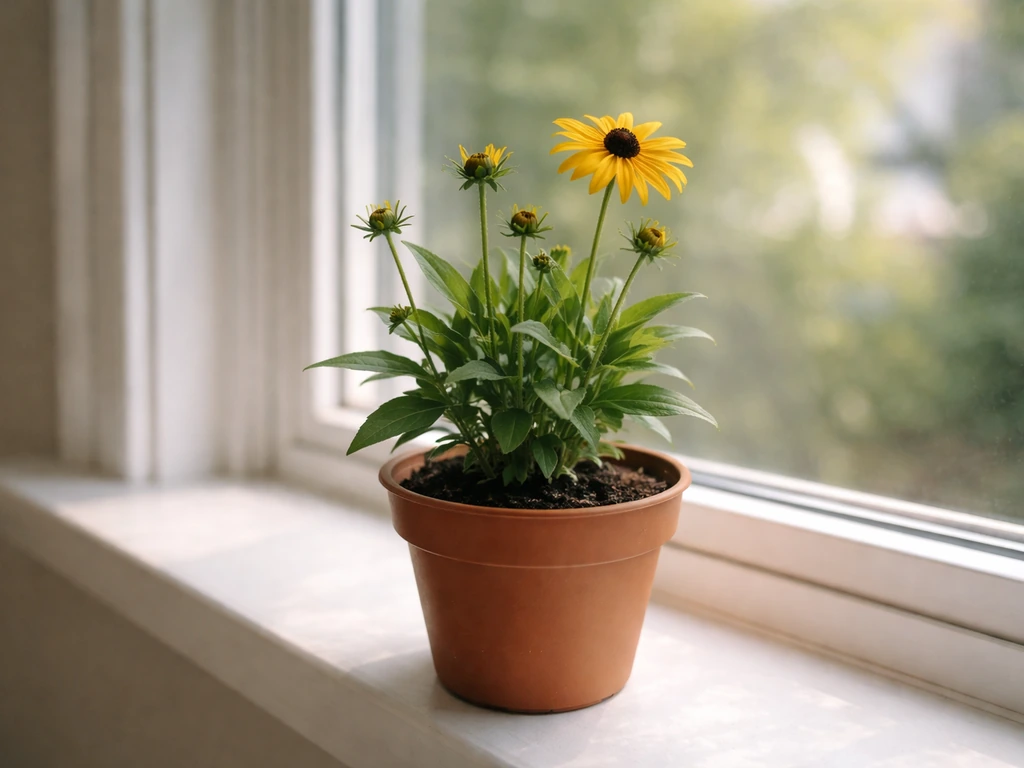
Rudbeckia hirta is typically grown as an annual or short-lived perennial outdoors, blooming from June through September. It loves heat, sun, and good drainage. None of those things are guaranteed indoors, which is why most gardening resources treat it as a seedling-starting subject rather than a true houseplant. The realistic indoor use case is either starting seeds indoors before transplanting outside, or growing a container plant near a very bright window or under grow lights and actually getting it to flower inside. Both are achievable. The second one just takes more intentional setup.
Where black-eyed Susan struggles indoors is low light and poor airflow. Unlike some herbs or tropical plants that genuinely adapt to indoor conditions, Rudbeckia evolved for open meadows and prairies. It doesn't quietly downshift to survive a living room. Give it the light it needs and manage watering carefully, and it rewards you. Cut corners on either, and you'll get a pale, floppy disappointment. Think of it the same way you'd think about growing a sun-loving herb like basil indoors: possible with the right setup, genuinely tricky without it.
Light requirements and where to put your plant
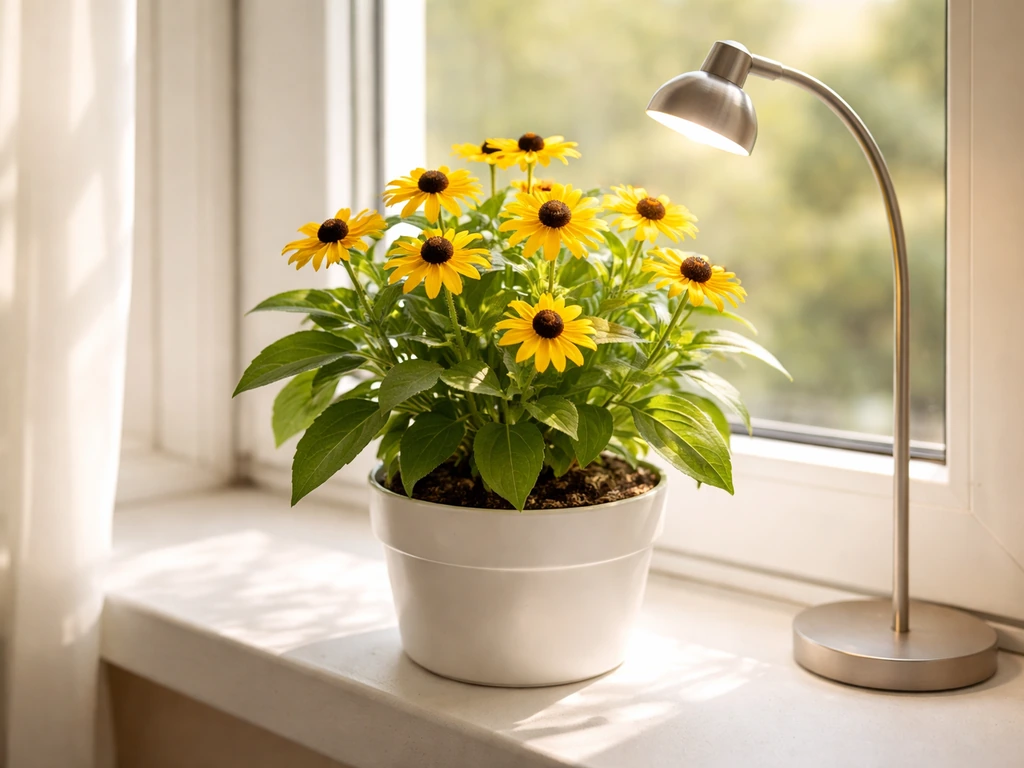
This is the make-or-break factor for black-eyed Susan indoors. The plant needs the equivalent of full sun, defined as 6 or more hours of direct sunlight per day. A south-facing windowsill in a room without obstructions is your best natural option, and even then, indoor glass reduces light intensity compared to being outside. East or west-facing windows can work for seedlings but usually aren't enough to push a mature plant into strong blooming.
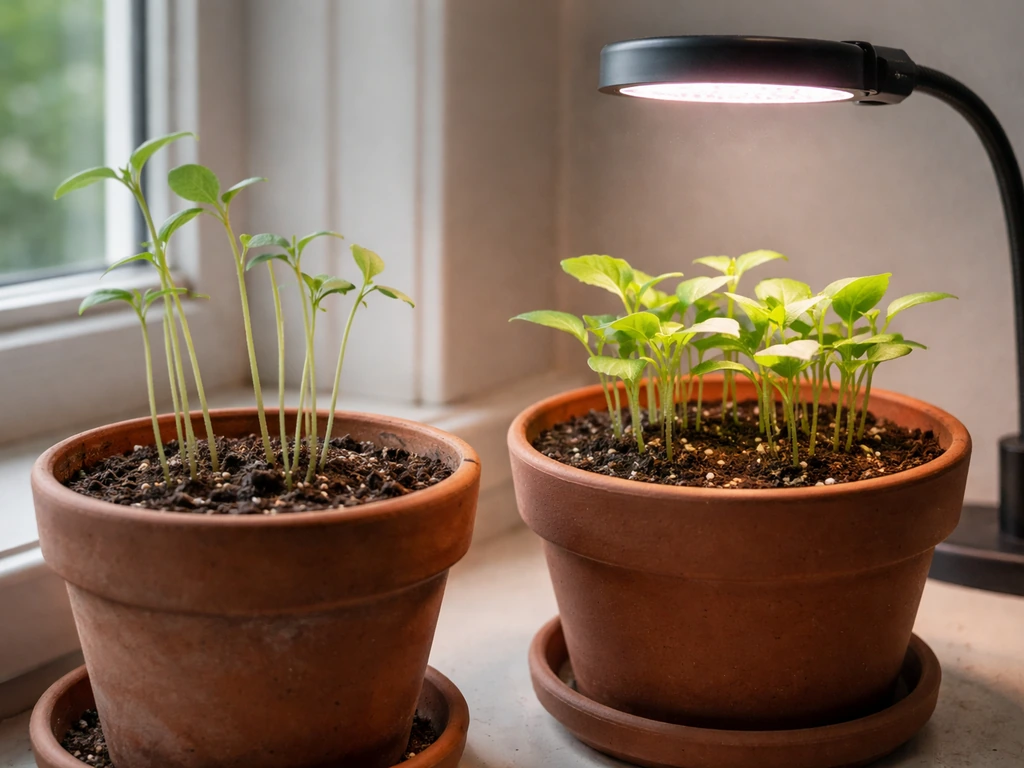
If your windows aren't cutting it, grow lights are genuinely the answer here, not a workaround. Run fluorescent or LED grow lights for 16 hours on and 8 hours off each day, positioning the lights about 3 to 4 inches above the seedlings. As plants grow taller, raise the lights to maintain that gap. This replicates the long summer days that trigger healthy growth and flower production. I've seen apartment growers get great results this way, even without a single suitable window, just by committing to a basic grow light setup on a timer.
How to start black-eyed Susan from seed indoors, step by step
Starting from seed is the most common indoor entry point, whether you're planning to transplant outside later or grow them in containers all the way to bloom. Cover seed very lightly as light is needed for germination. The timing and technique matter more than most people expect.
- Time your sowing: Start seeds 5 to 7 weeks before your last frost date if you plan to transplant outdoors, or any time of year if you're growing indoors under lights.
- Choose the right container: Use seed trays or plug flats (72-cell trays work well). Make sure they have drainage holes.
- Fill with seed-starting mix: Use a fine, sterile seed-starting formula, not regular potting soil. This keeps things light and disease-free.
- Sow at the correct depth: Press seeds about 1/4 inch into the mix, or even shallower. Rudbeckia seeds need light to germinate, so don't bury them. A light press and a thin dusting of mix on top is all they need.
- Water gently and cover: Mist the surface with a spray bottle and cover the tray loosely with plastic wrap or a humidity dome to hold moisture.
- Maintain germination temperature: Keep the soil temperature between 70 and 72°F (21 to 22°C). A heat mat under the tray helps a lot if your home is cooler.
- Watch for sprouts: Germination typically takes 7 to 14 days under good conditions. Once you see seedlings emerging, remove the humidity dome immediately.
- Get them under light right away: The moment seedlings are up, place them under grow lights or in your brightest window. Don't delay on this step or they'll stretch toward any available light source and go leggy fast.
- Begin feeding at 3 to 4 weeks: Once seedlings are a few weeks old, start feeding with a diluted starter fertilizer at half the recommended strength.
Potting mix, containers, and moving seedlings up
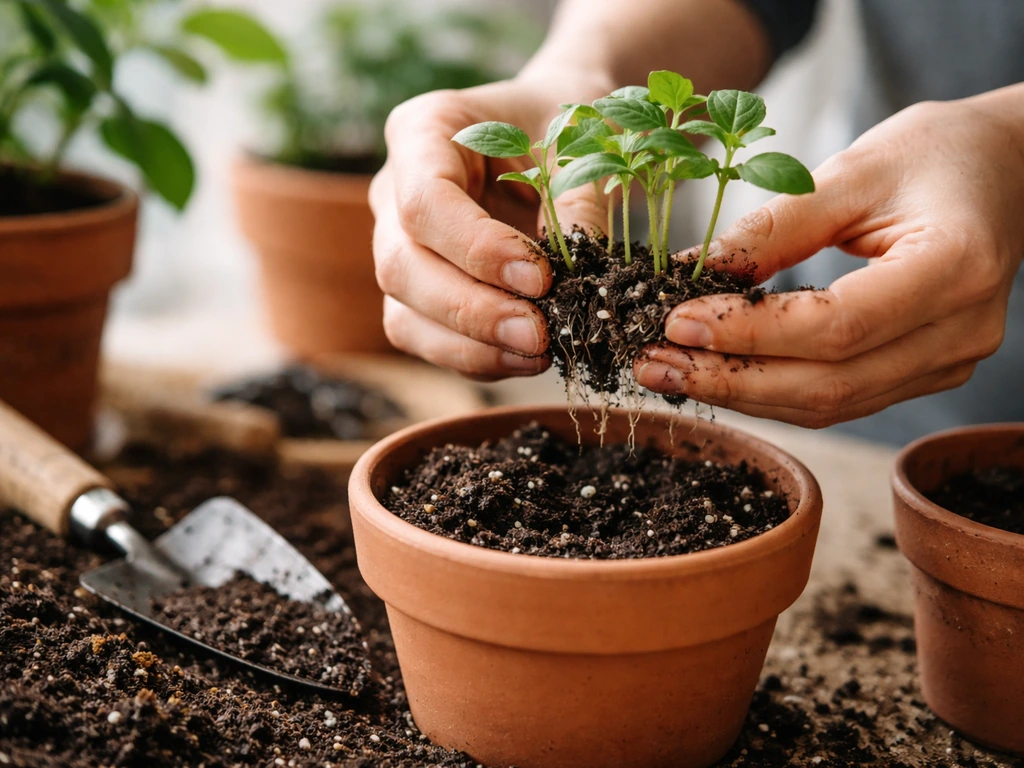
Once seedlings are established and have a couple of sets of true leaves, they're ready to move into larger containers. For ongoing indoor growing, choose pots that are at least 8 to 12 inches in diameter, with drainage holes at the bottom. Black-eyed Susan has a taproot system and doesn't like being cramped or waterlogged, so drainage is non-negotiable.
For potting mix, use a well-draining blend and aim for a soil pH between 5.5 and 6.2. A standard all-purpose potting mix lightened with perlite works well. Avoid anything labeled for moisture retention or moisture control, since those mixes hold too much water for a plant that's prone to root rot in soggy conditions. When transplanting, handle seedlings gently by the leaves rather than the stem, and space them far enough apart that air can circulate around each plant.
Watering, temperature, airflow, and feeding
Watering without overdoing it
Overwatering is the most common way people kill black-eyed Susan indoors. Let the top inch of soil dry out between waterings, then water thoroughly until it drains from the bottom of the pot. Never let the pot sit in a saucer of standing water. Seedlings are especially vulnerable, and keeping them consistently soggy is the fastest route to damping-off, a fungal problem where stems rot at the soil line. If you've ever had seedlings that were fine one day and collapsed the next, damping-off was almost certainly the cause.
Temperature and airflow
For established indoor plants, aim for daytime temperatures of 60 to 64°F (15 to 18°C) and cooler nights around 50 to 55°F (10 to 13°C). These slightly cool temperatures promote stocky, compact growth rather than the leggy stretching you get in a warm, dim room. Good airflow matters too. Stagnant air encourages fungal problems and pest pressure. Running a small fan near your plants for a few hours a day, even on a low setting, makes a real difference. It also helps strengthen stems naturally.
Fertilizing
Start with a half-strength liquid fertilizer when seedlings are 3 to 4 weeks old. After transplanting into larger containers, switch to a balanced all-purpose fertilizer at normal strength every 2 to 3 weeks during active growth. Don't over-fertilize, because too much nitrogen pushes leafy green growth at the expense of flowers. Black-eyed Susan is not a heavy feeder and does fine with moderate, consistent nutrition.
How long it takes to go from seed to flowers
Set realistic expectations before you start. From sowing to first transplant-ready seedling takes about 20 to 35 days. From transplanting to first flowers is typically another 8 to 10 weeks. So from the day you sow your seeds to the day you see blooms, you're looking at roughly 3 to 4 months. That's the honest timeline. If you start seeds in February or March under grow lights, you could have flowering plants by May or June, either indoors or moved to an outdoor container or garden.
One thing worth knowing: black-eyed Susan sometimes needs a touch of cold or a longer photoperiod (day length) to trigger flowering. This is part of why it blooms naturally in summer. Grow lights running 16 hours a day help simulate those long summer days and encourage the plant to shift into its flowering stage. Burpee’s indoor seed-sowing guidance recommends running grow or fluorescent lights for 16 hours per day on and 8 hours per day off to provide the long-day light regime that supports flowering indoors. If you're growing entirely indoors without that light duration, don't be surprised if flowers are slow to appear.
Troubleshooting common indoor problems
| Problem | Likely Cause | What to Do |
|---|---|---|
| Leggy, stretched stems | Not enough light | Move closer to the window or lower grow lights to 3–4 inches above plants; increase light duration to 16 hours/day |
| Seedlings collapsing at soil line | Damping-off (fungal rot from overwatering or poor airflow) | Reduce watering frequency, improve airflow with a small fan, use sterile seed-starting mix, don't sow too deep |
| No flowers appearing | Insufficient light or too-short day length | Increase grow light hours to 16/day; ensure temperatures aren't too warm at night |
| Yellowing leaves | Overwatering or nutrient deficiency | Check drainage, let soil dry between waterings, resume fertilizing at half strength |
| Tiny webs on leaves (spider mites) | Dry, warm, still air indoors | Increase humidity slightly, run a fan for airflow, wipe leaves with damp cloth, use insecticidal soap if needed |
| Sticky residue or distorted growth (aphids) | Pest infestation, often from poor airflow or overcrowding | Space plants apart, remove aphids with a strong water spray, use insecticidal soap for heavier infestations |
The most avoidable indoor failure with black-eyed Susan is slow, gradual decline from not enough light rather than one sudden dramatic problem. If your plant looks okay but just never seems to thrive or set buds, add more light before you change anything else. That's almost always the root issue with this particular plant indoors.
If you enjoy the challenge of growing light-hungry plants indoors, black-eyed Susan is a satisfying one to tackle. If you are wondering whether you can grow deadly nightshade indoors, that is a very different situation and it comes with serious safety risks. It's in good company with other ambitious indoor projects like growing vanilla or St. John's wort inside, all of which reward you proportionally to how well you meet their specific needs rather than just hoping they'll adapt. Get the light right, keep watering disciplined, and give seedlings good airflow from the start, and black-eyed Susan will absolutely grow and bloom for you indoors. If you also want to try a different, more houseplant-friendly option, can you grow damiana indoors grow and bloom for you indoors.
FAQ
Can I grow black-eyed Susan indoors year-round, or will it fade after a season?
You can start seedlings indoors without planning to transplant, but you must commit to container size (at least 8 to 12 inches across) and steady full-light conditions. If you do not add grow lights or have uninterrupted strong sun, most indoor plants will stay vegetative or produce only a few buds.
How do I know when to water black-eyed Susan indoors?
Use a simple “top inch” check. If the soil surface is dry and the pot feels noticeably lighter, water thoroughly until it drains out the bottom. Do not wait for the whole pot to dry completely, because taproots dislike long dry-downs but they also rot in standing moisture.
What should I do if my indoor black-eyed Susan seedlings are falling over?
If seedlings suddenly collapse at the soil line, the usual causes are overly wet media and poor airflow (damping-off). Improve drainage, increase air movement, and only water after the top inch dries. Also check that your grow lights are close enough, because weak, stretched seedlings can be more prone to failure.
Is a fan really necessary for black-eyed Susan indoors?
Plan for airflow and spacing from day one. A small fan running a few hours daily helps, but it should not blast directly on the stems. Crowded plants hold humid air around leaves, which increases fungal problems and pest pressure.
What grow light setup works best if my windows are too dim?
For most people, LED or fluorescent grow lights on a timer are the most reliable. Keep the light about 3 to 4 inches above seedlings, then raise it as plants grow to maintain intensity. If you run lights fewer than about 14 to 16 hours daily, flowering is often slower.
Can I pinch or prune black-eyed Susan indoors to make it bushier?
Yes, but only if you can keep them from getting leggy. Pinching can encourage branching, yet it also delays the timeline to blooms. If your plants are already stretching, fix the light first, then pinch lightly once you have sturdy growth.
My plant looks healthy but it never flowers. What’s the most likely problem?
It depends on the cause. Leggy growth usually points to insufficient light, while buds that never open often reflect the plant not receiving long-enough day length or consistent light intensity. Before changing fertilizer or temperature, add light (or extend photoperiod) and confirm you are watering correctly.
How often should I repot black-eyed Susan indoors?
Taproot plants hate root disturbance, so avoid frequent repotting. When you upsize, handle by leaves, keep disturbance minimal, and move only once you have true leaves and the roots are actively growing. If you repot too early or too often, plants can stall.
Do I need to test soil pH for indoor black-eyed Susan?
A pH range of about 5.5 to 6.2 helps nutrient availability. If your water is very hard or alkaline, pH can drift over time. Consider using fresh potting mix and, if needed, periodically test soil or at least track how the leaves respond to feeding.
Can I grow black-eyed Susan indoors from seed and still get flowers reliably?
Yes, it can be done, but the crop can be slower and more finicky indoors. Black-eyed Susan sometimes needs a cold or longer day stimulation to reliably trigger flowering, so without that cue it may take longer to bloom. Grow lights with long daily duration help, but timing can still vary.
Can I use my regular garden soil or moisture-control potting mix indoors?
No. Avoid moisture-retention mixes because they stay wet too long for a taproot that is prone to rot in soggy media. A standard potting mix lightened with perlite and a pot with drainage holes is the safer baseline.
What pests or diseases are most common with black-eyed Susan grown indoors?
Common indoor pests include aphids and spider mites, especially when plants are stressed by low light or dry conditions. Start by improving airflow and light, then inspect leaf undersides weekly. If pests appear, treat early so populations do not explode on indoor plants.