
Yes, you can grow African violets in a terrarium, but there's a catch: closed terrariums are actually a bad idea for them. You can also grow many other outdoor plants indoors by matching the right light, temperature, and watering needs for each species can you grow outdoor plants indoors.
Can You Grow African Violets in a Terrarium? How To
James Hartwell
19 May 2026
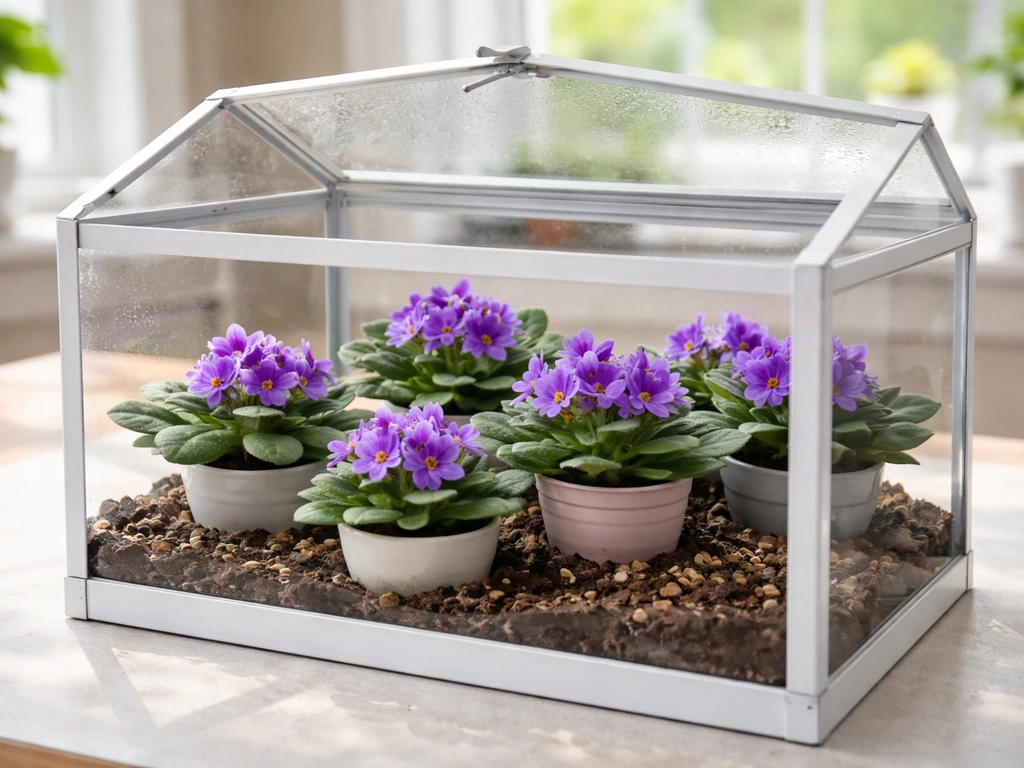
African violets need steady airflow to stay healthy, and the stagnant, saturated air inside a sealed glass container is a fast track to crown rot, Botrytis mold, and fungus gnats. The sweet spot is an open or semi-open terrarium, sometimes called a Wardian case with ventilation, where you get the humidity boost they love (40–60%) without trapping moisture around the crown and leaves. Get that balance right and they'll bloom reliably.
Get it wrong and you'll be pulling out a rotted plant within a few weeks.
Can African violets actually live in a terrarium?
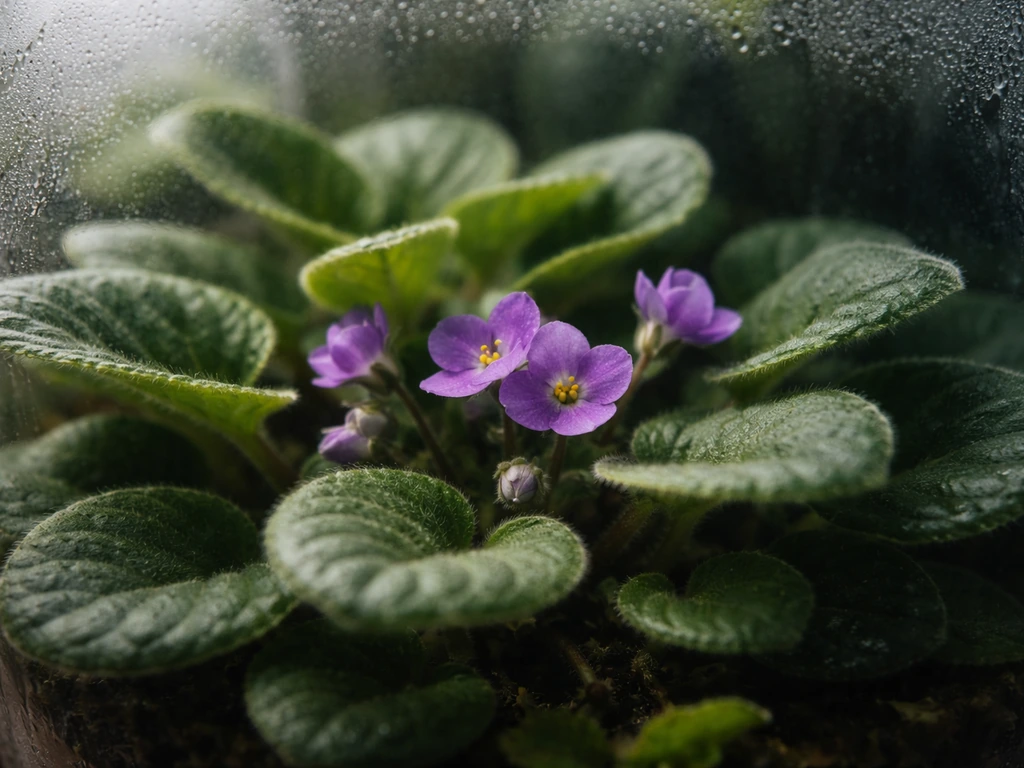
African violets are adapted to humid forest-canopy conditions in East Africa, so in theory a terrarium seems like a perfect home. African violets are a good example of how some flowers can grow inside the right type of terrarium with strong ventilation and careful watering can flowers grow inside. The problem is that most terrariums people build are fully closed, and that's where things go wrong.
The Florida Department of Agriculture identifies root and crown rot as the most serious disease affecting African violets, and it thrives in exactly the moist, low-airflow conditions a sealed terrarium creates. Botrytis (gray mold) is another terrarium-specific nightmare: it destroys blooms and foliage when humidity is high and air circulation is poor. UC IPM explains that [gray mold, also called Botrytis](https://ipm. ucanr.
edu/agriculture/floriculture-and-ornamental-nurseries/gray-mold/), develops more strongly under moist and humid conditions, and low humidity can limit fungal growth.
The one exception worth knowing about is miniature African violets. Standard-sized plants push against terrarium walls, create crowding, and trap even more moisture. Miniature varieties have a smaller footprint and slightly better air movement around them, which gives them a fighting chance in a carefully ventilated setup. If you're set on a terrarium, go miniature.
The right terrarium setup for African violets
Open vs. closed: always choose open
Forget closed terrariums entirely for African violets. You want an open-top container, a Wardian case with a vented lid, or a wide glass bowl with no cover. The goal is to get the ambient humidity inside the enclosure up to 40–60% without letting moisture pool or stagnate around the plant. Think of it less like a sealed ecosystem and more like a humidity tray with glass walls.
Ventilation and glazing
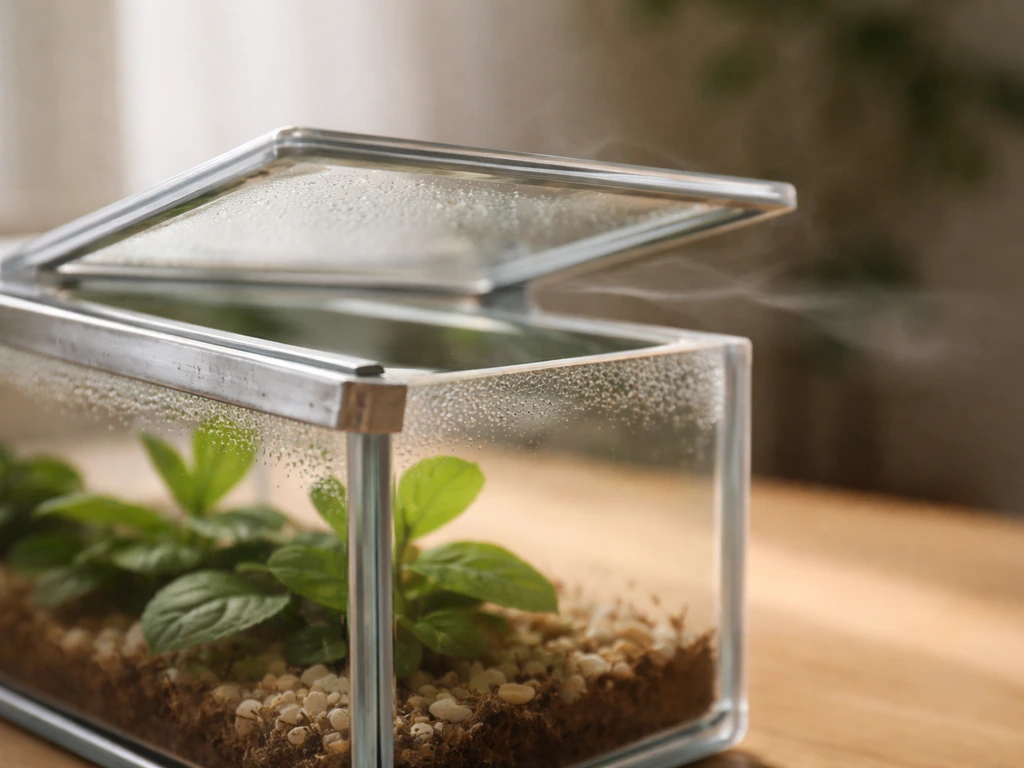
If you're using a lidded enclosure like a Wardian case or a glass box with a door, prop the lid or door open at least a few inches at all times. Some growers use a small USB fan positioned just outside the opening to keep air moving gently through the enclosure. Clear glass or acrylic glazing is far better than tinted glass, since African violets need every bit of available light. Tinted or colored glass cuts light transmission significantly and you'll end up with leggy, non-blooming plants.
Humidity targets
The African Violet Society of America recommends 40–60% humidity for best growth and flowering, and the African Violet Society of Canada puts the ideal range at 50–60%. Inside an open terrarium near a humidity tray or with slightly moist substrate in the base, you can usually hit that target without any active humidifier. If you're in a very dry apartment in winter, a small ultrasonic humidifier positioned near (not pointed directly at) the terrarium helps. A $10 digital hygrometer clipped inside the enclosure tells you exactly where you stand.
Light: the thing most terrarium growers get wrong
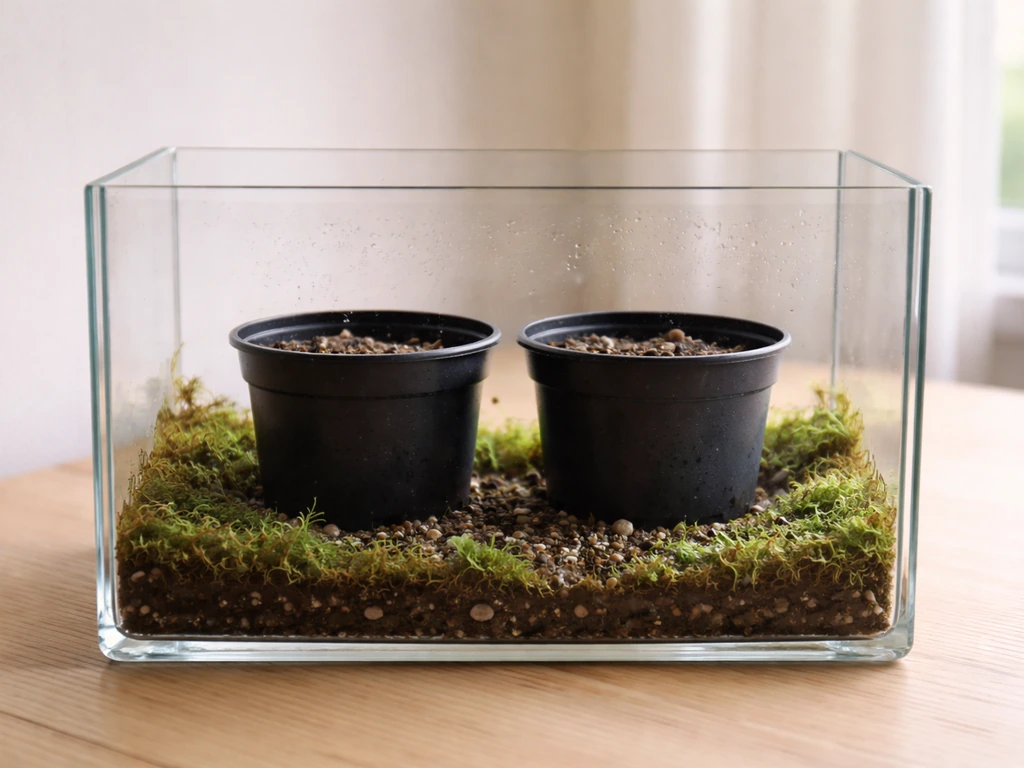
African violets need about 10–12 hours of bright, indirect light per day to bloom consistently. That's more than most terrariums sitting near a window can deliver, especially if the glass filters UV or the enclosure is set back from the pane. My honest recommendation: use grow lights inside or directly above the terrarium rather than relying on natural window light. If you want flowers that can grow indoors without sunlight, set up reliable grow lights and keep humidity and airflow under control. It's more reliable and you can dial in the intensity.
Grow light positioning and duration
The AVSA's practical guideline is to position the light so the crown of a mature plant sits about 6.5 inches below the bulb, and about 10 inches below for young starter plants. For LED grow lights, a full-spectrum panel works well. Start at around 8 hours per day and watch the plant for 3–4 weeks. If growth stays flat and compact, that's good. If leaves start reaching upward or the plant looks leggy, increase duration in small increments (5–10 minutes at a time). If leaves cup downward or you see bleaching, the light is too intense or too close.
Window light as a backup
An east-facing window works reasonably well if the terrarium is positioned right against the glass. North-facing windows rarely give enough light for reliable blooming. South or west windows can work but need sheer curtains to prevent leaf scorch, and the direct sun also heats the inside of a glass enclosure quickly, which stresses the plant. If you're going the window route, watch the temperature inside the enclosure with a min/max thermometer, since glass boxes trap heat fast.
Soil and container choices inside the terrarium
African violets do not go directly into terrarium substrate. Pot them individually in small containers and then place those containers inside the terrarium. This gives you drainage control you simply cannot get from planting directly into a terrarium base layer. A standard drip tray under each pot lets you bottom-water without getting the crown wet, which is critical.
Potting mix
Use a dedicated African violet mix or make your own with roughly equal parts peat moss (or coco coir), perlite, and coarse vermiculite. The mix needs to hold some moisture for the roots while draining quickly enough that the crown never sits in wetness. Inside a humid terrarium environment, err slightly on the side of more perlite than you'd normally use, since the surrounding air is already keeping moisture levels higher. Heavy, water-retentive potting soils are a recipe for root rot in this setup.
Pot size and drainage
African violets like being slightly root-bound, so choose pots that are about one-third the diameter of the leaf spread. Plastic pots with drainage holes are fine and actually dry out at a better rate than terracotta inside a humid enclosure (terracotta usually dries too fast under normal conditions, but in a terrarium the ambient humidity slows evaporation anyway). Make sure every pot has at least one drainage hole. No drainage hole is non-negotiable here.
Watering and humidity management (how to avoid rot)
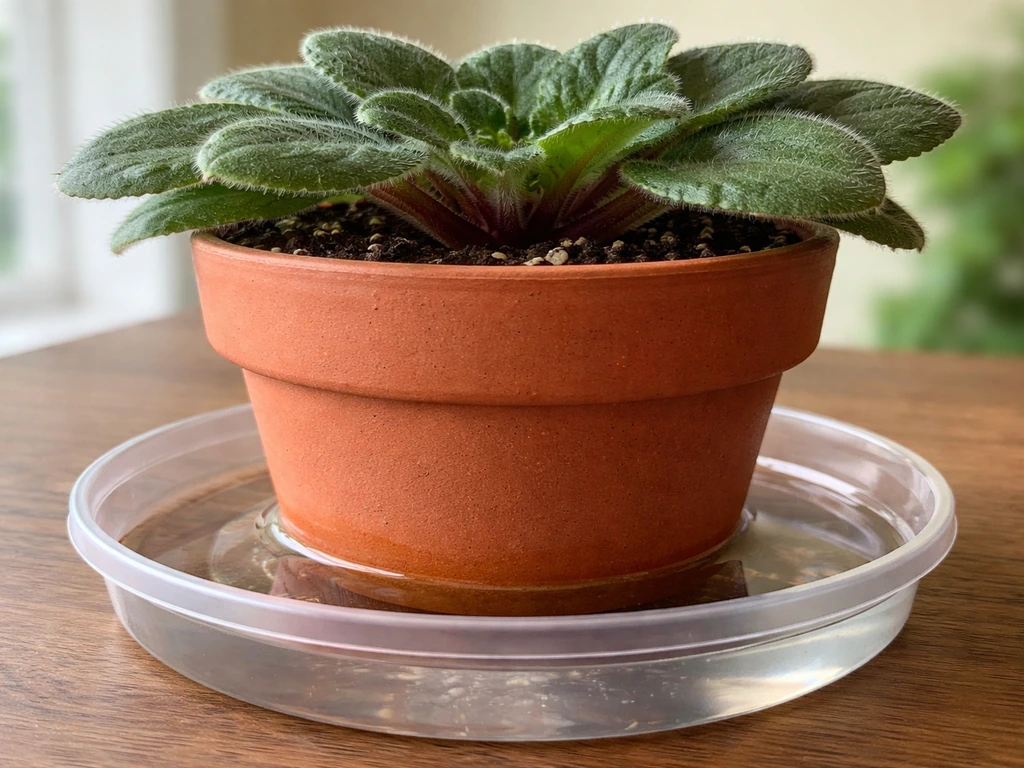
This is where most terrarium setups fail with African violets. The crown and leaves cannot get wet, period. Water that sits on fuzzy African violet leaves causes leaf spot and rot, and water pooling in the crown causes crown rot, which kills the plant quickly. The Smithsonian Gardens care sheet is direct about this: keep the crown dry, use room-temperature water, and water when the top inch of soil feels dry to the touch.
Bottom watering is your best friend here
Bottom watering is almost mandatory in a terrarium setup. Pour tepid water into the drip tray beneath the pot and let the soil wick it up over 30–60 minutes, then empty any remaining water from the tray. Never let the pot sit in standing water. Because the terrarium environment is more humid than a typical windowsill, you'll likely water less frequently than you expect. In moderate humidity (40–50%), once a week is a common schedule, but always check the soil first. Let it dry to the touch before watering again.
Wick watering as an alternative
Wick watering works well in terrariums because it completely eliminates splash risk to the leaves and crown. At repotting, thread a nylon or cotton wick through the drainage hole and up through the soil to near the top of the root ball. The other end sits in a reservoir of water below. Capillary action pulls moisture up into the soil on demand. It's consistent, hands-off, and keeps the crown bone dry. The AVSA describes this as one of its recommended watering approaches for exactly these reasons.
Never mist
Do not mist African violets inside a terrarium. It seems intuitive for a humid enclosure but it deposits water directly on the fuzzy leaves and crown, exactly where you don't want it. The terrarium walls and base substrate will provide ambient humidity without any misting needed.
Day-to-day plant care inside the terrarium
Temperature
African violets grow best between 65–80°F, with around 72°F often cited as an ideal daytime target and slightly cooler nights (65–70°F). Inside a glass terrarium near a window or under grow lights, temperatures can creep up quickly. Keep a thermometer inside and make sure the space doesn't exceed 80°F regularly, especially under grow lights. Below 60°F causes stress and stops blooming.
Fertilizing
Feed with a balanced, water-soluble fertilizer formulated for African violets (typically a 14-12-14 or similar ratio) at half the recommended strength every two to four weeks during active growth. In a terrarium, nutrients don't flush out as easily as they do with regular top watering, so going half-strength prevents fertilizer salt buildup in the soil. Every couple of months, flush the soil gently with plain water to reset any accumulated salts.
Leaf and crown grooming
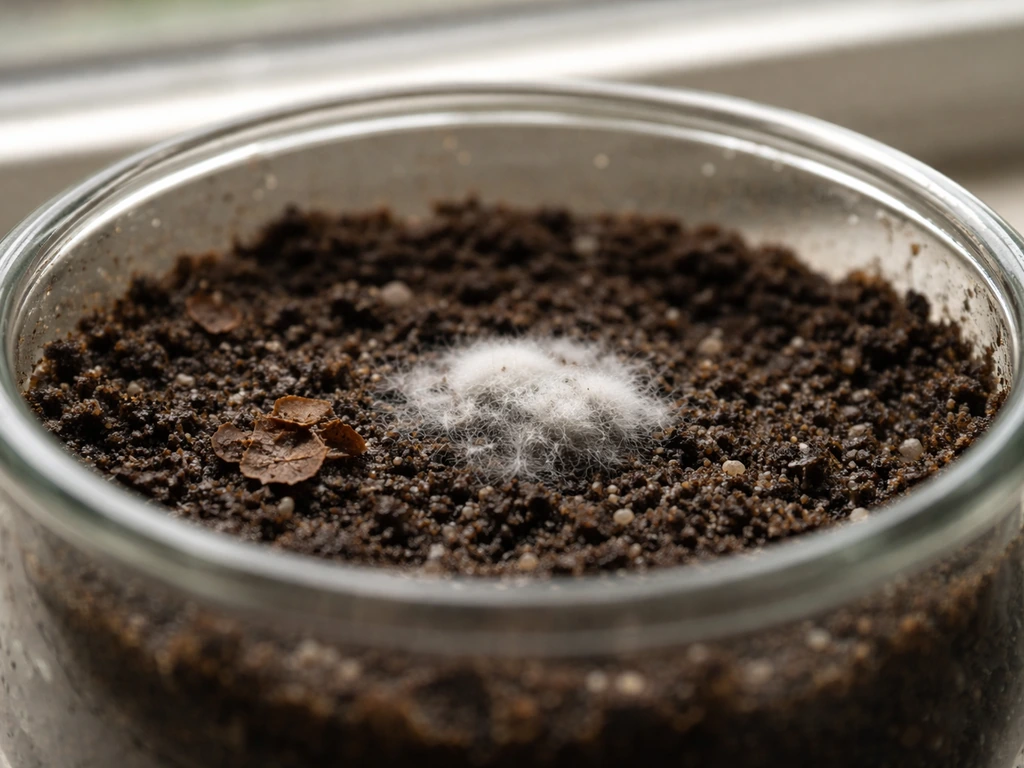
Remove dead or yellowing leaves promptly, especially inside a terrarium where decomposing organic matter invites mold. Snap off spent blooms at the base of the stem. African violets naturally push out suckers (small side shoots) from the base; remove these too unless you're propagating, since they crowd the plant and reduce air circulation. Use dry hands or tweezers to remove anything inside the terrarium, and don't leave any debris on the soil surface.
Troubleshooting common terrarium problems
| Problem | Likely Cause | Fix |
|---|---|---|
| White or gray mold on soil/leaves | Poor air circulation, high humidity, decaying matter | Open the terrarium more, remove debris, treat with dilute hydrogen peroxide on soil surface, improve airflow |
| Crown rot (plant collapses at base) | Water in the crown, overwatering, stagnant air | Remove affected plant immediately, check drainage, switch to wick or bottom watering, increase ventilation |
| Botrytis (gray mold on blooms) | High humidity plus stagnant air, cool temperature swings | Improve airflow immediately, remove infected blooms, reduce watering, avoid temperature drops at night |
| Fungus gnats | Overly moist soil, organic matter on surface | Let soil dry more between waterings, use a thin layer of sand on soil surface, apply beneficial nematodes or a BTi drench |
| Leggy growth, no blooms | Insufficient light, too few hours of light | Increase grow light duration toward 12 hours/day, move light closer (minimum 6.5 inches from crown), check for tinted glass filtering light |
| Brown spots on leaves | Cold water on leaves, direct sun through glass, fertilizer burn | Use only tepid water, never mist, shade from direct sun, flush soil to clear salt buildup |
Crown rot deserves special emphasis because by the time you notice it, it's usually too late to save that plant. Iowa State Extension notes that droopy leaves (a symptom of rot) often trick growers into watering more, which makes the rot worse. If your plant suddenly looks wilted and the crown feels soft at all, pull it out of the terrarium immediately, inspect the roots, and cut away any brown, mushy material before attempting to save it in fresh dry mix outside the terrarium.
Is a terrarium really worth it for African violets?
Honestly, African violets are not the easiest terrarium plant, and if you're exploring what flowers can grow in a terrarium more broadly, there are species that handle closed or semi-closed environments with far less fuss. That said, if you're committed to African violets specifically, a well-ventilated open terrarium with grow lights, bottom watering, and fast-draining soil gives you a genuinely good shot.
If you want to know whether the same principles apply beyond terrariums, you can also grow outdoor flowers indoors by matching the light, temperature, and watering needs to the specific plants blooms. Miniature varieties are the most practical choice for the format. Nail the airflow and keep the crown dry, and you'll have blooms. Let moisture stagnate and you won't.
The setup that works best in practice: a Wardian case with the door propped open a few inches, a small clip fan nearby, miniature African violets in individual plastic pots with drainage sitting on pebble trays inside the case, a full-spectrum LED panel 6–7 inches above the crown running 10–12 hours a day, and bottom watering only when the soil surface feels dry. That combination hits every requirement these plants have while controlling the two things that kill them fastest in a terrarium: stagnant humid air and wet crowns.
FAQ
Can I keep an African violet in a fully closed, sealed glass terrarium?
Yes, but only if the setup stays vented and the crown never gets water. Use miniature varieties, individual pots with drainage, bottom watering, and keep the lid propped open (or use a vented Wardian case). A fully sealed terrarium will typically trap moisture around leaves and crown faster than African violets can handle.
What is the most common reason African violets fail in a terrarium?
If you use regular watering, the fastest mistake is getting water on the fuzzy leaves or inside the crown. Even a small recurring splash can lead to leaf spotting or crown rot. Stick to bottom watering into a drip tray, empty excess water, and only refill the reservoir after the top inch of soil dries.
Should I mist my African violets to boost humidity inside the terrarium?
Avoid misting completely. Instead, manage humidity with ventilation and a humidity tray approach, plus correct watering. If humidity is too low in winter, a small humidifier placed near the terrarium (not aimed at the plant) is safer than misting because it doesn’t wet the crown and leaves directly.
How often should I water an African violet in a terrarium?
Use a simple rule of thumb, check the soil, not the calendar. In a terrarium with 40 to 60 percent humidity, watering may still land around once a week, but you should wait until the top inch feels dry. If the soil stays damp, push the next watering back.
Can I plant African violets directly into the terrarium soil instead of using pots?
No, do not plant directly into the terrarium base. Pot the violet in a separate container with drainage, then place that pot inside the terrarium. This keeps you from losing control of drainage and makes it easier to rescue the plant if root or crown problems start.
What should I do if condensation keeps forming on the inside of the terrarium?
Aim for about 40 to 60 percent humidity, and prioritize airflow over maximizing humidity. If you see condensation on the glass, slow the humidity source, increase the opening size, or add gentle airflow, because standing moisture and stagnant air are what drive crown rot and gray mold.
How do I know whether the light level is too low or too high in a terrarium?
Watch the crown and leaf shape as your feedback loop. Stretching or upward reaching suggests insufficient light, while bleaching or unusually pale leaves suggests too much intensity or the light is too close. Adjust in small steps over several days, then reassess after 2 to 3 weeks.
What are the first steps if my African violet develops crown rot signs?
If you see sudden droop and the crown feels soft or mushy, remove the plant immediately. Inspect roots and crown, cut away brown tissue, and repot in fresh, drier mix outside the terrarium to stop the moisture-driven rot cycle. Don’t wait for symptoms to spread within the terrarium environment.
Can I propagate African violets inside the terrarium?
They are usually propagated successfully, but terrarium propagation is higher-risk because humidity plus poor airflow can rot cuttings. Keep humidity managed, use very small starters in separate containers, and ensure the same bottom-watering method so water doesn’t sit on the crown area.
How do I handle fertilizer buildup in a terrarium-grown African violet?
White crust on soil or an overly strong smell can indicate fertilizer salt buildup, especially since terrarium conditions reduce flushing. If you notice crusting, skip feeding and flush the soil with plain water until runoff is clear, then resume at half-strength and longer intervals.