Yes, you can grow some outdoor flowers indoors, but not all of them, and light is almost always the deciding factor. Flowers that evolved to bloom in full sun will sulk on your windowsill, grow leggy, and stop flowering entirely. But a good number of outdoor favorites, particularly those already comfortable in containers or partial shade, can do genuinely well inside when you match their core needs. With the right light and humidity setup, many flowers can also thrive in a terrarium environment can you grow flowers in a terrarium. The key is being honest about what your home's light situation actually offers before you start hauling pots inside.
Can You Grow Outdoor Flowers Indoors? Yes and How
James Hartwell
22 May 2026
What's possible and what just won't work
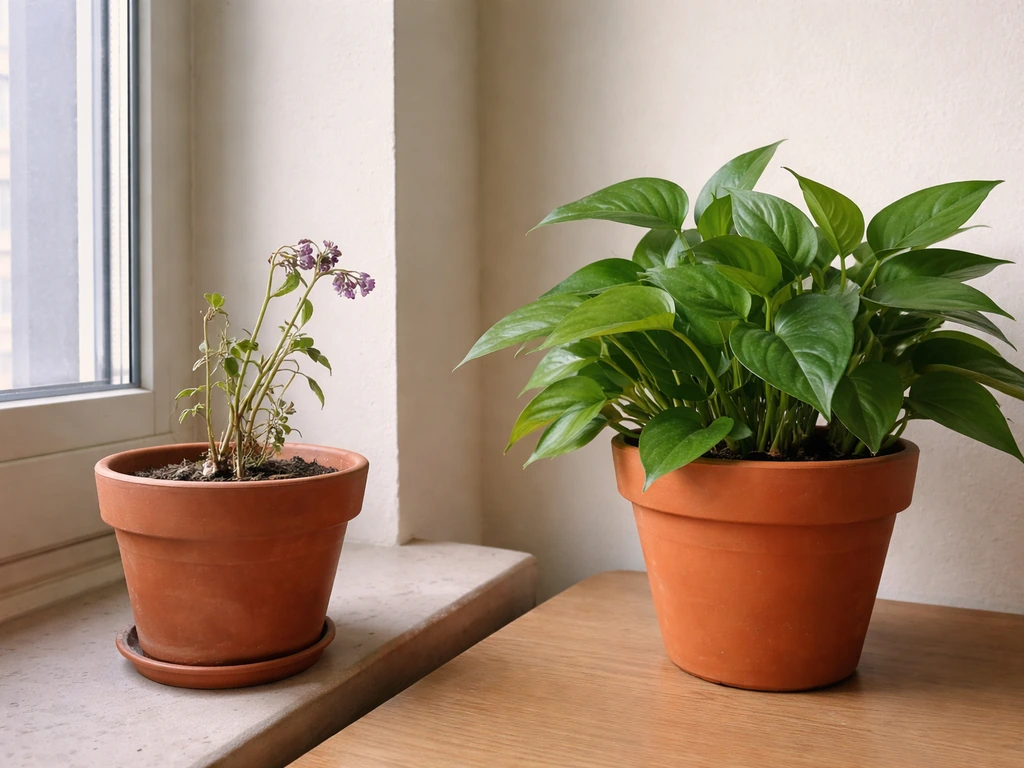
The biggest trap people fall into is assuming that because a plant grows outside, it must be tougher than a houseplant and therefore fine indoors. It's almost the reverse. Outdoor flowers are used to natural light intensities that are 10 to 100 times stronger than what even a bright indoor window delivers. Extension research is clear on this: insufficient light reduces flowering and causes the stretched, pale, leggy growth that tells you a plant is struggling. That said, plants that are already adapted to container life, that tolerate some shade, or that come from tropical or subtropical climates are genuinely good indoor candidates. Plants with deep dormancy requirements tied to outdoor cold cycles, or those that need full sun to bloom, are not. You're not failing as a gardener if a full-sun annual refuses to flower on a north-facing windowsill. That's just physics.
It's also worth knowing that 'growing indoors' doesn't have to mean permanently. Many outdoor flowers work beautifully as seasonal indoor plants, brought inside before frost and moved back out in spring. That approach is often more realistic than trying to keep a sun-loving flower blooming on a windowsill in January.
Light and window setup for outdoor flowers indoors
Window orientation matters more than almost anything else. A south-facing window is your best asset, delivering the most light across the longest stretch of the day. East and west windows are genuinely useful for flowers that tolerate partial sun. North-facing windows are tough, delivering low light that typically only suits foliage plants or true shade flowers. In practical terms, light intensity drops sharply the further you move a plant from the glass. University of Maryland Extension classifies low light as roughly 25 to 100 foot-candles, which is typical for north-facing windows or back corners of rooms. For a flowering plant, that's almost never enough.
Distance from the window matters just as much as which direction it faces. University of Illinois Extension offers a useful mental framework: a north window only works for plants positioned very close to the glass, while a south window can support plants placed 15 to 20 feet away. An east or west window is useful in a 3 to 10 foot range. PPFD (the measure of usable light for photosynthesis) drops the further a plant sits from its light source, which means that beautiful spot across the room from your sunny window is probably not as light-rich as it looks.
If your window situation is limited, a grow light closes that gap reliably. Full-spectrum LED grow lights are affordable now and make a real difference for flowering plants indoors. Position them 6 to 12 inches above the canopy and run them 12 to 16 hours a day. This isn't just a workaround: for many outdoor flowers, a grow light plus a decent east or west window is genuinely better than a north-facing window alone.
Picking the right outdoor flowers for indoor conditions
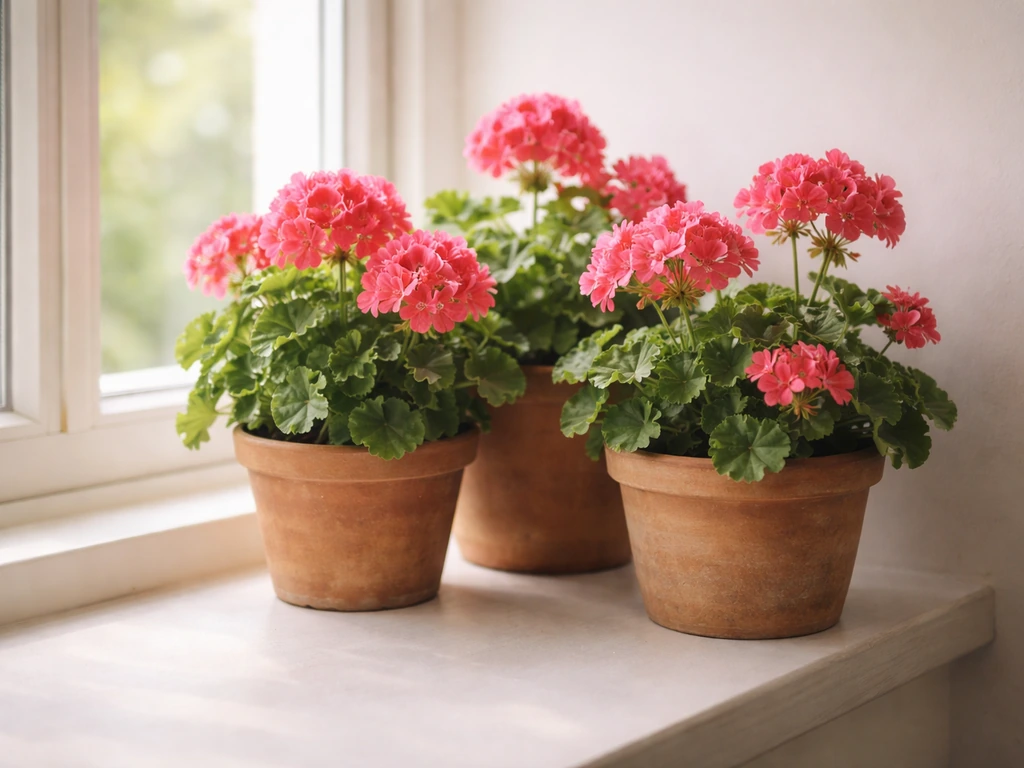
Not all outdoor flowers are equal candidates for indoor life. Here's how to think about it by category.
Strong indoor performers
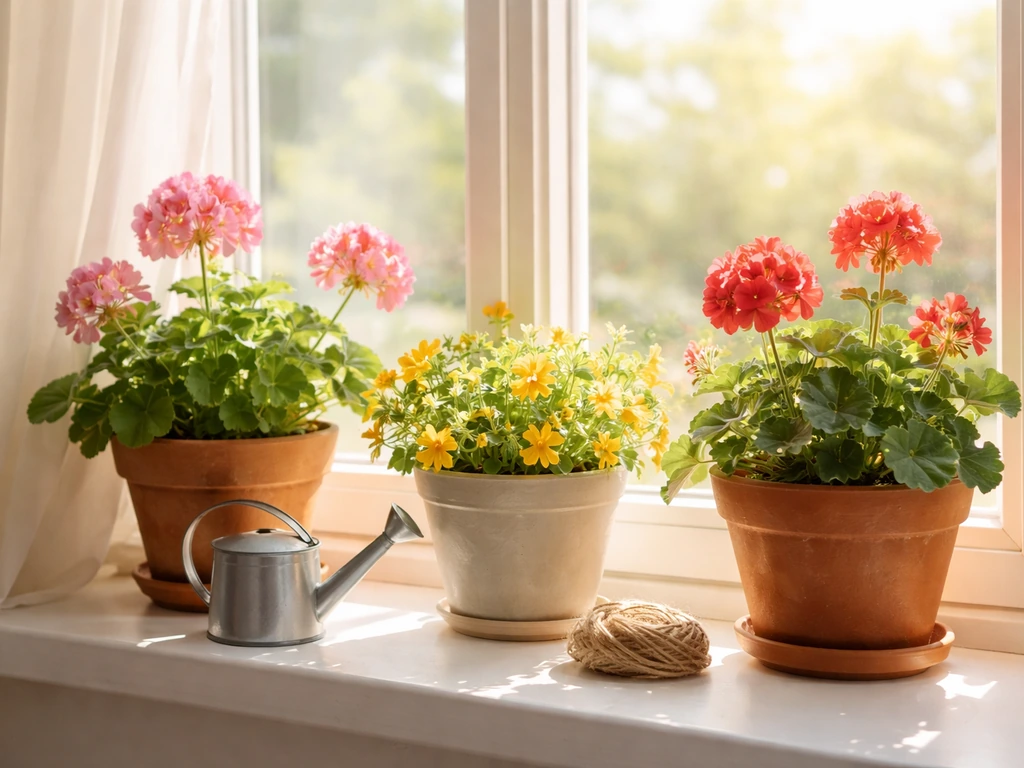
- Geraniums (Pelargonium): One of the best options. They're already container-adapted, tolerate indoor conditions reasonably well, and will flower if you give them bright light. Expect some leaf drop when you first bring them in. That's normal. They'll push new growth once they settle. They need a south or west window, or a grow light, to stay in bloom.
- Begonias: Wax begonias and tuberous begonias both adapt well to containers and tolerate lower light better than most flowering plants. A bright east window often works fine.
- Impatiens: They're shade-tolerant outdoors and that translates indoors. They won't need your sunniest window and they'll stay compact and tidy.
- Fuchsia: Does well indoors in bright, indirect light and actually prefers cooler temperatures, making it a natural fit for drafty apartments in fall and winter.
- Oxalis: Compact, container-friendly, and genuinely happy indoors in a sunny window. A good pick for limited space.
- Tropical and subtropical flowers (hibiscus, mandevilla, bougainvillea): These can live indoors if you have the light for them. Hibiscus and bougainvillea especially need a south window or serious grow light supplementation to bloom. They're worth the effort if the light is there.
Plants that will struggle or fail indoors
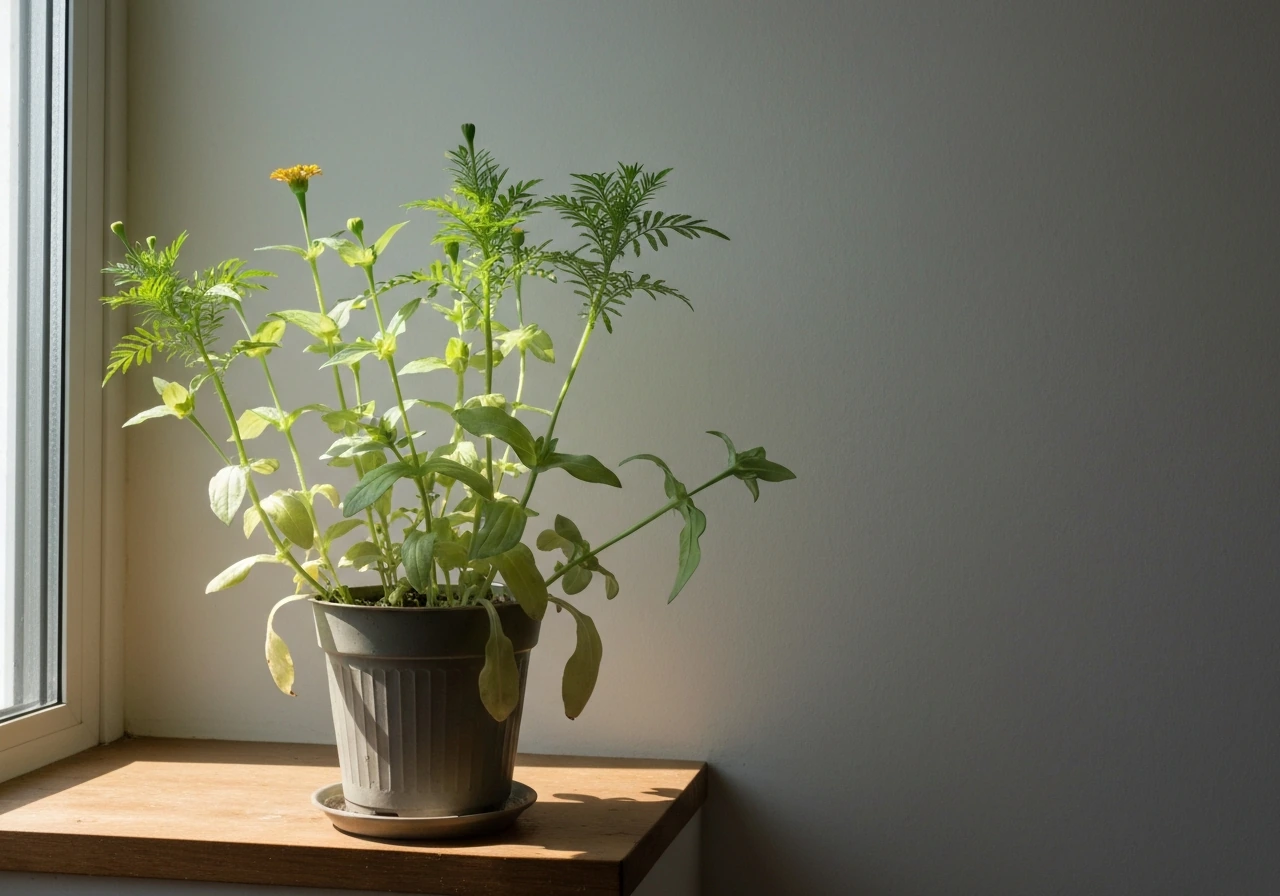
- Full-sun annuals like zinnias, marigolds, and sunflowers: These are bred for intense outdoor sun. Indoors, they'll stretch toward the light, fail to bloom, and are susceptible to mildew in low-airflow environments.
- Bulbs with cold dormancy requirements (tulips, daffodils, hyacinths): They need a cold period to bloom. You can force them indoors with a chilling stage, but they're a one-season project, not a long-term indoor plant.
- Large shrubby perennials: Plants like roses or hydrangeas that need outdoor space, pruning cycles, and seasonal cold are hard to sustain indoors for more than a brief stretch.
- Plants prone to pest pressure in low-airflow conditions: Dahlias and other dense-foliage flowers can develop fungal issues fast indoors where air doesn't circulate well.
Soil, containers, and drainage for indoor growing
The single most common way people kill potted flowers indoors is poor drainage, and it usually starts with the wrong soil or the wrong pot. Outdoor flowers need a potting mix that is porous and drains freely. That means a quality all-purpose potting mix that contains perlite or vermiculite, not garden soil from your beds. Garden soil compacts in containers, suffocates roots, and holds water in ways that lead directly to root rot. University of Maryland Extension is clear that potting mix needs to stay porous for both drainage and root aeration. If your mix doesn't contain perlite, you can add it yourself at about 20 to 30 percent by volume.
Every container you use indoors must have drainage holes. This is non-negotiable. OSU Extension warns that containers retaining excess water are a direct path to root rot. If you're using a decorative outer pot (a cache pot), drain it after every watering and don't let the plant sit in standing water. For most outdoor flowers moved indoors, a pot that is 1 to 2 inches wider than the root ball is the right size. Going too large causes the soil to stay wet for too long between waterings because there are no roots to absorb that moisture.
Watering and humidity needs (and common mistakes)
Outdoor flowers moved indoors need significantly less water than they did outside. The combination of lower light, lower temperatures, and no wind means soil dries out much more slowly. The practical check is simple: push your finger about 1 to 2 inches into the potting mix. If it feels dry at that depth, water thoroughly. If it still feels moist, wait. Both Iowa State University Extension and University of Maryland Extension recommend this finger test as the most reliable method. It sounds obvious, but it's genuinely better than any schedule-based approach because your indoor conditions vary by season, window placement, and pot size.
When you do water, water until it runs freely from the drainage holes, then stop. This flushes excess salts from the soil and ensures the whole root zone gets moisture, not just the top inch. The mistake most people make is watering a little every day, which keeps the top layer perpetually damp and the bottom half perpetually dry. That's a recipe for fungus gnats and root stress simultaneously.
Humidity is worth paying attention to, especially in winter when indoor heating dries the air significantly. Most flowering plants prefer humidity in the 40 to 60 percent range. If your home is dry, grouping plants together helps slightly because they create a small humid microclimate around each other. A small humidifier near your plant area is the most effective solution. Avoid misting foliage directly, especially on plants prone to powdery mildew, as wet leaves in low-airflow conditions invite fungal problems. If your plant is in shade, Purdue Extension notes that it is more prone to powdery mildew than plants in sunlight plants prone to powdery mildew.
Temperature, airflow, and pest management indoors
Most outdoor flowers brought indoors prefer temperatures between 60 and 75 degrees Fahrenheit during the day, with a slight drop at night. Avoid placing plants directly against cold window glass in winter (especially below 50°F), near heating vents, or in direct drafts from doors. Cold glass can damage leaves and roots. Heat vents dry plants out rapidly and stress them. Both extremes cause leaf drop and poor flowering.
Airflow is something indoor growers often overlook. Outdoors, plants have natural wind and air movement that keeps foliage dry and discourages fungal disease. Indoors, air is still and humid pockets form around dense foliage. Purdue Extension is direct about this: improving air movement is one of the best ways to prevent and reduce powdery mildew severity. Space your plants so leaves aren't touching, and consider running a small fan on low nearby for a few hours each day. That alone can prevent a lot of mildew problems.
Pests indoors tend to be fewer in variety than outdoors but can multiply fast without natural predators to check them. The two you'll encounter most with outdoor flowers brought in are spider mites and fungus gnats. Spider mites thrive in warm, dry conditions and create fine webbing on leaf undersides. Treat with insecticidal soap, applying thoroughly and repeating 2 to 3 days later to catch newly hatched mites, as OSU Extension recommends. Fungus gnats are almost always a sign of overwatering. NC State Extension is clear that excessively moist potted plants are a primary breeding ground for fungus gnats. Let the soil dry out more between waterings and the population will crash on its own. Yellow sticky traps catch adults in the meantime.
How to transition flowers from outdoors to indoors
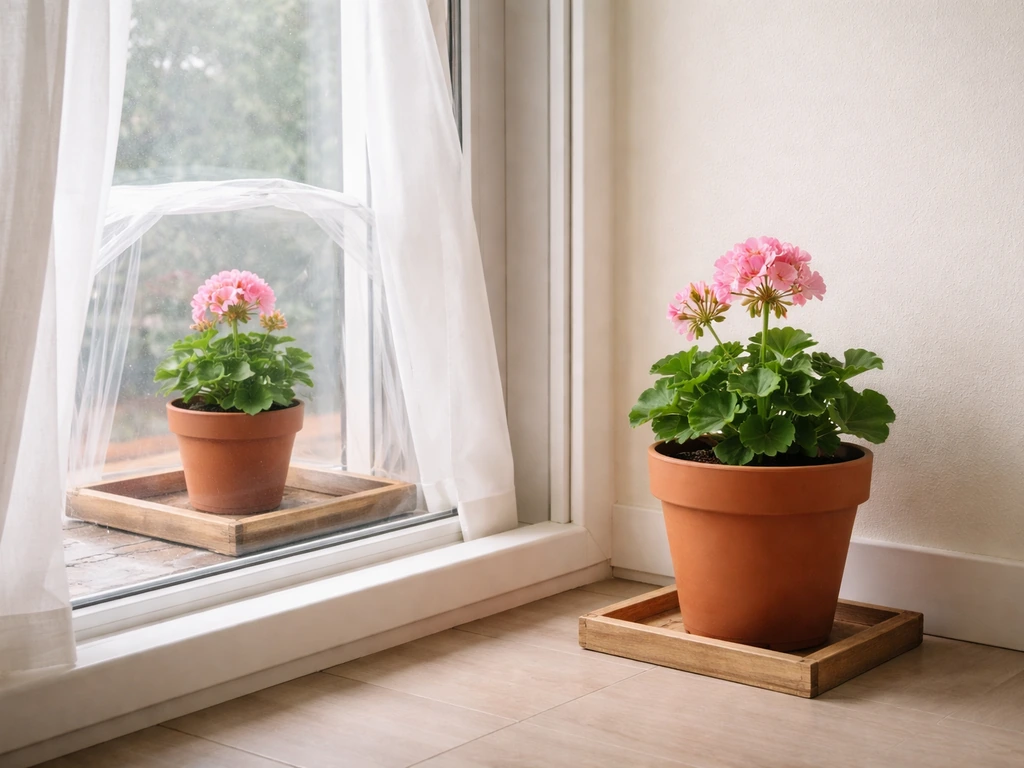
Bringing an outdoor plant inside without any preparation is a guaranteed way to stress it. The light drop alone, from full outdoor sun to even a bright window, is dramatic. Penn State Extension describes hardening off as a process of gradually adjusting plants to new conditions, and the same principle applies in reverse when moving plants indoors. Rush it, and you'll see wilting, brown leaf margins, slowed growth, and sometimes plant death.
The ideal time to bring outdoor flowers indoors is before the first frost, but also before you turn the heat on inside. You want temperatures indoors and outdoors to be as close as possible during the transition, typically in early to mid fall depending on your climate. Before moving the plant, check it thoroughly for pests. Inspect under leaves, around the soil surface, and in any crevices. Treat any existing pests before the plant comes in, because you don't want to introduce spider mites or aphids to your other plants.
- Start by moving the plant to a shadier outdoor spot for 5 to 7 days before bringing it inside. This reduces the light shock.
- Bring it indoors to your brightest window and let it adjust for 2 weeks before moving it to its permanent spot.
- Expect some leaf drop during the first few weeks, especially with geraniums. This is a stress response, not death. Cut back on watering slightly during this period.
- Hold off on fertilizing until you see new growth, which signals the plant has stabilized.
- Check for pests again one week after bringing the plant indoors, before it gets near your other plants.
Care calendar: fertilizing, pruning, and when to move back outside
Once your outdoor flowers are settled indoors, the care rhythm changes significantly from what they needed in the garden. Think of indoor care in three phases: adjustment, maintenance, and reactivation.
| Phase | Timing | Fertilizing | Pruning/Deadheading | Light Management |
|---|---|---|---|---|
| Adjustment | First 4–6 weeks indoors (fall) | None — hold off until new growth appears | Remove dead or yellowing leaves only | Brightest available window; add grow light if needed |
| Maintenance | Winter months | Half-strength balanced fertilizer every 4–6 weeks | Deadhead spent blooms to encourage continued flowering; pinch leggy stems | Maintain grow light schedule (12–16 hrs/day) if natural light is low |
| Reactivation | Late winter to early spring | Resume regular feeding every 2–3 weeks as light increases | Light shaping prune to encourage bushy growth before moving out | Increase light exposure gradually to prepare for outdoor conditions |
Don't over-fertilize during winter. Plants growing in lower light are not actively producing a lot of new growth, and pushing fertilizer into a slow plant causes salt buildup in the soil and can burn roots. Less is genuinely more here. Resume regular feeding in late winter when daylight hours are noticeably longer and you start seeing new growth pushing.
When spring arrives and temperatures consistently stay above 50°F at night, it's time to start moving outdoor flowers back outside. Do it gradually, the same way you brought them in: start with a few hours of morning sun and shaded afternoons, increasing outdoor exposure over 7 to 10 days. Even though these plants spent time outdoors before, a winter indoors means they've lost some of their tolerance for direct sun and wind. Give them the same acclimation process you'd give any transplant.
If you're weighing which flowers to try indoors, geraniums are genuinely the best starting point because they're forgiving, container-adapted, and well-understood. If you want to explore plants that are designed for indoor flowering from the start, looking at which flowers are suited to indoor growing by nature (rather than by adaptation) can save you a lot of frustration. And if you're working with very low light, there's a whole category of flowers that can grow indoors without direct sunlight worth exploring separately. But for outdoor flowers specifically, the answer comes back to the same thing every time: get the light right first, and the rest is manageable. To match that, focus on flowers that can grow indoors without sunlight by choosing varieties bred for low-light windows or that perform well with a grow light get the light right first.
FAQ
Can you grow outdoor flowers indoors long-term, or is it only seasonal?
Both work, but true long-term success usually depends on whether you can reliably provide the light the plant needs year-round. If your winter daylight is weak, a seasonal approach (bring in before frost, then move back outside after temperatures stabilize) often prevents chronic leggy growth and poor blooming.
What if I only have a north-facing window, can I still grow flowering outdoor plants indoors?
You might keep some shade-tolerant outdoor foliage plants near the glass, but most flowering outdoor flowers will struggle without supplemental light. If you try anyway, position them very close to the window and use a grow light to cover the gap, especially in winter when daylength is short.
How far from the window is “too far” for indoor-growing outdoor flowers?
For north windows, practical success is usually limited to near the glass only. For south, some flowers tolerate distance, but performance still drops with distance because usable light declines quickly. If the pot is in a bright room but not near the window, assume it is still low-light for flowering unless you add a grow light.
Do I need to use a grow light if my window is very bright?
If it produces strong, consistent growth and real budding, you may not. If you see slow growth, pale leaves, or flowers that stall, the window may be bright to your eyes but not intense enough. A grow light set to the plant canopy height can correct that, often outperforming relying on a “sunny spot” across the room.
Can I use garden soil from outdoors in indoor pots?
Usually no. Garden soil compacts in containers and tends to hold water too long indoors, which increases root rot risk. Stick to a porous potting mix (with perlite or similar), and only use garden soil if you are prepared to amend heavily for drainage and still monitor moisture carefully.
How do I know my pot size is correct for bringing an outdoor flower indoors?
Avoid upsizing too much. An overly large pot stays wet for longer because there is less root mass to absorb moisture. As a rule of thumb used for potted plants, a pot slightly larger than the root ball (often about 1 to 2 inches wider) helps keep the soil drying at a healthy pace.
What watering routine should I follow when bringing outdoor flowers indoors?
Use a moisture check instead of a schedule. Push your finger 1 to 2 inches into the mix, water thoroughly only when it feels dry at that depth, then stop after water runs freely from drainage holes. Indoor flowers generally need less frequent watering than outdoors due to reduced light and airflow.
Should I mist my outdoor flowers to raise humidity indoors?
Misting is usually not a great solution, especially in winter. Wet leaves with limited airflow can increase fungal risk on susceptible plants. If humidity is low, prefer grouping plants for a small local effect and using a humidifier near the plant area.
My indoor outdoor flower has yellowing leaves and looks droopy, is it always overwatering?
Not always, but overwatering is common when indoors. Check the soil depth first, confirm drainage holes work, and look for wet soil that stays wet for days. Also consider cold stress near window glass or heat stress near vents, since both can cause leaf drop and decline even when watering seems “correct.”
How can I prevent spider mites and fungus gnats when I bring plants inside?
Start with thorough inspection before moving them indoors, especially under leaves and around the soil surface. Quarantine new arrivals if possible, then address issues early. Overwatering is the main driver of fungus gnats, while dry, warm conditions favor spider mites, so adjust watering and air conditions accordingly.
Do I need to fertilize outdoor flowers through winter?
Typically no. In winter, lower light reduces active growth, so heavy feeding can cause salt buildup and root burn. If you feed, keep it light and resume stronger fertilizing in late winter as new growth appears and daylight increases.
How do I move the flowers back outside in spring without shocking them?
Acclimate them gradually over about a week or so by increasing outdoor exposure slowly, starting with morning sun and shaded afternoons. The key is to reintroduce sun, wind, and temperature swings step by step, because winter indoor conditions can reduce a plant’s tolerance.
Which outdoor flowers are the safest bets to try indoors first?
Geraniums are usually a good starting point because they are forgiving and container-adapted. If you want alternatives, prioritize plants that are already partial-shade tolerant or that perform well with supplemental light, rather than full-sun bloomers that depend heavily on strong direct light.