
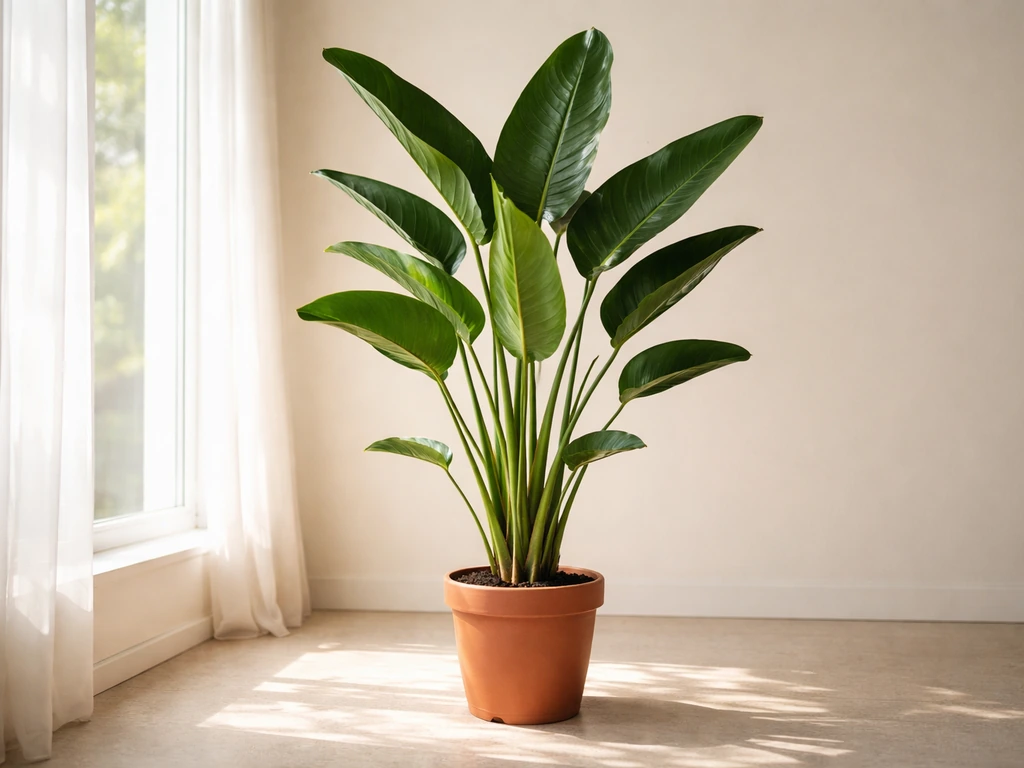
Yes, Strelitzia nicolai can grow indoors, and it can genuinely thrive for years if you nail the basics. The non-negotiables are very bright light (we're talking a big south- or west-facing window), good drainage, and careful watering. Get those three right and you have a dramatic, long-lived houseplant on your hands. The honest caveat: this plant eventually wants to be enormous. In the wild it reaches 7–8 metres, and the RHS puts its eventual maximum closer to 10 metres. Indoors, growth is much slower, but over a decade or more, size becomes a real conversation. For most people, it makes a spectacular statement plant for many years before space becomes an issue.
Can Strelitzia Nicolai Grow Indoors? Conditions to Succeed
James Hartwell
13 May 2026
Light requirements and best indoor placement
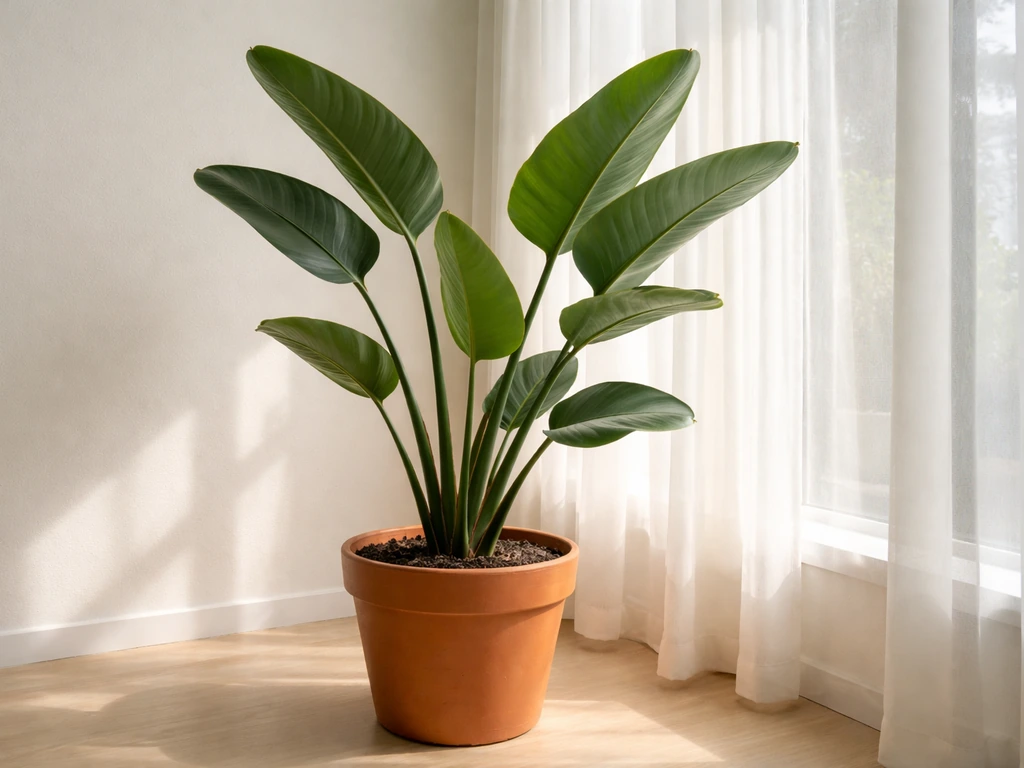
Light is the single biggest factor between a Strelitzia nicolai that grows and one that just sits there looking miserable. This plant needs as much direct or near-direct sun as you can give it indoors. A large south-facing window is the gold standard. A west-facing window works well too, especially if it gets several hours of afternoon sun. North-facing rooms are really not suitable, and east-facing windows can work only if the light is very strong and unobstructed.
One practical tip I'd pass on: give the pot a quarter turn every time you water. The RHS specifically recommends this to keep the plant growing evenly rather than leaning dramatically toward the light source. It sounds fussy but it genuinely makes a difference over a few months.
If your natural light is limited, especially through winter, supplementing with a full-spectrum LED grow light is worth considering. Position it roughly 12–18 inches above the foliage and run it for 12–14 hours daily. Strelitzia nicolai is light-hungry even during dormancy, so propping up the light levels through darker months prevents the slow, demoralising decline you might otherwise see by March.
Temperature, humidity, and airflow
Strelitzia nicolai likes warmth. The sweet spot for active growth is 21–28°C (roughly 70–82°F), and you should aim to keep it above 7–10°C even through winter. A normal living room maintained at 18–24°C year-round suits it well. Homes & Gardens recommends keeping room temperatures around 65–75°F (18–24°C) through the colder months, which lines up with most centrally heated homes.
The two temperature-related mistakes I see most often are placing the plant near a cold draughty window in winter, or directly in the airflow of an air conditioning unit in summer. Both trigger leaf browning and can stress the plant significantly. Keep it away from vents, open windows in cold weather, and exterior doors.
For humidity, 40–60% is the target range. Most homes with central heating sit below that in winter, which is where problems creep in. You can mist the leaves during drier periods to provide some relief. Maintaining humidity above 40–50% also helps keep spider mites at bay, which is worth noting because mites genuinely love dry indoor conditions. Good airflow around the plant (not cold draughts, just general air circulation) also reduces the risk of fungal issues like grey mould.
Soil, pot choice, drainage, and repotting
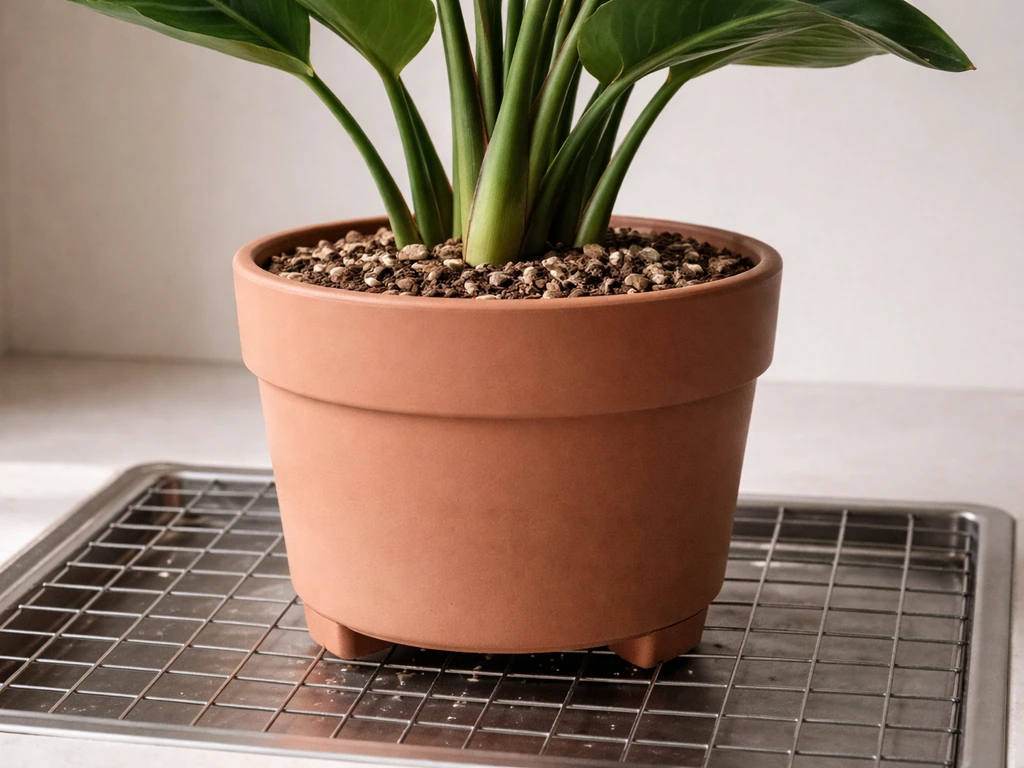
Drainage is everything with this plant. Root rot from sitting in soggy soil is one of the most common reasons indoor Strelitzia nicolai fails. Use a mix that prioritises aeration: a good starting point is a base of indoor plant compost combined with perlite and a little bark chip to open up the structure and allow excess water to move through quickly. Think of it like giving the roots room to breathe rather than sitting in a mud bath.
Always choose a pot with at least one drainage hole, and don't use a saucer that lets the pot sit in standing water for hours. Terracotta pots are excellent for this plant because the porous walls help wick away excess moisture, reducing overwatering risk compared to plastic or glazed ceramic.
Strelitzia nicolai actually does better when it's slightly pot-bound, so don't rush to size up. The practical triggers for repotting are roots escaping the drainage holes or visibly lifting the root ball. For most indoor plants, that means repotting every 3–4 years in spring. When you do repot, go up only one pot size rather than jumping to something much larger. Dropping it into an oversized pot dramatically increases overwatering risk because the extra soil holds moisture the roots can't use. Each spring, even in years you don't repot, it's worth scraping off the top 5 cm of compost and replacing it with fresh mix to replenish nutrients.
Watering and fertilizing indoors
The watering rhythm that works best is a dry-down approach rather than a fixed calendar schedule. In spring and summer, water when the top 3–5 cm (roughly 1–2 inches) of soil feels dry. Under typical indoor conditions that often works out to every 7–10 days, but check the soil rather than watching the calendar. In winter, ease right back and water only every 2–3 weeks as growth slows and the plant needs far less moisture.
When you do water, water thoroughly until it drains freely from the bottom of the pot, then let it drain completely. Never let the pot sit in a puddle of water. This is where most people go wrong: a little water every couple of days is worse than a good deep soak every week or so.
For fertilizing, use a balanced water-soluble fertilizer diluted to about half the recommended strength, applied every 2–4 weeks during the active growing season (spring through summer). Stop or significantly reduce feeding once growth slows heading into autumn and winter. Over-fertilizing a slow-growing indoor plant doesn't speed things up but it does build up salt residues in the soil that can cause tip burn.
What to expect indoors: size, growth rate, and space planning
Indoors, Strelitzia nicolai grows much more slowly than it would outside, but it still grows. Over several years you can expect a plant that gradually commands real vertical space. In the wild it spreads to about 3.5 metres wide and reaches 7–8 metres tall. Indoors, most plants stay manageable for a decade or more, but that eventual size is worth factoring in before you commit. This is not a plant for a small flat with low ceilings.
Flowering is another honest conversation. The RHS notes strelitzia typically takes 5–10 years to reach flowering maturity, and indoors, Strelitzia nicolai is really grown as a foliage plant. The dramatic paddle-shaped leaves are the point. If you want flowers, you need a plant at maturity with extremely strong light. Don't buy a Strelitzia nicolai expecting flowers any time soon. The good news is that with proper care it can live for several decades indoors, so you're investing in a long-term companion rather than a seasonal display.
If you have outdoor space and live somewhere with mild summers, moving the plant outside from late spring through early autumn is genuinely beneficial. The extra light and warmth boost growth considerably. Just transition it gradually over a couple of weeks to avoid sun scorch on leaves that have adapted to indoor light levels, and bring it back in well before night temperatures drop toward 10°C.
Common indoor problems and how to fix them
Yellow leaves
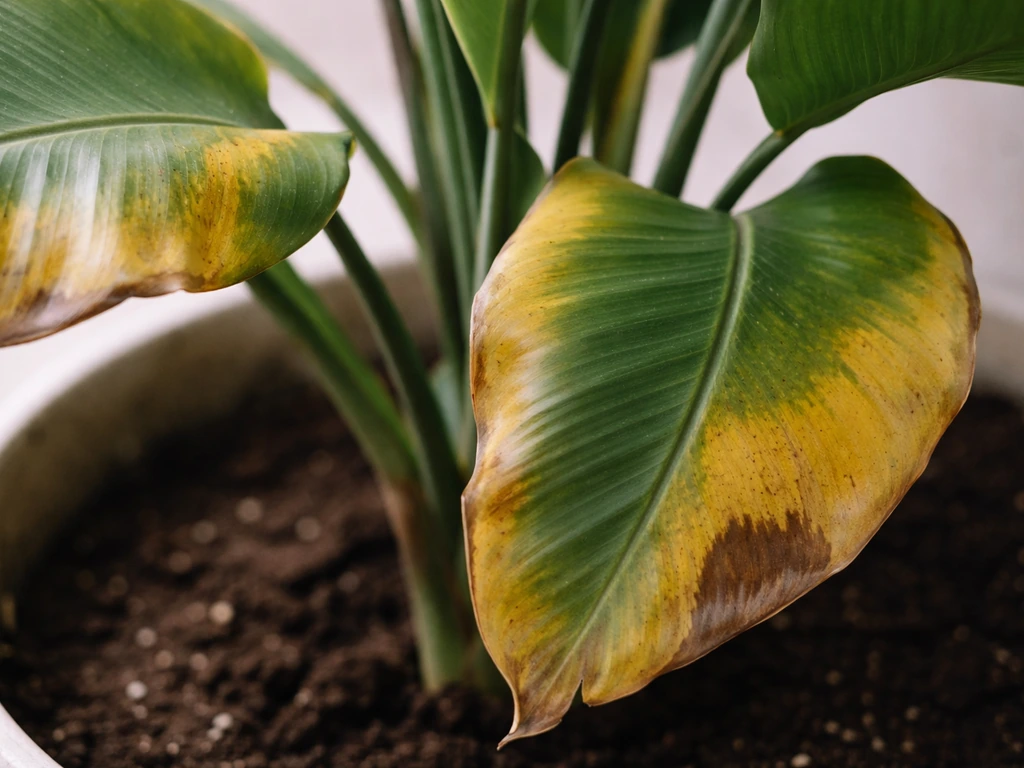
blank" rel="noopener noreferrer">Yellowing leaves are almost always an overwatering or drainage problem. If you’re specifically wondering about an angel wing begonia, check its light, watering, and humidity needs because they differ from Strelitzia. If multiple leaves are turning yellow and the soil feels consistently damp, ease off watering immediately, check that the drainage holes are not blocked, and let the soil dry down more thoroughly before the next watering. If you suspect root rot, tip the plant out of its pot, remove any soft brown roots, let them air dry briefly, and repot into fresh well-draining mix.
Brown or scorched leaf tips and edges
Crispy brown tips usually point to low humidity, cold draught damage, or less commonly direct contact with a very hot window in summer. Check what's closest to the affected leaves. If the air is very dry (common in winter with central heating), increase humidity by misting or placing a humidifier nearby. If the tips are yellowing before browning, overwatering is more likely the culprit than humidity. Cold draughts from windows or AC vents cause a similar but faster-progressing edge browning.
Slow or stalled growth
Strelitzia nicolai grows slowly indoors at the best of times, but if it has stopped entirely outside of winter, the most likely cause is insufficient light. If you can provide enough light and warmth, can rieger begonias grow indoors too, but they have different humidity and feeding needs than Strelitzia nicolai. Even a few metres back from a window makes a significant difference to how much usable light the plant receives. Move it closer to the brightest window you have, or add a grow light. If growth stalls in winter, that is largely normal and can be left to correct itself in spring once light levels recover.
Spider mites
Spider mites are the most likely pest you will deal with on an indoor Strelitzia nicolai. They thrive when humidity drops below about 50%, which makes dry, centrally heated rooms in winter a classic breeding ground. Look for fine webbing between leaves and leaf stems, and a dusty or stippled texture on the upper leaf surface. Treat with horticultural neem oil, making sure to coat the undersides of all leaves thoroughly where mites cluster. Repeat applications every 5–7 days for at least three rounds to catch eggs hatching. Raising ambient humidity above 50% makes conditions much less favourable for re-infestation.
Leaning or lopsided growth
If the plant is dramatically leaning toward the window, it just needs rotating more consistently. The quarter-turn-at-every-watering habit is the fix. Start it now and the plant will gradually even out over the next few months.
Your immediate setup checklist
Before doing anything else, run through these quick diagnostic questions to identify what your current setup might be missing: If you are wondering specifically about can New Guinea impatiens grow indoors, the right light and consistent moisture make a big difference.
- Is the plant within 1–2 metres of a large south- or west-facing window? If not, move it or add a grow light.
- Is the pot sitting in standing water or using a saucer that traps moisture? Remove it or drain after watering.
- Does your potting mix drain freely? If it holds water for a long time after watering, repot into a more open mix with added perlite.
- Are you watering on a fixed schedule regardless of soil dryness? Switch to checking the top 3–5 cm of soil before every watering.
- Is the plant near a cold draught, open window, or AC vent? Relocate it to a stable temperature spot.
- Is the humidity in the room consistently below 40%? Consider misting regularly or using a humidifier nearby.
- When did you last fertilize? If it's spring or summer and you haven't fed in over a month, start a fortnightly half-strength balanced feed.
- Is the plant rotating regularly? Begin a quarter-turn at each watering to keep growth even.
Fix the light first, then sort drainage and watering, and most other problems tend to resolve on their own. Can wax begonias grow indoors too? They do best with bright, indirect light and consistently moist, well-draining soil. Strelitzia nicolai is a robust plant that rewards good fundamentals more than any complicated routine.
FAQ
Can Strelitzia nicolai handle being on a windowsill or cold floor in winter?
Yes, but only if you can keep the pot from sitting cold and wet. Use a saucer-free setup, empty any runoff right away, and protect the pot from direct contact with a cold floor or windowsill (a small pot stand or insulating mat helps). Cold root temperatures combined with wet compost raise root-rot risk.
How do I know when to water if the top of the soil looks dry but the plant still looks unhappy?
Start by checking the soil, not the calendar. If the top 3–5 cm feels dry, water deeply until it drains, then wait to re-check dryness again. If the surface is dry but the pot feels heavy, wait, because indoor mixes can stay damp deeper down.
Is misting Strelitzia nicolai a good substitute for raising humidity?
Do not. While Strelitzia nicolai can tolerate slightly low humidity, direct misting encourages leaf spotting and can worsen fungus in stagnant air. If you mist, do it lightly, only during very dry periods, and ensure good airflow around the plant.
What potting mix works best if my plant keeps struggling with soggy soil?
Use a gritty, airy mix and improve drainage rather than increasing watering. A simple approach is compost plus perlite, and add bark for extra structure. After repotting, wait about a week before following your regular dry-down routine, so disturbed roots can settle.
Should I cut off yellow or brown leaves, and where exactly should I prune?
Trim only damaged tissue. Cut brown or fully crispy tips back partway, but avoid cutting into green healthy leaf tissue, which can leave open wounds. If the base crown is soft or leaves are collapsing, that points more to rot, then you need root inspection.
My Strelitzia nicolai stopped growing. How can I tell if it is winter dormancy or a care problem?
If growth has stalled, confirm light first. Then check that the pot is not oversized, the drainage holes are clear, and the temperature is staying above about 7 to 10°C. Most indoor “stops growing” cases during winter are light and cooler-room driven rather than a need for more fertilizer.
Why do I get tip burn even though I fertilize correctly and don’t overwater?
Treat it like a light plant, not a feeder. Use half-strength balanced fertilizer every 2–4 weeks in spring and summer only, and pause feeding when growth slows. Overfeeding shows up as salt buildup and tip burn, especially in slow-growing indoor conditions.
What are early signs of root rot versus normal slow growth, and what should I do first?
Probably, if the pot is too large, drainage is poor, or you water on a set schedule. Feel for heaviness after watering, check whether water drains quickly, and look for persistent yellowing with damp soil. Root rot treatment is potting mix replacement plus removing soft roots, not just “less water.”
Why won’t my indoor Strelitzia nicolai flower, even after months of good care?
Not usually. Strelitzia nicolai indoors rarely flowers without very high, consistent light for years. If your plant is still immature, focus on strong sun or a properly positioned LED grow light, and use a steady dry-down watering routine rather than trying to “push” flowering.
Can I take Strelitzia nicolai outdoors in summer, and how do I prevent leaf scorch?
Yes, but with the right timing and risk control. If you must move it outside for mild summer weather, harden it off gradually over 1 to 2 weeks, start with partial shade, and return before night temperatures drop toward 10°C. Also keep it in a container with fast-draining soil so it does not stay wet after rain.
My plant gets yellow leaves but the soil is not very wet. What else should I check besides watering?
Make sure the drainage holes are not blocked by roots or compacted soil, and check that runoff is actually leaving the pot. Then switch to a deeper soak when the top 3–5 cm is dry, and stop watering more frequently just because the surface looks dry.
How do I repot without causing a new round of decline?
Repot only when roots push out of drainage holes or when the root ball lifts. When you do repot, go up just one pot size and keep the same general planting depth. If you “jump sizes,” the extra mix stays wet longer and increases overwatering and rot risk.
What is the quickest way to stop spider mites on indoor Strelitzia nicolai?
For pests, separate leaves and inspect undersides because mites cluster there. Treatments work best when you maintain above 50% humidity and repeat neem oil on a schedule (including undersides) to catch hatchings. If you have webbing early, act quickly, because populations can build fast indoors.