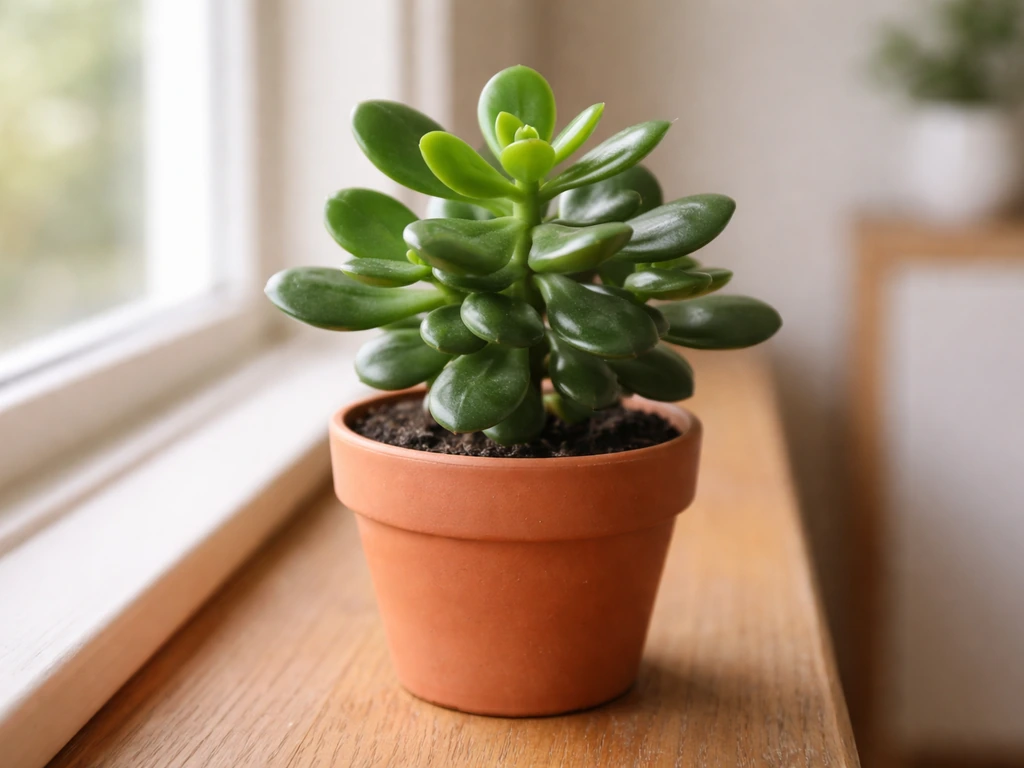
Yes, jade plants grow indoors beautifully, and they're honestly one of the best houseplants you can own. Crassula ovata is tolerant of the low humidity, variable temperatures, and less-than-perfect light that most homes offer. Give it a sunny windowsill and you're most of the way there. It's slow-growing, long-lived, and remarkably forgiving as long as you don't overwater it.
Can Jade Plant Grow Indoors? How to Grow It Step by Step

James Hartwell
28 Apr 2026
What jade plants actually need indoors
Light
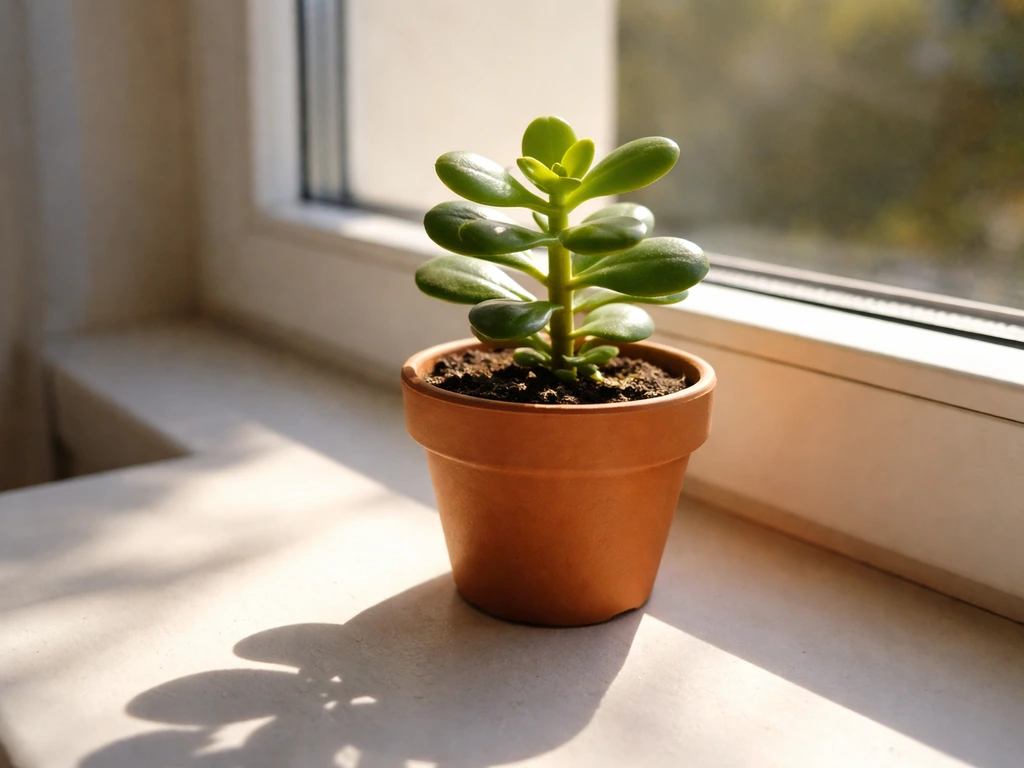
Light is the one thing jade genuinely needs. It does best with four or more hours of direct sun per day, so a south- or west-facing window is ideal. It will survive in bright indirect light, but growth slows and stems start to stretch. If you only have a north-facing room or a spot several feet from a window, jade will technically survive but it won't thrive. This is probably the number one reason jade plants slowly deteriorate indoors: not enough light. If you're wondering can creeping jenny grow indoors, it helps to know what light and trimming it needs to stay tidy and healthy.
Temperature
Jade is tolerant of a wide range of household temperatures. Standard room temps between 65°F and 75°F are fine year-round. It can handle cooler spells, and in fact a drop to around 55°F in fall or winter is what triggers blooming if you want flowers. What it can't handle is freezing. Keep it away from drafty windowsills in hard winters, and never leave it outdoors if frost is coming.
Humidity
This is where jade really shines as a houseplant: it doesn't care about humidity. The dry air from central heating that kills tropical plants like gardenias doesn't faze jade at all. If you've ever struggled with plants that need high humidity (jasmine and gardenia are tough in this regard), jade is a genuine relief. If you're curious whether gardenia can grow indoors, it needs a very different setup than jade gardenias.
Gardenias are harder indoors because they typically need more consistent humidity and bright light jasmine and gardenia. If you're wondering can jasmine grow indoors, the biggest hurdle is usually humidity and consistent bright light. If you're wondering can jasmine grow indoors, the biggest hurdle is usually humidity and consistent bright light jasmine and gardenia can arabian jasmine grow indoors.
If you're asking can confederate jasmine grow indoors, plan on creating a more consistent humidity and light routine than you would for jade. If you mean jasmine in general, indoor jasmine can work too, but you will need the right combination of bright light, consistent humidity, and careful watering jasmine grow indoors. Star jasmine can grow indoors, but you will need to match its light and humidity needs closely. No misting, no pebble trays, no humidifiers needed.
How to grow jade indoors: step by step
- Choose a pot with drainage holes. Terra cotta works especially well because it breathes and dries out faster than plastic, which lowers root rot risk.
- Fill it with a cactus and succulent potting mix, or make your own by mixing standard potting soil with perlite at roughly a 1:1 ratio. The goal is extremely fast drainage.
- Plant your jade so the base of the stem sits just at soil level. Don't bury the stem.
- Place the pot in your sunniest window. South-facing is best, west-facing is a solid second choice.
- Water thoroughly until water drains from the bottom, then leave it alone until the top inch or two of soil is completely dry.
- Feed lightly during the growing season (spring through summer) and hold off in fall and winter.
- Rotate the pot a quarter turn every few weeks so all sides get even light exposure.
Soil, watering, and fertilizing: the details that matter
Jade stores water in its leaves, stems, and roots, which means it can go weeks without a drink and be perfectly fine. The UF/IFAS houseplant list worksheet groups jade (Crassula ovata) with houseplants that share similar light and watering needs, which can help guide your matching care [UF/IFAS houseplant list worksheet groups jade with plants with similar light and watering needs](https://gardeningsolutions. ifas. ufl.
edu/pdf/houseplant-list. pdf). The single biggest mistake I see with indoor jade is treating it like a regular houseplant and watering on a schedule. Don't do that.
Water deeply, then wait. In a warm, sunny spot the soil might dry out in two to three weeks in summer. In winter, it might be once a month or even less. Stick your finger an inch into the soil before you water.
If it's still damp, walk away.
For fertilizer, jade doesn't need much. A balanced liquid fertilizer diluted to half strength, applied two or three times during spring and summer, is plenty. Don't fertilize in fall or winter when the plant is resting. Over-fertilizing pushes weak, leggy growth and can damage roots.
Common indoor problems and how to fix them
Leggy, stretching growth
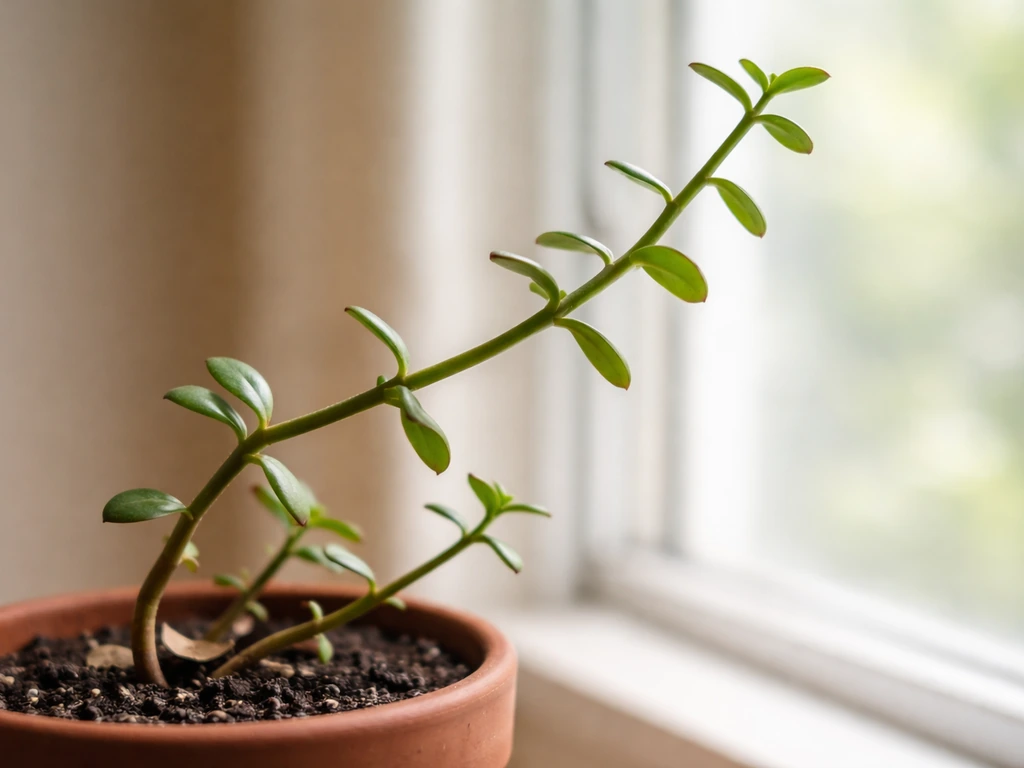
If your jade is producing long, thin stems with small widely-spaced leaves, it's reaching for light. Move it closer to a window or to a brighter room. Once it's in better light, new growth will be compact and healthy. You can trim back the stretched stems to encourage bushier growth.
Leaf drop and shriveling
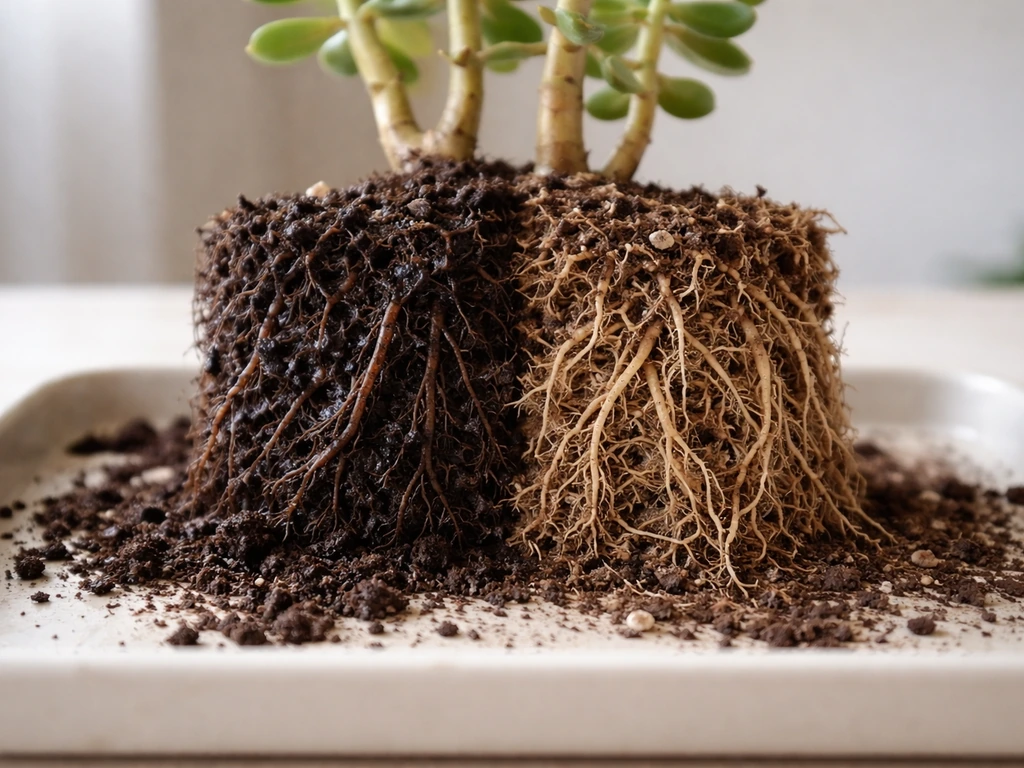
Leaves dropping suddenly, especially without yellowing first, usually means a sudden temperature change, a draft, or a dramatic shift in watering. Shriveled, wrinkled leaves (when the soil is dry) mean the plant actually is thirsty and needs water. Shriveled leaves with wet soil, though, point to root rot: the roots can't take up water anymore because they're damaged.
Root rot from overwatering
Root rot is the most common way jade dies indoors. If the soil stays wet for too long, the roots rot and the plant slowly collapses. If you suspect this is happening, unpot the plant and check the roots. Brown, mushy roots are rotted. Trim them off with clean scissors, let the plant air dry for a day, then repot into fresh dry succulent mix. If the soil doesn't drain well, that's your first fix: repot into a more porous mix before anything else.
Mealybugs and scale
Indoor jade can pick up mealybugs (which look like tiny white cotton patches in the joints of stems) or scale (small brown bumps on stems). These almost always come in on newly purchased or gifted plants, so inspect any new plant before bringing it into your home and keep it separated from your other plants for a couple of weeks. If you spot mealybugs, dab them with rubbing alcohol on a cotton swab or spray with diluted neem oil. Powdery mildew can occasionally appear on jade too, usually in low-light, poor-airflow situations.
Fungus gnats
If you're seeing small flies hovering around your jade, they're likely fungus gnats, which are drawn to consistently moist soil. The fix is simply to let the soil dry out more between waterings. Yellow sticky traps near the pot will catch the adults while the soil dries out.
Where to put it and how to adjust care through the seasons
The best spot indoors is a south-facing windowsill where it gets direct sun for most of the day. If you are wondering can star jasmine grow indoors, the key is giving it enough bright light and consistent care south-facing windowsill. In summer, you can move it outdoors to a patio or balcony if you like, just introduce it to full outdoor sun gradually to avoid sunburn. Bring it back inside before nighttime temps dip below 50°F in fall.
In winter, keep it away from cold drafts near windows, but don't move it too far from the glass either. Light levels drop significantly in winter and jade really feels it. If you want your jade to flower (small starry white or pink blooms), move it to a cooler spot around 55°F in fall, reduce watering, and give it about six weeks of that treatment before bringing it back to normal conditions. It's not guaranteed, but that's how you give it the best shot.
When to repot and how to propagate your jade
Repotting
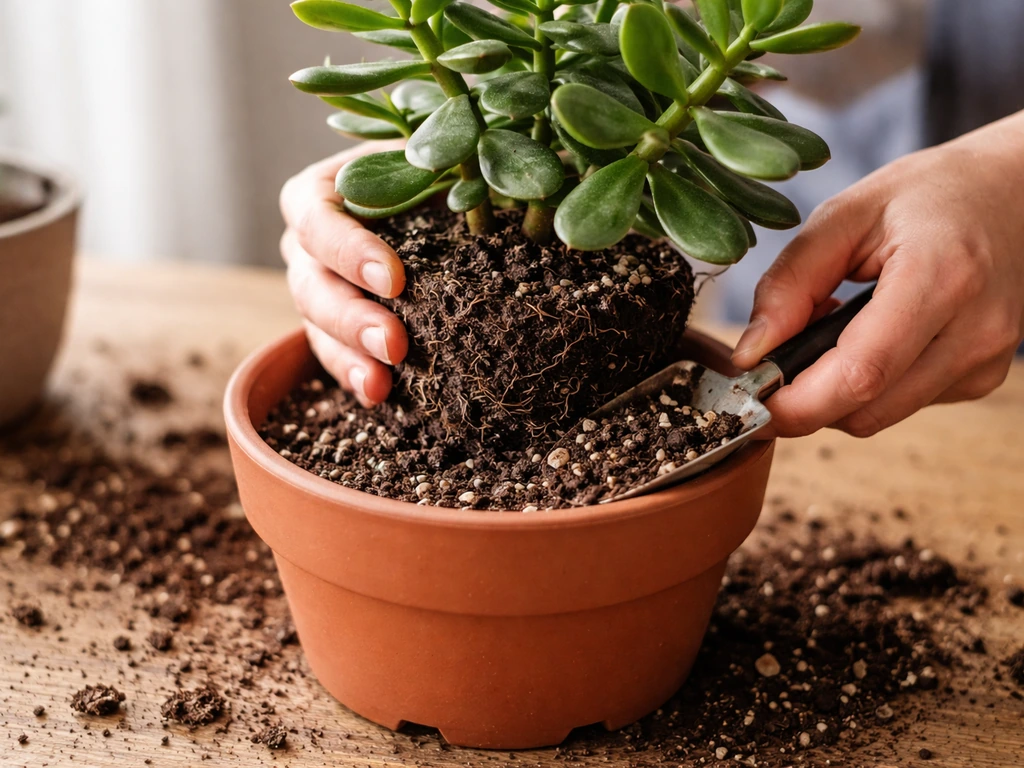
Jade doesn't mind being a little root-bound, so you don't need to repot often. When roots start circling the bottom of the pot or poking out the drainage holes, it's time. Spring is the best moment. Go up only one pot size at a time: too large a pot holds too much moisture and increases rot risk. Use fresh succulent mix each time.
Propagating from cuttings
Jade is one of the easiest plants to propagate indoors. If you're curious about another easy trailing houseplant, can wandering jew grow indoors in the same kind of home conditions? Summer is when cuttings root most easily, but it works year-round. Here's the process: UF/IFAS notes that blank" rel="noopener noreferrer">starting jade plants in soil from cuttings is a straightforward propagation approach outlined in its instructional guidance.
- Take a stem cutting three to four inches long, or pull off a healthy leaf cleanly from the stem.
- Let the cut end sit out in a dry, bright spot for one to three days until the cut surface forms a dry callous. This step is important: it seals the wound and prevents rot when you pot it up.
- Push the calloused end about half an inch into barely moist, well-draining succulent mix. The cutting can even begin forming roots sitting on top of dry soil.
- Place it in bright indirect light (not intense direct sun at this stage) and resist watering for about a week.
- Once you see small roots forming (usually within two to four weeks) and notice new leaf growth, you can begin watering lightly.
- Once roots are about an inch long, move the cutting to its own pot and begin treating it like a mature jade plant.
Jade is genuinely one of the most rewarding indoor plants to grow. It tolerates the conditions most homes naturally have, doesn't demand constant attention, and can live for decades with basic care. Get the light right, don't overwater, and you're set. Creeping Charlie, also called ground ivy, can grow indoors if you provide bright light and let the soil dry slightly between waterings creeping Charlie can grow indoors.
FAQ
How much direct sun does jade need when it’s indoors year-round?
Aim for at least four hours of direct sun daily. If your window delivers only morning or only afternoon light, rotate the pot every 1 to 2 weeks so both sides stay compact, and watch for stretching as a sign the sun is too weak.
Can jade plant grow indoors under grow lights instead of a window?
Yes. Use a bright grow light and keep it close enough for strong, compact growth, typically 10 to 12 hours per day. If stems begin to elongate, increase light intensity or shorten the distance to the bulb.
Is it okay to water jade on a fixed schedule?
It’s the biggest mistake. Use soil moisture, not dates. Water deeply only when the top inch (or more) is dry, and empty any saucer after 10 minutes so roots never sit in runoff.
What type of soil should I use for indoor jade to prevent root rot?
Use a fast-draining succulent or cactus mix and ensure the pot has drainage holes. If you live in a humid area or your home runs cool, consider amending the mix with extra perlite or pumice to help it dry faster.
How do I tell the difference between underwatering and overwatering on jade?
Shriveled, wrinkled leaves usually mean underwatering. Leaves that drop suddenly or feel soft, along with consistently wet soil, point more toward overwatering and possible root rot.
My jade dropped leaves after I moved it, is it dying?
Leaf drop can happen after sudden changes in temperature or light. Give it stable light for a couple of weeks, adjust watering based on dryness, and check the roots if new growth stops or the base looks dark or mushy.
Should I mist jade indoors?
No. Jade stores water and does not need humidity boosts. Misting can keep leaves wet longer, which raises the risk of fungal issues if airflow is poor.
Can jade survive a dark office or low-light room?
It can survive longer than many plants, but it likely won’t thrive. If the room is truly dim, plan on either moving it near a window part of the day or using a grow light, otherwise it will stretch and thin out.
What pot size should I use indoors?
Choose a pot that’s only slightly larger than the root ball. Too-large pots hold excess moisture and increase rot risk, even if you water carefully.
When should I repot indoor jade, and how often?
Repot when roots circle the bottom or emerge from drainage holes, usually every few years. Spring is best. Always use fresh, dry succulent mix, and wait about a week before the first watering if you disturbed roots heavily.
How do I propagate jade indoors, and what’s the quickest method?
Stem or leaf cuttings work. Let cut ends callus for a few days until the surface is dry, then plant in dry succulent mix. Keep it bright but not scorching, and water lightly only after roots start to form.
Why are there tiny white cottony patches or brown bumps on my jade?
Those are commonly mealybugs (cottony clusters) or scale (brown bumps). Remove visible pests first, then treat the plant and inspect new growth repeatedly over 2 to 4 weeks, since eggs can hatch later.
What causes fungus gnats around jade indoors?
They usually indicate the soil stays too wet. Let the mix dry more between waterings, remove any decaying plant debris, and use yellow sticky traps to reduce adult flies while the soil conditions improve.
Can indoor jade flower, and what should I change to encourage it?
It can, but it’s not guaranteed. For the best chance, provide a cooler period around 55°F in fall, reduce watering, and keep it in strong light. Once flower buds appear, return to normal conditions gradually.
Is jade plant safe for pets indoors?
Jade is considered potentially toxic to cats and dogs if ingested. If you have pets that chew plants, place jade out of reach or choose a pet-safe alternative, and contact a veterinarian if ingestion happens.