
Calibrachoa can grow indoors, but it's not the easiest houseplant to keep happy. This is a high-light, fast-drinking plant that evolved for full sun and outdoor breezes. Give it a south-facing window with at least six hours of direct sun (or a decent grow light running 14–16 hours a day), a fast-draining acidic mix, and consistent feeding, and you'll get those tiny petunia-like blooms indoors. Skimp on light or let the roots stay soggy, and it'll get leggy, yellow, and stop flowering within a few weeks. Here's exactly how to set it up right.
Can Calibrachoa Grow Indoors? Step-by-Step Care Guide

James Hartwell
2 Jun 2026
The honest verdict: yes, but with real conditions
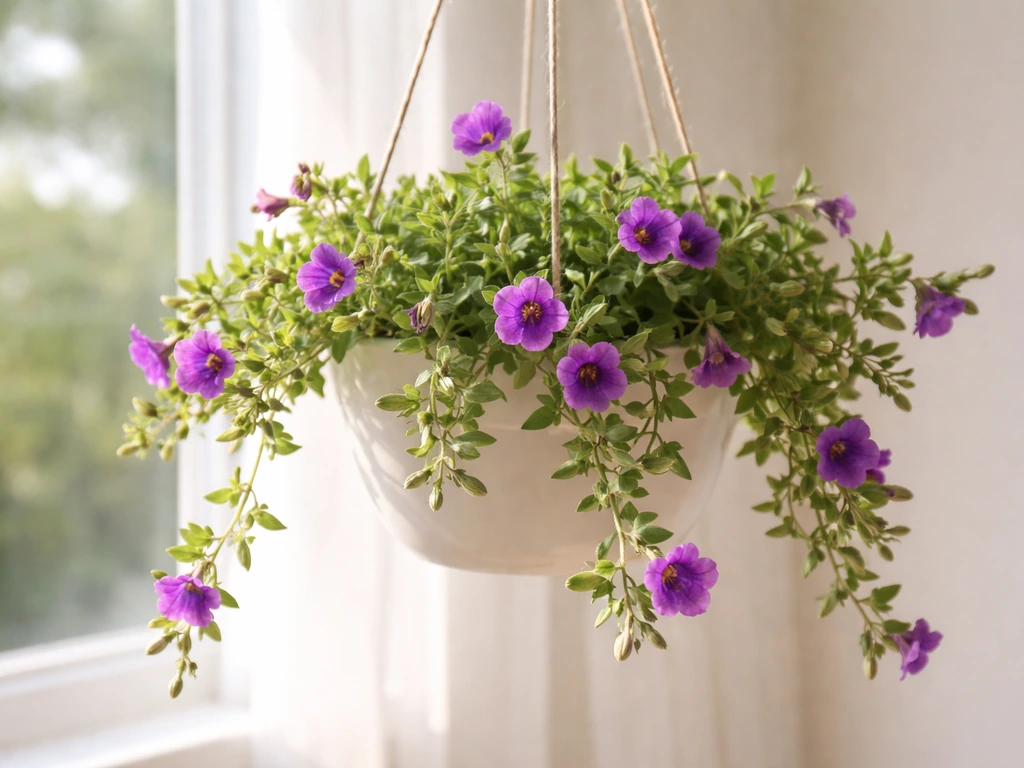
Calibrachoa will grow and bloom indoors if you can meet its non-negotiable: bright, direct light. This isn't a plant that tolerates a north-facing windowsill or a dark apartment corner. If you can give it a genuinely sunny south or west window, or supplement with a grow light, it's a rewarding indoor plant with a long bloom season. If your space is mostly indirect light, I'd be honest with you: save yourself the frustration and choose something else.
Unlike tropical foliage plants such as calathea, which can manage in lower light, calibrachoa is wired to bloom hard in high-intensity sun and it simply won't perform without it. If you’re also deciding whether can calathea grow indoors, the key factors are steady humidity and avoiding drafts.
The best indoor scenarios for calibrachoa are a bright sunroom or a south-facing window in a space that gets genuine, unobstructed sun. Apartments with large south-facing windows work well. A grow-light setup is honestly one of the most reliable approaches because you control the hours and intensity precisely. If either of those describes your space, keep reading. You can absolutely do this.
Light requirements: which windows work and when to use grow lights
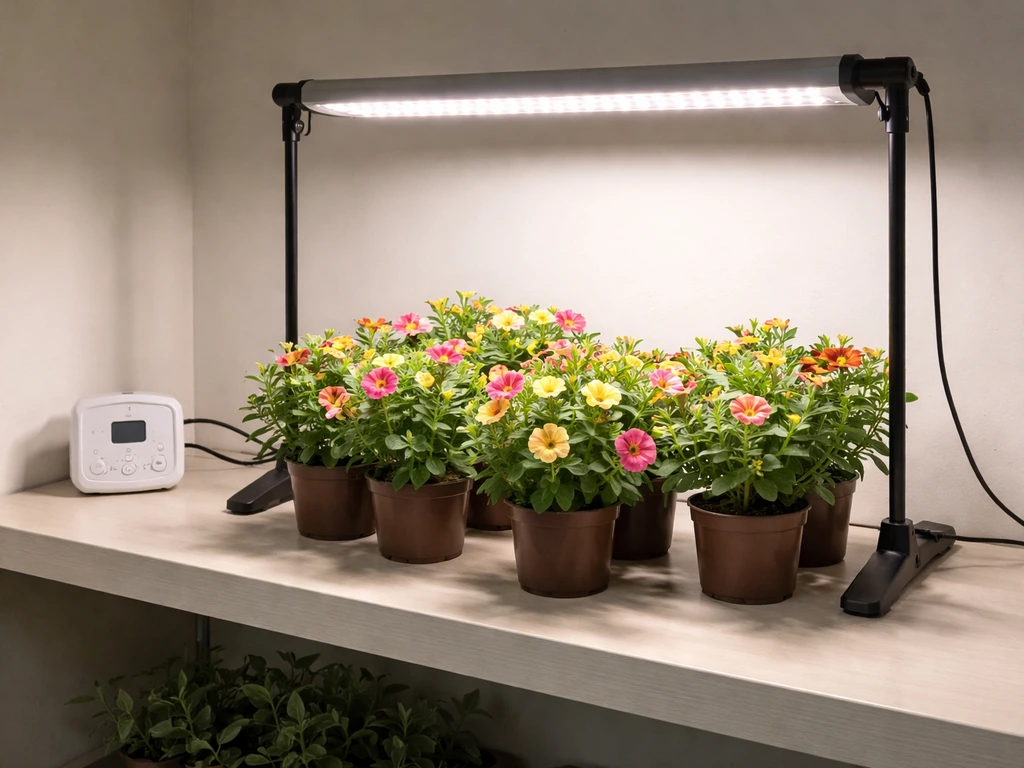
Calibrachoa needs at least 4,000 to 6,000 foot-candles of light to perform well, and ideally more than 4,500 foot-candles for consistent flowering. In practical terms, that means a minimum of six hours of direct sun per day. A south-facing window in summer can get you close. A west-facing window can work if the afternoon sun is strong and unobstructed. North and east windows almost never produce enough intensity to keep this plant blooming; it'll survive but look miserable and stretched.
A full-spectrum LED grow light is a game-changer for indoor calibrachoa. Position it 6 to 12 inches above the plant and run it for 14 to 16 hours a day. Night-interruption lighting (briefly lighting the plant mid-night) is actually used by commercial growers to bring calibrachoa into bloom earlier and more evenly, so if you're growing in winter, a timer-controlled grow light is genuinely worth the investment. Day length matters too: calibrachoa selected for indoor finishing (like many Cabrio-type varieties) can be triggered to flower under just 10.5 hours of daylight, which means winter indoor conditions can actually work in your favor if your light intensity is adequate.
- South-facing window: best natural option, especially in summer
- West-facing window: workable if afternoon sun is direct and strong
- East or north-facing window: not sufficient, supplement with grow lights
- Grow light: full-spectrum LED, 14–16 hours/day, 6–12 inches above the plant
- Target: at least 4,500 foot-candles or roughly 15 mols/day of light
Potting, soil mix, and container size
Calibrachoa is very particular about soil pH, which trips up a lot of indoor growers. It needs an acidic mix in the 5.0 to 6.5 pH range. Standard all-purpose potting soil is often too alkaline, which locks out iron and causes the yellowing that many people misdiagnose as overwatering. Use a mix formulated for acid-loving plants, or blend a standard peat-based potting mix with perlite (roughly 70% mix, 30% perlite) to hit the right pH and drainage.
Drainage is the other non-negotiable. Calibrachoa cannot sit in wet soil. Use a container with at least one large drainage hole, and never use a saucer that lets the pot sit in standing water. For container size, a 6- to 8-inch pot works well for a single plant indoors. Smaller containers dry out faster (which actually suits calibrachoa's dislike of soggy roots) but require more frequent watering. Avoid oversized pots because excess soil volume holds moisture too long and invites root rot. A terracotta pot is a solid choice because it breathes and helps prevent waterlogging.
If your potting mix doesn't already contain fertilizer, mix in a slow-release, balanced granular fertilizer at planting time. This gives the roots a nutritional head start before you establish your liquid-feeding routine.
Watering and fertilizing indoors
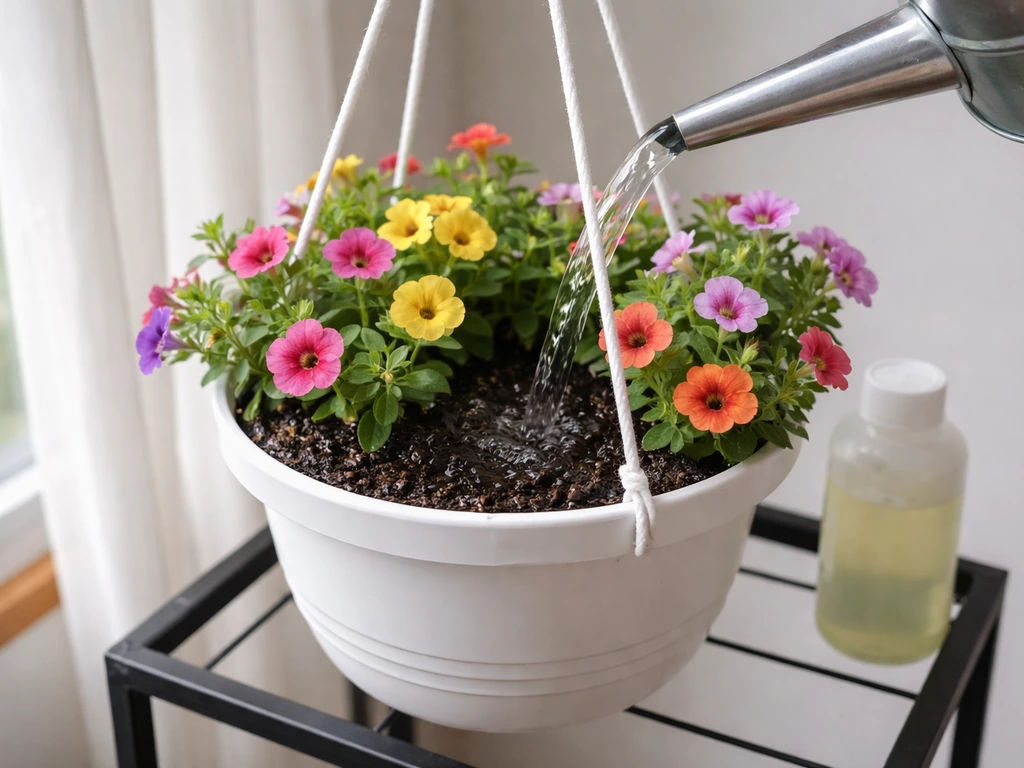
Calibrachoa drinks a lot. Outdoors in a hanging basket in summer heat, it can need water twice a day. Indoors, the pace slows somewhat, but it still wants consistent moisture without waterlogging. Check the top inch of soil daily. When it's dry, water thoroughly until it drains out the bottom, then let it drain completely. During warmer months or under grow lights, you may find yourself watering every day. In cooler, lower-light periods, every two to three days is more typical. The rule of thumb from container plant research is simple: at a minimum, once daily when the plant is actively growing under good light.
For fertilizing, calibrachoa is a hungry plant. Feed it with a water-soluble, balanced fertilizer every other week. Look for something with roughly equal N-P-K numbers and make sure it's formulated for acid-loving or flowering plants. Because high pH locks out iron and causes chlorosis (yellowing between leaf veins), it's worth using a fertilizer that includes chelated iron, or adding a chelated iron supplement periodically. If you notice new leaves yellowing while older leaves stay green, that's iron chlorosis talking, and adjusting pH and feeding with chelated iron is the fix.
| Task | Frequency | Notes |
|---|---|---|
| Watering | Daily or every 2–3 days | Check top inch of soil; water thoroughly, drain completely |
| Liquid fertilizing | Every 2 weeks | Balanced water-soluble fertilizer; include chelated iron |
| Slow-release fertilizer | At planting | Mix into soil; skip if liquid-feeding consistently |
| pH check | Monthly | Target 5.0–6.5; high pH causes iron lockout |
Temperature, humidity, and airflow
Calibrachoa likes temperatures similar to what many of us keep our homes at: 70 to 75°F during the day and 55 to 60°F at night. That cooler nighttime temperature is actually beneficial for bud set and prolonging blooms. If your home never dips below 65°F at night (common in centrally heated apartments), the plant will still grow fine, but you may see slightly less flowering intensity compared to a plant that gets that cooler night period.
Humidity is generally not a major concern because calibrachoa is more of a dry-side plant than a tropical like colocasia or philodendron. Average indoor humidity of 40 to 50% is perfectly fine. What calibrachoa does need, though, is good airflow. Stagnant air encourages fungal issues and pests. If you're growing indoors, position the plant near a window that gets opened periodically, or use a small fan on low to keep air moving around it. This is especially important if you're growing under grow lights in a closed room.
Common indoor problems and how to fix them
Leggy, stretched growth
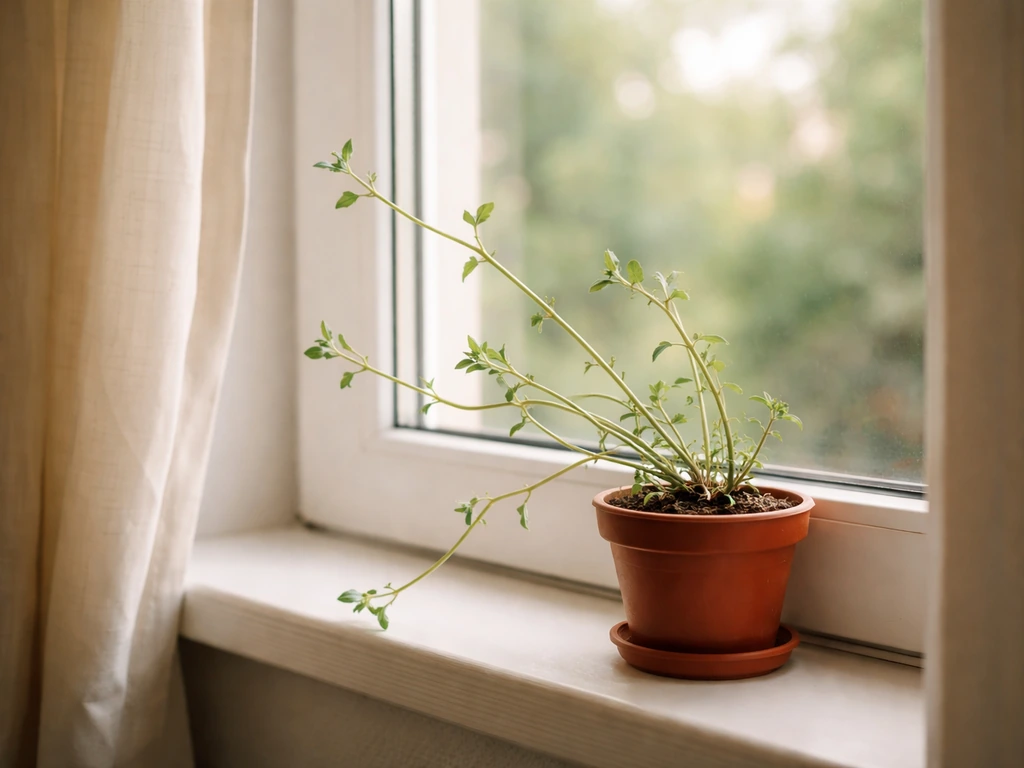
If your calibrachoa is reaching toward the light with long, weak stems and sparse leaves, it's not getting enough light. Move it closer to your brightest window or add a grow light. Pinch back the leggy stems by about a third to encourage bushier growth. Without fixing the light situation, pinching is just a temporary fix.
Yellowing leaves
Yellowing is the most common complaint with indoor calibrachoa, and it has two main causes. If older, lower leaves are yellowing uniformly, overwatering or poor drainage is usually the culprit. Check that your container drains freely and that you're not watering before the top inch dries out. If new growth is yellowing between the veins (interveinal chlorosis), that's iron deficiency from high soil pH. Test your mix's pH and correct with an acidifying fertilizer or chelated iron supplement. The research from e-GRO and University of Maryland Extension consistently points to iron chlorosis as the most common nutrient deficiency issue in calibrachoa.
Flower decline
If blooms slow down or stop, light is almost always the first thing to investigate. Calibrachoa needs that 4,500-plus foot-candle threshold to keep flowering. The second culprit is inconsistent feeding. If you've been skipping fertilizer, start a regular biweekly schedule. Also check that the plant isn't rootbound; a severely pot-bound plant will stall.
Pests indoors
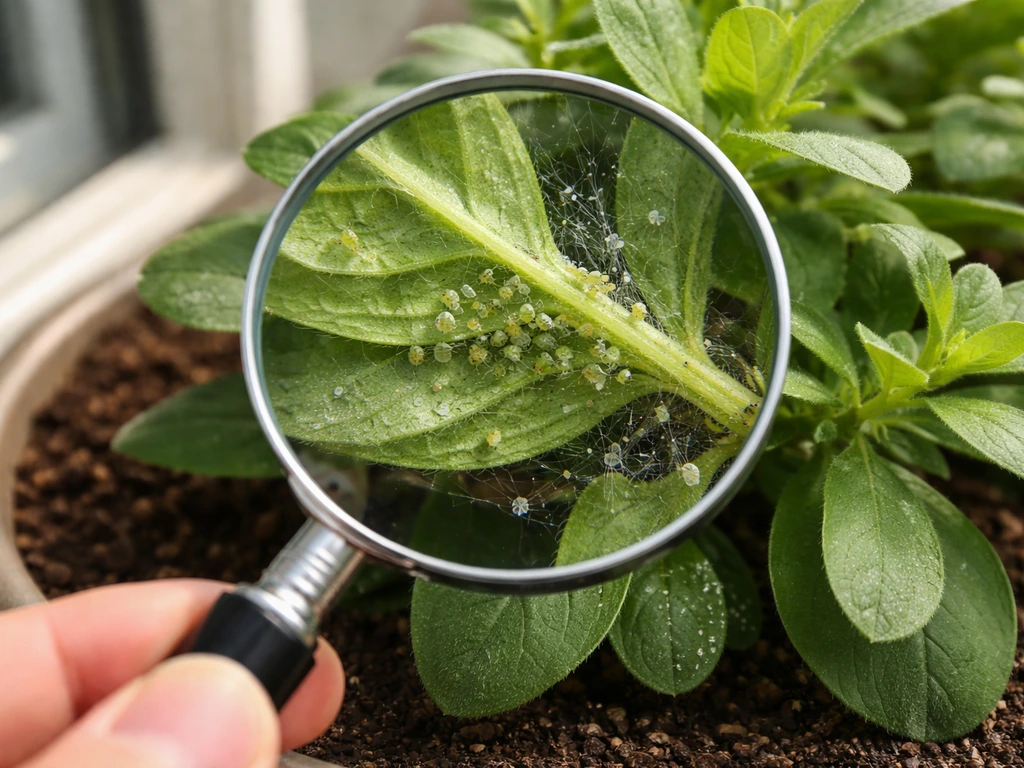
Aphids, spider mites, whiteflies, and fungus gnats are the most common indoor pests you'll deal with. Missouri Extension IPM also lists common greenhouse or indoor pests such as [whiteflies and fungus gnats](https://extension. missouri. edu/sites/default/files/legacy_media/wysiwyg/Extensiondata/Pub/pdf/agguides/pests/ipm1026.
pdf) as crop pest categories to manage with integrated pest management. Aphids multiply fast (a generation every two to three weeks), so catch them early. Wash them off with a strong spray of water and follow up with insecticidal soap. Spider mites show up as fine webbing and a bronze or grayish look to the foliage.
Increase humidity around the plant, spray the leaves down with water repeatedly, and treat with insecticidal soap. Whiteflies and winged aphids can be monitored and caught with yellow sticky traps. Fungus gnats usually mean you're overwatering: [let the soil dry out more between waterings, and use Bti (Bacillus thuringiensis israelensis) soil drench or beneficial nematodes for persistent infestations. ](https://extension.
arizona. edu/sites/extension. arizona. edu/files/attachment/HouseplantInsect-Reference.
pdf) Sticky traps near the soil surface also help catch adult gnats.
Starting from seed or cuttings vs buying plants
Most calibrachoa sold today are hybrid varieties that don't come true from seed, so propagation by cuttings is the standard approach if you want to maintain a specific plant or multiply what you have. Take 3- to 4-inch tip cuttings, remove lower leaves, and stick them in a moist, well-draining propagation mix (perlite and peat works well). Keep the media at around 70°F during the first two weeks of rooting, which is the sweet spot for developing good root systems.
Under good conditions, you can expect rooting in about 4. 5 to 5 weeks. Keep the cutting medium consistently moist but not saturated (over-misting causes stem rot), and hold off on fertilizer until you see active new growth, then start at a low dose of around 100 ppm nitrogen with a balanced, low-phosphorus formula.
For most home growers, buying a started plant from a nursery in spring is the most practical route. You get a plant that's weeks ahead of cuttings and already established. If you're buying specifically to grow indoors year-round, look for compact varieties rather than trailing types designed for large hanging baskets, since compact forms are easier to manage on a windowsill or under grow lights.
Seasonal care and keeping it blooming all year
Calibrachoa can bloom for extended periods indoors if you adjust care seasonally. In summer, your main challenge is keeping up with watering (daily is normal) and making sure the plant isn't overheating in a south window with intense sun. Sheer curtains can diffuse harsh midday light if leaves look bleached or scorched. Keep fertilizing every two weeks and the plant will reward you with consistent blooms.
In fall and winter, light drops and the plant naturally slows down. This is when a grow light becomes almost essential for continuous blooming. Switch to a 14- to 16-hour photoperiod under the grow light. Reduce watering frequency since the plant's uptake slows in lower light and cooler conditions, but don't stop fertilizing entirely: every three to four weeks in winter keeps it from running deficient. Cooler nighttime temperatures in winter can actually benefit flowering, so if you can let the room drop to around 60°F at night, do it.
If the plant looks tired mid-season, cut it back by about a third and give it a good feed. Calibrachoa responds well to hard pruning and typically rebounds with fresh blooms within three to four weeks. This is a better move than letting a ratty plant limp along.
Your next steps: a quick setup checklist
- Assess your light situation: count actual hours of direct sun at your best window, or plan your grow-light setup (full-spectrum LED, 14–16 hours/day)
- Choose a 6- to 8-inch container with good drainage holes and use a peat-based, acidic potting mix (pH 5.0–6.5) mixed with 30% perlite
- Set up a watering routine: check the top inch of soil daily and water thoroughly when dry
- Start a biweekly fertilizing schedule with a balanced water-soluble fertilizer that includes chelated iron
- Place a small fan nearby or open nearby windows regularly for airflow
- Hang a yellow sticky trap to monitor for early pest activity
- Pinch back any leggy stems at planting to encourage bushy growth from the start
- Check pH monthly and adjust if yellowing appears between leaf veins
FAQ
Can I move my indoor calibrachoa outside in summer and bring it back in?.
Yes, but only if you can get enough light and keep the soil from going too alkaline. If you plan to take calibrachoa back indoors after summer, transplant it into an acidic mix (pH about 5.0 to 6.5), use a pot with at least one large drainage hole, and gradually increase indoor light exposure over a week or two to reduce shock. Sudden moves from full sun outdoors to dimmer indoor conditions are the fastest way to get leggy growth and a bloom drop.
How do I know my grow light is strong enough for indoor calibrachoa?.
If you’re using a grow light, don’t mistake long hours for enough intensity. Calibrachoa needs high light output, so keep the light 6 to 12 inches above the plant and check that you’re meeting the practical equivalent of roughly six hours of direct sun per day. If stems stretch upward and leaves thin out even with a timer, raise intensity (or lower the light) rather than just adding more hours.
When should I repot calibrachoa indoors?.
The most common “should I repot?” trigger is root crowding, not calendar timing. If the plant dries out much faster than it used to, roots are circling the pot, or flowering stalls while lighting and feeding are correct, move up one pot size at a time (for example, 6 inches to 8 inches). Avoid jumping to a much larger container because extra wet soil can keep roots soggy and invite rot.
What watering method works best for calibrachoa in pots indoors?.
If you only water when the plant looks dry on top, you can still end up with dry pockets that prevent even nutrient uptake and contribute to yellowing. The better method is checking the top inch daily and watering thoroughly until it drains, then emptying any runoff. This ensures the entire root ball is re-wetted evenly.
Does calibrachoa need high humidity indoors?.
Do not rely on misting or humidifiers as a primary fix for indoor problems. Calibrachoa generally prefers average humidity, but it needs airflow to avoid fungal issues and pests. In practice, keep humidity around typical indoor levels, then run a small fan on low or position near an intermittently opened window.
My calibrachoa leaves are yellow, is it always overwatering?.
It can, but it’s risky to treat it like a “tropical tolerant” plant. Many indoor chlorosis cases are actually pH and iron availability problems, not a watering issue. If you see new leaves yellowing between veins, test mix pH (or assume alkalinity) and correct with an acidic fertilizer and/or chelated iron rather than increasing watering.
Why did my indoor calibrachoa stop blooming in winter, and what should I change?.
For continuous indoor bloom, aim to keep growth active with consistent light and a regular feeding cadence. In winter, reduce fertilizer frequency to about every three to four weeks but do not stop completely, and use a 14 to 16 hour photoperiod under the grow light. If you stop feeding entirely, buds often fade because the plant can’t replace nutrients as light levels drop.
Is it okay to prune calibrachoa indoors, and when should I do it?.
Yes, and it helps, but it must be timed correctly. Pinch or cut back leggy stems by about a third to encourage branching, then resume a consistent light and feeding routine. For best results, do a harder pruning when you’re confident light is stable (for example, after you have a grow light running or once the plant is established on a bright window), then expect fresh blooms in a few weeks.
Can I propagate calibrachoa indoors year-round, and how do I avoid failure?.
Use cuttings if you want to control plant size and repeat a specific hybrid, but understand the light requirement still applies. Rooted cuttings need bright light, not just “window light,” and you should delay fertilizer until you see active new growth. Keep the propagation medium moist but not saturated to avoid stem rot.
What are the most common indoor pests on calibrachoa, and how do I prevent them?
Indoor pest pressure often comes from letting the soil stay too wet and skipping early checks. Inspect weekly, especially under leaves and around buds. If you see fungus gnat activity, let the top layer dry more between waterings and use Bti or beneficial nematodes; for aphids and mites, catch them early and treat with insecticidal soap as soon as you spot hotspots.