
Chrysanthemums can grow indoors, but I want to be straight with you: they're one of the trickier plants to keep happy inside your home long-term. The pot mums you buy from a garden center or grocery store will bloom beautifully for 3 to 4 weeks in your living room, and with the right cool temperatures (around 50–65°F) and bright light, you can stretch that display even longer. Getting them to rebloom indoors, though, is a whole different challenge that requires controlling light and dark periods in a way most homes just aren't set up for. So yes, you can absolutely grow chrysanthemums indoors, the question is what your goal is, and I'll walk you through both scenarios.
Can Chrysanthemums Grow Indoors? Indoor Care Guide

James Hartwell
25 Apr 2026
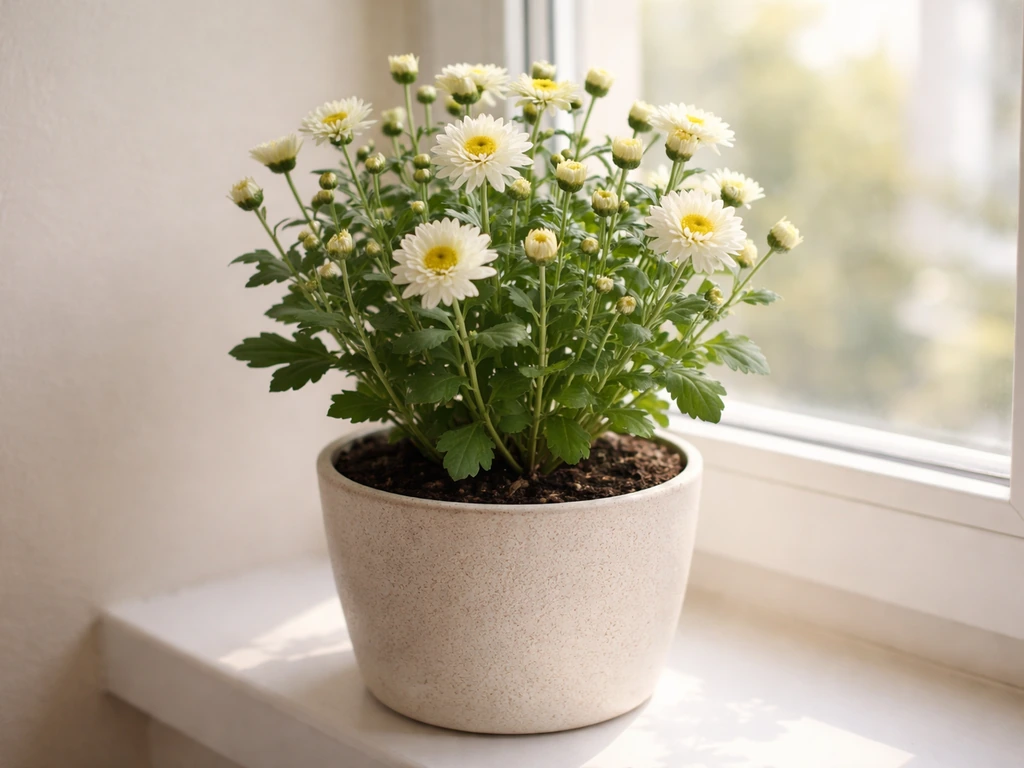
What you're actually getting into
Chrysanthemums are what botanists call short-day plants. That means they set flower buds when nights are long, typically 11 to 12 hours or more of uninterrupted darkness. Commercial growers use blackout curtains and precise lighting schedules to force mums into bloom on demand year-round. In your home, you're competing with street lights, hallway lights flicking on, and the general chaos of real life. Even a few minutes of light during those long dark periods can interrupt the flowering signal. That's why UNH Extension is pretty candid that most home gardeners don't have the setup or the schedule to reliably rebloom chrysanthemums indoors. I think that's fair, and it's worth knowing before you fall too hard for a $6 pot mum at the checkout line.
That said, if you buy a chrysanthemum already in bloom (which is how most people bring them inside), you can enjoy it for weeks and even attempt to coax it through a second bloom cycle with some patience and a light-control strategy. And if you're growing from cuttings or small plants, you have more control from the start. Either way, here's how to set yourself up for success.
Best indoor setup: light, temperature, and humidity
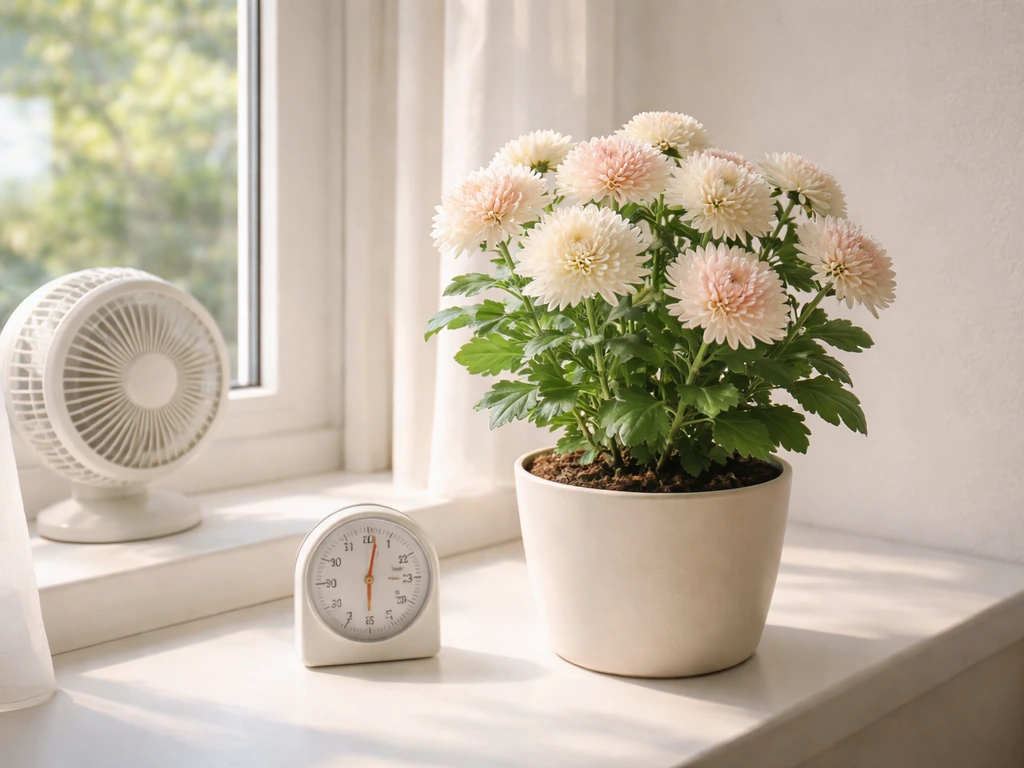
Light
Chrysanthemums need bright, indirect light to look their best indoors. A south- or east-facing window is your best bet. During the vegetative (non-flowering) phase, they want as much light as possible, at least 6 hours of good bright light a day. If you're short on natural light, grow lights are genuinely useful here. UNH Extension recommends placing plant growth tubes, or a combination of a cool white and a daylight fluorescent tube, about 8 to 12 inches above the foliage. If you're using LED grow lights, the same distance works as a starting point. During the flowering phase, it flips: you need to give them long, uninterrupted dark periods (more on that in the blooming section).
Temperature
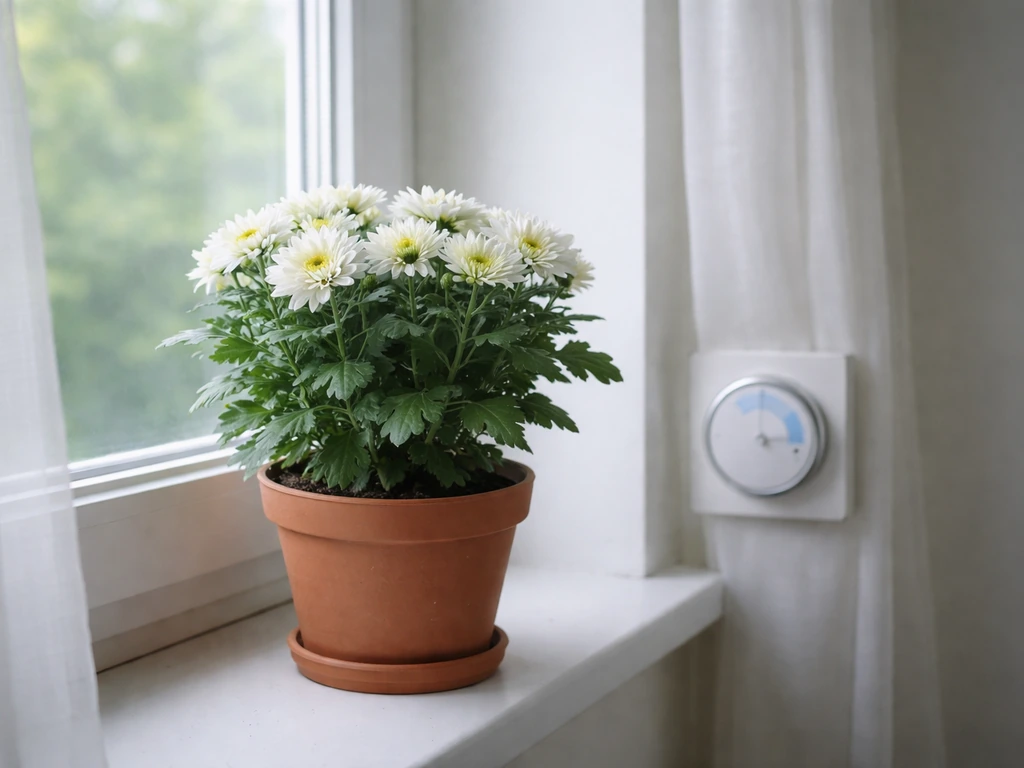
Temperature is probably the single biggest factor in whether your indoor mums look great or fall apart fast. These plants love it cool. MU Extension puts the sweet spot at 45 to 50°F at night and 55 to 65°F during the day for maximum bloom longevity. UNH Extension echoes this, recommending around 50°F at night and no higher than 65°F during the day. If your home runs warm (most do, at 68 to 72°F), your mums will fade faster and buds may not develop properly. A cool entryway, a spare bedroom that stays chilly, or a spot near a north-facing window in winter are all worth considering. High night temperatures are particularly problematic, research shows they delay flowering, cause abnormal flower development, and reduce stem quality.
Humidity and airflow
Chrysanthemums aren't fussy about humidity the way tropical plants are, but they do need decent air circulation. Stagnant, humid air is an invitation for Botrytis (gray mold) and other fungal diseases. Keep them away from heating vents and air conditioning units, both of which create temperature swings and dry drafts that stress the plant. A gentle fan nearby is better than still air in a closed room. Avoid misting the foliage, and if water gets on the leaves, make sure the plant is in a spot where it can dry out quickly.
Step-by-step: how to grow chrysanthemums indoors at home
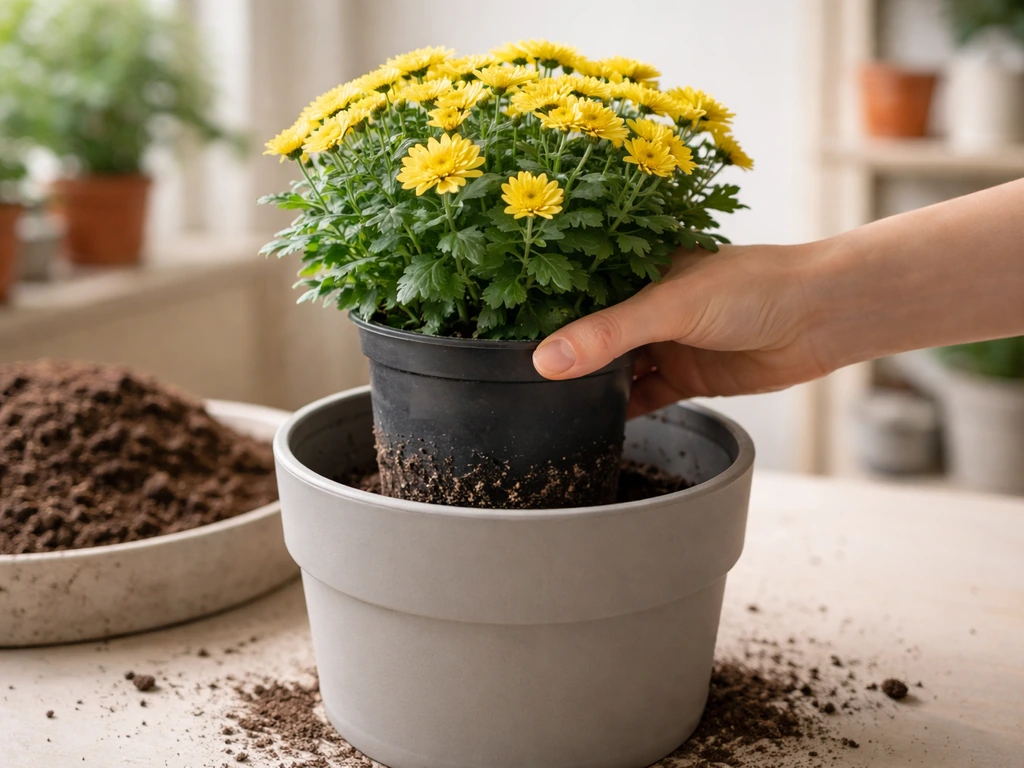
- Choose your plant wisely. Start with a pot mum from a reputable garden center, or if you want to grow from scratch, get rooted cuttings of a compact florist variety. Avoid buying plants that are already fully open — look for ones with tight, mostly closed buds so you get the longest bloom period.
- Pick the right spot. Find your coolest, brightest location. A south- or east-facing window in a room that doesn't get too warm is ideal. If light is limited, set up a grow light 8 to 12 inches above the plant.
- Pot it up properly. If repotting, use a well-draining potting mix in a container with drainage holes. An 8-inch pot works well for a single plant. Make sure the pot has a saucer but don't let water sit in the saucer for more than 30 minutes after watering.
- Water carefully. Water when the top inch of soil feels dry. Water thoroughly until it drains from the bottom, then empty the saucer. Never let the plant sit in standing water.
- Keep temperatures cool. If you can situate the plant somewhere that stays around 55 to 65°F during the day and closer to 50°F at night, do it. Your mums will last weeks longer.
- Pinch early if you're growing from a young plant. While the plant is still in the vegetative stage (before buds form), pinch the growing tips back to encourage bushy, compact growth. Stop pinching once you see buds starting to set.
- Manage light periods if you want reblooming. Once the plant has finished its first bloom, cut it back, keep it growing in good light, then control the dark period to trigger a new flowering cycle. This means 13 to 14 hours of complete, uninterrupted darkness per night for about 6 weeks.
Choosing varieties and getting the soil right
Not all mums are created equal for indoor growing. Florist mums and pot mums (the compact, greenhouse-grown varieties you see sold indoors) are specifically bred for that enclosed, controlled environment. Garden mums, the kind sold in big outdoor nursery bins in autumn, are bred for hardiness outdoors and are generally not a good fit for indoor growing or reblooming. MU Extension specifically notes that potted mum varieties used for indoor flowering are usually not suitable as garden plants, and the reverse is also true. Stick with compact pot mum varieties if your goal is an indoor plant.
For soil, you want a fertile, well-draining mix. A standard quality potting mix works, but make sure it doesn't stay soggy. Target a slightly acidic pH: UMass Amherst's floriculture guidance puts the ideal range at 6.3 to 6.7 for soil-based mixes and 5.8 to 6.2 for soilless mixes. If you're mixing your own, adding perlite to improve drainage is a smart move. Chrysanthemums absolutely cannot tolerate wet, waterlogged roots, that's one of the fastest ways to kill them indoors.
Care calendar: watering, fertilizing, and pruning
Watering
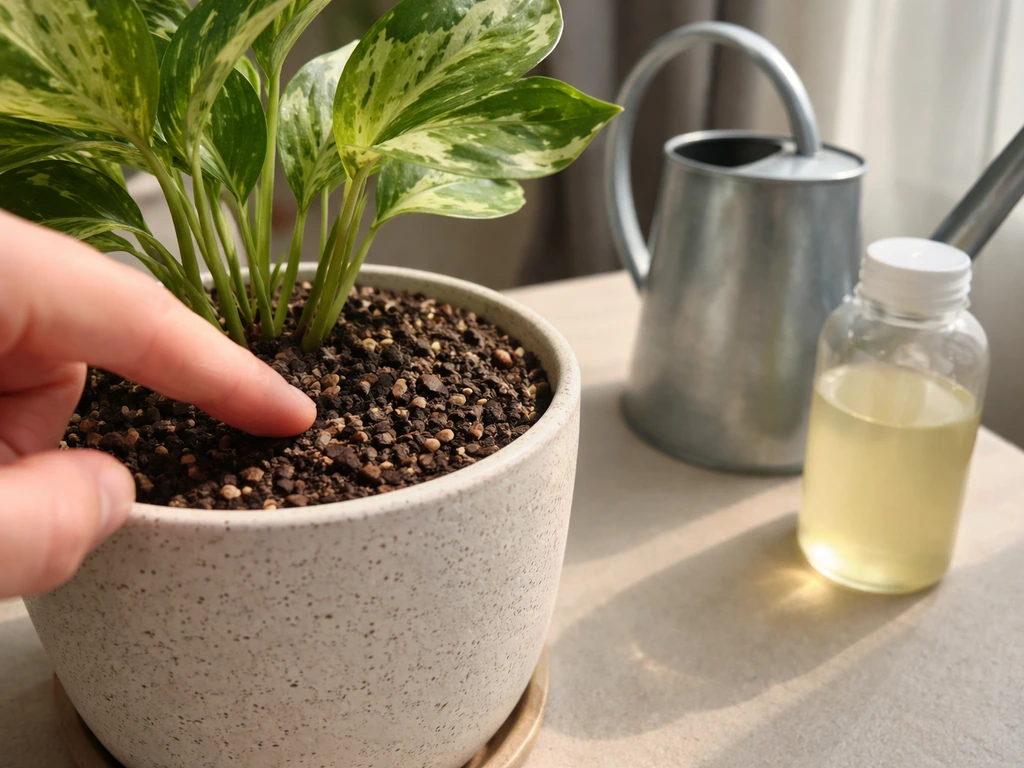
The goal is uniformly moist soil, not wet soil. Check the top inch of the potting mix with your finger every 2 to 3 days. When it feels dry, water thoroughly and let excess drain completely. During active growth in warmer conditions, that might mean watering every 2 to 3 days. In cooler conditions or during the darker winter months, you'll water less frequently. Always err on the side of slightly drier over soggy, root rot from Pythium and similar pathogens is a real threat with overwatered mums.
Fertilizing
During vegetative growth, feed your chrysanthemum every two weeks with a balanced liquid fertilizer (something like 10-10-10 or a similar ratio) diluted to half strength. Once flower buds appear, switch to a low-nitrogen, higher-phosphorus fertilizer to support bloom development. Stop fertilizing during the dark-period treatment when you're trying to trigger flowering, and resume once buds are visible again. If you're keeping a gift mum just for its current bloom, you don't need to fertilize at all.
Pinching and pruning
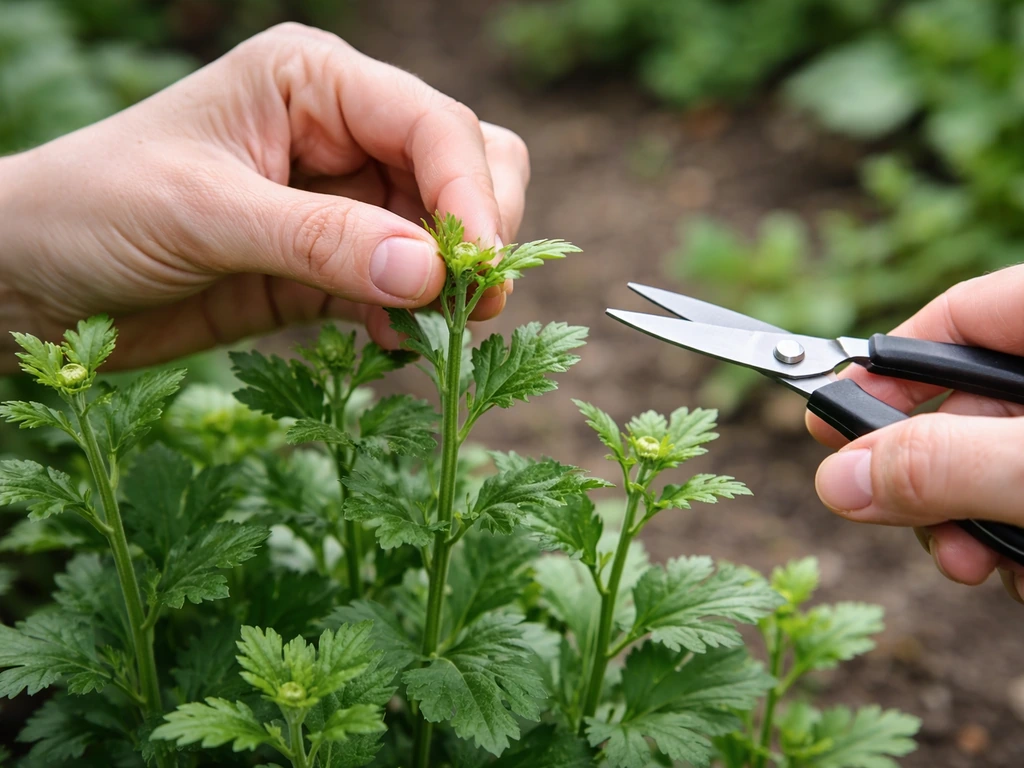
Pinching is the key to getting full, bushy mums instead of tall, leggy ones. Start pinching when new growth begins, snipping off just the top half-inch to an inch of each stem. This encourages branching and more flower sites. K-State and Chicago Botanic Garden both recommend stopping pinching by around early July (if you're working on a seasonal outdoor-to-indoor cycle) to give buds enough time to develop. Indoors, if you're growing year-round under lights, the same principle applies: pinch during vegetative growth, stop once you begin the dark-period treatment to induce flowering.
Common problems and how to fix them
| Problem | Likely Cause | What to Do |
|---|---|---|
| Leggy, stretched stems | Not enough light | Move closer to a window or lower grow lights to 8 inches above foliage; pinch stems to encourage bushiness |
| Buds dropping or failing to open | Too warm, or light interrupting dark period | Move to a cooler spot; check for any light leaks during the dark period |
| Yellowing leaves / wilting despite moist soil | Root rot from overwatering | Check drainage, reduce watering, repot into fresh mix if roots are mushy |
| Gray fuzzy mold on flowers or leaves | Botrytis (gray mold) from poor airflow or wet foliage | Improve air circulation, remove affected parts, avoid wetting leaves |
| Tiny webbing on leaves, stippled foliage | Spider mites | Spray with neem oil or insecticidal soap, covering undersides of leaves; repeat every 5 to 7 days |
| Plant doesn't rebloom | Insufficient dark period or too-warm nights | Provide 13 to 14 hours of complete darkness nightly for 6 weeks; keep nights below 65°F |
Spider mites are especially sneaky indoors because they thrive in warm, dry conditions, exactly the kind many heated homes create in winter. Catch them early by checking the undersides of leaves regularly. Horticultural oils, neem oil, and insecticidal soaps all work, but you need thorough coverage and repeat applications to break the life cycle. Botrytis is the other big one: if you see gray, fuzzy patches on petals or stems, that's almost always a ventilation and moisture problem. Get some airflow moving and remove affected tissue right away.
Getting chrysanthemums to bloom indoors (and what to actually expect)
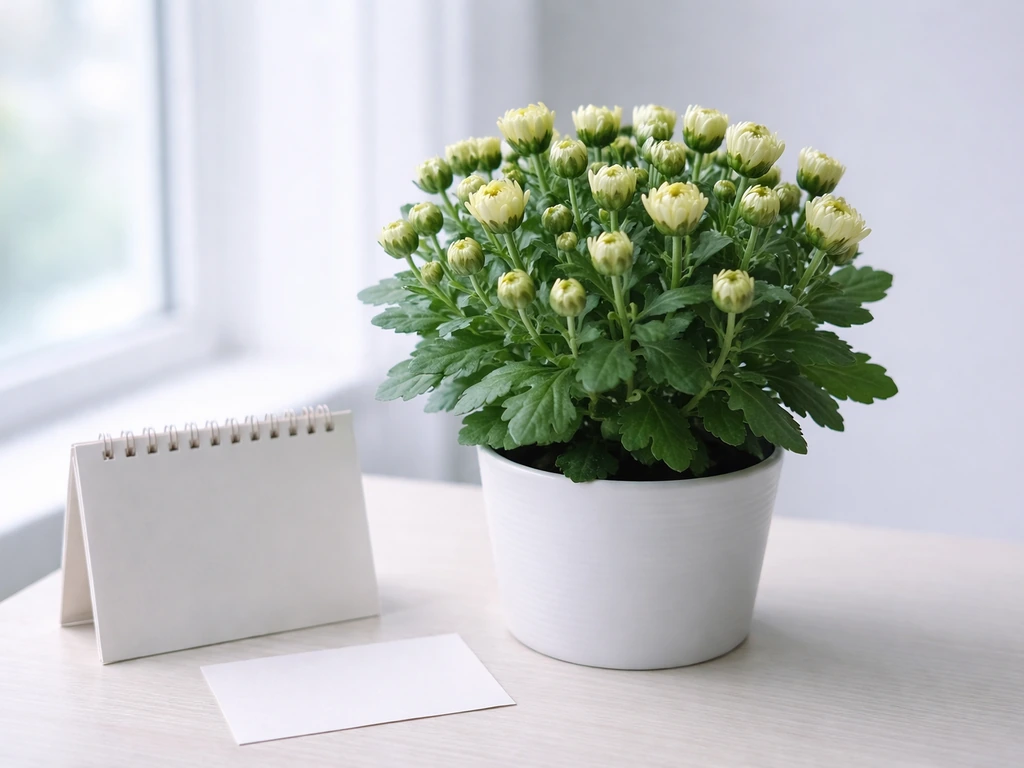
Here's the honest version: if you buy a chrysanthemum already in bloom, it will bloom for roughly 3 to 4 weeks. Keep it cool (50 to 65°F), give it bright indirect light during the day, and water it carefully, and you'll be at the high end of that range. That's a perfectly good outcome, and many people are happy with that. If you're also wondering can morning glories grow indoors, the answer depends on getting them enough sun and using the right pot and trellis setup grow morning glories indoors. Daffodils, unlike most bulb flowers, can also be grown indoors if you give them proper chilling and plenty of bright light can daffodils grow indoors.
If you want to rebloom your mum indoors, you need to respect its photoperiod requirements. Chrysanthemums need at least 6 weeks of nights lasting 11 to 12 hours or longer, with zero light interruption, to set flower buds. Purdue Extension notes that greenhouse photoperiod management, such as day extension and night interruption, is used to control flowering responses in nursery and greenhouse production at least 6 weeks of nights lasting 11 to 12 hours or longer, with zero light interruption, to set flower buds.. MU Extension puts it specifically at about six weeks of natural winter day lengths for bud initiation. In practice, that means placing your plant in a closet or covering it with a lightproof box from, say, 6 p.m. to 8 a.m. every single night for those six weeks, then moving it back into bright light during the day. Miss even a few nights, or let light sneak in, and the flowering signal resets.
Temperature during this period matters too. Nights should stay below 65°F. Warmer night temperatures will delay or prevent flowering altogether, and can cause abnormal flower development. If you can keep nights in the 50 to 60°F range during the induction period, you'll get much better results.
I'll be upfront: this takes real commitment. It's the kind of routine that works well for someone who genuinely enjoys tinkering with plants and doesn't mind a strict schedule for a month and a half. If that sounds like you, go for it. If it sounds like a lot, enjoy the mum for its current bloom and consider it a seasonal plant the same way you might treat forced spring bulbs like daffodils. There's no shame in that approach, and you'll have a beautiful display either way.
Your next steps
If you're ready to try chrysanthemums indoors, here's exactly where to start. Buy a compact pot mum with mostly closed buds. Find your coolest, brightest spot, ideally a room that stays under 65°F during the day and closer to 50°F at night. Get a pot with drainage holes and a well-draining potting mix if you're repotting. Water carefully (moist, not wet), keep the air moving, and enjoy the bloom. If you want to go further and attempt reblooming, plan your 6-week dark-period treatment after the first bloom fades, and commit to the daily light schedule. It's doable, it's just not casual. Chrysanthemums reward attention in a way that plants like marigolds (which are much more forgiving indoors) don't quite match, but the payoff of a well-managed indoor mum in full bloom is genuinely worth it. Yes, you can grow dahlias indoors year round, but you’ll need bright light, consistent warmth, and a tuber or cutting that’s suited to indoor conditions. If you are also curious about other indoor-blooming options, can dahlias grow indoors is a related comparison worth checking before you commit to a setup. Marigolds can be grown indoors too, as long as they get plenty of bright light and consistent care plants like marigolds.
FAQ
How long can I realistically keep a potted chrysanthemum indoors?
If it’s already in bloom when you bring it home, expect about 3 to 4 weeks of good flowering. If you keep it cool, bright, and evenly moist, you may extend the display toward the high end, but reblooming after that is not guaranteed indoors.
What’s the best window direction if I only have one good spot for my mum?
A south- or east-facing window is ideal because it gives the brightest light during the day. If your only option is a north-facing window, it can work in winter when sun is weaker but still try to supplement with a grow light so the plant gets enough usable brightness.
Can I grow chrysanthemums indoors without dark-period scheduling?
You can grow them and keep them looking good during vegetative growth, but skipping the long, uninterrupted dark periods means you should not expect a second flowering cycle. If you want repeat blooms, you need consistent light control at night.
How can I tell if the “dark period” is failing?
Most often it fails because light leaks in. If buds do not form after the induction period, or development is patchy, check for hallway lights, timer mistakes, curtains that aren’t fully opaque, and any bright electronics close to the plant at night.
Do I have to cover the plant every night for the full induction period?
Yes, for the bud-initiation treatment to work. The process depends on many nights of uninterrupted darkness, so missing even a few nights can reset the flowering cue, which delays or prevents buds from forming.
Is it safe to move my chrysanthemum in and out of a dark closet or box each day?
It’s workable, but avoid gaps. Use the same timing every day, keep the box fully dark during the night window, and make sure the plant does not get exposed to bright light or lamps when it should be in darkness.
What temperature range should I aim for during day and night, and what should I avoid?
Aim for cool conditions, roughly 55 to 65°F during the day and around 50 to 60°F at night during induction. Avoid warm nights, because they can delay bud formation and lead to poor flower development and weaker stems.
Should I mist my indoor chrysanthemum to manage humidity?
No. Misting can leave moisture on leaves and encourage fungal issues. Instead, focus on air circulation and keep the plant away from vents or areas with drying drafts.
How do I prevent overwatering and root rot indoors?
Let the top inch of the potting mix dry slightly before watering, then water thoroughly until excess drains out. Do not let the pot sit in a saucer of runoff, and use a draining potting mix with perlite if you’re mixing your own.
Is there a sign my soil is staying too wet?
Yes, symptoms include persistent sogginess, a sour or musty smell, yellowing leaves with limp stems, and fungal growth. If you notice these, dry the mix more between waterings and confirm the pot has unobstructed drainage holes.
How often should I fertilize, and should I fertilize during the dark-period treatment?
Feed every two weeks with a balanced fertilizer during vegetative growth, then switch to a lower-nitrogen, higher-phosphorus formula once buds appear. During the dark-period treatment, stop fertilizing so the plant can focus on bud initiation.
What’s the best fertilizer if I just want my current bloom to last longer?
If your goal is only to enjoy the existing flowers, you usually don’t need fertilizer at all. Cooling, bright indirect light, and careful watering matter far more than feeding during the bloom display.
When and how should I pinch a mum grown indoors?
Pinch when new growth begins, removing about the top half-inch to an inch per stem to encourage branching. Stop pinching once you start the dark-period induction (or earlier if you’re aiming for a predictable indoor flowering schedule), so buds have time to develop.
Can I prune off spent blooms to get more flowers indoors?
Yes, removing faded flowers can improve appearance and may redirect energy, but it does not replace the photoperiod requirement for true reblooming. For a second cycle, you still need the long, uninterrupted nights.
How do I manage spider mites indoors if my home is warm and dry?
Check leaf undersides regularly, especially during winter heating. Treat early with insecticidal soap or horticultural oil, apply thoroughly to reach hidden mites, and repeat according to label timing to break the life cycle.
What should I do if I see gray fuzzy spots or damaged petals?
That can be gray mold, often tied to poor airflow and excess moisture. Increase ventilation, remove affected tissue promptly, and avoid wetting leaves. If conditions don’t improve, you may need to escalate treatment to control the outbreak.
Are florist mums suitable for indoor reblooming, or should I buy a garden mum instead?
Choose compact pot mum varieties intended for indoor flowering. Garden mums are bred for outdoor hardiness, and they typically do not perform well indoors or reliably rebloom after the first show.
Why did my mum bloom quickly and then decline even though I kept it watered?
Most indoor rapid decline comes from temperature stress, inconsistent moisture, or light that is not bright enough. Even if watering seems correct, warm nights, low light, or airflow issues can shorten bloom life and reduce bud formation later.
What should I do if my plant gets tall and leggy indoors?
Leggy growth usually means insufficient bright light or not pinching during vegetative growth. Increase light intensity (often with a grow light positioned 8 to 12 inches above foliage) and pinch during active growth before induction begins.
Can I repot my indoor chrysanthemum right away?
Only repot if drainage is poor or the plant is rootbound and you can use a well-draining mix. For most gift or grocery-bought blooms, disturbing the plant can reduce performance, so it’s often better to wait until after the current flowering period ends.