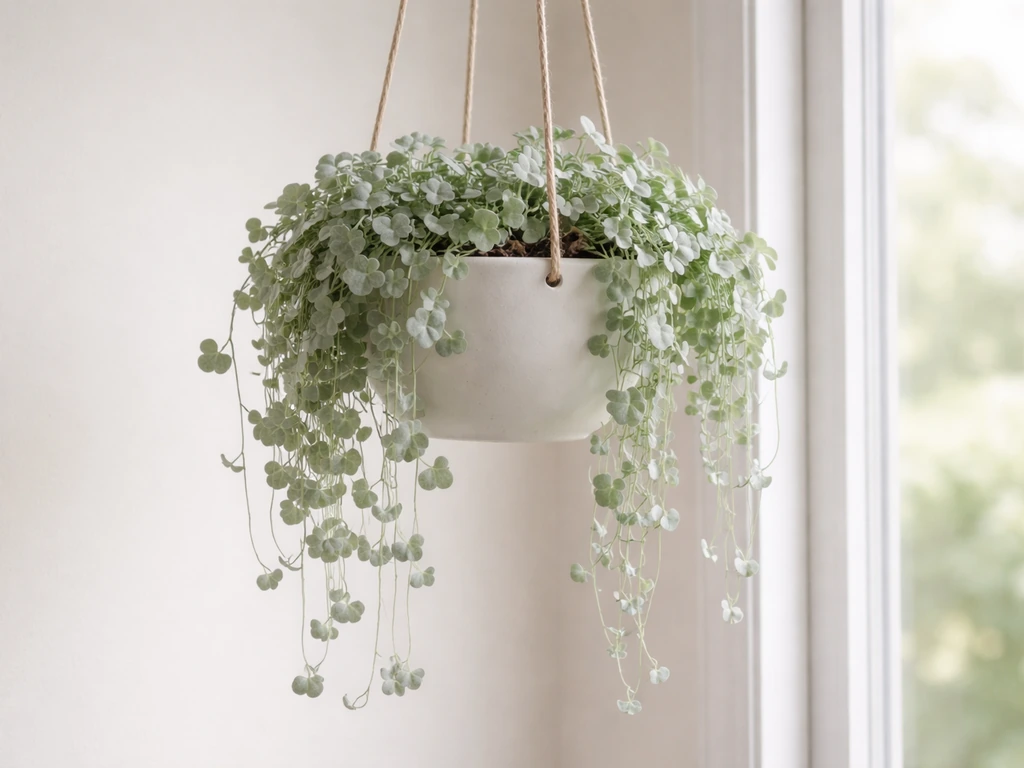
Yes, dichondra can grow indoors, but it needs significantly more light than most houseplants. Dichondra 'Silver Falls' is the cultivar people most often try to bring inside, and it works well in a hanging basket or trailing from a shelf, as long as you can give it a genuinely sunny spot. blank" rel="noopener noreferrer">A south- or west-facing window with 4 to 6 hours of direct sun is your minimum target. Anything less and you will watch those beautiful trailing stems stretch out, pale, and get floppy within a few weeks.
Can Dichondra Grow Indoors? How to Succeed with Silver Falls
James Hartwell
23 May 2026
What 'Silver Falls' actually needs indoors versus outside
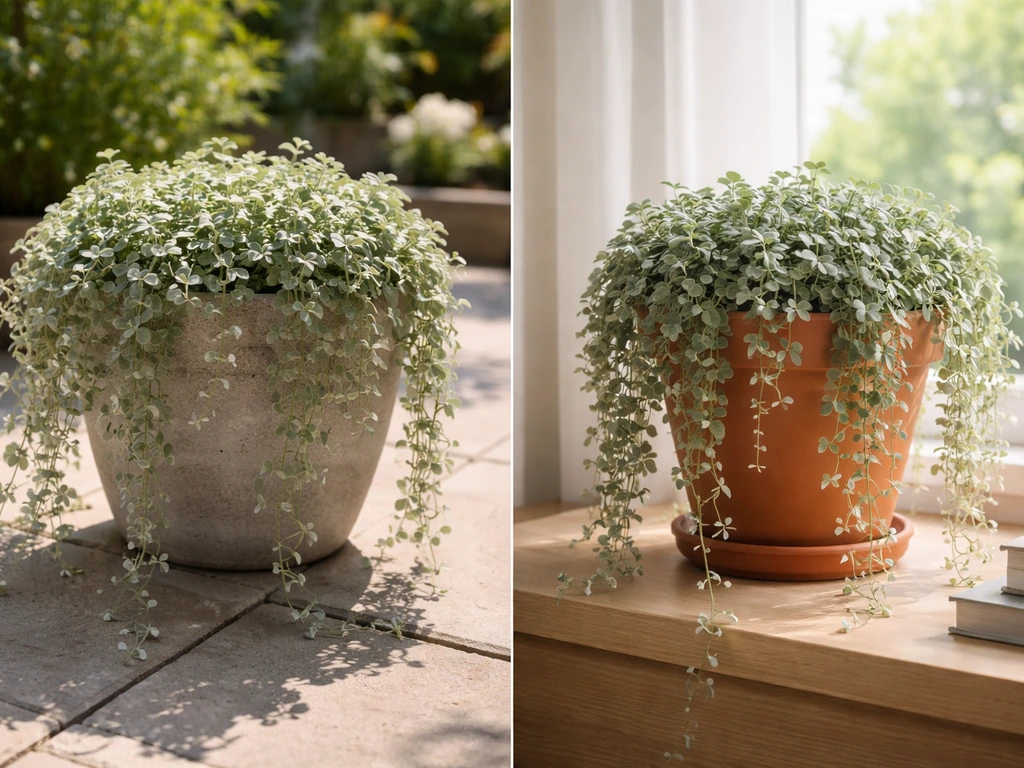
Outdoors, Silver Falls is a full-sun plant. The North Carolina Extension and the RHS both classify it as needing 6 or more hours of direct sun, and the RHS notes that the leaves are most intensely silvery in full sun rather than shade. The North Carolina Extension Gardener Plant Toolbox also lists full sun as the light requirement, specifying 6 or more hours of direct sunlight per day, with tolerance for light shade full sun (6+ hours of direct sunlight a day). That pewter, almost metallic leaf color that makes it so striking? You only really get that in strong light. Move it inside and you are instantly cutting available light by 70 to 90 percent compared to an outdoor spot, even near a bright window. That does not mean it cannot work, but you need to be realistic: the best indoor result still looks slightly less dramatic than the same plant on a sunny patio. It will trail, it will grow, but the silver shimmer is at its peak outdoors.
For green-leafed dichondra (like the lawn-type Dichondra repens sometimes used as a groundcover), the light demands are lower and it tolerates more shade. If you are growing green dichondra indoors, a bright indirect spot can work. Silver Falls is the trickier one because of those high light needs, so the rest of this guide focuses there. That said, the watering, soil, and temperature advice applies to any dichondra you are growing in a pot indoors.
Getting the light right indoors
Put Silver Falls in your brightest window. A south-facing window in the northern hemisphere is ideal. West-facing can work if it gets strong afternoon sun. East-facing is marginal at best, and north-facing will slowly kill it. If you are in an apartment with limited windowsill real estate, this is honestly one of the plants where you should consider whether your space can actually support it before you commit.
If natural light is not cutting it, a grow light makes a huge difference. Position a full-spectrum LED grow light about 6 to 12 inches above the plant and run it for 14 to 16 hours a day. This is not optional for low-light homes. I have seen Silver Falls go from leggy and sad to genuinely full and trailing in about three weeks once placed under a decent grow light. The investment is worth it if you want long, lush cascading stems.
- South-facing window: best natural light option indoors
- West-facing window: workable, especially in summer
- East-facing window: marginal, expect slower growth and less silver color
- North-facing window: not viable without supplemental grow light
- Grow light (full-spectrum LED): 14 to 16 hours daily, positioned 6 to 12 inches above the plant
Soil, containers, and drainage setup
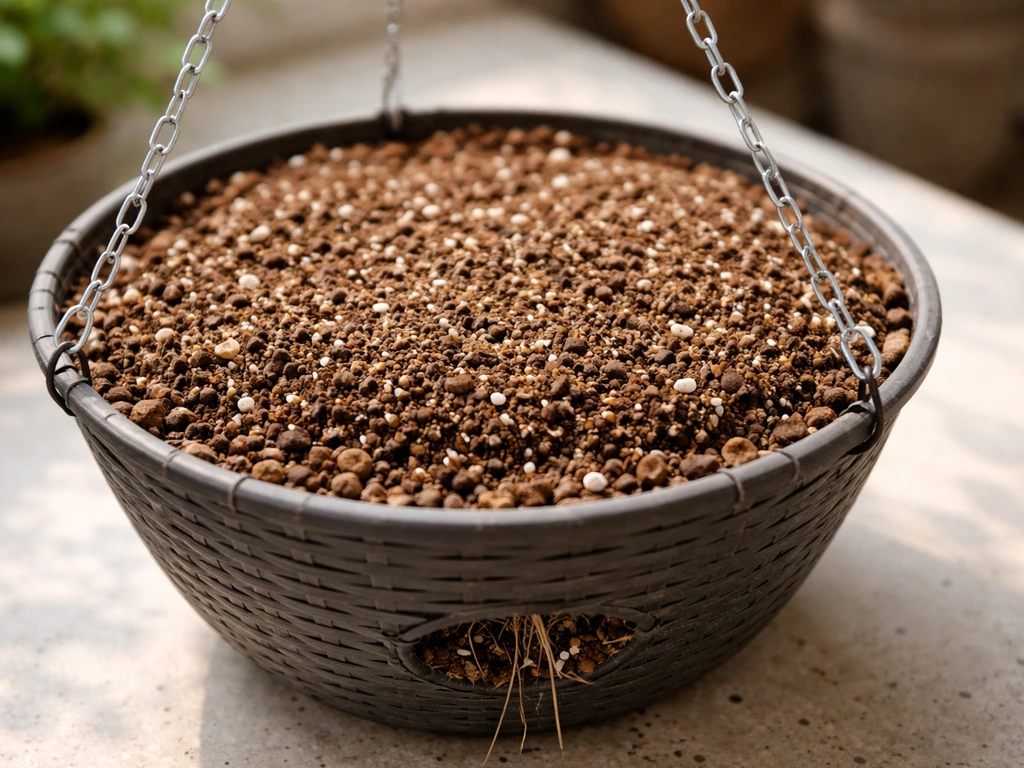
Dichondra wants well-drained soil. Root rot from standing water is one of the most common ways people kill this plant indoors. Use a mix that drains fast and does not hold excess moisture, something like a standard peat- or coir-based potting mix with about 20 to 30 percent added perlite. The target soil pH is 5.5 to 6.5 according to PanAmerican Seed's culture research, which is a slightly acidic range that most standard potting mixes fall into naturally.
For containers, a hanging basket is the classic choice and it suits the trailing habit perfectly. If you are setting it on a shelf or windowsill, any pot with drainage holes works. Do not use decorative pots without drainage as your primary container. If you love the look of a cover pot, just nest a plain nursery pot with holes inside it and empty the saucer after watering. Terracotta pots are actually a good pick here because they allow moisture to evaporate through the walls, which matches dichondra's preference for not sitting wet.
Watering and fertilizing schedule
The rule of thumb from grower guides is to water when the top 3 inches of soil are dry. Stick your finger in up to the second knuckle. If it feels dry, water thoroughly until it drains from the bottom. If there is still moisture in there, wait. Silver Falls is drought-tolerant and heat-loving, and it recovers quickly from wilting, so it is much more forgiving of underwatering than overwatering. If you want to know whether a different type of tree can manage indoor conditions too, see can dawn redwood grow indoors drought-tolerant. Indoors, where evaporation is slower than outside, many people water too frequently. That is usually what causes yellow leaves and root problems.
For fertilizing, Silver Falls is not a heavy feeder. PanAmerican Seed recommends a low fertilizer rate of 100 to 150 ppm nitrogen for culture. In practical home-gardener terms, this means a diluted balanced liquid fertilizer (like a 10-10-10 or similar) at half strength, applied every two to three weeks during active growth in spring and summer. Cut fertilizing back to once a month or stop entirely in winter when growth slows. Too much fertilizer, especially nitrogen, pushes lush green growth at the expense of the plant's distinctive silver color and compact habit.
Temperature, humidity, and airflow
Silver Falls is a warm-climate plant that thrives in heat. PanAmerican Seed's culture data lists ideal growing temperatures as 65 to 75 degrees Fahrenheit during the day and 62 to 65 degrees Fahrenheit at night. That translates well to most indoor home environments, which is actually a point in its favor as an indoor plant. Standard room temperature is fine. What it absolutely cannot tolerate is frost or cold drafts, which is exactly why it is often treated as an annual outdoors in cooler climates but can be kept alive year-round indoors.
Humidity is not a major concern with this plant. Dichondra Silver Falls handles dry indoor air reasonably well, especially compared to tropical houseplants that struggle in heated homes. You do not need to mist it or run a humidifier. What matters more than humidity is airflow. Stagnant air increases the risk of fungal issues, so a spot with some air circulation helps, near a vent (but not blasting cold air on it) or by a window that you occasionally crack open works well.
How to grow and maintain dichondra indoors
Silver Falls is a trailing plant, not an upright one. Indoors, use that to your advantage. A hanging basket near a bright window lets the stems cascade naturally downward and looks fantastic. On a high shelf under a grow light, the same effect works. The stems can reach 3 to 4 feet long in good conditions, which is genuinely impressive for an indoor plant.
Pruning is simple: trim back any stems that are getting too long, look sparse, or are trailing in an awkward direction. You can cut back quite aggressively and the plant will branch out and fill in. If you want a fuller, bushier look rather than pure cascading length, pinch back the growing tips regularly, every few weeks during the growing season. This encourages branching and a denser, more compact appearance.
Repot into a slightly larger container once you see roots coming out of the drainage holes or the plant drying out very rapidly after watering. Silver Falls does not need a huge pot. It actually performs well slightly root-bound, which also helps control overwatering risk. A 6 to 8 inch hanging basket is usually sufficient for a single plant.
Troubleshooting common indoor problems
Leggy, stretched-out growth
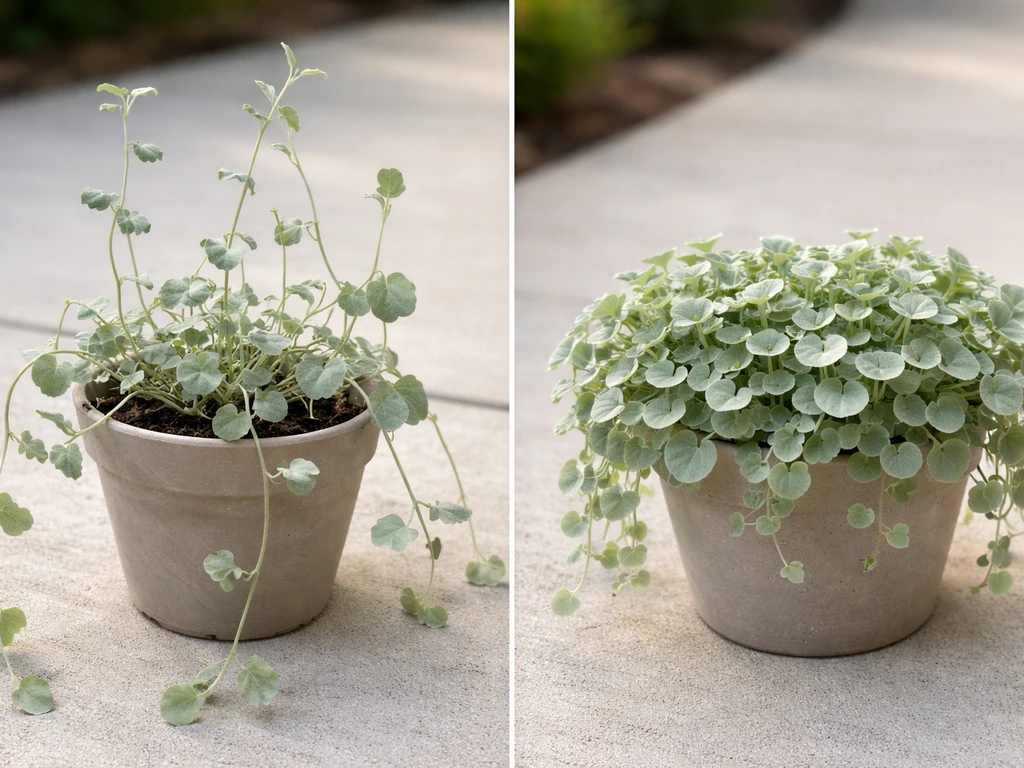
This is the number one sign of insufficient light. If stems are long and thin with widely spaced leaves and the plant looks sparse rather than full and lush, it is reaching toward more light. Move it to a brighter window immediately or add a grow light. Trim the leggy stems back by about half to encourage new branching from the base, then keep it in the better light position. You should see improvement within two to three weeks.
Yellow leaves
Yellow leaves almost always mean overwatering in dichondra. Go back to the basics: check the top 3 inches of soil before watering and only water when dry. Pull the plant out of its pot and look at the roots. Healthy roots are white or light tan. Brown, mushy, or foul-smelling roots mean rot has set in. If you catch it early, trim off the rotten roots with clean scissors, let the root ball air dry for an hour, and repot in fresh dry mix. If more than half the roots are gone, the plant may not recover.
Slow growth or loss of silver color
If your Silver Falls is growing very slowly and looks more green or grey than that distinctive pewter-silver, it needs more light. The silver coloring is strongest in high light and fades in low-light conditions. More sun or better grow light placement is the fix. Slow growth in winter is normal and not a cause for alarm since the plant naturally slows down when days are short. Resume normal fertilizing and watering as days lengthen in spring.
Common problems at a glance
| Problem | Most likely cause | Fix |
|---|---|---|
| Leggy, sparse stems | Not enough light | Brighter window or grow light; trim back leggy growth |
| Yellow leaves | Overwatering or root rot | Let soil dry out; check roots; repot if rotting |
| Pale or greenish leaves (not silver) | Insufficient light | Move to stronger light source |
| Wilting despite moist soil | Root rot from overwatering | Inspect roots; reduce watering; repot in fresh mix |
| Slow growth in winter | Natural dormancy response to low light and short days | Add grow light; resume feeding in spring |
| Fungal spots or mildew | Poor airflow and excess moisture | Improve air circulation; water at soil level, not leaves |
Is dichondra the right indoor plant for your space?
Dichondra Silver Falls is worth growing indoors if you have a genuinely bright window or are willing to use a grow light. If you are also thinking about other tough, light-hungry choices like can desert rose grow indoors, the key takeaway is still that you need enough light for the plant type you pick. If you are wondering can you grow daphne indoors, check the light level and watering needs before choosing a spot. African daisies can be grown indoors, but they need plenty of light and well-draining soil to stay healthy can african daisies grow indoors. It is easier in some ways than people expect: it handles dry indoor air, does not need high humidity, and tolerates the warm temperatures of a typical home. The one non-negotiable is light. If that is something you can provide, you will end up with a genuinely beautiful trailing plant that looks different from the usual houseplant lineup. If your home is on the darker side, it is worth looking at other trailing plants that are more shade-tolerant before committing to this one. For comparison, some flowering plants like dipladenia or dianthus have different but equally specific indoor light needs, so it is always worth matching the plant to the actual conditions you can offer rather than the conditions you wish you had. For more guidance on indoor light needs for dianthus, check whether your windowsill can meet the plant’s requirements.
FAQ
Can dichondra grow indoors without a grow light if I only have an east or north window?
For Silver Falls, an east window is marginal and a north window will usually lead to slow decline (leggy stems, pale color, sparse growth). If you cannot offer at least 4 to 6 hours of direct sun, a grow light is the safer route, because indoor light drops fast behind curtains, during winter, and with overcast weather.
How close should the grow light be, and how do I know if I’m using it correctly?
Start with a full-spectrum LED about 6 to 12 inches above the plant, then watch the growth habit. Correct lighting produces tighter leaf spacing and quicker branching. If leaves keep stretching and thinning, raise the intensity by moving the light closer (still avoiding heat stress) or extend daily runtime toward 16 hours.
What’s the best pot size for indoor dichondra Silver Falls, and do I need to size up often?
You do not need a large container, and slightly root-bound conditions are usually fine. Repot only when roots start exiting drainage holes or when the pot dries unusually fast after watering. Jumping to a much bigger pot increases the risk of staying too wet and can trigger root rot.
How do I water indoors to avoid yellow leaves if I’m unsure when the soil is dry?
Use the top-3-inch check consistently, finger depth to the second knuckle, and water only when that section is dry. If you still get yellow leaves, pause watering longer and confirm drainage, because yellowing indoors is commonly linked to moisture staying in the root zone rather than a lack of fertilizer.
Can I propagate Silver Falls indoors from cuttings, and will it root in water?
Yes, you can take stem cuttings and root them, and many growers find soil or a well-aerated rooting medium is more reliable than long water rooting for trailing plants. Keep new cuttings warm and lightly lit at first, then transition them toward brighter light to prevent leggy regrowth.
Why does my Silver Falls look less silver indoors, even though it’s growing?
The distinctive pewter-silver color is a strong-light effect. If it is growing but looks more green or grey, it is almost always a light shortfall. Improve by moving to the brightest available window, reducing distance to the light, and ensuring you get direct sun when possible.
Is low indoor humidity a problem for dichondra Silver Falls?
Usually not. Silver Falls handles dry indoor air better than many tropical houseplants. The bigger issue is airflow, stagnant corners, or cold drafts, because they raise fungal risk. A gentle airflow near a vent or a frequently refreshed window area helps more than misting.
What temperature is too cold for indoors, especially near a drafty window?
Dichondra tolerates typical room temperatures, but it cannot handle cold drafts. If the plant sits near a window that drops below your nighttime range or gets frequent chilly airflow, move it farther from the glass or use a grow light so it can stay comfortably warm.
Does Silver Falls need frequent fertilizer to look full indoors?
No, it is not a heavy feeder. Overfertilizing can reduce the compact habit and push overly lush growth, which may also make the silver tones less prominent. Stick to diluted balanced fertilizer at about half strength every 2 to 3 weeks during active growth, then reduce or stop in winter.
How can I make it bushier instead of letting it turn into a long cascade?
Trim stems that look sparse or awkward, and pinch the growing tips every few weeks during the growing season. Cutting back about half during leggy periods encourages new branching near the base, then returning it to brighter light helps keep the new growth dense.
What should I do if I suspect root rot but I’m not sure how bad it is?
Pull the plant and inspect roots right away. Healthy roots are light tan or white, while brown, mushy, or smelly roots indicate rot. Trim rotten sections with clean scissors, air-dry the root ball for about an hour, and repot in fresh dry mix. If more than half the roots are gone, recovery is uncertain.