Yes, Tradescantia grows indoors reliably and is honestly one of the easier houseplants you can keep. Cymbidium is a much more demanding orchid, so it can grow indoors only if you can provide strong light and cooler conditions Tradescantia grows indoors. If you are also wondering whether can crotons grow indoors, the answer depends on matching their light and temperature needs as closely as possible one of the easier houseplants you can keep. If you're wondering can cyclamen grow indoors, the key is matching its light and watering needs rather than trying to force it in average conditions. Give it a bright spot near a window, water it when the top inch or two of soil dries out, and it will reward you with fast, lush growth and striking foliage all year round. It tolerates average home humidity, forgives the occasional missed watering, and propagates so effortlessly that you'll be handing cuttings to neighbours within a few months.
Can Tradescantia Grow Indoors? Light, Water, Soil, Care
Tradescantia indoors: the quick yes/no
Tradescantia is a genuine indoor success story. It's fast-growing, visually bold, and adaptable enough to suit a typical apartment or house without any specialist equipment. The main conditions it needs, bright indirect light and moderate watering, are well within reach for most homes. Where it does struggle is in very dark rooms or when it's overwatered, but both of those are fixable. If you have a reasonably bright window and a bit of patience, you're in good shape.
Getting the light right: bright shade beats direct sun
Tradescantia wants bright, indirect light, and that's the single most important thing to get right indoors. A south, south-east, or south-west facing window is ideal. You want good natural brightness without harsh, unfiltered midday sun hitting the leaves directly, especially in warmer months when indoor glass can intensify heat. A sheer curtain or positioning the plant a foot or two back from the glass solves that instantly.
The Wisconsin Master Gardener program specifically calls out 'bright light indoors' as the key to success with Tradescantia zebrina, and every source I've looked at lands in the same place: bright but filtered. UConn Extension puts it well by saying tradescantias appreciate bright light but genuinely don't need direct sunlight. Think of it like a seat near a sunny window rather than sitting in the sun itself.
What happens in lower light? The plant won't immediately die, but it will get leggy fast, the colours will fade, and growth will slow noticeably. A Reddit grower who kept theirs for over two years indoors put it bluntly: give the plant as much light as possible, and watering adjustments come second. I'd echo that completely. If you only have a north-facing room, a grow light placed 6 to 12 inches above the plant for 10 to 12 hours a day will bridge the gap.
Watering, soil, humidity, and temperature basics
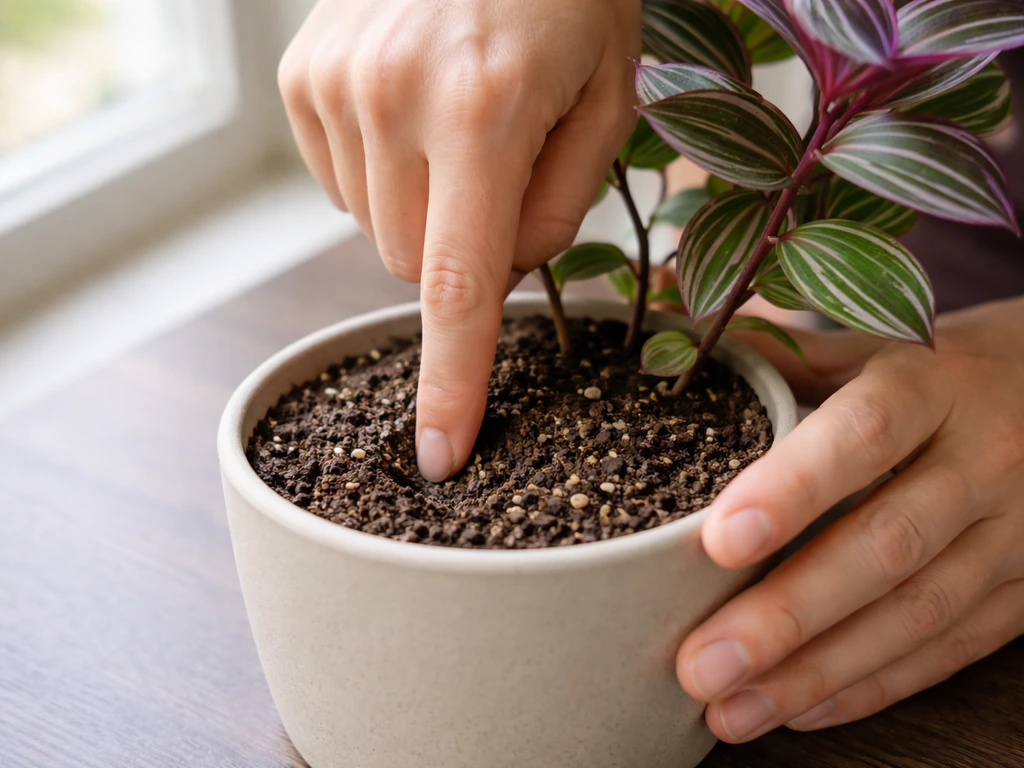
Watering without overthinking it
The rule that works every time: water when the top 1 to 2 inches of soil feel dry. Stick your finger in, and if it still feels damp, wait a day or two and check again. Tradescantia does well when soil is allowed to dry out between waterings, that's straight from Wisconsin Master Gardener guidance, and it matches what Biosphere 2's plant care notes recommend too. Overwatering is the most common way people kill this plant indoors, so when in doubt, hold off.
In winter, when growth slows and your home is drier but potentially cooler, you'll water less frequently. In summer, especially in a warm, bright room, you may water twice a week. The frequency matters less than the finger-test rule. When you do water, water thoroughly until it drains from the bottom of the pot, then don't water again until that top layer dries out.
Soil and drainage
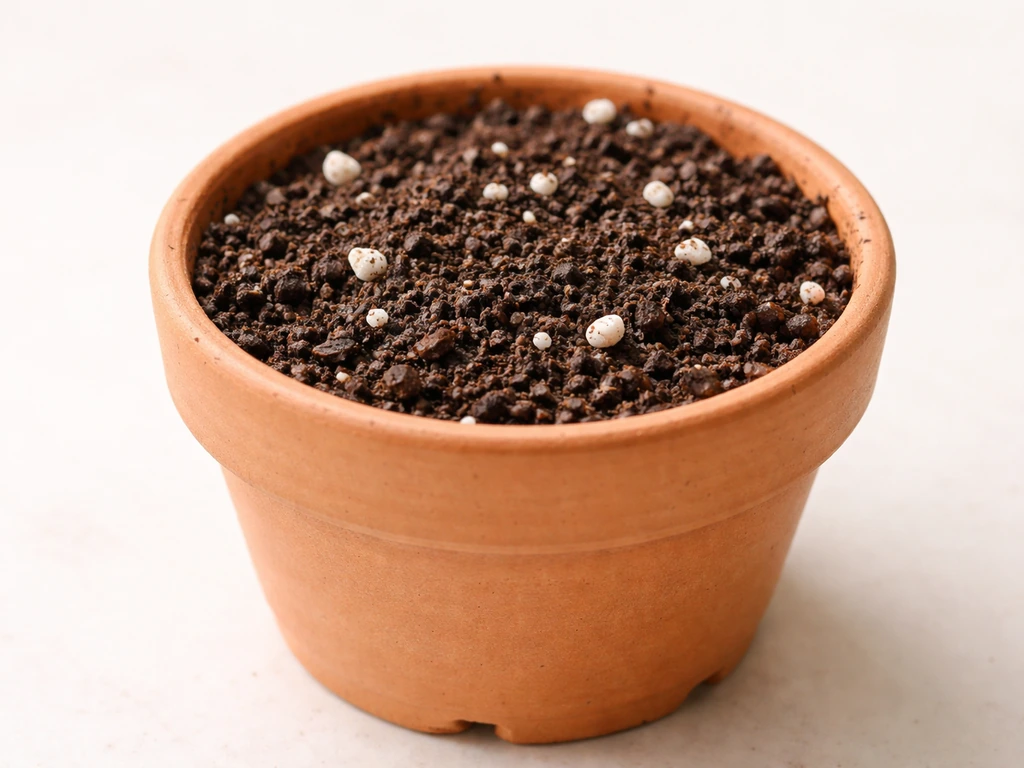
Use a well-draining potting mix, ideally a standard houseplant compost with a handful of perlite mixed in. The goal is a mix that holds a little moisture but doesn't stay soggy. Make sure your pot has drainage holes, this is non-negotiable. Sitting water in a pot with no drainage is a fast route to root rot, and Tradescantia is not the kind of plant that tolerates wet feet for long.
Humidity and temperature
The good news here is that Tradescantia adapts to average indoor humidity without much fuss. A range of around 40 to 60 percent humidity suits it well, which is basically normal home air in most climates. Higher humidity will give you lusher, more vibrant foliage, so if you have a bathroom with decent natural light, that's actually a great spot. If your home is particularly dry in winter (central heating does this), a small humidifier nearby or a pebble tray with water under the pot helps. For temperature, keep it between about 60°F and 80°F (15°C to 27°C). Avoid placing it near cold draughts, air conditioning vents, or radiators.
How to propagate Tradescantia indoors from cuttings
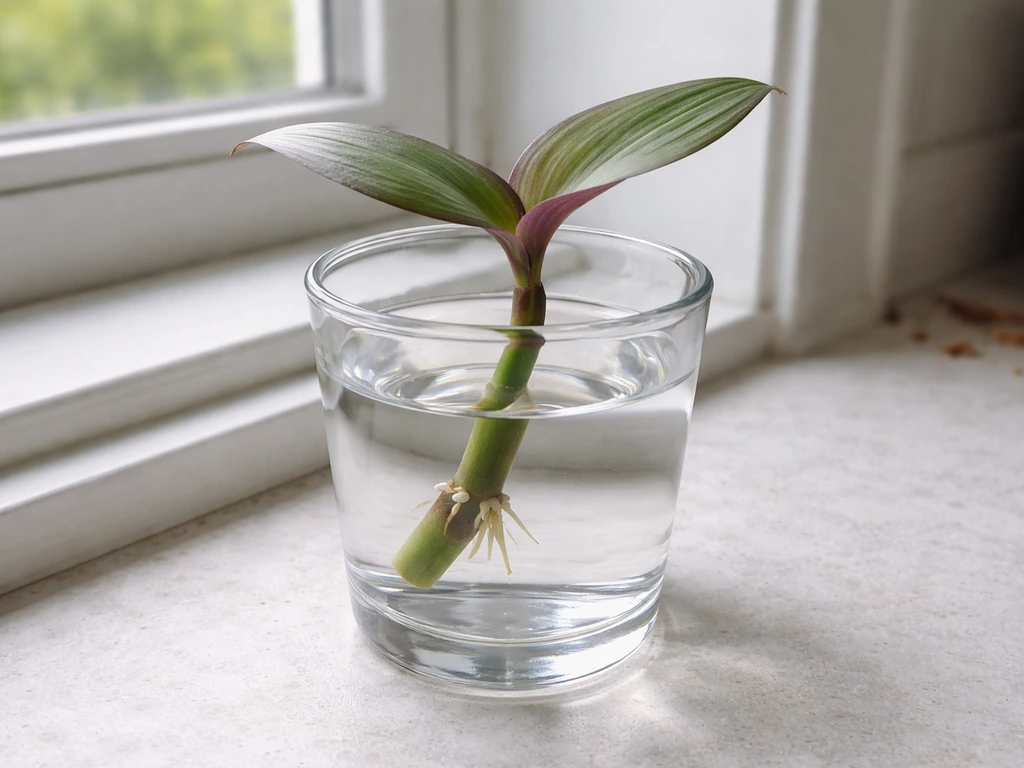
Tradescantia is one of the most satisfying plants to propagate because it's almost foolproof. Both Tradescantia zebrina and Tradescantia spathacea root easily from stem cuttings, as confirmed by University of Florida IFAS Extension research. Here's the method that works consistently:
- Take a cutting about 10 cm (4 inches) long, cutting just below a leaf node with clean scissors or a knife.
- Remove the lower leaves so the bottom couple of nodes are bare.
- Place the cutting in a glass of clean water, making sure the bare nodes are submerged but the leaves aren't.
- Set the glass somewhere bright and warm, out of direct sun.
- Change the water every few days to keep it fresh.
- Once roots reach about an inch long (usually within 1 to 2 weeks), pot the cutting into moist, well-draining compost.
- Water lightly and keep the young plant in bright indirect light while it establishes.
Rooting hormone is optional, most sources agree it's not necessary for Tradescantia. Cuttings will root in water or directly in moist soil. If you're potting straight into soil, keep the compost consistently moist (not wet) for the first couple of weeks until you see new growth, then switch to the normal dry-between-waterings approach. This propagation method is particularly useful when your plant gets leggy, since you can trim it back, root the healthy tips, and restart with a fuller, bushier plant.
Common indoor problems and how to fix them fast
Leggy, stretched-out growth
This is the most common issue with indoor Tradescantia, and it's almost always a light problem. When the plant isn't getting enough brightness, it stretches toward the nearest light source, producing long, weak stems with widely spaced leaves and washed-out colour. The fix is to move it closer to a brighter window or supplement with a grow light. Once you've improved the light, trim the leggy stems back and propagate the healthy tips. The plant will bush out again fairly quickly.
Root rot and drooping leaves
Drooping or mushy stems combined with yellowing lower leaves usually means the roots are sitting in too much water. If you suspect root rot, take the plant out of its pot and check the roots. Healthy roots are white or light tan and firm; rotted roots are brown, mushy, and may smell. Cut away any affected roots and stems with clean scissors, repot into fresh, well-draining compost in a clean pot with drainage holes, and hold off watering for a week or so while it settles. Going forward, stick to the top-2-inch dry rule and you shouldn't see it again.
Spider mites and mealybugs
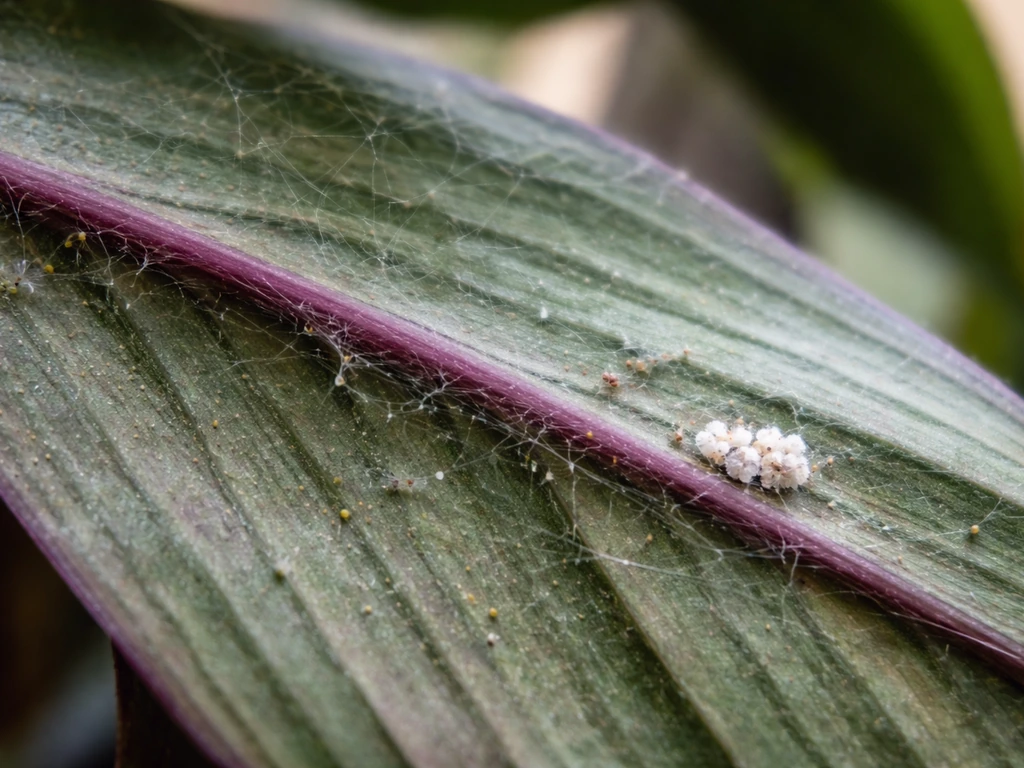
Spider mites are the most likely pest you'll encounter indoors, especially in dry air. Look for fine webbing on the undersides of leaves and tiny moving dots. Mealybugs show up as white cottony clusters in leaf joints. For both, blank" rel="noopener noreferrer">insecticidal soap spray or neem oil are your go-to treatments. Spray thoroughly, including leaf undersides and stem joints, and repeat every week until the infestation clears. Utah State University Extension recommends applying horticultural oils at about 1 to 1.5 percent dilution at dusk, and notes that repeat applications are often needed since mites can bounce back. USU Extension also advises applying insecticidal soap and horticultural oil at dusk for the best effects, using about 1 to 1.5% dilution blank" rel="noopener noreferrer">horticultural oils at about 1 to 1.5 percent dilution at dusk. Don't skip follow-up sprays even if the plant looks clear after round one.
Picking the right variety and where to put it
Which Tradescantia works best indoors?
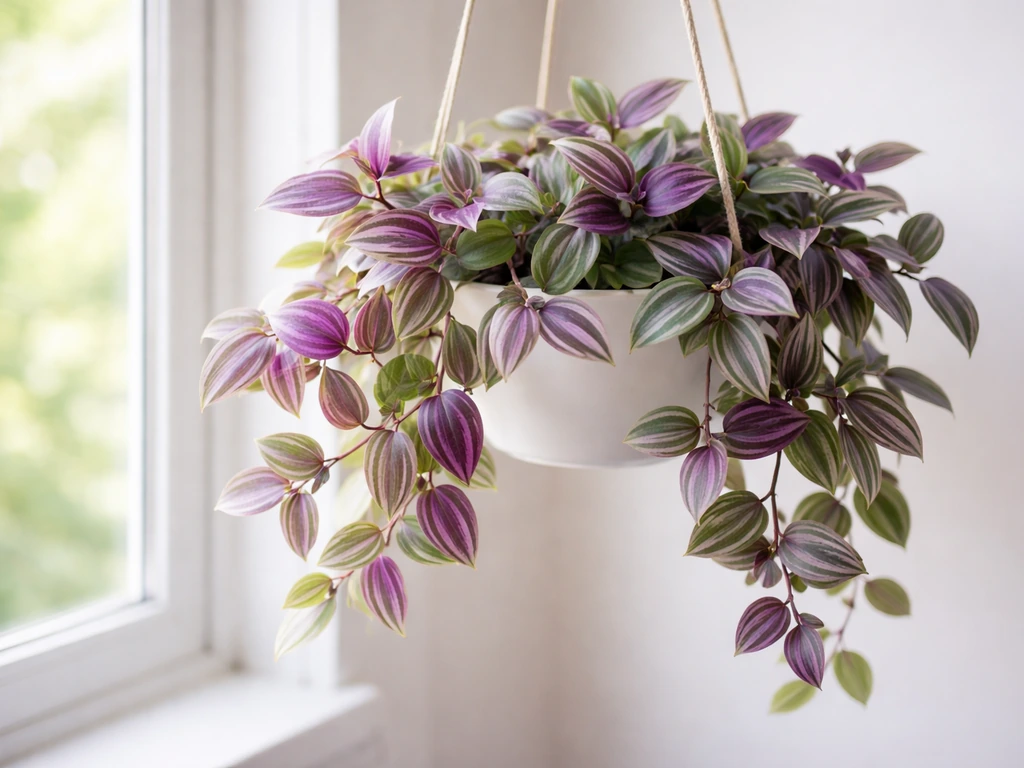
The most commonly grown indoor varieties are Tradescantia zebrina (with its silver-striped, purple-backed leaves), Tradescantia fluminensis (green and white), and Tradescantia spathacea, also called Moses-in-the-Cradle, which has a more upright, rosette-like form. All three grow well indoors under similar conditions, but they do have slightly different characters.
| Variety | Leaf appearance | Growth habit | Best for |
|---|---|---|---|
| T. zebrina | Silver-striped, deep purple underside | Trailing, fast-growing | Hanging baskets, shelves |
| T. fluminensis | Green with white/cream variegation | Trailing, spreading | Hanging baskets, cascading pots |
| T. spathacea | Green and purple, strap-like leaves | Upright rosette | Tabletop pots, windowsills |
For most apartment dwellers wanting a low-effort trailing plant with real visual impact, Tradescantia zebrina is the one to go for. It's the fastest grower of the three, the most forgiving in slightly lower light, and its colouring is genuinely striking. If you want something a little more architectural, spathacea is worth trying since its upright form suits a pot on a windowsill nicely. Cyclamen is a tuber-forming flowering plant, and the best way to grow it is by using the right potting mix and keeping the tuber conditions correct.
Placement and pot tips
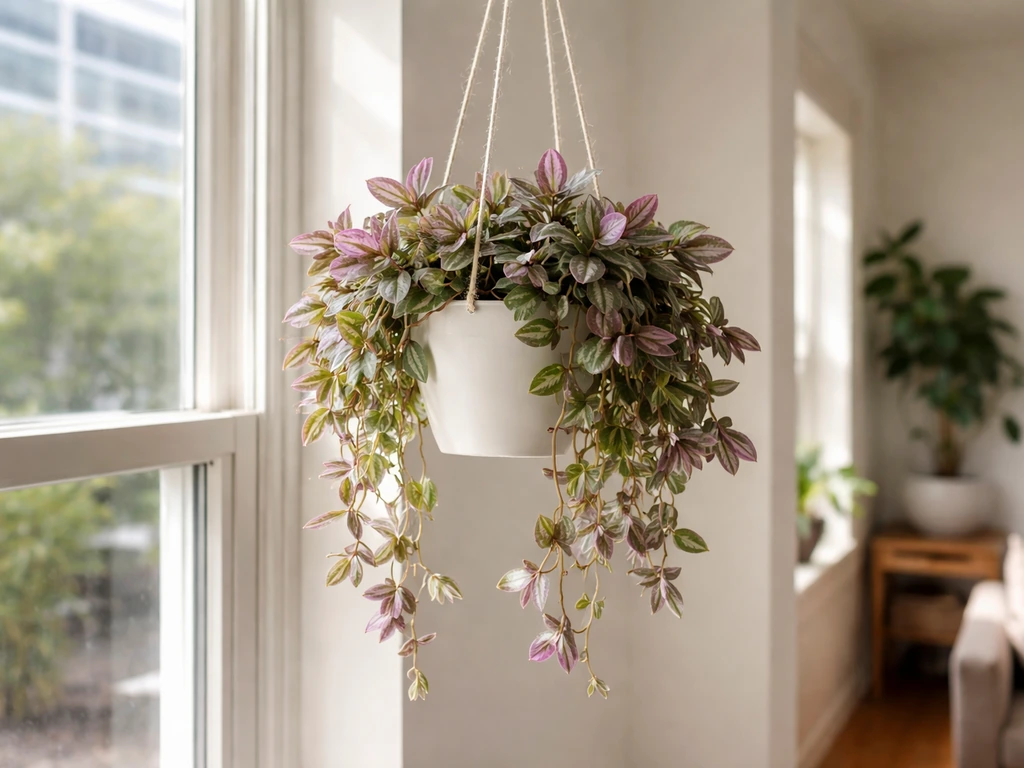
A hanging basket near a bright window is the classic setup for trailing varieties, and it works brilliantly. The stems cascade naturally and you get the full effect of the patterned foliage. A shelf at window height works just as well. For tabletop placement, make sure the pot is genuinely near the glass, not just in the same room as a window, light drops off faster than you'd expect as you move further away. Terracotta pots are a great choice because they allow the soil to dry more evenly, reducing the overwatering risk. Plastic pots retain more moisture, so you'll want to be more careful with watering frequency if that's what you have.
Seasonally, move the plant back from south-facing glass in peak summer if the heat is intense, and bring it as close to the window as possible in winter when natural light is weaker. These small adjustments make a noticeable difference to long-term health.
How to tell it's thriving, and what to do if it's not
Signs your Tradescantia is happy
- New leaves unfurling regularly, with compact spacing between them on the stem
- Vivid, saturated leaf colour (for zebrina, the silver and purple should be strong and distinct)
- Stems feel firm, not mushy or soft
- Roots are white or light tan and fill the pot without circling excessively
- No yellowing of lower leaves beyond the occasional oldest leaf naturally dropping
Quick troubleshooting checklist if things go sideways
- Leggy stems with pale colour: Move to a brighter window or add a grow light. Trim and propagate the healthy tips.
- Yellowing lower leaves with soggy soil: Check for root rot. Repot in fresh, well-draining compost and reduce watering.
- Leaf edges browning or crisping: Air is too dry or the plant is too close to a heat source. Add humidity and reposition.
- No new growth for weeks: Check light levels first, then confirm you're not keeping the soil constantly wet.
- Webbing or white fluff on leaves: Treat with insecticidal soap or neem oil weekly until clear.
- Plant looking overall dull and tired: Take fresh cuttings, root them, and start over. Tradescantia renews quickly.
One thing worth knowing: Tradescantia is naturally fast-growing, and older plants do become straggly over time even in good conditions. Many experienced growers treat it as a 'cut and restart' plant every year or two, propagating new cuttings to replace an ageing parent plant. It's not a sign of failure, it's just how the plant grows. The good news is that rooting fresh cuttings takes almost no effort, so you're never more than a few weeks away from a full, lush plant again.
If you enjoy the hands-on, slightly unpredictable nature of indoor plant keeping, Tradescantia sits in a similar category to other adaptable tropical houseplants, straightforward once you know the core rules, but with enough personality to keep things interesting. Camellias can grow indoors too, but they need very specific light, cool temperatures, and consistent care can camellias grow indoors. And unlike some more demanding indoor plants, it gives you fast, visible results when you get the conditions right. While Tradescantia is great for indoor growing, can you grow Camellia sinensis indoors too?
FAQ
Can Tradescantia grow indoors in winter if my room gets colder at night?
Yes, but only if you can still give bright, filtered light. When it spends nights cooler than about 60°F (15°C), growth slows, so water less often and watch for leggy stretching. If temperatures dip near freezing or the room has cold drafts, keep the plant a bit back from the window glass.
Is Tradescantia okay indoors if I forget to empty the drip tray after watering?
If it has bright indirect light and the soil dries properly, it can be indoors with minimal fuss. However, avoid letting the pot sit in a saucer of water after watering, since that keeps the lower roots wet and can trigger root rot even if the top looks dry.
Should I use the same dry-between-waterings rule for Tradescantia cuttings?
During propagation, the usual “top 1 to 2 inches dry” rule is paused. If you root in soil, keep the mix evenly moist but not soggy for the first couple of weeks until you see new growth, then transition back to normal drying intervals to prevent rotting.
Does Tradescantia spathacea reliably flower indoors, or is it mainly grown for foliage?
Long-flowering stems from Tradescantia spathacea are less consistent indoors than outdoors. Also, the upright, rosette form tends to look best with stable light and not too much pruning. If your goal is foliage, prioritize light and spacing over forcing bloom.
What should I do if my Tradescantia gets brown leaf tips from hard tap water?
Hard tap water is usually tolerable, but very high mineral content can cause leaf-edge browning or a crusty residue in the pot over time. If you see buildup, flush the soil occasionally (run water through until it drains) and consider using filtered water to slow salt accumulation.
Does Tradescantia need fertilizer indoors to grow well?
Generally no, fertilizers are optional. If you choose to feed, use a diluted balanced houseplant fertilizer about once a month in spring through summer, then stop or reduce in winter when growth slows. Over-fertilizing can make stems weaker and worsen pests.
Can I grow Tradescantia near a north-facing window without a grow light?
Yes, but avoid placing it where strong direct sun hits through glass, especially during heat waves. If you only have a north-facing window, a grow light is usually more reliable than relying on a slightly dim corner, because “bright” light matters more than watering adjustments.
How do I adjust watering frequency if my pot or soil dries out unusually fast?
Not exactly. Tradescantia prefers drying between waterings, so water only after the top layer is dry, and water thoroughly each time. If you pot it in a fabric grow bag or a very porous mix, it may need more frequent watering than the typical twice-a-week guidance.
My Tradescantia is yellowing and dropping leaves, how can I tell if it’s light stress or overwatering?
It’s common for older leaves to drop, but widespread yellowing and mushy stems usually signals overwatering. Check the potting mix moisture and the root firmness before changing anything else, because fixing light alone won’t correct root rot.
When should I prune or trim Tradescantia to encourage a fuller plant indoors?
Yes, but do it strategically. Prune leggy stems right after you move the plant to better light, so new shoots branch from the healthier remaining nodes. If you cut aggressively while light is still low, it can stall growth temporarily.
What changes should I look for if Tradescantia is not getting enough indoor light?
Expect lighter colors and faster stretching in low light, even if the plant survives. If you notice faded stripes or silver tones turning dull, increase light first, then reassess watering, because overly frequent watering in low light often compounds the problem.
Can Tradescantia live in a bathroom, and is it safe near a heater or AC vent?
Yes, but choose a spot that stays within the usual 60°F to 80°F (15°C to 27°C) range and is not right next to vents or radiators. A bathroom can work well if it gets bright natural light, but avoid places where it gets foggy and dark or where airflow dries it out too quickly.
Will a hanging basket work for Tradescantia if the basket itself does not have drainage holes?
It can, especially in hanging baskets, but good drainage still matters. A basket liner without drainage can turn into a water-retention trap, so use a pot with drainage holes inside the basket or ensure excess water can escape completely after watering.