
You can grow fireweed (Epilobium angustifolium, also called Chamaenerion angustifolium) indoors, but I want to be upfront with you: it's genuinely difficult, and most people will get better results treating it as a short-term indoor project or a conservatory/sunroom plant rather than a year-round houseplant. Fireweed is a tall, sun-hungry wildflower that can hit 3 to 7 feet at maturity. It evolved on open hillsides and post-wildfire clearings, not living rooms. That said, with a serious light setup, the right container, and realistic expectations, you absolutely can start it indoors, overwinter small plants, or bridge it between outdoor seasons. Here's exactly how to do that.
Can You Grow Fireweed Indoors? A Step-by-Step Guide
James Hartwell
1 Jun 2026
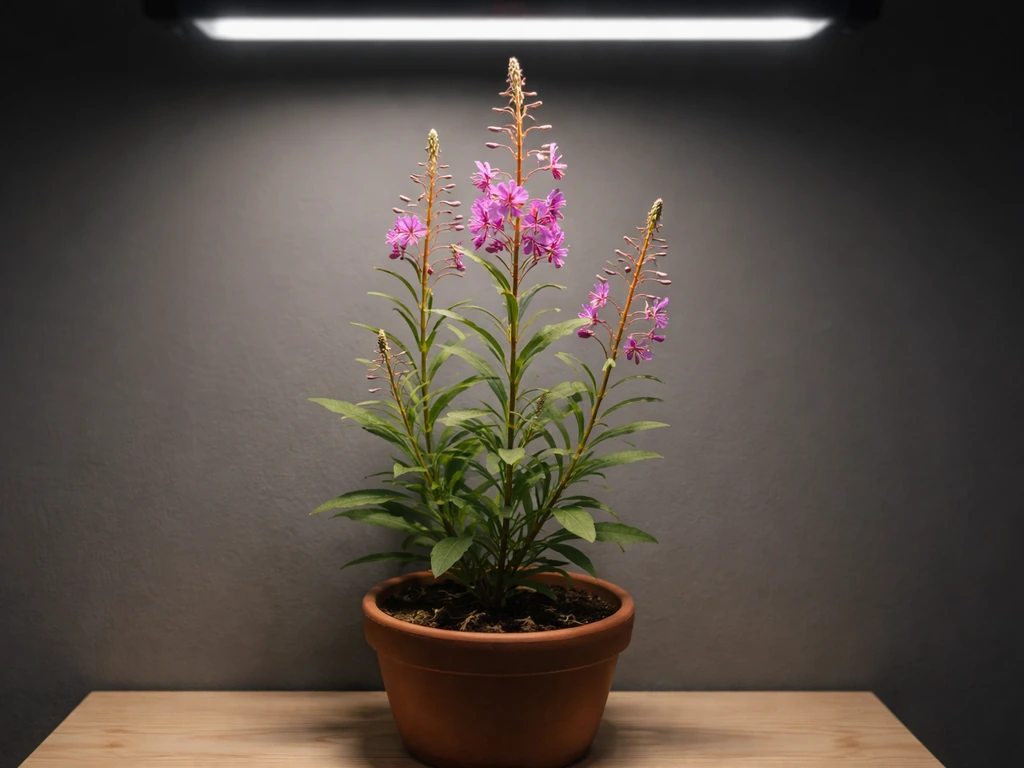
How realistic is growing fireweed indoors, really?
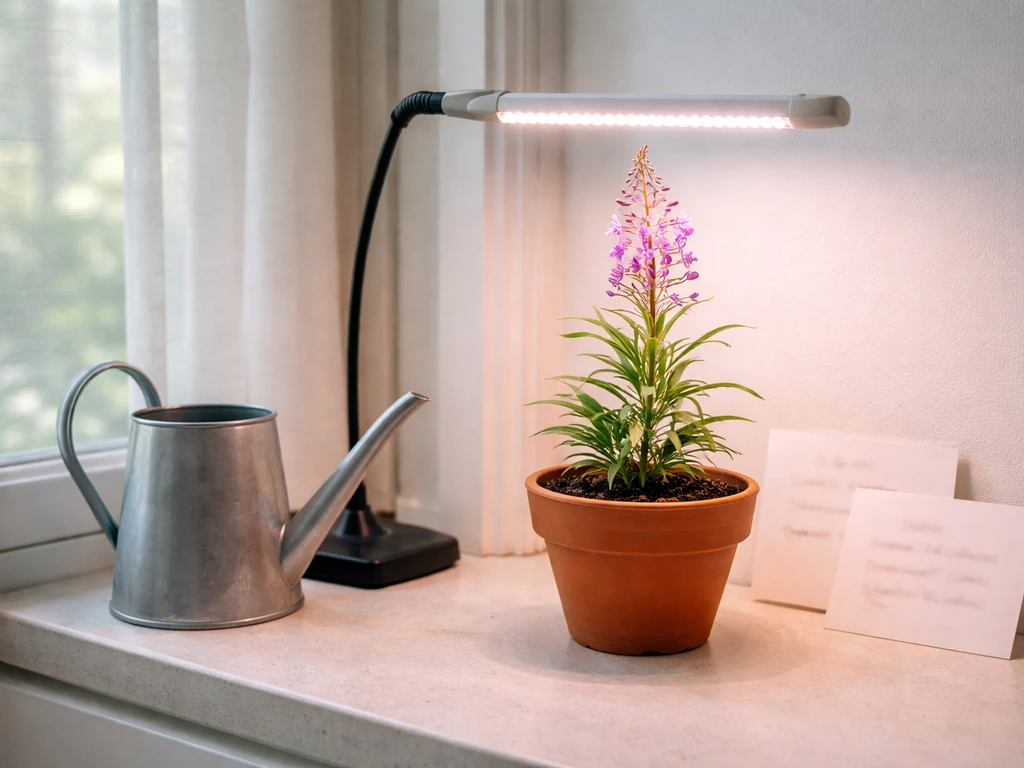
Let me set honest expectations before you spend money on pots and grow lights. Fireweed is a rhizomatous perennial that blooms in midsummer (typically July and August) after building energy through a full spring of strong outdoor light. Indoors, you're fighting against two big problems: light intensity and vertical space.
A typical apartment window delivers a fraction of the light an open meadow provides, and a plant that wants to grow 4 to 6 feet tall is going to feel cramped in any standard room. I've seen people successfully use fireweed indoors as a germination and early-growth project before moving plants outside, or keep compact specimens in a very bright sunroom or greenhouse-style conservatory. For indoor blooms specifically, you need to commit to a dedicated grow-light setup.
Without it, you'll get leggy, floppy stems and no flowers. With the right setup, though, it's a rewarding and unusual container plant.
Choosing the right variety and pot setup
The standard species (Epilobium angustifolium) will grow 3 to 7 feet tall, which is a lot to manage in a container. If you can find the cultivar 'Album' (white-flowered) or any compact selection from a native plant nursery, that's worth looking for. In practice, most gardeners will be working with the straight species from seed, so plan your container accordingly.
For the pot itself, go with something at least 12 inches wide and 14 to 16 inches deep to accommodate the rhizomatous root system. Terracotta or fabric grow bags are my preference because they breathe well and help prevent the chronic moisture saturation that kills container fireweed. Critically, you need multiple drainage holes, not just one.
Yerba Buena Nursery's container guidance makes the point well: a single small hole is often not enough, especially in lower-light indoor conditions where the soil stays wet longer. Iowa State Extension also cautions against pots that are too large for the plant's current root mass, because oversized containers stay saturated between waterings. Start in a reasonably sized pot and pot up only when roots are clearly filling it.
Light, temperature, and what to expect by season
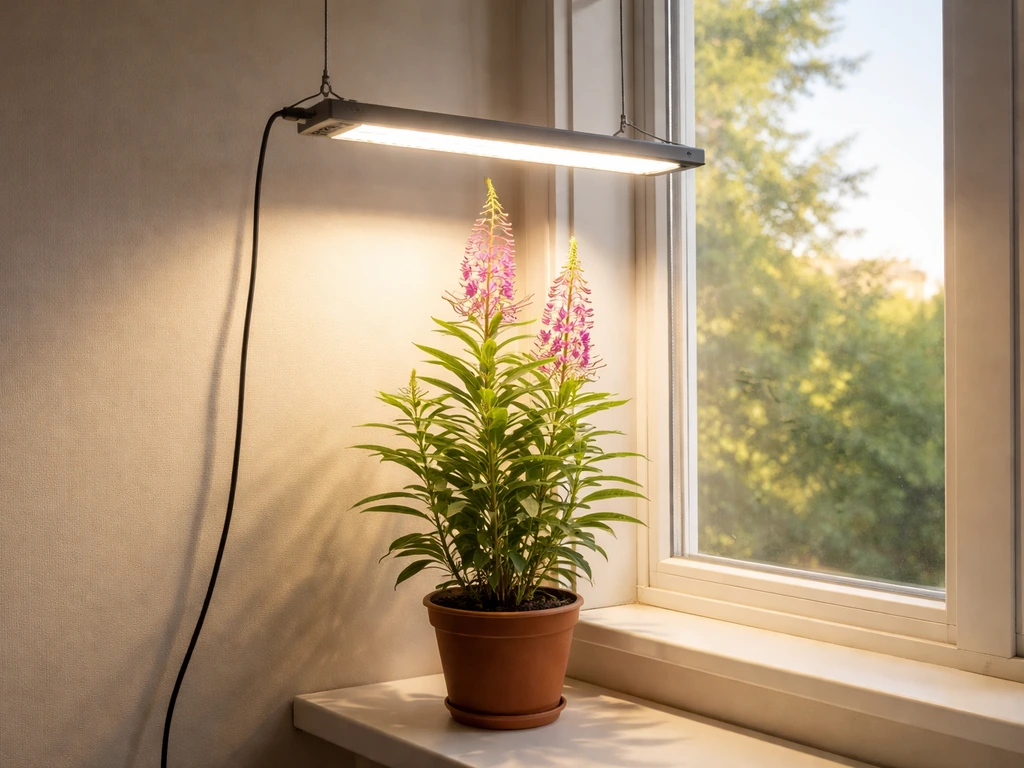
Light is the single biggest make-or-break factor for fireweed indoors. This plant wants full sun, which means 6 or more hours of direct, high-intensity light. A south-facing window in a northern hemisphere home is the best you can do with natural light, and even then it may not be enough in winter months. The University of Maryland Extension is direct on this point: during winter, most sun-loving plants need supplemental grow lights running 14 to 16 hours per day to compensate for weak indoor daylight. I'd set up a full-spectrum LED grow light on a timer as a baseline assumption, not an optional add-on, if you're serious about keeping fireweed growing indoors beyond early spring.
Temperature-wise, fireweed is cold-tolerant as a garden plant and actually benefits from a cool dormancy period in winter. Indoors, keep it in a bright, cool spot (55 to 65°F / 13 to 18°C) during its winter rest phase. During active growth in spring and summer, normal room temperature (65 to 75°F / 18 to 24°C) is fine. Germination studies show the seeds sprout well in the 20 to 40°C range, so warm conditions are good for starting seeds. For actively growing plants, avoid placing the pot near heating vents, which dry out the soil rapidly and stress the foliage.
Seasonally, think of indoor fireweed as a plant with two modes: active growth from spring through summer, and a slow or dormant phase in autumn and winter. If you're keeping it indoors year-round, reduce watering and feeding in late fall, allow it to die back partially, and then ramp back up with light and water in late winter to encourage new spring growth.
Soil, watering, and fertilizing
Potting mix
Fireweed tolerates a wide pH range, roughly 5.6 to above 7.0 in natural habitats, so you don't need to fuss too much about exact pH. A target of around 5.8 to 6.5 works well in containers. Use a well-draining potting mix, not straight garden soil. I mix a standard peat-free or peat-based potting compost with about 20 to 30% perlite to keep it airy. Fireweed is prone to root rot in standing water, so drainage is more important than fertility when it comes to soil structure.
Watering
Water consistently during active growth, keeping the soil moist but never waterlogged. Botanical-online describes fireweed's moisture needs as constant and abundant during the growing season. In practice indoors, that means checking the top inch of soil every couple of days in spring and summer, and watering when it's just starting to dry. Always empty the saucer after watering so the pot isn't sitting in water.
In winter, pull back significantly, watering only when the top 2 to 3 inches are dry. Fireweed develops reasonable drought tolerance once established, but in containers that tolerance is reduced, so don't let it go completely bone dry either. A Fireweed care guide advises regular watering during dry spells and notes it becomes drought-tolerant once established, so container plants should not be allowed to dry out completely [drought tolerance once established](https://plantfun. app/wiki/en/epilobium-angustifolium.
html).
Fertilizing
Feed lightly. A diluted balanced liquid fertilizer (something like 10-10-10 at half the recommended strength) applied once every three to four weeks during active growth is plenty. Fireweed doesn't need heavy feeding, and pushing too much nitrogen is actually counterproductive: UC IPM notes that nitrogen excess can increase soil salinity, alter pH, and weaken plant health, which in a flowering plant often means more foliage and fewer blooms. Some hobby growers use diluted compost tea or banana peel tea as a gentle potassium source to encourage flowering. Stop feeding entirely from October through February.
Starting fireweed from seed or cuttings
Growing from seed
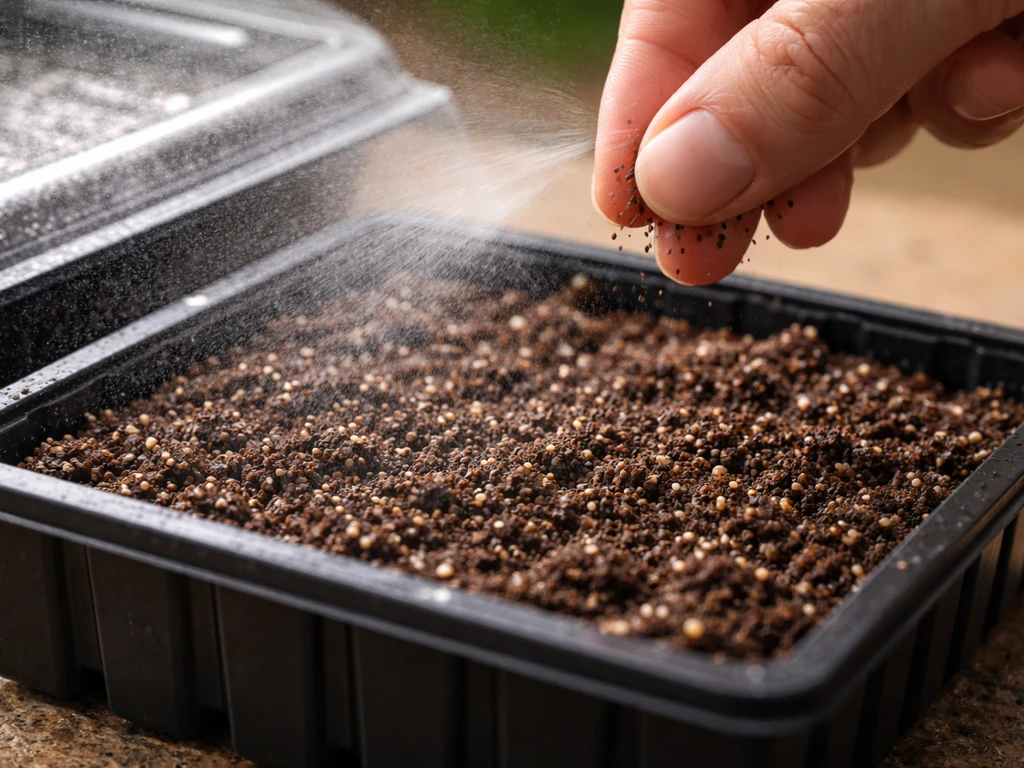
Seed is the most accessible starting method. Fireweed seeds are tiny and need light to germinate, so surface-sow them: press the seeds lightly into the surface of a moist seed-starting mix without covering them. Some sources and seed sellers recommend a 4-week cold stratification period in a damp paper towel or damp sand in the fridge before sowing, to improve germination rates.
Research from Alaska native plant cultivation trials suggests that while fireweed may not strictly require stratification, European germination studies found it improves consistency, so I'd do it if you have time. After stratification, move the seeds to a warm spot (around 20 to 25°C) with good light or under a grow light. Keep the surface consistently moist but not soggy. Germination typically takes 1 to 3 weeks under warm, bright conditions.
Once seedlings have a couple of true leaves, pot them up into individual small containers before eventually moving to your final pot.
Taking cuttings
If you have access to an established fireweed plant, cuttings are a faster route to a flowering-sized plant. Take stem cuttings in early spring, before the plant flowers, when growth is young and vigorous. Aim for a 4 to 6 inch cutting from a non-flowering stem, strip the lower leaves, dip the cut end in rooting hormone powder, and push it into a moistened mix of potting compost and perlite. Cover loosely with a clear bag or humidity dome to retain moisture and place under a grow light or in a bright spot. Roots typically develop in 3 to 5 weeks. Once the cutting shows new growth and resists a gentle tug, it's ready to pot up.
Keeping plants healthy: leggy growth, no blooms, and routine care
The two most common indoor problems with fireweed are leggy, floppy stems and a complete failure to bloom. Both have the same root cause: not enough light. If you’re also wondering can you grow phlox indoors, remember that light levels are just as crucial for getting healthy growth and flowers not enough light. If your plant is stretching dramatically toward the window, producing long internodes with small leaves, that's a clear sign it needs more light immediately. Either move it to a brighter spot or add a grow light. Remember, 14 to 16 hours of supplemental light per day is the target in low-light months.
Because the stems can get tall, indoor plants often need staking. A simple bamboo cane and soft tie works fine. Pinching back the growing tips in early spring when plants are about 12 inches tall can encourage bushier, more compact growth and reduce how dramatically the plant towers over its container.
For blooming: beyond sufficient light, fireweed needs to have gone through a cool resting period and then experienced a proper spring warmup. If your indoor plant has been in a consistently warm, lit room all year with no seasonal variation, it may not bloom reliably. Mimicking a seasonal cycle, cooler and dimmer in winter, brighter and warmer from late February onward, makes a real difference. Deadhead spent flowers promptly if you do get blooms; this encourages continued flowering and prevents the plant from putting all its energy into seed production.
Pests, diseases, and when to move on
Indoors, the most likely pest problems you'll encounter are spider mites, aphids, and fungus gnats. Spider mites thrive in warm, dry indoor air and are often the first pest to show up on stressed plants. Look for fine webbing and stippled, pale leaves. Treat with insecticidal soap or neem oil spray, applied to all leaf surfaces.
Aphids cluster on new growth and can be removed with a sharp jet of water or treated with insecticidal soap. Fungus gnats are usually a symptom of consistently overwatered soil. Let the top layer dry out more between waterings and use a yellow sticky trap to catch adults. Powdery mildew can appear if airflow is poor; space plants away from walls, avoid wetting foliage when watering, and increase ventilation.
If your plant has been indoors for a full season and has produced nothing but weak, pale growth despite good light and care, it's worth being honest with yourself: fireweed is a wildflower that genuinely wants to be outside. Moving it outdoors in late spring, once frost risk has passed, will almost always transform the plant. Treat indoor growing as a germination and establishment phase, then transition it to a sunny patio or garden bed for its best performance.
For gardeners curious about growing other challenging or wild-natured plants indoors, alpine plants and prairie smoke present similar honest trade-offs between indoor convenience and outdoor performance. If you’re wondering can you grow alpine plants indoors, they often need similarly high light and a realistic seasonal routine to do well.
Indoor fireweed setup at a glance
| Factor | What fireweed needs indoors |
|---|---|
| Container size | At least 12 inches wide, 14–16 inches deep; multiple drainage holes |
| Potting mix | Well-draining compost with 20–30% perlite; pH 5.8–6.5 |
| Light | Full sun south-facing window plus grow light at 14–16 hrs/day |
| Temperature (growing) | 65–75°F (18–24°C) during active growth |
| Temperature (winter rest) | 55–65°F (13–18°C), reduced light and water |
| Watering | Keep moist but not waterlogged in growing season; reduce in winter |
| Fertilizer | Half-strength balanced liquid feed every 3–4 weeks in growing season only |
| Starting method | Surface-sow seeds after 4-week cold stratification; or spring stem cuttings |
| Bloom timing | Midsummer (July–August) if light and seasonal cycle are adequate |
| Height management | Stake tall stems; pinch tips at 12 inches to encourage bushier growth |
The short version: start fireweed indoors in late winter for a head start, give it the brightest spot you have plus a grow light, transplant it outdoors after the last frost if you want reliable blooms and strong growth. If you're committed to keeping it indoors long-term, a sunroom or conservatory with direct sun for most of the day is the realistic setting where it will actually reward your effort. If you’re wondering can you grow brunnera indoors, the key is also matching light and cool-season conditions, then using a container and soil that won’t stay soggy.
FAQ
How much grow-light power do I actually need for indoor fireweed?
Aim to replicate full-sun intensity at the leaf level, not just “a light on.” A practical way to dial this in is to measure with a light meter if you have one, otherwise keep the LED close enough that the plant is not stretching, and run the light 14 to 16 hours per day during winter. If it still grows tall and thin, increase distance? Usually the fix is lowering the light height or upgrading to higher output.
Can I grow fireweed indoors without any natural sunlight, only under grow lights?
You can start and keep it under grow lights, but it still needs a true long photoperiod (about 14 to 16 hours in winter) and consistent brightness. If your light timer only runs 8 to 10 hours, expect leggy growth and a low chance of blooming, even if everything else is right.
What size pot should I start with, and when is it time to repot?
Use at least 12 inches wide and 14 to 16 inches deep from the start, because fireweed forms rhizomes and does not like long periods cramped. Repot only when roots are clearly filling the container and the soil dries unusually fast, rather than upsizing early, because larger wet soil areas raise root-rot risk indoors.
How do I water fireweed indoors when heat and drafts change the soil drying rate?
Base watering on the top inch drying test, not the calendar. In winter or near windows, soil can stay damp much longer, while near vents it dries quickly. Always empty any saucer after watering, and if the plant wilts while soil is still wet, stop watering and check for early rot or poor drainage.
Why does my indoor fireweed keep getting leggy even though I’m using grow lights?
Legginess usually means insufficient intensity or too much distance between the plant and the light, but it can also be inconsistent light timing. Check that the timer is working every day, reduce the gap between leaves and the LED, and rotate the pot weekly so one side is not consistently dimmer.
Will fireweed bloom indoors if I follow the care steps?
Sometimes, but blooming is the hardest part indoors because it requires a cool rest period and a seasonal warm-up. If you keep temperatures and light stable all year, blooms are unlikely. Try to mimic a winter rest with cooler conditions (about 55 to 65°F) and less watering, then increase light duration and water in late winter.
What’s the difference between indoor winter dormancy and “just less watering”?
Dormancy usually includes cooler temperatures and reduced growth, often with partial dieback, not merely watering less. In practice, move it to a bright, cool spot in winter, cut back feeding completely, and let the soil dry deeper in the pot (top 2 to 3 inches) between waterings.
Do I need to cold stratify fireweed seeds?
It’s not always strictly required, but it improves germination consistency. If you want the best odds, do a damp stratification period (often 3 to 4 weeks in a fridge) before sowing, then keep the seeds warm (around 20 to 25°C) with strong light and steady surface moisture.
My seedlings look pale and slow, is that fertilizer deficiency?
Often it’s light, not food. For very small seedlings, start with minimal or no fertilizer until they are established, and focus on strong, close light. Overfeeding at the seedling stage can also raise salt levels in containers, making it harder for roots to take up water.
What pests are most likely indoors, and how can I prevent them before they explode?
Spider mites and aphids show up when plants are stressed, and fungus gnats indicate persistently wet soil. Preventatively, keep airflow around the plant, avoid overwatering, let the top layer dry more between waterings, and inspect the undersides of leaves weekly so you can treat early with insecticidal soap if needed.
How can I tell if my fireweed problem is root rot versus underwatering?
Root rot usually comes with persistently wet soil, yellowing that progresses quickly, and sometimes a musty smell. Underwatering typically shows dry soil that pulls away from the pot edges and leaves droop, then recover after watering. If the pot stays damp for days and symptoms worsen, prioritize drainage, dry-down, and trimming any blackened roots if you repot.
Is fireweed safe to grow indoors with pets or kids?
Fireweed is a wild plant, and “edible” status is not the same as “safe” around pets. If you have curious pets, treat it like an unknown and keep it out of reach, because ingestion risks are hard to guarantee for houseplant exposure. Use a container placed high or behind a barrier if chewing is an issue.
Can I keep indoor fireweed forever, or is it better as a stepping-stone plant?
It is possible long-term in a sunroom or conservatory with daily direct sun, but in a typical room it becomes an ongoing fight with height control, light, and seasonal cues. If you are not able to reliably provide 6+ hours of direct sun and a cool winter period, plan to use indoors for germination and establishment, then move outdoors after frost risk passes.