
You can grow holly indoors, but let's be honest: it's a challenge, and most species genuinely prefer to be outside. Holly (Ilex) is a woody, often large shrub that evolved for outdoor conditions, cold winters included. That said, compact varieties like Ilex crenata (Japanese holly) or dwarf cultivars of Ilex aquifolium can survive in containers indoors if you get the light, temperature, and watering right. Getting berries indoors is a whole other story, and I'll cover exactly what that takes below.
Can You Grow Holly Indoors? Ilex vs Hollyhocks Guide

James Hartwell
16 May 2026
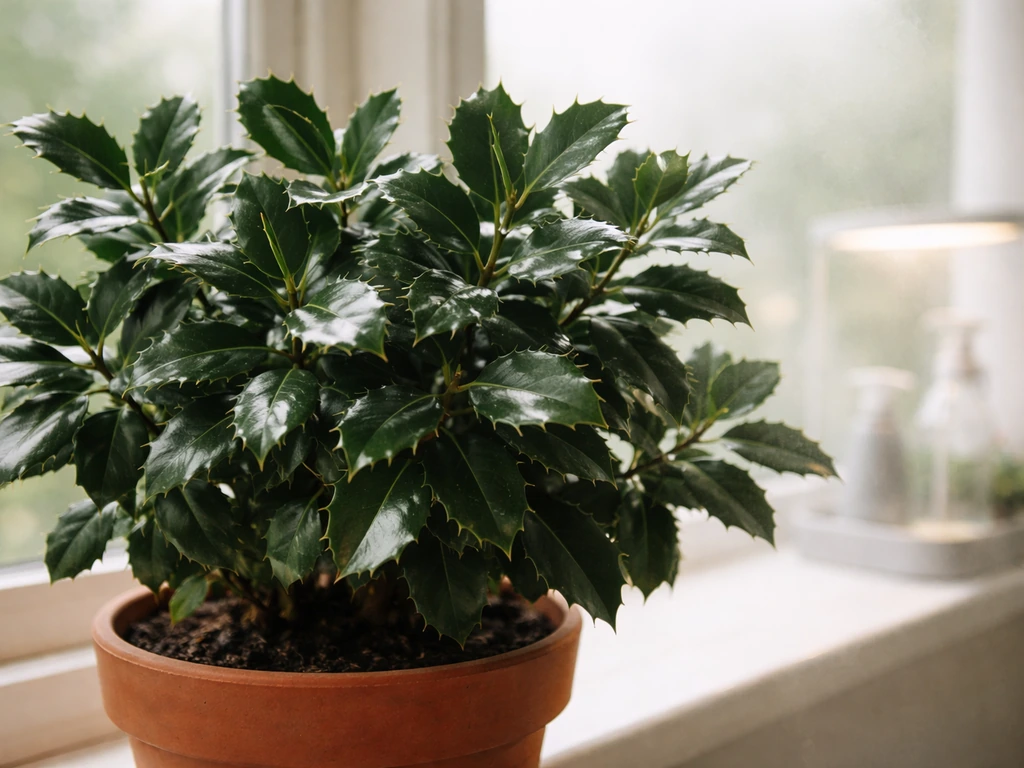
Wait, are you thinking of holly or hollyhocks?
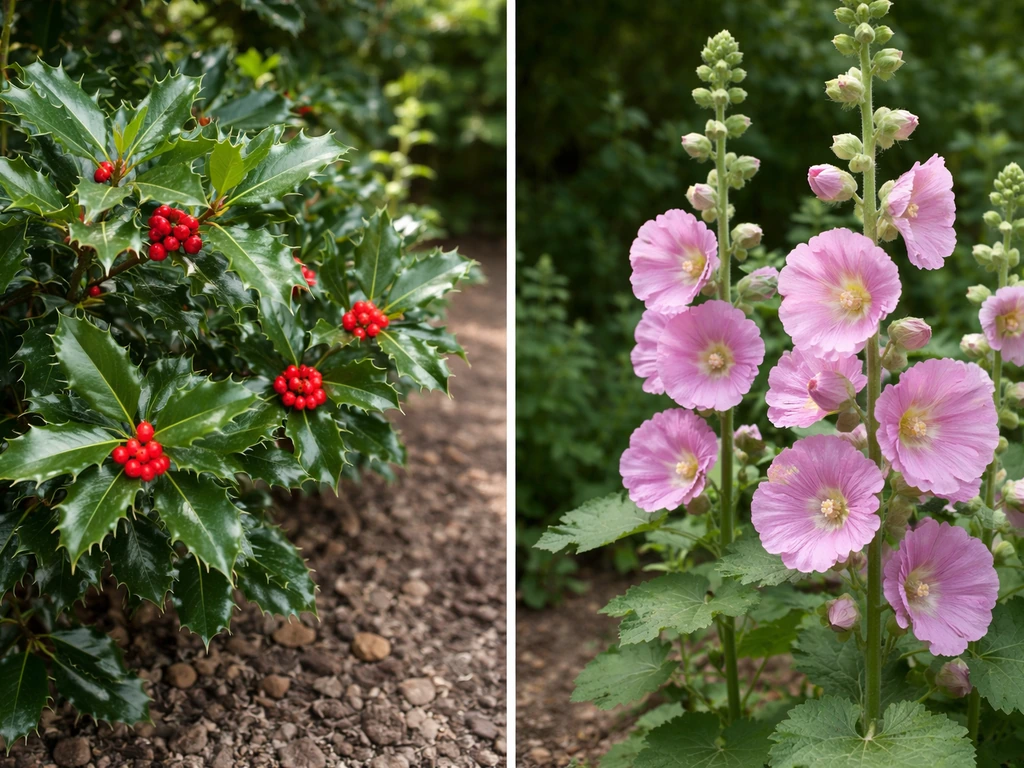
Before anything else: holly and hollyhocks are two completely different plants. Holly is genus Ilex, a woody evergreen or deciduous shrub with those familiar glossy leaves and red (or black or yellow) berries. Hollyhocks are Alcea rosea, a tall flowering plant in the mallow family (Malvaceae), related to hibiscus, not holly at all. If you searched for 'growing holly indoors' but you're picturing tall flower stalks with big blooms, you're probably thinking of hollyhocks. Hollyhocks are actually easier to start indoors from seed as annuals, but they're a sun-hungry, tall plant that eventually wants garden soil and plenty of space. The rest of this article focuses on true holly (Ilex), so if hollyhocks are your goal, that's a separate growing path entirely.
How well does holly actually do indoors?
Holly is not a natural houseplant. Most species want full sun to partial shade outdoors, cold winters, and room to spread. But 'can it survive indoors' and 'will it thrive indoors' are different questions. With the right conditions, a compact holly in a container can live quite happily inside, especially if you treat it more like a patio plant that winters in a cool, bright room than a true houseplant sitting next to your ferns. Here's what the plant actually needs and where most indoor attempts fall apart.
Light
Light is the single biggest obstacle to growing holly indoors. Ilex aquifolium wants full sun to partial shade outdoors, and translating that to indoor conditions is tough. The photosynthetically active light in even a bright south-facing window is a fraction of what the plant gets outside on a cloudy day. For berry production, you need even more light, roughly 400 to 1,200 PPFD (micromoles per square meter per second), which most homes simply cannot provide through windows alone. Survival is possible with a bright south or west window; actual growth and any hope of fruiting will likely need supplemental grow lights.
Temperature
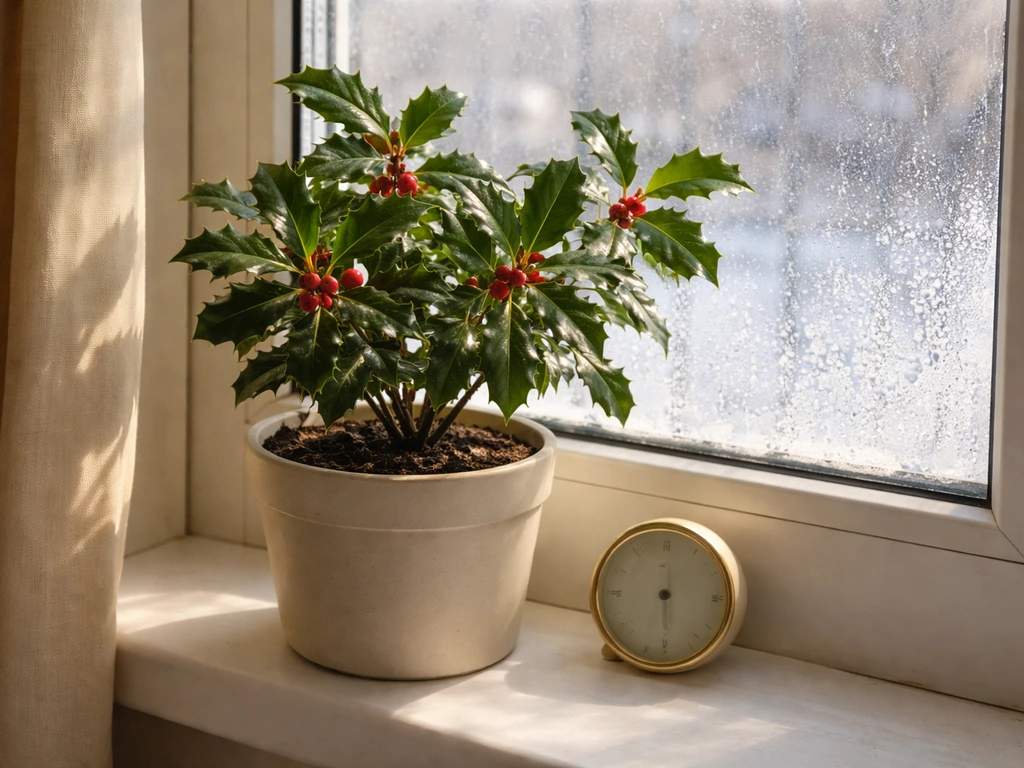
Holly is a cool-season plant at heart. Ilex aquifolium handles fairly cold temperatures and actually benefits from a proper chilling period each winter. Indoors, keeping the plant in a room that stays between 50 and 65°F (10 to 18°C) during winter is much better than a warm, centrally heated living room. If your only option is a heated apartment that stays at 70°F year-round, the plant will struggle over time, especially when it comes to flowering and fruiting. A cool garage, unheated sunroom, or enclosed porch during winter is genuinely your best friend here.
Humidity and airflow
Central heating is brutal for holly because it dries out the air. Holly prefers moderate humidity and does not like sitting in stagnant, dry air. A humidifier nearby, a pebble tray with water under the pot, or regular misting will help during winter months. Good airflow around the foliage also matters for preventing fungal issues, especially if the plant is in a cool, lower-light spot.
Which holly to choose and where to get one
Species and variety selection will make or break your indoor holly project. The large common hollies you see in landscapes will outgrow any container quickly and become impossible to manage. Go compact from the start.
- Ilex crenata (Japanese holly): Small-leaved, slow-growing, and one of the best for container culture. Often used in bonsai for good reason. The cultivar 'Convexa' or dwarf types work well in pots.
- Ilex aquifolium dwarf cultivars: Look for varieties labeled 'dwarf' or 'compact', like 'Argentea Marginata' in a smaller form. The standard species gets too large.
- Ilex verticillata (winterberry): Technically possible in containers, but this is a deciduous wetland-native holly that really wants cold winters and acidic, moist soil. It's the hardest to keep happy indoors long-term.
- Ilex cornuta 'Dwarf Burford': A compact, self-fertile cultivar, which means it can potentially produce berries without a separate male plant. This is a practical advantage for indoor growing.
For sourcing, buy from a local nursery rather than ordering bare-root online if possible. You want a plant that's already in good condition and ideally already container-grown. Ask specifically for a female plant if you want berry potential, and pick up a male pollinator cultivar at the same time unless you go with a self-fertile type like 'Dwarf Burford'. Garden centers in spring and early fall typically have the best container holly selection.
How to pot and set up your holly indoors
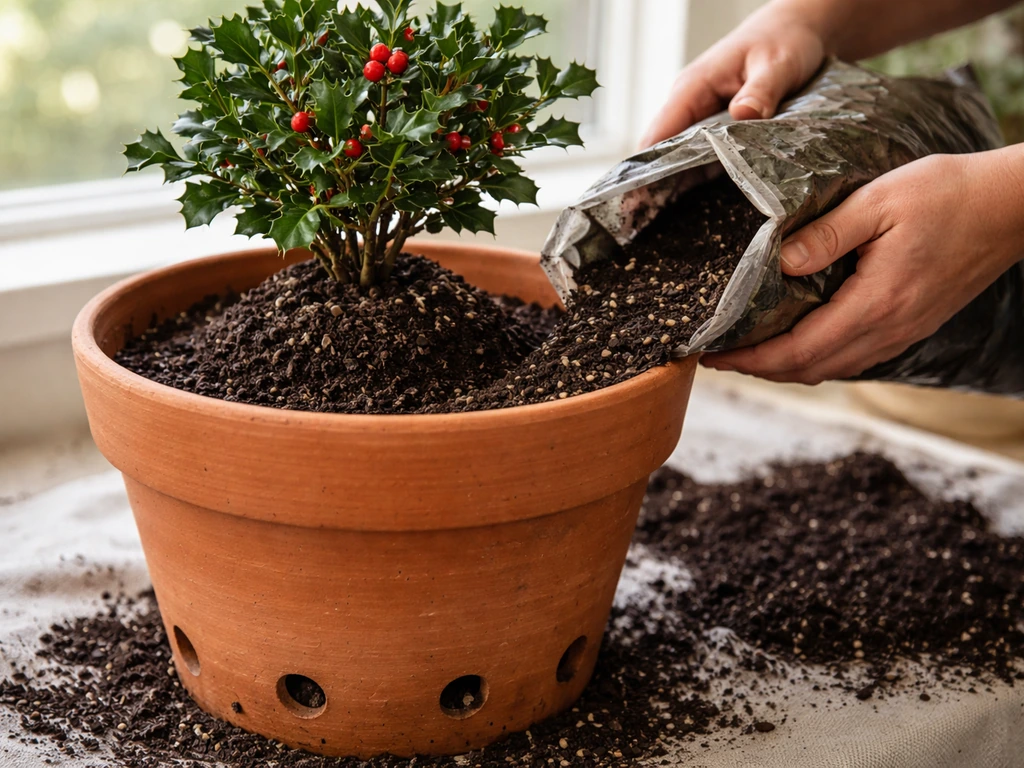
- Choose a container with excellent drainage. Holly roots hate sitting in water. A 12 to 16 inch (30 to 40 cm) pot with multiple drainage holes is a good starting size for a compact cultivar. Terra cotta works well because it breathes and helps prevent overwatering.
- Use an acidic, well-draining potting mix. Holly needs a soil pH between roughly 4.5 and 6.5 depending on species (winterberry likes it closer to 4.5 to 5.5; Ilex aquifolium tolerates up to around 6.5). Use an ericaceous (acid) compost or mix standard potting soil with perlite and a little composted pine bark to lower pH and improve drainage.
- Plant at the same depth as it was in its nursery container. Don't bury the crown. Top-dress with a thin layer of pine bark mulch to retain moisture without waterlogging the surface.
- Place a saucer under the pot but never let the pot sit in standing water. If you're using a pebble tray for humidity, make sure the pot base is above the waterline.
- Water thoroughly at planting, then let the top inch or two of soil dry before watering again. In winter, reduce watering frequency significantly, especially if the plant is in a cooler room.
Watering routine
Overwatering is the most common way to kill a potted holly indoors. The rule I use: water deeply, then wait. In spring and summer with bright light, that might mean watering every 5 to 7 days. In a cool, low-light winter setup, you might only water every 10 to 14 days. Always check the soil before watering, not the calendar. If the top two inches feel damp, leave it alone.
Getting the light right: windows and grow lights
Place your holly in the brightest spot you have. A south-facing window in the northern hemisphere is the gold standard, followed by west-facing. East-facing windows can work for survival but rarely for robust growth. Keep the plant within 12 to 18 inches of the glass to maximize light intensity, because light drops off dramatically as you move further from the window.
If your windows aren't cutting it, a full-spectrum LED grow light is a practical fix. For a holly you want to maintain (not just survive), aim for a light that delivers around 200 to 400 PPFD at the canopy for general growth. If you're hoping for flowers and berries, push that closer to 600 to 800 PPFD at the leaf surface. A good LED panel hung 12 to 24 inches above the plant for 12 to 14 hours a day will cover vegetative growth. Bump up both the duration and intensity during the spring flowering window if your variety has been through a winter chill. I've had decent results with broad-spectrum LEDs in the 3000 to 4000K color temperature range for woody plants like this.
Ongoing care through the seasons
Pruning
Light pruning in late winter or early spring, just before new growth begins, keeps your holly compact and bushy. For container plants, this is especially important because you want to manage size and encourage dense branching rather than leggy growth. Don't go heavy-handed: remove dead or crossing branches and tip-prune to shape. Holly responds well to gentle pruning and will push new growth from the cut points.
Feeding
Feed with an acid-formulated slow-release fertilizer (something labeled for azaleas or rhododendrons works well) in early spring and again in midsummer. Avoid feeding in late summer or fall, because pushing new growth going into winter sets the plant up for cold-damage issues and makes it harder to give it the rest it needs. In a container, nutrients leach out faster than in garden soil, so a light liquid feed of diluted acidic fertilizer every 4 to 6 weeks during the growing season is a good practice.
Repotting
Repot every 2 to 3 years or when you see roots circling the bottom of the pot or coming through drainage holes. Early spring, just before active growth, is the best time. Move up only one pot size at a time, refresh the soil mix, and trim back any obviously circling or dead roots. Ilex crenata grown as bonsai is typically repotted every other year, and that's a reasonable schedule for container holly generally.
Pests to watch for
Indoor conditions, especially dry heated air, are prime territory for spider mites and mealybugs. Spider mites show up as fine webbing on the undersides of leaves and a dusty, stippled look on foliage. Mealybugs look like small white cottony clusters at leaf joints. Scale is another known issue for Ilex species in general. Check the plant monthly, especially on the undersides of leaves and at stem junctions. For early infestations, a strong spray of water or a wipe-down with neem oil solution works well. For heavier infestations, insecticidal soap applied every 5 to 7 days for 3 applications usually gets things under control.
Seasonal adjustments and the chilling question
This is where indoor holly care gets real. Many holly species need a proper cold period each winter to perform well the following season, particularly for flowering. Think of it like how bulbs need 12 to 18 weeks of chilling before they'll bloom when forced indoors. Holly isn't forced in the same way, but without adequate cool temperatures over winter, flowering (and therefore berry production) will be reduced or absent. The practical solution: move the plant to a cool room, unheated garage, or enclosed porch from November through February where temperatures stay consistently between 35 and 50°F (2 to 10°C). Reduce watering during this period. Then bring it back into brighter, warmer conditions as spring approaches.
Realistic expectations for berries indoors
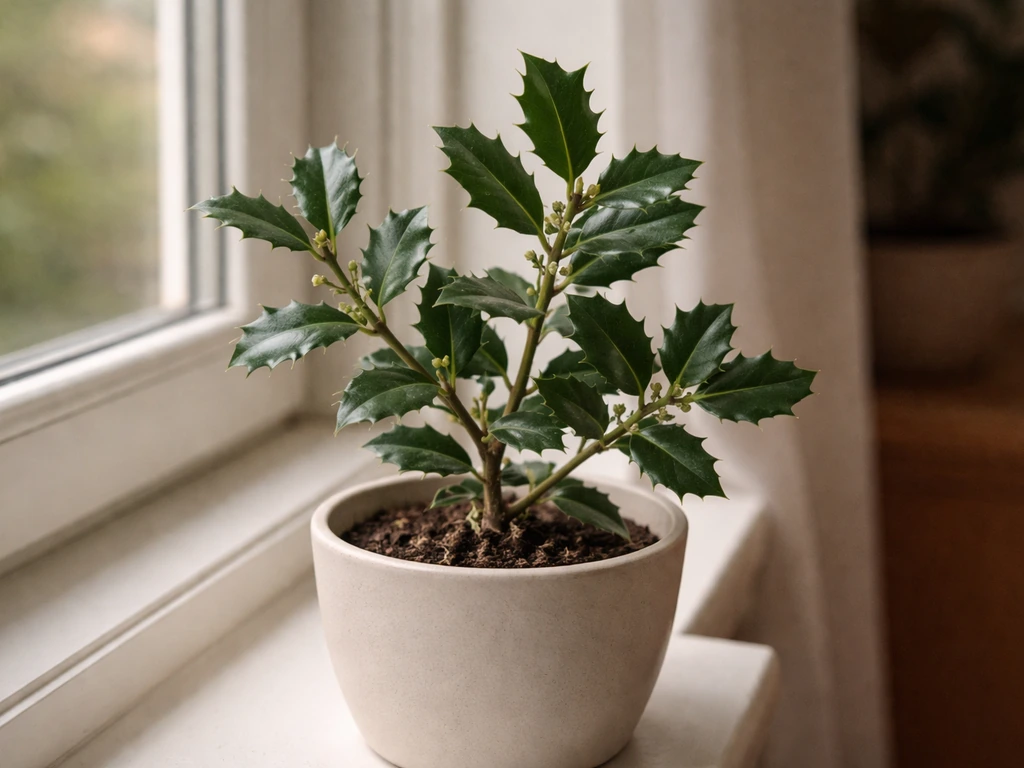
Here's the honest part: getting berries on indoor holly is genuinely difficult, and most home growers won't manage it consistently. If you want to know what affects berry success, including whether hens and chicks can grow indoors, those realistic expectations matter more than anything else realistic expectations for berries indoors. There are several reasons for this.
First, most holly species are dioecious, meaning you need both a male and a female plant for pollination. The female plant produces the flowers that become berries, but only if pollen from a compatible male plant reaches them. Outdoors, bees and other insects handle this easily. Indoors, you either need to hand-pollinate (transfer pollen from male flowers to female flowers with a small brush during the bloom window) or choose a self-fertile cultivar. For Ilex verticillata (winterberry), the bloom timing has to match between male and female: specific male cultivars like 'Jim Dandy' are recommended as pollinators for certain female varieties because their flowering periods align.
Second, even with pollination, the plant needs sufficient light and energy to set and hold fruit. Without strong light, energy goes into survival rather than reproduction.
Third, without a proper winter chill, flowers may not form at all. If you're growing in a heated apartment without a cool period, berry production is unlikely regardless of everything else.
Your most realistic path to indoor holly berries: choose Ilex cornuta 'Dwarf Burford' (self-fertile, compact, good for containers), give it a genuine cold rest of at least 8 to 10 weeks below 50°F, provide the strongest light you can with LED supplementation during spring and summer, and hand-pollinate if you see flowers opening. Even then, treat berries as a bonus, not a guarantee.
Holly vs. other indoor plants: is it worth it?
| Plant | Indoor difficulty | Light needs | Chilling required | Berries/flowers indoors |
|---|---|---|---|---|
| Holly (Ilex) | High | Very high (full sun equivalent) | Yes, for flowering | Difficult, needs pollination or self-fertile type |
| Bird of paradise | Medium | High (bright indirect to direct) | No | Possible with age in bright light |
| Honeysuckle | Medium-High | High (full sun) | Some species benefit | Possible with grow lights |
| Hens and chicks | Low-Medium | Medium-High | No | Rarely flowers indoors |
Holly is one of the more demanding plants to keep indoors successfully, sitting in a similar category to plants like bird of paradise that really want maximum light. Bird of paradise also tends to need very bright light to grow well indoors. If you're an apartment dweller with one decent south-facing window and no cool room in winter, I'd be straightforward with you: holly is going to frustrate you. If you have a bright sunroom, an unheated porch for winter, and you're up for supplemental lighting, a compact holly can genuinely work and looks beautiful year-round as a container specimen, berries or not.
What to do next
If you want to give indoor holly a real shot, start here: pick up a compact, self-fertile cultivar like Ilex cornuta 'Dwarf Burford' or Ilex crenata 'Convexa' from a local nursery this spring or early fall. Set it up in an acidic, well-draining soil mix in a terracotta pot with good drainage, place it in your brightest window or under a full-spectrum LED, and plan for a proper cool winter rest in your coldest available indoor space. For Ilex aquifolium, Gardener’s World also recommends moist but well-drained soil in either sun or shade moist but well-drained soil in sun or shade. Water conservatively, feed lightly with acid fertilizer in spring and summer, and check monthly for spider mites and mealybugs. If berries are your goal, research the bloom timing on your chosen variety and be ready to hand-pollinate. That's the whole plan, and it genuinely can work if the conditions are there.
FAQ
If I do everything else right, can I skip the winter chill and still get berries?
Yes, but only if you can approximate the holly’s “cool rest” and light needs. For most Ilex types, aim for an 8 to 10 week winter period consistently below 50°F (2 to 10°C), then resume brighter, warmer conditions for active growth.
How do I know whether my holly will stay a manageable size indoors?
Look at the cultivar’s habit. Many hollies are either naturally upright and wide or will become leggy in low window light, so container success usually depends on starting with a compact form and doing light pruning in late winter or early spring to keep branching dense.
What’s the safest way to repot indoor holly without overwatering it?
When you repot, use an acidic, fast-draining mix and do not upsize aggressively, go up only about one pot size. If the pot is too large, excess wet soil sits around the roots longer, which increases root rot risk and makes overwatering more likely.
My indoor holly has crispy or brown leaf edges, what should I check first?
If leaf tips look scorched, you see crisp edges, and the plant is in a very warm, dry spot, reduce heat stress and humidity deficits rather than increasing fertilizer. Flush lightly with room-temperature water only if salts have built up, then wait and correct humidity and airflow.
Will increasing humidity prevent spider mites and mealybugs, or is spraying still necessary?
Typically, yes. Mealybugs and spider mites love dry heated air, so raising humidity and rinsing the foliage can help. However, keep using your monthly checks, because eggs and hidden stages can bounce back even after you wipe visible bugs.
Why did my holly start dropping leaves after I moved it indoors?
Holly often drops leaves when it gets a sudden shift in light or temperature. Move it gradually closer to the window or adjust grow lights over several days, and avoid moving it from a cold porch to a hot room abruptly.
How should my watering routine change if I use a grow light in winter?
For container holly, watering should be guided by soil dryness, not by a set schedule. In winter, you can let the top several inches dry more than you would in summer, but never let the entire pot go bone-dry for long periods, especially with grow lights running.
How much fertilizer is too much for indoor holly in a pot?
Fertilize lightly and stop feeding in late summer or fall to avoid soft growth that can be damaged by cold. In containers, if you see dark green growth plus weak stems, or leaf burn at the margins, dilute more and consider pausing feeds until the plant stabilizes.
If my holly is labeled self-fertile, do I still need a second plant or hand-pollination?
Self-fertile cultivars can form berries without a second plant, but pollination still matters and bloom timing has to align with conditions. If your variety is not self-fertile, hand-pollination and a compatible male pollinator are usually required.
What’s the best strategy for treating early vs heavy infestations on indoor holly?
If you use neem oil, it can leave residue and may be less effective on heavy scale or when applied at the wrong time. Use it for early issues, test on a small area first, and if pests persist, switch to insecticidal soap applied in repeated intervals.