
Yes, angel wing begonias grow very well indoors, and they are honestly one of the better houseplant candidates in the begonia family. If you are also wondering about a different option, can strelitzia nicolai grow indoors and what conditions it needs are worth checking too houseplant candidates. Given a bright spot out of direct sun, a well-draining pot, and a sensible watering routine, these plants will reward you with spotted foliage and clusters of delicate flowers even in an apartment. The key failure points are almost always too much direct sun, too much water, or a pot that is too large. Get those three things right and the rest falls into place.
Can Angel Wing Begonia Grow Indoors? Yes, Here’s How

James Hartwell
5 Jun 2026
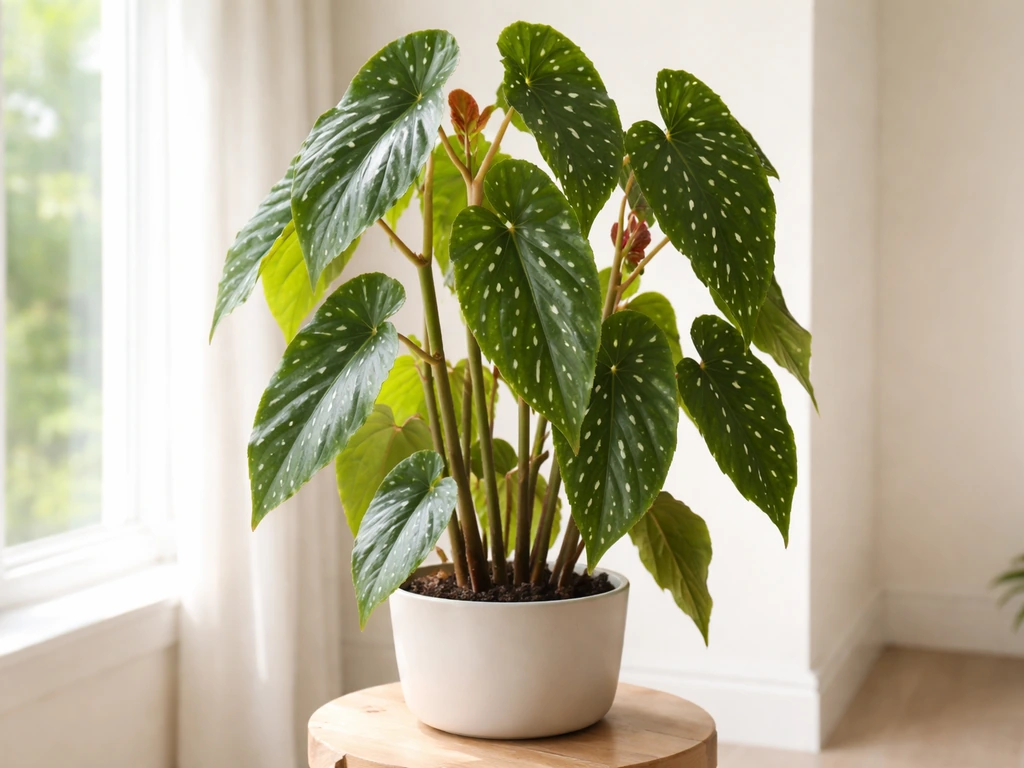
Where to put it: light and window placement
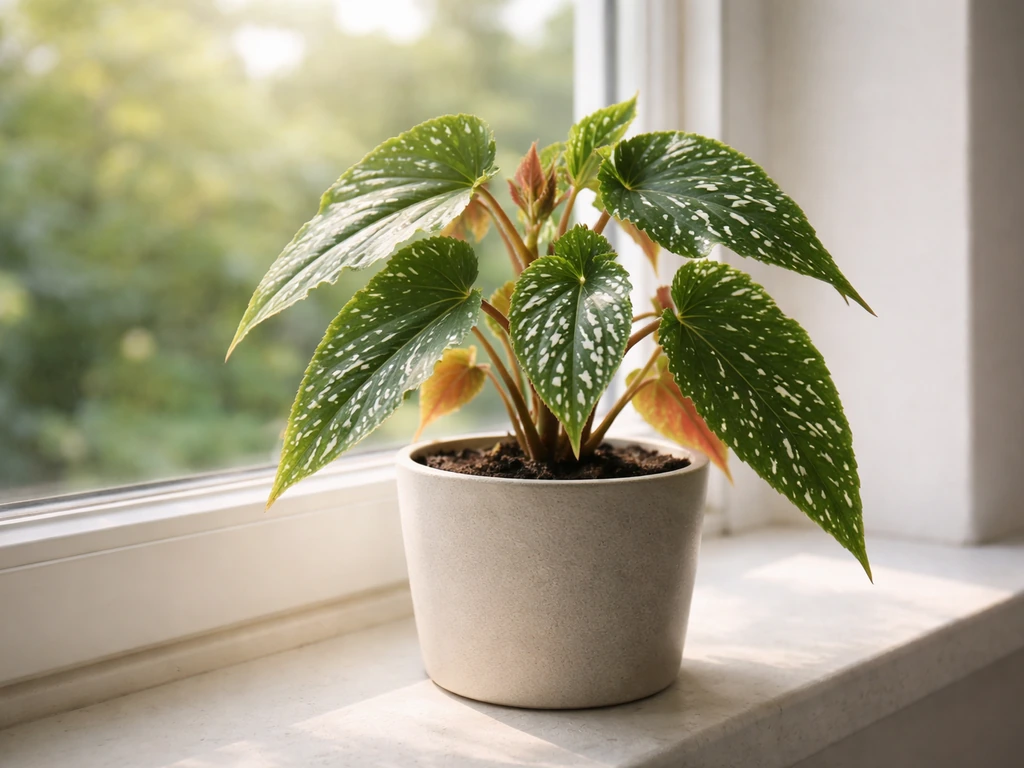
Angel wing begonias need bright, indirect light. That phrase gets thrown around a lot, but here is what it actually means in practice: you want the plant close enough to a window to receive good ambient brightness, but not sitting in a shaft of direct afternoon sun. Direct sun will scorch those beautiful spotted leaves fast, leaving brown crispy patches that do not recover.
The best placements are an east-facing window, which gives gentle morning sun that is not intense enough to burn, or a west-facing window where the afternoon light is filtered. If your best option is a south-facing window, simply hang a sheer curtain to knock back the intensity. The goal, as the American Begonia Society puts it, is a bright, shady area out of direct midday sun. Within about two to three feet of a well-lit window is the sweet spot. Push it into a dark corner and you will get leggy, weak stems and very few flowers.
Watering: the biggest thing you can get wrong
Overwatering kills more angel wing begonias indoors than anything else. These plants are sensitive to soggy roots, and the indoor environment makes overwatering easy to do accidentally because the soil does not dry out as fast as it would outside. Do not water on a fixed schedule. Instead, probe the potting mix a few inches down with your finger. If it still feels damp, leave it. Water only when the top couple of inches have dried out.
When you do water, do it properly: soak the pot until water runs freely out of the drainage holes, then let it drain completely before putting it back on the saucer. When watering, soak the potting mix so water runs out the drainage holes, which helps ensure roots get oxygen and that excess water drains away soak the pot until water runs freely out of the drainage holes.
Never let the pot sit in standing water. In the active growing season (spring through summer) you will likely water every five to ten days depending on pot size, light, and temperature. In winter, follow the RHS guidance and cut back significantly, letting the surface of the compost dry out before you water again. The plant is not actively growing and does not need much moisture.
Humidity, temperature, and airflow
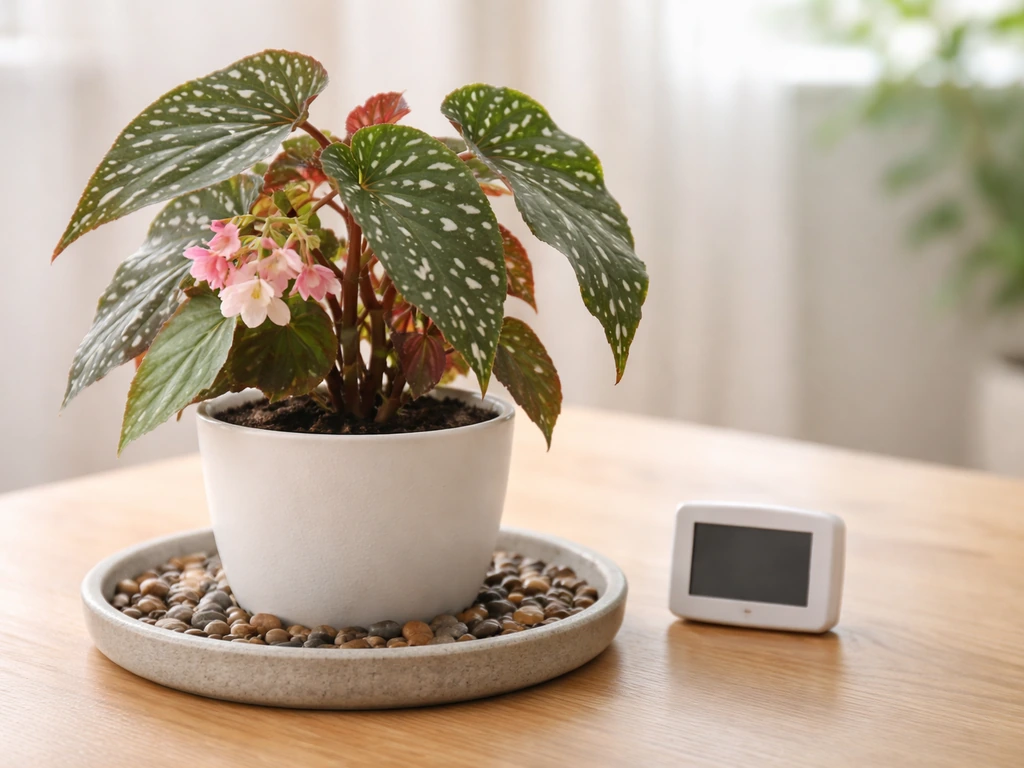
Angel wing begonias come from tropical and subtropical regions, so they appreciate humidity above what most homes naturally provide. The target range is around 50 to 70 percent relative humidity. At the lower end of that range, leaf edges may start to brown. Indoor heating in winter can push humidity well below 40 percent, which stresses the plant noticeably.
The best fix is a pebble-filled tray placed beneath the pot with water kept just below the base of the pot. As the water evaporates it raises humidity immediately around the plant without wetting the roots. Do not mist the leaves directly. Wet foliage in low-airflow indoor conditions is an invitation for powdery mildew and other fungal problems. For temperature, keep the plant between roughly 64 and 81°F (18 to 27°C) and away from cold drafts, air conditioning vents, and radiators. Consistent warmth matters more than precise numbers.
Potting, drainage, and getting the container right
Angel wing begonias are sensitive to over-potting. If you put a small plant in a large pot, all that extra damp soil around the rootball stays wet far too long, and root rot follows. Use a pot only one to two inches wider than the rootball, and move up gradually as the plant grows. A terracotta pot is a good choice because it allows the mix to breathe and dry out more evenly than plastic.
Drainage holes are non-negotiable. A pot without drainage holes will eventually drown your begonia no matter how carefully you water. The potting mix should be chunky and aerated rather than dense. A practical mix is standard indoor potting soil with about 20 to 30 percent perlite or pumice added to improve drainage. That extra aeration keeps the roots oxygenated and prevents the chronic sogginess that triggers rot.
What goes wrong indoors (and how to fix it)
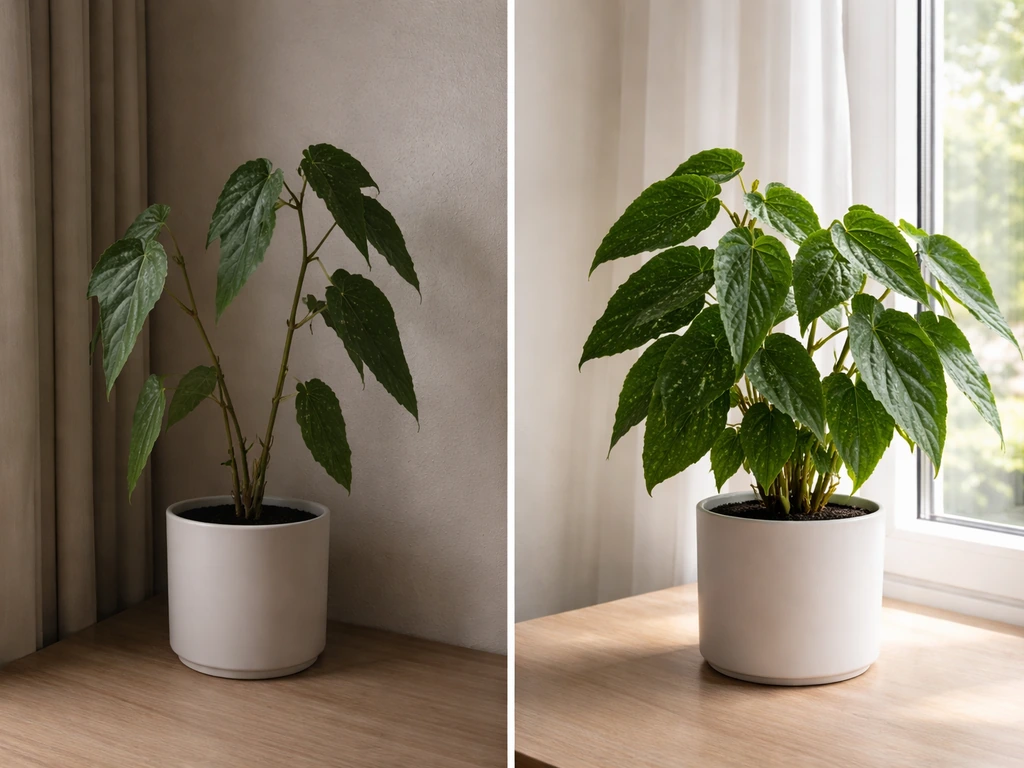
Most indoor problems with angel wing begonias trace back to light or water. Here are the most common ones:
- Leggy, weak growth with long gaps between leaves: almost always a light problem. Move the plant closer to a brighter window. If no natural light option is good enough, a grow light positioned about 12 inches above the plant for 12 to 14 hours a day will compensate.
- Drooping or wilting leaves: check the soil immediately. If it is wet, you have overwatered and possibly started root rot. Let the mix dry out and improve drainage. If the soil is bone dry, the plant is simply thirsty but will usually recover quickly after a good watering.
- Yellowing leaves: can be overwatering, underwatering, or insufficient light. Probe the soil first. If moisture is not the issue, evaluate your light situation.
- Brown leaf edges or tips: usually low humidity or cold draft exposure. Move the plant away from vents and try the pebble tray method.
- Brown or black mushy stems at the base (crown rot or root rot): this is caused by chronic overwatering or a pot without drainage. Remove the plant, cut away all affected tissue with a clean tool, let the healthy stem callous briefly, and repot into fresh dry mix. Catch it early and you can often save the plant.
- Scorched, bleached leaf patches: direct sun exposure. Move the plant back from the window or add a sheer curtain.
Fertilizing, pruning, and making more plants
Fertilizing
Feed your angel wing begonia from May through September. The RHS recommends every two weeks with a high-nitrogen fertilizer to support leafy stem growth. A practical alternative that many experienced begonia growers prefer is diluting a balanced liquid fertilizer to about a quarter of the recommended strength and adding it at every watering or every other watering during active growth. This gentle, consistent feeding approach suits begonias better than infrequent heavy doses, which can burn roots. Stop feeding in autumn and give the plant a rest over winter.
Pruning
Angel wing begonias can get tall and floppy indoors, especially in lower-light conditions. Pinching out the growing tips regularly encourages bushier, more compact growth. If stems have gotten long and bare, cut them back hard in early spring before the new growing season. The plant responds well and will push out fresh growth from lower nodes. Always use clean, sharp scissors or pruners to avoid spreading disease between cuts.
Propagation
Stem cuttings are the easiest way to propagate angel wing begonias, and those pruning offcuts are perfect for the job. Take a cutting with at least two to three nodes, remove the lower leaves, and let the cut end dry for about 30 minutes before placing it in moist perlite or a light propagation mix. Keep it in bright indirect light and maintain high humidity around the cutting, either with a loose plastic bag or a clear humidity dome.
One important note: do not put the cuttings in direct sun, even while rooting. A humidity dome in direct sun heats up rapidly and will wilt or kill a cutting before it ever roots. Roots typically develop within three to four weeks, at which point you can pot the cutting up normally.
How angel wing begonias compare to other begonias indoors
If you are trying to decide between begonia types for indoor growing, it helps to understand where angel wing begonias sit. Compared to wax begonias, angel wing types get larger and more dramatic but need the same basic care principles. Rieger begonias are grown more for their flowers and tend to be treated as seasonal plants rather than long-term houseplants.
Like other cane-forming varieties, can Rieger begonias grow indoors, but they are usually treated as seasonal plants for their best blooms. Angel wing begonias sit in the sweet spot of being genuinely rewarding long-term indoor plants with striking foliage, provided you can give them a bright spot and stay on top of watering. A similar approach can be used when asking can strelitzia nicolai grow indoors, but light and watering needs may differ from begonias.
| Feature | Angel Wing Begonia | Wax Begonia | Rieger Begonia |
|---|---|---|---|
| Indoor viability | Excellent long-term | Good long-term | Often seasonal/temporary |
| Light needs | Bright indirect | Bright indirect to moderate | Bright indirect |
| Main appeal | Spotted foliage + flowers | Compact, tidy flowers | Large showy flowers |
| Size indoors | Can reach 2-4 ft tall | Compact, under 1 ft | Compact, under 1 ft |
| Overwatering sensitivity | High | High | High |
| Humidity needs | Moderate to high (50-70%) | Moderate | Moderate |
What success actually looks like
A healthy indoor angel wing begonia will have deep green, silver-spotted leaves on upright canes, new leaves pushing out from the growing tips, and clusters of pink, red, or white flowers appearing in spring and summer. If your plant is doing all three, you have nailed it. The most common sign things are going well is steady new leaf production throughout the growing season.
Start by finding the brightest indirect spot in your home, pot it correctly with good drainage, resist the urge to overwater, and keep it away from heating vents. Can New Guinea impatiens grow indoors? Yes, with bright light, consistent watering, and protection from hot sun. Those four changes alone solve the majority of indoor angel wing begonia problems.
FAQ
Can angel wing begonia handle low light indoors?
Yes, but keep it consistent. Sudden shifts from bright window light to dim rooms often trigger leaf drop and fewer flowers. When moving the plant indoors for the season, move it gradually over 7 to 14 days, and re-check watering frequency since the pot will dry more slowly in lower light.
How do I know when my angel wing begonia is ready for watering?
Use a moisture meter if you tend to second-guess finger tests. If the readout shows dampness deeper in the pot, wait. Also remember that pots in ceramic or terracotta dry faster than plastic, so the same schedule will not work for different pot materials.
What are signs I’m over-fertilizing my indoor angel wing begonia?
Fertilizer can be too strong or too frequent. If you notice dark salty crust, brown leaf tips, or weak growth, flush the pot with clean water (so it drains freely) and switch to lighter feeding, for example quarter strength every other watering.
How often should I repot an angel wing begonia grown indoors?
Repot only when needed, and do it in spring. If your plant is not root-bound and still growing well, avoid frequent repotting, because fresh potting mix can stay wet longer and increase the risk of root rot.
My plant looks wilted even though the soil is wet, what should I do?
It is usually rot or poor aeration when the base turns soft, leaves wilt without bouncing back after watering, or you smell a sour odor. Pull the plant, check roots, trim mushy sections with sterilized scissors, and re-pot into a smaller pot with chunkier, well-draining mix before resuming careful watering.
Can I propagate angel wing begonias in an apartment without misting?
Yes, with a clear humidity dome you can root successfully. However, keep airflow gentle to prevent condensation from constantly dripping onto the cut end, and remove the dome briefly once roots begin forming so the new plants acclimate.
Is it okay to keep my begonia near an air conditioner or heater?
Avoid bare metal radiators and direct airflow from HVAC vents. Place the plant slightly away from vents, and during winter use curtains or a buffer against cold windows, because cold drafts can cause leaf spotting even if temperatures seem acceptable overall.
Should I keep feeding my indoor angel wing begonia year-round?
Not in winter dormancy or if your plant is in dim light. If growth slows, feeding can lead to pale leaves and weak stems. Resume feeding only when you see steady new growth in spring, and stop again in autumn.
When is the best time to pinch or cut back angel wing begonia indoors?
Yes, you can prune to control shape, but avoid aggressive pruning during the darkest months. The best timing is early spring for major cuts, and light pinching during the growing season to encourage branching.