Yes, bougainvillea can grow indoors, but I want to be upfront with you: it's one of the more demanding plants you can bring inside. It's absolutely doable, and I've seen it done beautifully, but bougainvillea has non-negotiable needs, especially when it comes to light. Get those needs right and you'll have a plant that blooms spectacularly. Ignore them and you'll end up with a leggy, leaf-dropping, never-flowering frustration. So let's get into exactly what it takes.
Can Bougainvillea Grow Indoors? How to Succeed Today
James Hartwell
24 Mar 2026
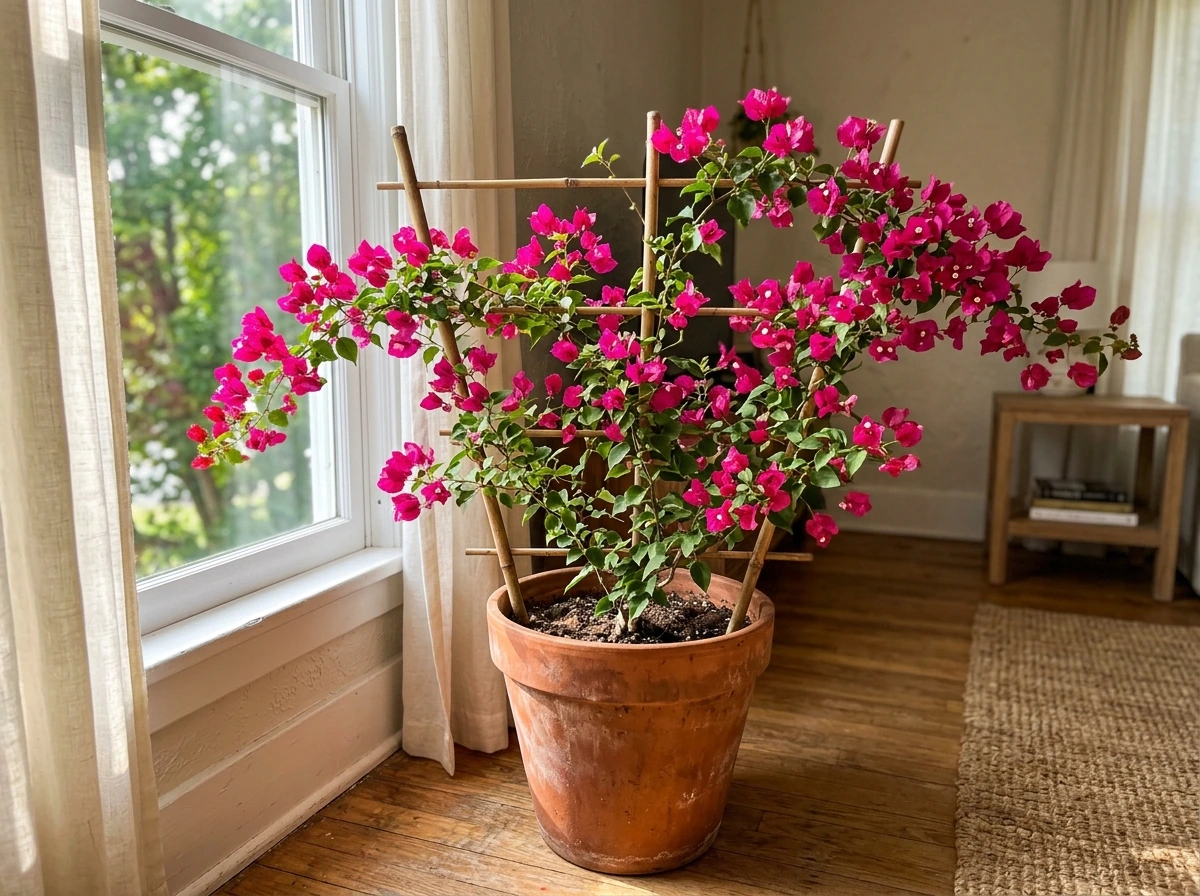
Can bougainvillea actually survive indoors? The honest answer
Bougainvillea is a tropical and subtropical plant that thrives in full sun outdoors. Indoors, it can survive and even bloom, but only if you can offer it conditions that closely mimic what it gets outside. The biggest limiting factor for most people is light. Bougainvillea genuinely needs full sun, which means a south-facing window at an absolute minimum. Logee’s bougainvillea care sheet also specifies “blank" rel="noopener noreferrer">Full sun, a southern exposure” for the plant to flower well. If your apartment has north-facing windows or you're working with limited natural light, I'd honestly steer you toward something easier, I'd honestly steer you toward something easier, like a begonia or impatiens, which are far more forgiving in lower-light situations., which are far more forgiving in lower-light situations.
That said, if you have a bright sunroom, a large south-facing window, or a conservatory, bougainvillea can thrive indoors and reward you with those stunning papery bracts it's famous for. It's also a great candidate for a plant that spends summers outdoors and winters inside, which I'll cover later. The key is going in with realistic expectations.
What bougainvillea needs indoors: light, temperature, and humidity
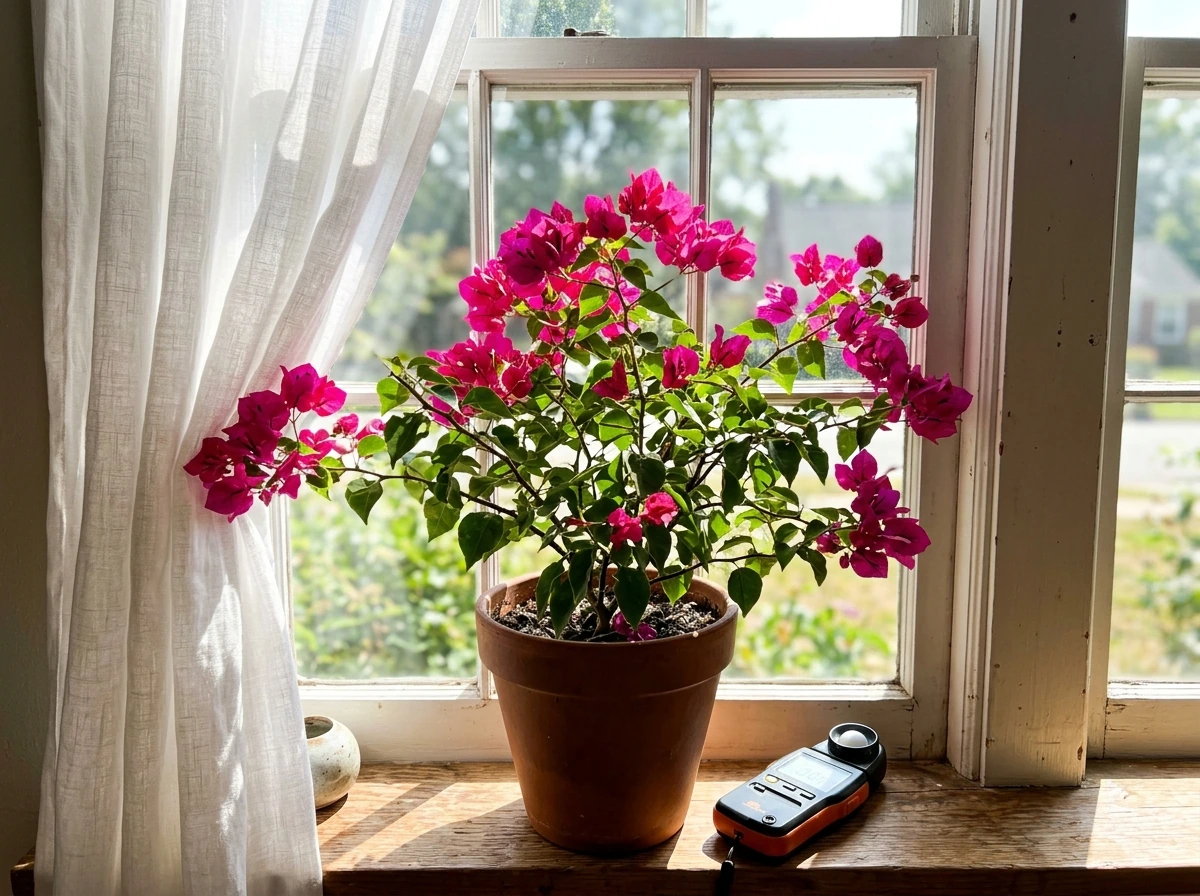
Light: this is the make-or-break factor
Bougainvillea needs full sun with a southern exposure to flower well in a container. Think of it this way: this plant grows outdoors in places like Brazil, the Caribbean, and the Mediterranean, baking in direct sun for six to eight hours a day. Indoors, the brightest south-facing window you have is the only realistic spot. Even a west-facing window may not cut it for reliable blooming. If you see pale, stretched growth or zero flowers, dim light is almost always the culprit.
Temperature: keep it warm but give it a real winter
The minimum night temperature for bougainvillea is 10°C (50°F). Drop below that and the plant will shed leaves rapidly. During active growth, aim to keep it above 60°F even at night. Standard indoor temperatures of 65 to 75°F during the day are perfectly fine. What bougainvillea actually benefits from is a slight cool-down in winter, around 50 to 55°F at night, which helps trigger a dormancy period that sets up a strong spring bloom. If you keep it warm and cozy year-round with poor light, expect weak, non-flowering growth.
Humidity and airflow
Bougainvillea prefers humidity around 50% or higher. Most homes in winter run at 30 to 40% humidity, which can stress the plant and increase the risk of wilting and leaf loss. If your home is very dry in winter, a humidity tray or small room humidifier near the plant helps. Airflow also matters: stagnant, stuffy air around the plant encourages pest problems. A gentle fan or an open window when temperatures allow keeps things healthier.
How to grow bougainvillea indoors: step by step
- Choose the right spot first. Place your plant directly in front of the brightest south-facing window you have. If you're using a sunroom or conservatory, that's ideal. No south-facing window? Consider a high-output grow light to supplement.
- Start with the right pot and soil (more on the exact setup below) before you bring the plant home or repot it.
- Acclimate the plant gradually if it's been in a greenhouse or nursery. Move it to bright indoor light over a week rather than suddenly changing its environment.
- Water it in thoroughly after potting, then let it settle for a few days before resuming your regular watering schedule.
- Begin feeding with a high-potassium fertilizer as soon as you see new growth pushing in late winter or early spring.
- Train the stems to a trellis, wire frame, or support early on. Bougainvillea is a vigorous climber and it's much easier to direct growth when stems are young and flexible.
- Monitor regularly for pests, especially on the undersides of leaves, since indoor conditions can make infestations worse.
Getting the pot and soil right
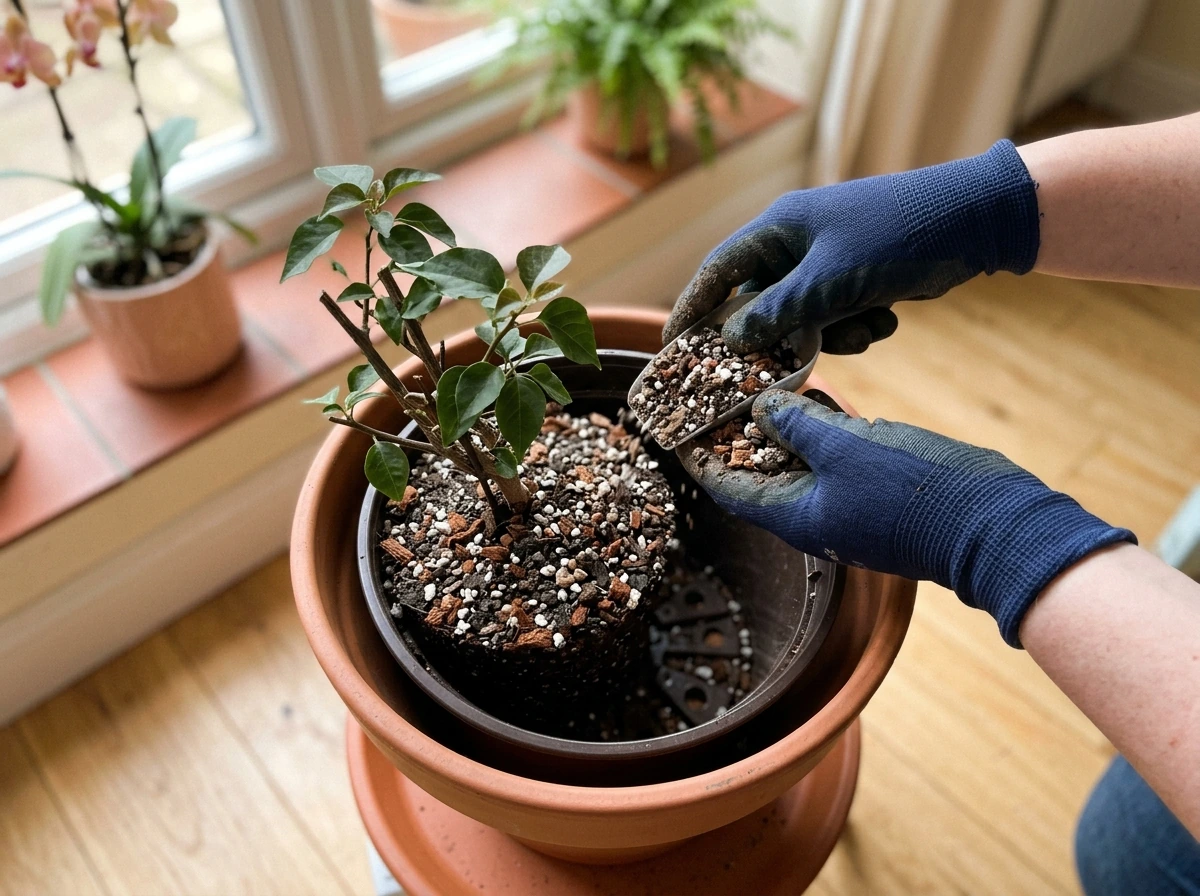
Drainage is everything with bougainvillea. This plant absolutely hates sitting in wet soil, and a pot without adequate drainage holes is basically a death sentence for it. Use a terracotta or unglazed clay pot if you can: these breathe and dry out faster than plastic, which suits bougainvillea perfectly. A container in the 10 to 14 inch range works well for most indoor specimens. Going too large encourages the plant to put energy into roots and foliage rather than flowers, so resist the urge to pot up into a huge container right away.
For soil, use a well-draining mix. A good formula is two parts quality potting mix combined with one part perlite or coarse sand. You want the water to move through quickly and the roots to dry out between waterings. Bougainvillea performs better when its soil is kept a little dry, so a mix that stays soggy for days is going to cause problems. Avoid peat-heavy mixes that retain too much moisture.
Watering and fertilizing: less is more (most of the time)
How to water your indoor bougainvillea
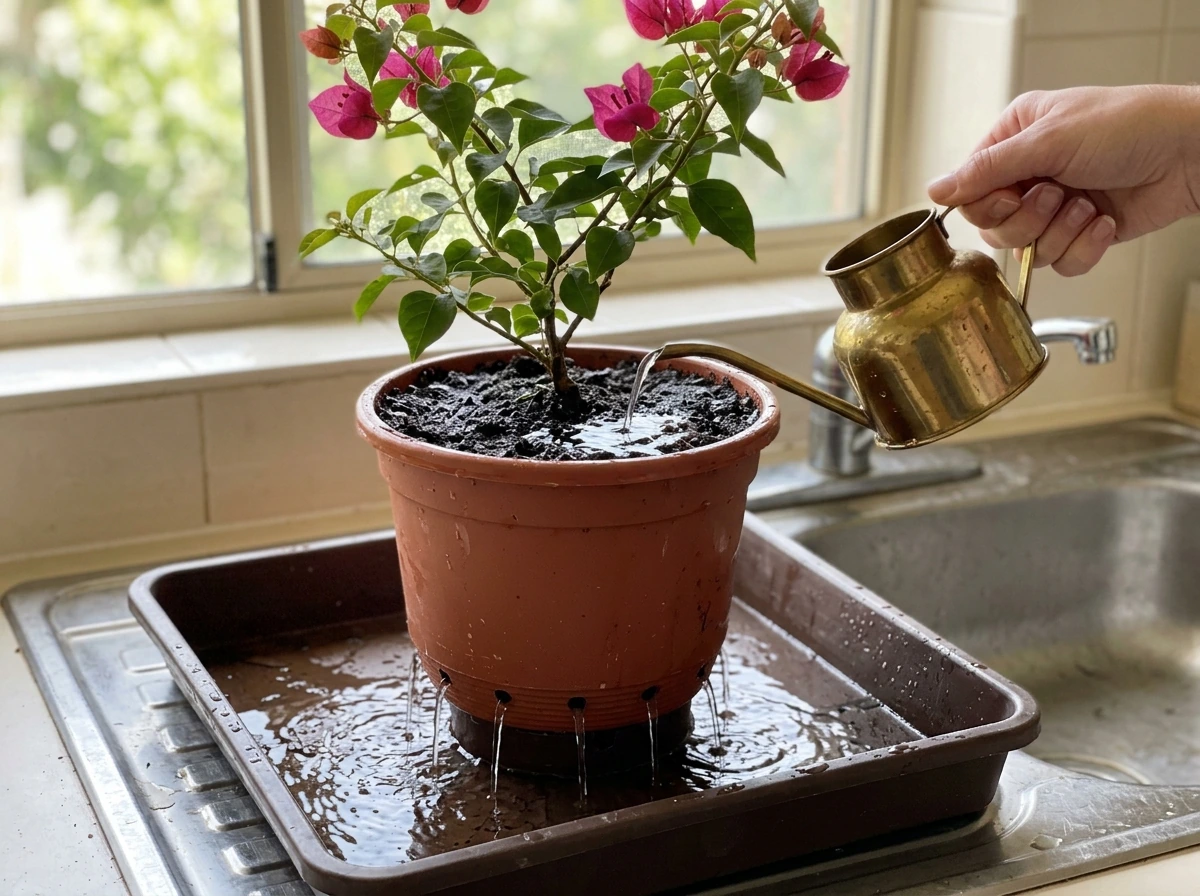
The right watering technique is to saturate the soil thoroughly until water drains freely from the bottom, then wait until the soil has almost completely dried before watering again. Follow the “soak and dry” approach: water thoroughly until it drains from the bottom, then wait until the upper root zone dries before watering again, as Gardenia.net recommends. This is not a plant you water on a strict schedule: you water based on what the soil is actually doing. In summer, that might mean watering every five to seven days. In winter during dormancy, it could stretch to every two to three weeks. Overwatering is one of the most common reasons bougainvillea fails indoors: soggy roots lead to root rot, yellowing leaves, and a plant that looks sick no matter what you do.
As light levels increase in late February and March, the plant naturally needs more water as it pushes new growth. Match your watering frequency to the plant's activity level, not the calendar.
Fertilizing for flowers, not just foliage
Here's a trap a lot of people fall into: over-fertilizing with a high-nitrogen feed. Nitrogen pushes lush, dark green leafy growth, but it can actually inhibit blooming in bougainvillea. To get those bracts, you want a fertilizer that's higher in potassium and phosphorus. A balanced bloom-booster fertilizer applied every two to three weeks during active growth, from roughly March through September, works well. Once flowering winds down in late summer or fall, stop feeding entirely and reduce watering to let the plant rest.
Troubleshooting: why your indoor bougainvillea isn't flowering (or is dropping leaves)
| Problem | Most Likely Cause | Fix |
|---|---|---|
| No flowers or very few | Insufficient light or too much nitrogen fertilizer | Move to brighter south-facing window; switch to a bloom-booster fertilizer lower in nitrogen |
| Leaf drop in winter | Temperature too cold (below 50°F at night) or low humidity | Keep night temps above 50°F; increase humidity with a tray or humidifier |
| Yellowing leaves with wet soil | Overwatering or poor drainage | Let soil dry out fully before watering; check drainage holes are clear |
| Pale, mottled, or sticky leaves | Scale insects, aphids, or red spider mite | Inspect undersides of leaves; treat with insecticidal soap or neem oil |
| Leggy, stretched growth with no blooms | Not enough light | Supplement with a grow light or move to a sunnier spot |
| Sooty black coating on leaves | Scale insects producing honeydew | Remove scale manually; treat with horticultural oil; wipe leaves clean |
Dealing with pests indoors
The most common pests you'll encounter on indoor bougainvillea are melon aphids, citrus mealybugs, brown soft scale, and red spider mite. Scale insects are particularly sneaky: they cause yellowing, premature leaf drop, sticky honeydew residue, and eventually a black sooty mold that coats the leaves. Check the stems and undersides of leaves every couple of weeks, especially during winter when the plant is under stress. Catching an infestation early means you can handle it with insecticidal soap or a neem oil spray rather than a full chemical intervention.
How to actually get your bougainvillea to flower indoors
Getting blooms indoors comes down to three things: enough light, the right fertilizer, and a proper rest period. If you're only hitting one or two of those, you'll get foliage but not the spectacular color display bougainvillea is known for.
Pruning for more blooms
After the first flush of bracts drops, cut the long growth back by about half. This sounds drastic but it's exactly what triggers a second flush of blooms. For container-grown bougainvillea in cool climates, a good hard cutback in fall before you bring it inside or as it goes into dormancy helps shape the plant and sets you up for stronger flowering the following spring. If you skip pruning, the plant gets increasingly woody, produces fewer new flowering shoots, and takes up more and more space without a proportional bloom reward.
Training on a support
Bougainvillea naturally wants to climb. Indoors, train it on a small trellis, a wire frame, or even a simple bamboo structure. Spreading the stems out horizontally rather than letting them grow straight up encourages more lateral flowering shoots to develop. You can also grow it as a more compact shrub with regular pinching, which works well if your indoor space is limited.
Using a rest period to trigger flowering
One of the most effective indoor flowering strategies is giving your bougainvillea a deliberate rest period in late autumn and winter. Reduce watering significantly, stop fertilizing, and let the plant sit in a cooler spot (around 50 to 55°F) with reduced watering for six to eight weeks. Then in late February or early March, move it back to your brightest window, resume watering as the soil dries, and start feeding again. This cycle mimics the dry season that triggers flowering in its native habitat, and it's one of the most reliable ways to get a strong spring bloom indoors.
Seasonal care: should you keep it indoors year-round or move it outside?
If you live somewhere with mild winters (USDA zones 9 to 11), bougainvillea can stay outside year-round and you're really just bringing it inside to overwinter in a cool, bright spot. For everyone else, the best approach is to treat it as a container plant that spends spring through early fall outdoors in full sun, then comes inside before the first frost.
Moving it outside for the summer is genuinely transformative for the plant. The intensity of natural sunlight outdoors is something no south-facing window can fully replicate, and you'll see a huge difference in bloom density and vigor in plants that get that summer outside stint. When you bring it back indoors in fall (before temperatures drop below 50°F at night), cut it back, reduce watering, and let it rest as described above.
If you want to keep it strictly indoors year-round, it's possible, but you need to be realistic: you'll likely get fewer and less dramatic blooms than a plant that gets real outdoor sun exposure part of the year. A high-output grow light can help close some of that gap if moving the plant outdoors isn't an option for you. Supplemental lighting is also worth considering if you're in a northern location with short, dim winters, which is a situation where even a south-facing window delivers far less light than bougainvillea ideally wants. can mandevilla grow indoors
Bottom line: bougainvillea is rewarding indoors when you commit to its light and temperature needs, give it a rest period, prune it after flowering, and water it carefully. It's not the easiest houseplant, but if you've got the right window and you're willing to manage its seasonal rhythm, the payoff, those vivid magenta, orange, or white bracts filling your sunniest room, is absolutely worth it.
FAQ
If I only have a west-facing window, can bougainvillea still bloom indoors?
Sometimes it survives, but reliable bracts are less likely. A west window often lacks the hours of intense light bougainvillea needs, so growth may get leggy. If that is your only option, use supplemental grow lights to mimic full sun intensity and place the plant close enough that new growth doesn’t stretch between light sessions.
How long should I keep bougainvillea on the windowsill before I conclude it won’t bloom?
Give it a full seasonal cycle, especially if you’re new to indoor care. If you can provide a true rest period in winter and the brightest light in late winter to spring, blooming usually shows up after you resume light, watering, and feeding. If after that it still produces only leaves, reassess light first before changing fertilizer or watering.
Can bougainvillea be grown indoors without a “rest period” in winter?
You can keep it alive year-round, but skipping the cool, drier rest commonly reduces flowering and can lead to weak, non-bracting growth. The most realistic compromise is reducing watering and feeding in late autumn, then placing it in the coolest bright spot you can manage (around 50 to 55°F at night) for several weeks.
What should I do if my indoor bougainvillea drops leaves even though I’m watering correctly?
Leaf drop indoors is often temperature or light stress rather than plain overwatering. Check whether nights are dropping below 50°F, whether the window is truly bright enough, and whether there are cold drafts near the pot. Also confirm drainage, because soggy soil can cause roots to fail and trigger leaf loss even when watering seems careful.
How do I prevent root rot if I tend to overwater houseplants?
Use a pot with multiple drainage holes and prioritize a faster-drying mix (potting mix plus perlite or coarse sand). Water by thoroughly saturating, then letting the soil nearly dry. If you’re unsure, wait an extra few days in winter, because bougainvillea absorbs water more slowly during dormancy.
Do I need a special fertilizer to get bracts, or is a regular balanced feed okay?
A regular balanced fertilizer may produce foliage but can blunt flowering because bougainvillea responds better to feeds higher in phosphorus and potassium. Follow the article’s timing, feed every two to three weeks during active growth, and stop completely once flowering winds down so the plant can rest.
Can I mist bougainvillea to increase humidity instead of using a humidifier?
Misting can help briefly, but it usually doesn’t raise humidity consistently enough to prevent winter stress. For steadier results, use a small humidifier or humidity tray near the plant and pair it with good airflow (a gentle fan) to reduce pest problems and leaf issues.
Are pests worse indoors, and what’s the fastest way to catch them early?
Pests often show up when conditions are dry, warm, or the plant is stressed. The fastest way to catch them is to inspect undersides of leaves and stems every couple of weeks, especially in winter, and look for early signs like stippling (mites), sticky residue (mealybugs or scale), or tiny crawling insects on new growth.
Should I prune bougainvillea after it stops blooming, and how hard can I cut back?
Yes, pruning after the first bracts drop helps trigger another flush. A practical approach is cutting back long growth by about half and removing weak, straggly sections. Avoid heavy cutting right before you bring the plant into a rest period, since it needs time to settle before it slows down.
Is it better to keep bougainvillea in a smaller pot or repot it into a larger one indoors?
Keep it on the snug side. Going too large encourages root and leaf growth at the expense of bracts, which can delay flowering. If repotting is necessary, choose a modest increase and make sure the new pot still drains quickly and dries down between waterings.
What if my indoor bougainvillea grows but never forms bracts, even with a good window?
If light seems adequate, the next most common causes are fertilizer imbalance and an interrupted rest. Confirm you’re using a bloom-leaning fertilizer (lower nitrogen, higher phosphorus and potassium), feeding only during active growth, and giving a cool, reduced-watering rest in winter before returning it to the brightest spot.
Can I train bougainvillea to stay compact indoors without sacrificing flowering?
Yes. Train it on a trellis or wire frame and spread stems horizontally to encourage lateral flowering shoots. If space is tight, pinch or prune to control height, but keep enough bright exposure on the new growth, since compact plants still need intense light to produce bracts.