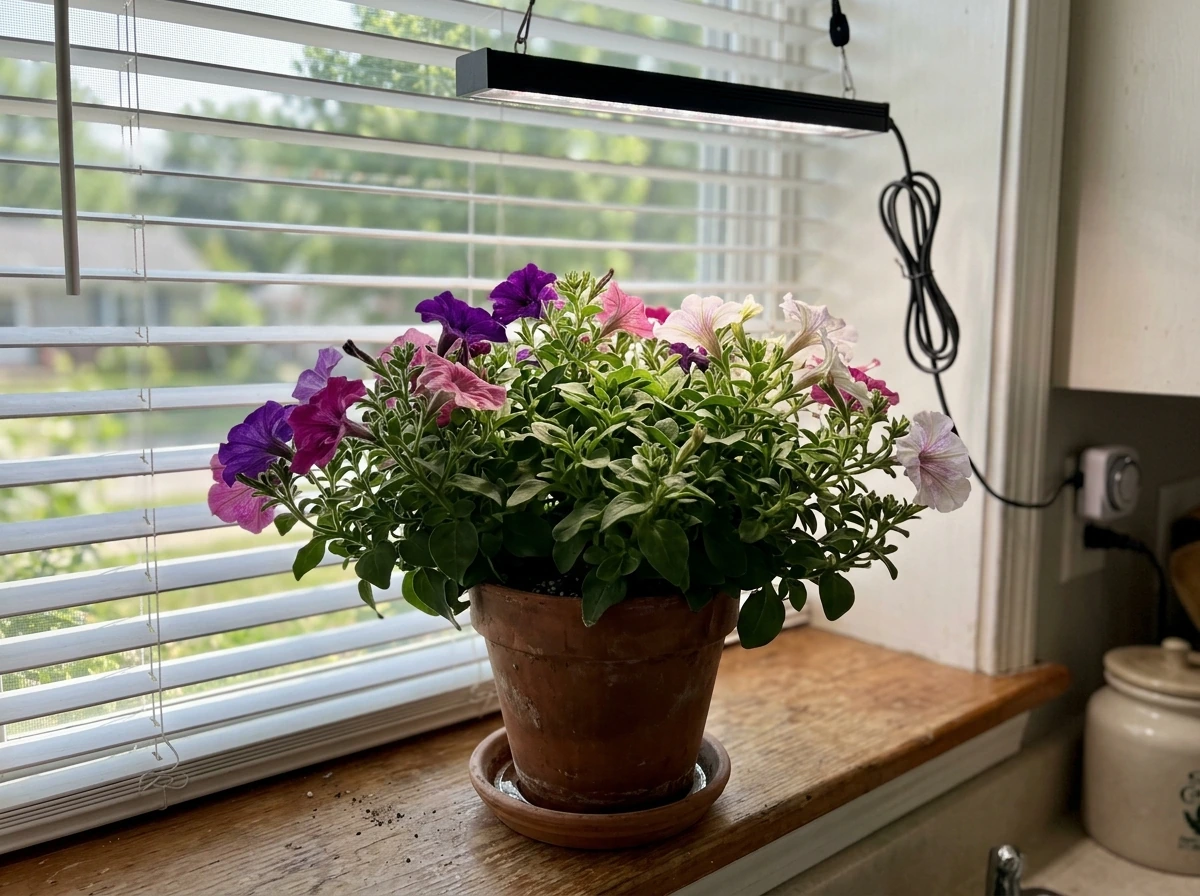
The catch is light. Petunias are sun-hungry plants that need at least 5 to 6 hours of direct, quality sunlight per day for decent performance, and full sun produces significantly better flowering. In most homes, a south-facing window is the only realistic natural-light option, and even that may fall short in winter. The good news is that grow lights solve this problem completely, and petunias actually respond very well to them.
So the honest answer is: if you have a blazing south window or you're willing to run a grow light for 14 to 16 hours a day, indoor petunias are a genuinely rewarding project. If neither of those applies to your space, you'll end up with leggy, barely-blooming plants and a lot of frustration.
How much light indoor petunias actually need
This is where most indoor petunia attempts fail, so let's be specific. Petunias are what horticulturists call facultative long-day plants, meaning they flower much faster and more freely when they get long days of light. Research has shown that under short photoperiods (fewer than 13 to 14 hours of light per day), some petunia varieties simply won't flower at all. Under long-day lighting, 100% of plants in those same studies flowered. That's not a subtle difference.
Using a window
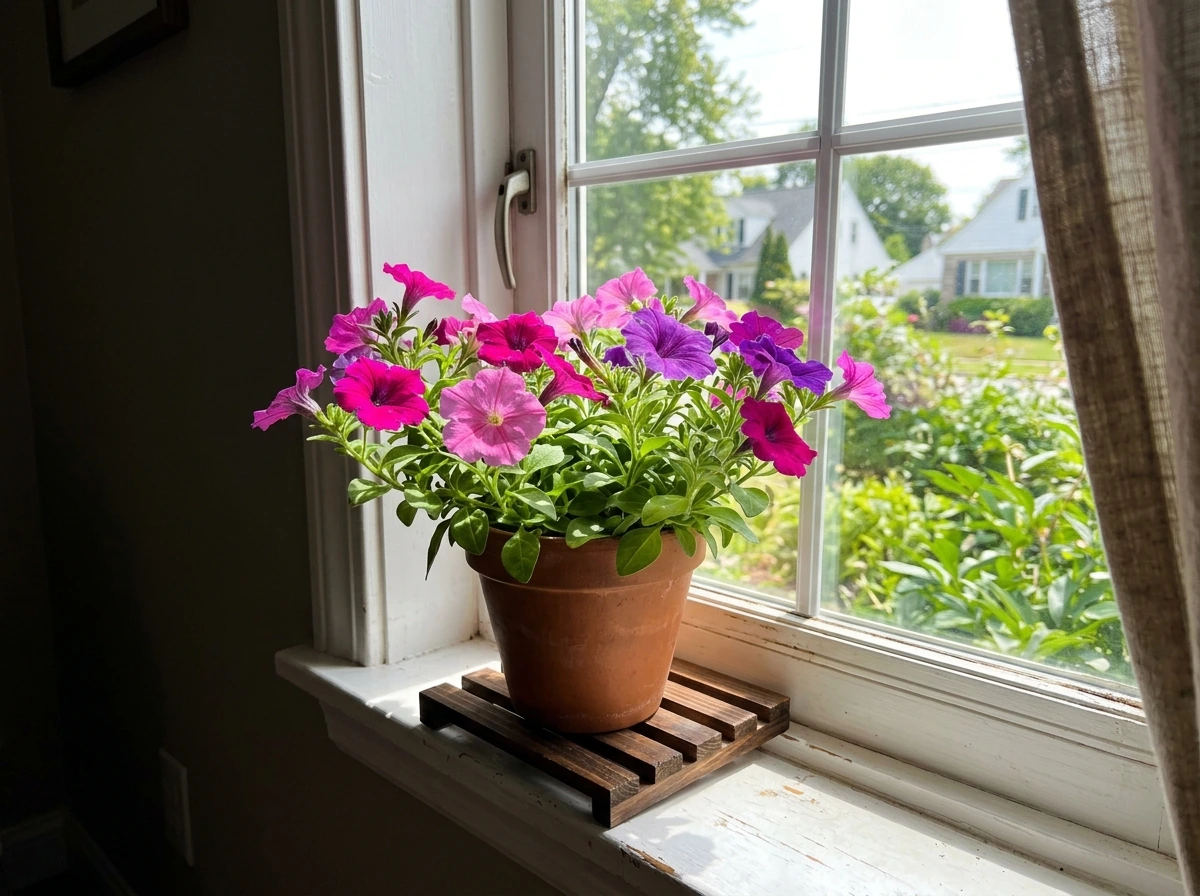
A south-facing window is your best natural-light option. Some growers report real success with varieties like Firefly petunias placed in a very bright south-facing window that gets direct sun for most of the day. East or west windows can work for keeping a plant alive, but you're unlikely to get strong, consistent flowering from them. North-facing windows are a non-starter. Even with a good south window, winter daylight hours in most of the country won't hit that 13 to 14 hour threshold, so you'd still benefit from a supplemental grow light during the shorter months.
Using grow lights
Grow lights are the reliable path to blooming indoor petunias. The target intensity is 500 to 1,000 foot-candles (roughly 5,000 to 10,000 lux), which is the range where petunias grow and flower well under artificial lighting. For promoting flowering specifically, supplemental lighting around 350 to 500 foot-candles (3,500 to 5,000 lux) combined with a 13. 5 to 14 hour day length is enough to trigger the long-day flowering response.
Position a fluorescent or LED grow light 4 to 6 inches above seedlings or young plants, and no more than 6 to 12 inches above established plants. Run the light on a timer set to 14 to 16 hours per day. That photoperiod consistently produces faster flowering and bushier growth than shorter schedules.
The right container, soil, and drainage setup
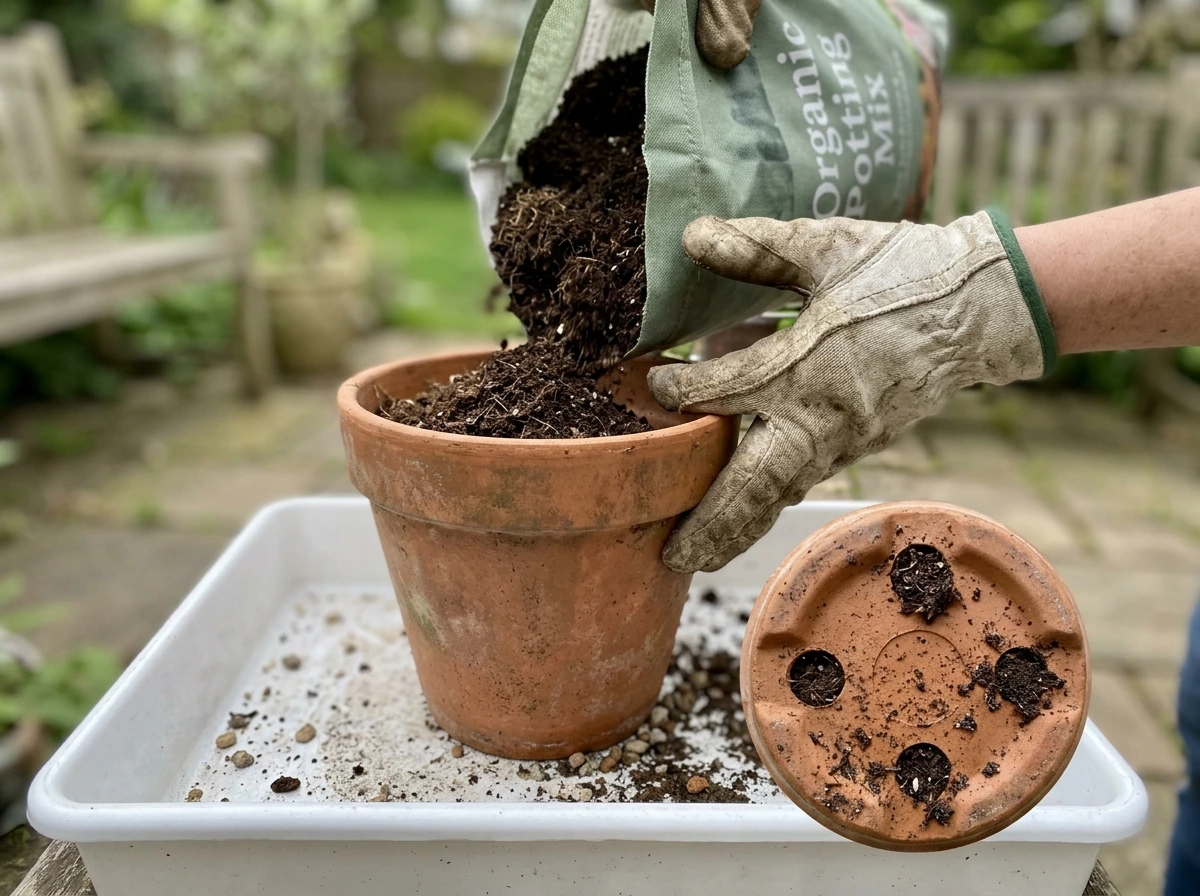
Petunias are not picky about containers, but drainage is non-negotiable indoors. A pot without drainage holes will eventually kill your plant, full stop. Choose a container with at least one good drainage hole and use a saucer underneath. A 6 to 8 inch pot works well for a single plant; if you want a fuller, trailing look, a 10 to 12 inch pot gives roots more room and lets you group two or three plants together. Hanging basket-style planters work great on a plant stand under a grow light if you're going for trailing varieties.
For soil, use a quality all-purpose potting mix, not garden soil. Garden soil compacts in pots and causes drainage problems. A mix that includes perlite or coarse sand for added drainage is ideal. Avoid mixes with heavy water-retaining gels if your indoor space stays cool or low-light, since slow evaporation plus constant moisture is a recipe for root rot. Fill the pot leaving about an inch of space at the top so water doesn't run straight off when you water.
Watering and feeding your indoor petunias
Watering
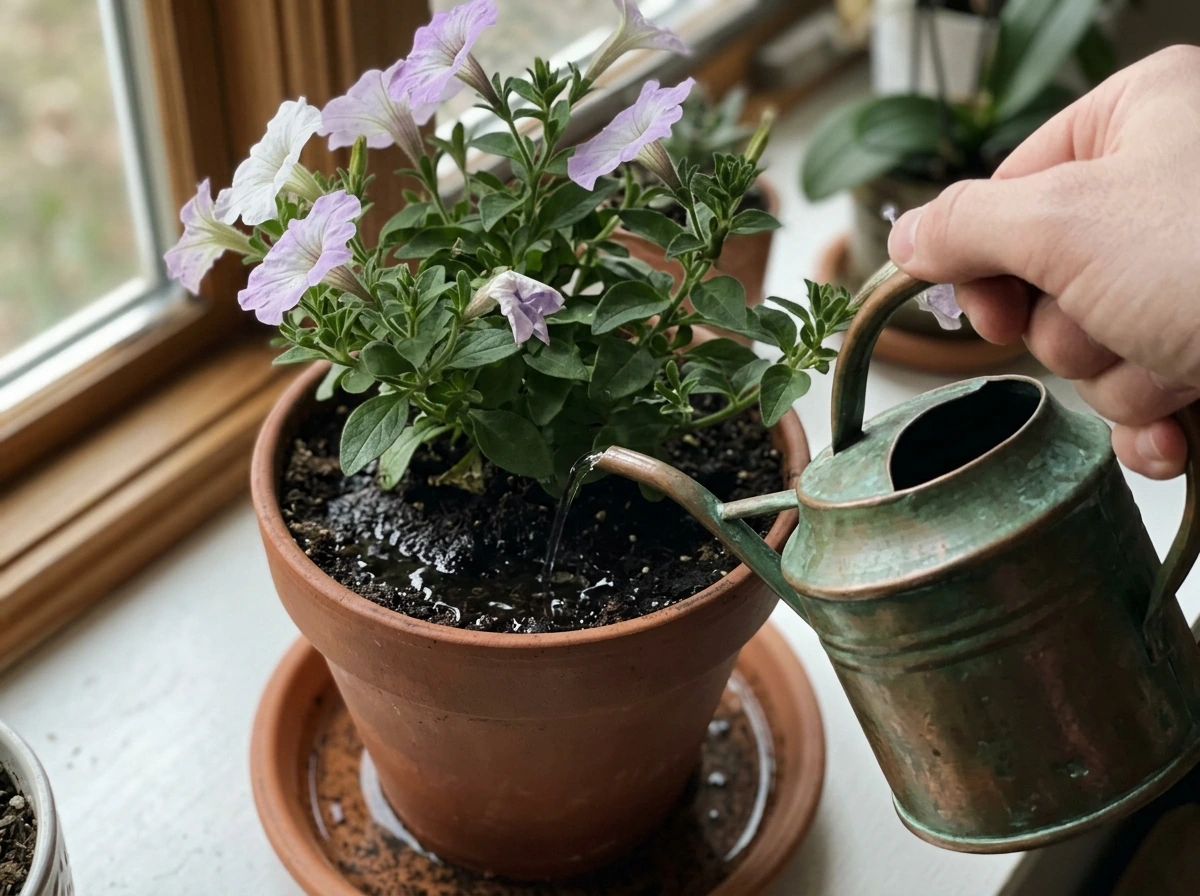
Petunias are fairly tolerant of dry conditions outdoors, but indoors the risk shifts toward overwatering rather than underwatering. The goal is to water deeply when the top inch or so of soil feels dry, then let the pot drain completely. Never let your petunia sit in standing water in a saucer for more than an hour after watering. When you do water, water thoroughly so the entire root zone gets moisture, not just the surface. Think of it as a good soak, not a light sprinkle. Outdoors, that principle means soaking the soil 6 to 8 inches deep each time. Indoors, it means watering until water runs freely from the drainage hole.
Excess moisture is one of the most common ways to lose an indoor petunia, especially in fall and winter when growth slows and the plant isn't drinking as fast. During cooler, lower-light periods, you'll water noticeably less often than in summer. Check the soil every few days rather than watering on a fixed schedule.
Feeding
Petunias are heavy feeders when they're actively growing and blooming. Indoors, fertilize every two to four weeks with a liquid fertilizer formulated for flowering plants. A balanced fertilizer with calcium and magnesium (look for Cal-Mag types, such as 13-2-13, 14-4-14, or 15-5-15) works very well, as does a general-purpose water-soluble fertilizer like 20-10-20. Aim for around 200 to 250 ppm nitrogen during active growth. In winter, when growth slows significantly, cut back feeding to once a month or less. Over-feeding a slow-growing plant leads to salt buildup in the soil, which causes its own set of problems.
Temperature, airflow, and the indoor problems that sneak up on you
Petunias like it warm but not hot. Indoors, they do well in the same temperature range most people keep their homes: roughly 65 to 75 degrees Fahrenheit during the day. They can tolerate a bit warmer without much trouble, since they're naturally heat-tolerant plants. What they cannot handle is cold drafts. Keep your petunia away from drafty windows, air conditioning vents, and exterior doors that get opened frequently in cold weather. A cold draft hitting a warm plant at night is a quick way to cause bud drop and stress.
Airflow is something most indoor gardeners don't think about, but it matters a lot for petunias. Still, stagnant air indoors encourages powdery mildew, which petunias are somewhat prone to. Providing gentle air circulation, either by running a small fan nearby on low or simply keeping a window cracked in mild weather, makes a meaningful difference. If you do spot white powdery patches on the leaves, isolate the plant immediately, remove affected leaves, and improve air circulation around it. Good sanitation practices, like clearing away dead leaves and debris from the pot surface, help prevent problems from taking hold in the first place.
The other sneaky indoor problem is legginess. If your petunia starts stretching out with long, weak stems and very few flowers, insufficient light is almost always the cause. Moving the plant to a brighter spot or lowering your grow light closer to the plant (back to that 4 to 6 inch range) typically results in bushier, more compact growth within a few weeks. You can also trim back leggy stems by about a third to encourage branching and new bud development.
Growing petunias indoors in winter: what changes
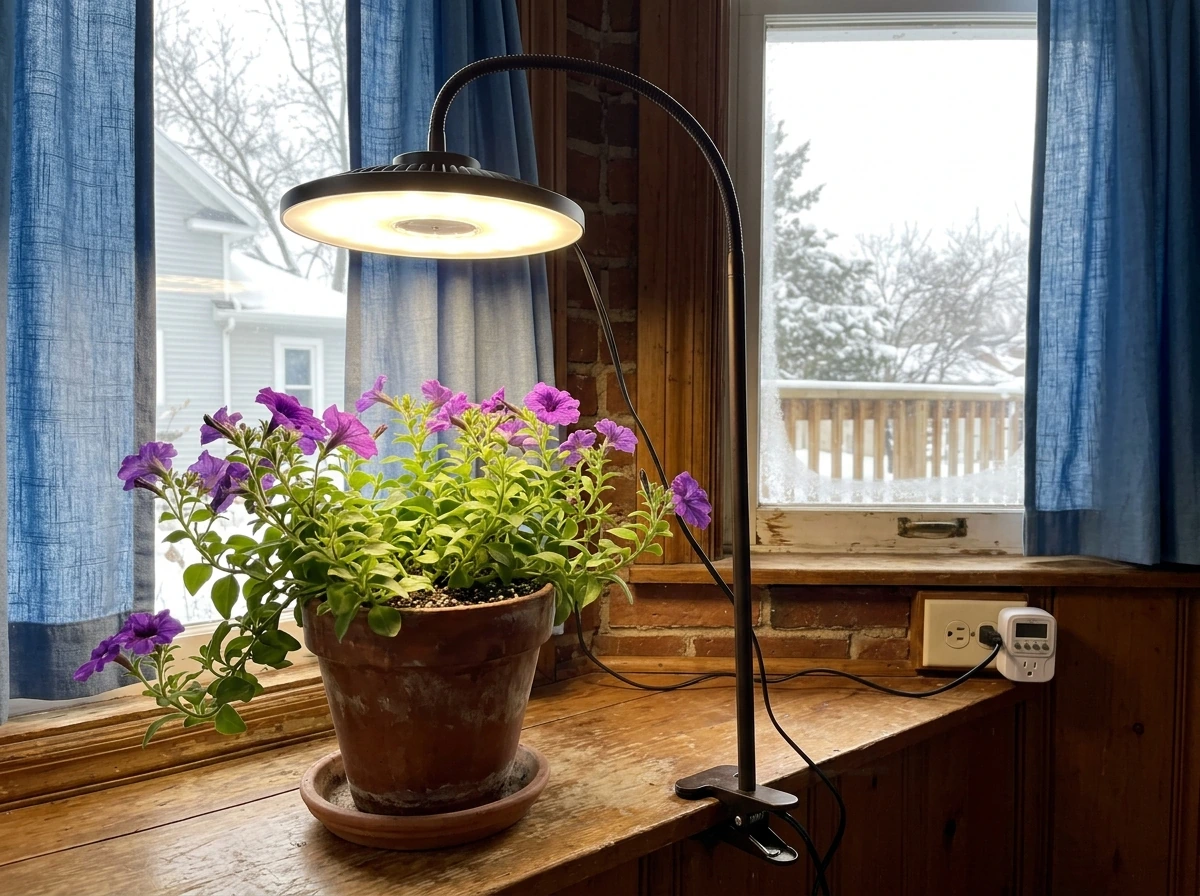
Winter is when growing petunias indoors gets genuinely interesting, and also when you have to be most intentional. Natural daylight drops below that critical 13 to 14 hour threshold in virtually every part of the country by late fall, and window light intensity drops dramatically even on sunny days. If you've been relying on a south window without supplemental lighting during spring or summer, that same window will not keep your petunias blooming through December and January.
The most important winter adjustment is extending your light period artificially. Set a grow light timer to provide 14 to 16 hours of light per day throughout winter. This single change has an outsized effect on flowering. Studies have confirmed that short winter days can completely halt flowering in petunias, while extending day length to 13.5 hours or more restores the flowering response. You can also use a night interruption approach: rather than running lights all day, turning them on for just a few hours in the middle of the night (around midnight to 2 a.m.) can trick the plant into perceiving a long-day photoperiod. This is a useful trick if electricity cost is a concern.
In winter, also reduce watering frequency significantly. Yes, bougainvillea can grow indoors, but it needs bright light and careful temperature control to stay healthy. The plant's growth slows, evaporation is lower, and root rot risk is higher. Keep the soil barely moist rather than consistently wet. Pull back on fertilizer too, dropping to once a month at most. The goal in winter isn't explosive growth; it's keeping the plant healthy and flowering at a modest but steady rate until days get longer again. Keep the plant away from cold window glass at night, since temperatures near single-pane windows can drop sharply even when the room feels warm.
Window vs. grow light: which should you use?
| Factor | South-facing window | Grow light |
|---|
| Light intensity | Variable; excellent in summer, poor in winter | Consistent year-round at the right distance |
| Photoperiod control | No control; follows natural daylight hours | Full control with a timer |
| Winter performance | Usually insufficient for blooming | Reliable flowering with 14-16 hr timer |
| Cost | Free | Upfront fixture cost; modest electricity use |
| Ease of use | Simple, no setup | Requires positioning, timer setup |
| Best for | Spring/summer indoor growing | Year-round or winter growing |
If you're growing petunias indoors only during spring or summer and your home has a strong south-facing window, that window alone can work. For anyone wanting winter blooms or working with less-than-ideal natural light, a grow light is the right call and worth the modest investment. A basic LED grow light with a built-in timer runs as little as $25 to $50 and will serve you for multiple seasons.
Your step-by-step plan and troubleshooting checklist
Starting petunias indoors from seed
- Start seeds 10 to 12 weeks before your intended bloom date (or before your last frost date if you're growing them to eventually move outside).
- Fill small cell trays or seed-starting pots with a moist, fine-textured seed-starting mix.
- Press petunia seeds lightly onto the surface (they need light to germinate, so do not cover them with soil).
- Cover the tray with a clear plastic dome or plastic wrap and place it in a warm spot (70 to 85 degrees Fahrenheit) near good light.
- Once seedlings sprout, remove the plastic cover and position a grow light 4 to 6 inches above the seedlings. Set the timer to 14 to 16 hours per day.
- Keep the soil moist but not soggy during germination and early seedling stages.
- Transplant into individual 6 to 8 inch pots once seedlings have two to three sets of true leaves.
Ongoing care at a glance
- Light: 14 to 16 hours per day under a grow light, or a strong south-facing window (supplement with grow light in winter)
- Grow light distance: 4 to 6 inches above seedlings; 6 to 12 inches above established plants
- Watering: deeply when top inch of soil is dry; never leave standing water in saucer
- Fertilizing: every two to four weeks with a balanced liquid fertilizer during active growth; monthly or less in winter
- Temperature: 65 to 75 degrees Fahrenheit; keep away from cold drafts and air vents
- Airflow: gentle air circulation to prevent powdery mildew
- Pruning: trim leggy stems back by one-third to encourage bushy growth and more blooms
Troubleshooting checklist
| Problem | Most likely cause | Fix |
|---|
| Leggy, stretched stems with few flowers | Insufficient light | Move closer to light source or lower grow light to 4-6 inches; trim stems back by one-third |
| No flowers at all | Short photoperiod (under 13-14 hours) | Set grow light timer to 14-16 hours daily |
| Yellow leaves | Overwatering or nutrient deficiency | Let soil dry out more between waterings; feed with balanced fertilizer |
| Wilting despite moist soil | Root rot from overwatering | Check drainage; remove damaged roots; reduce watering frequency |
| White powder on leaves | Powdery mildew from poor airflow | Isolate plant; remove affected leaves; add a small fan for air circulation |
| Bud drop | Cold draft or sudden temperature change | Move plant away from drafty windows, vents, or exterior doors |
| Slow growth in winter | Natural response to lower light and temp | Extend photoperiod; reduce watering and feeding; maintain 65-70 degree temps |
Indoor petunias are one of those projects that rewards you exactly as much as you put into the light setup. Get that right, and almost everything else falls into place. If you enjoy growing other flowering annuals indoors, it's worth knowing that begonias can begonia grow indoors and impatiens tend to be a bit more forgiving of lower light conditions than petunias, so they can be easier starting points for beginners.
Indoor petunias are one of those projects that rewards you exactly as much as you put into the light setup. Get that right, and almost everything else falls into place. If you enjoy growing other flowering annuals indoors, it's worth knowing that begonias can begonia grow indoors and impatiens tend to be a bit more forgiving of lower light conditions than petunias, so they can be easier starting points for beginners.
Petunias are absolutely doable indoors, though, and once you see them blooming on your windowsill or under a grow light in January, you'll understand why they're worth the extra attention. can bougainvillea grow indoors can impatiens grow inside can bougainvillea grow indoors