
Yes, impatiens can grow inside your home, but the honest answer comes with a caveat: some types do much better than others, and success depends almost entirely on how much light your space gets. New Guinea impatiens (Impatiens hawkeri) are the indoor-friendly variety. New Guinea impatiens can genuinely thrive as houseplants and will often flower year-round when given enough bright, indirect light.
Can Impatiens Grow Inside? Indoor Care Step-by-Step

James Hartwell
24 Mar 2026
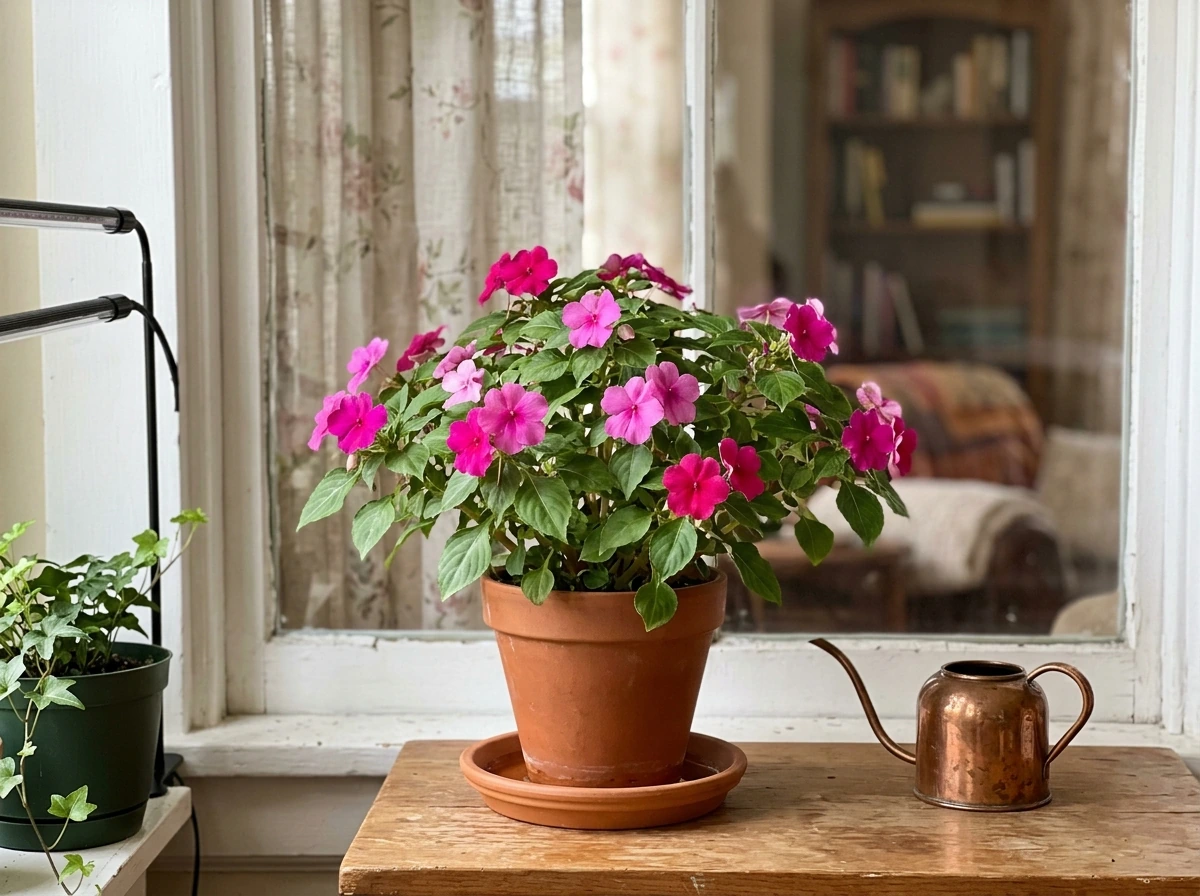
Standard impatiens (Impatiens walleriana), the kind you see blanketing garden beds every summer, can survive indoors and are absolutely worth bringing inside before frost, but they're more commonly overwintered rather than kept as permanent houseplants. Think of it this way: New Guinea impatiens can be a long-term resident, while walleriana types are more like a guest staying through winter until they can go back outside.
Who This Works For (and Who It Doesn't)
Indoor impatiens growing is a great option for a few specific situations. If you have a sunny south- or east-facing window, a sunroom, or a spot under grow lights, you're in good shape. Apartment dwellers with a bright windowsill can realistically keep New Guinea impatiens blooming through winter. If you grew impatiens in containers outside and want to save them before frost hits rather than buying new plants every spring, bringing them indoors is absolutely worth doing.
Where it doesn't work well: north-facing rooms with dim, indirect light will quickly produce leggy, non-flowering plants no matter how diligently you water. If your home is consistently dry with forced-air heat and no way to add humidity, impatiens will struggle more than average. They're not the most forgiving houseplants, but they're not finicky either once you match their basic needs. If you're exploring other flowering annuals for indoors, it's worth checking how plants like begonias handle similar conditions, since they come up for many of the same indoor gardening questions.
Light: The Single Biggest Factor
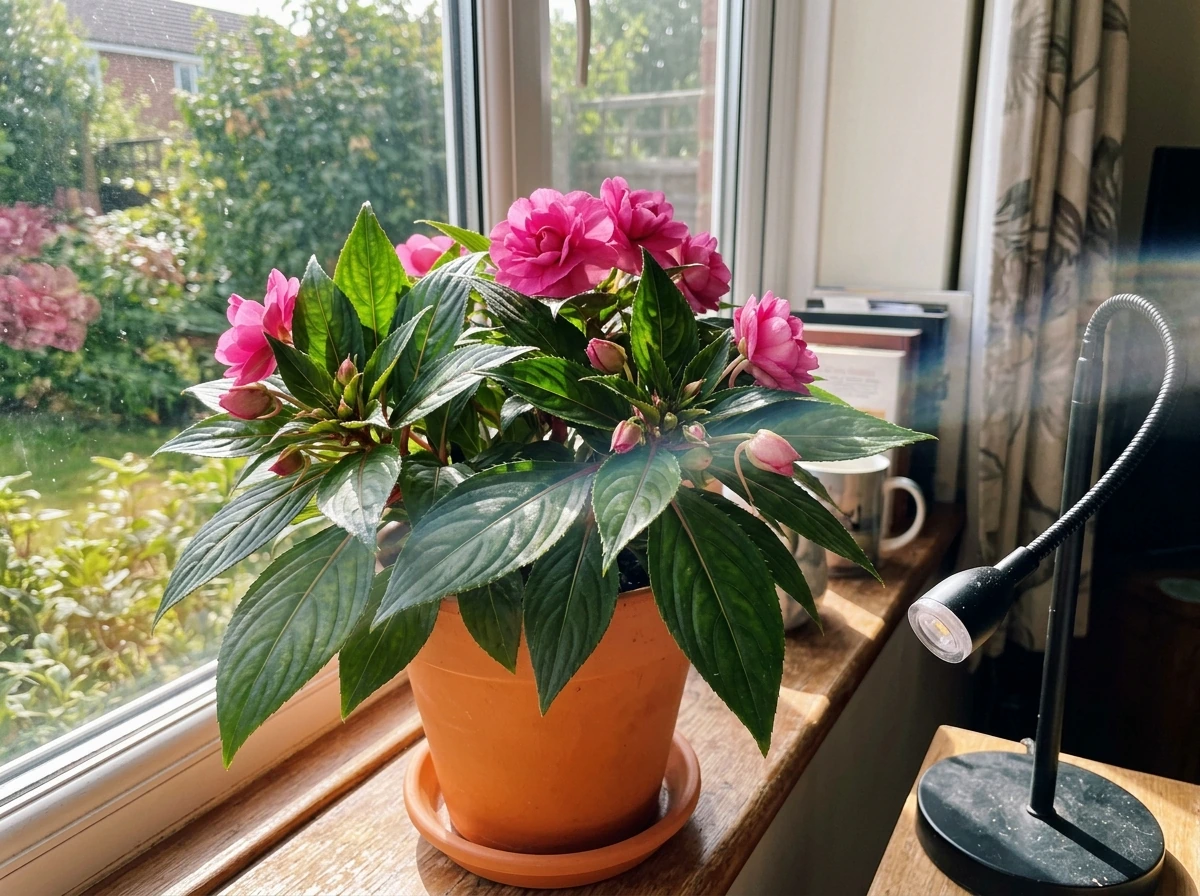
Light is the make-or-break condition for impatiens indoors, full stop. They need bright, indirect light for at least 6 hours a day to flower reliably. A south- or east-facing windowsill is ideal. West-facing windows can work but tend to deliver more afternoon heat than morning gentleness, which can stress the plants. North-facing windows rarely provide enough light for blooming.
If your home doesn't get enough natural light, grow lights solve the problem completely. A simple full-spectrum LED grow light running 14 to 16 hours a day placed 6 to 12 inches above the plant will keep impatiens flowering even in a basement or a dim interior room. I've kept New Guinea impatiens under a clip-on grow light on a bookshelf through an entire winter and they didn't miss a beat. If you're investing in one plant to try under artificial light, New Guinea varieties are your best bet since they're bred for continuous indoor blooming.
One thing to avoid: direct midday sun through glass, especially in summer, can scorch the leaves. Bright but filtered or indirect is the sweet spot. A sheer curtain in front of a south-facing window in summer does the job.
Setting Up the Right Container and Potting Mix
Choosing the right pot
Impatiens don't need large pots, and in fact do better slightly snug than in an oversized container. A 6- to 8-inch pot works well for a single plant, or a 10- to 12-inch pot for a fuller, multi-stem specimen. The non-negotiable requirement is drainage holes. Impatiens sitting in waterlogged soil will rot quickly, so skip any decorative pots without drainage unless you're using them as cachepots with a well-draining grower's pot inside.
Material matters a bit here. Terracotta pots dry out faster, which can be helpful if you tend to overwater, but they'll require more frequent watering in dry indoor air. Plastic or glazed ceramic pots retain moisture longer, which suits impatiens' preference for consistent moisture. Either works fine as long as you adjust your watering habits accordingly.
The best potting mix
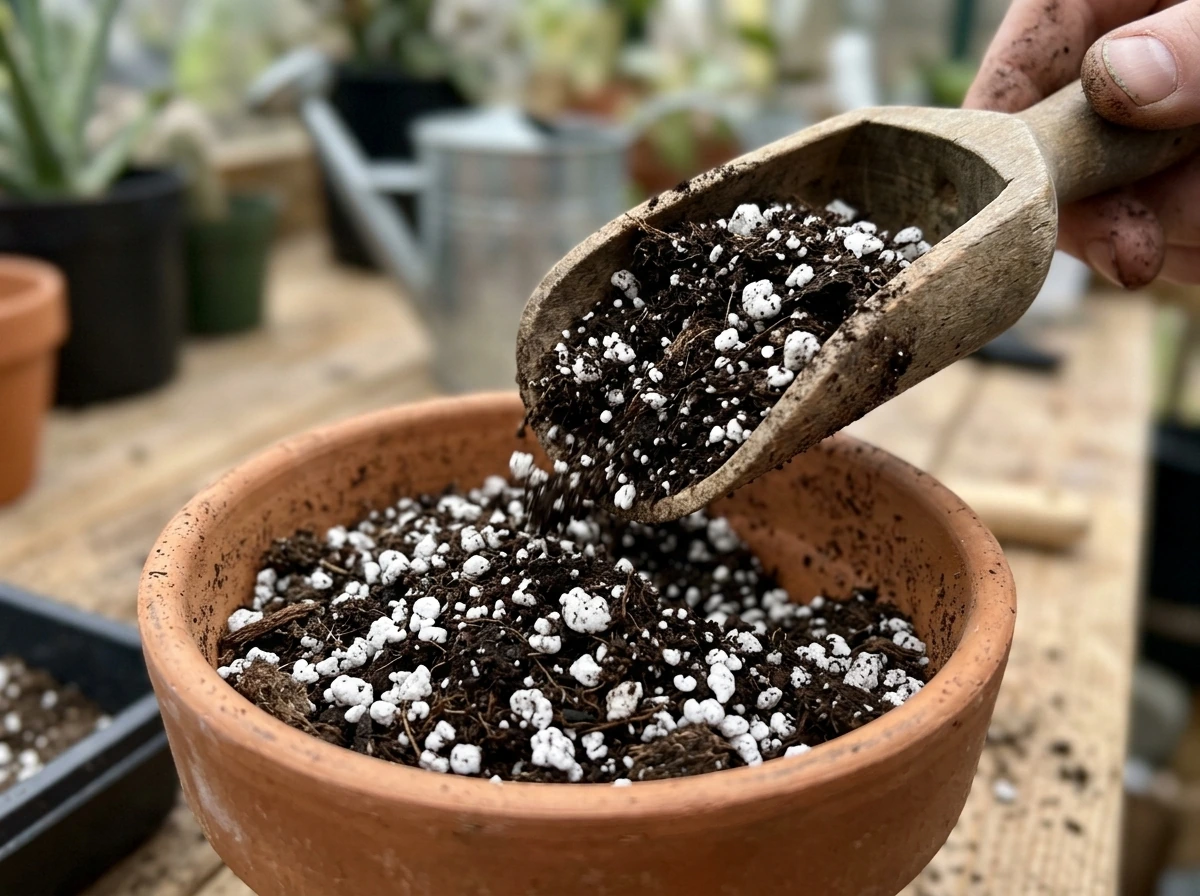
Use a high-quality, well-draining potting mix, not garden soil. A standard peat- or coir-based potting mix works well. I like to mix in about 20 to 25 percent perlite to improve drainage and keep the roots from sitting in too much moisture. Impatiens want consistently moist soil, but not wet, compacted soil. That distinction is everything. If your mix stays soggy for days after watering, add more perlite or switch to a mix labeled for containers.
Watering, Humidity, and Temperature
Watering routine
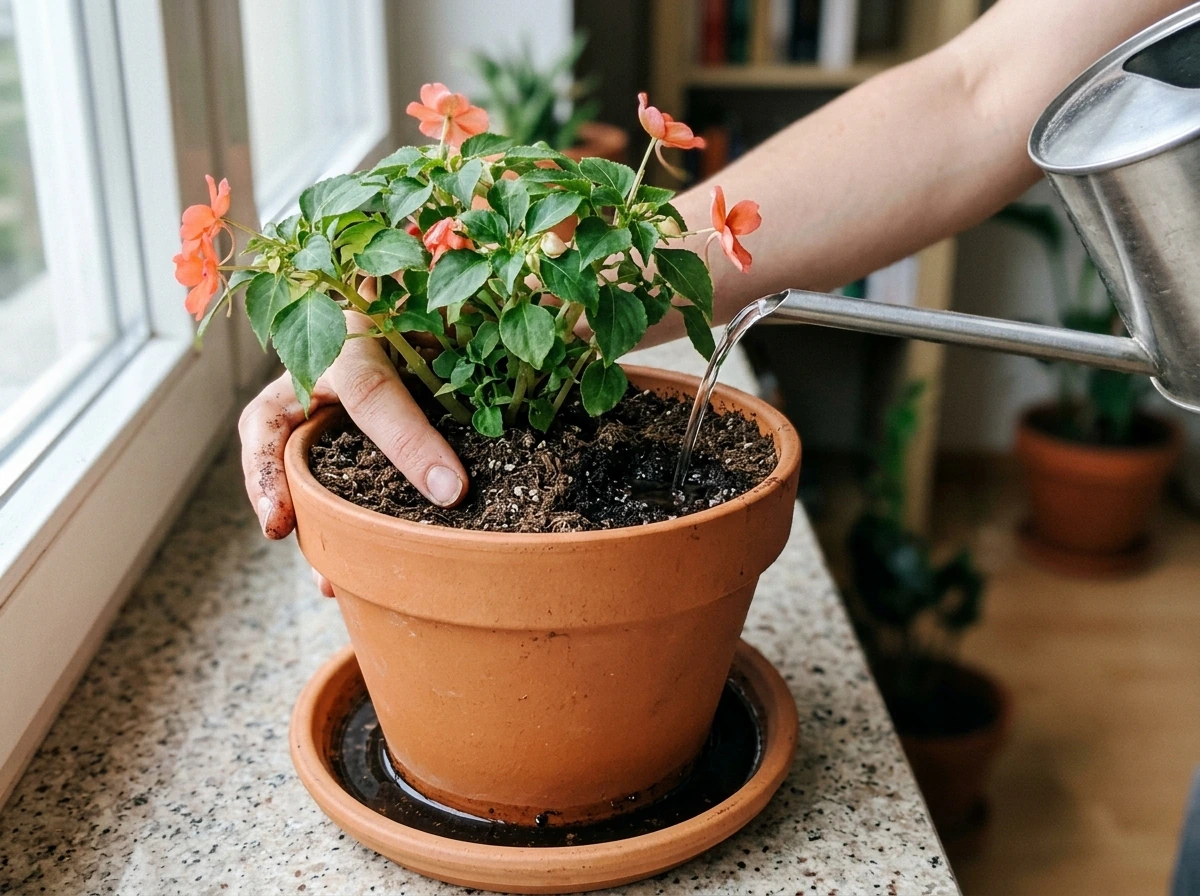
Impatiens are thirsty plants and will wilt dramatically when they dry out, which can be alarming if you've never grown them before. Water when the top inch of soil feels dry to the touch. In most indoor environments during winter, that means watering every 3 to 5 days, though it varies by pot size, pot material, and how warm and dry your home is. Always water thoroughly until water runs out the drainage holes, then let the pot drain completely before returning it to a saucer. Don't leave impatiens standing in a puddle of water.
Humidity needs
Impatiens prefer humidity levels of 50 percent or higher. Most homes in winter run at 30 to 40 percent, especially with central heating, which is on the dry side for these plants. The practical fixes are grouping plants together (they create a more humid microclimate), placing the pot on a tray of pebbles with a little water just below the pot's base, or running a small humidifier nearby. Misting the leaves is often recommended but honestly creates more problems than it solves since wet foliage invites fungal issues. Stick to the tray method or a humidifier.
Temperature range
Impatiens are comfortable in the same temperature range most people keep their homes: 65 to 75°F (18 to 24°C) during the day. They don't like temperatures dropping below 50°F (10°C), so keep them away from drafty windowsills in cold climates where the glass gets very cold at night. Also avoid placing them directly over heat vents, which blasts dry, hot air onto the foliage. A stable, moderately warm spot away from drafts and direct heating is ideal.
Ongoing Care: Feeding, Pinching, and Watching for Problems
Fertilizing
Impatiens are relatively heavy feeders when they're actively growing and blooming. During spring and summer, feed every two weeks with a balanced liquid fertilizer (something like a 10-10-10 or a bloom-booster formula). In fall and winter, cut back to once a month or even less if the plant is growing slowly and not in active bloom. Over-fertilizing in low light conditions is a common mistake that produces lush green growth with no flowers.
Pinching for bushier plants
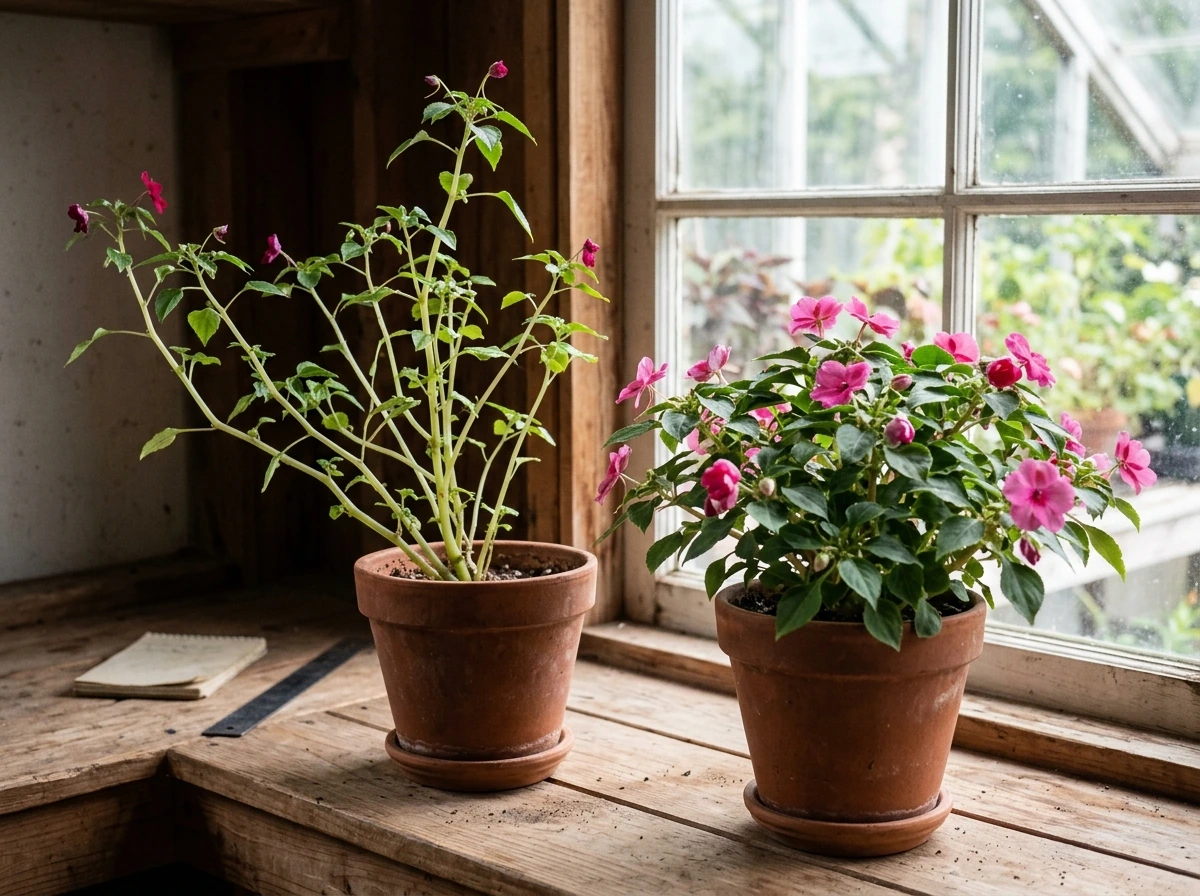
If your impatiens starts getting leggy, which is especially common in lower-light conditions, pinch or snip back the tips of the stems. Removing the top inch or two of each stem encourages branching and a fuller, bushier shape. Don't be shy about this. A hard cut back to about half the plant's height can actually rejuvenate a tired, straggly plant. New growth typically appears within a week or two. This is also a good approach if you're bringing outdoor impatiens inside for overwintering: cut them back by about half before you bring them in to encourage fresh, compact growth.
Pest and disease watch
Indoors, the most common pests on impatiens are spider mites and aphids. Spider mites thrive in hot, dry conditions, which is why good humidity management matters. Check the undersides of leaves regularly for fine webbing or tiny moving dots. Aphids cluster on new growth and stems. Both can be knocked back with insecticidal soap spray or neem oil applied every 5 to 7 days for two to three cycles. Kopa Insecticidal Soap is described as a potassium soap of fatty acids that controls mites and soft-bodied insects on contact insecticidal soap spray. Keep treated plants away from other houseplants until you're sure the infestation is gone.
On the disease side, fungal issues like gray mold (botrytis) are the main risk, and they almost always come from overwatering, poor air circulation, or wet foliage. UC IPM notes that gray mold (Botrytis) risk increases when plants are frequently wetted and when they are crowded or shaded, reducing air circulation [gray mold (botrytis) risk increases when plants are frequently wetted and when plants are crowded or shaded](https://ipm. ucanr. edu/PMG/GARDEN/PLANTS/DISEASES/botrytis.
html). Keep water off the leaves, don't crowd plants, and make sure there's some gentle air movement around them. Impatiens downy mildew, which devastated outdoor plantings in recent years, is less of a concern indoors but can still appear if you're bringing in infected plants from outside. If you notice white fuzzy growth on leaf undersides or sudden wilting and leaf drop, that's your cue to remove and discard affected plants immediately.
Fixing the Most Common Indoor Impatiens Problems
| Problem | Likely Cause | Fix |
|---|---|---|
| Leggy, stretched stems with few flowers | Not enough light | Move to a brighter window or add a grow light; pinch back stems |
| Wilting despite moist soil | Root rot from overwatering or poor drainage | Check roots, reduce watering, improve drainage |
| Wilting and very dry soil | Underwatering | Water thoroughly and consider watering more frequently |
| Yellow leaves | Overwatering, nutrient deficiency, or too little light | Check soil moisture, resume fertilizing, assess light levels |
| No blooms | Low light or over-fertilizing with high nitrogen | Increase light; switch to a bloom-booster fertilizer |
| White powdery or fuzzy coating on leaves | Powdery mildew or downy mildew | Improve air circulation; remove badly affected leaves; treat or discard if severe |
| Sticky residue or visible bugs on new growth | Aphids or spider mites | Treat with insecticidal soap or neem oil every 5 to 7 days for 3 cycles |
Moving Impatiens Back Outside and Managing the Seasons
If you brought impatiens indoors for overwintering, plan to move them back outside after your last frost date, typically late spring depending on where you live. Don't go straight from a cozy indoor spot to full outdoor sun. Harden them off over 7 to 10 days by setting them outside in a sheltered, shaded spot for a few hours each day, gradually increasing outdoor time. Skipping this step often results in scorched, shocked plants even though they look healthy.
Before moving them out, it's a good moment to cut the plants back by a third, repot into fresh soil if they've been in the same mix for a year, and give them a dose of balanced fertilizer. They'll bounce back quickly once outdoor temperatures and humidity are in their favor.
On the question of how long impatiens last indoors: be realistic. Impatiens walleriana is treated as a half-hardy annual in most temperate regions, meaning even when overwintered successfully indoors, most gardeners essentially start fresh each year. You're saving money and effort by not buying new plants every spring, but don't expect a walleriana plant to thrive indefinitely as a permanent houseplant. New Guinea impatiens are genuinely different here. Given enough light, they can be kept as long-lived indoor plants that bloom year after year, which is why they're the variety worth investing in if you want an actual indoor flowering houseplant rather than a seasonal guest.
The bottom line is that indoor impatiens growing is very doable, but light is the one thing you can't compromise on. Get that right, keep the soil consistently moist without waterlogging it, manage humidity where you can, and you'll have flowering plants through even the dreariest winter months. New Guinea types are the easiest path to year-round indoor color. Walleriana types are worth saving from frost and keeping alive for spring, even if they're not going to become permanent residents.
FAQ
What should I expect if my indoor space is not very bright? Can I still keep impatiens alive?
If your home is dim, switch the goal from “permanent blooming” to “survival until spring.” Walleriana can limp along in lower light as an overwintering project, but it usually won’t flower well. For consistent blooms, prioritize New Guinea impatiens and plan on supplementing with a grow light.
Can I move indoor impatiens back outdoors quickly once it warms up?
Yes, but treat it like a bedding-plant transition, not a casual move. Place the pot outside in morning shade first, then gradually increase sun exposure over 7 to 10 days. Even if the plant looks healthy indoors, sudden midday sun can scorch it.
My impatiens has yellow leaves indoors, what are the most common causes?
Start by checking the soil drainage and airflow. Yellowing leaves can come from soggy soil, low light, or dry air stressing the plant. Push a finger into the potting mix, confirm the pot drains freely, then adjust light and humidity before changing fertilizer.
Can I pot indoor impatiens in regular outdoor soil or compost?
Don’t use garden soil indoors. It compacts in containers, holds too much water, and increases rot risk. Use a container potting mix (peat or coir based) and, if needed, add perlite to improve drainage.
How do I know if I’m overwatering or underwatering impatiens?
Overwatering often shows up as limp growth plus a continually damp mix, sometimes with moldy soil smell. A safer routine is to water thoroughly only when the top inch dries, then always let excess drain completely. If the mix stays wet for days, increase perlite or repot into a lighter mix.
Is leaf misting the best way to increase humidity for indoor impatiens?
Misting usually does not raise humidity enough to help long-term, and wet leaves raise the chance of fungal problems. Use a humidity tray (pebbles with water below the pot) or a small humidifier, especially during winter heating.
Can I grow impatiens indoors under LED grow lights year-round? How should I position them?
Yes. With grow lights, rotate the pot every few days so the plant stays evenly shaped, and keep the light on a timer for 14 to 16 hours daily. Also watch for dryness, since artificial light can increase evaporation even indoors.
What’s the fastest way to handle spider mites or aphids on indoor impatiens?
If you see webbing or tiny moving dots on the underside of leaves, act early. Isolate the plant, spray thoroughly with insecticidal soap or neem, and repeat every 5 to 7 days for multiple cycles. Don’t forget to treat nearby foliage, not just the worst-looking leaves.
Will north-facing windows work if I fertilize and water more?
If you only have north-facing light, expect weak growth and few flowers. Your best option is either grow lights or choosing a brighter window like south or east. Without enough light, feeding can make the problem worse by encouraging leafy growth without blooms.
How can I prevent gray mold (botrytis) indoors?
If you want fewer issues with fungus, use gentle air movement (like a small fan on low) and water at the soil line, not onto leaves. Remove any affected foliage early, because gray mold spreads faster in crowded, wet conditions.
When should I repot indoor impatiens, and does it help them bloom longer?
A good sign of readiness is active growth plus the ability to hold steady moisture without staying soggy. Repot into fresh potting mix if the plant has been in the same mix for about a year, then resume feeding at the lighter schedule for the season you’re in.