The best herbs to grow indoors year-round are chives, mint, parsley, thyme, oregano, and basil. If you have a bright south-facing window or a decent grow light, you can add rosemary, sage, and cilantro to that list. These aren't wild guesses, they're the herbs that consistently survive and produce in real home conditions, not ideal greenhouse setups. The rest of this guide will help you pick the right ones for your space, set them up properly, and actually keep them alive.
Best Herbs Grow Indoors: Easy Picks, Light Tips, Pairings
James Hartwell
24 Mar 2026
The best indoor herbs you can grow year-round
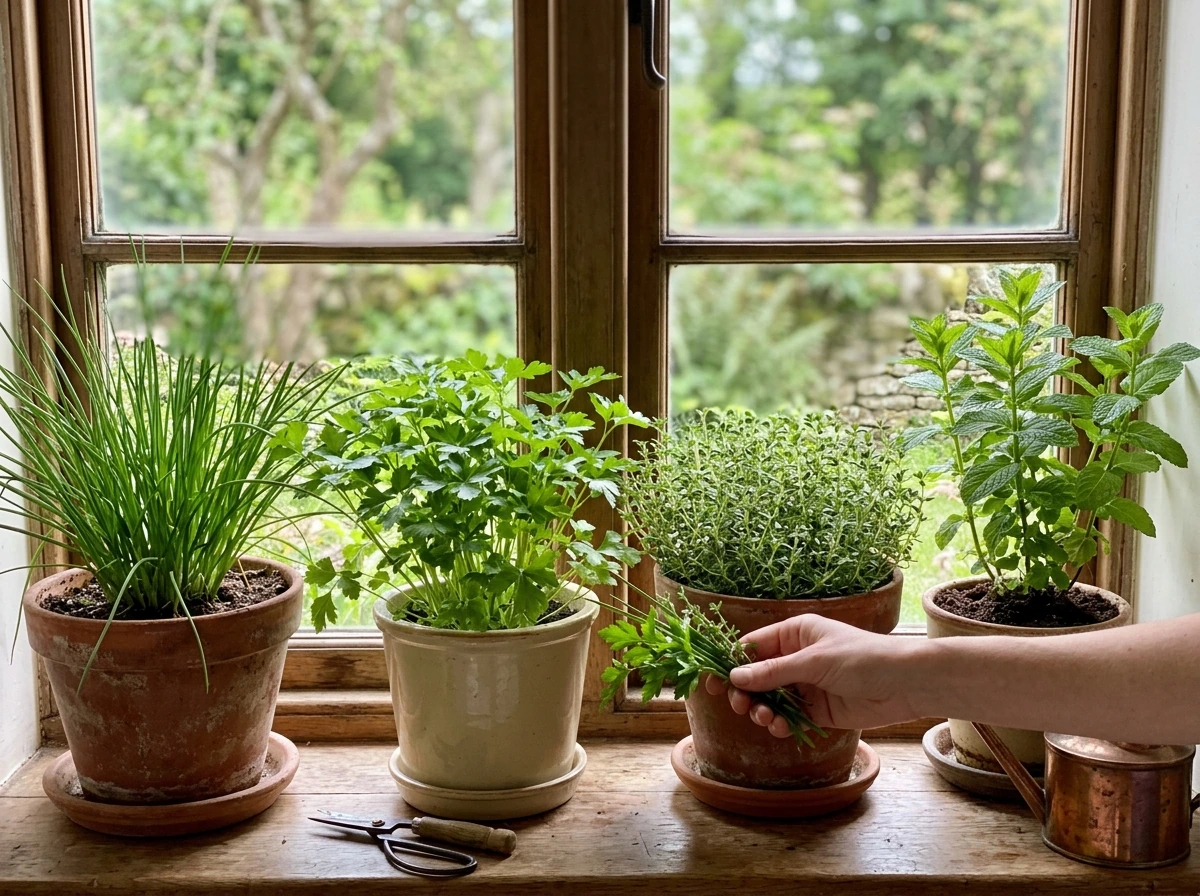
Most herbs can technically be grown indoors, but "technically" and "successfully" are two different things. The herbs below are the ones that genuinely hold up through winter and don't make you feel like you're failing every two weeks. Penn State Extension specifically calls out basil, chives, and cilantro as solid indoor options, and the Chicago Botanic Garden adds thyme, sage, oregano, and parsley to the shortlist of strong windowsill candidates.
- Chives: One of the easiest, most forgiving herbs you can grow indoors. They tolerate lower light better than most and bounce back fast after cutting.
- Mint: Practically grows itself. It actually prefers a bit more moisture, which makes it easier for people who tend to overwater.
- Parsley: Slower to get going but very reliable once established. It handles average light better than basil does.
- Thyme: Loves a sunny windowsill and dry-ish soil. One of the best for flavor indoors.
- Oregano: Similar to thyme in needs and also retains good flavor when grown inside.
- Basil: Possible year-round but needs real warmth and strong light. It's the diva of the indoor herb world, and worth reading more about on its own — we cover basil's indoor quirks in detail if you want to dig deeper.
- Rosemary: Can do well indoors but is very easy to overwater and needs bright light. Treat it like a Mediterranean plant — dry, sunny, and not fussed over.
- Sage: Manageable indoors but susceptible to mildew and sensitive to excess moisture. Give it airflow and don't let its soil stay wet.
- Cilantro: Short-lived by nature but fast-growing. Succession planting (starting new seeds every few weeks) is the trick to keeping a steady supply.
The easiest herbs for beginners to start with
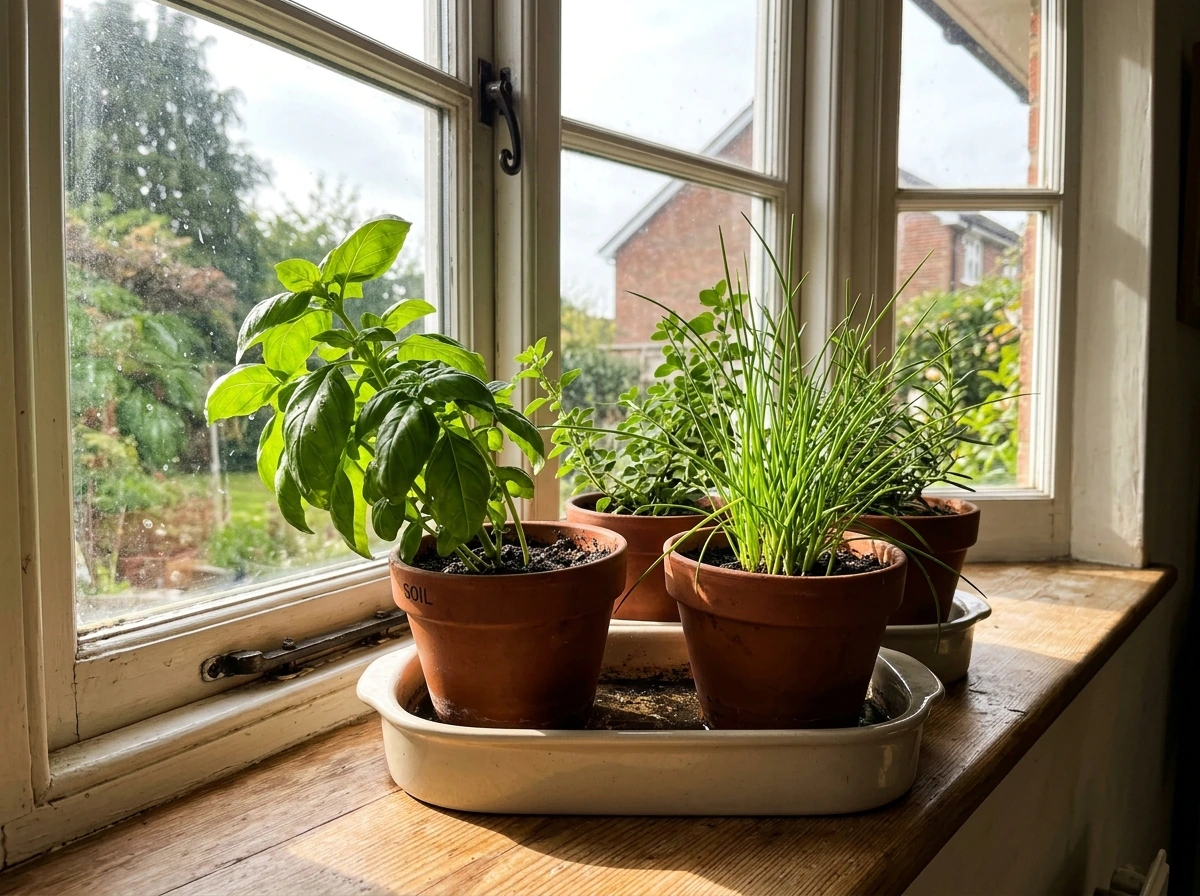
If you're just starting out or you've killed a few herb plants and want something forgiving, start with chives, mint, and parsley. These three will tolerate the inconsistent watering and imperfect light that most beginners deal with. Chives are practically bulletproof. Mint spreads aggressively and is almost impossible to kill. Parsley takes a few weeks to get established but is very steady after that.
Thyme and oregano are also beginner-friendly once you know one rule: blank" rel="noopener noreferrer">don't overwater them. They want to dry out a bit between waterings, and if you treat them like succulents rather than tropical plants, they'll reward you. The mistake most people make is watering on a schedule instead of checking the soil first, especially if you’re trying to figure out does basil grow indoors and need to get moisture right.
Hold off on rosemary and basil until you've got a feel for things. Rosemary is notoriously easy to kill through overwatering, and basil is a light hog that sulks the moment temperatures drop or light gets inconsistent. Neither is a great first herb unless you have ideal conditions from the start.
Light and setup: what your herbs actually need
Light is the single most important factor for growing herbs indoors. Colorado State Extension is direct about this: light is the most critical aspect of indoor herb success. Everything else, water, fertilizer, pot size, matters a lot less if your plants aren't getting enough light.
Window light vs. grow lights
A south-facing window in a clear climate is your best natural-light option. East or west windows work for lower-demand herbs like chives, mint, and parsley. North-facing windows are a tough spot, we have a full breakdown on whether herbs can actually thrive in a north-facing window if that's what you're working with. For most sun-loving herbs like basil, thyme, oregano, rosemary, and sage, a north window alone usually isn't enough, especially in winter.
If your windows are limited, a grow light is not optional, it's just the setup cost of growing herbs indoors in low-light conditions. herbs that can grow indoors with low light Look for full-spectrum LED grow lights that cover a wavelength range of around 450 to 660 nm, which covers the blue and red spectrum ranges herbs use most. Horticultural lighting research suggests target light intensities for herbs and leafy crops in the range of roughly 300 to 500 µmol/m²/s PPFD for good growth. That sounds technical, but in practice: a decent LED panel placed 6 to 12 inches above your herbs on a 14 to 16 hour daily timer will cover most herbs well.
Pots, soil, and drainage
Illinois Extension recommends containers with a minimum of 6-inch diameter and drainage holes, no exceptions. Standing water at the bottom of a pot is a fast track to root rot, which is one of the most common ways indoor herbs die. Use a well-draining potting mix, not garden soil. A mix formulated for containers or herbs drains faster and doesn't compact the way outdoor soil does indoors.
For herbs like dill that have a long taproot, Penn State Extension specifically recommends deeper pots, at least 8 to 12 inches deep, so the roots have somewhere to go. Trying to grow dill in a shallow pot is one of those small mistakes that makes a big difference.
Temperature and humidity
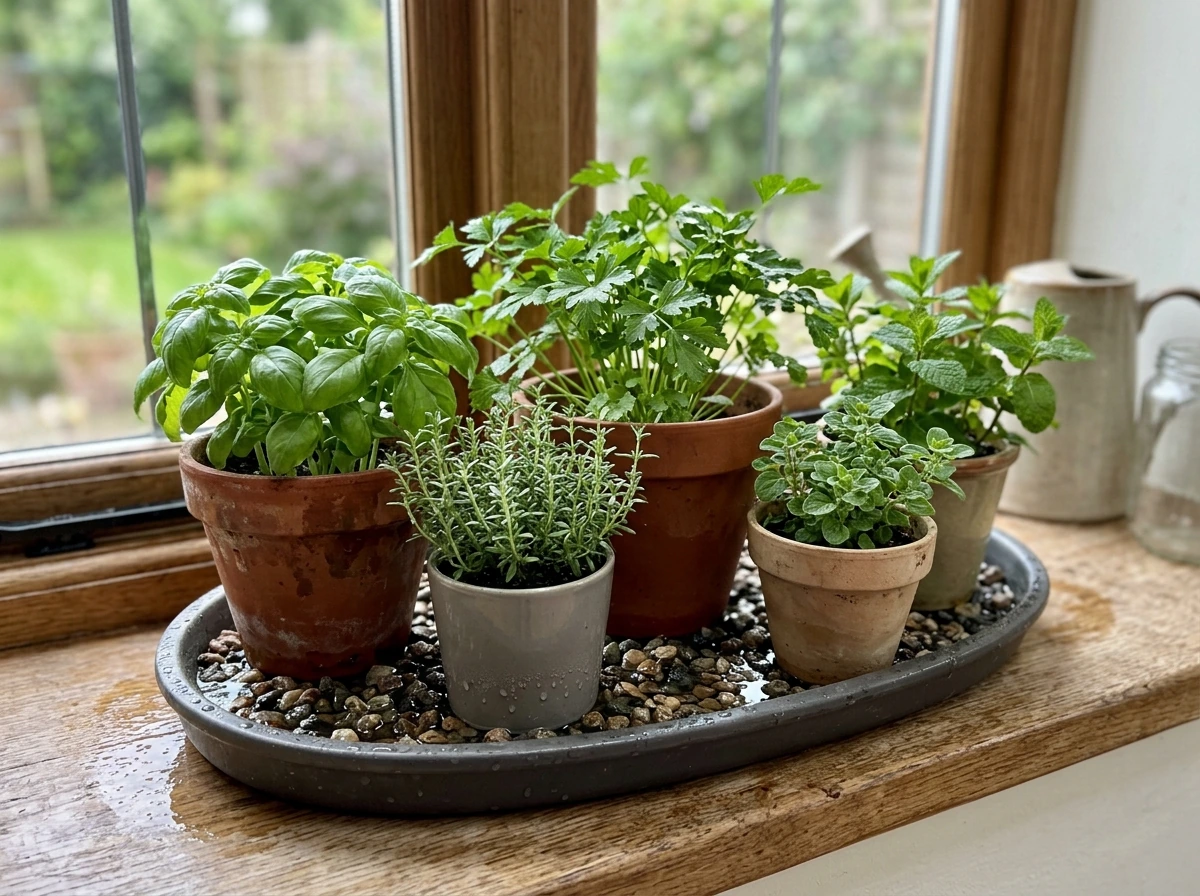
Most herbs do well in the same temperature range that's comfortable for people: around 65 to 70°F during the day and 55 to 60°F at night. That day-to-night temperature drop actually helps herbs, Iowa State Extension notes that a 5 to 10°F drop between day and night temperatures is ideal for indoor herb growing.
Iowa State University Extension and Outreach also says most houseplants prefer a daily temperature drop from day to night, typically about 10 to 15°F [Iowa State Extension notes that a 5 to 10°F drop between day and night temperatures is ideal for indoor herb growing. ](https://yardandgarden. extension. iastate.
edu/how-to/how-care-houseplants). The problem in winter is that homes near heating vents or radiators stay too warm and too dry. Dry heat is rough on herbs: low humidity reduces their ability to take up water even when the soil is moist.
To increase humidity around your herbs, try grouping pots together, placing them on a tray filled with pebbles and a little water (so the pot sits above the water level, not in it), or running a small humidifier nearby. The Chicago Botanic Garden recommends this approach specifically for winter windowsill herb gardens, where indoor air can get very dry.
Herb-by-herb breakdown: what to expect indoors
| Herb | Light Need | Watering | Special Notes |
|---|---|---|---|
| Basil | High (6+ hrs bright light) | Moderate, consistent moisture | Needs warmth; bolts fast; pinch flowers immediately |
| Chives | Medium (4–6 hrs) | Let soil dry slightly between waterings | Very forgiving; regrows quickly after cutting |
| Mint | Medium (4–6 hrs) | Keep slightly moist | Grows aggressively; keep in its own pot |
| Parsley | Medium (4–6 hrs) | Moderate | Slow to start; use deep pot; good long-term producer |
| Thyme | High (6+ hrs) | Allow to dry between waterings | Great flavor indoors; very drought-tolerant |
| Oregano | High (6+ hrs) | Allow to dry between waterings | Similar to thyme; pinch to keep compact |
| Rosemary | High (6+ hrs) | Very infrequent; allow to dry fully | Extremely prone to overwatering and root rot |
| Sage | High (6+ hrs) | Infrequent; well-drained soil essential | Prone to mildew; needs good airflow |
| Cilantro | Medium-High | Moderate | Bolts fast; succession plant for steady supply |
| Dill | High (6+ hrs) | Moderate | Needs deep pot (taproot); short-lived |
| Lemon balm | Medium | Keep slightly moist | Good medicinal/tea herb; tolerates lower light well |
| Chamomile | Medium-High | Moderate | Medicinal tea herb; best grown from seed indoors |
A quick note on medicinal herbs: lemon balm, chamomile, and even mint have long histories as medicinal and tea herbs. All three are genuinely doable indoors. Lemon balm in particular handles lower light better than many herbs, making it a good option if you're limited to an east-facing window. Chamomile can be grown from seed indoors and harvested for tea once it flowers, though it does need a reasonably bright spot to bloom.
What grows well together indoors (and what to keep separate)
The most practical way to think about pairing indoor herbs is by their water needs. Grouping herbs with similar watering requirements in the same pot or tray prevents the classic problem of overwatering drought-tolerant herbs while trying to keep moisture-loving ones happy.
Good indoor herb combinations
- Thyme + Oregano + Rosemary: All Mediterranean herbs that like dry conditions and bright light. They share the same watering schedule and light preference perfectly. Note: keep rosemary in its own pot if possible, since it needs even less water than thyme and oregano.
- Basil + Parsley: Both like moderate, consistent moisture and benefit from similar light levels. They can share a wide pot comfortably.
- Mint + Lemon Balm: Both enjoy slightly moist conditions and tolerate medium light. Mint can be aggressive, so use a divided container or keep them in separate but adjacent pots.
- Chives + Parsley: Compatible water needs and light tolerance; a classic low-maintenance pair for a windowsill herb garden.
- Chamomile + Chives: Both handle moderate light and similar moisture levels well.
Combinations to avoid
Don't plant rosemary and mint in the same pot. Rosemary needs to dry out almost completely between waterings, while mint wants consistent moisture. Keeping them together means one of them is always unhappy. The same logic applies to pairing basil (moderate moisture) with thyme or rosemary (dry conditions) in a single container. Different water needs in one pot always ends badly for one of the plants.
Mint deserves its own container for another reason too: it spreads. If you plant mint alongside anything else, it will crowd out its pot-mate within a couple of months. Give mint its own home and it'll behave just fine.
Simple indoor herb garden layout
If you have a south-facing windowsill or a grow-light shelf, a practical starting layout is three separate pots: one for Mediterranean herbs (thyme and oregano together), one for moisture-tolerant herbs (mint or lemon balm on its own), and one for kitchen workhorses (chives and parsley together). This covers a wide range of cooking uses, keeps watering simple, and prevents the compatibility issues that come from mixing incompatible herbs. Add basil in its own pot during warmer months when light is stronger.
Will herbs actually thrive indoors? The honest answer
Yes, but with realistic expectations. Indoor herbs grow more slowly than outdoor ones. Flavor can be slightly less intense. Herbs won't get as bushy. That's normal, and it doesn't mean you're doing something wrong. Illinois Extension is upfront that light levels and humidity are the main limiting factors for indoor herb growth, especially in winter. Once you understand and address those two things, most herbs will produce steadily even if they never look quite as lush as they would outside in July.
Slow growth and leggy plants
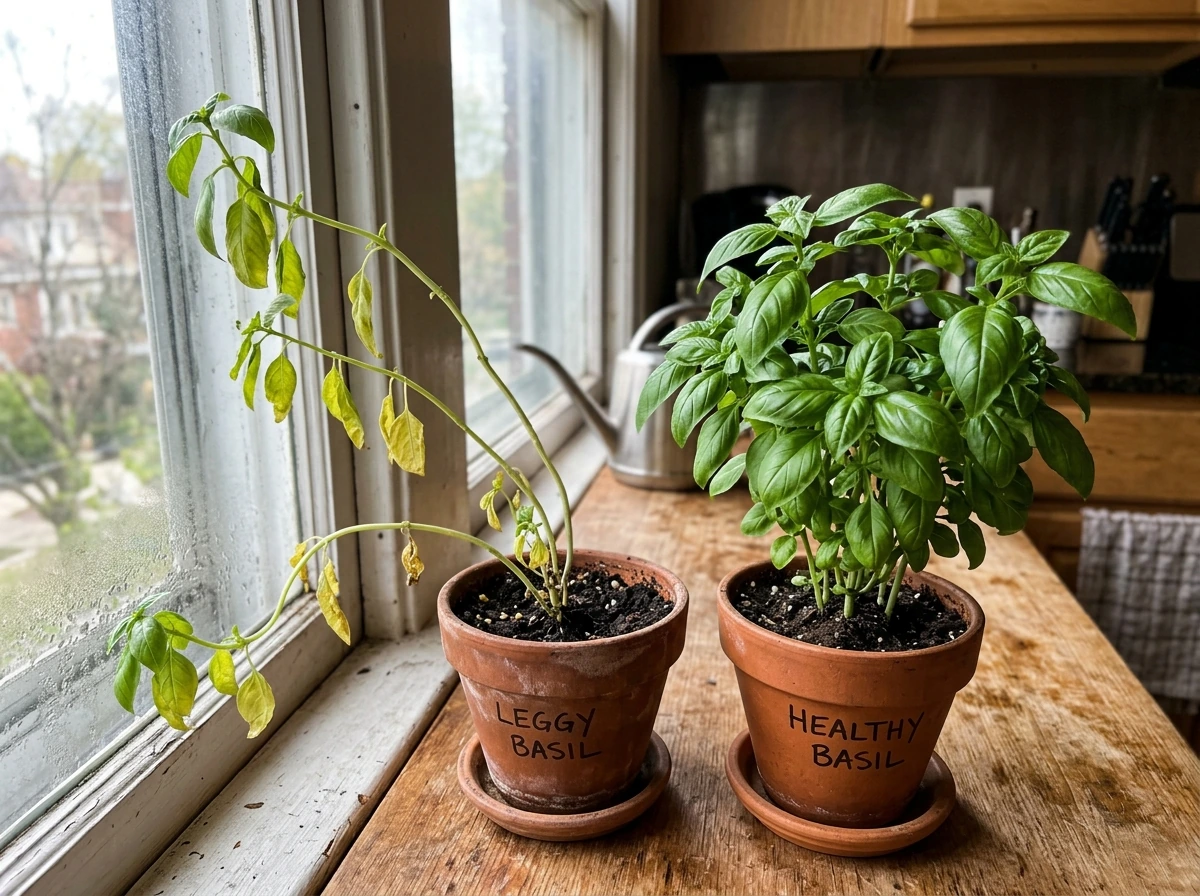
If your herbs are growing slowly with long, weak, stretched-out stems, they're not getting enough light. Leggy growth is a plant's way of reaching for more light. Move them closer to your window, add a grow light, or extend your grow-light hours. Regular pinching, cutting back stem tips, also helps keep plants compact and encourages bushier growth. The Chicago Botanic Garden recommends pinching frequently to keep windowsill herbs stocky, and it really does make a visible difference.
Weak flavor
Herbs with disappointing flavor indoors are almost always lacking light. More light equals more essential oil production, which is where flavor and aroma come from. If your thyme tastes bland, it almost certainly needs more sun or a stronger grow light. The fix is the same as for leggy growth: more and better light.
Overwatering and root rot
This is the number one way herbs die indoors, and it's usually well-intentioned. Root rot symptoms include yellowing lower leaves, wilting even when the soil feels wet, and soft or mushy stems at the base. University of Maryland Extension notes that wilting with wet soil is a classic sign that roots are already compromised. Prevention is simple: always check the soil before watering, use pots with drainage holes, and use well-draining potting mix. If you catch root rot early, remove the plant, trim away any black or mushy roots, and repot in fresh, dry mix.
Fungus gnats
Those tiny flies hovering around your herb pots are almost certainly fungus gnats. They thrive in moist potting soil and are more annoying than dangerous, though their larvae can damage roots if the population gets large. The fix starts with letting your soil dry out more between waterings, since wet soil is their breeding ground. Yellow sticky cards placed near the soil surface trap adult gnats and help you monitor the population, UC IPM and UConn IPM both recommend this approach as a first step. For a heavier infestation, a treatment with insecticidal soap or a targeted biological control like Bacillus thuringiensis israelensis (Bti) applied to the soil works well.
Aphids and spider mites
Aphids show up as clusters of tiny soft-bodied insects on new growth and stems. Spider mites appear as fine webbing and stippled, grayish leaves, often when indoor air is very dry. Missouri Extension recommends insecticidal soap or horticultural oil as least-toxic options for both pests. Spray the whole plant, including the undersides of leaves, and repeat every five to seven days for two to three cycles. Isolate any affected plant from your other herbs immediately to prevent spread.
Mildew on sage and rosemary
Powdery mildew appears as a white powdery coating on leaves, and sage is particularly prone to it indoors. It's typically triggered by poor airflow and high humidity combined with inconsistent light. Don't crowd sage against other plants, don't mist the foliage, and make sure air can circulate around it. If mildew appears, remove affected leaves, improve airflow, and avoid overhead watering entirely.
Quick comparison: which herbs suit which home conditions
| Home Condition | Best Herbs to Try | Herbs to Avoid |
|---|---|---|
| Bright south-facing window | Basil, thyme, oregano, rosemary, sage, chives, parsley | None — almost everything works here |
| East or west-facing window | Chives, mint, parsley, lemon balm, cilantro | Basil, rosemary, sage (need more light) |
| North-facing window or low light | Mint, chives, lemon balm | Basil, thyme, oregano, rosemary, sage, cilantro |
| Grow light setup | All herbs on this list — match intensity and hours to herb requirements | N/A with proper setup |
| Dry heated apartment | Mint, lemon balm (add humidity tray) | Rosemary, sage (mildew and stress risk increases) |
If you're working with a challenging light setup, our deeper look at herbs that grow indoors with low light is worth reading before you decide what to plant. And if a north-facing window is all you have, there's specific guidance on what will and won't work in that direction available too.
Your next steps right now
Start small and set yourself up to win. Pick two or three herbs from the beginner-friendly list, chives, mint, and parsley are a solid trio, get them into 6-inch pots with drainage holes and good potting mix, Start small and set yourself up to win.
Pick two or three herbs from the beginner-friendly list, chives, mint, and parsley are a solid trio, get them into 6-inch pots with drainage holes and good potting mix, and put them in your brightest window box. If that window gets less than four hours of direct sun, grab an inexpensive LED grow light. Check the soil before every watering rather than watering on a schedule. Pinch the tips regularly to keep plants compact and encourage fuller growth.
If that window gets less than four hours of direct sun, grab an inexpensive LED grow light. Check the soil before every watering rather than watering on a schedule. Pinch the tips regularly to keep plants compact and encourage fuller growth. Once those three are going well, add thyme and oregano.
Once you've got a feel for the dry-soil herbs, consider rosemary. That progression will save you a lot of frustration compared to starting with everything at once.
FAQ
How much direct sun do indoor herbs actually need on a daily basis?
Most sun-loving herbs (basil, oregano, thyme, rosemary, sage) generally do best with several hours of direct sun or equivalent LED light. If your window gives under about four hours of direct sun, plan on a grow light rather than hoping they will “adjust,” since winter light levels usually aren’t enough for consistent growth.
Can I grow multiple herbs in one larger planter and still avoid root rot and mixing water needs?
Yes, if you use separate containers or a divided tray inside the planter. The key is keeping herbs that have different watering schedules from sharing the same soil volume. If you want one outer pot for looks, use separate inner pots, all draining independently, then place them together for humidity.
What’s the right depth for typical kitchen herbs in containers?
For most herbs, a container around 6 inches wide with good depth works well, but depth matters for taprooted herbs. If you want to grow dill indoors, use deeper pots (about 8 to 12 inches) so the root can develop without circling or stalling.
Is tap water okay for indoor herbs, or should I use filtered or distilled water?
Tap water is usually fine, but if you notice persistent leaf issues like browning tips or crusty white residue on soil, consider letting water sit out overnight or using filtered water. Hard water can build up salts in potting mix faster indoors, which can stress herbs even when you’re watering correctly.
How often should I pinch or harvest herbs so they keep growing indoors?
Pinch regularly, especially for chives, parsley, basil, thyme, and oregano, to encourage branching. A practical rule is to harvest lightly at first, then remove stem tips before plants get leggy. Don’t strip more than a reasonable portion at once, because indoor herbs recover more slowly than outdoor ones.
My herbs look fine, but the flavor is weak. What should I change first?
Increase light before you change fertilizer. Weak, pale flavor indoors is almost always a light issue, not a nutrition issue. Move plants closer to the light source or extend grow-light duration, then only adjust feeding after you see healthier growth.
Do I need to fertilize indoor herbs, and if so, how do I avoid overfeeding?
You usually can, but use light, consistent feeding rather than frequent heavy doses. Overfertilizing can worsen salt buildup in containers and contribute to leaf problems. If you fertilize, follow a label rate and ensure you’re watering based on soil moisture, not a calendar schedule.
What should I do if my basil keeps dropping leaves or turning unhappy during winter?
Basil is a temperature and light-sensitive herb indoors. When conditions drop (cool nights, drafts, or reduced window hours), it may sulk and shed leaves. Move it closer to the brightest spot, stabilize away from vents and radiators, and consider a grow light with a consistent daily schedule.
Are mint and lemon balm safe to grow with other herbs, or will they always take over?
They should not be planted in the same shared soil space as other herbs. Mint especially spreads fast and will crowd out neighboring plants. Even if you keep them “contained” in a large pot, it’s safer to give mint its own container with drainage, then group pots only at the placement level.
How do I prevent fungus gnats if I already have them in my herb pots?
Let the top layer of potting mix dry more between waterings and use yellow sticky cards near the soil surface to monitor and reduce adults. If the population persists, treat the soil with a biological control like Bti. The goal is breaking the wet-soil breeding cycle rather than just killing the flying adults.
What’s the fastest way to tell if wilting is from underwatering or root rot?
Check the base and soil moisture together. If the soil feels wet but the plant wilts and lower leaves yellow, that points more toward root stress or early root rot. If the soil feels dry and pull away from the pot edges, underwatering is more likely. In both cases, adjust watering and improve drainage, but root rot typically requires trimming damaged roots and repotting in fresh dry mix.
Can I mist indoor herbs to fix dry air and improve growth?
Avoid misting, especially for herbs prone to mildew (sage in particular). Misting can raise humidity directly on leaves, which promotes fungal issues when airflow is poor. Instead, group pots, use pebble trays under pots, or run a small humidifier nearby if your indoor air is very dry.
Do indoor herbs need their own light timer, or is it okay to “leave the grow light on” longer?
Use a timer so the plants get a consistent daily photoperiod, commonly around 14 to 16 hours for many herbs under LED setups. Leaving lights on nonstop can confuse growth patterns and raise heat at the canopy level. Consistency beats extremes.
How do I know when it’s time to repot my indoor herbs?
Repot when roots visibly circle the pot, water runs straight through without soaking, or plants become stunted despite proper light. Most indoor herbs also benefit from fresh potting mix over time because containers accumulate salts from watering. If you do repot, move up gradually and keep drainage excellent.