The honest answer: yes, a handful of herbs genuinely tolerate low indoor light and will still give you something useful to harvest. Chives, mint, parsley, lemon balm, and cilantro are your best bets. Most other popular herbs, think basil, rosemary, thyme, and sage, really want a south-facing window and hours of direct sun. If you push them into a dim corner, they'll survive for a while but won't thrive. So this guide focuses on the herbs that are actually worth your effort in low light, and how to set them up properly so they don't just limp along.
Herbs That Can Grow Indoors With Low Light: Best Picks
James Hartwell
24 Mar 2026
What "low light" actually means indoors
"Low light" is one of those terms that gets thrown around a lot but almost never defined. In practical terms, low light indoors means roughly 500 to 2,000 lux at the plant's leaf level. UMN Extension’s indoor plant and seed-starting guidance defines a “low light” category as PPFD 50, 150 umol m-2s-1 (about 50, 250 foot-candles), suitable for a north window or fairly dark corner [PPFD 50–150 umol m-2s-1](https://extension. umn.
edu/node/19281). Below 500 lux, you're in extremely low light territory that isn't suitable for growing most plants at all, including herbs. A north-facing window on a cloudy day in winter can easily drop below 400 foot-candles (roughly 4,300 lux at midday on a bright day, much less on a typical overcast one), which is why University of Florida IFAS specifically flags north-facing windows as borderline for most plants.
The reason this matters is that light levels drop fast as you move away from a window. At the glass itself you might get 2,000 lux or more. Step two feet back and that number can fall by half. Step four feet back and you're often in that below-500-lux zone where nothing productive is going to happen. So when I say "low light," I mean: close to a north- or east-facing window, or near a west-facing window but partially shaded by a building or tree outside.
There's also a seasonal factor. In winter, even a south-facing window gets weaker light because the days are shorter and the sun angle is lower. The concept behind this is called daily light integral (DLI), which combines how bright the light is with how many hours it's available each day. A dim window in December gives a plant far less total daily light than that same window in June, even if nothing about your apartment has changed. This is why herbs that scrape by in low light during summer can really struggle in winter, and it's the main reason grow lights are worth knowing about.
The best low-light herbs to grow indoors
Here's who actually makes the cut. These herbs are consistently recommended by extension programs (Penn State, Iowa State, UMN, and others) as the most tolerant of lower indoor light conditions.
Chives
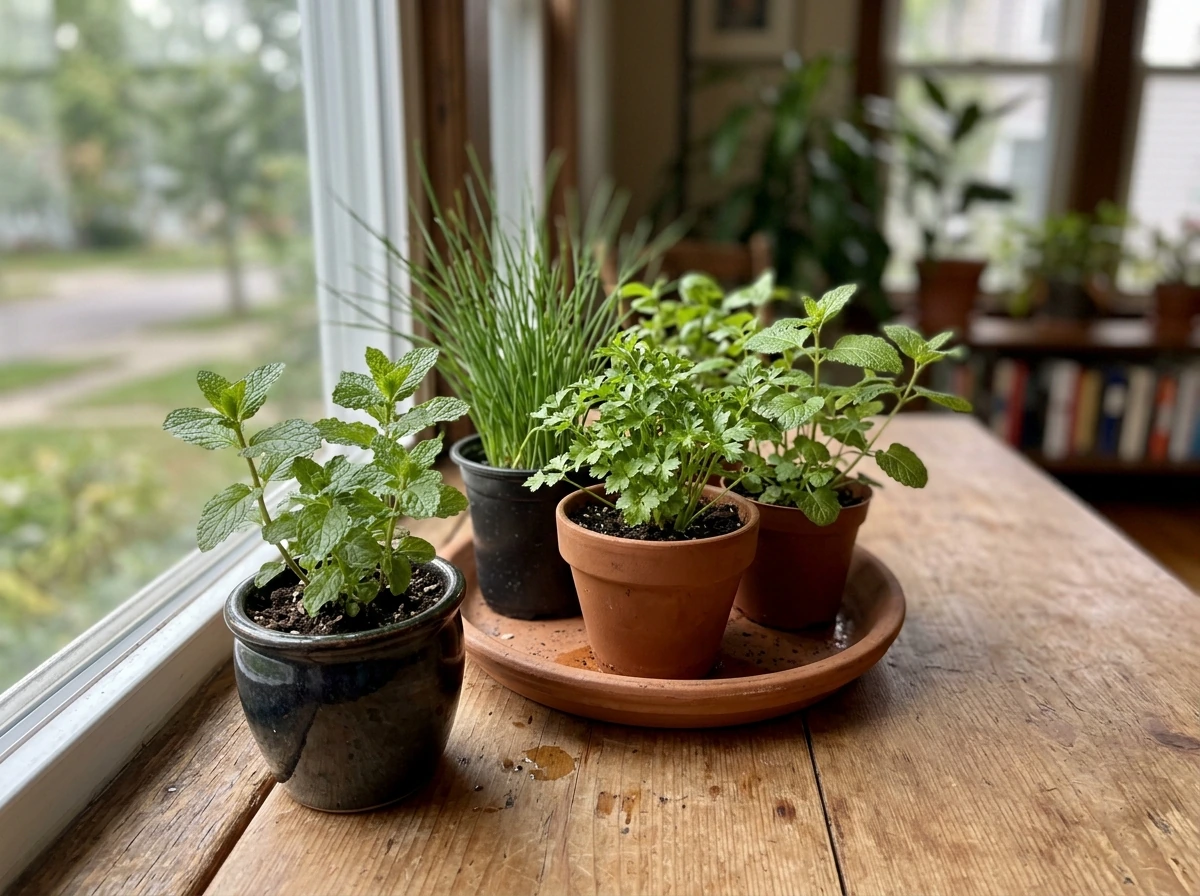
Chives are probably my top pick for best smelling herbs to grow indoors. They tolerate partial shade, cooler temperatures, and they don't bolt or go weird on you the way cilantro does. best smelling herbs to grow indoors A north-facing windowsill is genuinely fine for chives. Growth will be slower than in full sun, but you'll get consistent, usable leaves. If your chives are doing well in that spot, you can also use this as a jumping-off point for the best herbs grow indoors in low light. They're also incredibly forgiving if you occasionally forget to water.
Mint
Mint handles lower light better than most culinary herbs, and it grows aggressively enough that even in suboptimal conditions it keeps pushing out new growth. The key caveat: keep it in its own pot. Mint is known for taking over, and in a shared container indoors it will muscle out whatever else you've planted with it. Spearmint and peppermint are both solid choices. Just keep the pot in your best available light spot, even if that's just a few feet from an east-facing window.
Parsley
Parsley is slower to establish than chives or mint but it's a reasonable low-light performer once it gets going. Flat-leaf (Italian) parsley tends to be more productive than curly parsley indoors. It prefers a bit more light than chives, so put it as close to your window as possible. Give it a deep pot because parsley has a tap root that doesn't love being cramped.
Lemon balm
Lemon balm is an underrated choice for low-light apartments. Penn State Extension specifically lists it among herbs that can do well in very low light conditions, which is a meaningful endorsement. It's in the mint family, so it shares that same "grow it in its own pot" rule. The flavor is mild and citrusy, great for teas. It's a low-maintenance plant that doesn't demand much attention.
Cilantro
Cilantro is on this list with a real asterisk. It can grow in moderate indoor light, and interestingly, too much direct sun actually stresses it and speeds up bolting. But it's also temperature-sensitive: once your indoor space gets above about 75°F, it's going to bolt regardless of light levels. It also bolts when stressed by inconsistent watering. I'd call cilantro "low-light tolerant but fussy" rather than "easy." If you want a continuous supply of cilantro leaves, succession sow, meaning plant a new pot every three to four weeks, because individual plants don't last long indoors.
Herbs that need more light than most people think
Basil, rosemary, thyme, and sage are frequently marketed as easy indoor herbs, but they're genuinely not well-suited to low light. Basil in particular is demanding, and there's a whole separate conversation to be had about [whether basil can really thrive indoors] (does basil grow indoors) at all without supplemental light. Rosemary and sage are Mediterranean herbs that want sun, and sage is specifically susceptible to mildew and overwatering when light is low. Thyme can limp along in a bright window but won't be vigorous. If you're curious about basil specifically, that deserves its own deep dive rather than a brief mention here.
Low-light herb comparison at a glance
| Herb | Low-Light Tolerance | Difficulty Indoors | Key Watch-Out |
|---|---|---|---|
| Chives | Excellent | Easy | Slow in very dim spots; cut flower stalks to keep foliage productive |
| Mint | Good | Easy | Needs its own pot; can become leggy without decent light |
| Lemon Balm | Excellent | Easy | Grows in its own pot; mild flavor suits teas and cooking |
| Parsley | Moderate | Medium | Needs a deep pot for tap root; slower to establish |
| Cilantro | Moderate | Tricky | Bolts above 75°F; short lifespan, succession sow for continuous harvest |
Where to place them in your space
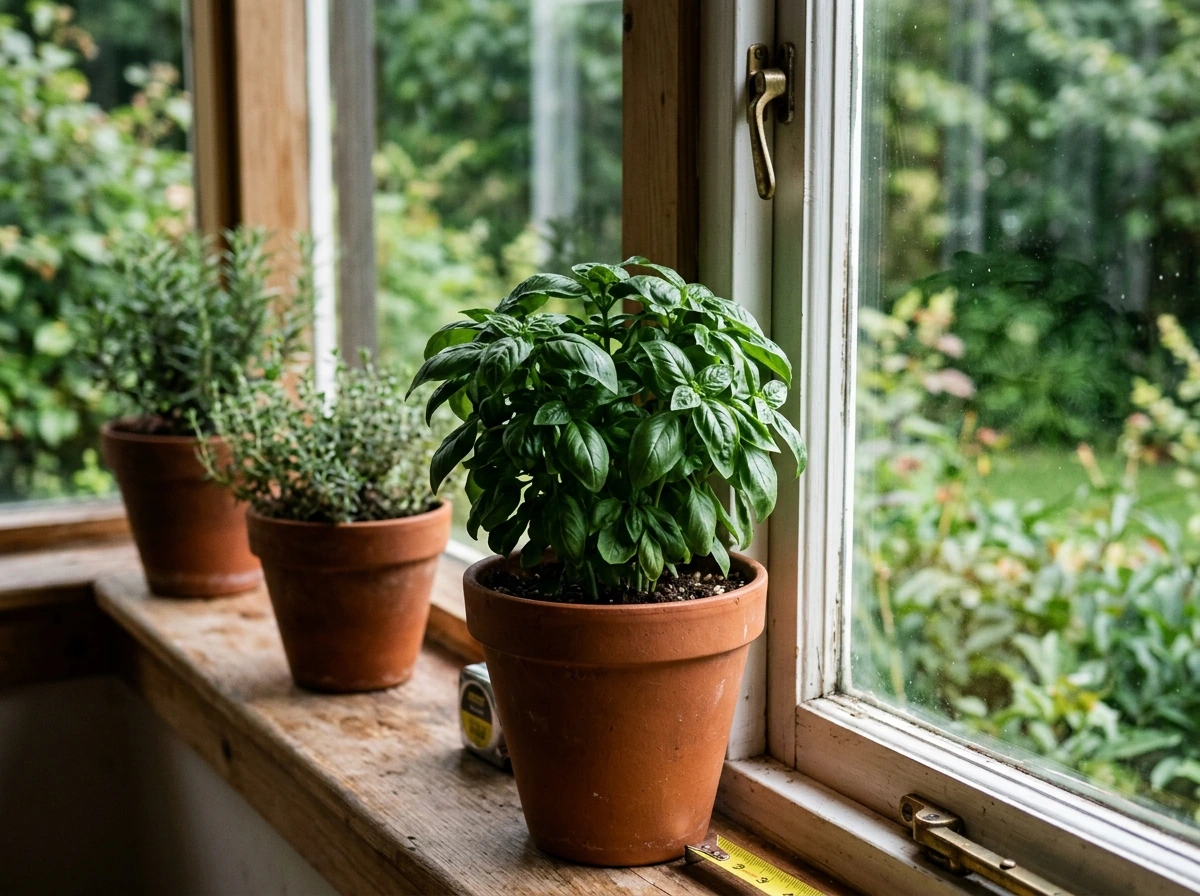
The single most useful thing you can do is get your herbs as close to the window glass as physically possible. Not three feet back. Right at the glass. The light drop-off indoors is dramatic, and those extra few feet matter enormously. If you have a north-facing window, chives and lemon balm can still perform there, but your other herbs will struggle more. An east-facing window is genuinely better for the full low-light herb list because plants get a few hours of direct morning sun, which is gentler and more usable than afternoon sun. can you grow sweet peas in a window box
Northwest-facing windows can work for the more tolerant herbs if you're close enough to the glass. Horticulturists note that north- and northwest-facing windows can provide medium-to-low light suitable for forgiving plants. The key word there is "forgiving," which is why the herbs on this list were chosen and not basil.
Rotate your pots every week or so. Plants lean toward the light source over time, and rotating keeps growth more even and prevents one-sided stretching. If you have multiple herbs, put the least light-tolerant ones (like cilantro and parsley) closest to the window and let your chives and lemon balm sit slightly further back if space is tight.
Soil, watering, containers, and temperature
Soil and containers
Never use garden soil for indoor herbs. It compacts in pots and kills drainage. Use a quality potting mix designed for containers, and make sure every pot has drainage holes. If you love a decorative pot without holes, use it as a cachepot, meaning put the herb in a plain plastic pot with holes inside the decorative one, and empty the decorative pot after watering so the herb isn't sitting in water. Root rot is the most common way indoor herbs die, and it almost always comes down to poor drainage combined with overwatering.
Container size matters too. Herbs in tiny pots dry out too fast or get root-bound quickly. Parsley especially needs a deeper pot for its tap root. A general rule: use a pot that's at least 6 inches deep and 6 inches wide for individual herbs. Replace the potting mix every growing season because it breaks down and loses its structure over time.
Watering
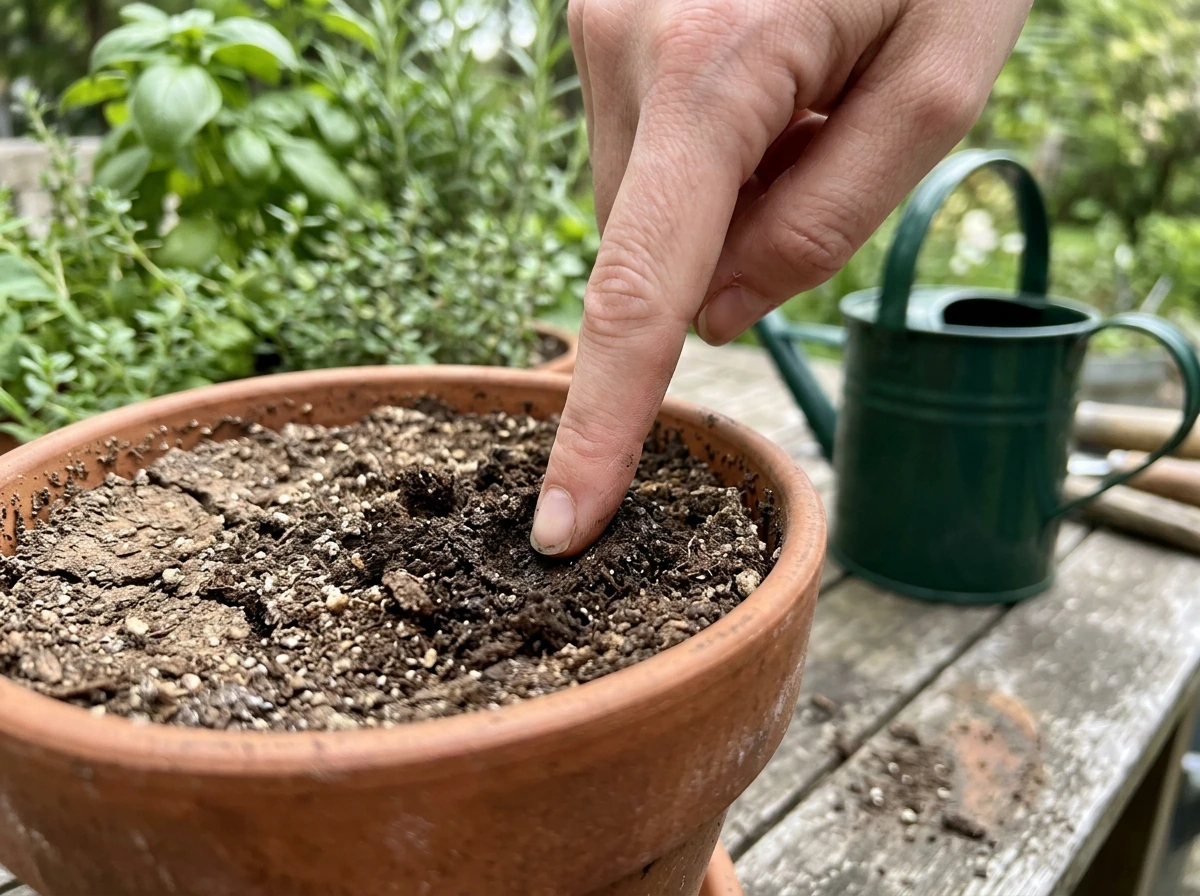
The standard advice from Oregon State Extension is simple and reliable: water thoroughly only when the soil surface is dry. Applying water incorrectly, such as watering too rapidly so it runs off instead of soaking in, wastes water rather than helping the plant take it up, which is why OSU Extension emphasizes watering practices that allow proper absorption watering too rapidly causing runoff wastes water rather than soaking it in.
Stick your finger into the top inch of soil. If it's dry, water until it drains freely from the bottom. If it's still moist, wait. In low light, plants grow more slowly and take up water more slowly, which means the soil stays wet longer than you might expect.
This is exactly when overwatering happens. For Mediterranean herbs like thyme and oregano (if you're attempting them), let the soil dry out a bit more between waterings because they want that slight dry-down cycle.
Temperature and humidity
Most indoor herbs are happy in the same temperature range that makes humans comfortable: roughly 60 to 70°F. Cilantro is the exception, since it starts bolting when temperatures climb above 75°F, which can happen near heating vents or in a sunny west window in the afternoon. Keep your herbs away from heating vents, air conditioner drafts, and cold drafts from leaky single-pane windows in winter. Chives actually prefer it slightly cooler and will handle a drafty north window better than most.
Pruning and harvesting: the cut-and-come-again approach
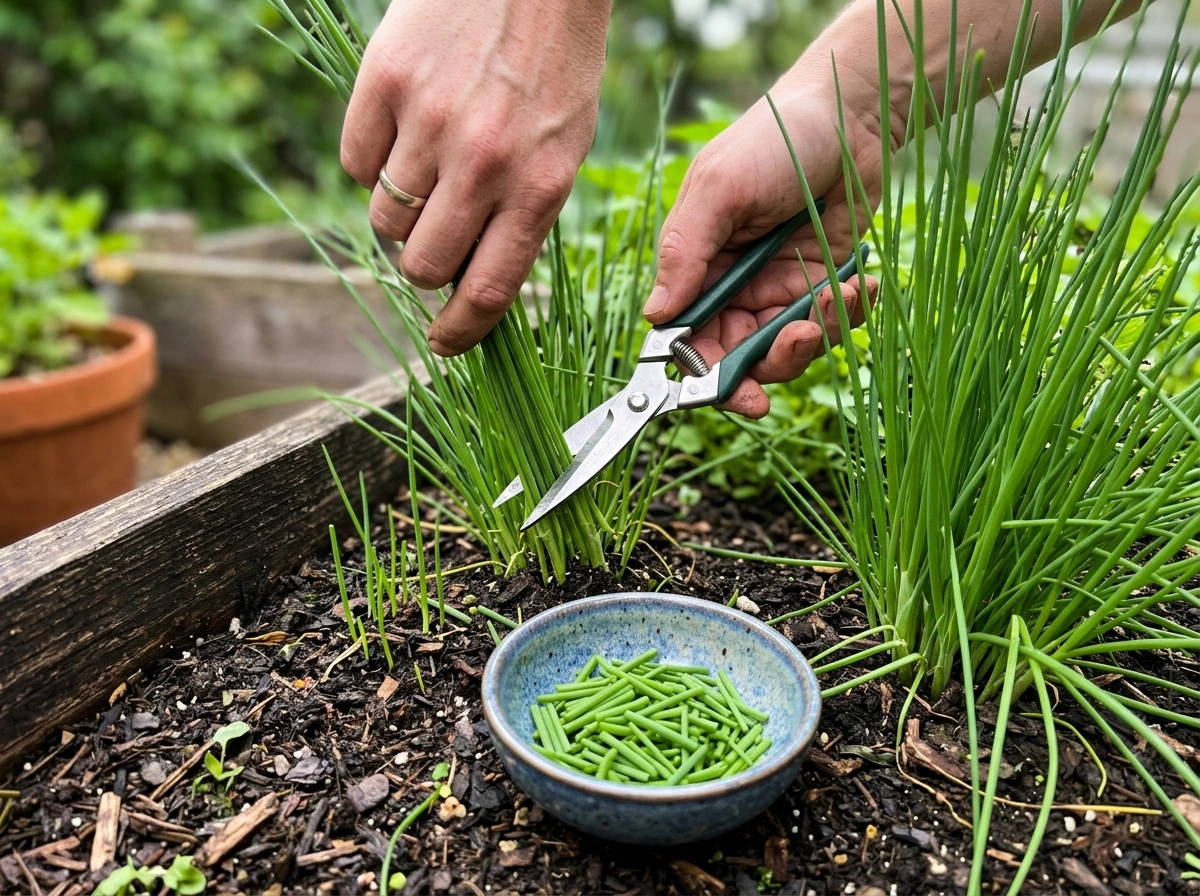
Regular harvesting isn't just about getting herbs into your cooking. It's one of the key ways to keep low-light plants from declining. When you harvest consistently, you encourage the plant to keep producing new growth rather than putting energy into flowering and going to seed. The phrase for this is cut-and-come-again, and it applies to almost every herb on this list.
For chives, snip leaves from the base rather than cutting the tips. The RHS recommends cutting the whole plant down to about 2 inches (5 cm) from the soil when growth has slowed, which triggers a fresh flush of new leaves over the following weeks. Once chives flower, cut the flower stalks off at the soil line so the plant refocuses its energy on foliage. For cilantro, Iowa State Extension advises starting harvest once the plant reaches 4 to 6 inches tall. Harvest outer leaves regularly to slow the inevitable push toward bolting. For mint and lemon balm, pinch back the tips regularly to keep the plant bushy rather than lanky.
A practical harvesting rhythm: visit your herbs every few days. Even if you don't need anything for cooking, pinch back any tips that are getting long or stretchy. This keeps the plant dense, encourages branching, and prevents the leggy, floppy growth that low-light conditions promote.
When things go wrong: leggy growth, yellow leaves, and slow growth
Leggy, stretchy stems
If your herbs are growing long, spindly stems with widely spaced leaves, they're reaching for more light. This is the most common low-light symptom and it's the plant's honest signal that it needs more. The fix is to move the plant closer to the window, rotate the pot so it gets more even exposure, or add a grow light. Pinching back the leggy growth helps in the short term but doesn't fix the underlying cause. Don't let the problem run for too long; stems that have gone really leggy don't recover well and it's often easier to take cuttings and start fresh.
Yellow leaves
Yellow leaves usually mean one of two things: overwatering (the most common culprit indoors) or insufficient light, which are often connected. In low light, the plant can't process water and nutrients as efficiently, so the soil stays wet longer and roots sit in soggy conditions. Check drainage first. Make sure the pot has holes and isn't sitting in a saucer full of water. Then adjust your watering schedule and wait for the top inch of soil to dry before watering again. If the soil and drainage are fine and yellowing continues, light is probably the primary issue.
Slow or stalled growth
Some slowdown in low light is normal and expected. But if your herbs have essentially stopped growing for several weeks, or if new growth is very small and pale, the light is almost certainly insufficient. This is especially common in winter when natural light levels drop even at a south-facing window. The honest answer here is that some of those plants need a grow light, not just repositioning. Check whether the issue is also root-bound plants: gently remove the herb from its pot and look at the roots. If they're circling the bottom or growing out of the drainage holes, repot into a slightly larger container.
When to just get a grow light
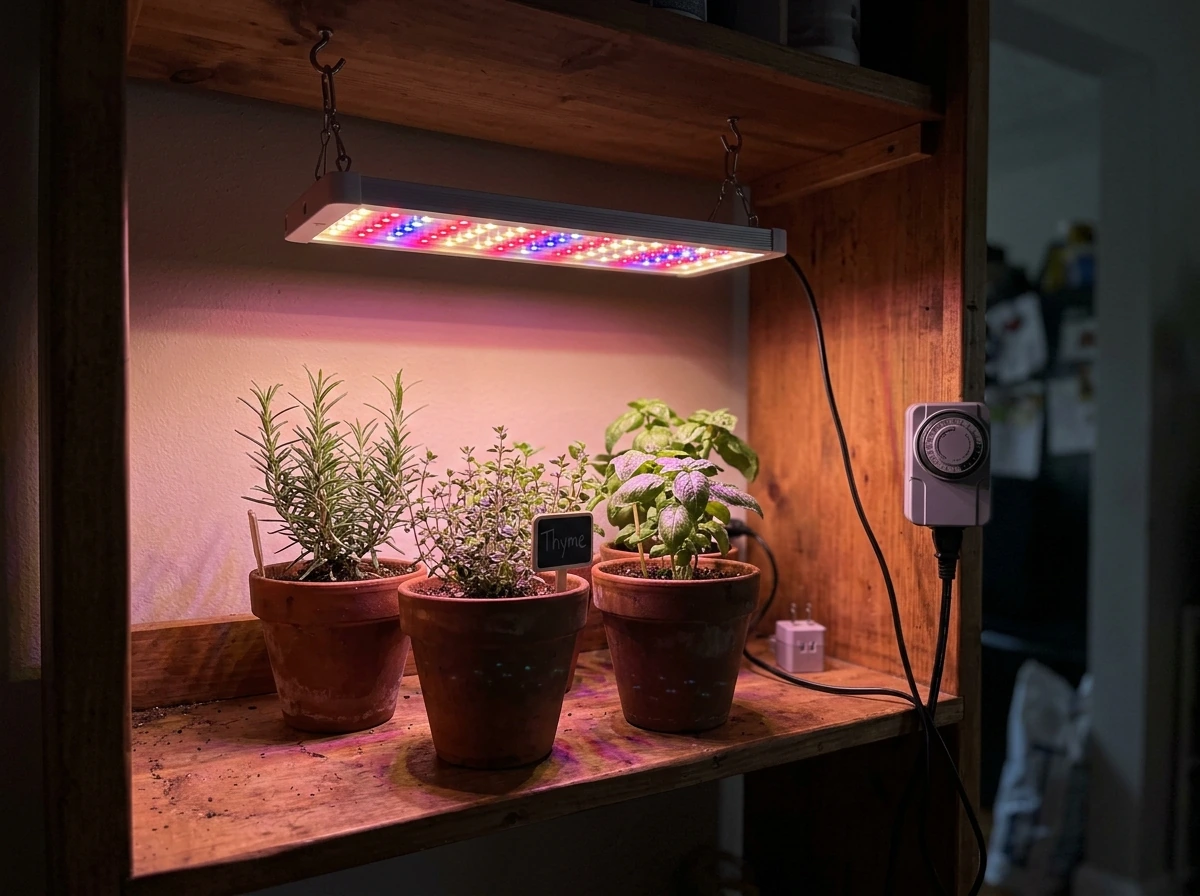
If you have a north-facing window in a city apartment, or if your only window faces a wall or is blocked by a large tree, low-light herbs are going to struggle without some help. A grow light is the practical solution, and modern options are simple and inexpensive. You don't need anything elaborate. A 24 to 36-inch LED bar light on a timer is the most convenient option for a windowsill or small shelf setup. Set it on a timer for 12 to 14 hours per day and you've effectively solved the light problem for all the herbs on this list.
Positioning matters. Most LED grow lights for herbs should be placed 6 to 12 inches above the plant canopy, but check the fixture's own PPFD output specs rather than relying on a generic distance rule. PPFD (photosynthetic photon flux density) is the measurement that tells you how much usable light is actually reaching the plant. A quality grow light will include a PPFD chart showing output at different distances. For herbs, you want at least 200 to 400 PPFD at canopy level. Most basic LED bar lights marketed for herbs will hit this at 6 to 10 inches.
One more thing: a grow light doesn't have to replace the window, it supplements it. Even in a low-light apartment, run the grow light in addition to whatever natural light you get. The combination usually makes a real difference, especially in winter when natural light is weakest. If you've been fighting leggy chives or stalled parsley all season and haven't tried a grow light yet, it's worth the experiment before giving up on indoor herb growing altogether.
FAQ
Can I start these low-light herbs from seed, or should I buy transplants?
Yes, but only for certain herbs and only if you do it consistently. Chives, parsley, and cilantro can be started from seed indoors, but in low light seedlings need more light than mature plants to stay compact. Plan to start seeds closer to the window and, if you see tall, thin stems, switch to a small LED bar on a timer for at least the first 4 to 6 weeks.
What pot size should I use so low-light herbs do not get root-bound or dry out too fast?
For the low-light herbs listed, choose the smallest pot that matches the plant’s growth habit, then size up if roots crowd quickly. A practical approach is 6-inch diameter for chives and mint family herbs, 6-inch deep for parsley due to the tap root, and at least 8 to 10 inches deep if you want longer-term parsley production without repotting.
How do I avoid overwatering when my herbs grow slowly in winter?
In low light, do not rely on a fixed watering schedule. The top-inch check is the safest method, but add one extra rule: empty the saucer or cachepot every time, and only water again after the soil has dried across the whole top inch, not just on the surface. If you have yellow leaves plus a heavy, wet soil smell, assume overwatering until proven otherwise.
If my herbs look pale and stretched, how can I tell whether it is low light or a nutrient problem?
If your herbs are leggy and spaced out, light is the primary issue, but the pattern can be mistaken for low nitrogen. The quick decision aid is to look for directionality: if growth leans toward the window, it is light. If leaves are pale all over and growth is uniformly weak, consider a very light feeding once every 3 to 4 weeks with a balanced, half-strength fertilizer for edible plants.
What is the best way to keep cilantro from bolting indoors?
Cilantro is the most time-sensitive herb on this list. Even in acceptable light, it will often bolt as temperatures rise or watering becomes inconsistent. If you want steady leaves, use succession planting (new pots every few weeks) and harvest outer leaves early, rather than waiting until the plant is fully “ready” to maximize harvest duration.
Can I plant multiple herbs together in one container for a low-light setup?
Yes, but do not combine the “own pot” rule with shared containers for mint family herbs. Mint and lemon balm send out aggressive underground growth, even indoors, so each should have its own pot. You can mix chives and parsley in a larger standalone container only if both have adequate drainage and you are willing to manage crowding over time.
Is it better to keep my indoor herb area cooler or warmer for low-light growth?
Sometimes. Herbs can handle “cooler” better than “heat,” but cold drafts can slow growth and cause stress. Keep plants away from vents and direct blasts from heating or AC. If temperatures near the window drop a lot at night, move the pots slightly back from the glass or use a simple draft barrier so the leaves are not constantly chilled.
How much can I harvest without stalling my indoor low-light herbs?
Most low-light herbs can be harvested regularly, but harvest style affects how fast they decline. With chives, taking frequent base snips encourages regrowth, and removing flower stalks prevents the plant from shifting energy to seed. With mint family herbs, pinching tips keeps the plant compact; avoid cutting more than about one-third of total growth at a time.
Do I need a humidifier for low-light indoor herbs?
You usually do not need to add humidity for these herbs, but you should avoid two extremes. Very dry air can increase wilting between waterings, especially near heaters, while persistently humid, poorly ventilated corners can worsen mildew risk for sensitive herbs. A small fan for gentle air movement is often more helpful than adding moisture.
When should I give up on the window and switch to a grow light?
Yes, and it is one of the fastest fixes. If you have used the window approach and still see no improvement after a few weeks, add a grow light rather than waiting longer. Start by placing the fixture 6 to 10 inches above the canopy, use a timer for 12 to 14 hours daily, and watch for the main improvement signal: tighter growth with smaller, less spaced leaves.